Emergency Situations: First Aid for Common Injuries
First aid is the care given until professional help is available. In a life-threatening situation, call 911 in the United States or your local emergency number. Put the phone on speaker and follow the dispatcher's instructions.
This guide covers the injuries shown on the earlier version of this page. The advice has been rewritten because several old recommendations—such as putting antibiotic cream on a fresh burn or tying a band above a snakebite—can delay treatment or make an injury worse.
Reading is useful, but it does not replace hands-on CPR, AED, bleeding-control, or first-aid training.
The first steps in an emergency
- Check the scene. Look for traffic, fire, electricity, chemicals, an aggressive animal, or another danger. Do not become a second injured person.
- Check the person. See whether they respond, are breathing normally, and have life-threatening bleeding.
- Call for help. Call emergency services when the person is unresponsive, is not breathing normally, has severe bleeding, or appears seriously ill or injured. Send someone to get an AED and first-aid kit if available.
- Give care within your training. If the person is not breathing normally, begin CPR and use an AED if you know how, or follow the dispatcher's instructions.
- Keep watching. Stay with the person, keep them from getting too cold or hot, and report any change in breathing or responsiveness.
If you suspect a head, neck, or back injury, ask the person not to move. Leave them in the position found unless the scene is unsafe, you must give CPR, or you must control life-threatening bleeding. The American Red Cross first-aid steps provide a useful general framework.
Burns
Heat, hot liquid or steam, chemicals, electricity, radiation, and explosions can all cause burns. A burn that looks small can still be serious when it is deep or caused by electricity or chemicals.
What to do
- Stop contact with the source only when it is safe to do so.
- Remove jewelry and loose clothing near the burn before swelling begins. Do not pull away material stuck to the skin.
- Cool a thermal burn under clean, cool running water as soon as possible for at least 15 minutes.
- After cooling, loosely cover the area with a sterile nonstick dressing or clean material.
Do not use ice, butter, toothpaste, oil, or burn creams on a fresh burn. Ice can damage tissue, and greasy products trap heat. Do not break blisters.
Call emergency services for burns involving the face, mouth, hands, feet, genitals, or a major joint; burns that go around a limb, chest, or neck; large or deep burns; breathing difficulty; or any serious chemical or electrical burn. The Red Cross has separate instructions for thermal, chemical, and electrical burns.
Chemical burns
Protect yourself from the chemical. Brush off dry powder with gloved hands or a cloth before flushing, and remove contaminated clothing if you can do so safely. Flush a liquid chemical from the skin with plenty of running water. Call emergency services or a poison center for product-specific advice.
Electric shock
Do not touch someone who is still in contact with electricity. Turn off the power at the breaker or unplug the device only if you can do so without entering a wet or dangerous area. For a downed power line or high-voltage source, stay well away and call emergency services and the utility company.
Once the power is confirmed off, check responsiveness and breathing. Start CPR and use an AED if needed and if you are trained. Cool a visible electrical burn with clean, cool running water.
Anyone with a significant electrical shock should receive prompt medical evaluation even when the skin mark is small or the person initially feels well. Electricity can disrupt the heart or cause internal injuries that are not visible.
Minor cuts and severe bleeding
For a minor cut
- Wash your hands and use disposable gloves if available.
- Apply gentle direct pressure with clean gauze or cloth until bleeding stops.
- Rinse the wound with clean running water. Clean the surrounding skin with soap without scrubbing soap deep into the wound.
- Cover it with a clean dressing and replace the dressing when it becomes wet or dirty.
Contact a clinician for a deep, gaping, dirty, puncture, crush, or bite wound; a wound with debris you cannot remove; numbness or loss of movement; signs of infection; or uncertainty about tetanus vaccination.
For life-threatening bleeding
Call emergency services and press firmly and continuously on the source of the bleeding with gauze or a clean cloth. If an object is embedded, do not remove it; apply pressure around it. A commercial tourniquet may save a life when bleeding from an arm or leg is life-threatening, but it should be used according to training or dispatcher instructions. The Red Cross explains how to recognize and respond to life-threatening external bleeding.
Sprains and possible fractures
A sprain injures a ligament around a joint, while a strain affects a muscle or tendon. Pain, swelling, bruising, and difficulty using the area can also occur with a fracture. Being able to move or stand on an injured limb does not rule out a broken bone.
- Stop the activity and protect the injured area.
- Do not force a joint or bone back into position.
- Apply a cold pack wrapped in a thin, dry towel for no more than 20 minutes at a time.
- A gentle compression wrap may limit swelling. Loosen it if the skin beyond the wrap becomes cold, pale, numb, or tingly.
- Elevate the limb only if doing so is comfortable and does not worsen pain.
Seek urgent care for a deformed limb, an open wound over a possible fracture, severe pain, loss of feeling, cold or discolored fingers or toes, or an injury involving the head, neck, spine, pelvis, or upper leg. See the Red Cross guide to muscle, bone, and joint injuries.
Falls and possible head injury
After a fall, first check for breathing problems, severe bleeding, obvious deformity, and head, neck, or back pain. Do not rush to sit the person up. If a serious spine or hip injury is possible, keep them still and call emergency services.
A concussion can occur without loss of consciousness, and symptoms may appear hours or days later. Seek emergency care after a blow to the head for a worsening headache, repeated vomiting, seizure, slurred speech, weakness or numbness, unusual confusion or behavior, unequal pupils, increasing drowsiness, or an inability to wake. These are among the CDC's concussion danger signs.
Snakebites
Treat an unknown snakebite as an emergency. Move away from the snake, call emergency services, and keep the person calm and as still as possible. Remove rings, watches, or tight clothing before swelling starts. Keep the bitten limb in a neutral, comfortable position and cover the wound with a clean, dry dressing.
If it can be done from a safe distance, a photograph may help identify the snake. Do not approach, trap, or kill it.
Do not apply ice or a tourniquet. Do not cut the wound, suck out venom, use electric shock, or wait for symptoms. These methods can cause additional injury. The CDC's current snakebite guidance emphasizes prompt medical treatment and transport by someone other than the bitten person.
Dog and other mammal bites
Get to safety, then wash the wound thoroughly with soap and running water. Apply direct pressure if it is bleeding and cover it with a clean dressing. Deep bites, bites to the face or hand, uncontrolled bleeding, loss of function, and wounds showing redness, swelling, drainage, or fever require medical care.
A clinician or public-health department should assess the risk of rabies when the animal is wild, stray, acting strangely, unavailable for observation, or has an unknown vaccination history. Do not try to capture the animal yourself. Rabies treatment decisions depend on the animal, location, exposure, and local public-health guidance. The CDC explains what information to collect and when to seek care after a dog bite.
Ask the clinician whether tetanus vaccination or antibiotics are needed. Do not wait for rabies symptoms to appear; prevention must begin before illness develops.
Scorpion stings
Move away from the scorpion and wash the sting with soap and water. In the United States, call Poison Control at 1-800-222-1222 or use its online tool for advice based on the person's age, location, and symptoms. Elsewhere, contact the local poison center or emergency service.
Call emergency services for trouble breathing or swallowing, severe muscle twitching, unusual eye movements, slurred speech, seizure, collapse, or rapidly worsening symptoms. Young children need especially close attention because some scorpion venoms can affect them more severely. Poison Control provides more detail on scorpion sting symptoms and treatment.
Do not use a tourniquet, cut the skin, or attempt to remove venom. If possible, note the scorpion's appearance from a safe distance without trying to catch it.
A small amount of preparation helps
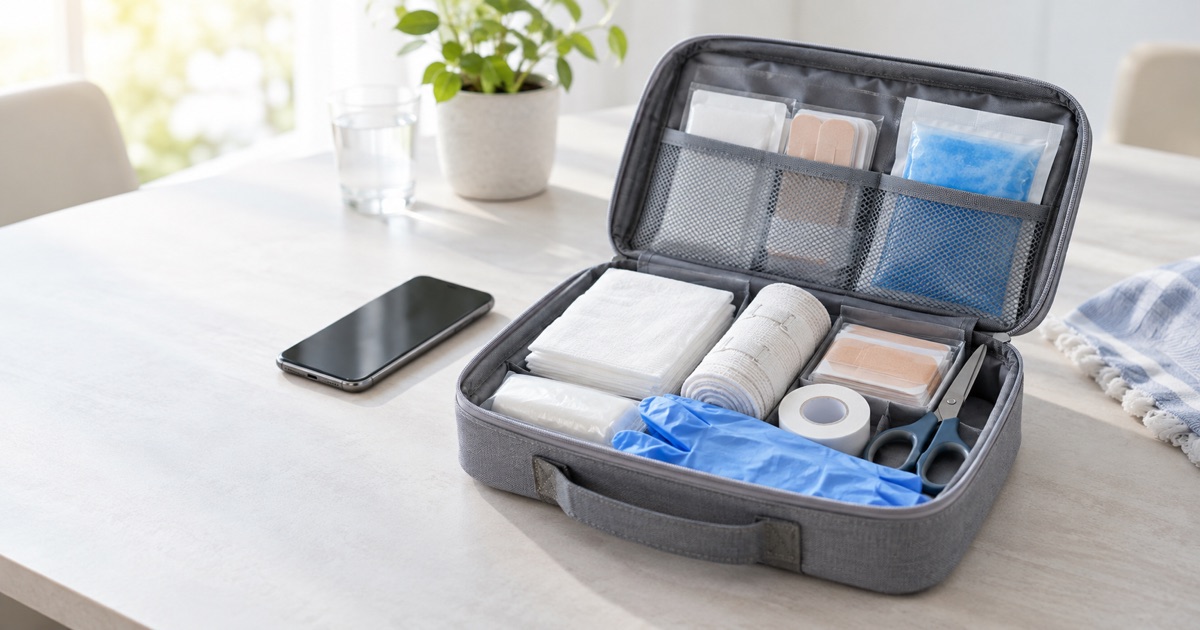
Keep emergency numbers, allergies, medications, and important medical conditions accessible. A basic first-aid kit can include gloves, sterile gauze, adhesive bandages, medical tape, a roller bandage, a cold pack, blunt-tip scissors, and a CPR face shield. Check expiration dates and replace used supplies.
A first-aid course is more valuable than a crowded kit because it teaches you how to recognize a dangerous situation and act under pressure.
This article provides general information and does not replace emergency services, hands-on first-aid training, or individual medical advice.