Best Tourniquet for First Aid of 2026

The moment a tourniquet matters is the worst moment of someone's day. You're not comparing specs then—you're trying to remember which end goes where with shaking hands. The good ones earn their keep before anything goes wrong: they open without a fight, lock down with one hand, and sit small enough that you actually carry them. My team and I spent four months with 14 tourniquets, and the differences show up fast—a tourniquet doesn't stop the emergency, it buys time for real help to arrive.

The surprise isn't that cheap tourniquets fail—it's how many decent-looking ones stumble on the small stuff: a windlass that rolls instead of locking, a clip that snaps when you route the strap, a pouch that demands two hands when you have one. We noted what came in the box, because a tourniquet with no way to stage it on a belt or bag gets left at home. Compactness is part of the same story—the best tourniquet is the one you have on you. The picks below are the ones we'd carry.

1

Best Overall

North American Rescue C-A-T Gen 7

98 /100
Trail Score Outstanding

Key details

Weight
2.7 oz
Strap Routing
Single routing buckle
Windlass System
Free-moving internal band
Product Dimensions
6.5 x 2.4 x 1.5 inches
Check Price on Amazon

The single routing buckle is the reason we put this at the top. You pass the strap through once, pull out the slack, and turn the windlass — no feeding a tail through a slot with a shaking hand. Of everything here, it is the sequence we trust most, and the one we keep in our own kits.

North American Rescue points to U.S. Army Institute of Surgical Research testing showing the C-A-T occludes blood flow in upper and lower extremities, and the Gen 7's free-moving internal band is the part that keeps pressure even as the windlass turns instead of letting the strap bunch. That claim belongs to the maker. What we can tell you is that the buckle, the band and the windlass are the three parts that decide whether a tourniquet works, and this one is built around all three. At 2.7 ounces it goes into a kit without complaint.

What it asks in return is space and money. Folded at 6.5 by 2.4 by 1.5 inches, it is a kit or cargo-pocket item rather than something that vanishes into jeans, and it costs more than anything else on this list. We think both are the right trade for the tourniquet you plan to use on someone else: this is the one to buy if you are buying exactly one.

Pros

  • One-pass strap routing removes a fumbling step
  • Free-moving internal band keeps pressure even
  • Deepest record of professional use here

Cons

  • Folded size rules out jeans-pocket carry
Our verdict

We recommend the Gen 7 as the default buy: the shortest one-handed sequence here, a maker's occlusion testing behind it, and kit-sized rather than pocket-sized.

Check Latest Price
2

Best for Large Limbs

TacMed SOF Tourniquet Gen 5

94 /100
Trail Score Outstanding

Key details

Buckle
Detachable
Weight
3.2 oz
Windlass
Heavy-duty metal
Product Dimensions
5 x 2 x 2 inches
Check Price on Amazon

Set the SOF-T beside the C-A-T and the first difference is the buckle: it comes apart. Split it open, wrap the strap around the limb, clip it back together, cinch. Nothing has to be fed through a slot, which is what makes this one easier on a thigh larger than the strap was expecting — and easier with a hand that is already slippery.

The windlass is metal, knurled deeply enough to bite through a glove, and that is the detail we kept noticing. Everything else is conventional in the good sense: high-strength webbing, neat tight seams, and a fold that lands at 5 by 2 by 2 inches. For a kit in a vehicle or a pack, this is the alternative we name right after the C-A-T, and the one to pick if you want a buckle that opens and a bar you can find by feel.

The catch is muscle memory. The apply sequence is not the C-A-T's, and if your training was built around single-pass routing you are relearning the routing, not just the grip. Neither design is harder; they are different, and switching between them costs you reps. Choose one and drill only that.

Pros

  • Detachable buckle wraps large limbs without threading
  • Deeply knurled metal windlass works in gloves
  • Neat, tight construction and a flat fold

Cons

  • Relearning needed if your training was C-A-T based
  • Heavier than the other windlass picks here
Our verdict

Our pick when the limb is big or the buckle is the part you fumble: it wraps without threading, and the metal windlass is easy to find with gloves on.

Check Latest Price
3

Best for Everyday Carry

Snakestaff ETQ Gen 2

92 /100
Trail Score Outstanding

Key details

Origin
Made in the USA
Weight
1.76 oz
Strap Width
1.5 inches
Product Dimensions
3 x 4 x 0.5 inches
Check Price on Amazon

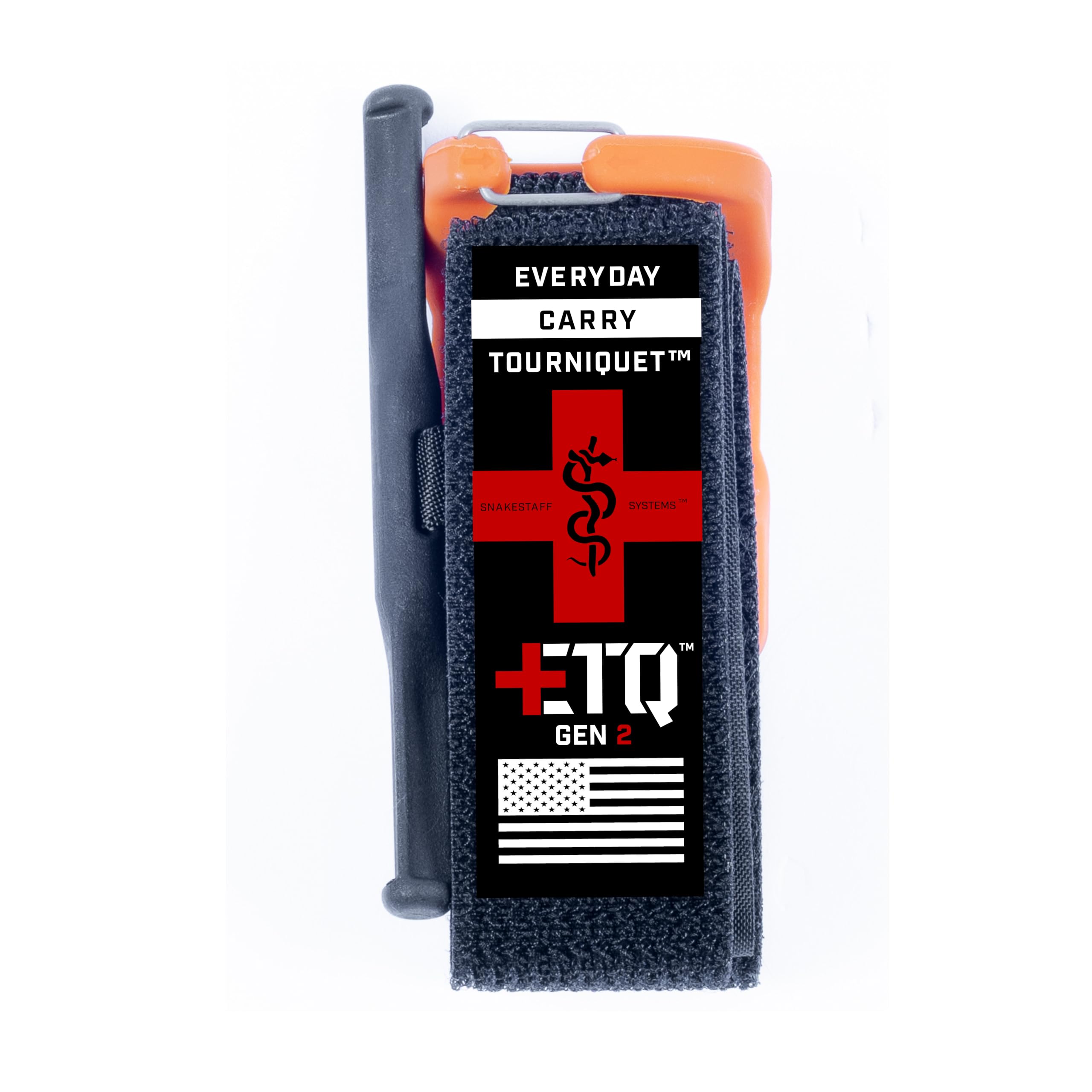
Half an inch thick and 1.76 ounces, the ETQ Gen 2 is the only tourniquet here that disappears into a pocket, and that is the whole argument for it. A tourniquet in the trunk of a car is a plan; a tourniquet in your jacket is a tourniquet.

The trick is the fold. It ships flat, and flat is what buys the thin profile — 3 by 4 inches at half an inch deep, with a 1.5-inch strap and a windlass that sits along the body of the device instead of across it. We noticed it rides in a front pocket without printing through, which is not something we can say about anything else in this group. It is made in the USA, and the hardware feels rigid rather than flimsy in the hand.

Here is the trade a compact design always makes: staged for fast access, with the windlass turned out and the strap opened up, it takes noticeably more room than it does folded flat. So decide what it is for. Carried flat and practiced from flat, it is the tourniquet that is actually on you; set up for speed, it is a small kit tourniquet that happens to have cost you about what our top pick did.

Pros

  • 1.76 ounces and half an inch thick
  • Sits flat in a pocket or on a belt
  • Rigid windlass and solid stitching

Cons

  • Costs about what our top pick does
Our verdict

The one we carry when a kit is not coming: 1.76 ounces and half an inch thick, at a price that makes it a considered purchase rather than an impulse one.

Check Latest Price
4

Best for Kids and Dogs

RATS Tourniquet System

93 /100
Trail Score Outstanding

Key details

Weight
2.4 oz
Limb Fit
Adults, children, dogs
Material
Polyester elastic
Check Price on Amazon

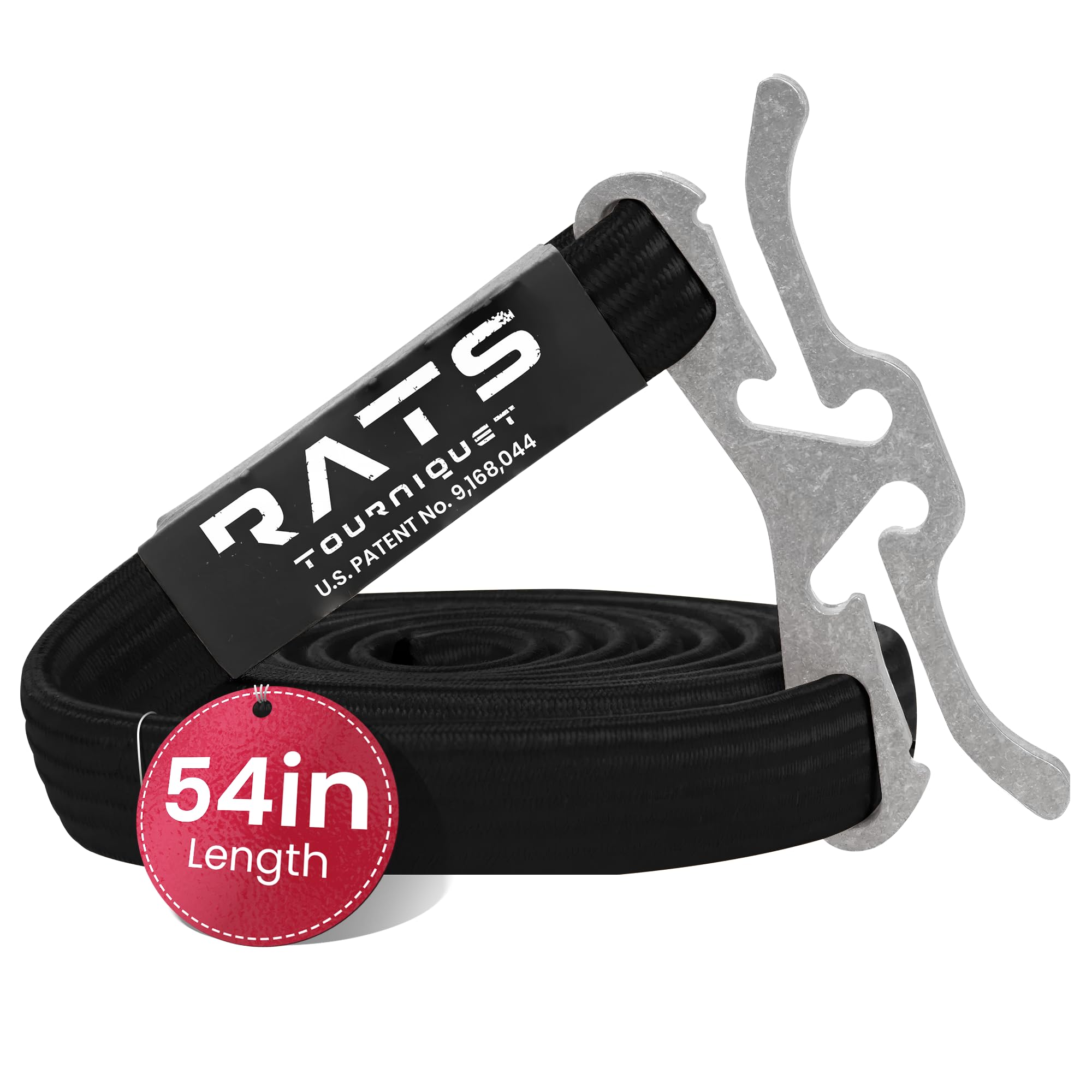
There is no windlass on the RATS. Pressure comes from the elastic strap: you stretch it as you wrap, lock the tail, and the tension in the material is what holds the limb shut. That single design choice is why it earned a place here and why it is not our first pick.

It is the best fit in this group for limbs that are not adult-sized. Elastic polyester conforms to a child's arm or a dog's leg where a stiff 1.5-inch webbing strap bunches and leaves gaps, and it rolls down to something you can loop through a belt or wear at an ankle and forget about. At 2.4 ounces it costs you nothing to carry.

The flip side is that the wrap is the machine. With a windlass, mechanical advantage does the last part of the work, so an imperfect pull still gets you occlusion. With elastic, how hard you stretch sets how much pressure you get, and stretching while seating the tail one-handed is a skill you build rather than a bar you turn. If this is going to be your self-application tourniquet, that is the part to drill.

So we keep it for the two jobs it beats everything else here at: small limbs, and a second unit light enough to live on a belt. As the primary tourniquet for an adult, we take a windlass every time.

Pros

  • Elastic strap conforms to small limbs
  • Rolls small enough for a belt or ankle
  • Simple design with few parts

Cons

  • Tension is set by technique, not by a windlass
Our verdict

Best for a household with small limbs in it: the elastic wrap fits a child or a dog where wide webbing does not, and it is light enough to wear.

Check Latest Price
5

Best Budget Windlass

PakCan Tactical Combat Tourniquet

86 /100
Trail Score Excellent

Key details

Weight
2.39 oz
Windlass
Textured anti-slip rod
Time Marking
Integrated time strap
Package Dimensions
6.73 x 2.2 x 1.46 inches
Check Price on Amazon

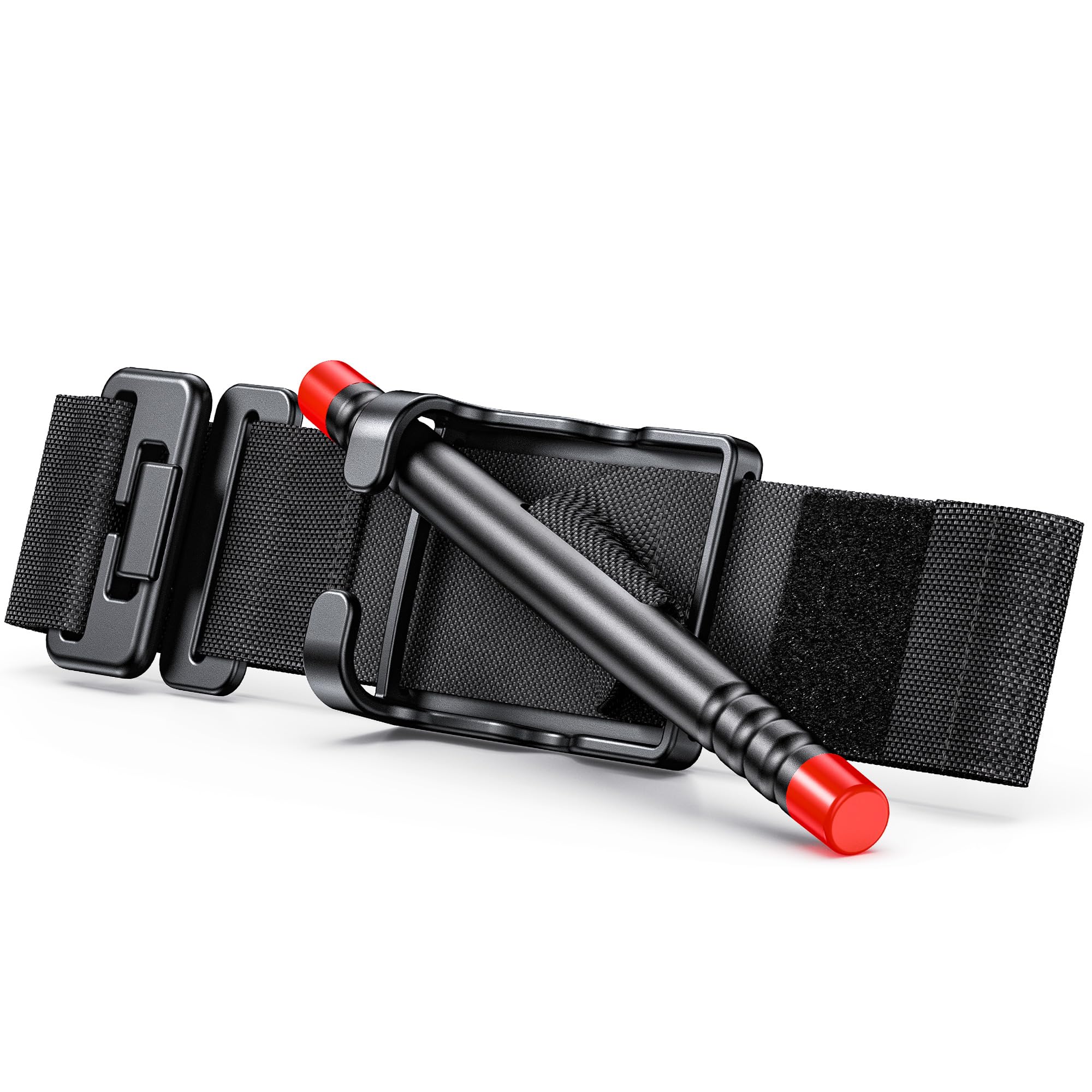
This is the cheapest windlass tourniquet in the group, and it does not look it: 2.39 ounces, a textured anti-slip rod over a reinforced core, stitching that reads neat and tight, and a time strap already attached to the band. The layout is the familiar one — route, cinch, crank — with no new mechanism to learn and nothing to figure out under pressure.

What the low price does not buy is proof. The page leans on military-grade language and on meeting U.S. military specifications, and those are claims printed beside a product rather than anything a buyer can check. Buy it as the second unit for the truck, the range bag or the cabin and the trade is easy to make. Buy it as the only tourniquet in the house and you are trusting a page you cannot verify with the one job that does not get a second attempt.

Pros

  • Windlass design at the lowest price here
  • Time strap already attached to the band
  • Textured rod and tidy stitching

Cons

  • Thinnest record of use among the windlass picks
Our verdict

A very good second unit: the familiar windlass layout at the lowest price here, as long as you are not relying on it as the only tourniquet in the house.

Check Latest Price
6

Work Bag Backup

Qen Tourniquet for Severe Bleeding

87 /100
Trail Score Excellent

Key details

Strap
Adjustable hook-and-loop
Weight
2.82 oz
Time Marking
High-visibility TIME label
Package Dimensions
6.18 x 3.27 x 1.69 inches
Check Price on Amazon

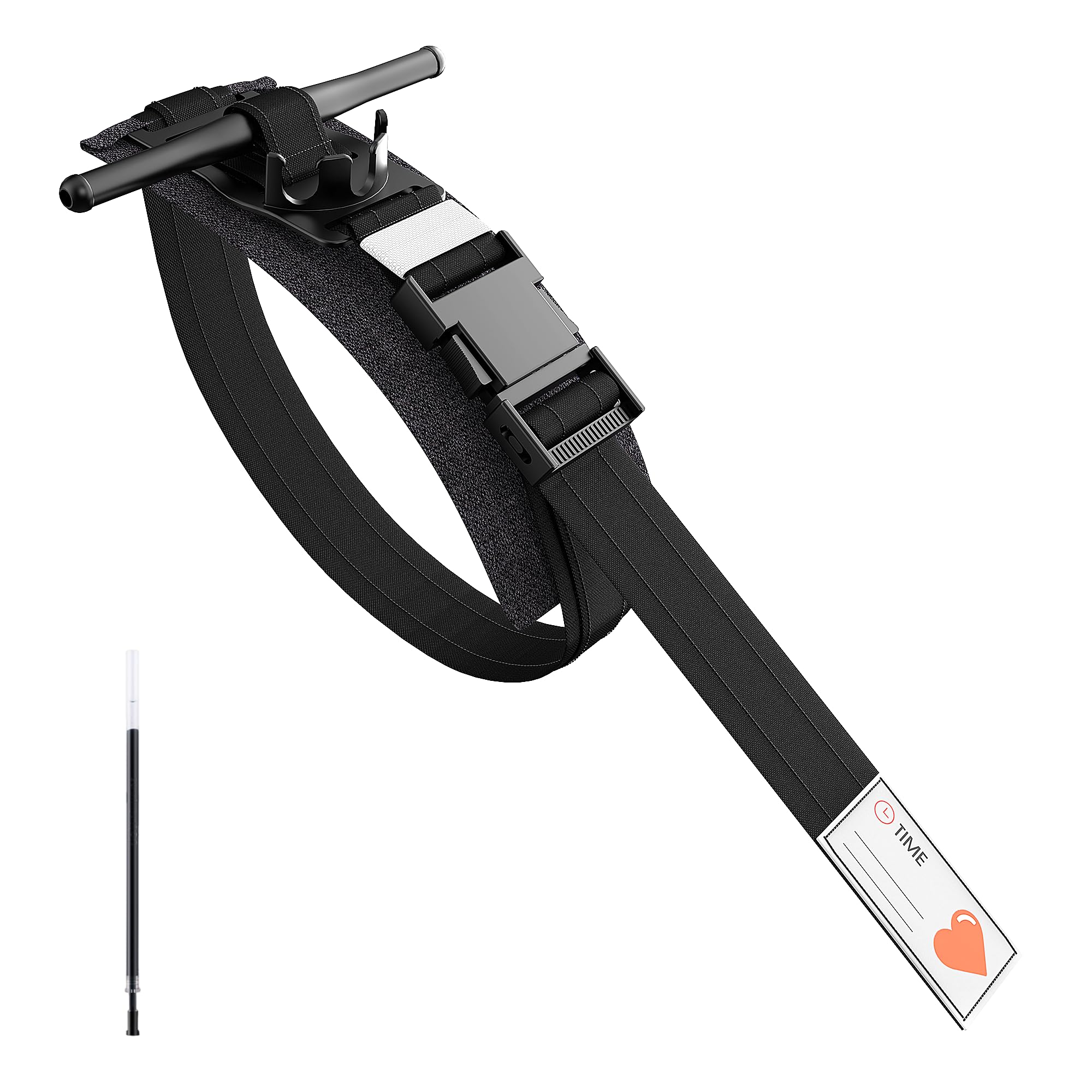
The bag you already carry to work is where this one belongs: 2.82 ounces, a hook-and-loop strap you adjust rather than thread, and a high-visibility TIME label printed right on the strap for whoever takes over from you. We see it as the way to get a second unit into a second place — the truck, the tool bag, the pack — without a second premium outlay. It is one of the cheapest routes to that here.

Before it goes in the bag, put it through a full dry cinch on your own thigh and watch the buckle take the load, then slack it off and do it again. With hook-and-loop, the strap has to be firm before you count on it, and anything that gives way during that drill is a return rather than a spare. The three-month warranty is the shortest of anything here.

Pros

  • TIME label printed on the strap
  • Hook-and-loop strap adjusts in a hurry
  • Light enough to live in a work bag

Cons

  • Three-month warranty, the shortest here
Our verdict

A good second unit rather than a first one: the TIME label and quick strap earn it a place in the work bag, provided the buckle passes a dry run.

Check Latest Price
7

Glovebox Spare

ZinonMax FST Tourniquet

87 /100
Trail Score Excellent

Key details

Weight
5.3 oz
Padding
Soft anti-abrasion pad
Mechanism
Three-clip fan structure
Package Dimensions
8.46 x 2.48 x 2.44 inches
Check Price on Amazon

Three fan-shaped clips are the idea here. Instead of a windlass, the strap ends in tabs that clip down and spread pressure across a wider patch of skin, with a soft pad underneath to cut abrasion. It is a real attempt at a different mechanism rather than a copy of the C-A-T, and we appreciate that somebody tried it.

The provenance is where we slow down. The manufacturer on the listing is a gift-products company in Dongguan rather than a medical device maker, and the page's claim that the tourniquet never expires is the kind of thing we push back on: tabs, elastic and hook-and-loop all age, and a device that lives in a hot car should be replaced on a schedule you set yourself, whatever the page says.

None of that makes it junk — the clips clamp positively and the pad is a thoughtful touch. But it is the newest, least-documented design here, from the maker with the shortest tourniquet history, and it is the wrong shape for the carry-it-everywhere argument that sells compact tourniquets in the first place. For a glovebox spare you have dry-run yourself, fine. For the one you grab in an emergency, no.

Pros

  • Clip tabs spread pressure across a wider area
  • Soft pad under the strap

Cons

  • Heaviest and bulkiest unit in this group
Our verdict

A glovebox spare, not a primary: the clip design is genuinely different, but this is the least proven and heaviest unit in the group.

Check Latest Price

How We Tested Tourniquets for Real-World Readiness

We started by pulling together the tourniquets sold for individual first-aid kits, not just the ones labeled tactical. That meant reading spec sheets for windlass material, clip design, and strap width, then narrowing to 14 models that ranged from bare straps to kits with pouches and mounting clips. Price mattered, but only as a tiebreaker: we compared what each one included against what it cost, and a mid-priced tourniquet with a metal windlass and a usable pouch beat a cheaper one you'd have to re-kit yourself.

Over four months, we kept them staged where they'd actually live: clipped to a range bag, stuffed in an IFAK pouch, and loose in a glovebox. Each one got handled with gloves on—nitrile and heavy leather—and applied one-handed to a training arm while a timer ran. We practiced in daylight and in a dim garage, because fumbling for a windlass in the dark is a different test. On the training limb, we looked at whether the strap stayed put when we let go mid-application, whether the windlass locked without back-rolling, and how much strap tail we had to manage after tightening.

Quality showed up in the seams and hardware: we flexed each windlass, tugged the clip until it either held or gave, and checked whether the buckle bit the strap cleanly or chewed it. Compactness was measured, not guessed—we weighed each one and noted folded footprint, then tried to fit it in a side pocket and a standard pouch. We also logged what came in the box: pouch, instruction card, pen, mounting clip. A tourniquet missing the pouch or clip isn't a dealbreaker, but it changes the real cost of getting it ready to carry, and that fed into our value calls.

How to Choose a Tourniquet for First Aid

Windlass, Elastic, or Clip

A windlass puts a rod between the strap and the limb and uses leverage to cinch past what your hand alone can pull, which is why every primary pick here uses one. Elastic systems like the RATS hold with the tension you stretch into the material; clip systems like the ZinonMax spread load across tabs instead of a turned bar.

For a limb you know nothing about, a windlass is the most forgiving of an imperfect application. Treat a new mechanism as a backup until it has a record behind it.

Can You Apply It One-Handed?

The real test is not the listing. It is whether you can route the strap, pull out the slack and turn a windlass with one hand while the other arm is out of commission. Buckle design is what decides that: the C-A-T's single routing pass and the SOF-T's detachable buckle both exist to shorten the sequence.

Run the drill on your own thigh and upper arm, first with two hands and then with one, before you accept that any mechanism is easy. A tourniquet you cannot self-apply is a tourniquet for other people.

Where It Will Live Decides the Size

Settle the carry location first — pocket, glovebox, or pack — because that is the only thing separating a 1.76-ounce tourniquet from a three-ounce one. There is a trap attached: a compact model staged for rapid deployment, windlass turned out and strap opened up, is noticeably bigger than the flat fold you bought.

Buy for the fold and practice the unfold, or admit that your pocket tourniquet is really a small kit tourniquet and place it accordingly.

Buy the Device, Not the Listing

Windlass tourniquets get copied, and a copy can look right in a photograph. Buy from the maker or a medical supplier you can name by name, and check what arrives: a windlass that turns without binding, a buckle that locks under a full cinch, and a label you can write a time on.

A fair price from an unknown seller is not a bargain. The device has one job, and it does not get a second attempt.

Frequently Asked Questions

Final Verdict

We recommend the North American Rescue C-A-T Gen 7 as the tourniquet to buy first. The single routing buckle and the free-moving band give you the shortest one-handed sequence in this group, and of everything here it has the deepest record of professional use. It is the priciest and it is a kit-sized item rather than a pocket one, and both are worth it for the piece of gear that has to work on the first try.

If you want a metal windlass and a buckle that opens, the TacMed SOF-T is the next name to look at. And if a tourniquet has to live in a pocket to be carried at all, the Snakestaff ETQ is the one that will.