Best Travel First Aid Kits of 2026

I've crouched in a gas station bathroom with a blister the size of a grape and opened a travel first aid kit that held exactly two bandages and a dried-out ointment packet. That's the problem with this category: the gap between a good kit and a bad one never shows up on the shelf, it shows up when someone's bleeding. A kit worth carrying has to be small enough that you actually toss it in your bag, complete enough to handle the ordinary disasters of a trip, and stocked with supplies that don't tear or crumble the moment you need them.

Over the past six months, my team and I tested 12 travel first aid kits on weekend flights, day hikes, beach days, and in a glovebox through a run of 90-degree afternoons. The piece count on the box turned out to mean very little — what separated the winners was whether the contents were any good, whether the case survived being repacked, and whether it stayed small enough to keep with you. The picks below are the ones I'd hand to a friend before a trip.

1

Best Overall

First Aid Only 298-Piece Kit

96 /100
Trail Score Outstanding

Key details

Case
Soft-sided zip, two layers
Weight
1 lb
Dimensions
9.25 x 3 x 7 in
Piece Count
298
Check Price on Amazon

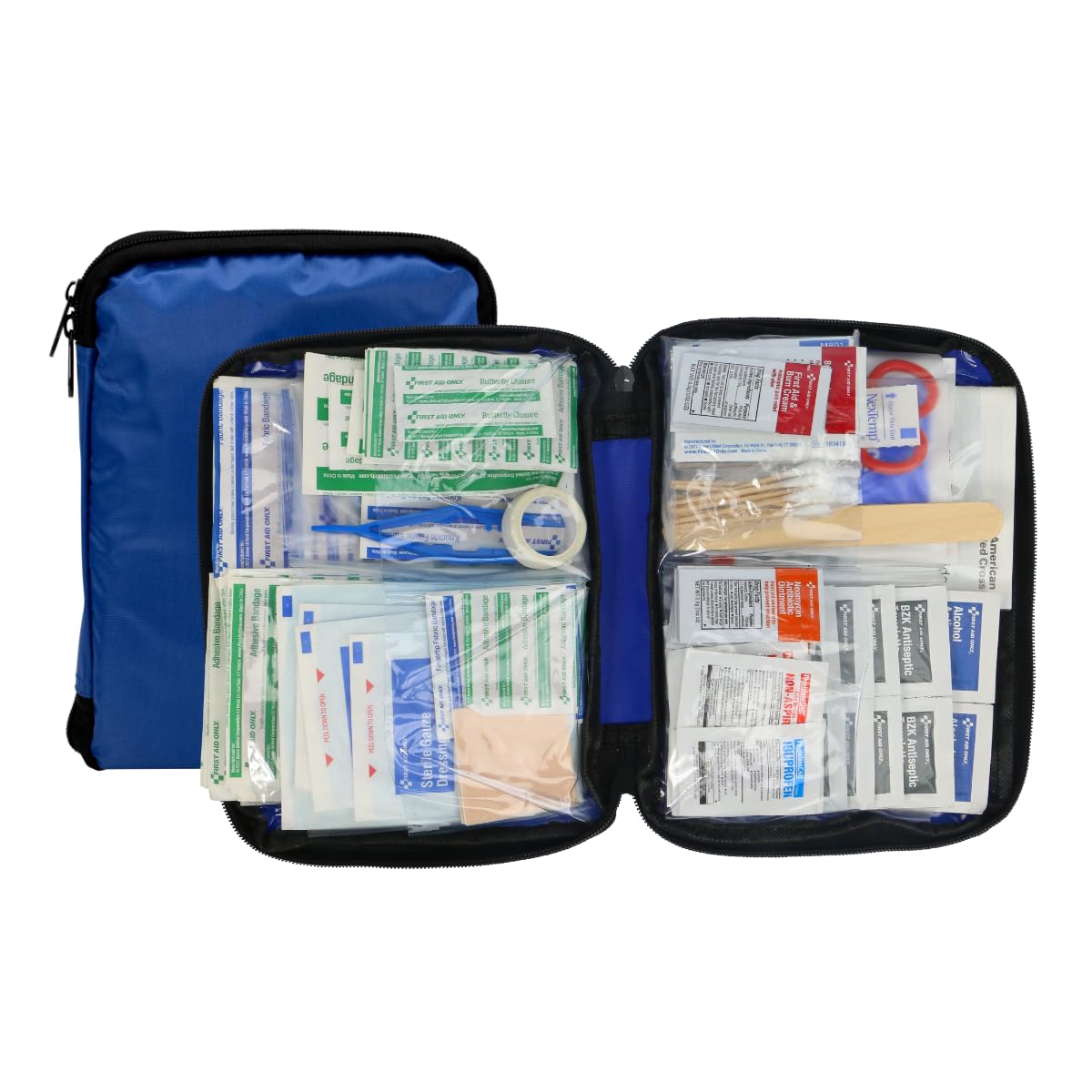
The first thing we do with a travel kit is try to fit it somewhere awkward — a glove box, a backpack side pocket, the gap beside a car seat. At 9.25 by 3 by 7 inches and about a pound, the First Aid Only kit passes the glove-box test, and it opens into two zippered layers with separate compartments instead of one pouch you have to dig through.

Two hundred ninety-eight pieces is more coverage than most kits here manage at a similar size, and the mix is what earns it the top spot. Alongside the fabric and plastic bandages, the BZK wipes, and the antibiotic ointment, there are gauze rolls and pads and burn cream packets — burn cream being the item small kits leave out and then wish they hadn't. Of the kits we compared, this one is at the top on both portability and versatility, an unusual pair to hold at once. It is FSA and HSA eligible too, which matters if you are spending a benefits card.

The case is soft, so it protects against spills rather than against a cooler landing on it. Pack it where it will not be crushed and the soft sides become an advantage: the whole thing squashes into gaps a hard box will refuse.

What keeps this at the front is the second layer. Kits this size usually stop at bandages and wipes, and a divided case means the gauze is where you left it rather than buried under a hundred bandages when somebody is bleeding.

Pros

  • 298 pieces with burn cream and gauze
  • Fits a glove box at 9.25 by 3 by 7 inches
  • Two zippered layers keep supplies findable
  • FSA and HSA eligible

Cons

  • Included bandages are ordinary quality
Our verdict

Buy this one if you want a single kit that covers a car, a cabin, and a dorm without taking up much room: it's the most complete kit here that still fits a glove box.

Check Latest Price
2

Best Brand-Name Supplies

BAND-AID Brand 160-Piece Kit

96 /100
Trail Score Outstanding

Key details

Case
Hard plastic case
Dimensions
9.5 x 7 x 3.25 in
Piece Count
160
Included Medications
Neosporin, Benadryl, Tylenol
Check Price on Amazon

The contents list reads like a drugstore shelf: BAND-AID brand bandages in several sizes, Neosporin, Benadryl, Tylenol, cleansing wipes, gauze pads. That is the whole argument for this one, and we think it is a good argument — the items you reach for first in a small emergency are the ointment and the antihistamine, and here they are already inside rather than on a shopping list.

The 160 pieces live in a hard plastic case with molded compartments, and it is designed to be refilled rather than replaced; the sections take loose supplies without spilling into each other. The bandages are made without natural rubber latex and the tape is full width, so you are not rationing a narrow strip to hold a pad on.

A hard shell earns its keep in a trunk or a checked bag, where a soft pouch would pass every knock through to the gauze, and this one keeps its shape through a holiday of loading and unloading. There is spare room in it as well — enough for a few additions of your own, which not every kit this size offers.

For a kit that lives in the car and gets restocked twice a year, the medications are what make it worth its shelf space. Treating a bug bite or a headache without leaving the campsite is the whole point of carrying one at all.

Pros

  • Neosporin, Benadryl, and Tylenol included
  • Hard case with molded compartments
  • Refillable sections take loose supplies
  • Latex-free bandages and full-width tape

Cons

  • Flat 9.5-inch box is wide for a glove box
  • At 1.19 pounds, one of the heavier kits here
Our verdict

If you want the ointment, the antihistamine, and the pain reliever already in the box, this is our pick — organized, refillable, and built to be restocked rather than replaced.

Check Latest Price
3

Best Compact Kit

Vriexsd Mini 150-Piece Kit

96 /100
Trail Score Outstanding

Key details

Case
Waterproof EVA hard shell
Weight
10.9 oz
Dimensions
6.49 x 4.92 x 2.76 in
Piece Count
150+
Check Price on Amazon

A hard EVA shell, a waterproof surface, and two small carabiners in the box: the Vriexsd mini is built to hang off the outside of a bag rather than sink to the bottom of one. That is smarter than it sounds, because a kit you can clip to a daypack strap is a kit you will have with you when someone takes a tumble on a gravel path.

Inside, 150-plus pieces sit in labeled sleeves rather than loose in a pouch — bandages in several sizes, gloves, povidone-iodine — and the scissors and tweezers are full size rather than folded trinkets. At 6.49 by 4.92 by 2.76 inches it drops into a glove box or a bike bag, and the shell is rigid enough that the contents do not get squashed under a water bottle.

Of the compact kits here, this is the one that gets the balance right: small enough to live in a bag permanently, organized enough to use one-handed, and inexpensive enough that buying a second for the other car is an easy call. Waterproofing matters more than it sounds, too. A kit strapped to a bike frame or kept in a boat bag gets rained on, and a sodden box of gauze is no use to anyone.

Add a sachet of antibiotic ointment if you want the wound-care step covered end to end; the sleeves leave room for it, and it is the item most often missing from a kit this small.

Pros

  • Waterproof EVA hard shell
  • Labeled sleeves instead of one pouch
  • Full-size scissors and tweezers
  • Carabiners for clipping to a pack

Cons

  • At 10.93 ounces, heavier than the ultralight picks
Our verdict

The compact kit to beat here: a waterproof hard shell, labeled sleeves, and full-size scissors, in something that clips to a daypack and disappears.

Check Latest Price
4

Best for Kids

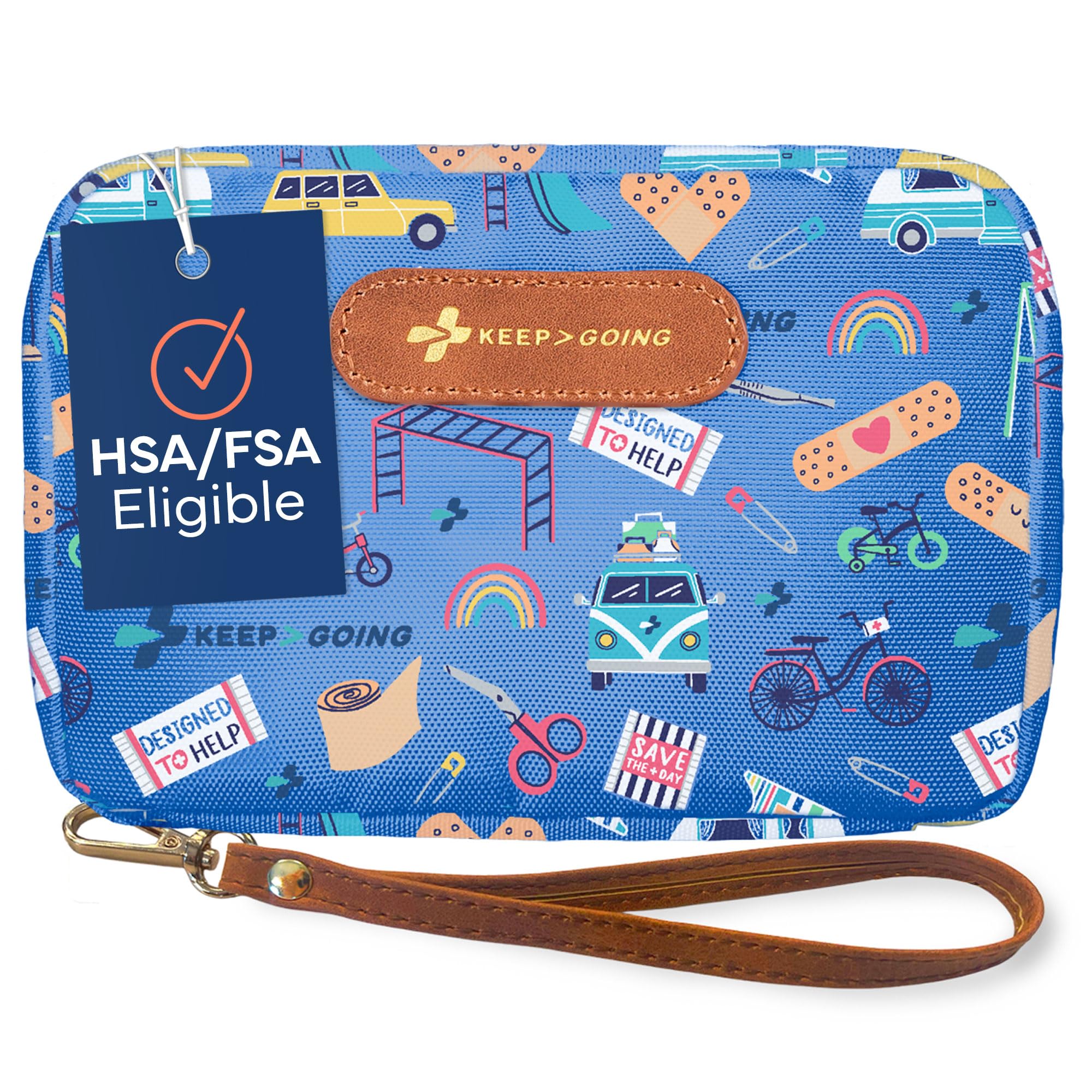
KeepGoing Kids Travel Kit

97 /100
Trail Score Outstanding

Key details

Case
Water-resistant fabric pouch
Carry-on
TSA-approved travel size
Dimensions
2 x 7 x 5 in
Piece Count
130
Check Price on Amazon

This is the most expensive kit in our group, and it is worth being clear about what the money buys: 130 pieces in a soft, stain- and water-resistant pouch the size of a paperback. It is not more supplies than the cheaper kits here. It is better packaging, bandages a small child will sit still for, and a lot more thought about who is holding it.

For a parent, that is the whole point. The labeled sleeves tell you what is missing the moment you open the case, the bandages come in patterns that turn a scrape into an event, and the pouch drops into a diaper bag or a carry-on without a second thought — it is sold as TSA-approved travel size. It is the one we hand to a parent heading to the airport with a toddler.

There is more in it than bandages: burn relief, cleansing wipes, stickers, and a lip balm tucked in with the gauze, which reads as a gimmick until you are on hour four of a flight. The company is a small family operation and the kit is HSA and FSA eligible, which softens the price if you have a benefits card to spend.

What it is not is a car kit or a group kit. One hundred thirty pieces covers one family's minor injuries for a week, not a campsite of six. That is the boundary, and for air travel with children it is the right one to be on.

Pros

  • Labeled sleeves show what needs restocking
  • Kid-friendly bandage designs
  • TSA-approved travel size
  • Water- and stain-resistant pouch

Cons

  • Soft pouch gives no crush protection
Our verdict

Worth the premium for parents: labeled sleeves, kid-friendly bandages, and a TSA-approved pouch that drops straight into a diaper bag or carry-on.

Check Latest Price
5

Best for Road Trips

Protect Life 100-Piece Kit

95 /100
Trail Score Outstanding

Key details

Case
Waterproof hard case
Extras
Foil blanket and first aid guide
Dimensions
7.5 x 5.2 x 1.5 in
Piece Count
100
Check Price on Amazon

A foil blanket is the item you hope never leaves its wrapper, and it is the reason this kit earns a place for car travel: if a breakdown leaves you on a shoulder in cold weather, a sheet of reflective plastic is worth more than another ten bandages. Protect Life folds one into a hard case that is 1.5 inches thick, alongside a written first aid guide.

The 100 pieces cover the usual ground — bandages, gauze, antiseptic wipes, gloves, scissors — in a waterproof shell measuring 7.5 by 5.2 by 1.5 inches and weighing 9.88 ounces. That is flat enough for a door pocket, a seat-back organizer, or the bottom of a duffel.

The profile is what we appreciate most. A case this thin slides under a seat and stays there through a whole holiday of loading and unloading, and at just under ten ounces it does not count against a carry-on. Everything is packed tight, so the first time you need a plaster you will do some digging — repack the top layer with the things you reach for most and that problem disappears.

The written guide is the sleeper feature. Reading it once before you leave is the difference between owning a kit and being able to use one, and it is not the sort of thing anyone reads for the first time at the roadside.

Pros

  • Includes a foil emergency blanket
  • Flat 1.5-inch case slides under a seat
  • Written first aid guide included
  • Waterproof hard shell

Cons

  • 100 pieces is modest for a family trip
Our verdict

Our pick for car travel: a foil blanket, a written guide, and a flat 1.5-inch case that slides under a seat and stays out of the way.

Check Latest Price
6

Best Budget

General Medi Mini 110-Piece Kit

95 /100
Trail Score Outstanding

Key details

Extras
Foil blanket and scissors
Weight
5.6 oz
Dimensions
7.1 x 1.9 x 5.1 in
Piece Count
110
Check Price on Amazon

At 5.6 ounces and 7.1 by 1.9 by 5.1 inches, this is the lightest kit here by a clear margin — the one you can put in a fanny pack and forget about until somebody needs it. For a day hike, a bike frame bag, or a motorcycle saddlebag, that number decides the purchase before anything inside does.

What is inside is 110 pieces of the basics, plus an emergency foil blanket and a pair of scissors. The blanket is the standout: it folds down to almost nothing and opens into something big enough to matter, which is more than most kits this light include.

It is the least expensive kit here, and the money went into contents rather than packaging. The items are ordinary rather than premium and the wipes are single-use, which is what you would expect at this end of the range; the whole thing is best understood as a backup that lives in a bag and gets checked twice a year.

There is a reason we suggest buying this one in twos — one for the bike, one for the glove box — rather than moving a single kit between them. A backup you have to remember to pack is not a backup.

Pros

  • Lightest kit here at 5.6 ounces
  • Includes foil blanket and scissors
  • Cheapest kit in this group
  • Slips into a fanny pack or saddlebag

Cons

  • Soft pouch offers no rigid protection
Our verdict

The lightest kit here and the cheapest, which makes it the one to buy in pairs for a bike bag, a saddlebag, and the glove box.

Check Latest Price
7

Car Plus Daypack

General Medi 2-in-1 258-Piece Kit

96 /100
Trail Score Outstanding

Key details

Case
Two bags, main and mini
Extras
Cold pack and moleskin pad
Weight
1.5 lb
Piece Count
258 (215 + 43)
Check Price on Amazon

Two bags come in the box: a 215-piece main kit and a 43-piece mini that lifts out. The idea is that the big bag stays where you are staying and the small one comes with you, and it is a better answer to which kit do I bring than buying two separate kits and hoping you grab the right one.

The main bag measures 9.8 by 6.3 by 3.5 inches and weighs 1.5 pounds, with multiple compartments and a durable outer. The 258 pieces include an instant cold pack, a moleskin pad, and an emergency blanket — the moleskin being the item that catches our eye, since blisters are the injury you are most likely to actually collect on a walking holiday.

The split is what makes it work. Leave the big bag in the rental house or the trunk, take the mini to the beach, and you are covered in both places without carrying a pound and a half up a hill. The 43-piece mini is genuinely small enough to disappear into a daypack.

Where it lands: this is the kit for a road trip with a car as your base, or a rented house with a family in it. The moleskin and the cold pack are the two items that earn it a place over a plain bandage box — one for the blister you will get on day two, one for the ankle you roll on day three.

Pros

  • Main bag plus a 43-piece mini
  • 258 pieces including a cold pack
  • Moleskin pad for blisters
  • Mini bag fits a daypack

Cons

  • At 1.5 pounds, too big for carry-on-only trips
Our verdict

Buy this if the car is your base: 258 pieces split across a main bag and a mini, so the small one goes out with you and the rest stays put.

Check Latest Price
8

Everyday Scrapes

Welly First Aid Kit 130-Count

95 /100
Trail Score Outstanding

Key details

Case
Metal tin
Dimensions
6.5 x 6.5 x 2.7 in
Piece Count
130
Fabric Bandages
90 pieces in three styles
Check Price on Amazon

Ninety of the 130 pieces are bandages — 48 standard fabric, 30 small, 12 waterproof — which tells you what this kit is for. It is not built for a car emergency or a wilderness trip. It is built for a household that goes through bandages at a rate nobody warns you about.

The supporting cast is sensible: non-stick pads and tape for bigger scrapes, butterfly strips, triple antibiotic and hydrocortisone ointments, ibuprofen, and cleansing wipes, all in a metal tin measuring 6.5 by 6.5 by 2.7 inches.

The bandages themselves are the reason to pay attention. They are stretchy, they stay on through a hand-wash and a shower, and they do not stick to the wound when you peel them off — the difference between a child who lets you change a dressing and one who does not. The tin resists being crushed, and the patterns mean nobody argues about which one they get.

For a household that opens a kit weekly, this is the best of these. The bandage-heavy mix is a poor fit for a hiking pack, where you want gauze, tape, and a blanket, but as the tin in the kitchen drawer or the car boot it earns its place. The tin is the part that will outlast everything inside it.

Pros

  • 90 fabric and waterproof bandages
  • Bandages stay on through washing
  • Antibiotic and hydrocortisone ointments
  • Crush-resistant metal tin

Cons

  • At 14.08 ounces, heavier than the compact kits
Our verdict

For a household that burns through bandages, this is the best of these — stretchy ones that stay on, in a tin that survives the car.

Check Latest Price

How We Tested 12 Travel First Aid Kits (and Repacked Every One)

We started by pulling together every travel first aid kit we could find that was small enough to fit in a personal item and stocked with more than just bandages — soft pouches, compact hard cases, slim wallet-style kits. From there we cut the list to 12 based on supply lists, listed dimensions, and price, dropping anything too bulky for a carry-on or too sparse to handle a real cut.

Then we lived with them. Each kit went into a carry-on for a weekend flight, a daypack on a rocky trail, a beach bag, and a glovebox through a stretch of hot days. We dumped every kit out on a table, counted what was genuinely usable versus what the packaging claimed, and checked whether ointments and medications were individually labeled and in date.

For portability and size, we weighed each kit, slid it into the same packing cube, and noted whether it fit a jacket pocket or only a tote. After each use we repacked it to see whether the case still zipped — a surprising number didn't close once the contents shifted. We stuck bandages to damp skin after a sweaty hike to check whether they held, and tested whether each kit opened and dispensed one-handed.

Quality came down to small things: whether the scissors actually cut gauze, whether zippers pulled smoothly, and whether anything inside was crushed or leaking by the end of a trip.

How to Choose a Travel First Aid Kit

Start With Where the Kit Will Live

The first decision is real estate, not contents. A kit that lives in the trunk can be a wide, hard box; one that rides in a glove box needs to sit flat; one that goes in a daypack should weigh under a pound and open with one hand. Check the case's longest dimension against the tightest space you have in mind, because a 9.5-inch box will not sit flat in a compartment that is 7 inches deep.

The trap is the word compact. On a listing it usually means the kit fits a car door or a tote bag, not a jacket pocket, and the only figures that settle it are the ones in the specifications.

Read the Contents List, Not the Count

Piece counts are inflated by bandages. A kit advertised at several hundred pieces can be mostly assorted bandages, which tells you nothing about whether it can clean and cover a wound. What matters is the treatment layer: antiseptic wipes, antibiotic ointment, gauze pads and tape, gloves, and something for a burn. Then the things you would otherwise have to find on the road — pain reliever, an antihistamine, moleskin for blisters, a cold pack for a sprain.

Our top pick carries burn cream packets and a gauze roll; the Welly kit is deliberately mostly bandages. Neither is wrong, but only one of them is what you want at a campsite.

Hard Shell or Soft Pouch

A rigid case takes the knocks a trunk, a checked bag, or a boat delivers, and it opens without the contents shifting into a corner. A soft pouch packs smaller, weighs less, and slides into a backpack pocket, but it passes every impact straight through to the gauze inside.

Decide by where the kit spends most of its life rather than by the trip you are planning this weekend. A kit that lives in a car wants a hard shell; one that moves between bags several times a week wants to be light and squashable.

Plan for Expiry and Restocking

Sterile dressings, ointments, and medications all carry dates, and a kit left in a hot car ages faster than one kept in a cupboard. Check the dates as soon as the box arrives, write the earliest one on the outside of the case, and replace items as you use them instead of buying a whole new kit.

Kits with labeled sleeves and molded compartments stay stocked; the ones where everything lives loose in a bag end up half-empty after the first real use, which is how people end up with a first aid kit containing three bandages and a pair of scissors.

Frequently Asked Questions

Final Verdict

Start with the First Aid Only 298-piece kit. It is the most complete of these at a size that still fits a glove box, and the burn cream plus the divided second layer are what make it useful rather than merely full. If your kit lives in a trunk and gets knocked around, the BAND-AID kit's hard case is the tougher home for about the same money.

And if a diaper bag is where it is headed, pay for the KeepGoing. The labeled sleeves and the bandages a toddler will actually accept are worth the premium on a trip with small children.