Best Women's Orthotic Slippers of 2026

Slippers should be the easiest part of the day, but the wrong pair turns every trip to the kitchen into a negotiation. The cushy ones go flat in a month, the firm ones can look like something from a physical therapy clinic, and plenty of pairs claim arch support without fitting a woman's foot. What you want is a footbed that supports without poking, a soft upper that doesn't turn shapeless, and straps or a cut that adapts when your feet swell by evening. The right pair fixes all three—and looks normal enough to answer the door in.

We put 12 pairs through eight months of mornings and evenings—coffee, dinner prep, laundry, stairs, and the dash to the porch. The differences came down to fit, arch support, softness, adjustability, traction, and how seams and footbeds held up; a couple looked nice but felt vague underfoot, and one or two supported well but seemed overpriced. Appearance matters in a house shoe, and value isn't just the tag—it's whether the pair is still the one you grab months later.

1

Best Overall

Vionic Gemma II

89 /100
Trail Score Excellent

Key details

Style
Slip-on
Upper
Fuzzy
Arch Support
Built-in Vionic footbed
Check Price on Amazon

Plenty of slippers call themselves orthotic and then put a soft bump under the arch that flattens within a couple of weeks. The Gemma II is built the other way around. Vionic's footbed sits under the fuzzy upper with real structure behind the arch and around the heel, so what you feel underfoot is support rather than stuffing.

That construction is why we put it first. Plantar fasciitis is usually why anyone goes looking for an orthotic slipper, and this is the pair here with the most convincing record of relieving it: the arch support is the point of the slipper, not a feature bolted onto a soft shoe. The fuzzy lining adds real warmth on cold floors, which matters more than it sounds at six in the morning on tile.

Fit is the thing to sort before you order. These run roomy, and the slip-on shape lets the foot creep forward, so a narrow foot can end up swimming. Take your usual size if your feet are average width and go down a size if they are not; the roominess then reads as comfort rather than slip.

Pros

  • Genuine orthotic footbed under the fuzz
  • Strong record of plantar fasciitis relief
  • Warm lining for cold floors

Cons

  • Too warm for summer and heated rooms
Our verdict

We point anyone whose heel hurts first thing in the morning here: a genuine orthotic footbed under a warm, fuzzy upper, with the most convincing plantar fasciitis relief in this guide.

Check Latest Price
2

Best Adjustable Fit

SOLLBEAM Orthopedic Slipper

88 /100
Trail Score Excellent

Key details

Upper
Fuzzy
Closure
Adjustable hook-and-loop strap
Arch Support
Orthotic with heel cup
Listed Weight
1.04 lb
Check Price on Amazon

Feet are not the same width at seven in the morning and seven at night, and they are not the same width in July as they are inside a wool sock. The hook-and-loop strap across the instep is why we recommend this pair to anyone whose fit shifts: cinch it for a bare foot, open it over socks, take up the slack on an evening that ends with swollen ankles. A slipper with a fixed upper cannot do any of that.

The support underneath earns its place too. There is a firm orthotic layer with a heel cup, so the heel sits in something rather than on a cushion, and the fuzzy upper stays soft where it crosses the top of the foot. Structure below, softness above is the combination we look for in this category, and it is why this pair covers more feet than anything else here.

The inside can feel slick underfoot, especially barefoot on a smooth floor. The strap fixes most of it, since a snugger fit stops the foot sliding around in there, but take the stairs carefully until you have found your setting.

Pros

  • Strap adjusts to swelling and socks
  • Firm orthotic footbed with a heel cup
  • Soft fuzzy upper over a supportive base
  • Costs less than the premium pairs here

Cons

  • Upper can come apart with heavy daily wear
Our verdict

Take the strap in when feet swell and let it out for thick socks — that is our case for this pair. Firm support, a real heel cup, and less money than the premium picks.

Check Latest Price
3

Best for Narrow Feet

GRITHEIM Orthotic Slipper

88 /100
Trail Score Excellent

Key details

Style
Furry slide
Closure
Adjustable hook-and-loop strap
Arch Support
Orthotic
Check Price on Amazon

If slippers usually gape at the sides of your foot, you know the routine: the foot slides forward, the toes jam, and the heel hangs off the back by lunchtime. This pair is the fix. The upper comes down over the instep on a hook-and-loop strap, so it closes onto a slim foot instead of leaving air at the sides.

That same strap works in the other direction. Let it out and the slipper takes a wide forefoot or a high instep without complaint, so the adjustable top does the work here rather than the size on the box. It is a rare thing in a house slipper, and it is why we keep recommending this one to people whose feet do not match any single width.

Firm is the right word for the footbed, and firm is what keeps the support where you put it instead of letting the arch wander off under a day of wear. What you get for that is a furry slide tidy enough to answer the door in, at a price that makes a second pair for upstairs an easy call.

Pros

  • Strap secures a narrow foot
  • Opens up for wide forefeet and high insteps
  • Firm footbed keeps the arch in place
  • Inexpensive enough for a second pair

Cons

  • Firm, stiff sole rather than a plush one
Our verdict

If every slipper you try gapes at the sides of your foot, start here. It is the pair we hand to narrow-footed shoppers, and the strap closes the gap.

Check Latest Price
4

Best for Indoor and Outdoor

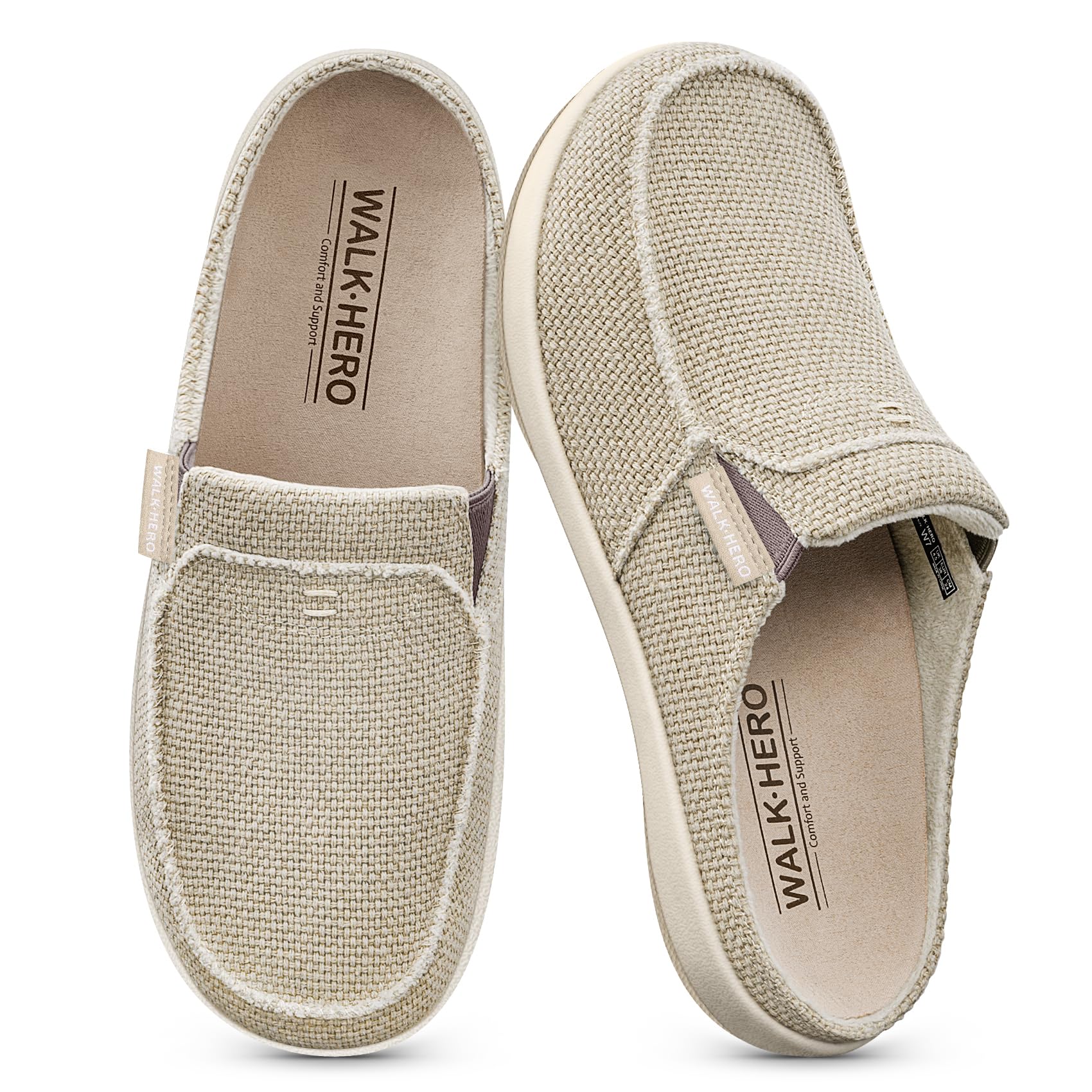
WALK·HERO Orthopedic Slipper

87 /100
Trail Score Excellent

Key details

Use
Indoor and outdoor
Closure
Slip-on
Toe Box
Wide
Arch Support
Orthotic
Check Price on Amazon

The real test of a house slipper is not the living room. It is the tenth trip of the day, out to the porch, down the driveway for the mail, into the garage for the thing you forgot, and that is the trip this pair is built for. It is shaped like a slip-on shoe rather than a bedroom slipper, with an outsole that copes with a damp porch and an upper that stays put when you move.

The wide toe box is the detail we appreciate most. Toes that have spent the day in a work shoe get room to spread, and the fit does not depend on a strap to stay on. It is also not a bulky, fluffy slipper, which is either the appeal or the dealbreaker depending on what you want from a house shoe.

Underfoot it is firm the way a house shoe is firm, so a long day on hardwood stops being an endurance event. Sizing is where to be careful: this one runs big, and it fits best a half size down from what you normally take. Order your usual size and you will be clomping.

Pros

  • Outsole handles porch and driveway
  • Wide toe box for tired feet
  • Slips on and off easily
  • Firm support for long days on hardwood

Cons

  • Seams can split after months of daily wear
Our verdict

The pair that does not stop at the door, and the one we reach for when a day at home means a dozen trips outside. Size down, because it runs big.

Check Latest Price
5

Best Budget

Litfun Orthopedic Slipper

86 /100
Trail Score Excellent

Key details

Style
House shoe
Closure
Adjustable hook-and-loop strap
Arch Support
Orthotic
Check Price on Amazon

Cheap slippers usually cut corners in one place, and it is the footbed. This pair does not, or at least not first. There is a shaped arch underfoot and a strap across the top you can tighten onto the foot, which is more than plenty of pricier slippers bother with. What there is not is memory foam, whatever the look of them suggests; the support here is firmer and flatter than a pillow.

For a first orthotic slipper, a second pair for the bedroom, or something to leave at a summer rental, this is the one we point to. The upper is soft and light enough that you forget there is structure in the sole, and the strap takes up the slack if you land between sizes.

The fit runs a little big, so that strap does real work rather than sitting decorative. Tighten it and the slipper stays on; leave it loose and you will be shuffling to keep it there.

Pros

  • Real arch support at the lowest price here
  • Adjustable strap across the instep
  • Soft, light upper

Cons

  • Starts wearing down with daily use
Our verdict

The cheapest way into real arch support in this guide, and the pair we suggest to anyone testing the idea before spending more. Expect firm, not plush.

Check Latest Price
6

Warm Rooms

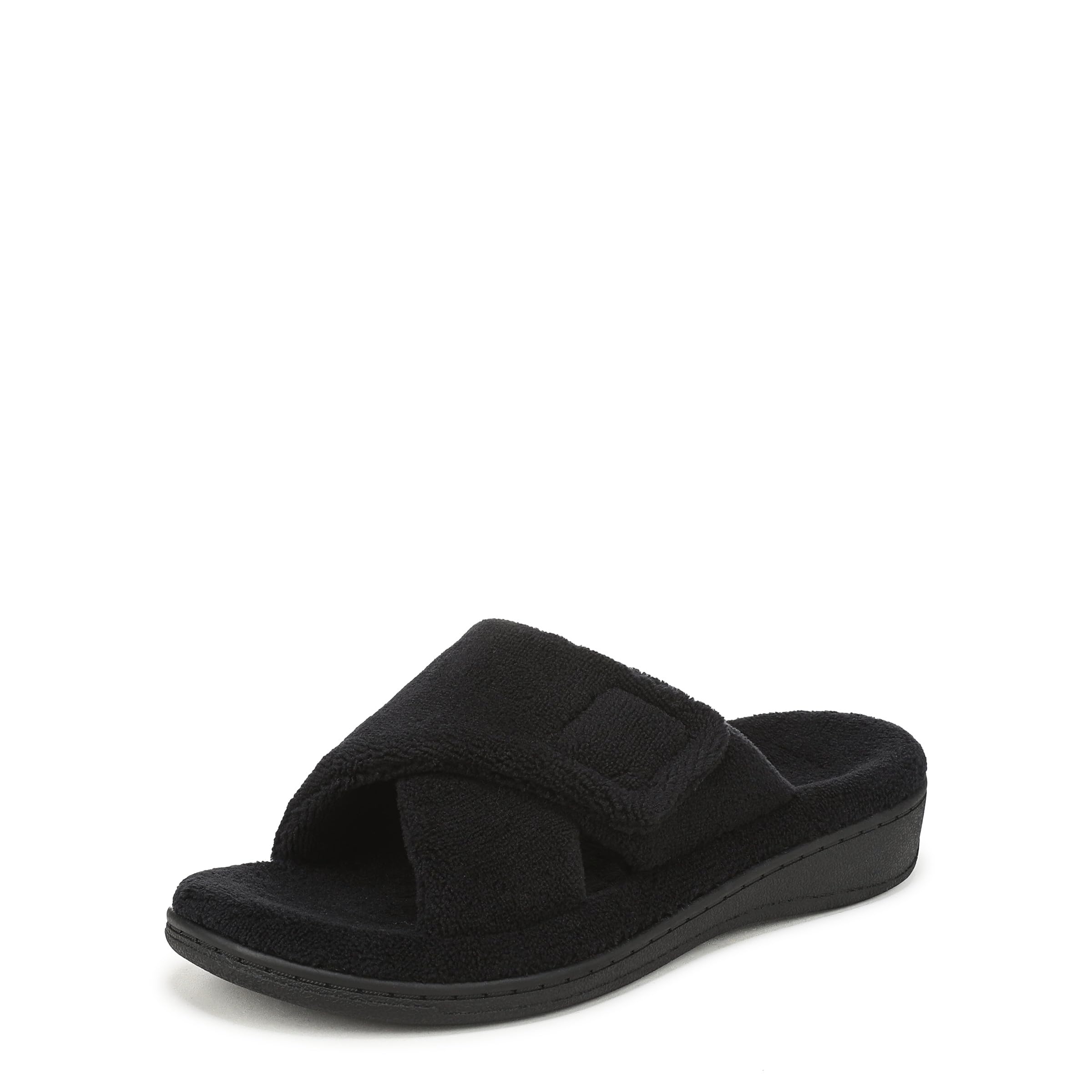
Vionic Relax

89 /100
Trail Score Excellent

Key details

Style
Open-back slide
Closure
Adjustable buckle
Arch Support
Built-in Vionic footbed
Listed Weight
10.4 oz
Check Price on Amazon

Some feet run hot, and a fuzzy closed slipper turns into a sauna by mid-afternoon. This is our answer to that: an open-back slide on Vionic's orthotic footbed, with a buckle strap over the instep instead of a fixed upper. We like it for warm rooms, warm climates, and anyone who wants support without fleece against the skin.

The support is the reason to buy it. This is Vionic's arch support in a lighter, more open build, and the foot comfort is right up with the best in this group, the kind of thing that makes hardwood feel less like a punishment. That, after all, is the whole point of the category.

What holds it back is longevity. The upper and the trim can fray and separate with steady daily wear, and at this price that stings more than it would on a budget pair. If you want one pair to last several winters, the Gemma II is the better bet; if your feet overheat in anything fuzzy, this is the trade you make.

Pros

  • Open slide suits warm rooms and climates
  • Vionic arch support in a lighter build
  • Adjustable buckle over the instep
  • Strong foot-comfort results

Cons

  • Runs wide and cannot always be cinched tighter
Our verdict

Our pick for feet that overheat: Vionic's arch support in an open slide with an adjustable buckle, instead of a fuzzy closed slipper.

Check Latest Price

How We Tested Women's Orthotic Slippers

We started with a shortlist of slippers sold as orthotic or arch-supportive, then narrowed it by checking size range, whether the footbed was removable or cushioned, whether the upper could be adjusted, and whether the sole looked sturdy enough for short trips outside. We ruled out one-size-fits-most house shoes and pairs with no meaningful fit information. That left 12 pairs, which we rotated through eight months of real use.

We wore them barefoot and with socks on kitchen tile, hardwood, carpet, and the stairs, and we kept a pair by the door for quick trips to the porch. Each pair got judged on the same everyday moments: coffee, dinner prep, laundry, and the slow wind-down at night. We noted where the arch landed—whether it felt like support or a pebble—and whether the footbed stayed springy after an hour of standing. We adjusted straps over bare feet and thick socks, then again at the end of the day when feet swelled, and we watched for rubbing at the heel and pressure across the instep.

To check traction, we walked from hardwood onto a slightly wet tile and down the stairs, paying attention to slipping and grip. For appearance, we asked whether we'd wear them to answer the door or walk to the mailbox, not just whether they looked fine under pajamas. Quality and durability showed up in seams, stitching, and whether the footbed flattened or the sole creased; after eight months, we compared which pairs still felt supportive and which had gone soft in the wrong way. Value came last: we weighed how often we reached for each pair against how they held up, not just how they felt on day one.

How to Choose Women's Orthotic Slippers

Cushioning Is Not Support

Memory foam is the most advertised material in this category and the least useful for foot pain. It compresses under the arch, so the support you feel in the first week is a memory by the third. What you want instead is structure: a raised arch and a heel cup that hold their shape under a day of standing.

Press your thumb hard into the arch of any slipper before you commit. If it bottoms out against the floor, it will bottom out under your foot too. The firm pairs in this guide, including our top pick, feel almost unyielding at first and that is the point.

Fit, Adjustability, and Sizing Traps

Most of the slippers here run roomy, and a loose slipper slides, which is worse for a sore foot than no slipper at all. A hook-and-loop strap or a buckle buys forgiveness: it takes up slack on a narrow foot, opens over thick socks, and adjusts around swelling that builds through the day.

If you are between sizes or your feet change shape, pay for adjustability and take your usual size. On a fixed-upper pair, size down rather than up, and expect the fit to feel snug across the instep at first.

Where You Will Actually Wear Them

Bedroom slippers and house shoes are different purchases. A soft, warm pair is lovely for the ten feet between bed and bathroom; it is a poor choice if you take out the trash, collect the mail, or stand at the kitchen counter for an hour. Shoe-like slippers with a sturdier outsole handle a damp porch and hard floors, and they trade some softness for that stability.

Season matters too. A closed, fuzzy slipper is a pleasure in January and a sauna in July, so if your feet run hot, an open slide with the same orthotic footbed serves you better than a warmer pair you stop wearing.

Care, and When to Replace Them

Slippers fail at the seams and at the sole, usually long before the upper looks worn. Washing shortens that life: some pairs machine-wash cold and air-dry fine, others shed lining and separate in the drum, and heat from a dryer softens both the footbed and the adhesive under it.

Check the care label before the first wash, and check the arch with your thumb every few months. Once it compresses flat, the slipper has become a house shoe, not an orthotic.

Frequently Asked Questions

Final Verdict

Foot pain is the reason to buy any of these, so the recommendation starts there. The Vionic Gemma II has the strongest case for daily relief, with a real orthotic footbed inside a warm slipper, and it is the pair we put first for anyone whose heel hurts on those first steps of the morning.

If your feet swell or your width changes through the day, the SOLLBEAM's instep strap solves a problem the Vionic cannot. And if you are not ready to spend much on an experiment, the Litfun pair gives you genuine arch support for a fraction of the cost.