Best Walking Shoes for Women of 2026

Walking shoes are a daily compromise: the pillowy pair that feels like a cloud in the store can turn mushy by mile two, while a firm, supportive shoe can feel like clomping around in bricks. I've worn through my share of both, and the difference usually comes down to whether a shoe supports your foot without making you think about it. The right pair disappears underfoot, with enough arch support to hold you up and enough flex to let your foot roll through each step.

That was the bar over the past six months as my team and I tested 12 pairs of walking shoes. We wore them on neighborhood loops, through grocery aisles, during long standing shifts, and on weekend errands. We noted fit (especially toe box room), how easy each pair was to pull on, how stiff the sole felt out of the box, whether the materials held up, and whether the cushioning flattened after weeks of use. Appearance and value mattered, because a shoe you don't want to wear stays in the closet. The picks below are the ones that kept ending up by the door.

1

Best Overall

Easy Spirit Romy

89 /100
Trail Score Excellent

Key details

Style
Walking sneaker
Widths
Standard, wide, extra wide
Closure
Lace-up
Underfoot
Soft, shaped support
Check Price on Amazon

A walking shoe has to fit the foot you have at four in the afternoon, not the one you laced up at seven in the morning. That's the case for the Easy Spirit Romy: the toe box is genuinely roomy, with space across the ball of the foot and an upper with enough give that a foot which swells over a long day doesn't start pressing on the toes. It comes in wide and extra-wide as well as standard, which is the reason we put it first for anyone whose current pair leaves a red mark by evening.

Fit gets it on the list; the ride keeps it there. Underfoot it's soft but not shapeless, with a shaped, cradling feel through the midfoot rather than a flat pad, and the cushioning holds its shape instead of packing down into a pancake. Of the five shoes here, this is the one that moves most like a walking shoe and least like a sneaker that happens to be comfortable.

The build is honest too: stitched overlays, a heel counter that doesn't fold when you press it, and a sole that keeps its shape. And it looks better than most walking shoes — the trim and proportions read more street than gym, which is why it gets worn with jeans as readily as leggings.

One practical note if your heel is narrow: the upper is generous, so try a heel-lock lacing pattern before deciding the shoe is too big. It takes a minute and usually settles the question.

Pros

  • Roomy toe box in standard, wide and extra-wide
  • Cradling arch support, not just soft foam
  • Cushioned enough for full days on your feet
  • Well made for a midrange price

Cons

  • Runs wide; narrow feet may swim
Our verdict

The pair we recommend first for everyday walking: roomy through the toe box, soft but genuinely supportive under the arch, and available in wide and extra-wide.
Check Latest Price
2

Best Value

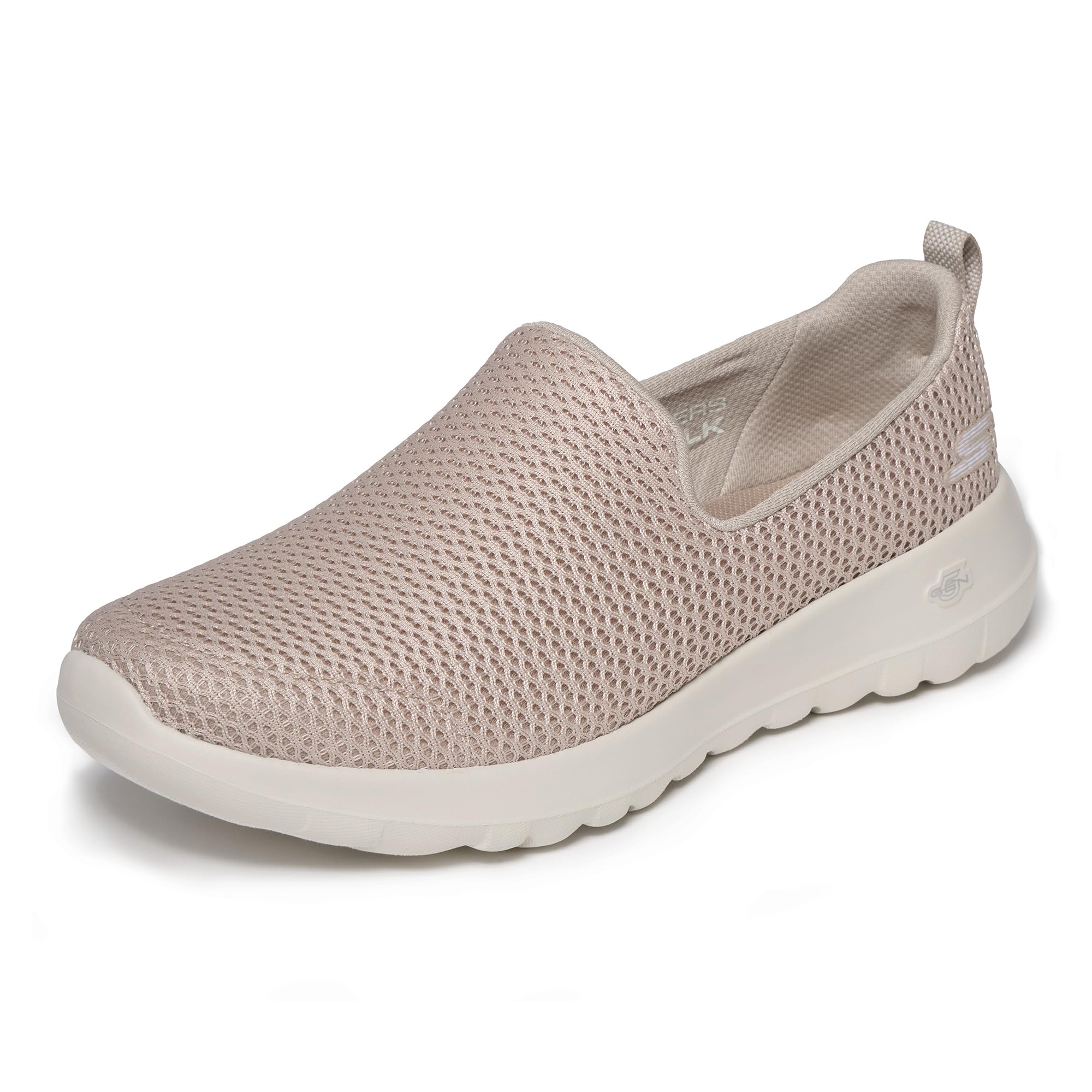
Skechers Go Walk Joy

91 /100
Trail Score Outstanding

Key details

Style
Slip-on walking shoe
Sizing
Generous, runs large for some
Closure
No laces
Underfoot
Soft foam
Check Price on Amazon

Sizing is the first thing to settle with the Go Walk Joy. The fit runs both ways: your usual size may come up big, and the forefoot may feel narrow, so start with your normal size in the standard width and move to a wide if you have a broad forefoot. Because there are no laces, there's nothing to take up the slack afterward.

Get that right and it's the easiest shoe here to live in. The footbed is soft to the point of pillow-like, the knit upper has no seams to rub, and there's nothing to bend down for at the door. For a day that mixes standing, errands and a couple of flat miles, it's the pair we reach for, and it adds almost nothing to a bag.

The support is where the money went missing — the arch is soft rather than shaped. If your feet want holding rather than cushioning, the Romy or the 608 is the better buy. What this one does have going for it is upkeep: it survives the washing machine, which the leather 608 won't.

Pros

  • No laces; step in and go
  • Soft, pillow-like underfoot
  • Light enough to forget you're wearing
  • Survives repeated machine washing

Cons

  • Very little arch support
Our verdict

A soft, no-lace shoe that's easy to wear all day for very little money — get the size right, and don't expect much from the arch.

Check Latest Price
3

Best Cushioning for Long Walks

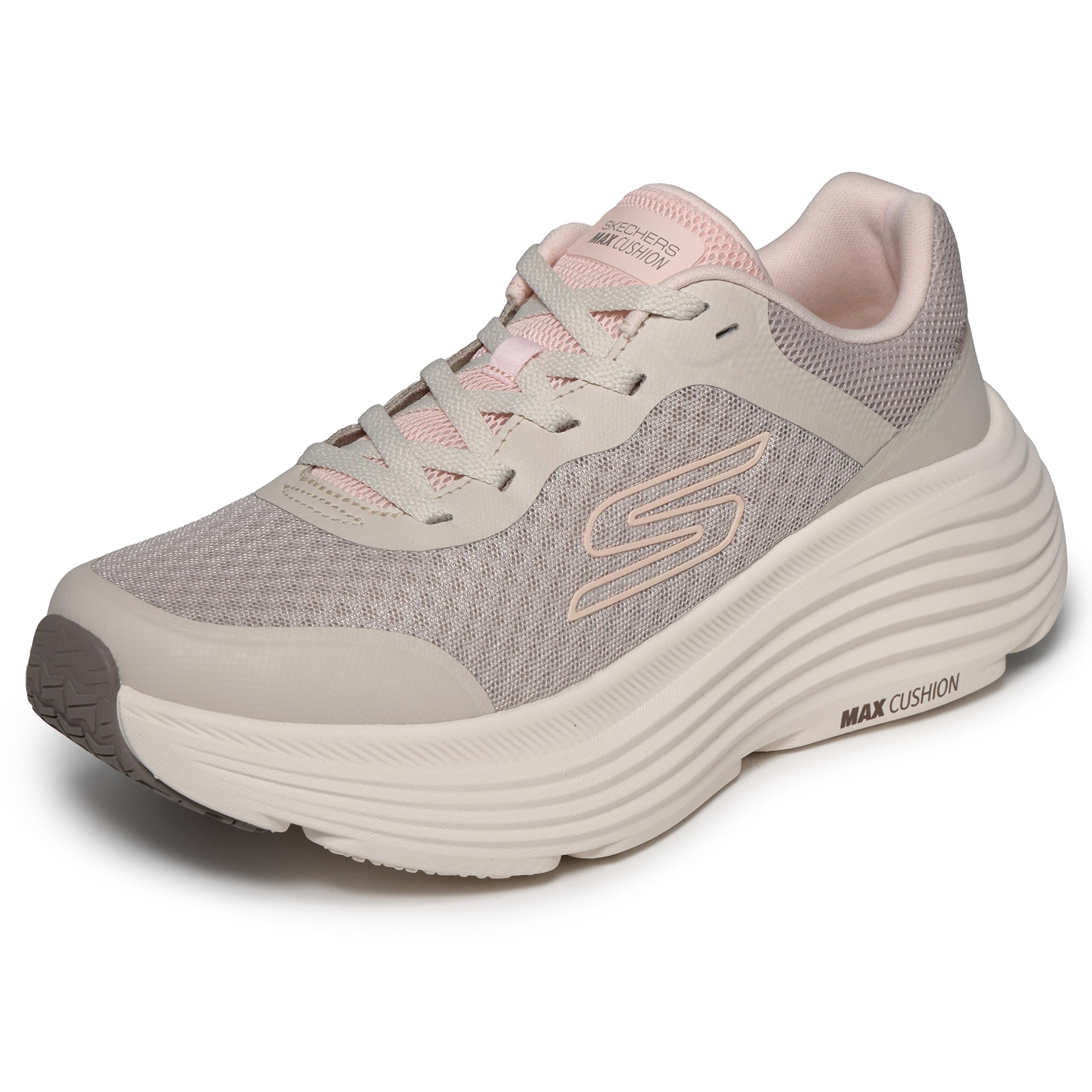
Skechers Max Cushioning Endeavour

91 /100
Trail Score Outstanding

Key details

Style
Max-cushion walking shoe
Upper
Soft mesh
Toe Box
Roomy, wide fit
Underfoot
Thick foam stack
Check Price on Amazon

There is visibly more shoe under your foot here than anywhere else in this group. That stack is the point: it takes the sting out of pavement in a way the thinner shoes can't, and it's what we suggest when the walk is the main event — a long daily loop, a city break, a shift on a hard floor.

The upper is soft and generous, with a toe box that suits a wide forefoot, and the heel holds snugly enough that the shoe doesn't slide when you push off. Feet stay reasonably cool, too; the mesh does its job on a warm afternoon.

What it isn't is subtle. The stack shows under trousers, and the shoe is happiest with walking kit rather than a work outfit — it's the pair you change into rather than the one you wear everywhere. For the days that need it, that's a fair trade.

Pros

  • Thick cushioning that softens hard pavement
  • Roomy toe box for wide forefeet
  • Soft, breathable mesh upper
  • Springy rather than dead underfoot

Cons

  • Outsole wears through on high-mileage use
Our verdict

The most cushioned shoe here, and the one to pick for long pavement walks or sore feet — roomy through the toes, with an outsole that gives out before the upper.

Check Latest Price
4

Best for Wide Feet

New Balance 608 v5

89 /100
Trail Score Excellent

Key details

Style
Leather cross-trainer
Widths
Wide and extra wide
Closure
Lace-up
Support
Firm, structured platform
Check Price on Amazon

Where the Romy is soft, the 608 is structured. It's the most substantial shoe in this group: a leather upper, a firm sole that doesn't flex much under the ball of the foot, and a wide toe box that has made this model a standby for women who need room across the forefoot.

The support is why it earns a place. This is the firmest, most foot-holding shoe of the five, and it's the one we point to when someone stands on concrete all day, wants their foot held rather than cradled, or needs room for an added insole. If soft foam leaves your feet working harder by evening, start here.

The proportions are smarter than they look: the sole is cut short at the toe, so a size 10 doesn't read as a size 10 on the foot. And the wide and extra-wide options are the real reason to choose it over the softer shoes here — you get room across the forefoot without adding length.

Pros

  • Firm, foot-holding support
  • Wide and extra-wide sizing
  • Leather upper keeps its shape
  • Room for an added insole

Cons

  • Leather needs a break-in period
  • Soles can peel or wear through with heavy use
Our verdict

The firm, structured pick for wide feet and long days on concrete — proper support, though the leather upper needs time to soften.

Check Latest Price
5

Short Errands

ALEADER Energycloud

88 /100
Trail Score Excellent

Key details

Style
Knit slip-on
Sizing
Runs big for some
Closure
Slip-on with decorative laces
Underfoot
Thin, flexible sole
Check Price on Amazon

Start with what this shoe is for: short trips. It's a flexible knit slip-on for errands, the school run and a mile or two on a nice day, and it's the least expensive pair here, which is most of the argument.

What it does well is the easy part. It slips on without a fight — the laces on top are decoration rather than fastening — the knit is light and airy in warm weather, and it's the best-looking shoe of the five by a distance, the sort of thing that gets worn with a dress rather than just leggings. It's comfortable from the first wear, with none of the break-in the leather 608 asks for.

Underfoot is where the limits are. The sole is thin and the arch is barely there, which hardly registers on a ten-minute walk and registers plenty at two hours, and a row of small holes in the outsole can suction against smooth floors. Wear them for the school run and they're fine; take them to the mall and you'll hear them coming.

Pros

  • Light, airy knit upper
  • Genuinely easy to slip on
  • Looks better than its price suggests
  • Comfortable with no break-in

Cons

  • Sizing runs big for some
  • Outsole wears down quickly
Our verdict

A light, inexpensive, good-looking slip-on for errands and short walks — it isn't built to support a long one.

Check Latest Price

How We Tested the Best Walking Shoes for Women

We began by scanning more than 60 pairs of walking shoes, reading through hundreds of customer reviews, and filtering for the things that actually break a shoe: narrow toe boxes, heels that slip, arch support that disappears after a few weeks, and cushioning that packs down early. From that pool, we bought 12 pairs at retail — no samples from brands — so we could test the same shoes you'd receive. We made sure the group covered a range of foot shapes, from narrow to wide and flat to high-arched.

For six months, those 12 pairs rotated through daily life: morning dog walks, grocery runs, standing shifts at a desk, weekend errands, and one long airport day. Each pair went to at least two testers, and we kept notes on the first mile versus the fiftieth. We checked fit by seeing whether toes had room to splay and whether the heel stayed put without cranking the laces. Arch support was judged on hard pavement and during long stretches of standing — did our arches feel held up or just pressed on? Stiffness got a simple test: how much the shoe bent at the ball of the foot out of the box, then again after a week of wear.

We also looked at ease of use — whether a shoe was easy to pull on and adjust without wrestling — and durability, by checking outsole wear and whether the upper creased, frayed, or flattened. Appearance and value came last but counted: we asked whether we'd wear each pair beyond a workout and whether the materials and construction felt worth the price. The pairs that stayed in rotation are the ones that needed no break-in period, kept their shape, and felt comfortable enough to forget about by the end of the day.

How to Choose Walking Shoes for Women

Fit: width, toe box and when you try them on

Feet spread and swell through the day, so a pair that feels snug at 8 a.m. can pinch by dinner. Try shoes on late if you can, and check there is a finger's width of space in front of your longest toe — a walking shoe should give you room to spare at the toe, not a firm stop.

Width matters as much as length, and it is the first thing to change when a shoe feels tight. The Easy Spirit Romy and the New Balance 608 both come in wide and extra-wide, and a wider fitting in your correct length usually beats sizing up, which leaves you bending a shoe in the wrong place.

How much support you actually need

Walking shoes sit on a spectrum from soft and unstructured to firm and shaped. Soft foam feels lovely in the shop and does less work over an hour on pavement; a shaped midfoot and a firm heel counter hold the foot so the arch isn't doing all the work. Neither is better in the abstract — it depends on the day you're buying for.

If you walk more than an hour at a stretch, stand on hard floors, or feel it in your arch by mid-afternoon, choose structure: the Romy or the 608. For errands and short flat loops, a soft shoe like the Go Walk Joy is comfortable and costs less.

Cushioning: soft, firm or maximum

A thicker sole softens rough pavement, but it adds height and weight, and a tall, soft shoe can feel vague if you like to feel the ground. Maximum cushioning earns its keep on long daily walks and for anyone whose feet ache afterward — the Skechers Max Cushioning Endeavour is the clear example here — while a moderate, springy sole is the better all-rounder.

The trap is assuming more foam always means more comfort. If you're unsteady on your feet or walk on uneven ground, a lower, firmer shoe keeps you closer to the surface and is the safer pick.

Laces, slip-ons and heel hold

A slip-on is a genuine convenience, especially if bending down is hard, but there is nothing to tighten when the fit is off. That's why the Go Walk Joy lives or dies on getting the size right, and why laces are more forgiving for a narrow heel or a foot that swells.

Laces also let you fine-tune: a heel-lock pattern takes up slack around the ankle without squeezing the toes. If you want slip-on ease with a laced shoe, leave the Romy or the 608 tied loosely and treat them as step-ins at the door.

Frequently Asked Questions

Final Verdict

For most women walking most days, the Easy Spirit Romy is the shoe to buy. It has the roomiest fit of the walking-specific picks, cushioning that doesn't collapse under a long day, and enough support that an hour on pavement doesn't become the thing you remember about the walk.

Two situations call for something else. If your walks are long or your feet ache afterward, the Skechers Max Cushioning Endeavour puts far more between you and the ground. If you have wide feet and want a firm, structured shoe with room for an insole, the New Balance 608 is the one — provided you're willing to break in a leather upper.