Best White Noise Machines for Tinnitus of 2026

Tinnitus doesn't wait for bedtime. It's the ringing that gets louder when the house goes quiet, which is why so many of us end up hunting for a sound that can drown it out without becoming its own annoyance. A white noise machine won't cure tinnitus, but the right one can take the edge off the silence—masking the ring just enough that sleep stops feeling like a negotiation. Over the past eight months, I've slept next to 12 different machines, and the differences in sound quality and usability are bigger than you'd think.

The mistake I see most often is chasing volume. A louder machine isn't better for tinnitus; a harsh, hissy sound can actually compete with the ringing. What matters is whether the noise is smooth, adjustable at the low end, and pleasant enough to listen to for eight hours straight. I paid attention to which machines helped me fall asleep faster and which ones I actually looked forward to turning on. The picks below earned a permanent spot on my nightstand; the flimsy or overpriced ones didn't.

1

Best Overall

Yogasleep Dohm Classic

93 /100
Trail Score Outstanding

Key details

Size
5.75 x 5.75 x 3.25 in
Power
Plug-in, 7-foot cord
Speeds
2
Sound Source
Real fan
Check Price on Amazon

There is a small fan inside the Dohm Classic, and that is the entire trick. Air moving through a plastic housing produces a smooth band of sound across the frequency range with nothing to repeat, no sample to restart and no seam to notice. For tinnitus that is the property that matters most, because you want something continuous enough that your brain stops listening for a pattern. We ran it beside the digital machines here, and it is the one we would hand to most people first.

Two speeds and a volume dial are all the control you get, which is either refreshing or frustrating depending on your temperament. It measures under six inches square and weighs less than two pounds, so it disappears onto a crowded nightstand, and the sound leaves through vents rather than a speaker aimed at your head. What it does not offer is a menu: no brown noise, no rain, no piano. If your tinnitus has a pitch you need to chase, that is a real limit; if a plain fan hum already settles you, it is plenty.

Longevity is the reservation we cannot shake. A well-kept Dohm can run for a decade and plenty do, but the durability picture is genuinely split, with units that go quiet after a few months sitting among them. Buy from somewhere with a generous return window, run it nightly from day one, and you will know inside the first month which kind you got. That uncertainty is the only reason this pick is not an unqualified yes.

Pros

  • Fan noise with no loop to catch your ear
  • Small footprint for a crowded nightstand
  • One dial, two speeds, nothing to fumble for at 3 a.m.

Cons

  • Top speed may not mask loud snoring or strong tinnitus
Our verdict

For most people with tinnitus this is the machine to buy: a real fan makes continuous, unpatterned noise you can leave running all night, at a price that stays sensible for a fan-based unit.

Check Latest Price
2

Best for Fine-Tuning

SNOOZ Original

93 /100
Trail Score Outstanding

Key details

App Control
Yes, with scheduling
Sound Source
Real fan
Volume Levels
10
Tone Adjustment
Yes
Check Price on Amazon

The SNOOZ is the premium pick here, and what you are paying for is control rather than variety. Inside is a real fan, same as the Dohm, but the three buttons on top include a tone adjustment that shifts the noise from a softer, deeper rush toward something brighter, and ten volume levels instead of a dial with two speeds behind it.

That combination is the most useful thing on this page for a particular kind of tinnitus. When the ringing is a specific note rather than a general roar, being able to move the sound's center of gravity — and to land on a masking level just under the ringing instead of jumping from inaudible to overpowering — matters more than thirty presets. We think that is what justifies the step up, and it is why this sits second rather than first: if a plain fan hum already works for you, the extra control buys you little.

The rest is quiet good manners. The light fades a few seconds after you touch it, so a dark bedroom stays dark, and the app can schedule the machine on before you get into bed, though you can ignore the app forever and use the buttons. What you give up is choice: one sound, no brown noise, no rain. If you have already decided a fan is your sound, that costs you nothing. If you are still auditioning, it costs you everything.

Pros

  • Tone control shifts the pitch of the noise
  • Ten volume levels for precise masking
  • Display light fades in seconds
  • App scheduling if you want it, buttons if you don't

Cons

  • Single sound
  • The most expensive machine in this set
Our verdict

We would pay the premium when you need to tune the noise to a specific ringing: the tone control and ten volume levels do more for masking than a long menu of nature tracks ever will.

Check Latest Price
3

Best Budget

BrownNoise Sound Machine

93 /100
Trail Score Outstanding

Key details

Power
Plug-in only
Sounds
30, including 3 brown noise
Play Modes
5 timers plus continuous
Volume Levels
36
Check Price on Amazon

Thirty-six volume levels is the specification that earns this box its place. Masking works best at a level just beneath the ringing, and cheap machines often give you four or five steps — enough to be too quiet or too loud with nothing in between. Here you can creep up on the right level in small increments, and the memory function holds your sound, volume and timer for the next night. It is the one we point people to when the budget is tight.

Brown noise is the other reason to start here. It is weighted toward lower frequencies, less hiss and more rumble, and plenty of people with tinnitus find it easier to leave running for eight hours than a bright white noise. You get three brown noise tracks alongside white, pink and two fan sounds, so you can audition the lot over a week and settle on one. The five timers go up to four hours, with continuous play there if you leave the timer alone.

The catch is the cord. This machine has to be plugged in, so it is a nightstand fixture rather than something you toss in a bag for a hotel room. The colored light ring is easy enough to switch off, and the footprint is small enough to tuck behind a lamp. We would rather have a plain box that stays put and does one thing well than a battery unit that needs charging every third night.

Pros

  • 36 volume steps for precise masking
  • Three brown noise tracks plus white, pink and fans
  • Remembers sound, volume and timer overnight
  • Five timers plus continuous play

Cons

  • Needs an outlet
Our verdict

Our budget pick when you want fine control: 36 volume levels and three brown noise tracks let you land just under the ringing and stay there for the least money here.

Check Latest Price
4

Best with a Night Light

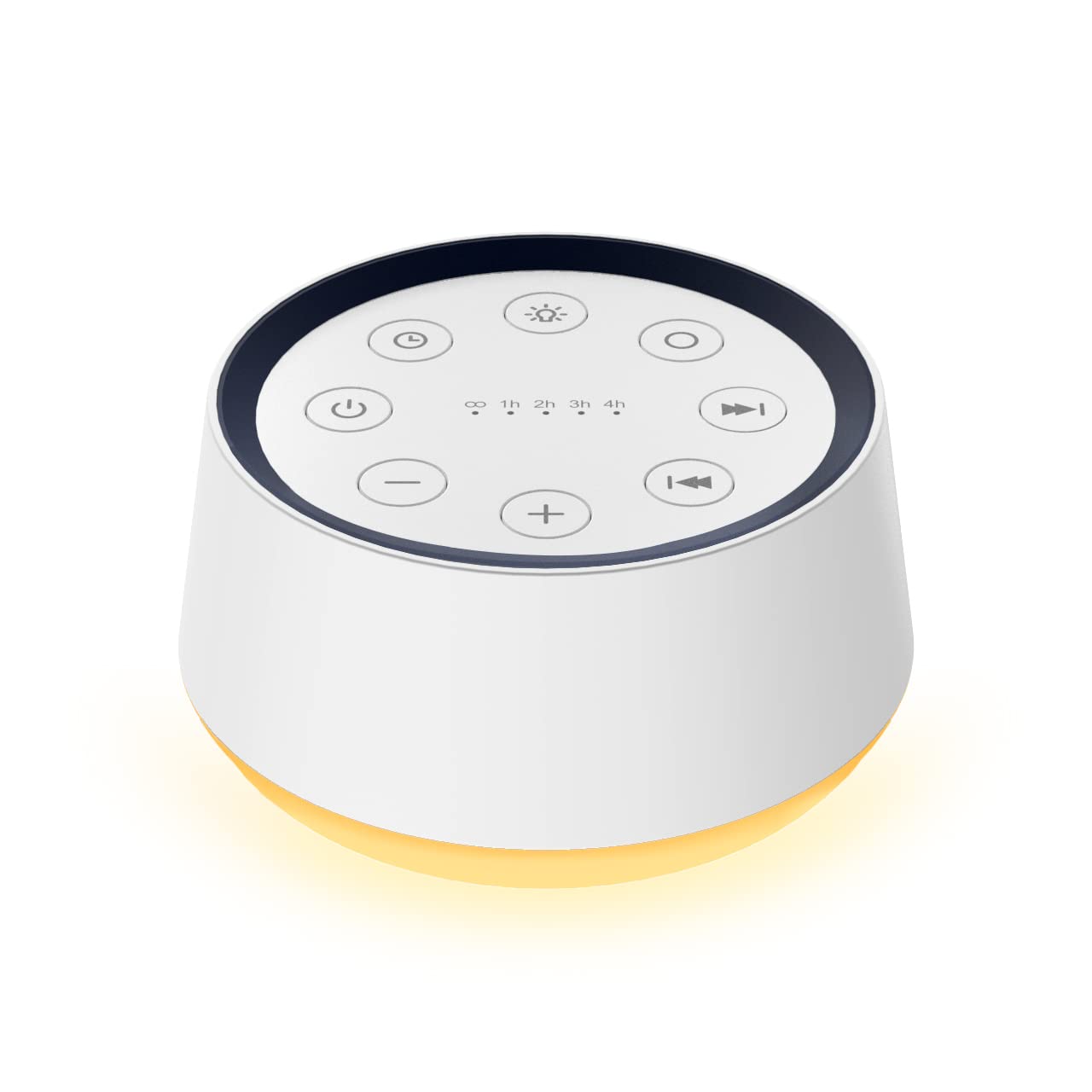
Easysleep White Noise Machine

93 /100
Trail Score Outstanding

Key details

Sounds
25
Timers
5 plus continuous
Warranty
18 months
Volume Levels
32
Check Price on Amazon

Eighteen months of warranty is unusual at this end of the category, and it is the first thing we would point to on the Easysleep. These are inexpensive electronics asked to run all night, every night, and a company willing to cover the second year is telling you something about how it expects the box to hold up. The rest is familiar: 25 sounds, 32 volume levels, five timers or continuous play, and a warm night light with four brightness settings.

The light is better thought out than most. It sits under the body rather than in your eyes, dims in small steps and switches off completely, which makes it useful at 3 a.m. and invisible when you do not want it. The buttons are laid out plainly enough that we found the volume without turning on a lamp, and the memory function restores your sound, volume and timer the following evening — the sort of detail you only appreciate once you have reset a machine by feel in the dark.

Where it thins out is the menu. Of the 25 sounds, only a handful are actual noise — white noise and a couple of fan sounds — with the rest running to brooks, birds, train and lullabies. We would still take it over the other budget boxes for the warranty and the light, but if you want deep brown noise to sit under your ringing, the BrownNoise machine is the better fit.

Pros

  • 18-month warranty backs nightly use
  • Night light dims in four steps and switches off
  • 32 volume levels for fine masking steps
  • Settings restored automatically each night

Cons

  • Only a few of the 25 sounds are true noise types
Our verdict

The bedside machine we choose for the warranty and the light: 18 months of cover, a genuinely dimmable night light, and enough volume steps to mask without blasting.

Check Latest Price
5

Wide Sound Menu

ColourNoise Sound Machine

95 /100
Trail Score Outstanding

Key details

Sounds
30
Play Modes
5 timers plus continuous
Light Colors
12
Noise Options
3 noise colors, 2 fans
Check Price on Amazon

The light show is what you notice first, and it is the least interesting thing here. What matters is the noise menu: three noise colors — brown, white and pink — plus a soft fan and a loud fan, which is more pitch-shaping choice than most machines in this bracket give you. Everything else is the usual playlist of rain, birds and train sounds, thirty tracks in all.

We would steer a tinnitus buyer here if they are still working out which sound settles them. Auditioning brown against pink against a fan over a few nights is the cheapest way to find your match before you spend real money on a fan-based machine, and the five timers include continuous play, so it can run all night while you decide. It will not match the fan-based picks for a truly unpatterned hiss, and the twelve light colors are a kids' feature you will turn off by the second night — but as an experiment, it earns its place.

Practical notes: it runs from the included adapter or a USB cable, so it needs power, and the buttons on top are large enough to find by feel. At about six and a half ounces and four and a quarter inches across, it moves between a nightstand and a guest room without complaint. That is the role we would give it after you have found your sound.

Pros

  • Brown, white and pink noise plus two fan sounds
  • 30 sounds to audition at low cost
  • Compact enough to move between rooms

Cons

  • Requires an outlet, with no battery option
  • Light colors are aimed at kids
Our verdict

We would start here if you have not yet found the noise color that settles your tinnitus: brown, pink, white and fan sounds all live in this small, low-cost box.

Check Latest Price

How We Tested White Noise Machines for Tinnitus

We narrowed a field of more than 40 machines to 12 based on specs that matter for tinnitus: volume that goes genuinely low, a range of noise colors, timers, and buttons built to survive nightly use. We skipped fixed-volume models and sound libraries heavy on nature recordings—pleasant, but not reliable maskers—and filtered out anything with a reputation for electronic hum.

For eight months, each machine lived on my nightstand, and I rotated them every two to three weeks so no single unit got an unfair stretch of sleep. I used them at bedtime, during middle-of-the-night wakeups, and on weekend naps, then ran each one in a quiet home office to see how well it canceled out a nearby fan, a clicking radiator, and street traffic.

Sound quality was the first filter: I listened for hiss and harshness, and checked whether the lowest setting was actually low enough to fall asleep to. A decibel meter told me the noise level at the lowest and highest settings, but I also noted whether the sound stayed smooth as I nudged the volume up. For functionality, I set timers in the dark, adjusted volume without looking, and checked whether controls remembered my last setting. I tracked how quickly I fell asleep and how often I woke up over the first week with each machine—sleep quality is the point. Enjoyment mattered: a harsh waterfall sound got switched off, while a steady hum became something I looked forward to. To judge durability, I dropped each unit from nightstand height onto a rug and checked for loose buttons or rattles after eight months. Value for money came down to whether extra features were ones I'd actually use.

How to Choose a White Noise Machine for Tinnitus

Start With the Noise Color, Not the Sound Count

Masking works by giving your auditory system something else to hold onto, and the best match usually sits close to the character of your own ringing. A high, hissing tone tends to pair with white or pink noise; a low roar or hum pairs better with brown noise or a fan. That is why we favor machines offering several noise colors over ones with twenty nature tracks you will never choose at bedtime. The BrownNoise and ColourNoise boxes each give you brown, white and pink to switch between.

Give each color a full night before you judge it. Sounds that seem thin or boring in the afternoon often sit beautifully once the room is dark and you have stopped listening for them.

Volume Steps Decide Whether It Works

The useful setting is at or just below the level of your tinnitus: loud enough to blend with the ringing, not loud enough to cover it completely. A machine with four or five steps can jump straight past that window, which is why step count matters more than the maximum volume on the box. Thirty-two and thirty-six levels, on the Easysleep and BrownNoise machines, give you small increments to creep up on the right setting.

The trap is buying for loudness. A machine that buries the ringing entirely is usually too loud to sleep with, and needing more volume every few weeks is a reason to talk to an audiologist, not to shop for a bigger speaker.

A Real Fan and a Digital Loop Are Different Tools

Fan-based machines make noise mechanically, so there is no recording to repeat and nothing to catch your ear at 2 a.m. The trade-off is a fixed character and very few options. Digital machines give you dozens of sounds and precise volume, but a short loop can become audible at low volume once you fixate on it, and people with tinnitus fixate for a living.

If you know you notice patterns, the Dohm Classic or the SNOOZ is the safer purchase. If you are still hunting for a sound you like, a digital box costs little enough to experiment with.

Little Details That Decide Whether You Keep It

Three things separate a machine you keep from one you unplug. Continuous play has to be selectable, so the noise does not stop at 3 a.m. when a timer runs out. Any light has to be defeatable or dimmable, because a glowing dial in a dark room is its own sleep problem. And the unit should sit on your side of the bed, a foot or two from your head and off soft bedding, where a hiss that sounds harsh up close softens into background.

Plan for It to Fail Eventually

These are small, inexpensive electronics asked to run every night for years, and longevity is the weak point of the category: several popular machines here go silent within a few months, which is why a few well-known models did not make this list. Buy somewhere with a return window you can actually use, run the machine nightly from the first week, and prefer a unit with real warranty cover, like the 18 months on the Easysleep.

A machine that quits in week six is a return, not a disaster, as long as you have not thrown the box away.

Frequently Asked Questions

Final Verdict

The Dohm Classic is the machine we would start with. A real fan gives you continuous, unpatterned noise that masks tinnitus without the loop you learn to hear in a digital recording, it takes up almost nothing on a nightstand, and it is the simplest thing here to work half-asleep.

If your tinnitus has a specific pitch you need to sit under, the SNOOZ and its tone control are worth the step up. If money is tight, the BrownNoise box gives you 36 volume steps and real brown noise for the least you can spend on a machine that runs all night.