Best Behind-The-Ear Hearing Aids of 2026

Hearing loss rarely announces itself. It shows up as missed punchlines, a TV volume creeping upward, and nods that don't quite land. A good behind-the-ear hearing aid brings those moments back—without making you feel like you're wearing medical equipment. The catch is the category splits into two extremes: cheap amplifiers that whistle and distort, and prescription devices that cost as much as a car. We focused on the middle ground—models with clear sound, all-day comfort, and fair value.

Over six months, we wore eight pairs through work calls, noisy restaurants, and walks. We noted whether voices sounded natural, if the rechargeable battery lasted a full day, and how often we adjusted volume. In noisy settings, we tracked which models cut through clatter and which made everything louder. Size and durability showed up in daily use—some tucked behind the ear, while others felt bulky; a few developed sticky buttons or stretched tips. The best hearing aid is the one you forget you're wearing. Below are the eight we'd recommend.

1

Best Overall

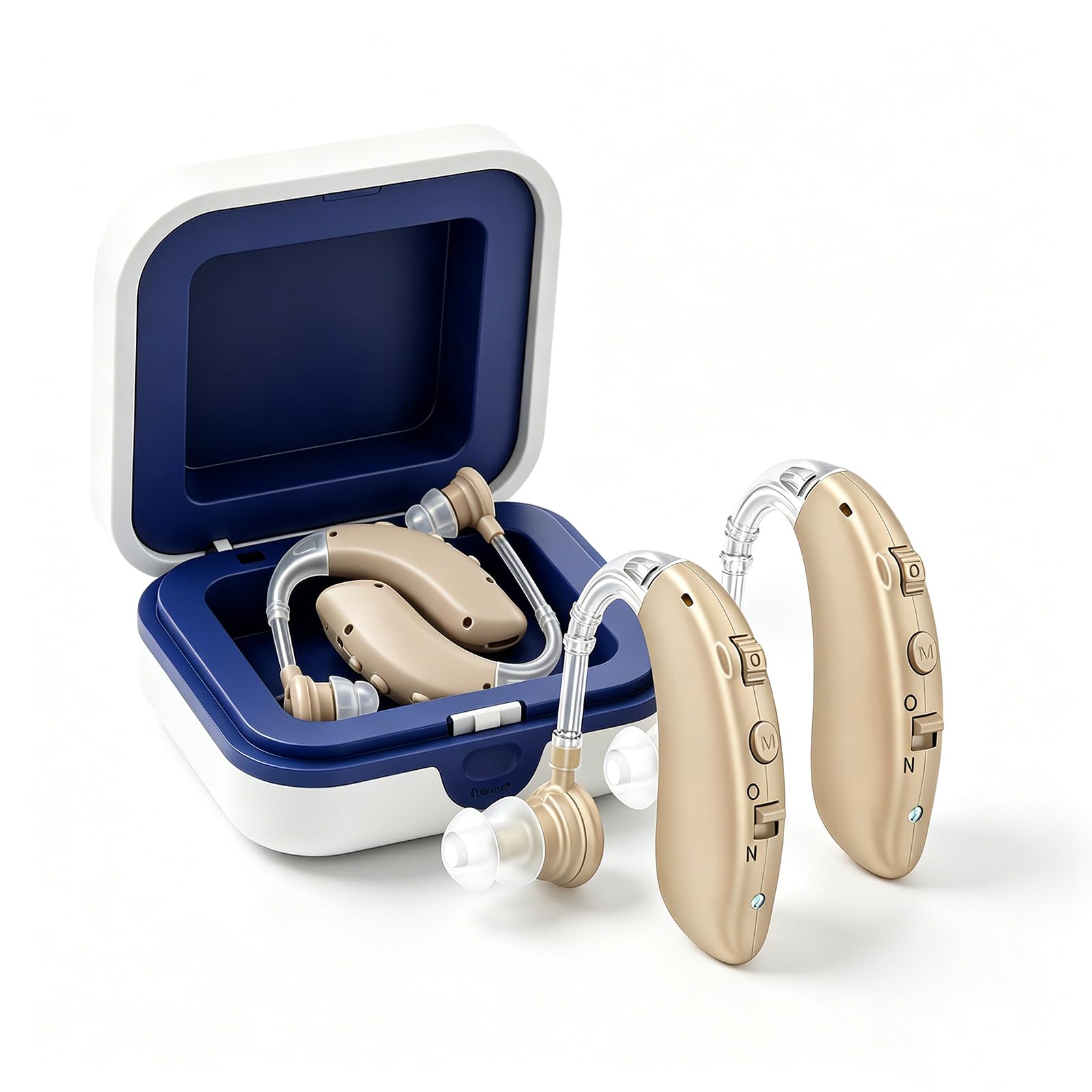
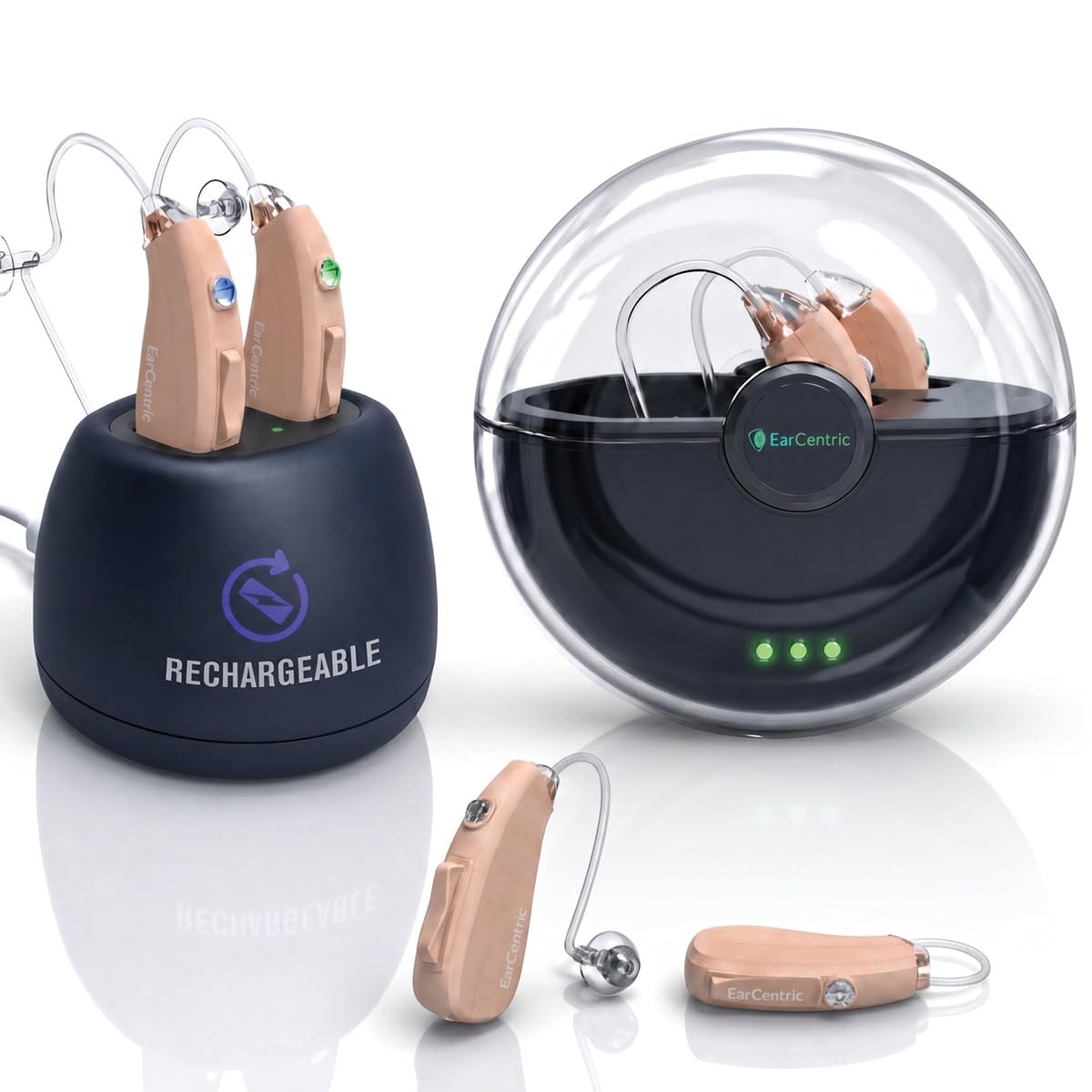
EarCentric EasyCharge

86 /100
Trail Score Excellent

Key details

Fit
Behind-the-ear, regular and long tubes
Runtime
3 days per charge, up to 12 days with case
Charging
Desktop dock plus portable case
Controls
Button volume control
Check Price on Amazon

Two chargers arrive in the box, and that is the whole argument. One dock sits by the bed; the other is a lidded case that holds three extra charges, so a single charge in the aids plus a full case covers up to 12 days. We've done a long weekend with the case and no cable, which is not something we can say for the rest of the rechargeables here.

For a first pair, this is the one we start people on. The body sits behind the ear, the volume is a button you find by feel, and the fit comes down to picking among the supplied domes and swapping between the regular and long tubes — no appointment, no programming. That last part matters more than it sounds: an aid the wearer can adjust alone is an aid that stays out of the drawer.

In the living room and at the kitchen table, speech came through full rather than thin, and the aids stayed quiet in the ear through an entire evening of television. The whistle a bad seal produces only turned up when we seated one dome badly on purpose, which told us what the fit is doing when it's right.

The weak spot is longevity. Units that fail tend to fail within the first few months, so the early weeks are the ones to test properly: wear both aids for a full day, take them into the noisiest room you have, and charge them every night. A pair that clears that seems to keep going.

Pros

  • Desktop dock plus a travel case with three charges
  • Up to 12 days between wall charges
  • Button volume control that needs no app
  • Several domes and two tube lengths in the box

Cons

  • No Bluetooth, so no calls or TV streaming
Our verdict

The pair we recommend to most first-time wearers: behind-the-ear, one volume button, two chargers, and up to 12 days away from an outlet.

Check Latest Price
2

Best Budget

Flaygo GM-362T

80 /100
Trail Score Excellent

Key details

Weight
0.12 oz
Runtime
Up to 80 hours with case
Controls
One button, four volume levels
Processing
16-channel digital chip
Check Price on Amazon

Cheap hearing aids usually give themselves away in the first hour — a tinny edge, a whistle, or a battery asking for a charge by dinner. This pair didn't. At a fraction of the top pick's price you get a 16-channel digital aid, one button for power and four volume levels, and a case that adds four full recharges to the two hours inside the aids, for about 80 hours before anything needs a socket.

What we noticed most was the weight. At 3.5 grams behind the ear, a glasses wearer won't feel the two fighting for the same real estate, and the single button is the right call for the person this is aimed at: hold for power, tap for volume, no menu to get lost in. Speech came through clear enough for conversation and loud enough for television at a level the neighbors won't hear about.

The case earns its place in a bag. It holds the pair plus its reserve and tops up over USB-C, so one cable covers the aids and your phone. Six pairs of domes come in the box too, which is more fit options than most budget kits bother with — useful, because a spare dome in a pocket is what keeps a pair usable when one splits.

Pros

  • 16-channel processing at a budget price
  • Four volume levels on a single button
  • Case adds four full recharges, about 80 hours
  • Six pairs of domes included

Cons

  • Four volume steps leave no fine control
Our verdict

Our budget pick: one button, four volume levels, and a charging case that carries four more charges.

Check Latest Price
3

Best for Replaceable Batteries

Kituwant Hearing Aid

79 /100
Trail Score Very Good

Key details

Fit
Behind-the-ear hook
Gain
36 dB
Battery
675 zinc-air cell
Programs
Four frequency programs
Check Price on Amazon

These run on a 675 zinc-air button cell, which makes them the odd pair out here and, for some households, the sensible one. No case to charge, no dock to remember, no cable to hunt through a drawer: peel the tab off a fresh cell, give it a minute to wake up, drop it in and wear them. If the wearer has been buying hearing aid batteries for decades, this is the routine they already know by heart.

The rest of the design is deliberately old-fashioned in the same way. A hook goes over the ear, volume adjusts on a button, and a second button steps through four frequency programs — high, low, mid and wide — so you can lean the sound toward speech or toward music without an app. The listed 36 dB of gain puts it at the mild end, which is where most over-the-counter buyers actually sit. The brown body disappears behind the ear, and a cleaning brush comes in the box.

We recommend it for the spare-pair drawer and the low-tech household. At this price a second set isn't an extravagance, and a lost aid is a shrug rather than a ruined week. The trade is the cell itself: zinc-air doesn't warn you before it dies, so the habit is a fresh one on a schedule you set, rather than on a beep that never comes.

Pros

  • Runs on standard 675 zinc-air cells
  • Four frequency programs on a button
  • Nothing to charge overnight
  • Low enough cost to keep a second pair

Cons

  • Replacement 675 cells are an ongoing purchase
Our verdict

For the household that doesn't want another charger: standard 675 cells, four programs, nothing to plug in.

Check Latest Price
4

Best for Simple Two-Mode Control

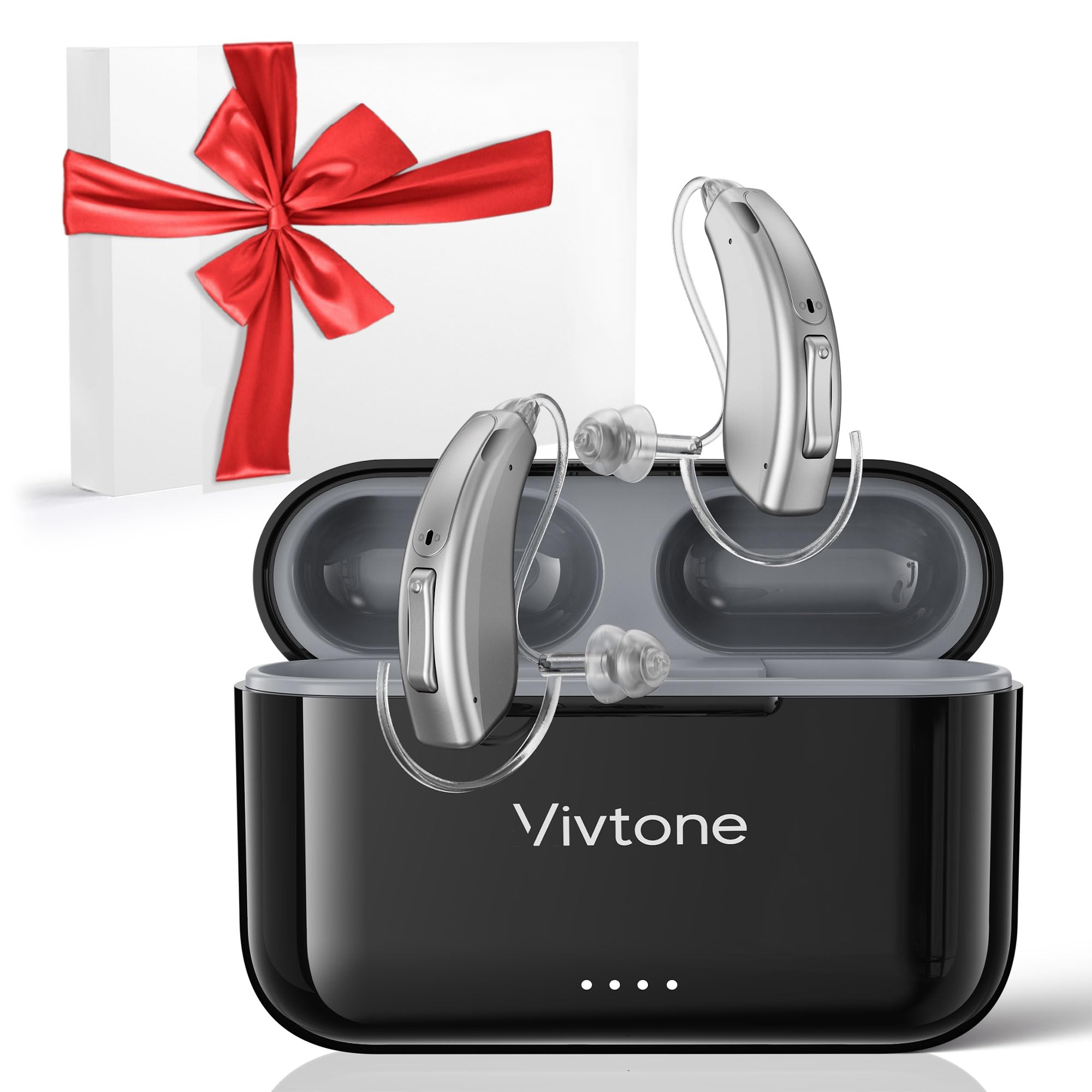
Vivtone Lucid508

79 /100
Trail Score Very Good

Key details

Gain
41 dB peak
Modes
Quiet and noisy
Runtime
25 hours, up to 125 hours with case
Charging
Auto on/off in case, 2-hour charge
Check Price on Amazon

Lift these out of the case and they switch on; drop them back in and they charge. Auto on/off sounds like a small thing until you've spent a week pressing a tiny button behind your own ear twice a day — this pair was ready before it reached the ear every time. There's a quiet mode and a noisy mode on the aid itself, so a restaurant doesn't require a phone or a menu.

We rate it the best middle ground here for someone who wants more control than a single-button aid without taking on an app. Peak gain is 41 dB, more than the Kituwant's listed 36, and the case carries four full recharges on top of 25 hours in the aids — 125 hours before the charger needs a socket, which covers a two-week trip with the cable left at home.

Sound is where it divides. In a quiet room the speech was clean and the small body sat still behind the ear, even under a glasses temple. In a loud room the noisy mode pulled voices forward but brought the room along with them, and the result could tip into harsh. If most of your week is the house, the television and a supermarket, that's enough to work with.

Pros

  • Auto on/off when lifted from the case
  • Quiet and noisy modes on the device
  • 125 hours total with the charging case
  • 41 dB peak gain

Cons

  • No app or frequency tuning, just volume and two modes
Our verdict

Our middle-ground pick: auto on/off in the case, quiet and noisy modes, and 125 hours with the case.

Check Latest Price
5

Best With App Control

ELEHEAR Beyond

81 /100
Trail Score Excellent

Key details

Gain
50 dB
Domes
Nine sizes
Modes
Four scene modes via app
Runtime
20 hours, up to 100 hours with case
Check Price on Amazon

Most aids here ask you to choose a volume and live with it. The Beyond puts four scene modes, volume, frequency balance and directionality into a phone app, and the difference in a busy room is real: switching to the noisy profile and narrowing the microphones to the front changes what you can pick out of the clatter.

The hardware backs it up. 50 dB of amplification is the highest stated gain in this group, nine dome sizes give the ear canal a decent chance at a proper seal, and the numbers work out to 20 hours in the aids plus four case recharges for 100 hours total.

Speech clarity is what the design is chasing, and that's also where reactions divide: crisp for some wearers, shrill or echoey for others. The gap usually comes down to the seal — a dome that doesn't fill the canal leaks the low frequencies and leaves the treble standing alone — so working through nine sizes over an evening is worth more than any setting.

We keep it on the list for the household where someone will actually use the app, because that's where the money goes. Bluetooth streaming for calls and television is the bonus that makes an aid feel less clinical. If the wearer is going to leave it on the default profile, the extra outlay buys features nobody touches.

Pros

  • Four scene modes with per-ear app tuning
  • Highest stated gain here at 50 dB
  • Nine dome sizes for a proper seal
  • Bluetooth streaming for calls and TV

Cons

  • Units have stopped taking a charge within weeks
Our verdict

The one for a phone-comfortable wearer: four scene modes, per-ear tuning and Bluetooth streaming from the app.

Check Latest Price
6

Calls and Streaming

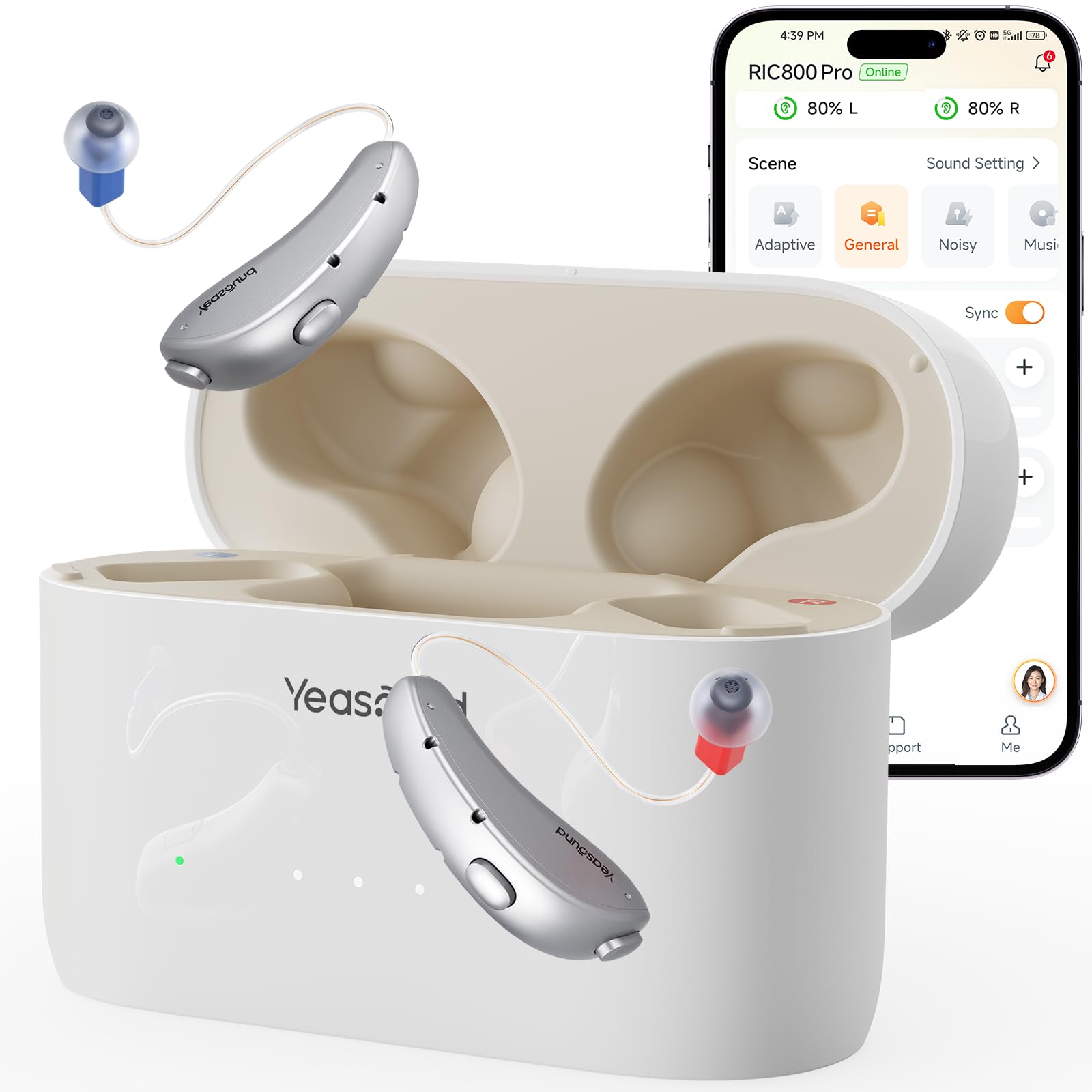
Yeasound RIC800

80 /100
Trail Score Excellent

Key details

Weight
0.09 oz
Runtime
Up to 92 hours
Bluetooth
Calls and music streaming
Water Resistance
IPX8
Check Price on Amazon

Bluetooth is what separates the RIC800 from everything else here. It pairs with an iPhone on iOS 14 or later and an Android phone on Android 10 or later for calls and music, and with five profiles — adaptive, general, noisy, music and outdoors — it does the work of an aid and a set of earbuds without swapping anything in and out of your ears.

The shape is different too. A receiver sits in the ear canal on a thin wire, with a body small enough to hide behind the ear at 0.088 ounces and 1.23 inches long. It's the only aid in this group rated IPX8, so sweat and rain aren't a reason to take it out, and it charges wirelessly with up to 92 hours claimed.

We recommend it to the wearer who wants one device for the phone and the room and is willing to pay for it. The wire is the part to plan around: it's the first thing to wear on any receiver-in-canal aid, and the domes and receiver leads can be hard to source online, so order spares at the same time as the aids rather than after the first one goes.

Pros

  • Bluetooth calls and music streaming
  • IPX8 water resistance, unique in this group
  • Five listening profiles
  • 0.088 ounces behind the ear

Cons

  • The priciest aid in this group
  • Spare domes and receiver wires can be hard to source
Our verdict

Bluetooth is the reason to buy this one: a discreet RIC aid with calls and music streaming, five profiles and an IPX8 rating.

Check Latest Price
7

Touchscreen Control

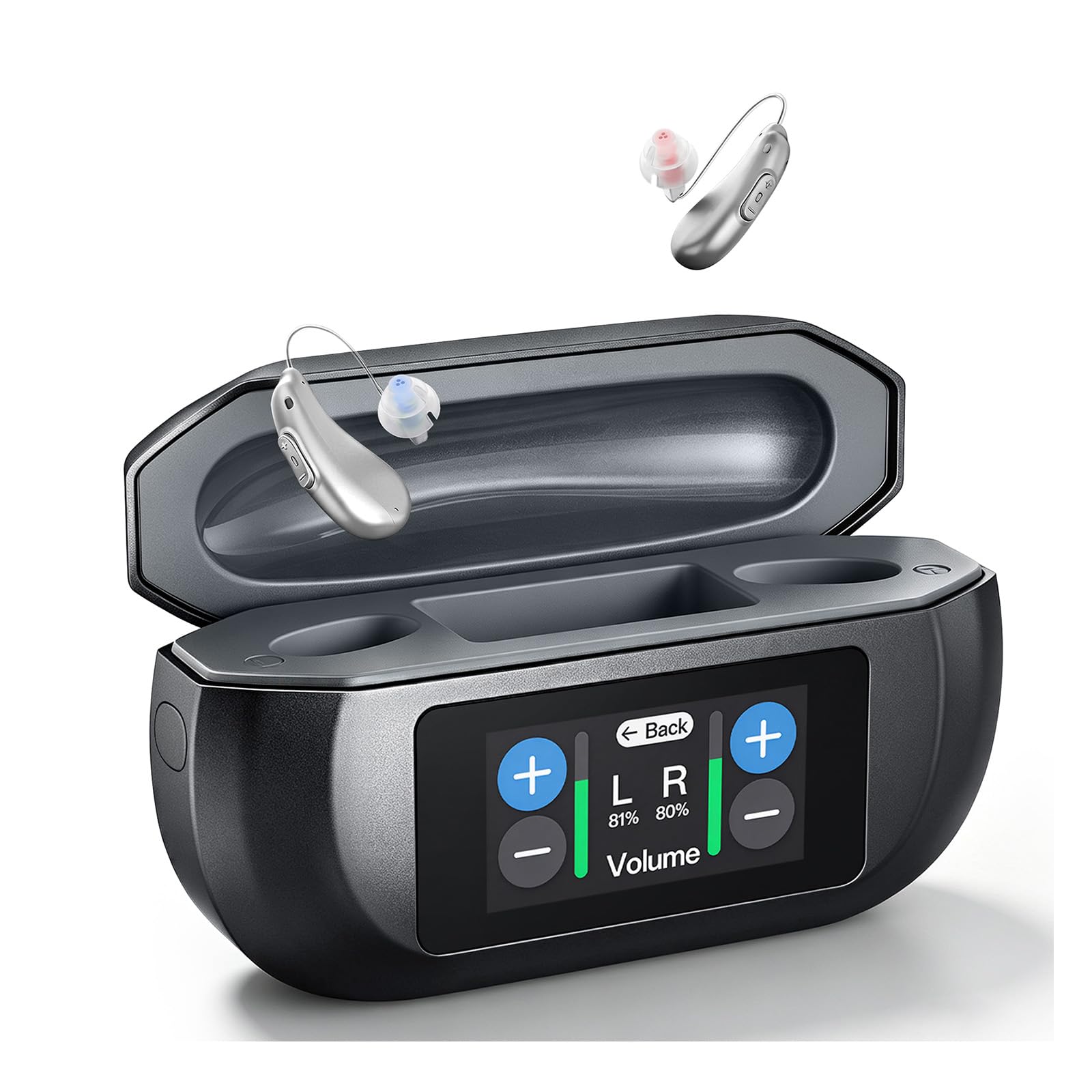
Oction Touchscreen

92 /100
Trail Score Outstanding

Key details

Modes
Four hearing modes
Weight
0.12 oz
Runtime
Up to 100 hours with case
Controls
Touchscreen, 10 volume levels
Check Price on Amazon

A touchscreen on the charging case sounds like a gimmick until you've tried to change volume on an aid behind your own ear. The Oction puts per-ear volume across 10 levels, four hearing modes and a battery readout on the case itself, with no app and no phone. We think that's the most approachable control scheme here for anyone whose fingers don't do small buttons — and overkill for anyone who wants to set it once and forget it.

The rest of the specification is current: a 16-channel chip with a claimed 5 ms of latency, Bluetooth that switches on 15 seconds after the aids leave the case and pairs with iOS or Android, an hour's charge in the aids and a case holding five full recharges for about 100 hours. At 3.5 grams they sit lightly behind the ear. What gives us pause is the price: it lands in the same bracket as the ELEHEAR, which offers deeper tuning through an app, so you're paying for the screen rather than for more processing.

Pros

  • Touchscreen per-ear volume and mode control
  • Battery readout on the case
  • Bluetooth with automatic pairing
  • 3.5 grams behind the ear

Cons

  • More controls to learn than a one-button aid
Our verdict

The touchscreen option: per-ear volume, four modes and a battery readout on the case, no phone needed.

Check Latest Price
8

Spare Pair

RUYIOER OTC Aid

77 /100
Trail Score Very Good

Key details

Gain
40 dB
Weight
0.23 oz
Runtime
Up to 48 hours
Charging
Micro-USB, 2-hour charge
Check Price on Amazon

This is the least expensive proper behind-the-ear pair in the group, and it doesn't arrive stripped down to match: 40 dB of maximum gain, a 16-channel processor, and a body weighing 0.23 ounces. Light enough to forget is the whole point of an aid that sits behind the ear rather than in it.

Setup is a two-hour charge and a 48-hour run, over micro-USB rather than the USB-C the rest of this list uses. One-touch controls handle power and volume, and soft domes in multiple sizes come in the box, so the fit is adjustable without sending anything back.

The mode button is the weak point. Nothing in the packaging explains what each mode does, so you cycle through them until something sounds better and then try to remember where you landed. That's a small annoyance for a patient user and a real obstacle for someone who needs to be told which button to press.

We keep it on the list as a first pair, a spare, or the pair that lives in the car. At this price a second set isn't a stretch, and a lost aid is not a lost week. It's not the one to hand to someone who needs help getting started, though — the instructions won't do that job, and an aid nobody can operate stays in the drawer.

Pros

  • 40 dB of gain at the lowest price here
  • 48 hours per two-hour charge
  • 0.23 ounces behind the ear
  • Multiple dome sizes included

Cons

  • Micro-USB charging rather than USB-C
Our verdict

The cheapest way into a behind-the-ear pair here: 40 dB of gain, 48 hours a charge and one-touch controls.

Check Latest Price

How We Tested Behind-the-Ear Hearing Aids

We started with a list of 22 behind-the-ear models from brands with a track record in hearing devices, then filtered by verified customer reviews, trial periods, and whether the manufacturer offered a rechargeable battery and a range of ear-tip sizes. That left eight models, which we bought at retail so no brand could influence the results.

Each pair lived with a tester for six months. We wore them during conference calls, in crowded coffee shops, at family dinners, and on daily walks. To judge sound quality and hearing quality, we compared how a podcast host's voice sounded against the same episode through headphones—was it tinny, muffled, or natural? At restaurants, we noted whether we could follow a conversation across the table without asking for repeats, and we tested noise reduction by standing near a running dishwasher and a busy bar to see if background clatter got amplified along with speech.

Comfort meant wearing them for a full eight-hour workday and logging any sore spots behind the ear or in the canal. We tracked battery life by noting the percentage left after a 16-hour day of streaming and conversation, and we judged size by how well each model hid under a baseball cap and whether it interfered with glasses. Durability came from deliberate drops on carpet, tossing them in a bag, and checking for loose parts or sticky buttons after three months. At the end, we compared each model's performance against its price—not to find the cheapest, but to see which ones justified their cost.

How to Choose a Behind-The-Ear Hearing Aid

Read the Battery Number Carefully

Almost every rechargeable here advertises a big figure — 12 days, 100 hours, 125 hours — and in each case it counts recharges held in the case, not one charge in the aids. The aids themselves run roughly a day and a bit: 20 to 25 hours in most of these. That's fine, but it means the case, not the aid, is the thing you're really buying.

So match the case to the routine. A dock beside the bed handles everything for a household that remembers to put things down, and the EarCentric's extra travel case is exactly why it leads our list. If nobody wants another cable in the house, a 675 zinc-air cell like the Kituwant's is the old answer and still a good one, paid for with a standing battery supply.

Match the Gain to Your Loss, Then the Controls to the Person

Stated gain in this group runs from 36 dB to 50 dB, and it maps roughly onto who each pair suits: the lower end for a mild loss, the higher end for more. Channel counts and processing chips matter less on paper than fit does, but they're the foundation the scene modes and noise handling are built on.

The control scheme is the decision buyers get wrong. A single button, a volume control with two modes, a phone app, a touchscreen case — every layer of control needs someone who wants to use it. An app nobody opens is money spent on nothing, and an aid the wearer can't adjust alone tends to end up in a drawer.

Fit Is the Dome and the Tube

A behind-the-ear aid touches you in two places: the dome in the canal and the tube or wire over the ear. Whistling usually comes from the first rather than from a fault. A dome that's too small leaks sound back to the microphone, which is why every kit here ships several sizes, and working through them is the most useful hour you'll spend with a new pair.

The second contact is the tube. Longer tubes and thin receiver wires sit more comfortably alongside glasses; a hook pressing on a temple arm will push the dome loose all day. Put the aids on before the glasses, then check the tube hasn't been lifted out of place.

Budget for the Parts That Wear Out

None of these is a one-time purchase. Domes and tubes stiffen and need replacing every few months, receiver wires on a receiver-in-canal aid are the first thing to go, and zinc-air cells run down without warning. Order spares with the aids rather than after the first failure, because a spare dome in a bag is the difference between a working aid and a week in a drawer.

Buy from a seller with a straightforward return, and keep the packaging until both aids have been through a full day, a noisy room and a complete charge cycle.

Frequently Asked Questions

Final Verdict

The EarCentric EasyCharge is the pair we point most people toward: simplest to live with, easy to adjust without help, and the only one here that hands you a second charger for the road.

If the wearer wants two listening modes and no app, the Vivtone Lucid508 is the better buy. If the budget rules, the Flaygo pair does the core job for far less, as long as four volume steps are enough. Choose on the routine you can keep, not on the spec sheet.