Best Walkers for Seniors of 2026

The first time a walker shifts under your hand, you stop trusting it—and that's the whole game. A good one should feel like a hand under your elbow: steady when you lean, light enough to lift into the car, and narrow enough to clear the bathroom door. It should also hold up after months of daily use without developing a wobble or a squeak.

For anyone shopping for themselves or a parent, the questions pile up fast: Will it wobble? Is assembly a two-person job? Can it fold one-handed and fit in a trunk? My team and I tested a dozen walkers over six months—in hallways, kitchens, waiting rooms, and the back of a hatchback—and the differences were real. The heaviest frame wasn't always the steadiest; wheel placement and brake design mattered just as much. The picks below are the ones that made us stop worrying about falling and start thinking about where we were going.

1

Best Overall

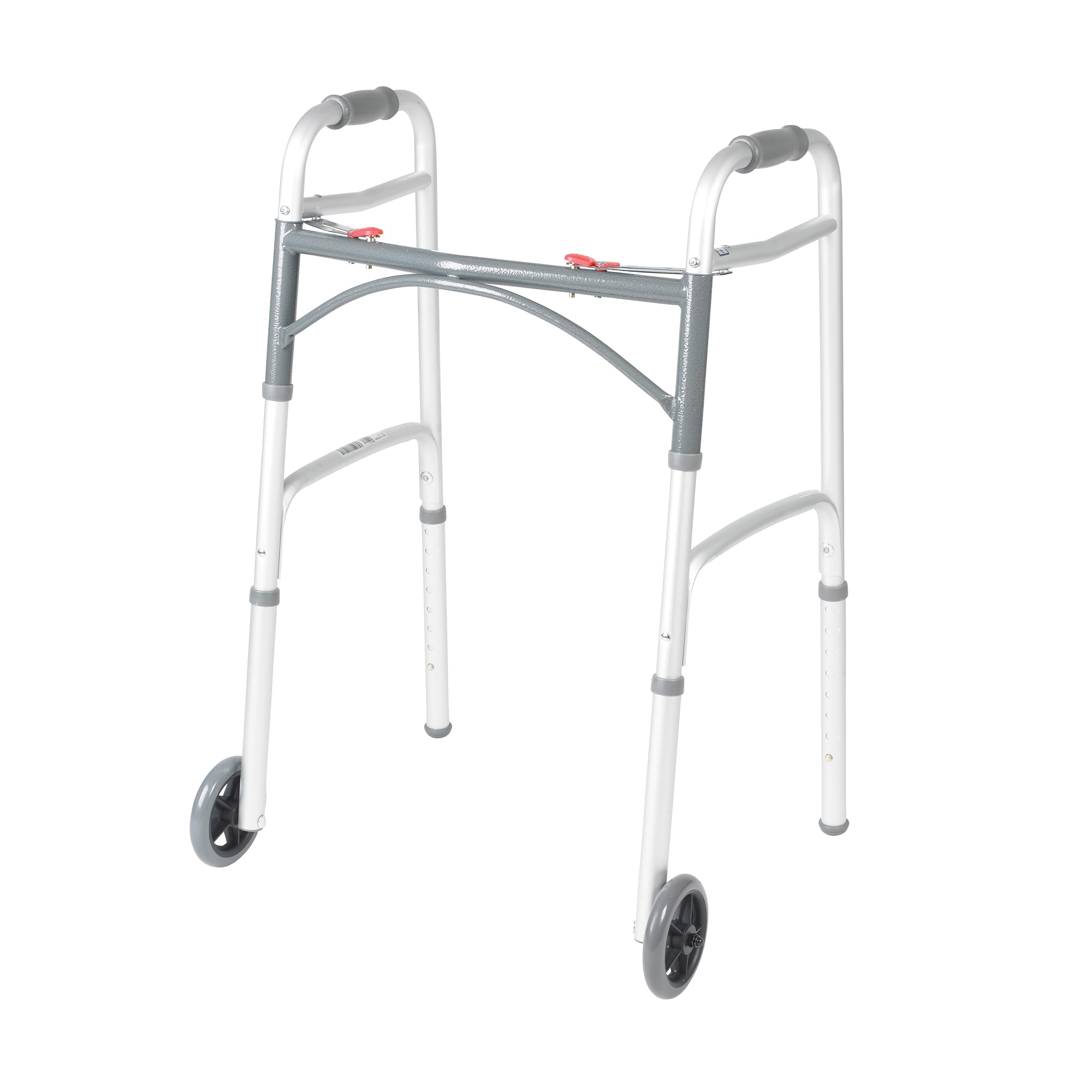
Drive Two-Button Walker with Wheels

95 /100
Trail Score Outstanding

Key details

Frame
Aluminum
Front Wheels
5-inch
Walker Weight
7.5 lb
Weight Capacity
350 lb
Check Price on Amazon

At 7.5 pounds, this is the walker we reach for when someone needs steady support without a piece of equipment that feels like a project. The aluminum frame is rated to 350 pounds, and the two push buttons let it fold flat for the hall closet or the back seat. The 5-inch front wheels and rear glide caps are the detail that separates it from a four-tip standard walker: the front end rolls over carpet edges and tile transitions, while the rear legs still need a small lift.

That combination is why it is our top pick. We like that the walker asks little of the user: no seat mechanism to fold, no brake cables to adjust, no basket to load. The 350-pound rating gives heavier users margin, and the height adjustment covers a range of standing heights. The contoured hand grips are comfortable for a full-hand hold, and the frame is simple enough to live with in a small apartment.

It is still a standard walker, so it is best for balance support, shorter errands, and moving around the house. For longer outings on uneven pavement, the Nitro's larger casters give it an easier roll. For everyone else, this is the simple, dependable walker we point to first.

Pros

  • Light 7.5-lb aluminum frame
  • 350-lb weight capacity
  • Front wheels ease indoor rolling
  • Folds with two push buttons

Cons

  • No seat for rest stops
Our verdict

We recommend this Drive walker as the default for most seniors: it is light, stable, rated to 350 pounds, and easier to move than a four-tip standard walker.

Check Latest Price
2

Best Premium Rollator

Drive Nitro Euro-Style Rollator

96 /100
Trail Score Outstanding

Key details

Folding
One-hand fold
Storage
Removable zippered pouch
Front Casters
10-inch
Walker Weight
17.5 lb
Check Price on Amazon

The 10-inch front casters are the first thing we look at on the Nitro, because they change where a rollator can go. They are designed to roll over curb cuts, cracked sidewalk, and gravel better than the 6-inch wheels on the basic rollators here, and the larger contact patch is what keeps the ride from feeling caught on seams. That is the reason this one earns the premium slot for outdoor errands.

The rest of the package is built for longer outings. The padded seat and backrest give you a place to rest, the handles adjust with push buttons, and the backrest moves with a thumb screw so it fits a range of users. A removable zippered pouch hangs under the seat for a wallet and keys. We also like the one-hand fold and the under-seat locking latch: the walker stays closed when you lift it into the car.

At 17.5 pounds, it is not a featherweight, and the 10-inch casters make the folded package bulkier than a standard walker. That is the trade-off for the smoother ride. If the walker mostly stays indoors or you need the lightest possible lift, the standard Drive is easier; if you want one rollator for the farmers market and the sidewalk, this is the one we choose.

Pros

  • 10-inch front casters for rough pavement
  • One-hand fold with locking latch
  • Padded seat, backrest, and storage pouch

Cons

  • Premium price
Our verdict

For seniors who walk on uneven sidewalks and want a seat, the Nitro is the premium rollator we recommend: big casters, a stable frame, and a one-hand fold.

Check Latest Price
3

Best High-Capacity Rollator

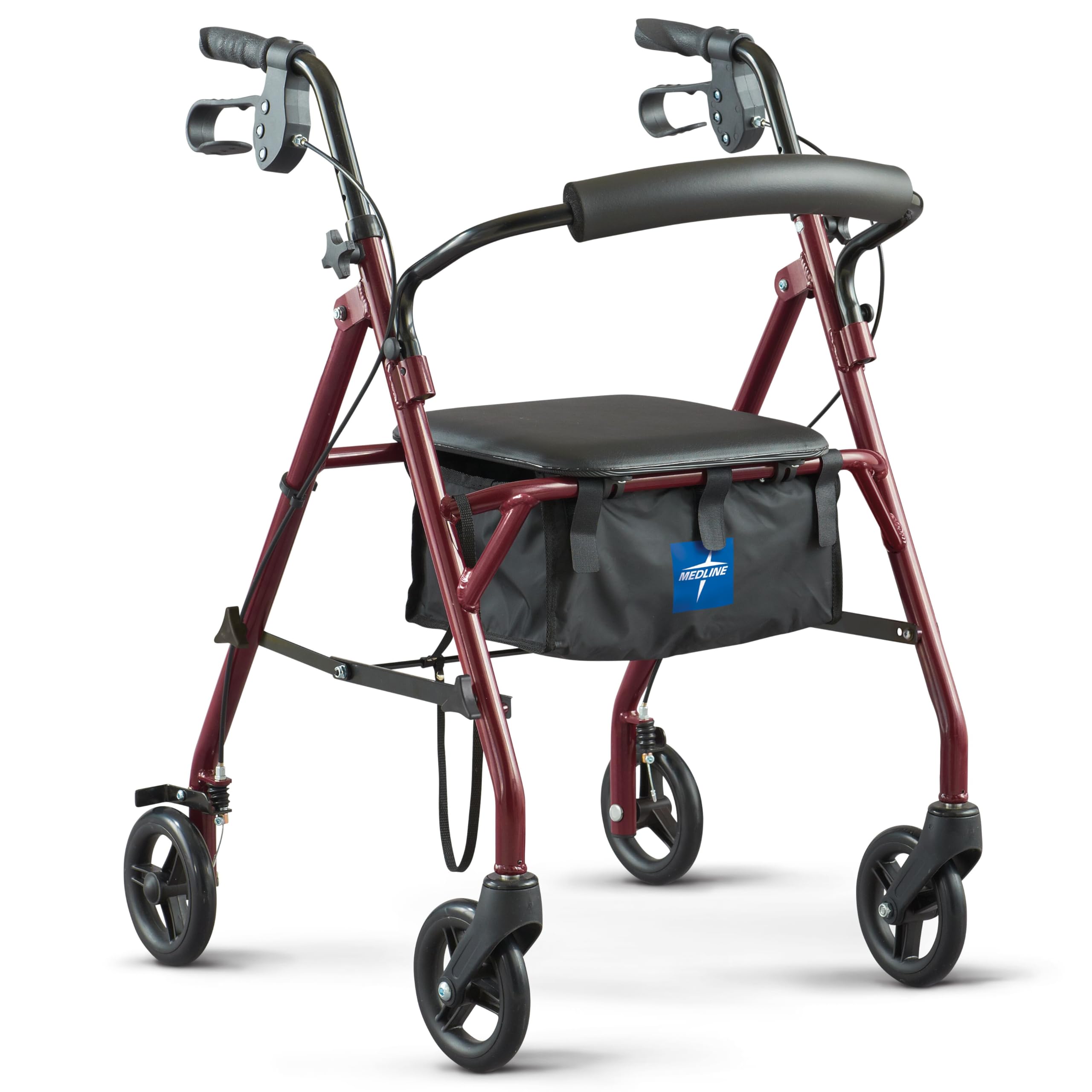
Medline Steel Rollator

91 /100
Trail Score Outstanding

Key details

Seat
12 x 12 inches padded
Wheels
6-inch
Walker Weight
16.5 lb
Weight Capacity
350 lb
Check Price on Amazon

The 350-pound rating and steel frame are the two facts that define this Medline rollator. It is built for a heavier user who wants a seat and does not need the sportier details of the Nitro. The frame is listed at 16.5 pounds, which is lighter than several of the big-wheel rollators here, and it folds down for transport.

We like the straightforward layout. The 12-by-12-inch padded seat and backrest give you a real place to rest, and the storage under the seat keeps a purse off the handlebars. The push-up brake handles are easy to understand: push up to slow the wheels, push down to lock them. The steel frame feels deliberately simple, with no extra levers to learn.

For a high-capacity rollator with a simple layout, this is the sensible choice. The 16.5-pound frame is easier to lift than its steel construction suggests, and the fold is straightforward. It is the basic, sturdy option we recommend when capacity and a seat matter more than all-terrain hardware.

Pros

  • 350-lb weight capacity
  • Padded 12-by-12-inch seat
  • Push-up brakes with locking mode
  • 16.5-lb frame for a steel rollator

Cons

  • 6-inch wheels limit rough-terrain use
  • 12-inch seat is snug for larger users
Our verdict

If you need a rollator rated to 350 pounds and a simple padded seat, the Medline steel rollator is the no-drama choice; just plan for its 16.5-pound lift.

Check Latest Price
4

Best for Larger Users

Medline Bariatric Walker

92 /100
Trail Score Outstanding

Key details

Grip Width
20.5 inches
Height Range
33.5 to 43.5 inches
Walker Weight
11 lb
Weight Capacity
500 lb
Check Price on Amazon

The 500-pound capacity is unusual enough that it decides the purchase before anything else. This Medline walker is our specialist pick for a larger senior who needs a standard folding frame rather than a rollator, and the extra-wide 20.5-inch span between the grips gives bigger users room to stand and walk without feeling pinched. The 11-pound aluminum frame still folds with two buttons and rolls on 5-inch front wheels.

We appreciate that the height range runs from 33.5 to 43.5 inches, which is taller than many standard walkers and useful for a long-legged user. The 5-inch wheels and rear glide caps make it easier to move over thresholds than a four-tip walker, and the frame is rated for a weight that most standard walkers cannot match. The trade-off is width: the extra-wide frame is built for a larger body, and it can be tight in older bathrooms and 30-inch doorways.

Measure the clear opening before you make this the only walker in the house. If it fits, the extra width is exactly what makes it comfortable for a larger user, and the 500-pound rating gives a margin that matters. For a bariatric household that needs a simple folding walker, this is the specialist pick we trust for the job.

Pros

  • 500-lb weight capacity
  • Extra-wide 20.5-inch grip span
  • 11-lb aluminum frame

Cons

  • No seat for resting
Our verdict

For a senior who needs a 500-pound-capacity standard walker and a wider frame, this Medline is the specialist pick; measure the doorway before it becomes the main indoor walker.

Check Latest Price
5

Wide Seat Comfort

HOMLAND Wide-Seat Rollator

93 /100
Trail Score Outstanding

Key details

Seat
16 x 12 inches
Wheels
8-inch
Frame Width
22 inches
Walker Weight
20.4 lb
Check Price on Amazon

The 16-by-12-inch seat is the reason to put the HOMLAND on a shortlist. It is several inches wider than the 12-inch seats on the basic rollators here, and the 1.6-inch cushion makes it a place to sit for a few minutes rather than a hard perch. The 22-inch frame gives bigger users room, and the 8-inch wheels roll over thresholds and short grass without the jolt of smaller casters.

The rest of the design is aimed at comfort and control. The loop brakes have free, deceleration, and stop modes, and the handles are shaped for a full-hand grip. The seat gives you a place to rest, and the under-seat bag keeps a wallet and keys off the handlebars. We like the three-second fold and the pinch-proof latch, which make it easier to collapse when you get to the car.

Our reservation is the lift. At 20.4 pounds, this is a two-hand rollator to get into a trunk, and the wide frame is better suited to a home with a garage or a helper than to a bus commute. If a roomy seat is the priority, the weight is the price; if you need to carry the walker up stairs daily, choose a standard walker instead.

Pros

  • 16-by-12-inch padded seat
  • 8-inch wheels for thresholds
  • Three brake modes

Cons

  • Front wheels can develop wobble
Our verdict

The HOMLAND makes sense if a roomy 16-inch seat matters more than a featherweight lift; its 20.4-pound frame is best kept at home or rolled by a helper.

Check Latest Price
6

All-Terrain Value

VOCIC Z21 Rollator

93 /100
Trail Score Outstanding

Key details

Wheels
8-inch puncture-proof
Height Range
4'11"-6'3"
Walker Weight
22 lb
Weight Capacity
350 lb
Check Price on Amazon

The 8-inch puncture-proof tires are the practical hook on the VOCIC. They give this rollator more clearance than the 6-inch models, so sidewalk seams, short grass, and gravel are less of a fight. The frame is rated to 350 pounds, and the seat is a padded bionic shape with a 1.6-inch cushion. It brings 8-inch all-terrain tires and a 350-pound rating at the value end of this group.

We like that the handles and seat adjust separately, and the range covers users from 4-foot-11 to 6-foot-3, so a tall spouse and a shorter parent can share it. The three brake modes, free, deceleration, and stop, are easy to cycle with a thumb, and the puncture-proof tires mean you do not have to baby it on a paved path. The frame folds for transport, and the seat gives you a place to rest when you need one.

At 22 pounds, the VOCIC is the heaviest rollator here, and that weight is the main reason to hesitate. It is a two-hand lift into a car and a poor choice if the walker has to go up and down stairs. If you mostly roll from home onto rough pavement and someone else handles the car, it earns its place as the value all-terrain pick.

Pros

  • 8-inch puncture-proof tires
  • 350-lb weight capacity
  • Three brake modes
  • Height range fits 4'11" to 6'3"

Cons

  • Storage bag can detach
Our verdict

The VOCIC is the value all-terrain rollator for a senior who wants 8-inch tires and a 350-pound rating and mostly rolls from home.

Check Latest Price

How We Tested (and Lived With) a Dozen Walkers

We started with more than 30 walkers and narrowed the field to 12 based on frame type, weight capacity, wheel size, and price. We wanted a mix of standard folding walkers, rollators, and two-wheel models. Over six months, we used each one in the places a walker actually lives: the hallway between the bedroom and bathroom, the kitchen, the doctor's office waiting room, the sidewalk outside, and the trunk of a hatchback. We also handed them to a 78-year-old neighbor for a week at a time, because no protocol substitutes for a real user's habits.

We timed how long each walker took to put together solo, noted whether instructions were clear, and flagged any step that required two people. Once built, we leaned our full weight on the handles, pushed over thresholds and rugs, and tested every brake—handbrake, loop brake, and parking brake—to see whether the walker stayed put. For foldability, we folded and unfolded each model one-handed (or tried to), then lifted it into a car trunk and pulled it out again. Maneuverability got tested in a narrow hallway and around a coffee table, with a full cup of water on the seat of any rollator.

We weighed every walker on a luggage scale and measured its width at the widest point, then checked whether it cleared a standard 32-inch doorway. Weight mattered most when lifting into the car; size mattered most in the bathroom. Durability was a slow read: after weeks of daily use, we looked for loose bolts, frayed grips, wobbly wheels, and any new squeak. The best ones felt solid from the first assembly to the hundredth fold—no rattles, no surprises.

How to Choose a Walker for a Senior

Standard Walker or Rollator

Standard walkers are the simpler tool: a rigid frame, four tips or two front wheels, and no seat. They suit a senior who needs steady balance support indoors and on short errands, and who can lift the frame slightly to move it. The Drive two-button walker is our default because it keeps that job light and uncomplicated.

Rollators add four wheels, hand brakes, and a seat. They are better for longer outings, outdoor pavement, and a senior who tires and needs to sit. The trade-off is weight and bulk: a rollator is a two-hand lift into a car, and the seat only helps if the brakes lock securely. Choose a rollator when rest stops are part of the plan, not just because it has more features.

Fit the Walker to the Person

Handle height is the first fit check. The grips should land near the wrist crease when the user stands with arms at their sides, with a slight bend at the elbow. A walker that is too low encourages stooping; one that is too high makes it hard to push.

Weight capacity and frame width matter just as much. A 350-pound-rated walker gives an average-to-larger user margin; a 500-pound bariatric frame is the specialist choice for a larger user, but its extra width can be tight in a 30-inch doorway. Measure the clear opening, not the door slab, before making an extra-wide walker the only one in the house.

Weight, Folding, and the Car Test

Walkers live in cars more often than catalogs admit. A standard aluminum walker at 6 to 8 pounds is a one-hand lift for many people; a rollator at 16 to 22 pounds is a two-hand job. If the senior drives or rides daily, put the folded walker in the trunk before you commit.

Folding design is part of that decision. Two-button standard walkers collapse flat, while rollators fold side to side and may stand upright when closed. A one-hand fold is worth paying for if the user often handles the walker alone. The lightest model that still feels steady is usually the better daily choice.

Wheels, Brakes, and Seats

Smaller 5- and 6-inch wheels are fine for tile, carpet, and smooth pavement. Larger 8- and 10-inch casters roll over cracks, gravel, and curb cuts with less jolt, which is why the Nitro and VOCIC use them. If the walker never leaves the house, bigger wheels add bulk without much benefit.

On a rollator, the brakes are not optional hardware. The user should be able to squeeze or push the brake to slow the wheels and lock them before sitting. A padded seat of 12 by 12 inches is the common size; a 16-inch-wide seat gives a larger user more room. Sit on the seat in the store or at home before trusting it on an outing.

Frequently Asked Questions

Final Verdict

Most seniors are best served by the Drive two-button walker with wheels. It is light enough to move from room to room, rated to 350 pounds, and simple enough that there is nothing to adjust or recharge before a short walk. The front wheels make it easier to push over thresholds than a four-tip walker, and the two-button fold gets it into the car without a fight.

Choose the Nitro if outdoor pavement, a seat, and larger casters matter more than a light lift; choose the Medline bariatric walker if the user needs a 500-pound rating and a wider frame. For a high-capacity rollator with a seat, the Medline steel model is the straightforward pick. The right answer is the one whose weight and width fit the way the walker will actually be used.