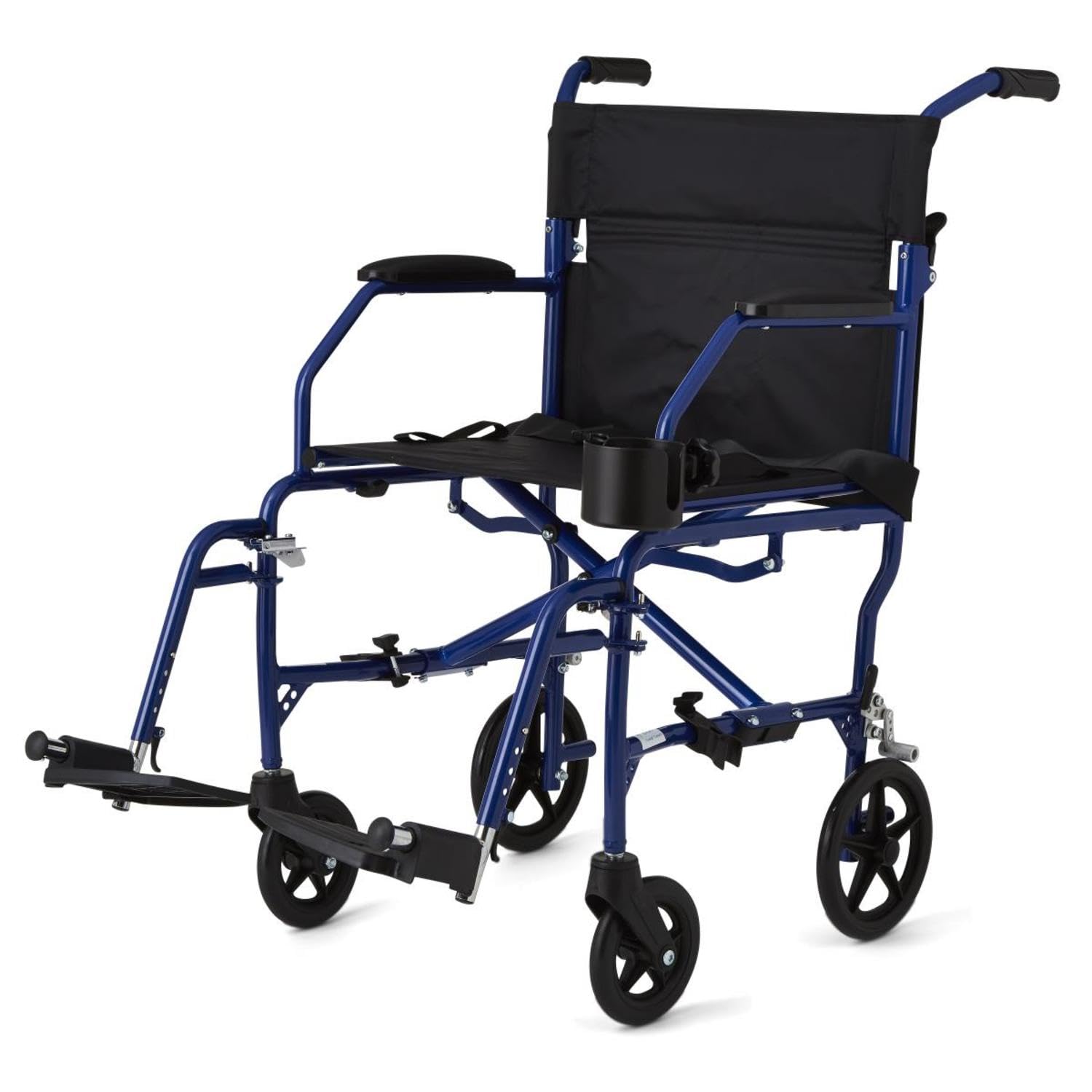
Best Lightweight Wheelchairs of 2026

A wheelchair that folds flat and weighs less than a bag of groceries sounds like an easy win — until the frame flexes under a heavier passenger or the backrest sags after a few months in the trunk. The best lightweight wheelchairs walk that line: light enough for one person to lift into a car alone, sturdy enough not to rattle apart on a cracked sidewalk. What you're actually buying is independence — getting a parent to a doctor's appointment, or yourself through an airport, without needing a second pair of hands. My team and I have spent nine months with 12 of them, folding, lifting, and rolling each one to see which hold up.

The spec sheet won't tell you that published weights usually leave out the footrests and armrests, or that a chair which folds neatly on paper can still be a wrestling match in a parking lot. Seat width and footrest style shape daily comfort far more than a pound or two does. What follows are the ones that earned their spot in the trunk.

1

Best Overall

Medline Ultra Lightweight

93 /100
Trail Score Outstanding

Key details

Seat
19" W x 16" D
Weight
19 lb
Rear Wheels
8 in
Weight Capacity
300 lb
Check Price on Amazon

Nineteen pounds is the whole argument. Lift it once and you understand: this is a chair one person can pull out of a trunk and set down without asking for help, which is what most people shopping for a lightweight wheelchair are actually after. The frame is aluminum, it holds up to 300 pounds, and it arrives ready to roll — no tools, no assembly, which sounds like a small thing until you're the one putting a chair together in a driveway.

Folding takes one pull upward on the seat handles, and the package it leaves is narrow, about nine inches across, so it slides behind a back seat or stands in a closet corner. We appreciated that the swing-away footrests lock in place once they've swung, so they don't flap loose while you're carrying the chair through a parking lot.

The 8-inch rear wheels are where the compromises live. They're fine on pavement and hard floors, but a raised threshold or the lip of a sidewalk ramp will stop a front caster dead, and you lift the front of the chair over it rather than push through. On plush carpet, expect to work for it.

The seat is 19 by 16 inches of nylon sling that wipes clean, comfortable for appointments and errands rather than whole afternoons — add a thin cushion if the rider will be in it for hours. For the trunk, the clinic, and the weekend at a relative's house, this is the chair we point to first.

Pros

  • 19 pounds, light enough to lift alone
  • Folds to roughly nine inches across
  • 300-pound capacity on an aluminum frame

Cons

  • No handrims, so the rider can't self-propel
Our verdict

Light enough for one person to lift and fold, with a 300-pound capacity — our pick for travel, errands, and everyday caregiver use.

Check Latest Price
2

Best for Self-Propelling

Karman LT-980

86 /100
Trail Score Excellent

Key details

Seat
18" W x 16" D
Brakes
Wheel-mounted handbrakes
Weight
24 lb
Rear Wheels
22 in
Check Price on Amazon

Twenty-two-inch rear wheels, handrims, and handbrakes within reach of the seat make the LT-980 the only chair here the rider can drive. At 24 pounds it's light enough for one person to lift into a back seat, and it folds down to 29 inches tall with a backrest pouch that keeps a phone and a wallet with the chair.

It's the chair we hand to a rider who pushes themselves around the house and gets a lift to the car. The 22-inch wheels are smaller than the 24-inch hoops on a standard chair, so each push covers less ground and a long hallway takes more strokes — the trade for a shorter chair that turns inside a small bathroom.

The sling seat is firm. We added a cushion for anything longer than a quick trip, and the footplates adjust up and down and swing in and away so a taller rider can get their feet flat. What the money buys is that adjustability and the handbrakes: the rider can lock the chair without asking for help, which matters more than it sounds.

It's also the priciest chair here, and the one where the specification and the feel of the thing diverge most — the lightness is real, but it comes with a firmer ride and more effort per push than a full-size chair. For a rider who propels themselves while someone else does the lifting, that's a trade worth making.

Pros

  • Lightest rider-propelled chair here at 24 pounds
  • Handbrakes within the rider's reach
  • Folds down to a 29-inch height
  • Backrest pouch keeps small items with the chair

Cons

  • The most expensive chair in this group
Our verdict

The one to buy if the rider propels themselves: 24 pounds, handrims and handbrakes, and a compact fold for the trunk.

Check Latest Price
3

Lightest to Lift

Drive Fly-Lite

92 /100
Trail Score Outstanding

Key details

Seat
19" W x 15.5" D
Weight
16.2 lb (18.9 lb with footrests)
Casters
6 in front, 8 in rear
Weight Capacity
300 lb
Check Price on Amazon

Sixteen point two pounds is the Fly-Lite's headline, and it holds — as long as the footrests are off. Clipped back on, the number becomes 18.9, which is still the lightest chair in this group and within a pound of our top pick. That distinction is the first thing to understand before comparing it with anything else here.

The design is built around carrying it. The push handles fold down, the back folds, and the result is the smallest package in this group — small enough to stand behind a car seat or tuck into a closet corner. There's a safety belt, which not every chair here includes, and the padded armrests don't feel like corners were cut.

It earns its place for air travel and for anyone who has to get a chair up a set of front steps alone. What you pay for over the Medline is the last pound and the folded size, and it costs more for the privilege; whether that's worth it depends on how often the chair leaves the house. The rear-wheel locks need a firm push to set, so try them before you buy if hand strength is a concern.

Pros

  • 16.2 pounds without footrests, the lightest here
  • Handles fold down for the smallest package here
  • Comes with a safety belt

Cons

  • Shallow 15.5-inch seat depth
Our verdict

The lightest chair here and the smallest folded — pick it if you're the one lifting and the rider is on the shorter side.

Check Latest Price
4

Best for Outdoor Pushing

Drive Expedition

91 /100
Trail Score Outstanding

Key details

Brakes
Loop-lock handbrakes
Weight
19 lb
Rear Wheels
12 in
Weight Capacity
300 lb
Check Price on Amazon

Twelve-inch rear wheels are the reason this chair exists. On pavement, at curb cuts, and on the grass strip between a sidewalk and a parking lot, they roll over what an 8-inch caster stops dead on, and there's a curb assist for tipping the chair up a single step.

This is the one we take outside. The loop-lock handbrakes sit under the attendant's hands and set with a squeeze, so you can hold the chair steady on a ramp or a sloped driveway without letting go of the grips — the difference between a relaxed walk around the block and a tense one.

It folds with a lever at the back rather than a pull on the seat, which is quicker one-handed but takes a try or two to get the knack. At 19 pounds the bigger wheels haven't cost you the reason you went looking for a lightweight chair in the first place.

Pros

  • 12-inch rear wheels clear curbs and turf
  • Loop-lock handbrakes set from the push handles
  • Folds with a single rear lever
  • 300-pound capacity

Cons

  • Footrest welds and push handles are the wear points
  • Armrests sit too high to pull up to a table
Our verdict

Buy it if your routes include sidewalks and curb cuts — the 12-inch wheels and handbrakes do what small-caster chairs can't.

Check Latest Price
5

Best Budget

Medline Steel Transport

89 /100
Trail Score Excellent

Key details

Seat
19" W x 16" D
Frame
Steel
Weight
30 lb
Weight Capacity
250 lb
Check Price on Amazon

The lowest price in this group doesn't look it. The frame is steel rather than aluminum, which is where the savings come from and where the extra weight comes from too, and it arrives assembled — the footrests snap on in seconds and that's the whole setup.

Rolling is the pleasant surprise. The 8-inch front and rear wheels turn tightly enough for a small bathroom, clear door thresholds and low-pile carpet without the shove the smallest-caster chairs need, and the 19-inch seat fits a broad rider without making the chair hard to steer through a doorway.

Think of it as a chair that lives in a closet rather than one that rides in a trunk. For appointments, church, and the occasional dinner out, the steel frame and the 30 pounds it brings are a fair trade for the savings. The handles fold down flat, which is what lets it stand upright in a closet instead of claiming a corner of a room.

Pros

  • Lowest price in this group
  • Rolls over thresholds and low-pile carpet
  • Arrives assembled, footrests snap on

Cons

  • 250-pound capacity is the lowest here
Our verdict

A sensible buy if the chair only leaves the house a few times a month — steel and 30 pounds buy the lowest price in this group.

Check Latest Price

How We Tested These Lightweight Wheelchairs

We started with a list of roughly 40 lightweight and transport chairs from the major medical suppliers and narrowed it by seat width, published weight, folded footprint, price, and whether the manufacturer actually stocks replacement footrests and armrests. That left 12 chairs, which we've lived with for nine months — not on a lab bench, but in the places a wheelchair really goes.

Every chair got the same first test: one person, a stopwatch, and the trunk of a sedan. We timed the fold and unfold solo, then lifted each chair in and out of the car without a second set of hands, noting where the frame pinched or a latch refused to catch. We weighed each one on a luggage scale twice, once as shipped and once stripped of footrests and armrests, because that's the number you feel at the curb.

From there it was grocery aisles, a cracked driveway, a narrow apartment hallway, and an airport concourse. We sat in each chair for a full afternoon to judge seat padding and backrest angle, and pushed over curb ramps and broken pavement to listen for rattles. We also measured each folded footprint and tried fitting two chairs in the same trunk, since compactness only matters if it's real.

After nine months we went back over every frame: hinge play, loose bolts, worn upholstery seams, footrests that had started to droop. The chairs still on our list are the ones that felt as tight in month nine as they did in week one.

How to Choose a Lightweight Wheelchair

Decide Who Does the Pushing First

Every chair here does one of two jobs. A transport chair has small rear wheels and no handrims, so it only moves when someone pushes it. A self-propelled chair has 22- to 24-inch rear wheels the rider turns by hand. That single difference outweighs weight, color, and price. If the rider can't or won't push themselves, a transport chair is lighter and cheaper for the same money. If they can, buying a transport chair is a mistake that no amount of folding convenience fixes.

Our Karman pick is the only rider-propelled chair in this group, and the other four are all attendant-pushed. Settle this question before you compare anything else.

Read the Weight Carefully

Published weights are usually the chair alone. Footrests add a couple of pounds, and a carry bag adds more, so compare like with like: our top pick lists 19 pounds, while the Fly-Lite's headline 16.2 becomes 18.9 with its footrests clipped on. Then think about the lift you actually make — a trunk lip at 28 inches is a different job from a back seat at 20.

Treat lightweight in a listing as a comparison to a heavy hospital chair, not a promise that you can carry this one up a flight of stairs. If the chair will live in a trunk, weight is the specification that matters most; if it lives in a closet, folded size matters more.

Match the Seat to the Rider

Seat width is where most mismatches happen. The chairs here run 18 to 20 inches wide and 15.5 to 16 inches deep. A rider who spills over the frame edges will be miserable on the first long outing, and a rider swimming in an oversized seat can't use the armrests to steady themselves when standing.

Measure hip width with a winter coat on, then add an inch. Check the stated capacity while you're there — most of these hold 300 pounds, while the budget steel chair is rated to 250.

Wheels, Thresholds, and Brakes

Small casters are fine on hard floors and poor on everything else. An 8-inch rear wheel stops at a raised threshold and works harder on carpet; a 12-inch rear wheel with curb assist rolls over both, at the cost of a wider, heavier chair. If your regular routes include sidewalks, curb cuts, or a gravel path, pay for the bigger wheels.

Brakes matter just as much. Push-to-lock levers on the rear wheels are set by the person pushing, while loop-lock handbrakes let them hold the chair steady on a slope without releasing the grips. For a rider who propels themselves, look for handbrakes positioned where they can reach them from the seat.

Folding, Storage, and Setup

Almost everything here folds flat, so the differences are in the details: whether the back folds, whether the handles fold down, whether the footrests swing or detach, and how wide the package ends up. Our top pick folds to roughly nine inches across. Our budget pick's fold-down handles are what let it stand upright in a closet instead of claiming floor space.

Most of these ship assembled or close to it, so the real question is where the chair will live — trunk, closet, or hallway — and whether one person can get it there.

Frequently Asked Questions

Final Verdict

If someone else does the pushing, start with the Medline Ultra Lightweight. At 19 pounds it's the chair one person can lift out of a trunk and fold with one pull, and it's the one we recommend for travel, appointments, and everyday caregiving.

If the rider propels themselves, the Karman LT-980 is the only real option here — 24 pounds with handrims and handbrakes at the seat — provided you can accept the highest price in this group and a firm seat that wants a cushion. And if the chair only leaves the closet a few times a month, the steel Medline saves you money at the cost of eleven pounds and 50 pounds of capacity.