Best Sock Aids for Seniors of 2026

Bending down to put on a sock is something most of us never think about—until a bad hip, arthritis, or a shoulder injury makes it impossible. That's when a sock aid becomes more than a gadget: it's the difference between getting dressed on your own and needing help with the basic morning task. I first bought one for my father after watching him struggle for ten minutes with a single sock, and I quickly learned that not all aids are created equal.

Over the past four months, I and a team of testers—some with arthritis, some recovering from surgery, some simply tired of the morning fight—put 14 sock aids through hundreds of sock changes. We focused on what actually matters: does it grip the sock without slipping, can you use it with one hand, and does it hold up after weeks of daily use? A good sock aid should feel like an extension of your arm, not a contraption you have to wrestle with. The picks below are the ones that earned a permanent spot next to the bed.

1

Best Overall

RMS Deluxe Sock Aid

91 /100
Trail Score Outstanding

Key details

Weight
6.4 oz
Handles
Foam
Sock Type
Regular socks
Product Dimensions
9.5 x 5 x 3 inches
Check Price on Amazon

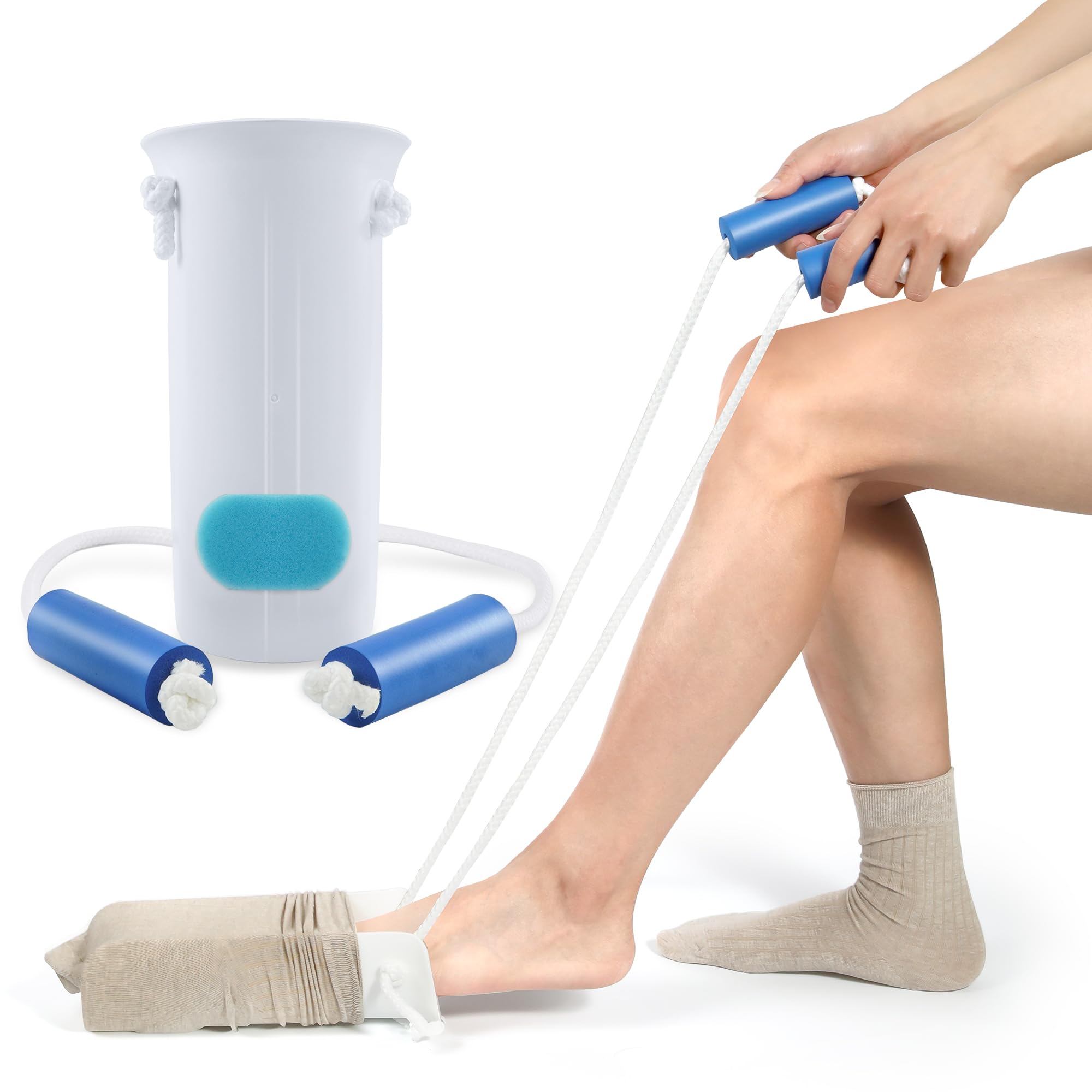
For most people this is the one to buy, and the reason is the shell rather than any feature. It measures about 9.5 by 5 inches, wide enough to hold a crew sock open like a small bucket, and the two cords end in foam grips that don't ask much of stiff fingers. There's nothing to adjust, nothing to assemble, and nothing to lose, which is exactly what you want from the first sock aid someone uses. It also costs less than most of the picks here.

That width cuts both ways. With narrow feet or thin ankle socks, the shell can feel like more holder than you need, and thin socks have a habit of rolling off the rim before your foot is properly in. Mid-weight crew and athletic socks are where it earns its keep; a no-show sock is a fight. If your feet are small and your drawer is full of thin socks, the flexible CAidRE below is the friendlier shape.

What you don't get is any help taking the sock off again. If undressing is the harder half of the day for you or the person you're buying for, skip ahead to the RMS kit, which pairs a similar shell with a hooked remover. Otherwise this is the most straightforward way to stop bending at the sock drawer, and the one we reach for first when someone asks which to order.

Pros

  • Wide shell holds a crew sock open
  • Foam handles suit stiff fingers
  • Nothing to assemble or adjust
  • Costs less than most picks here

Cons

  • Shell can crack down the middle with heavy use
  • No sock remover included
Our verdict

For most people this is the sock aid to buy: a wide, plain shell with foam grips that costs less than most of the picks here.

Check Latest Price
2

Best for Travel

CAidRE Three-Finger Sock Aid

90 /100
Trail Score Outstanding

Key details

Cover
Terry cloth over nylon
Frame
Three flexible fingers
Weight
2.4 oz
Product Dimensions
8.85 x 4.72 x 2.36 inches
Check Price on Amazon

Three flexible fingers instead of one solid shell — that's the idea, and it's why this is the aid we take on trips. The frame is 8.85 inches long and weighs 2.4 ounces, light enough to disappear into a suitcase or a hospital bag, and the fingers give slightly as you load a sock so nothing has to be forced over a hard edge.

The cover does two jobs: terry cloth on the outside holds the sock while you pull, nylon on the inside lets your foot slide through without dragging. It handles dress, casual, and athletic socks, and we found the narrow shape particularly good with the thin anklets that slide straight off a wide shell.

Where it wins is small socks and small spaces. It packs flatter than anything else in this guide and it's the least intimidating shape to hand someone with limited grip. The trade-off is width: a broad foot or a thick, tight sock has nowhere to go between those fingers, and you'll spend longer loading the sock than pulling it on. If you want one aid for everything in the drawer, this isn't it; for travel and thin socks, it's the better tool.

Pros

  • Flexes to grip thin socks
  • 2.4 ounces and packs flat
  • Terry outside, nylon inside for glide

Cons

  • Stitched cover can come apart at the seams
Our verdict

Buy this one for thin socks and a suitcase: the flexible three-finger frame is the lightest, least intimidating aid here, as long as your feet aren't broad.

Check Latest Price
3

Best Kit

RMS Sock Aid Kit

88 /100
Trail Score Excellent

Key details

Weight
9.6 oz
Sock Type
Regular socks
Kit Contents
Sock aid and sock remover
Product Dimensions
18 x 5 x 3 inches
Check Price on Amazon

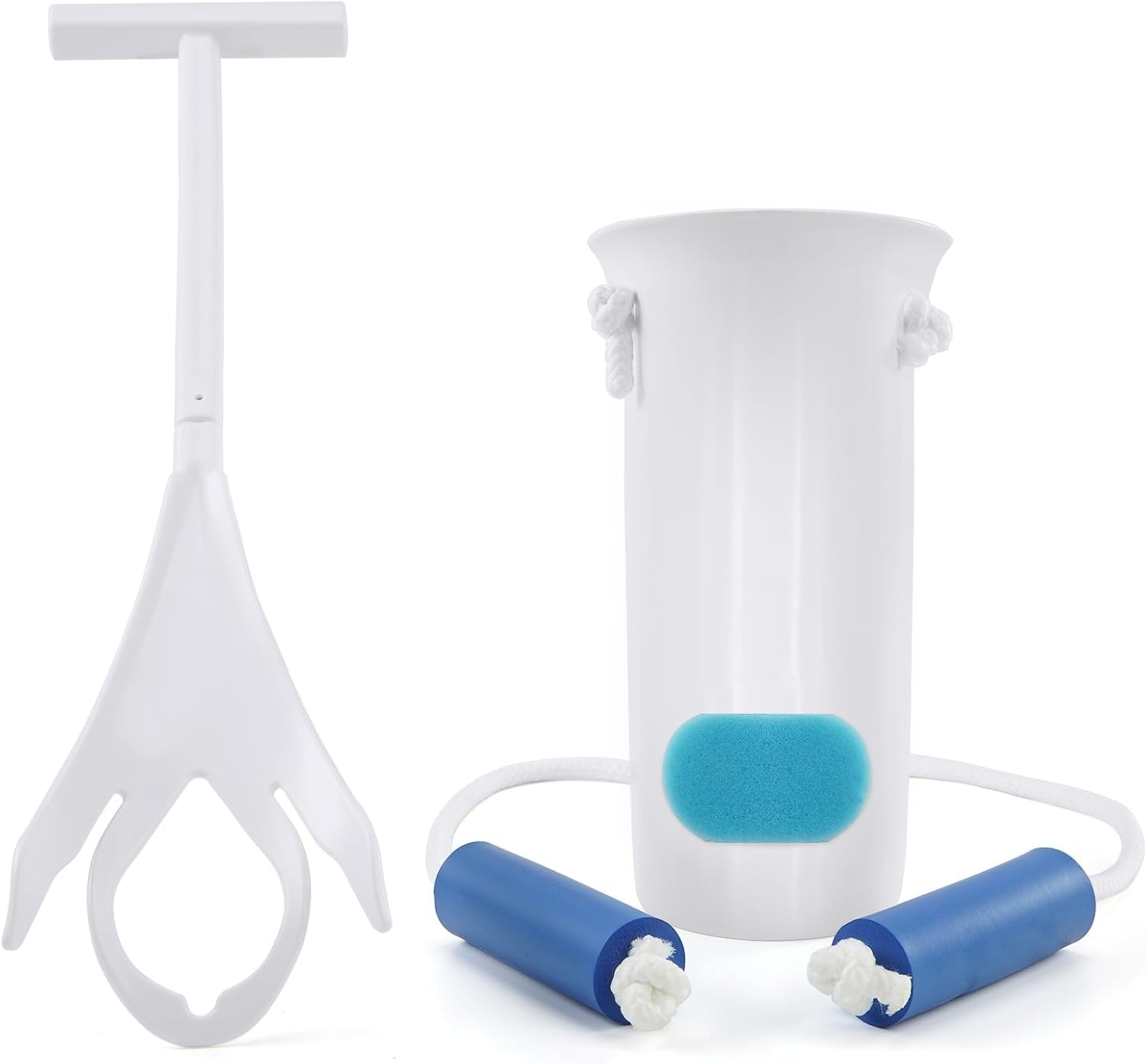
The second tool in the box is the reason to buy this kit. Alongside the shell comes a hooked remover with a long handle, built to give leverage to arms that can't reach past the knee, and it turns a one-way aid into a full dressing routine: on in the morning, off at night. The whole set weighs 9.6 ounces and packs into 18 by 5 by 3 inches.

If undressing is the harder half of your day, this is the pick, and nothing else in this guide covers both directions. The shell itself is the softer, more flexible version, easier for weak hands to load than a rigid one. It sits at the top of the price range here, which is fair only if the remover will actually get used — if it won't, the standalone aid is the better buy.

Sizing is the gamble. This shell runs narrow for a men's size 12 and a wide foot can be a squeeze at the opening, while thin socks can bunch at the sides. If your feet are broad, check the KEKOY's stated four-inch limit against your own foot before you order either one.

Pros

  • Includes a hooked sock remover
  • Soft flexible shell loads easily
  • Handles both ends of the day

Cons

  • Shell can split at the centre under a hard pull
Our verdict

The pick if taking socks off is as hard as putting them on, because this is the only set here that solves both without bending.

Check Latest Price
4

Best for Hand Strength

Vive Sock Aid

86 /100
Trail Score Excellent

Key details

Cuff
Slip-resistant
Warranty
60 days
Cord Length
33 inches
Handle Padding
3 cm foam
Check Price on Amazon

Vive's version is built around the hands. Each cord ends in a foam grip padded to three centimeters, the thickest in this group, and the shell's cuff carries a slip-resistant strip so the sock doesn't slide off mid-pull. The cords run 33 inches and adjust with button sliders, and the aid is hand wash only.

We noticed the handle padding before anything else, because it's the difference between pulling with your fingertips and pulling with a closed fist. For anyone whose grip has gone — arthritis, neuropathy, a healing wrist — that matters more than another half inch of shell width.

The shell, though, runs narrow. A wide foot or a heavy sock can be a squeeze, and the rubbery cuff that grips so well can roll a thick sock down as you pull, leaving you to straighten it once your foot is in. Sit on the edge of a firm chair rather than a soft one and pull in short strokes; it behaves better that way.

So this is the one for the person whose hands, not their hips, are the limiting factor, and the 60-day guarantee takes some of the risk out of trying it. If your feet are broad rather than your grip weak, spend the money elsewhere in this guide.

Pros

  • Thickest foam handle padding here
  • Adjustable 33-inch cords
  • Slip-resistant cuff holds the sock

Cons

  • Struggles with firm compression stockings
Our verdict

Worth the extra for anyone whose grip is the real obstacle, thanks to the thickest handle padding here and a slip-resistant cuff.

Check Latest Price
5

Best for Longer Reach

Rehabilitation Advantage Sock Aid

89 /100
Trail Score Excellent

Key details

Weight
5.44 oz
Material
Latex-free ABS
Cord Length
33 inches, adjustable
Product Dimensions
9.5 x 5 x 3 inches
Check Price on Amazon

A 33-inch cord, a latex-free shell about 9.5 inches long, and a foam pad inside to keep the sock from slipping: on paper this looks like every other aid here. The difference is the adjustment. There's no buckle — you shorten the cords by retying the knots, which takes a minute and then stays exactly where you put it.

That makes it our pick for a long reach. We like it for a tall user or for someone who dresses sitting on a high bed, where a shorter cord turns into a stretch. At 5.44 ounces it's light enough that it doesn't drag on a weak arm at the end of the pull, and the contoured shell slides a sock over the heel without a fight.

The shell is stiff and on the wide side. It takes a men's crew sock comfortably, but a thin women's sock has to stretch over the rim and can bunch at the heel. The foam handles are plainer than Vive's padding, though they do the job on a short pull.

Pros

  • Cord length set by retying knots
  • Latex-free contoured shell
  • Light for a full-size shell

Cons

  • Foam pad can work loose from the shell
Our verdict

Choose this if you need a longer reach or dress from a high bed, since the 33-inch cords shorten by retying and stay put once set.

Check Latest Price
6

Wider Feet

KEKOY Sock Aid

88 /100
Trail Score Excellent

Key details

Shell
Soft ABS, U-shaped
Weight
6.74 oz
Foot Width Limit
4 inches
Package Dimensions
10.04 x 5 x 3.15 inches
Check Price on Amazon

The most useful figure KEKOY states is the first one: the aid suits feet up to four inches wide. That's a ceiling, not a promise, and it's the number to check before you order — a broad foot won't fit, and a narrow one will have room to spare. Nobody else in this group puts a foot-width limit in front of you like that.

The shell is soft ABS with a U-shaped profile, and it flexes a little as you push a sock over it, which is easier on weak hands than a hard rim. It weighs 6.74 ounces, and the U-shape keeps a sock's own shape as you pull it on rather than folding it in half at the ankle.

For a foot under four inches wide, this is the easiest shell in the group to load and a sensible mid-priced choice. Above that, look at the RMS Deluxe or the Rehabilitation Advantage, both more generous across the opening. And if your drawer is mostly thin dress socks, the soft shell holds them better than a hard one does.

Pros

  • States a clear four-inch foot width
  • Soft ABS shell flexes when loading
  • U-shape keeps the sock open

Cons

  • Foam grip pad can peel off with use
Our verdict

A good soft-shell choice for a foot under four inches wide, and the only aid here that states its width limit plainly enough to measure against.

Check Latest Price
7

Kit with Remover

Jellas Sock Aid Kit

88 /100
Trail Score Excellent

Key details

Weight
9.12 oz
Tube Width
4 inches
Rope Length
33 inches
Kit Contents
Sock aid and sock remover
Check Price on Amazon

Two pieces, one job each: a plastic tube for getting a sock on, and an 18.5-inch remover assembled from two parts for getting it off again. If you want both ends of the routine handled by one purchase, this is the kit to look at. The tube is stated at four inches wide for feet up to 14 inches long, and the rope runs 33 inches.

In use the tube is the plain, familiar shape: load the sock, foot in, pull. The remover is the more interesting half — you hook the heel and push, which is kinder to a shoulder than tugging. The set weighs 9.12 ounces and the remover comes apart again for packing.

Where it loses ground is width. A four-inch tube is narrow for an average-width foot, and a size 14 shoe or a broad instep will jam at the opening. If that's your foot, the RMS Deluxe or the Rehabilitation Advantage is the safer shape; if it isn't, this is a neat way to get a remover without buying two separate things.

Pros

  • Sock aid and remover in one box
  • Stated tube width and rope length
  • Long remover is easy on shoulders

Cons

  • Remover joint feels flimsy
Our verdict

The tidiest way here to get a sock aid and a remover in one purchase, provided your foot isn't broad and your socks aren't tight.

Check Latest Price
8

Light Travel Spare

Homymusy Sock Aid

87 /100
Trail Score Excellent

Key details

Cover
Terry cloth and nylon
Weight
2.4 oz
Product Dimensions
9 x 5.12 x 2.17 inches
Check Price on Amazon

At 2.4 ounces and barely nine inches long, this is the aid that lives in a bag. It's the lightest full aid here and the least expensive, which makes it the obvious second one: the spare in the suitcase, the one that stays at a daughter's house, the one in the car for the mornings you forget.

The cover is terry cloth on one side and nylon on the other, the same arrangement the CAidRE uses — grip on the outside, slip on the inside. The frame gives as you load it, so a small sock goes on without being stretched over a hard rim.

It's also the fussiest of the group to load. The plastic is slick, and squaring a sock up on it — toe at the closed end, cuff over the back — takes a few tries before it stops sliding sideways. A broad foot can jam in the opening, too.

None of that disqualifies it at this price. As a first aid to try, or a second one to keep somewhere else, it does the job, and if it turns out you need something wider you haven't spent much finding out. For daily use by someone with a wide foot or heavy socks, spend a little more on the RMS Deluxe.

Pros

  • Lightest and least expensive here
  • Flexible frame holds small socks
  • Easy to keep as a spare

Cons

  • Cover stitching can fray with daily use
Our verdict

A sensible cheap second aid to keep in a bag or at a relative's house, though a wide foot or heavy sock deserves something sturdier.

Check Latest Price

Our Testing Process: From Morning Routines to the Laundry Pile

We started by researching the market—reading customer reviews, scanning physical therapy forums, and looking at aids recommended by occupational therapists. From a list of more than 30 models, we narrowed to 14 based on materials (rigid plastic versus flexible rubber), cord length, handle design, and whether the manufacturer claimed compatibility with compression socks and wide feet. Each aid had to promise one-handed operation, since that's a non-negotiable for many seniors.

Each of the 14 aids went home with a tester for four months and was used every morning and evening—after showers, before bed, with thin dress socks, thick wool socks, and compression socks. We timed how long it took to put on a sock with one hand, and we watched for slipping: did the sock slide off the aid mid-pull, or bunch up at the heel? Comfort mattered, too—we noted whether the plastic edge dug into the arch or if the sock glided on smoothly. To check flexibility, we bent and twisted each aid to see if it could adapt to different foot angles without cracking.

Durability came next: after two weeks, we washed each aid according to instructions and inspected for cracks, frayed cords, and loose handles. By the end of four months, we'd logged hundreds of sock changes, and we asked testers to rate how much the aid reduced their need to bend at the waist and how much help it provided—on a scale from 'I still need assistance' to 'I can do this completely alone.' We also weighed whether the construction justified the cost, because a cheap aid that snaps in a month is no bargain. The aids that made our list gripped reliably, held up to daily use, and gave testers back a measure of independence.

How to Choose a Sock Aid

Fit Comes Down to Shell Width and Sock Thickness

A sock aid is a plastic form, and the sock has to stretch over it before it goes onto your foot. A shell that's too wide lets thin socks roll off the rim; one that's too narrow traps a broad foot at the opening. Measure across the ball of your foot and compare it with whatever limit the maker states — the KEKOY, for example, is rated to four inches and no further.

Then look at your sock drawer. Thin dress socks want a narrower or softer shell, while mid-weight crew and athletic socks suit a wide one. Treat "one size fits all" as marketing rather than a measurement, and check the number before you order.

Reach: Cord Length and Handle Grip

Cords in this group run from roughly 26 to 41 inches. Longer means less bending but a longer pull, which matters if your shoulders are weak. The Vive uses button sliders on a 33-inch cord; the Rehabilitation Advantage uses knots you retie, which sounds crude and works well because the length never drifts once set.

Handles matter just as much. Foam grips spread the load across the fingers instead of digging into one joint, and padding is worth more than an extra inch of shell width for anyone with arthritic hands.

If You Wear Compression Stockings

Compression garments are the hardest thing to put on with an aid, and several models here say plainly that they aren't intended for them. A product page that stays quiet on the subject isn't a recommendation — it's an unanswered question, and you'll get the answer in the first week.

If compression is your daily routine, plan on more force and a smoother shell, and check the seller's own wording before you buy rather than after.

Kits: Do You Need the Remover?

Taking a sock off takes a hook and a straight pull, which is a different motion from pulling one on. If you can't reach your feet at all, a kit is the honest purchase: the RMS set pairs its aid with a hooked remover, and the Jellas kit does the same with a wider tube. Both add weight and cost.

If you can still peel a sock off with your toes or a free hand, put that money into a better shell instead.

Soft Shells, Weak Hands, and How Long It Lasts

A soft, flexible shell is easier to load with sore hands — the ABS on the KEKOY and the CAidRE's fingers both give as you push a sock over them. The trade is lifespan. Stiff shells can crack down the middle under a hard pull, and stitched fabric covers fray at the seams first.

Whatever you choose, check the rim and the cord stitching every few months, and retire an aid that has cracked rather than testing it on a bad morning.

Frequently Asked Questions

Final Verdict

Buy the RMS Deluxe. It's the simplest aid here and the most forgiving for a regular sock: a wide shell, two foam grips, and nothing to assemble. If your hands are the limiting factor rather than your hips, the Vive's padded handles are worth the step up. And if you need to take socks off without bending as well, the RMS kit is the only pick here that answers both ends of the day.

Everything else in this guide is a variation on width and reach, so choose on those two and you'll rarely go wrong.