Best Shoes for Elderly with Balance Problems of 2026

Falls are the thing nobody wants to think about until a shoe makes them think about it. A sole that's too thick dulls the feedback your feet need, a heel that slips on tile turns an ordinary turn into a wobble, and laces that won't stay tied become a hazard in the doorway. The right pair does one job: it keeps you steady and makes you willing to keep walking.

Over the past eight months my team and I have put 12 pairs through daily wear — driveways, grocery aisles, staircases, and the carpeted hallway at 2 a.m. Here's the counterintuitive part: the cushiest shoe in the box is rarely the safest one. Deep, squishy foam feels wonderful standing still and gives you nothing to push off against. A firm heel counter, a sole that bends at the ball of the foot rather than in the middle, and a closure you can work while seated matter far more. The picks below are the ones that got all three right, and the ones that look enough like ordinary shoes that nobody's going to ask about them.

1

Best Overall

FitVille EasyTop Wings

89 /100
Trail Score Excellent

Key details

Style
Slip-on walking shoe
Width
Extra wide
Closure
Hook-and-loop panel
Check Price on Amazon

The first thing we look at in a shoe for someone with balance problems is not the sole. It is how the shoe gets onto the foot. The EasyTop Wings is built around that: the top opens nearly to the toe, and a hook-and-loop panel runs the length of the opening, so a foot drops down into the shoe instead of being worked through a collar. That sounds like a small design choice. It is the reason this is the pair we recommend first.

Once the foot is in, the fit is unusually forgiving. The toe box lets toes lie flat rather than pressing together, and the strap can be let out or cinched as a foot swells through the day, which matters most in the afternoon when feet are at their largest. It also avoids the look of a medical shoe; with trousers on, the closure barely shows. That is not vanity. It is the difference between a shoe that gets worn to church and one that stays by the door.

Cushioning is soft rather than firm, and the inside is padded enough that a long morning of errands does not leave the ball of the foot aching. What a soft shoe cannot do is correct anything. If a clinician has asked for firm, motion-controlled support, this is not that shoe — the Brooks below is. What the EasyTop Wings delivers is a secure, adjustable fit and a foot that goes in without help, and for a lot of households that decides the purchase.

Sizing runs a touch generous, so start with the smaller size if the wearer sits between two and let the strap take up the rest. Because the closure covers the whole top of the shoe rather than a single narrow band, there is overlap to spare on a high instep, and it still closes flat when a foot is at its most swollen.

Pros

  • Opens wide for unaided, no-bending entry
  • Adjustable strap accommodates swelling
  • Roomy toe box that does not look medical
  • Soft cushioning for long days on foot

Cons

  • Runs a little large; size down if between
Our verdict

We recommend the EasyTop Wings to anyone who needs a shoe they can put on alone and trust to stay put; the wide opening does more for daily safety than any feature list.

Check Latest Price
2

Best for Maximum Support

Brooks Addiction Walker 2

87 /100
Trail Score Excellent

Key details

Upper
Leather
Weight
2.3 lb
Widths
Extra wide available
Check Price on Amazon

The Addiction Walker 2 is built for a different job than the FitVille: not getting the shoe on easily, but holding the foot still once it is there. Structure does the work — a firm heel counter that rises high at the back, a stable platform, and anti-roll features through the midfoot. The heel stays planted instead of floating, and that is the sensation that makes a walk feel less like a negotiation.

This is the pick for the person whose balance problems come with a daily walk: the loop around the block, the long supermarket trip, the hours when a soft shoe leaves the ankles tired by the end. Cushioning is firm and holds its shape, so it does not feel plush for five minutes and flat by lunchtime. It also comes in extended widths, which matters more than any sole technology — a narrow shoe on a wide foot wobbles no matter how good the midsole is.

Getting the size right is the catch. This one runs small and narrow, so plan on half a size up or a wider width than the wearer takes in other brands, and give the leather a week of short walks to soften around the ankle before judging it. Neither issue is unusual for a structured leather walker, and neither cancels out the heel hold, which is the whole reason to buy it.

Pros

  • Heel stays locked down with each step
  • Anti-roll construction resists sideways wobble
  • Firm cushioning that lasts a full day
  • Extended widths, including extra wide

Cons

  • Runs small and narrow; order up
  • Leather needs a break-in period
Our verdict

We reach for the Addiction Walker 2 when stability matters more than convenience: it is the firmest, most controlled walk in this guide, and the premium buys structure rather than padding.

Check Latest Price
3

Best Hands-Free Slip-On

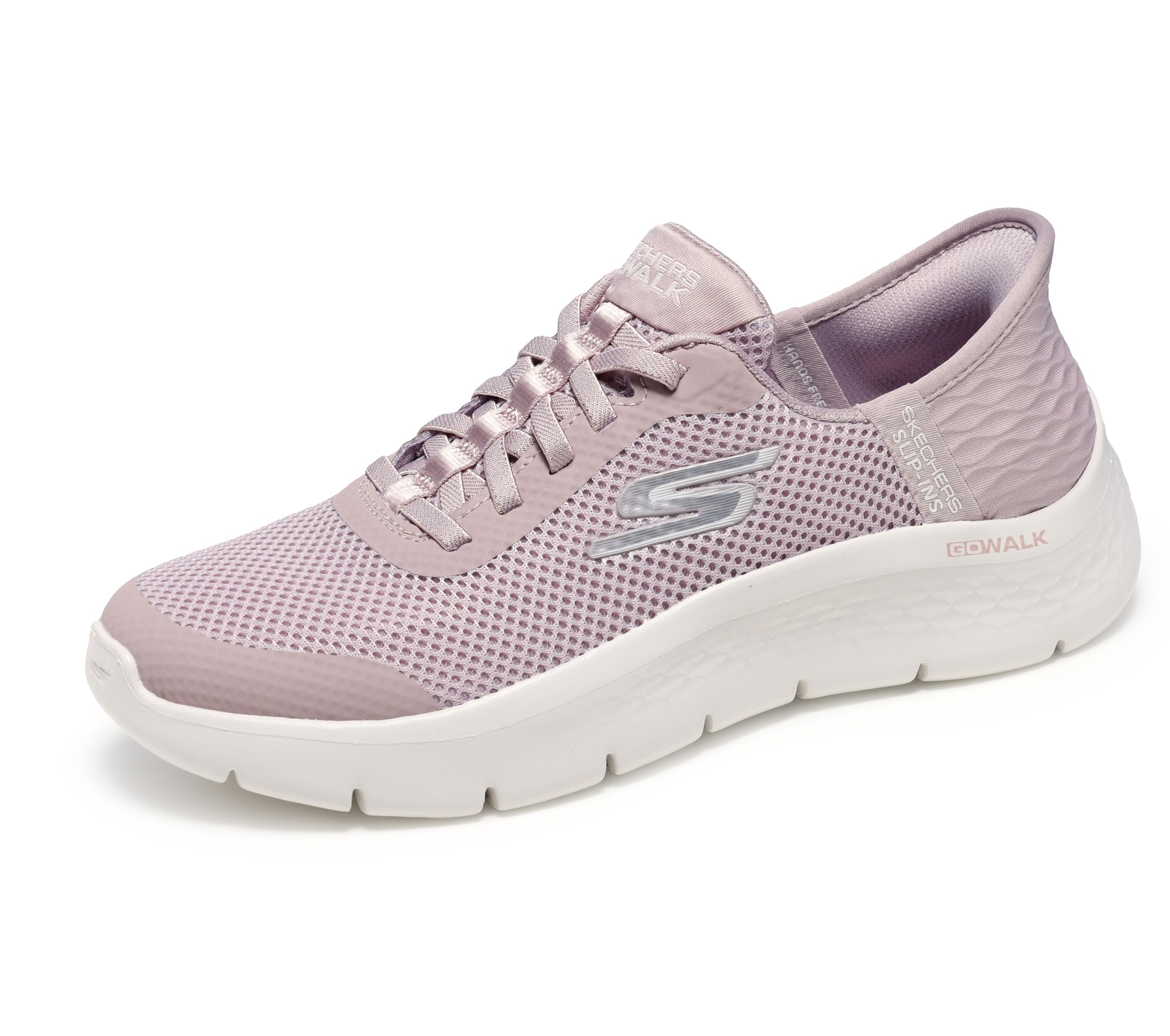
Skechers Go Walk Flex Grand Entry

89 /100
Trail Score Excellent

Key details

Upper
Mesh
Closure
Hands-free slip-on
Department
Women's
Check Price on Amazon

You can step into this one standing up. There is nothing to tie and no collar to work a heel into; the foot goes down and the shoe closes around it. For someone whose balance makes bending over the riskiest part of the day, that is the feature that decides the purchase, and it is why this pair sits high on our list.

It is light, too, which sounds minor until you are lifting a foot step after step on a long afternoon. The arch support is more substantial than the weight suggests, and the heel stays put rather than sliding as you go. The mesh upper breathes, so it is a reasonable choice for someone who overheats easily or wears the same pair straight through a warm day.

Where it gives up ground is underfoot. The ride is soft and light rather than firm, and a soft sole does not give much back when you push off — pleasant for errands and around the house, less reassuring on uneven pavement. A firm insole handles most of that, and it is the first change we make to a shoe like this.

Pros

  • Steps on hands-free, no bending
  • Light enough to lift easily all day
  • More arch support than its weight suggests
  • Breathable mesh upper

Cons

  • Runs narrow; order a wide width
Our verdict

This is our pick when getting a shoe on is the hard part of the morning — the step-in entry and light build make it the easiest pair here to live with.

Check Latest Price
4

Best Lace-Up

New Balance 608 V5

93 /100
Trail Score Outstanding

Key details

Type
Cross trainer
Widths
Wide and extra wide
Closure
Lace-up
Check Price on Amazon

If the wearer's feet have widened with age, start here. The 608 comes in wide and extra-wide, and it sits on a broad, planted base. It is a cross-trainer rather than a soft walking shoe, so the sole is firmer and the shoe resists rolling sideways. Where the FitVille is about getting a swollen foot in, this one is about what happens over the next mile.

The arch is the strongest thing about it: high enough to feel, shaped so it does not dig, over a firm footbed. It is also the best-established shoe in this guide by a wide margin, and the pattern behind that is the telling part — this is a model people replace with the same model rather than shopping around again.

Our advice is to buy it when a familiar lace-up sneaker suits the wearer and nobody has to put the shoe on for them. Trim or swap the laces when the box arrives, since they run long enough to end up underfoot, and expect to replace the pair once the outsole smooths. It is a workhorse, not a lifetime shoe.

Pros

  • Wide and extra-wide sizes
  • Strong arch support over a firm footbed
  • Broad, stable base for standing and turning

Cons

  • Extra-long laces need trimming or swapping
Our verdict

The 608 is the dependable lace-up we suggest for wide feet: firm, well supported, broadly sized, and familiar enough that it needs no getting used to.

Check Latest Price
5

Dressier Wear

Rockport Eureka

88 /100
Trail Score Excellent

Key details

Upper
Leather
Weight
2.5 lb
Closure
Lace-up
Check Price on Amazon

Not everyone will wear a sneaker, and that is a real constraint when you are shopping for a parent who has dressed a certain way their whole life. The Eureka answers it: a leather walking shoe with a stitched upper and a profile that reads as a casual dress shoe with slacks or jeans.

It is not only a good-looking shoe. The upper is substantial and holds the foot rather than stretching around it, the sole is firm underfoot, and the arch support is better than most dress-casual shoes bother to offer. The laces carry a little stretch, so they stay tied, which is a small thing that matters more as hands get less nimble.

Grip is a genuine strength. The outsole holds on wet pavement, which is the condition that actually puts people on the floor, and it is the detail a leather walking shoe most often gets wrong. Fit runs small, so a half size up is worth planning for rather than discovering.

The tongue is the one irritation: thick, stiff, and long, and it can press into the front of the ankle until the leather softens. Give it a week of short walks. After that, this is the pair for a wedding, a doctor's visit, or a Sunday service — formal enough that it gets worn, solid enough to do the walking underneath.

Pros

  • Leather upper that reads as a dress shoe
  • Firm sole with solid arch support
  • Stretchy laces that stay tied
  • Wide sizes available

Cons

  • Stiff tongue that presses on the ankle at first
  • Runs small; consider a half size up
Our verdict

We keep the Eureka for the wearer who won't put on a sneaker: dressy enough to wear out, sturdy enough to walk in, with a break-in period to plan for.

Check Latest Price
6

Quick Errands

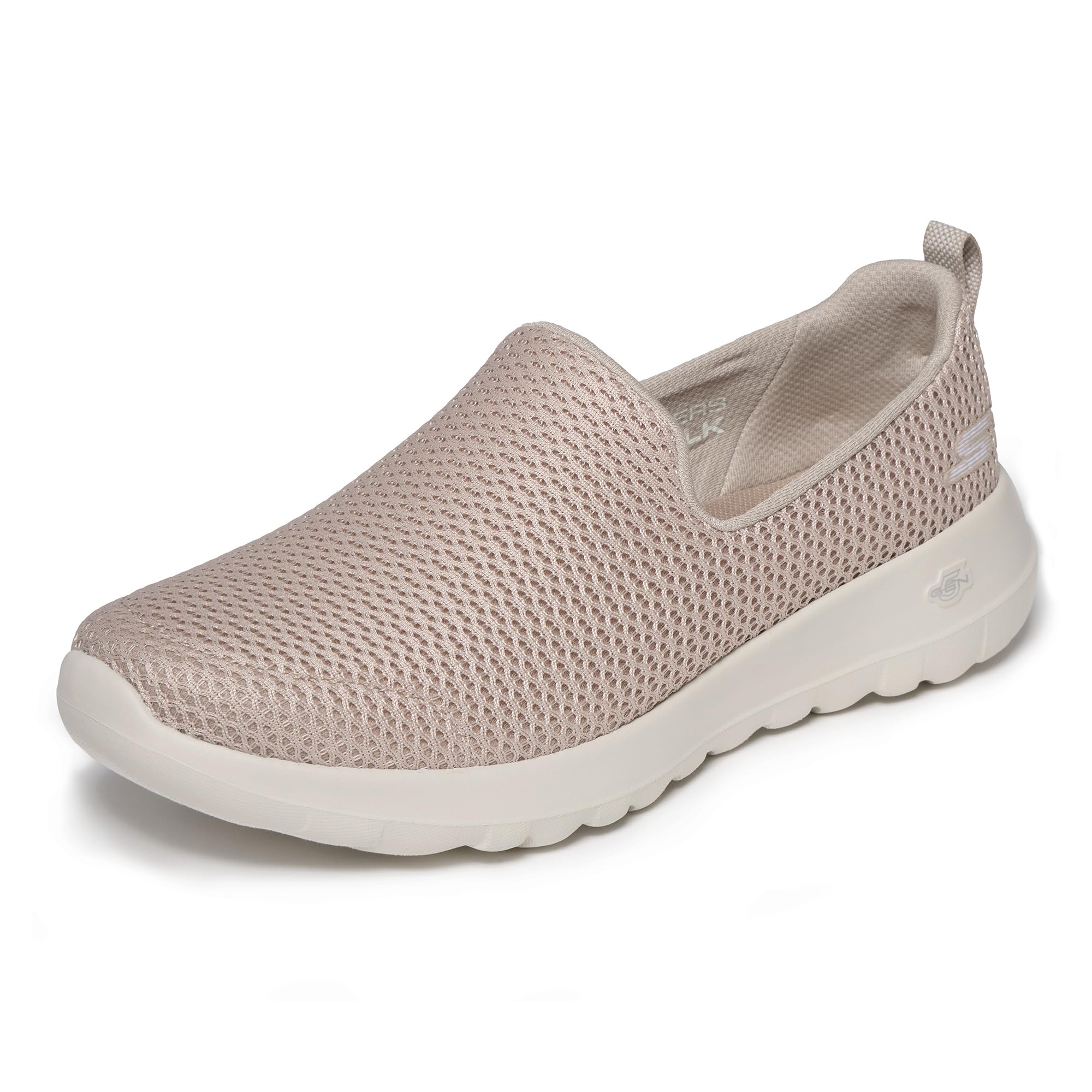
Skechers Go Walk Joy

91 /100
Trail Score Outstanding

Key details

Care
Machine washable
Closure
Slip-on
Toe Box
Generous
Check Price on Amazon

The Go Walk Joy is the cheapest shoe here and the lightest, and those two facts explain most of what it does well. It is a knit slip-on with a soft footbed, no break-in, and a shape that goes on without a shoehorn — the shoe that ends up by the back door because it is easier than anything else in the closet.

The toe box is generous without being sloppy, and the knit gives where a bunion or a bent toe needs it to. It breathes in hot weather and it goes into the washing machine, which is more useful than it sounds for a pair that gets worn to the mailbox and out to the garden. It is comfortable from the first wear and stays that way through a long day on your feet.

Where we hesitate is support. The Joy is soft and flat inside, so the footbed does not hold the arch and there is nothing firm to push against — the opposite of what a shaky sense of balance wants underfoot. A firm insole improves it considerably. Buy it as the easy second pair, for short trips and the kitchen floor, and keep a structured walker for the long walk.

Pros

  • Light enough to wear all day
  • Slips on with no break-in
  • Machine washable
  • Generous knit toe box

Cons

  • Sizing runs large; order a half size down
Our verdict

We treat the Go Walk Joy as the easy second pair: light, inexpensive, washable, and simple to slip on, rather than the shoe doing the balancing work.

Check Latest Price
7

Simple Closure

Dr. Scholl's Omega

90 /100
Trail Score Outstanding

Key details

Width
Wide width
Weight
Lightweight
Closure
Dual hook-and-loop straps
Check Price on Amazon

Two straps instead of one is the idea here: a hook-and-loop closure across the instep and a second over the forefoot, so the shoe closes in two places and each can be adjusted on its own. That is useful when swelling is not symmetrical, which it rarely is, and it means the front of the shoe opens wide enough to walk a foot in without undoing the whole thing.

As an everyday shoe for short trips, it does the job. It is light enough to forget you are wearing it, it goes on and off without help, and the wide width gives toes somewhere to go. It is not a walking shoe in the sense the Brooks is — there is no firm platform underneath — so it suits the person who needs a shoe to get to the car, around the store, and back home. For a caregiver doing the fastening, the two straps are quicker than laces and easier to check by feel, which means a shoe that is actually closed rather than nearly closed.

Pros

  • Two straps adjust independently
  • Lightweight and easy to put on
  • Wide width available

Cons

  • Straps run short on a high-volume foot
  • Runs small; order a size up
Our verdict

We pick the Omega when an adjustable closure matters more than support: two straps, a light build, and a wide width for short errands.

Check Latest Price

How We Chose and Tested Shoes for Balance Problems

We started with research before we bought anything: specs on roughly 40 styles, narrowed by weight, a heel counter firm enough to resist thumb pressure, real outsole tread, removable insoles for anyone with orthotics, and — the filter that eliminates more shoes than any other — a choice of widths. That left 12 pairs, worn by four testers over eight months: two in their seventies, one six months past hip surgery, and me.

Every pair went through the same rotation: a morning walk on sidewalk and driveway, a grocery run on polished tile, stairs at home, and the trip down the hall in the dark. We watched whether the heel stayed put through a corner and whether toes could feel the floor through the sole. We tested stiffness by hand, pushing the toe up toward the heel to see where the shoe bent; if the crease landed in the middle of the arch instead of the ball of the foot, it was out.

Sizing and ease of use got their own pass. Testers ordered their usual size and a half-size up, then reported where the toe box pressed; we timed how long each pair took to put on while seated, and whether it needed a shoehorn or could be tied one-handed. Comfort and arch support came from the wear itself — whether a tester reached for the same pair three days running without thinking about their feet. After eight months we checked tread, whether the heel collar had collapsed, and where the uppers creased. Value and appearance we judged last: cost against how the pair stood up, and whether anyone would wear it to a doctor's appointment without feeling like they were in a medical device. A few looked sharp and failed the walking test.

How to Choose Shoes for an Older Adult with Balance Problems

Start With the Closure

The closure decides whether a shoe gets worn. A full-length hook-and-loop opening like the FitVille's lets a foot drop in and the strap take up the slack, which is the most forgiving arrangement for swollen or sensitive feet. A step-in style like the Skechers Grand Entry removes bending altogether. Laces give the most adjustable fit but ask for reach and dexterity, so swap in elastic laces and trim the ends if the wearer still prefers them.

Whatever you choose, have the wearer walk ten steps. A heel that lifts means the shoe is not holding the foot, no matter how well it fastens.

Check the Heel and the Base

Support starts at the back of the shoe. Press the heel counter between thumb and finger; if it folds easily, it will not stop the ankle from rolling. Look for a midsole firm enough that you cannot wring it like a dishcloth, and a sole that sits wider than the upper above it.

Deeply cushioned shoes feel wonderful in the store but tell the wearer less about where the ground is, which is the opposite of what a shaky sense of balance needs. Firm does not mean hard — the Brooks is the firmest shoe here and still comfortable for hours.

Get Width and Volume Right

Feet spread and swell with age, and they do it unevenly. Measure late in the day, standing, both feet, and buy for the longer one. Width is measured at the ball of the foot; volume is the room over the toes, and they are different things — a wide shoe with a shallow toe box still pinches a bent toe.

An adjustable upper handles swelling that changes between morning and afternoon, and a removable insole lets you add firmness or take up room.

Look at the Outsole, Not the Colorway

Most falls at home happen on hard floors, so the bottom of the shoe deserves a look before the top. A rubber outsole with a visible tread pattern grips tile and pavement; a smooth fashion sole does not, however good it looks.

Wear a new pair around the house for an afternoon before cutting the tags, and try them on a bathroom floor after a shower — the slickest surface in most homes. When the tread under the heel smooths out, the shoe is finished, even if the upper still looks fine.

Frequently Asked Questions

Final Verdict

The FitVille EasyTop Wings is the pair we buy first for an older adult with balance problems. The wide opening and full-length adjustable strap take the struggle out of getting a shoe on, and the fit holds once it is there — which removes the part of the day most likely to go wrong.

When the wearer needs firm, motion-controlled support and can manage a structured leather shoe, the Brooks Addiction Walker 2 is the stronger choice, and it is the one we pair with a daily walking routine.