Best Women's Walking Shoes for Achilles Tendonitis of 2026

The first step out of bed is the tell. If your heel seizes before you reach the bathroom, you already know the wrong shoe turns a short walk into a negotiation. Shoes won't cure Achilles tendonitis, but they change how much load that tendon carries with every step: a heel counter that digs in, a sole so soft you sink, a heel that sits too high off the ground — all of it sends the same complaint up your leg. What you want is a shoe that cups the heel without pinching and looks good enough to wear all day.

Over six months we walked in 12 pairs, from plush max-cushion styles to bare-bones slip-ons, and the differences showed up in the first mile. One thing nobody tells a first-time buyer: a shoe that's too short changes how you walk, and your calf and Achilles pay for it. Cushioning is the easy part — arch support, durability, and whether you can get them on without jamming a sore heel are what separated the keepers, and those are the ones below.

1

Best Overall

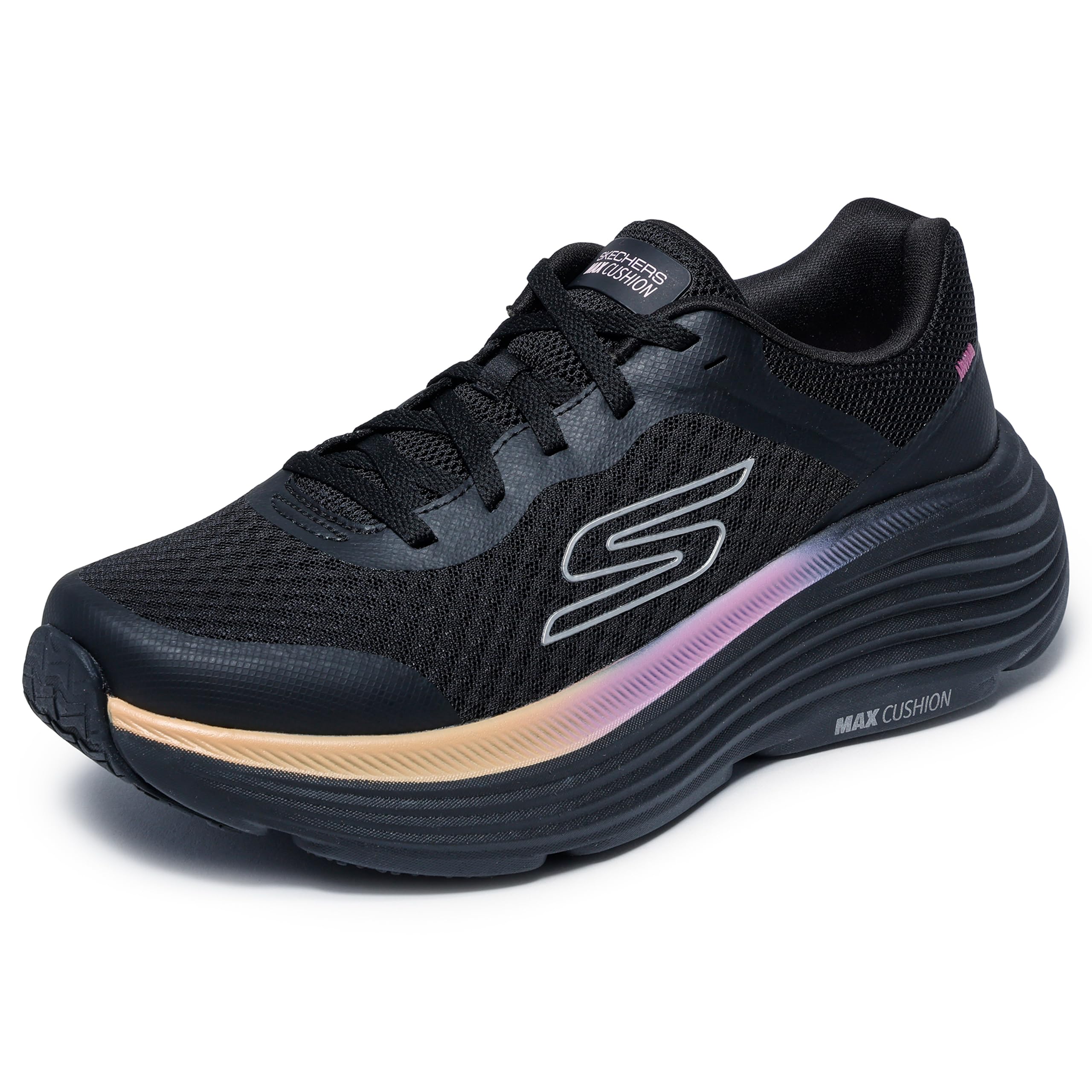
Skechers Max Cushioning Endeavour

91 /100
Trail Score Outstanding

Key details

Fit
Extra-wide toe room
Weight
1.5 lb
Midsole
Max Cushioning
Check Price on Amazon

The figure that won this one the top spot is 1.5 pounds. That's the listed weight of the Max Cushioning Endeavour, and it's the pairing that matters: a genuinely thick, soft midsole in a shoe light enough that a two-mile loop doesn't turn into a chore. Cushioning under the heel is the thing we refused to compromise on for a sore Achilles, and this shoe offers more of it than anything else here without turning your stride into a shuffle.

The shape seals it. The forefoot is wide enough that toes don't stack, while the back of the shoe stays snug — and a heel that moves around is the last thing an irritated tendon wants, because every slip is another rub. That combination is harder to find than it sounds; the roomy shoes here tend to let the heel lift. We noticed the difference most on longer walks, when a planted heel is what decides whether you finish the loop or cut it short.

Skechers files this one under road running rather than walking, which is worth knowing if you're filtering by category. Think of it as a walker with a running shoe's midsole: the upper breathes, the footbed is soft from the first wear rather than after a week of breaking in, and the sizing runs from standard to extra-wide for a broad forefoot.

The color range is better than most max-cushion shoes — the deep red looks richer in person than in the listing photos, and the black reads closer to charcoal. That's not what fixes a tendon, but a pair you're happy to put on is a pair you actually wear, and consistency is most of the battle with an angry Achilles.

Pros

  • Thick max-cushioning midsole under the heel
  • Snug heel behind a genuinely roomy toe box
  • Standard through extra-wide sizing
  • Listed at 1.5 pounds

Cons

  • Outsole can wear thin under heavy daily mileage
Our verdict

We recommend the Endeavour as the default for Achilles pain: the thickest cushioning here in a 1.5-pound shoe, with a heel that stays planted and a toe box that doesn't crowd.
Check Latest Price
2

Best Budget

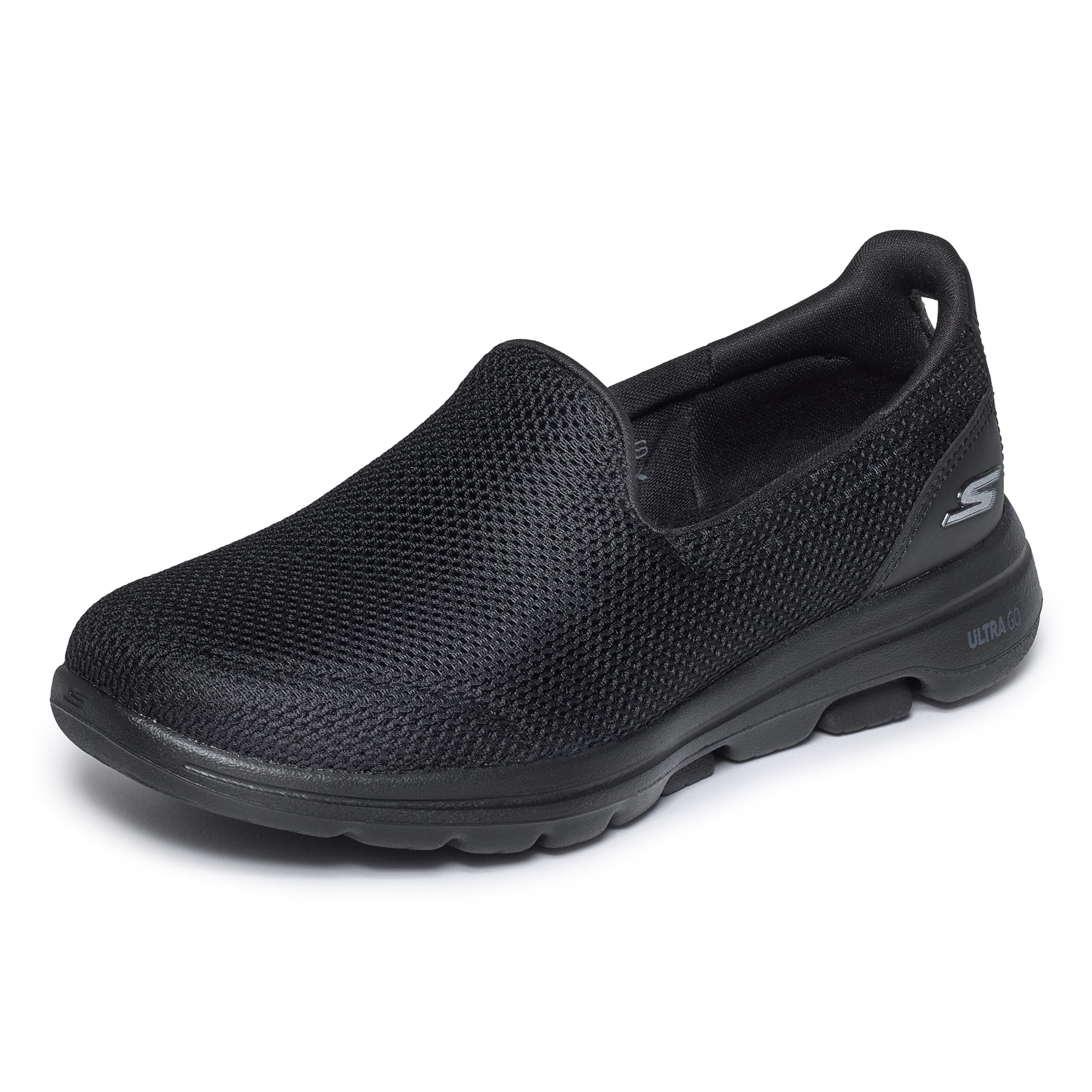
Skechers Go Walk 5

91 /100
Trail Score Outstanding

Key details

Build
Lightweight knit
Sizing
Runs large and wide
Closure
Slip-on, no laces
Check Price on Amazon

Getting a shoe on shouldn't be the hard part of a walk. The Go Walk 5 is a knit slip-on with no laces at all — you step in, the collar gives, and you're out the door. If your Achilles is stiff first thing in the morning, or reaching your feet has become a chore, that's not a small convenience; it's the difference between walking and skipping it.

We think it's the best value in this group, and comfort is why. The knit upper is soft against the foot, the sole is light enough that you forget there's a shoe on, and the arch has enough shape to keep you steady without feeling like an orthotic. It isn't a stability shoe — if your foot rolls inward heavily, one of the laced options will do more for you.

The knit washes and air-dries without drama, which matters more than it sounds for a shoe you'll reach for daily. Style-wise it's a plain, low-profile walker that disappears under jeans, and the darker colorways in particular don't announce themselves as athletic wear.

Pros

  • Comfortable through a full day on your feet
  • Slides on with nothing to tie
  • Very light knit upper
  • The least expensive pick here

Cons

  • Runs large, and sizing varies between pairs
  • No laces, so heel hold can't be tightened
Our verdict

Buy the Go Walk 5 if you want to step into a walk without touching a lace and still be comfortable past lunch — just size it carefully, because the fit runs generous.

Check Latest Price
3

Best Cushioned Lace-Up

NORTIV 8 Walking Shoe

88 /100
Trail Score Excellent

Key details

Closure
Lace-up
Toe Box
Roomy
Cushioning
Soft, bouncy midsole
Check Price on Amazon

If the Endeavour is the pick for a heel that needs a pillow, this is the one for a forefoot that needs space. The NORTIV 8 has a genuinely generous toe box — toes sit flat instead of curling against the sides — and the midsole underneath is soft and springy rather than firm. For a broad foot on a tighter budget, it's the pair we suggest first.

The cushioning is the pleasant surprise. It's soft and bouncy without the tipping feeling you get from some max-cushion soles, and the arch is shaped rather than flat, which helps if your feet pronate mildly and you'd rather not add an insert on day one.

Laces matter more here than usual: you can cinch the midfoot and keep the heel where you put it, which a slip-on simply can't do. The colors run from neutral to a bright pink, and the shoe sits near the bottom of this group's prices, which makes it an easy second pair to rotate in on wet days.

Pros

  • Soft, bouncy cushioning underfoot
  • Generous toe box for wide forefeet
  • Shaped arch support with stability

Cons

  • Collar starts stiff and can rub at first
Our verdict

Our pick when your forefoot needs more space than most walkers give: cushioned, stable, and easy on the budget, provided you break the collar in slowly.

Check Latest Price
4

Best for Arch Support

Ryka Echo Knit Slip On

91 /100
Trail Score Outstanding

Key details

Upper
Knit, step-in
Sizing
True to size
Arch Support
Built-in
Check Price on Amazon

A knit step-in that looks more like a fashion sneaker than a walking shoe is easy to find; one with real support built into the footbed is not. The Echo Knit is the second kind. The upper is soft and unstructured, your foot slides in without a shoehorn, and the arch is firm enough that you can feel it working on a longer walk.

Fit is where it earns trust. It runs true to size, the knit contours instead of bagging out, and the whole shoe is slim enough to wear with trousers without looking like you borrowed someone's gym kit. The collar sits low and soft at the back, which is what you want when the tendon is tender to the touch.

The limit is underfoot: the sole is thin, and on pavement you feel the ground in a way you don't in the Endeavour. That's the trade for a shoe this light and this easy to pack. It sits in the middle of this group's prices, which is fair for the arch support and the step-in ease — just don't ask it to be a mileage workhorse.

Pros

  • Step-in knit upper needs no lacing
  • Firm built-in arch support
  • True to size with a slim profile

Cons

  • Heel lining can wear through with daily wear
Our verdict

Choose the Echo Knit for short walks, errands and travel if arch support and easy entry matter more to you than deep cushioning under the heel.

Check Latest Price
5

Casual Wear

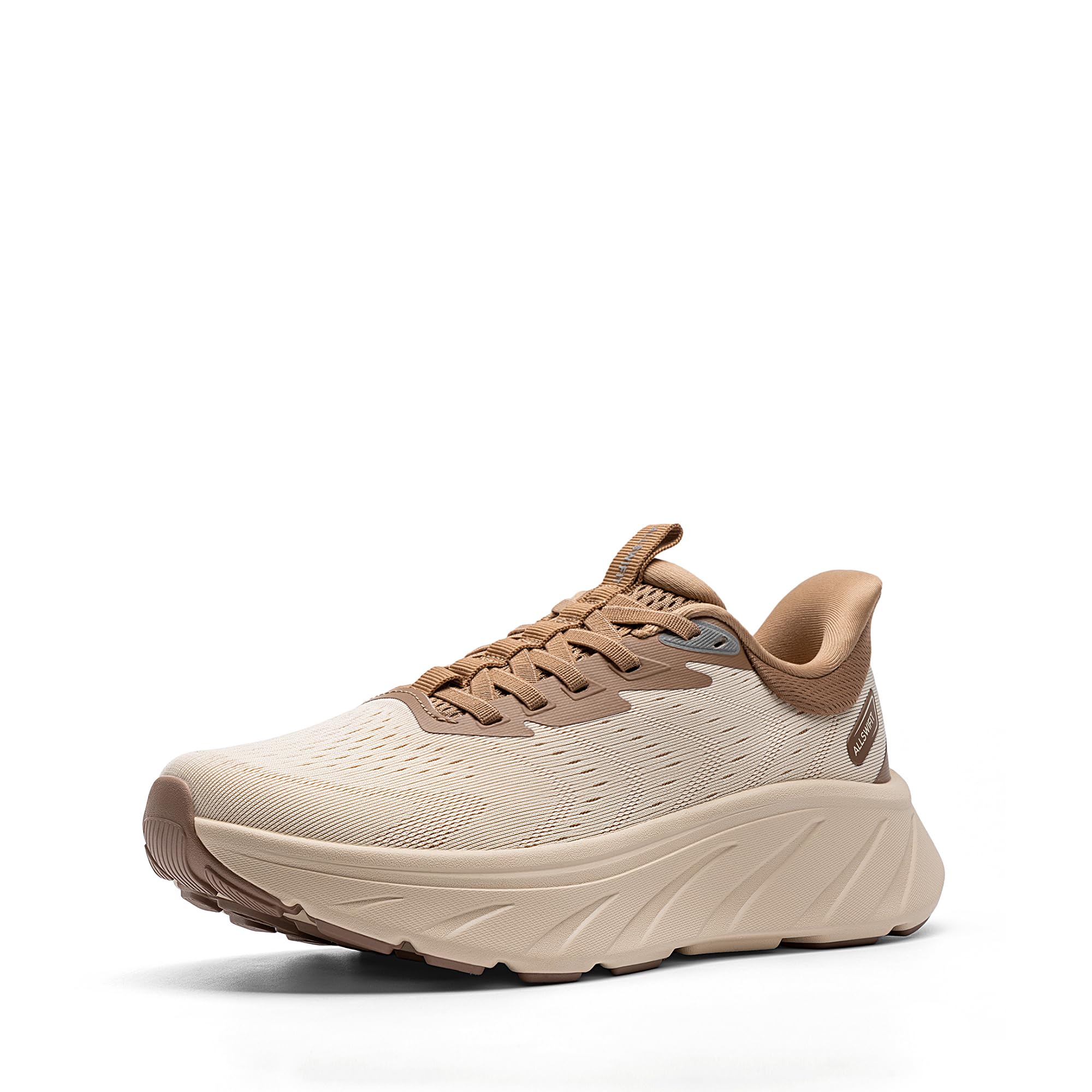
ALLSWIFIT Slip-On Walker

87 /100
Trail Score Excellent

Key details

Collar
Padded ankle
Sizing
Runs small
Closure
Slip-on
Check Price on Amazon

There's real padding around the ankle opening on the ALLSWIFIT, and that's the detail that sold us: slip-ons usually skimp there, and a thin collar against a bare ankle is the wrong spot to economize when the Achilles is the problem. It's a step-in that stays put once your foot is in, with a cushioned footbed and enough arch shape to feel supportive on a treadmill incline.

What you're buying is cushioning at the entry end of this group's prices, and for dog walks, errands and gym sessions that's plenty. It isn't the shoe for a long, fast pavement loop — the sole is soft rather than structured, and the ride is more marshmallow than spring. Where it earns its place is as the second pair by the door, the one you can step into with your hands full.

Pros

  • Padded ankle collar on a slip-on
  • Cushioned footbed with arch shape
  • Cushioned comfort at a low price

Cons

  • Runs small; many need to size up
  • Ankle opening is snug on wider feet
Our verdict

A well-padded slip-on at the entry end of this group's prices; we rate it for errands and treadmill time, not for long pavement loops.

Check Latest Price
6

Wide Forefoot

Ryka Dash 3

88 /100
Trail Score Excellent

Key details

Build
Lightweight, breathable
Weight
1.7 lb
Toe Box
Wide and roomy
Check Price on Amazon

A wide forefoot in a light shoe is the Dash 3's whole argument. The toe box gives your toes somewhere to spread, the listed weight is 1.7 pounds, and the upper is breathable enough for warm afternoons — a combination that's harder to assemble than the spec sheet makes it look.

The toe box is also the variable: wide through the ball, less so through the instep, so try them with the socks you actually walk in. Where it's consistent is the arch — shaped, not mushy, and enough to keep a high instep from collapsing over a couple of miles.

The insole is thin, and that's the fixable part: there's room to swap in something with more under the heel, which for an Achilles is often the whole point. For light daily walking and a broad forefoot it's a sensible, unfussy choice — and at 1.7 pounds it barely registers on your foot.

Pros

  • Wide, roomy forefoot
  • Light at a listed 1.7 pounds
  • Shaped arch support for high insteps

Cons

  • Stitching at the sides and toe can tear
Our verdict

For a wide forefoot and a light step, the Dash 3 is a sensible everyday walker — plan on a better insole and keep an eye on the upper.

Check Latest Price

How We Tested Walking Shoes for Achilles Pain

We started with about 60 pairs and cut the list using spec sheets: heel-to-toe drop, stack height, how the heel collar was built, and whether each came in more than one width. Anything with a stiff external heel cup or a drop above 10 millimeters came off early. That left 12 pairs, which we bought ourselves and tested for six months.

Each pair went into a normal week rather than a treadmill session. We wore them for the 6 a.m. walk to the bathroom to see how a cold heel felt, for dog walks and grocery runs, through a shift on hard floors, and on one long airport day. Every pair got at least a week of that before we wrote anything down.

We bent each shoe at the ball of the foot and again through the middle, since a sole that folds under the arch makes the tendon work harder, and we noted whether the midfoot felt genuinely supported or just soft. We pressed a thumb into the heel collar, then wore the shoes and noted whether that collar pressed back when we pushed off. Sizing got checked properly: we traced our feet, held the insole against the tracing, and wore each pair with the socks we'd actually use, because half a size short will have you gripping with your toes and walking differently by noon.

Ease of use was tested the way it happens at home — slipping each pair on one-handed while holding a leash. At the three- and six-month marks we checked tread wear and whether the collar padding had packed down, and we wore each pair with jeans on a Saturday to see which ones we'd actually leave the house in. Comfort and cushioning were the easy calls; the pairs that held up were the ones that got the heel and the sizing right.

How to Choose Walking Shoes for Achilles Tendonitis

Start With the Heel Collar

The collar at the back of the shoe sits right where the tendon attaches, so it is the first thing to check. A firm, high, or seamed collar presses on that spot with every step; a padded, slightly scooped one leaves room. Press your thumb into the inside back of the shoe — if you can feel a hard ridge or a stitched seam, your tendon will find it too.

Then check heel hold. A shoe that lets your heel lift creates the same rub from the other direction, which is why the roomiest, softest slip-ons here are not automatically the kindest ones for a sore tendon.

Drop and Cushioning: What Offloads the Tendon

Heel-to-toe drop — how much higher the heel sits than the forefoot — changes how much your Achilles has to stretch. A higher drop keeps the heel slightly lifted and takes load off the tendon; a flat, very flexible shoe asks more of it, which is rarely what you want while something is inflamed. Cushioning under the heel handles the impact side of the same problem.

Look up the drop before you buy if it is not on the box, and accept the trade: very tall, very soft soles buy comfort on pavement and give back a little steadiness on uneven ground.

Fit, Sizing, and the Knit-Upper Trap

Fit is where most of these shoes go wrong for someone with a sore heel. A knit upper that feels wonderful in the store can stretch with wear and give up the heel hold you bought it for; an upper that is snug at the instep can feel tight even when the length is right.

Shop at the end of the day, wear the socks you walk in, and leave a thumb's width in front of your longest toe. If the heel lifts as you walk, do not buy it and hope — go down a size or choose a model with more structure at the back.

Step-In Ease or Laces?

Step-in shoes spare you bending and tugging, which matters if the tendon is sore to touch or stiff first thing in the morning. The trade is adjustability: a slip-on cannot be tightened, so if your heel lifts there is nothing to do about it. Laces let you lock the midfoot and keep the heel down, which suits a tendon irritated by movement.

If you want both, look for a step-in with a padded, structured collar — the Ryka Echo Knit is the one in this group that manages it — or leave a laced pair tied loosely enough to slide into.

Frequently Asked Questions

Final Verdict

For most women walking with an irritated Achilles, the Skechers Max Cushioning Endeavour is the pair we point to: thick under the heel, snug at the back, roomy up front, and light enough that a daily loop does not wear you down. If you want to skip laces entirely and spend less, the Go Walk 5 handles the job — just size it carefully.

If a wide forefoot is the sticking point, the NORTIV 8 offers more room up front and a laced fit that keeps the heel planted. For short walks and travel, the Ryka Echo Knit is the better answer, where its thin sole stops mattering and its arch support does the work.