Best Rubber Gym Mats for a Home Gym of 2026

Rubber gym mats look simple until you unroll one in a spare room and the whole house smells like a tire fire. I've set up lifting spaces in a garage and a basement corner, and the real differences show up after a few weeks: curled corners, slick patches when you sweat, and rubber that sheds crumbs when you trim it. A good mat protects the floor and keeps a rack or dumbbell area stable; a bad one makes every session feel like a compromise. Thickness matters, but so do material, density, and how flat the mat actually lies.

We spent seven months testing 12 mats in home gym setups, from garage deadlifts to basement cardio and floor work. We judged durability and overall quality, tracked appearance after sweat and scuffs, and asked whether the price felt fair. Home gym suitability came down to grip, flatness, and trimming around racks and walls. A mat that stays put and lies flat beats an extra half-inch of soft rubber; the picks below earned their place.

1

Best Overall

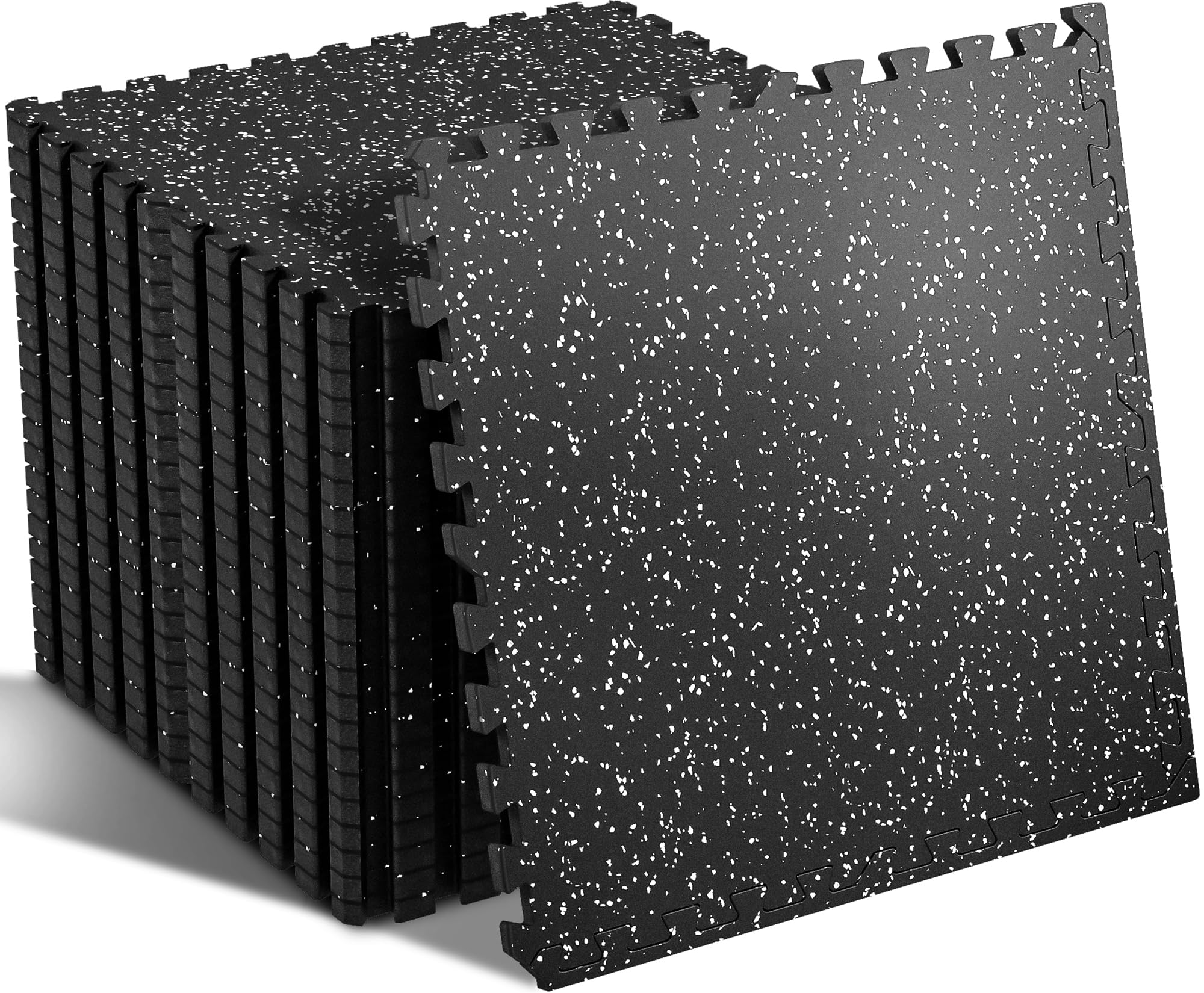
AIRHOP Interlocking Gym Tiles

91 /100
Trail Score Outstanding

Key details

Coverage
48 sq ft (12 tiles)
Thickness
0.56 in
Tile Size
24 x 24 in
Construction
Rubber top over EVA foam
Check Price on Amazon

Most home gyms need one surface that takes a barbell and a set of burpees without making either one miserable, and this is the set we kept down longest. Twelve 24-inch tiles lock into an 8-by-6-foot area, 48 square feet from a single box, and each is 0.56 inch thick with a recycled rubber wear layer bonded to a high-density foam core. That pairing is the whole trick: the rubber takes the scuffs, and the foam underneath gives knees and elbows somewhere to land.

Install is the least dramatic part. The tiles lock together on oversized tabs with no adhesive, and a utility knife trims them around a doorway or a rack foot in a couple of passes. Sweat and chalk wipe off the waterproof surface with a damp cloth. Leave new tiles out in the garage for a day first, since recycled rubber smells like recycled rubber until it off-gasses.

Underfoot it feels firm rather than squishy, and a shoe grips the textured top through lateral work without skating. The cushioning turns up where it matters — a plank, a sit-up, a knee down for a stretch — and stays out of the way during lunges. Shoes are fine on it, bare feet are fine on it, and it does not demand a separate yoga mat for floor work the way a lot of thick mats do.

Pros

  • Rubber-topped tiles cushion floor work without squishing
  • 48 square feet covers a real workout area
  • Locks together with no adhesive or tools
  • Waterproof surface wipes clean

Cons

  • Foam core gives slightly under a loaded rack
  • Seam grid stays visible after install
Our verdict

The best rubber floor here for a mixed home gym: 48 square feet of thick, grippy dual-layer tile that handles dumbbells, cardio and floor work without making you choose.

Check Latest Price
2

Best for Heavy Lifting

American Floor Mats Fit-Lock

93 /100
Trail Score Outstanding

Key details

Coverage
16 sq ft (4 tiles)
Thickness
3/8 in
Tile Size
24 x 24 in
Construction
Solid rubber
Check Price on Amazon

Sixteen square feet is a small piece of floor — four 24-inch tiles in a 4-by-4 pad — and it covers a fraction of the area the tile sets here do. What the money buys is density: each tile is 3/8 inch of solid rubber, with no foam core, no separate wear layer, and nothing to peel apart later.

Seating them is where we became believers. The tiles take a rubber mallet and firm hand pressure, and once they are down the seams nearly vanish; from standing height the floor reads as one poured surface rather than a grid. Nothing dents it either. A rack, a bench and a stack of dumbbells sit on it without leaving the dimples that foam-core tiles collect, and the corner pieces give a finished edge instead of a raw cut. If a loaded barbell is the reason you are shopping, this is the tile that belongs under it.

Plan the room before you order. The set is small on purpose and modular, so a full wall means several sets, and the border and corner tiles only finish the layout if you have counted them. The sensible split is solid rubber under the equipment and something cheaper where you stretch, which is exactly how this format is meant to be used.

Pros

  • 3/8-inch solid rubber resists dents under racks
  • Seams nearly disappear once installed
  • Tight interlock with no adhesive
  • Corner pieces give a finished edge

Cons

  • Highest cost per square foot here
  • Strong rubber smell at first
Our verdict

Buy this when a loaded rack or heavy dumbbells are the whole point — solid 3/8-inch rubber that will not dent, in a small set you add to as the gym grows.

Check Latest Price
3

Best Budget

Rubber King Exercise Mat

92 /100
Trail Score Outstanding

Key details

Coverage
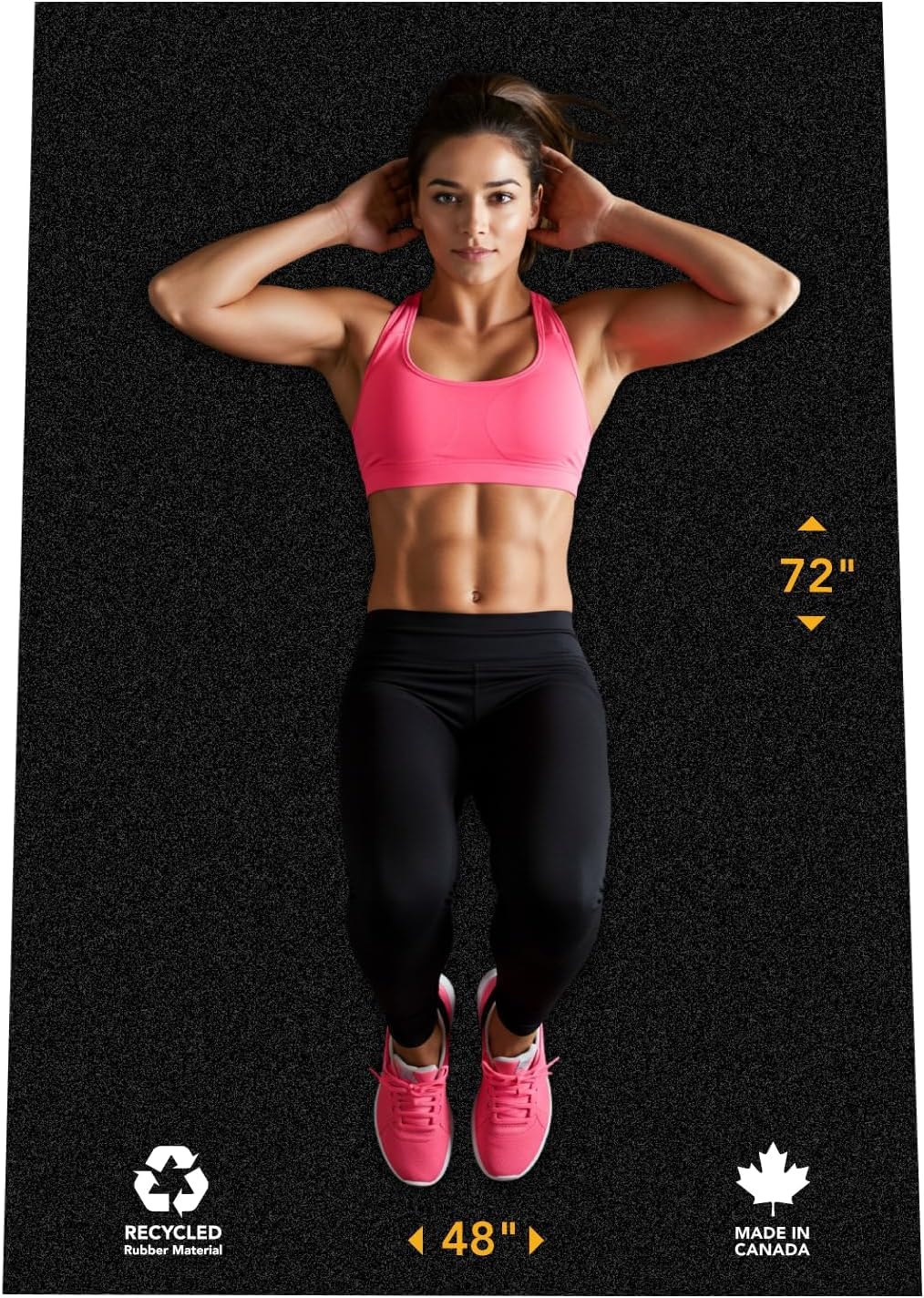
24 sq ft (4 x 6 ft)
Material
100% recycled rubber
Thickness
0.12 in
Indoor Air
FloorScore certified
Check Price on Amazon

The name promises a slab and the box delivers a sheet. Rubber King's mat is 4 by 6 feet and about an eighth of an inch thick, cut from recycled tire rubber, and we expected to be underwhelmed. Instead it is the cheapest way here to put real rubber under your equipment — as long as you want it for the floor rather than for your knees.

What it does is protect. It lies flat on concrete or carpet, slides under a treadmill, a rower or a spin bike, and stays put; at 13 pounds it is easy to drag, easy to vacuum and easy to trim with a knife when a corner has to clear a baseboard. The FloorScore certification is the clearest indoor-air credential in this group, and the five-year limited warranty is the only explicit one here.

Where it runs out is anything that involves kneeling. Three millimeters of rubber takes the sting out of standing but not out of a plank on your elbows, and it will not deaden a dropped dumbbell the way a thick tile does. Think of it as floor armor: it keeps the concrete off your equipment and your equipment off the concrete.

Pros

  • Real recycled rubber for less than the tiles
  • FloorScore certified for indoor air quality
  • Five-year limited warranty backs it
  • Trims with a knife to fit corners

Cons

  • No cushioning for kneeling or floor work
  • Can arrive with a noticeable rubber smell
Our verdict

The cheapest real rubber here: a dense recycled sheet that protects a floor under machines, provided you do your floor work somewhere else.

Check Latest Price
4

Large Rooms

SUPERJARE Rubber-Top Tiles

90 /100
Trail Score Outstanding

Key details

Coverage
96 sq ft (24 tiles)
Thickness
0.56 in
Tile Size
24 x 24 in
Construction
EPDM rubber top over EVA foam
Check Price on Amazon

Ninety-six square feet from one order is the reason to look at these: 24 tiles at 24 inches square and 0.56 inch thick, speckled rubber on top of a foam base. That is enough to floor a large room rather than a corner of one, and it is the widest coverage in a single box here.

The surface is the nicest part. The grey-and-black speckle hides dust and footprint smudges far better than plain black, and the foam under the rubber takes the clatter out of a dropped dumbbell in a way a thin sheet cannot. The tiles interlock without adhesive, cut with a knife, and come back up if you move. On smooth concrete they can drift out of line — a strip of double-sided tape or a weight in the corners settles it.

What keeps it out of the top tier is how it ages. We could not ignore the number of mats whose rubber wear layer peels away from the foam core, and that layer is exactly what takes the abuse when a bench or a rack drags across it. New tiles also smell strongly and need airing before they come indoors. For a big room where the budget is doing the deciding, both are acceptable; under serious equipment, solid rubber is the safer spend.

Pros

  • 96 square feet covers a large room
  • Speckled top hides dust and scuffs
  • Foam layer quiets dropped weights
  • Interlocking tiles lift out and re-lay

Cons

  • Rubber top can peel from the foam base
Our verdict

Worth it for a big room on a budget — 96 square feet of cushioned rubber-topped tile, as long as you accept that the top layer may peel.

Check Latest Price
5

Garages and Utility

Rubber-Cal Diamond-Plate Roll

89 /100
Trail Score Excellent

Key details

Surface
Diamond plate
Material
Synthetic rubber
Roll Size
4 x 7 ft
Thickness
3 mm
Check Price on Amazon

This is a floor covering rather than a training surface, and it is happiest doing the jobs nobody wants to do properly: the strip under a treadmill, the garage floor in front of a workbench, the bed of a van. It is 3 mm of synthetic rubber with a diamond-plate pattern, sold as a 4-by-7 roll, and it takes a beating without showing it.

Give it a utility job and it earns the space. The diamond pattern grips shoes, toolboxes and dog paws, water and oil sit on top rather than soaking in, and a mop or a hose finishes the cleanup. It is also the least expensive coverage per square foot in this group, which is why we reach for it under equipment and in truck beds rather than in the middle of a gym.

Two quirks to plan around. The roll keeps its memory and will hump at the ends until it is warmed — ten minutes in the sun helps, and so does weighting the edges for a day. The factory ends are not always square, so measure and cut your own edge instead of trusting the one it shipped with. A straightedge and a fresh blade handle both.

Pros

  • Diamond-plate surface grips shoes and gear
  • Cuts with scissors to fit odd spaces
  • Wipes or hoses clean

Cons

  • Strong rubber odor that lingers
  • No cushioning for floor work
Our verdict

A utility roll rather than a workout mat: buy it to keep a garage, mudroom or truck bed clean, and air it out before it comes inside.

Check Latest Price

How We Tested Rubber Gym Mats for Real Home Gyms

We started by scanning rubber mat listings and comparing material specs, thickness options, edge styles, and per-square-foot cost, then narrowed the field to 12 mats that represented different rubber formulations and home-gym formats. We tested them over seven months in a garage lifting area and a basement corner, rotating them under a squat rack, dumbbell bench, and cardio setup. We also moved a few into a spare room for floor work and stretching.

The first check was odor. We unrolled each mat and smelled it at one hour, 24 hours, and again after a week, noting whether it cleared in a ventilated garage or lingered in a closed room. For grip, we did push-ups, dumbbell rows, and walking lunges in dry socks, sneakers, and with sweaty hands, watching for sliding or slick spots. Flatness got a straightedge and a 72-hour wait: we checked whether corners relaxed or stayed curled, and whether edges sat tight to the floor.

We cut scrap edges with a utility knife to see whether the rubber sliced cleanly or crumbled. Thickness was judged underfoot during lifts and floor work, not just by the spec sheet, and we noted where softer mats bottomed out on concrete. Durability and quality came from weekly sessions: gouges, compression marks, surface sheen, and how each mat cleaned up. We factored appearance and value last, comparing how the surfaces aged against what they cost per square foot.

How to Choose a Rubber Gym Mat

Match the construction to the workout

Three builds cover almost every home gym. Solid rubber tiles are the densest and the only ones here that shrug off a rack foot. Rubber-topped foam tiles put a wear layer over a cushioned core and suit mixed training. A thin recycled rubber sheet protects the floor under equipment and little else. Decide what lives on the floor before you shop: a rack and dumbbells point to solid rubber, HIIT and stretching point to dual-layer tile, and a treadmill points to a thin mat.

The trap is buying on thickness alone. A half-inch foam-core tile is deeper than a 3/8-inch solid tile and is still the softer, less stable choice under load.

Thickness buys comfort, not durability

A 3 mm sheet and a 0.56-inch tile both keep scuffs off the slab. What the extra depth buys is cushioning under knees, elbows and dropped dumbbells, and what it costs is stability. Past about half an inch, single-leg work starts to feel like balancing on a mat, and any foam compresses where a rack foot sits.

If you want both, split the room: solid rubber under the equipment, something softer where you lie down. Expecting one thick mat to do both jobs is the most common way this purchase disappoints.

Buy by the square foot, not by the box

Measure the area you will actually train in, add about 10 percent for cuts and odd corners, then divide each set's coverage into it before comparing anything else. A 4-by-4 set is 16 square feet, which is a rack footprint and little more. Forty-eight is a genuine workout area. Ninety-six floors a large room.

Rolls and single mats are sold the same way, so the arithmetic carries across formats. Joining two smaller sets works fine, but every joint is another line on the floor and another place grit collects.

Take the smell seriously

Rubber off-gasses, and recycled tire rubber is the strongest offender. A FloorScore certification is the clearest indoor-air signal among these floors and worth paying for if the mat is headed to a basement or a spare room. Even certified rubber benefits from a few days unrolled outside, both faces up.

The trap is judging smell in the wrong room. A mat that is merely unpleasant in a ventilated garage can be unbearable in a bedroom, and no amount of airing fixes a floor that should not have come inside.

Seams, edges and staying put

Interlocking tiles need a flat, dry, hard surface. On smooth concrete, foam-core tiles can walk out of line; double-sided tape or a weight in each corner holds them. Rolled mats arrive with memory and lift at the ends, so warm them in the sun and weight the edges for a day before you judge them.

Seams are the other half of the trade. Solid rubber tiles fit tightest and read as one surface; foam-core sets always show a grid. If looks matter as much as cushion, that is the deciding difference.

Frequently Asked Questions

Final Verdict

For most home gyms, the AIRHOP tiles are the ones to order: 48 square feet of thick, grippy, rubber-topped tile that goes down without adhesive and handles cardio, dumbbells and floor work in the same session. You give up a seamless look and a little firmness under a rack, and for most rooms that is the right trade.

Put the American Floor Mats Fit-Lock tiles under a loaded rack and don't apologize for the cost — solid rubber is the only thing here that will not compress. If the mat exists purely to keep a treadmill or a spin bike off the floor, the Rubber King does that job for less and backs it with a five-year warranty.