Best Overall

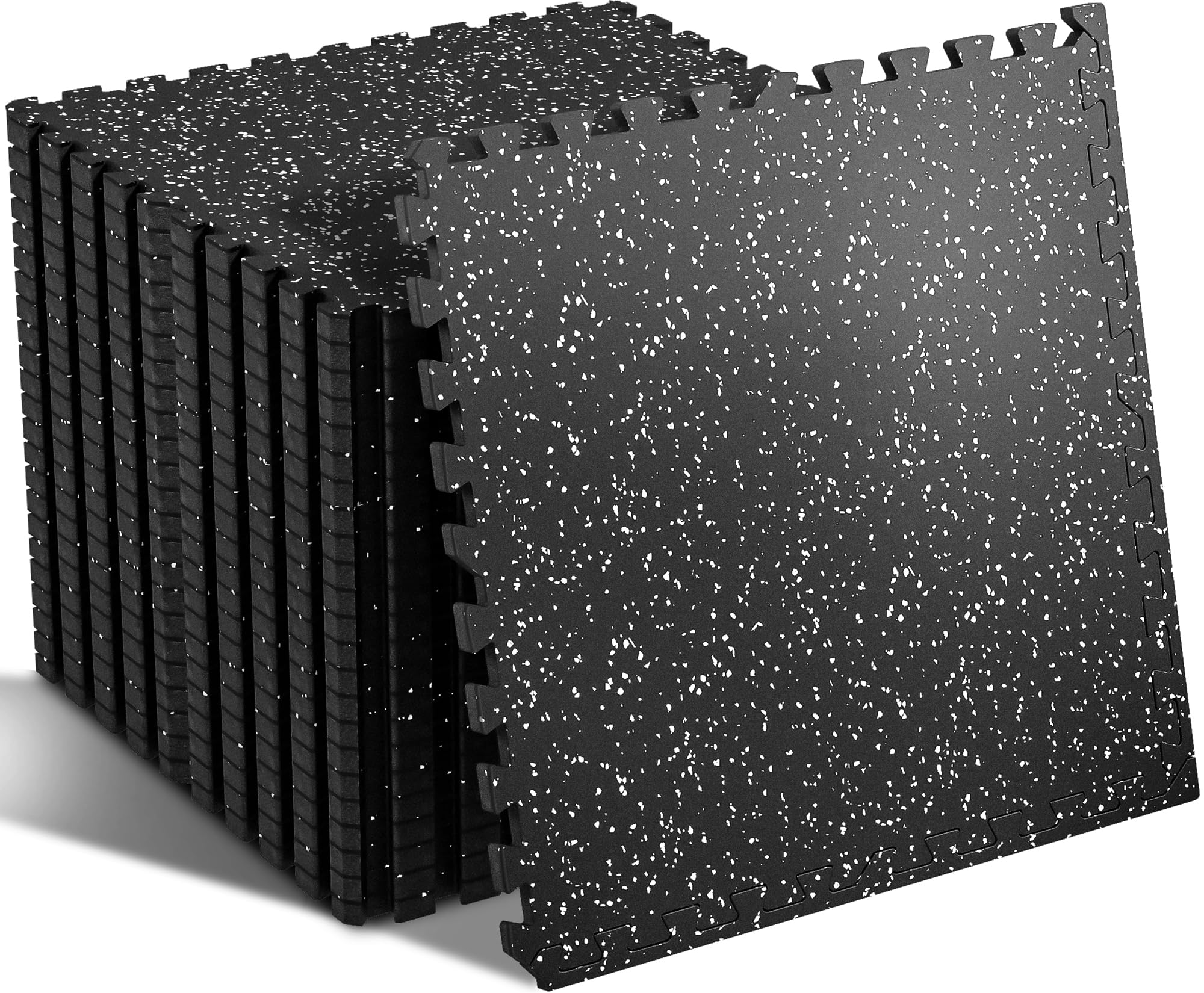
AIRHOP Rubber-Top Gym Tiles
Key details
- Pieces
- 24 tiles
- Surface
- Rubber top over EVA foam
- Coverage
- 96 sq ft (8 x 12 ft)
- Tile Size
- 24 x 24 x 0.56 in
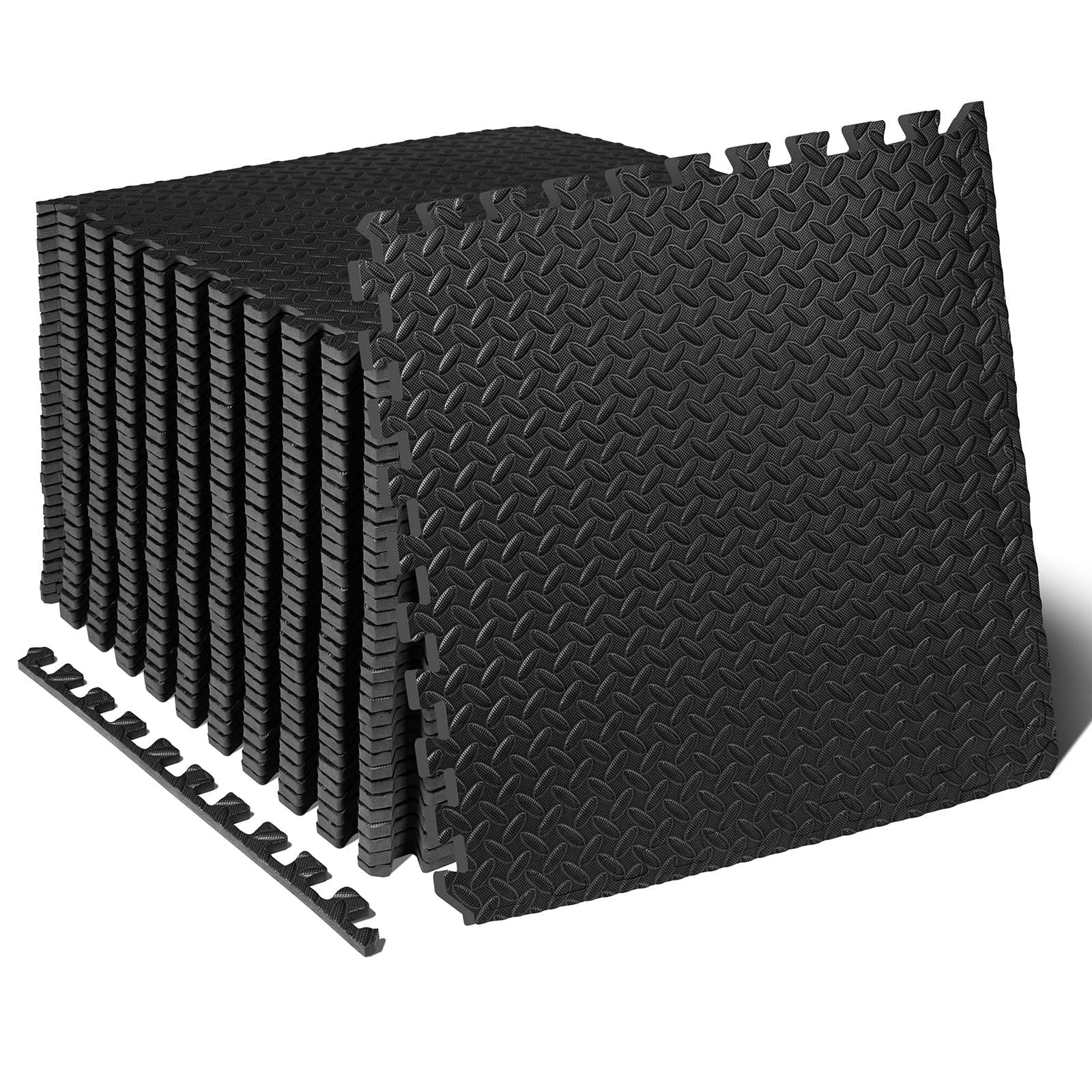
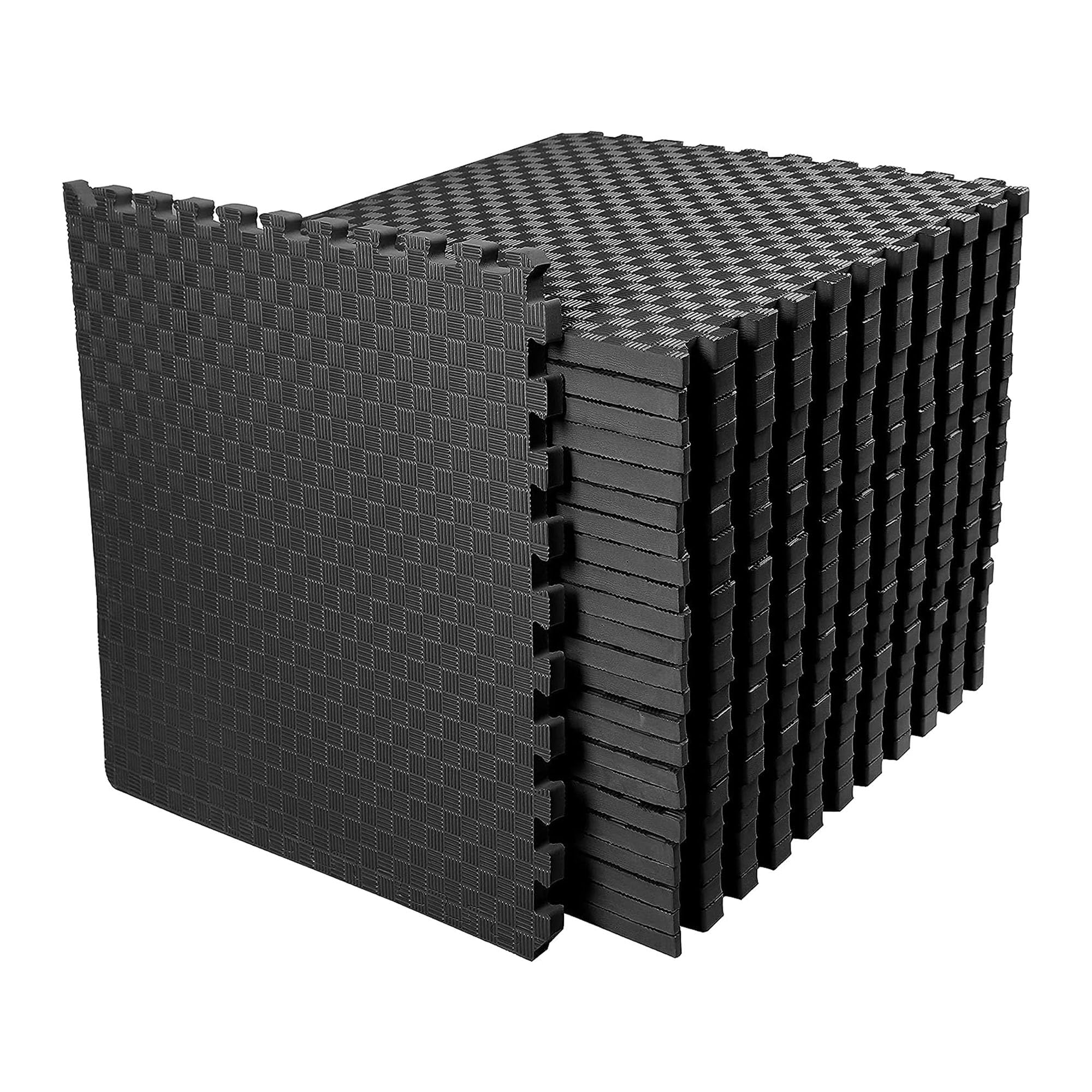
Rubber bonded over foam is the whole argument for these tiles, and it is why they are our top pick. The face is recycled rubber, so bench feet, rack uprights, and training shoes slide across it without gouging the surface, while the EVA core underneath takes the sting out of a concrete slab. Twenty-four tiles at 24 by 24 inches add up to 96 square feet — an 8-by-12 footprint with room for a rack, a bench, and the space to load plates.
The interlocking is where these pull ahead of the cheaper foam sets. The locks are larger than the ones on a typical puzzle tile, and once a row was seated we could walk the length of it without a tile stepping out of line. Seams are visible if you get down and look for them; underfoot, the floor reads as one surface.
Laying 24 tiles is not a five-minute job, and corners are the fussy part: if a corner piece will not seat flush, lifting the tile back out and starting that corner again works better than forcing it. Budget a second pair of hands for the last row, when you are working against tiles that are already locked in.
What you are paying for is quiet and durability in the same tile. The foam core absorbs the thud of a jump rope and the clatter of a dumbbell in a way a hard floor never will, which matters in a basement or in a room above a bedroom. This is the priciest of the interlocking sets here, and it is still the one we point to for a floor that is going to stay down.
Pros
- Rubber face resists abrasion from benches and shoes
- Foam core deadens impact noise
- Larger locks hold rows in line
- 96 sq ft covers a full garage bay
Cons
- Priciest of the interlocking sets here
- Corner pieces can resist seating flush
For a permanent gym floor in a garage or basement, these rubber-topped tiles are the ones we buy again: dense enough for a rack and quiet enough to keep the rest of the house undisturbed.