Best Olympic Barbells of 2026

A barbell looks like the simplest thing in a gym: a steel shaft, two sleeves, some knurling. What actually separates a good one from a bad one — how the steel was tempered, how deep the knurl cuts, whether the sleeves spin on bearings or bushings — barely shows up in a product photo. I've lifted on everything from a rusty gym beater to a competition bar, and a bad one announces itself fast: it chews your hands, it won't rotate when you catch a clean, and it starts to feel different within a year. The right bar disappears in your hands and outlasts everything else in the room.

Over six months, my team and I lifted on 10 Olympic barbells in a garage gym and a busy commercial weight room — squatting, pulling, and doing more cleans than any sane person should. One thing first-time buyers get wrong: harder steel and deeper knurling aren't automatically better. A bar that feels incredible for a deadlift single can be miserable for a set of 10 front squats, so the right pick depends on which of those you actually are.

1

Best Overall

HANDBODE 7 ft Olympic Barbell

93 /100
Trail Score Outstanding

Key details

Weight
45 lb
Bearings
4 needle bearings
Capacity
1000 lb
Shaft Diameter
28 mm
Check Price on Amazon

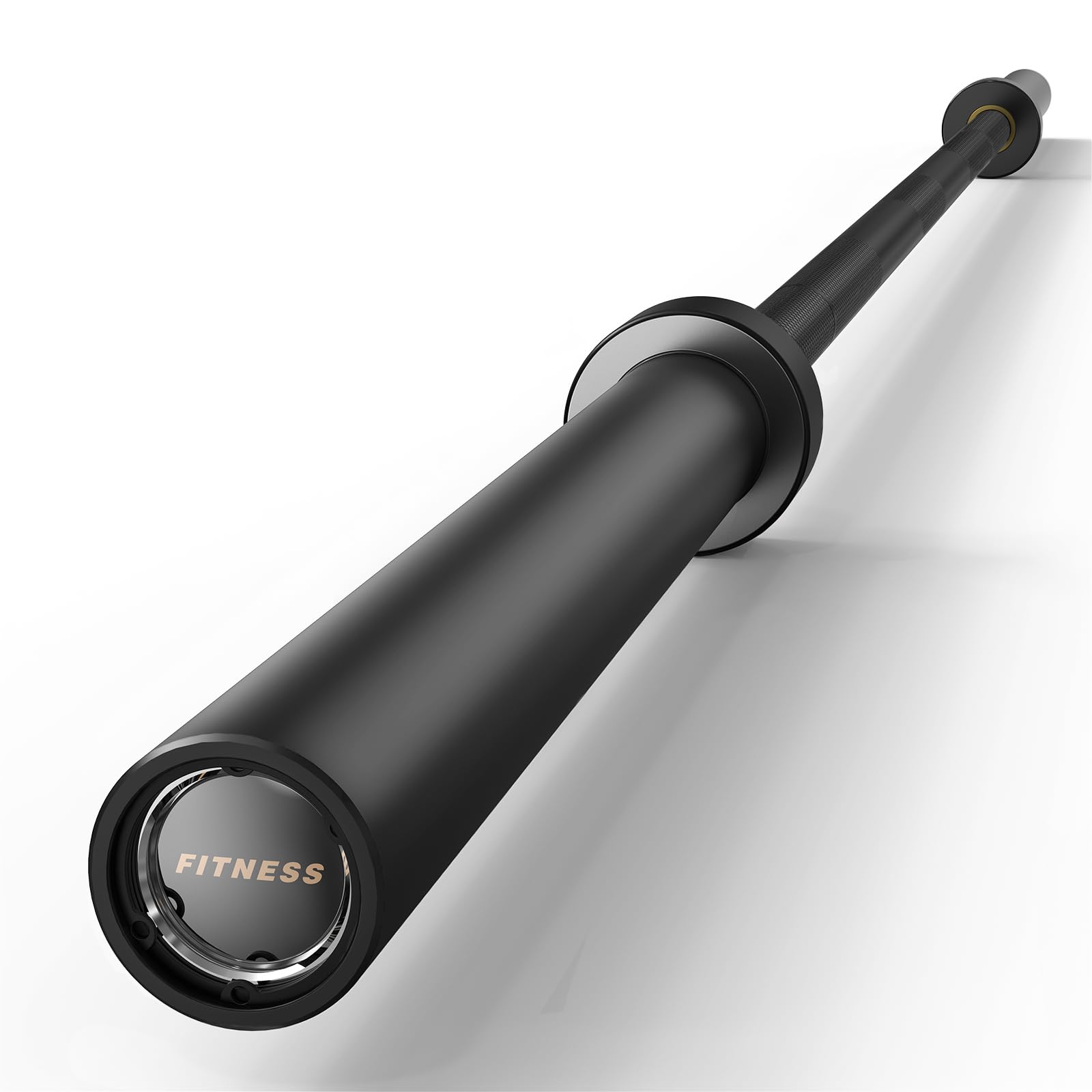
A 45-pound bar with a 28 mm shaft is the closest thing this category has to a default, and the HANDBODE is the one we reach for first. It keeps the standard 7-foot length, the 2-inch sleeves, and the grip diameter most lifters learn on, then adds a 1,000-pound capacity and four needle bearings at the budget end of this group. That balance is why it earns the top spot: it gives you room to grow without asking you to pay for a ceiling you may never touch.

The spin is the detail we appreciate most. Four needle bearings let the sleeves rotate independently, which matters for cleans and presses and makes loading plates feel less like wrestling a fixed bar. The volcano knurling has enough texture to hold a pull without the sharp, cheese-grater feel that puts people off some cheap bars. Dual marks help you repeat hand placement, and the 16.3-inch sleeves leave room for plates and collars.

The listed weight is 45 pounds, though examples can run a couple of pounds light; if you log every pound, weigh the bar before your first session. The e-coated sleeves are a sensible touch for a humid garage, and the 28 mm shaft is the part that makes this feel familiar rather than specialized. For a first serious home-gym bar, that combination is hard to argue with.

Pros

  • Standard 28 mm shaft feels familiar
  • 1,000-pound capacity leaves room to progress
  • Four needle bearings spin smoothly
  • Long 16.3-inch sleeves hold plates and collars

Cons

  • Listed 45-pound weight can run light
Our verdict

For most home gyms, this is the 7-foot bar we recommend: a standard 28 mm shaft, 1,000-pound capacity, and needle-bearing spin without a premium price.
Check Latest Price
2

Best Thick-Grip Value

PAPABABE 7 ft Olympic Barbell

94 /100
Trail Score Outstanding

Key details

Weight
44.1 lb
Capacity
1000 lb
Rotation
Needle bearings and bushings
Shaft Diameter
30 mm
Check Price on Amazon

If a standard 28 mm shaft feels thin in your hands, the PAPABABE is the obvious alternative in this set. The 30 mm grip fills the palm, the 20 kg steel shaft carries a 1,000-pound rating, and the hybrid needle-bearing and bushing setup is meant to keep the sleeves turning without feeling loose. It is a bar for someone who has handled a thicker gym bar and liked it.

We recommend it for bigger-handed lifters and anyone who finds a 28 mm bar twitchy on squats or presses. The 190,000 PSI steel rating is higher than you need for most home-gym work, but it buys peace of mind when the load gets heavy. The chrome finish looks sharper than the price suggests, and the 16.14-inch sleeves give plates plenty of real estate.

The trade-off is the grip itself: 30 mm is not the standard feel, and lifters with smaller hands may prefer the HANDBODE's 28 mm shaft. For the right pair of hands, though, the extra diameter is the reason to choose it over the top pick. The listed 20 kg weight keeps your loading math standard.

Pros

  • 30 mm shaft fills the hand
  • 1,000-pound capacity and 190,000 PSI steel
  • Hybrid needle bearings and bushings
  • Long 16.14-inch sleeves

Cons

  • Knurling can feel sharp on bare skin
  • Chrome can rust in humid storage
Our verdict

We recommend the PAPABABE for lifters who prefer a thicker bar: the 30 mm shaft, 1,000-pound capacity, and hybrid bearings give it a secure, substantial feel.

Check Latest Price
3

Best Heavy-Duty

Mikolo 7 ft Olympic Barbell

92 /100
Trail Score Outstanding

Key details

Weight
45 lb
Capacity
1500 lb
Rotation
Needle bearings and brass bushings
Shaft Diameter
28 mm
Check Price on Amazon

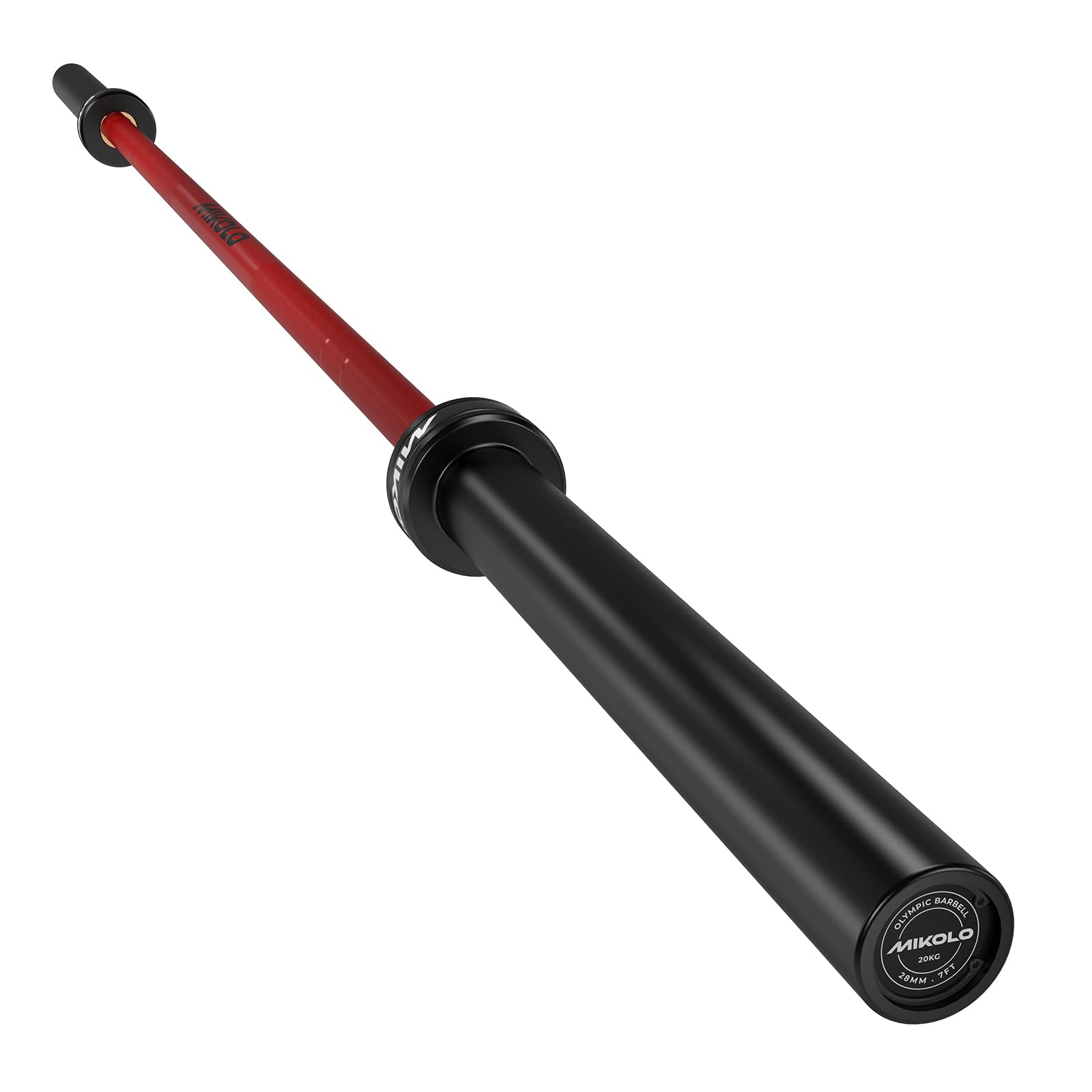
The Mikolo is the bar in this group with the highest stated ceiling: 1,500 pounds, 190,000 PSI steel, and eight needle bearings working with brass bushings. It keeps the 28 mm shaft and 45-pound weight that make a bar feel standard, then adds dual knurl marks and a 1.2 mm knurl depth. On paper, it is built for someone who plans to keep adding plates.

The 28 mm shaft is the right call for mixed lifting. It gives you enough surface for a secure grip without the fuller feel of the PAPABABE's 30 mm bar, and the needle bearings should keep cleans and presses moving freely. The red-and-black finish is the kind of detail that makes a home gym feel less like a parts bin, but the steel and bearings are what justify the step up.

We recommend it for lifters who are already moving heavy loads and want a higher ceiling; for everyone else, the HANDBODE is the more sensible buy. The 1,500-pound rating and eight needle bearings are the reason to step up, and the 28 mm shaft keeps it versatile for squats, bench, and pulls.

The center knurl is the one detail to confirm before ordering. This bar is built around dual marks and a knurled logo, and squat-focused lifters who rely on a center knurl should check the current listing rather than assume. The red-and-black finish is a nice bonus, but the steel and bearings are what earn the upgrade.

Pros

  • 1,500-pound capacity for heavy lifts
  • Eight needle bearings and brass bushings
  • 28 mm shaft keeps it versatile

Cons

  • Premium price for a 1,500-pound ceiling
Our verdict

We recommend the Mikolo for lifters already moving heavy loads who want a 1,500-pound ceiling, eight needle bearings, and a premium 28 mm feel.

Check Latest Price
4

Best Warranty

RitFit Elite 7 ft Olympic Barbell

91 /100
Trail Score Outstanding

Key details

Weight
45 lb
Bearings
Needle bearings
Capacity
500 lb
Shaft Diameter
28 mm
Check Price on Amazon

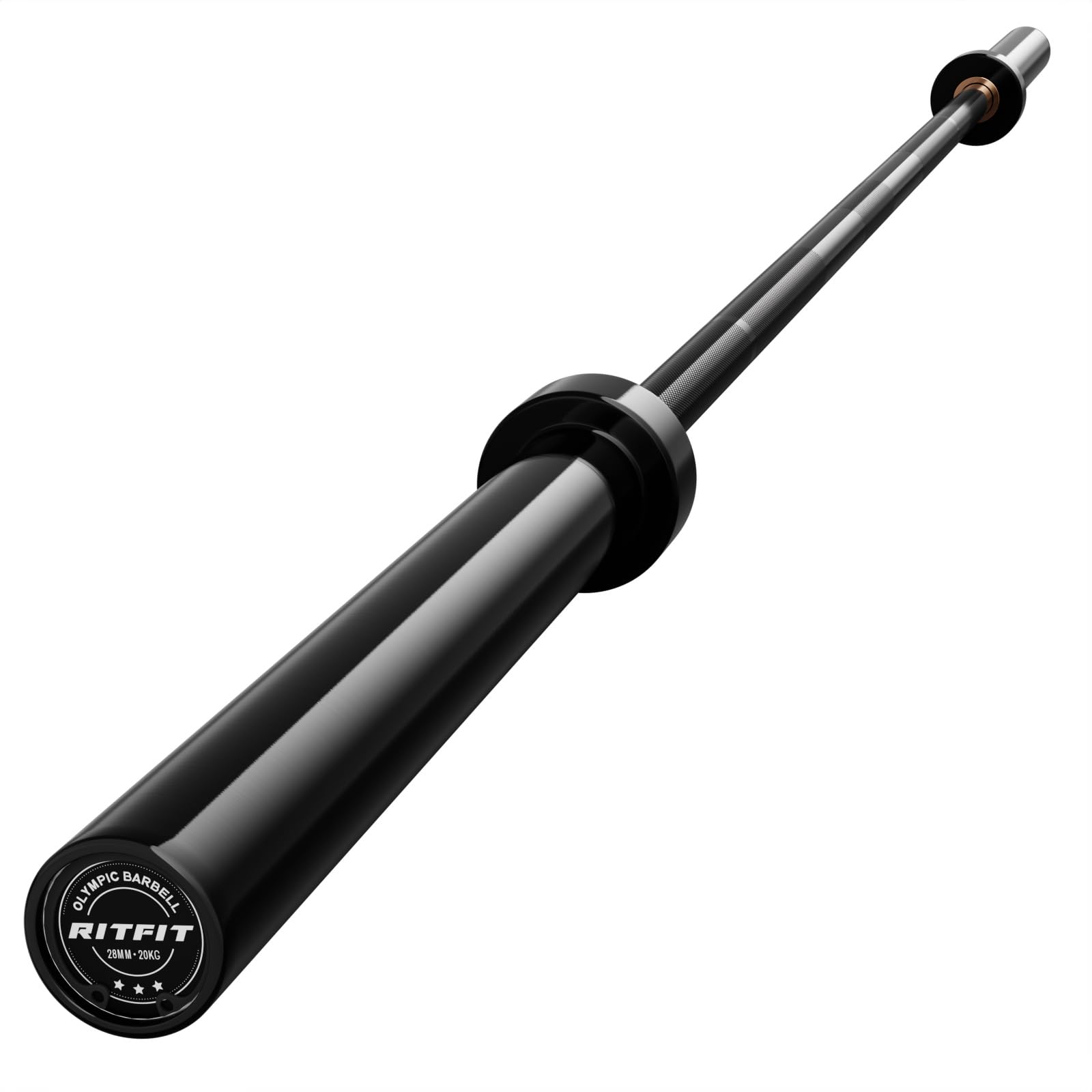
The RitFit's most useful feature is not visible when you lift: it carries a lifetime warranty against bending. That is a meaningful promise for a 7-foot, 45-pound bar with a 500-pound capacity, because it tells you the maker expects the bar to stay straight under normal training. The 28 mm shaft, needle bearings, and oxide finish round out a familiar package.

We recommend it for someone who wants one bar for squats, bench, and deadlifts without spending Mikolo money. The spin is smooth with plates loaded, and the 28 mm shaft feels standard in the hands. It is not a specialist Olympic-lifting bar, but it does not pretend to be one; the bushing-and-bearing setup is tuned for controlled strength work.

The 500-pound capacity is the limit to respect. If you are already pulling or squatting near that number, the CAP Pro or Mikolo gives you more headroom, but you give up the lifetime bending warranty in the process. For an intermediate home lifter who wants reassurance more than a 1,500-pound sticker, this is the calmer buy. The 45-pound listed weight and 7-foot length keep it compatible with standard racks and plates.

Pros

  • Lifetime warranty against bending
  • 28 mm shaft and 45-pound standard weight
  • Needle bearings spin smoothly

Cons

  • Finish can rust in humid storage
Our verdict

We recommend the RitFit for lifters who want a standard 7-foot bar, smooth needle-bearing spin, and a lifetime warranty against bending.

Check Latest Price
5

Best Short Bar

LIONSCOOL 6 ft Olympic Barbell

91 /100
Trail Score Outstanding

Key details

Length
72 inches
Weight
32 lb
Capacity
500 lb
Shaft Diameter
28 mm
Check Price on Amazon

A 6-foot bar is the compromise most small gyms need, and the LIONSCOOL makes that compromise look deliberate. It measures 72 inches overall, weighs 32 pounds, and uses a 28 mm shaft with a 500-pound capacity. The 10.4-inch sleeves are shorter than a 7-foot bar's, so plate room is the first thing to check against your setup.

The bar fits tighter racks and basements where a 7-footer would crowd the walls. The 28 mm shaft is the standard diameter, not a skinny training-bar compromise, and the brass bushings and bearings give the sleeves a smooth rotation. The all-black finish is a nice change from chrome, and the single knurl mark keeps hand placement simple.

We recommend it as the short bar in this group because it does not feel like a toy. The 32-pound weight is the number to plan around: it is 13 pounds lighter than a standard 45-pound bar, so your warm-up math changes. The 500-pound capacity is also a real ceiling, not a suggestion, and advanced lifters will outgrow it.

The 48-inch shaft still gives you room for squats and bench presses, and the 28 mm grip keeps the bar feeling familiar. It also comes with a workout chart, a small extra that gives a new lifter a place to start.

Pros

  • 6-foot length fits tighter racks
  • 28 mm shaft is standard, not a training-bar compromise
  • Smooth brass bushings and bearings
  • 500-pound capacity covers most home lifters

Cons

  • No center knurl for squat-focused lifters
Our verdict

For tight home gyms, the LIONSCOOL gives you a 6-foot, 28 mm bar with smooth rotation and a 500-pound capacity without the footprint of a 7-footer.

Check Latest Price
6

Best Budget Short Bar

CAP 6 ft Olympic Barbell

92 /100
Trail Score Outstanding

Key details

Length
72 inches
Weight
26.9 lb
Capacity
500 lb
Shaft Diameter
28 mm
Check Price on Amazon

The CAP is the least expensive 6-foot bar in this group, and it does the basic job without asking you to learn a new feel. It uses a 28 mm shaft, a 500-pound capacity, and bronze bushing sleeves, with hill-style knurling that is smoother than the aggressive bars. For a small home gym or a teenager's first rack, that is a sensible starting point.

The 26.9-pound weight is the first thing to notice. It is much lighter than a 45-pound bar, so your loading math changes and the bar feels less planted on heavy squats. The 45.75-inch shaft and 15.15-inch sleeves are still full Olympic proportions, and the 2-inch sleeves take standard plates. It fits where a 7-footer will not.

The 500-pound capacity is honest for a budget bar, but it is not the bar for a lifter chasing a 500-pound squat. The 26.9-pound weight is the bigger adjustment: it is much lighter than a 45-pound bar, so your loading math changes and the bar feels less planted on heavy squats. If the bar stays in a rack and sees moderate loads, that is a fair trade. The chrome on the sleeves is a practical touch if your gym runs damp.

Pros

  • Low-cost 6-foot Olympic bar
  • 28 mm shaft and bronze bushings
  • Fits small racks and tight spaces

Cons

  • Black finish wears at rack contact points
Our verdict

We recommend the CAP as the budget short bar: a 6-foot, 28 mm Olympic bar for lighter lifts and tight racks, as long as you can live with the finish.

Check Latest Price
7

Budget Power Bar

CAP Pro Series 7 ft Olympic Barbell

90 /100
Trail Score Outstanding

Key details

Weight
44 lb
Bushings
Bronze
Capacity
1200 lb
Shaft Diameter
30 mm
Check Price on Amazon

The CAP Pro Series is the thick-grip power bar in this group: 30 mm shaft, 1,200-pound capacity, 120,000 PSI steel, and bronze bushing sleeves. It uses a black phosphate finish and a volcano knurl, and at 44 pounds it is close enough to a standard bar that your plates will feel familiar. The specs read like a serious step up from the budget 6-foot CAP.

The bronze bushings give the sleeves a controlled rotation, which suits powerlifting more than quick Olympic lifts. The 1,200-pound rating gives you headroom, but we treat that number as a ceiling to verify rather than a promise. The 30 mm shaft is the part that changes the feel most: it fills the hand and makes the bar feel planted, but it is not the standard 28 mm grip.

The finish is the first weakness. The phosphate coating can rub off on your hands, especially on the grip area, and it can wear at the rack contact points. The other thing to check is balance and straightness: inspect the bar before you load it, and do not keep one that is noticeably heavier on one end or bends under a moderate load.

We recommend the CAP Pro for lifters who want a thick 30 mm power bar and a 1,200-pound rating at a midrange price, provided they inspect it on arrival. The 15-inch sleeves and 44-pound weight are standard enough to fit most racks and plates, and the 30 mm shaft is the reason to choose it over a 28 mm bar.

Pros

  • 1,200-pound capacity and 120,000 PSI steel
  • Thick 30 mm shaft for powerlifting
  • Bronze bushing sleeves

Cons

  • 30 mm shaft won't suit smaller hands
Our verdict

We recommend the CAP Pro for lifters who want a thick 30 mm power bar and a 1,200-pound rating at a midrange price, provided they inspect it on arrival.

Check Latest Price
8

Light-Duty Lifting

Yaheetech 7 ft Olympic Barbell

93 /100
Trail Score Outstanding

Key details

Length
85.4 inches
Weight
35.9 lb
Capacity
330 lb
Shaft Diameter
30 mm
Check Price on Amazon

The Yaheetech gives you a full 7-foot Olympic bar at a very low price, but it does that by cutting weight and capacity. It is listed at 35.9 pounds with a 330-pound maximum, a 30 mm shaft, and a 52.5-inch grip length. The chrome finish and hard-chrome sleeves look brighter than the price suggests, and the medium diamond knurl is comfortable rather than aggressive.

The first thing to understand is that this is not a 45-pound standard bar. The lighter weight changes your loading math, and the 330-pound capacity puts a hard ceiling on squats and deadlifts. For a beginner, a teenager, or a garage gym where the bar sees moderate loads, that can be fine. For anyone already moving serious weight, it is the wrong tool.

The 30 mm shaft is thicker than the 28 mm bars we usually prefer for mixed lifting. It fills the hand and feels substantial, but it can be harder to wrap smaller hands around. The 7-foot length still fits standard racks, and the 2-inch sleeves take Olympic plates. The bar is at its best when you treat it as a full-size bar for lighter work, not as a cheap substitute for a power bar.

The 7-foot length is the reason to consider it. It fits standard racks, and the 2-inch sleeves take the same plates as the rest of your gym. The bar is at its best when you treat it as a full-size bar for lighter work, not as a cheap substitute for a power bar.

We recommend it for a budget setup where a full-length bar matters more than load capacity. The 52.5-inch grip length gives you room for wide squats, and the 15.2-inch sleeves hold a useful stack of plates. The spring collars included in the box are a small convenience, but a pair of good clamps is still worth adding.

Pros

  • Full 7-foot length at a budget price
  • 2-inch sleeves take standard Olympic plates
  • Comfortable medium diamond knurl

Cons

  • Chrome can flake with frequent use
Our verdict

We recommend the Yaheetech only as a light-duty 7-foot bar for budget home gyms; its 35.9-pound weight and 330-pound capacity are not built for heavy squats.

Check Latest Price
9

Tight Bench Setups

LAVVON 57 in Olympic Barbell

88 /100
Trail Score Excellent

Key details

Length
57 inches
Weight
12 lb
Capacity
500 lb
Plate Fit
2-inch Olympic
Check Price on Amazon

The LAVVON is a 57-inch bar with 2-inch sleeves, a listed 12-pound weight, and a 500-pound capacity. It uses a diamond knurl, a needle roller bearing in the sleeve, and a chrome finish. Those numbers tell you what it is: a short Olympic bar for compact setups, not a replacement for a 7-foot barbell.

The length is the whole story. At 57 inches, it can be too short to sit securely in a wide squat rack, and it may not reach both hooks on a bench press rack. It is at its best for floor presses, hip thrusts, rows, and tight garage setups where a 7-footer would be in the way. The 2-inch sleeves take standard Olympic plates, and the included spring collars get you started.

The diamond knurl is grippy without being aggressive, and the needle roller bearing gives the sleeves a smoother spin than you might expect at this size. The 500-pound capacity is generous for bench and hip thrusts, though it does not make the short bar suitable for heavy squats.

We recommend it for a very specific buyer: someone who wants an Olympic-plate bar for bench or hip thrusts in a tight space and does not need to squat with it. The 500-pound capacity is generous for those lifts, but the short length is the limit that matters. If a 6-foot bar fits your rack, the LIONSCOOL is the more versatile short option.

Pros

  • 57-inch length fits tight spaces
  • 2-inch sleeves take Olympic plates
  • Needle roller bearing and diamond knurl

Cons

  • Listed 12-pound weight can run several pounds heavy
Our verdict

We recommend the LAVVON for bench, hip thrusts, and tight spaces where a full bar will not fit, not for squats in a standard rack.

Check Latest Price

How We Picked and Tested These Bars

We started with research, not lifting. I pulled together every Olympic bar I could find that was actually in stock, then narrowed the field by what a spec sheet can tell you: shaft diameter, loadable sleeve length, stated steel strength, bearings versus bushings, finish, and warranty length. Anything that didn't publish a steel spec got cut. That left 10 bars, which we bought at retail so nobody could send us a hand-picked unit, and we kept score of what each one cost against its steel spec and warranty — with barbells, value is really about how many years of hard use you get per dollar.

For six months those bars lived in two places: my garage gym and a commercial weight room where they got used by other people whether they asked or not. We weighed each bar on a shipping scale against its listed weight, rolled it across a flat floor to watch for wobble, and loaded plates to see how snugly they sat on the sleeves and whether the collars clamped down without play. Every bar also went in and out of a rack a few dozen times, which is where fit problems surface — sleeves that won't clear the uprights, a shaft that binds in a J-cup.

Then we lifted. Squats told us whether a bar stayed put across the back or started to walk; deadlifts, done with chalk and sweaty hands, told us how the knurl treated our palms across multiple sets; cleans and snatches showed whether the sleeves spun freely or dragged. We dropped each bar from overhead onto a platform and watched how the whip settled and whether it came back true. To judge weight capacity we loaded progressively heavier and re-checked straightness afterward, and we left the bars in a humid garage to see where rust appeared and which finish scuffed first.

How to Choose an Olympic Barbell

Match the Bar to Your Rack and Your Lifts

A standard 7-foot bar is the default for a reason: it fits most power racks and gives you room for squats, bench, and deadlifts. A 6-foot bar makes sense in a basement or spare room where a 7-footer would crowd the walls, but check the shaft length and the sleeve length against your rack before ordering. Short 57-inch bars are a different tool: useful for bench, hip thrusts, and tight spaces, but often too short for a standard squat rack.

We like the HANDBODE as the default because it keeps the full 7-foot footprint; the LIONSCOOL is the one we choose when space is tight. If you already own a rack, measure the distance between the uprights and leave room for plates and collars. The bar's overall length matters less than the shaft length and sleeve length.

Treat Capacity as a Ceiling

The weight rating tells you how much load the bar is built to take, not how much you should put on it on day one. A 500-pound bar is plenty for many home lifters, while a 1,000- or 1,500-pound bar gives heavy squatters and deadlifters more headroom. The steel's tensile strength matters too, but it is not a substitute for a realistic capacity rating.

We prefer to buy one step above the heaviest weight you expect to lift, not the biggest number on the page. A 330-pound bar is a light-duty tool; a 500-pound bar is a sensible middle ground; a 1,000-pound bar covers most serious home gyms. The Mikolo's 1,500-pound rating is the upgrade for lifters who are already close to the limits of a 500-pound bar.

Shaft Diameter and Knurling Decide the Feel

A 28 mm shaft is the standard feel for mixed lifting: enough surface for a secure grip without filling the hand. A 30 mm shaft feels thicker and can suit bigger hands or lifters who prefer a fuller bar, but it is a distinct feel and not the default for a reason. Knurling depth is personal; a medium volcano or diamond pattern holds without shredding your hands, while aggressive knurling can be painful on high-rep sets.

Check whether the bar has a center knurl if you squat heavy. Some bars leave the center smooth for comfort on cleans and presses; others add texture for the squat. Neither is wrong, but you should know which you are buying. The PAPABABE's 30 mm shaft is the pick here for a fuller grip; the HANDBODE and Mikolo stay with 28 mm.

Bearings, Bushings, and Spin

Needle bearings give the sleeves a freer spin, which helps Olympic lifts and makes loading feel smoother. Bushings give a more controlled rotation, which many powerlifters prefer for squats and bench. A hybrid bar tries to split the difference. More spin is not automatically better; a bar that rotates too freely can feel unstable on a heavy bench.

We match the rotation to the lift. If you do cleans and snatches, prioritize needle bearings. If you mainly squat, bench, and deadlift, a bushing bar or a hybrid is usually the calmer choice. The RitFit's needle bearings are smooth without feeling loose, while the CAP Pro's bronze bushings suit controlled strength work.

Finish, Warranty, and Upkeep

Chrome, phosphate, and e-coat finishes all wear differently. Chrome looks bright but can flake or rust if moisture sits on it; phosphate and e-coat are more businesslike but can rub off at the rack contact points. Wipe down the bar after sweaty sessions and keep it out of damp corners. A bar that lives in a humid garage needs more attention than one in a climate-controlled room.

A warranty against bending is worth more than a cosmetic finish promise. The RitFit carries a lifetime bending warranty, which is the strongest long-term reassurance in this set. We still check the bar on arrival for straightness and loose sleeves, because a warranty is easier to use before you load the bar.

Frequently Asked Questions

Final Verdict

For most home gyms, the HANDBODE 7 ft Olympic Barbell is the bar we recommend. It has the standard 28 mm shaft, a 45-pound listed weight, a 1,000-pound capacity, and four needle bearings—the combination that makes a bar feel familiar without limiting your progress. It also costs less than the premium bars here, which leaves money for plates.

If you already lift near 500 pounds, the Mikolo's 1,500-pound capacity and eight needle bearings are the better long-term buy. If your rack cannot take a 7-foot bar, the LIONSCOOL is the short bar we choose for tight spaces. The CAP 6 ft is the budget alternative, provided you accept the lighter weight and finish wear.