Best Insoles for Overpronation of 2026

Overpronation is what happens when your arch collapses inward with each step, and the ache it leaves behind often turns up far from your feet — in your shins, knees, or the outside of the hip. A good insole doesn't rewrite your stride; it props up the arch at the moment it starts to roll, which takes load off everything above it. I've flattened plenty of drugstore foam pads in under a month, so I know how quickly a soft insert stops being an insert.

Fit is the part people skip, and it decides whether an insole helps or hurts: the arch has to land under your arch, and the whole thing has to leave room in the shoe without pinching across the top. Over the past six months, my team and I have worn 14 pairs through work shifts, commutes, and weekend runs. The ones that genuinely eased pain had a firm, correctly placed arch — not the softest foam. The picks below are the ones that kept their shape and kept our testers moving.

1

Best Overall

PowerStep Pinnacle Maxx

91 /100
Trail Score Outstanding

Key details

Stability
Maximum
Heel Design
Angled
Arch Support
Firm
Pronation Support
Flat feet and overpronation
Check Price on Amazon

The Pinnacle Maxx is the pair we recommend first for a flat or low arch that rolls inward. It is not the softest insole here, and that is exactly the point: the firm arch and angled heel give the foot a stable platform instead of letting it sink and turn. For overpronation, that firmness matters more than a plush top cover, and it is why this one holds the top spot.

What we appreciate most is the shape through the rearfoot. The angled heel is designed to keep the foot planted, and the arch is firm enough to resist collapse when you stand. We wore it in shoes with removable footbeds and found it works best when the shoe has a little volume to give; in a tight sneaker, the same support can crowd the toes.

The Pinnacle Maxx is a premium insole, and the price is the main reason to pause. It is substantial underfoot, but it is not a brick; it is built for daily wear in athletic shoes and work boots. If you need a lower-profile option for dress shoes, the Superfeet All-Purpose is the easier fit.

The fit is true enough for most shoes with a removable footbed, but check the size against your existing insole before you commit. We also like that it is a unisex design, so it is easy to recommend to a partner or buy a second pair for another shoe. For a flat foot that rolls hard, it is the first pair we try.

Pros

  • Maximum-stability build for flat, overpronating feet
  • Firm arch with an angled heel
  • Substantial support for daily wear
  • Strong fit in roomy athletic shoes

Cons

  • Premium price compared with drugstore pairs
  • Adds volume in tight shoes
Our verdict

The Pinnacle Maxx is the one we recommend first for flat, low arches that roll inward: its firm arch and angled heel give the stability most insoles only claim.

Check Latest Price
2

Best for Women

PowerStep Pinnacle Pink

91 /100
Trail Score Outstanding

Key details

Sizing
Women's, exact fit
Cushioning
Maximum
Arch Support
Neutral
Pronation Support
Mild to moderate
Check Price on Amazon

Women's-specific sizing is the reason the Pinnacle Pink earns a place. It takes the same stability idea as the Maxx and cuts it for a woman's shoe, with a neutral arch, maximum cushioning, and pronation correction support. The no-trim fit is the practical bonus: you order your shoe size and drop it in, which is a nicer experience than trimming a unisex insole and hoping the arch lands in the right place.

We recommend it for women who want a softer landing than the Maxx but still need the arch to hold. The deep heel cup is the detail we noticed first; it gives the rearfoot a place to sit, and the cushioning takes some of the sting out of hard floors. The maximum cushioning is the difference from the Maxx: it softens the step without turning the arch mushy. It is still a firm orthotic, though, so give it short wears at first if you are used to a soft gel insert.

The fit is close and women's-specific, so it is not the pick for a man or for a very roomy unisex shoe. It also costs as much as the top pick. For a woman who wants a stability insole that does not need trimming and fits neatly into closed-toe shoes, those are fair trade-offs. If you have a high arch or a wide forefoot, check the size chart first; the exact-fit design leaves less room for error.

Pros

  • Women's-specific fit needs no trimming
  • Deep heel cup and pronation support
  • Maximum cushioning softens hard floors

Cons

  • Women's sizing only
  • Premium price for one pair
Our verdict

Women who want pronation correction without trimming should start with the Pinnacle Pink; we like that the women's-specific fit does the work for you.

Check Latest Price
3

Best for Medium Arches

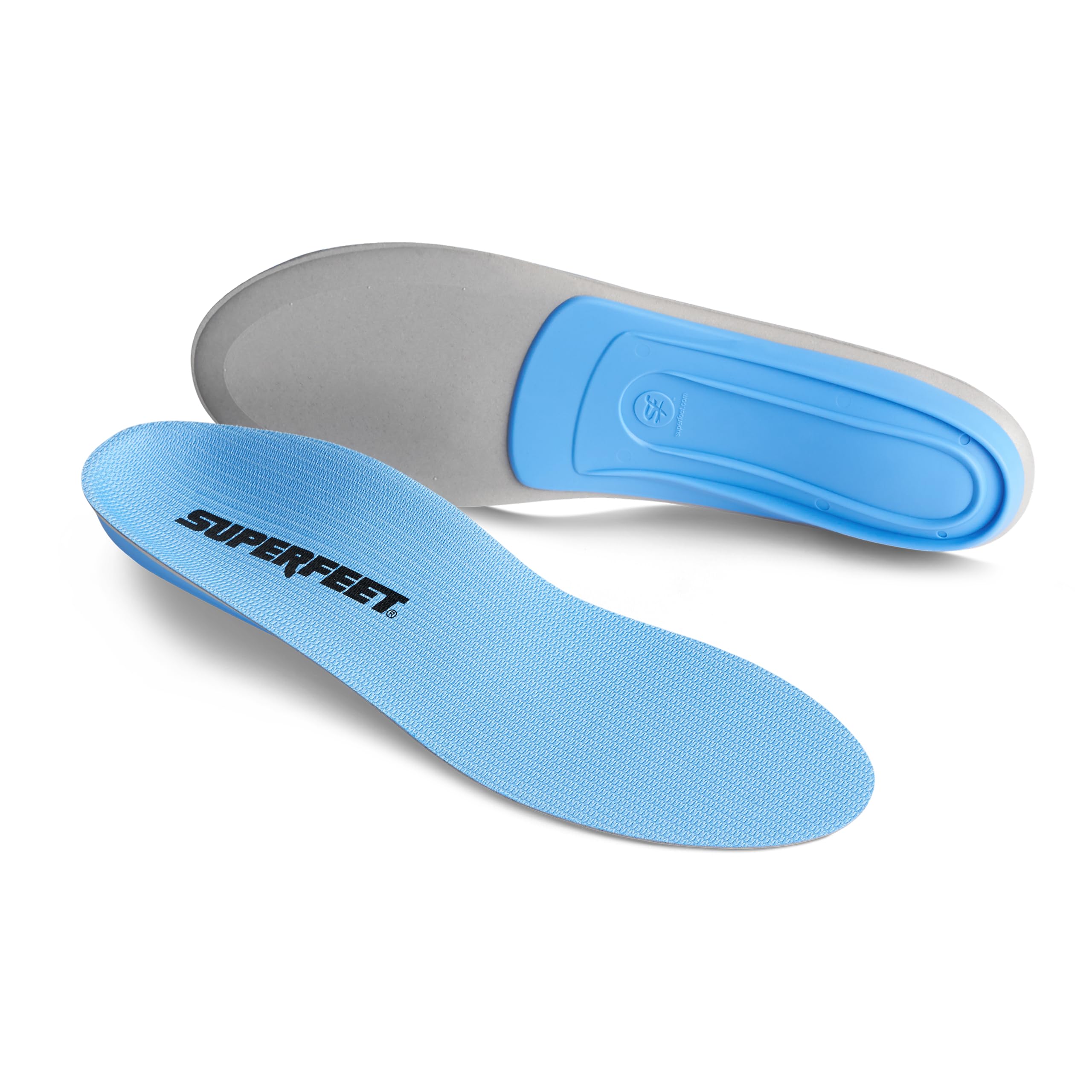
Superfeet All-Purpose

91 /100
Trail Score Outstanding

Key details

Sizing
M 11.5–14 / W 12.5+
Weight
3.2 oz
Dimensions
13.63 x 4.38 x 1.63 inches
Arch Support
Medium
Check Price on Amazon

This is not the maximum-stability pick. The Superfeet All-Purpose is the medium-arch insole we keep for milder overpronation, or for a foot that does not need an aggressive arch. The 3.2-ounce build is light, and the sizing is clear: men 11.5–14, women 12.5+.

We like it in roomier everyday shoes and sneakers. The medium profile is easier to wear all day than a deep, firm orthotic, and it still gives the arch something to press against. The listed dimensions are 13.63 x 4.38 x 1.63 inches, so compare the length with the shoe you plan to use. The trade-off is motion control: it will not hold a hard-rolling ankle the way the Pinnacle Maxx does. If your shoes are tight, the lighter build leaves more room, but it is still a full insole.

The price is premium, which is the part that gives us pause. You are paying for a well-known all-purpose shape and a light build, not for a pronation-specific design. For a low arch or a heavy runner, the PowerStep is the better spend; for a medium arch and a casual shoe, this is the easier insole to live with. We also appreciate that the sizing is explicit, so there is less guesswork.

Pros

  • Medium arch suits milder overpronation
  • Light 3.2-ounce build
  • Clear men's and women's sizing

Cons

  • Not a maximum motion-control shape
  • Premium price for an all-purpose insole
Our verdict

We keep the Superfeet All-Purpose for milder overpronation and roomier everyday shoes, where a medium arch is easier to wear than a maximum-stability block.

Check Latest Price
4

Best Budget Heavy-Duty

VALSOLE Heavy Duty

88 /100
Trail Score Excellent

Key details

Use
Work boots
Cushioning
Shock absorbing
Arch Support
High
Weight Rating
220+ lbs
Check Price on Amazon

The VALSOLE pair is the midrange heavy-duty option we point to when the premium stability picks are more than you want to spend. It is rated for 220+ lbs, with high arch support and a work-boot focus. The shock-absorbing build is the reason it earns a spot for long shifts on hard floors.

The high arch is assertive. In a boot with a removable footbed, that is useful: the insole sits securely and gives the foot a firm platform. In a low-volume sneaker, it can crowd the toes. We recommend giving it a short break-in and wearing it first in the shoe where you have the most room. The shape is simpler than the Pinnacle Maxx through the heel, but the price reflects that.

We recommend it for heavier buyers who need a work-boot insole and do not want premium pricing. It is not the most polished insole in the hand, but the arch and shock absorption are the parts that matter when you stand all day. If you want a softer heel landing, the CRUVHEAL is the closer call; if you want the most refined stability shape, save for the Maxx.

Pros

  • 220+ lb weight rating
  • High arch support for work boots
  • Shock-absorbing build for hard floors

Cons

  • Firm high arch needs break-in
  • Adds volume in low-volume sneakers
Our verdict

For heavier buyers who need a work-boot insole, the VALSOLE gives heavy-duty support without the premium price; that is why it earns our midrange pick.

Check Latest Price
5

Heavy Users

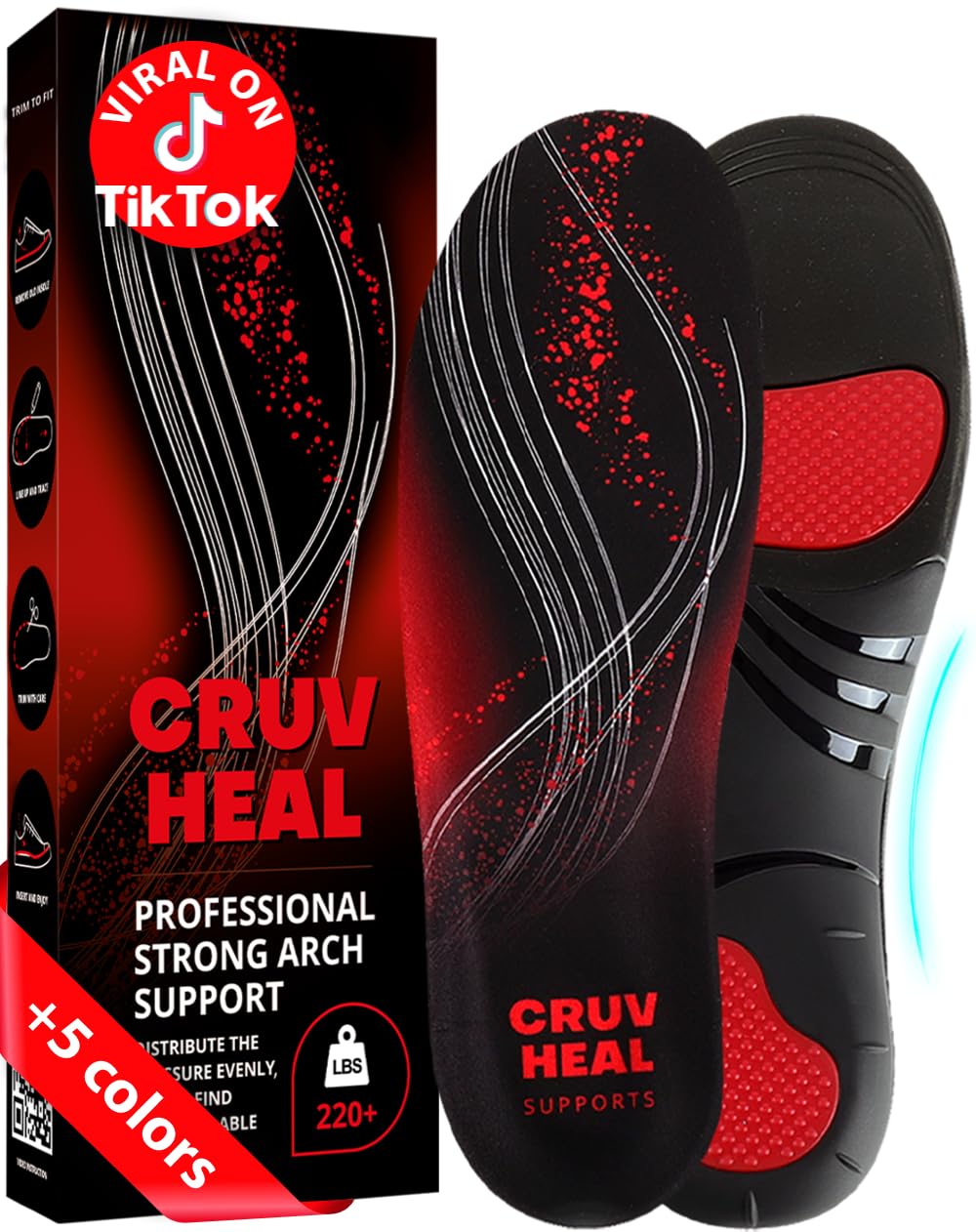
CRUVHEAL 220+

88 /100
Trail Score Excellent

Key details

Weight
9.17 oz
Cushioning
Gel heel pads
Arch Height
1.4 inches
Weight Rating
220+ lbs
Check Price on Amazon

The 1.4-inch arch is the first thing we look at on the CRUVHEAL, because it tells you this is a high-arch insole rather than a subtle insert. It is built for 220+ lbs, with gel heel pads and a firm arch. The shape is aimed at work boots and long days on hard floors, and that is where it makes the most sense.

We recommend it for heavier users who want a pronounced arch and a softer heel landing. The gel pads take the edge off concrete, and the high arch gives the foot something to push against. It is not a pure motion-control design, though; if your main problem is the ankle rolling inward, the Pinnacle Maxx is the more targeted choice. It is a good option for someone who has been unhappy with flat, cushioned insoles that collapse under weight.

The break-in is real. The firm arch can feel like a lump at first, so wear it for short stretches and check that the arch lands under your foot, not ahead of it. At 9.17 ounces, it is also the heaviest pair here; in a work boot that is fine, but it is not the one for a light walking shoe. The 1-year support policy is a useful backstop, but it does not change the fact that the arch has to match your foot.

Pros

  • 1.4-inch arch for pronounced support
  • Gel heel pads soften hard floors
  • 220+ lb weight rating
  • Works well in work boots

Cons

  • Heaviest pair here at 9.17 ounces
  • Firm arch needs a gradual break-in
Our verdict

The CRUVHEAL is our choice for heavier users who want a pronounced arch and gel heel cushioning for long days on hard floors.

Check Latest Price
6

Budget Rigid Support

WalkHero Heavy Duty

89 /100
Trail Score Excellent

Key details

Weight
4.66 oz
Cushioning
2mm EVA + 3mm OrthoLite
Arch Support
Rigid
Weight Rating
220+ lbs
Check Price on Amazon

At the budget end of this set, the WalkHero pair is the low-cost way to get a rigid arch. It is rated for 220+ lbs and uses a rigid arch support with a 2mm EVA layer and a 3mm OrthoLite layer. The build is aimed at work shoes and boots, and that is where it makes sense.

The rigidity is the reason to buy it. A soft insole lets the foot roll; this one gives a firmer platform, and the arch is strong enough to feel through the shoe. The cushioning is not luxurious, though. If you want a plush step, the Pinnacle Pink or CRUVHEAL is a better fit. The rigid arch is also why it is not the most forgiving first insole; give it a few short wears before a full shift.

We recommend it for a budget-conscious buyer who needs arch support in a work boot and can trade some softness for firmness. The 4.66-ounce build is light enough for all-day wear, and the lower cost makes it easier to buy a second pair for another shoe. It is not the insole we choose for a dress shoe or a tight sneaker, but for a work boot it earns its place.

Pros

  • Rigid arch for firm support
  • 220+ lb weight rating
  • Light 4.66-ounce build

Cons

  • Thin cushioning underfoot
Our verdict

Budget-minded buyers who need a rigid arch in a work boot should look at the WalkHero; we accept the firmer, thinner feel because the support is there.

Check Latest Price
7

Big and Tall

Dr. Scholl's Heavy Duty

89 /100
Trail Score Excellent

Key details

Trim
Trim to fit
Sizing
Men 8–14
Weight
7.04 oz
Weight Rating
200+ lbs
Check Price on Amazon

The Dr. Scholl's Heavy Duty pair is built for a specific shopper: a man over 200 pounds, often with wide feet, who wants a work-boot insole without spending much. The trim-to-fit design covers men's sizes 8–14, and the 7.04-ounce build feels substantial in the hand.

The arch support and heel cushioning are the appeal. It is a supportive, shock-absorbing insole for heavy use, and the extra heel cushioning is aimed at lower-back and leg fatigue. It is not a motion-control orthotic in the same way as the Pinnacle Maxx; it is a broader, more general support shape.

Fit is the part to watch. The insole is designed for wide feet, but it adds volume, so take the original footbed out if you can and trim carefully. In a work boot with room, it settles in; in a snug sneaker, it can make the shoe feel cramped. The trim-to-fit design gives you a closer match, but once you cut, the fit is yours to live with.

We recommend it as the budget big-and-tall pick for work boots, not as the first choice for a low arch that rolls inward. If overpronation is the main issue, the Pinnacle Maxx is worth the step up; if you need a cheap, supportive insole for a work boot, this one earns the place. It is also a good option for a wide foot that has trouble finding room in a standard insole.

Pros

  • Budget-friendly big-and-tall design
  • 200+ lb weight rating and wide-foot fit
  • Trim-to-fit men's sizes 8–14
  • Heel cushioning for work boots

Cons

  • Not an overpronation-specific shape
  • Men's sizing only
Our verdict

The Dr. Scholl's Heavy Duty is our budget big-and-tall pick for work boots, though it is not an overpronation-specific insole.

Check Latest Price

How We Tested 14 Pairs of Insoles for Overpronation

We started with a long list of insoles marketed for overpronation and cut anything that didn't state an arch height or a firmness level, since that's the information you need to match an insert to a foot. From there we filtered by price and by whether the insole was shaped for the shoes people actually wear — running shoes, work boots, everyday sneakers — and landed on 14 pairs to test.

Each pair went to a tester who wore it for six months, rotating between at least two pairs of shoes so we could tell an insole problem from a shoe problem. Testers logged standing shifts, commutes, and weekend runs, and noted how the insert felt in the first mile versus the tenth. We pressed a thumb into the arch and heel of every pair out of the box to see how firmly they resisted and how quickly they sprang back.

Fit came next. We trimmed where the manufacturer allowed it, checked whether the insert slid forward or bunched at the heel, and noted when it crowded the toebox. Each tester kept a short daily note on where they felt discomfort — morning heel pain, mid-afternoon arch ache, post-run shin tightness — and whether it moved over the weeks.

At two weeks, two months, and six months we checked every pair for flattened foam, cracked shells, worn fabric, and odor. The softest insoles felt great on day one and packed down fastest; the ones with a firmer shell and a defined heel cup were still holding their shape at the end.

How to Choose Insoles for Overpronation

Start With Stability, Not Softness

Overpronation is a rolling inward of the foot and ankle, and a soft gel insole does little to slow it. What helps is a firm arch that resists collapse and a heel cup or angled heel that keeps the rearfoot planted. When we compare insoles, we press the arch with a thumb; if it folds easily, it is not a stability pick. A cushioning layer on top is fine, but the structure underneath has to hold.

This is why the PowerStep Pinnacle Maxx sits at the top of our list. Its firm arch and angled heel are built for flat feet and overpronation, not just general comfort. If you have only mild roll and want a medium arch, the Superfeet All-Purpose is the easier wear; if you need maximum stability, stay with the firmer shape.

Match the Arch to Your Foot

Arch height is the fit decision people skip. A high, aggressive arch can feel like a lump under a low foot, while a medium arch may not give enough support to a flat foot that rolls hard. The arch should sit under the highest part of your foot, not ahead of it. Before you buy, check where the arch lands and whether the insole has a women's-specific or unisex shape.

The CRUVHEAL's 1.4-inch arch is a high-arch design for heavier users, while the Superfeet All-Purpose is a medium-arch insole for milder overpronation. Neither is better in the abstract; they fit different feet. If the arch lands too far forward, the insole will feel like it is pushing you over rather than holding you up.

Fit the Insole to the Shoe

A stability insole only works if it stays put and leaves room for your toes. Full-length insoles can crowd a tight shoe, and a thick heavy-duty pair can change the volume enough that you need to remove the original footbed. Trim-to-fit designs give you a closer match, but you have to cut carefully and live with the result. Women's-specific pairs such as the Pinnacle Pink skip trimming and are sized to the shoe.

We check the shoe first: pull out the existing insole if it is removable and compare the length and width. If the shoe is snug, choose a lighter insole or a women's-specific fit. If you are putting it in a work boot with room, a heavier pair like the VALSOLE or Dr. Scholl's Heavy Duty has space to sit.

Weight Rating and Break-In

Heavy-duty insoles are rated for 200+ or 220+ lbs, and those numbers are worth reading if you are a larger buyer or carry a pack all day. The rating usually means a firmer arch and a denser base, which is what keeps the insole from flattening under load. It also means more break-in. A firm arch can feel hard for the first few wears, so start with short stretches and build up.

We do not expect a heavy-duty insole to feel plush on day one. The VALSOLE, CRUVHEAL, and WalkHero all trade some softness for a firmer platform. If you want a softer landing, the Pinnacle Pink's maximum cushioning is the friendlier choice. Give any new insole a week of short wears before you judge it on a long day.

Frequently Asked Questions

Final Verdict

For most people with flat, low arches that roll inward, the PowerStep Pinnacle Maxx is the insole we recommend. Its firm arch and angled heel give the foot a stable platform, and that is the part cushioning alone does not fix. Women who want a closer, no-trim fit should look at the Pinnacle Pink; heavier buyers on a budget can start with the VALSOLE.

Choose the insole that fits the shoe you wear most, then give it a short break-in before a long day.