Best Insoles for Plantar Fasciitis of 2026

The first step out of bed is the tell. If your heel lights up before you've reached the bathroom, you know what plantar fasciitis feels like — and you know the flimsy insert that came with your sneakers won't help. What you need is an insole that holds the arch up rather than letting it collapse with every step, with enough heel cushioning that a grocery run doesn't leave you limping. A good pair won't cure anything, but it takes enough pressure off the arch and heel to make an ordinary day feel ordinary again.

The mistake first-time buyers make is assuming the softest pair wins — a marshmallow insole feels great for ten minutes, then your arch sinks into it and the ache is back by mid-afternoon. I've nursed a temperamental arch for years, and my team and I have spent the past eight months wearing 12 pairs through workdays, dog walks, and long grocery runs to see which ones held their shape. The picks below span different feet, different shoes, and different budgets.

1

Best Overall

PowerStep Pinnacle

91 /100
Trail Score Outstanding

Key details

Length
Full length
Sizing
M 11-11.5 / W 13-13.5
Cushioning
Dual-layer
Arch Profile
Neutral, moderate pronation
Check Price on Amazon

A firm, contoured arch with a softer layer bonded over the top is the shape that does the most for a sore heel, and the Pinnacle is the cleanest version of that idea here. It runs the full length of the shoe, so it replaces the factory footbed rather than sitting on top of it, and the heel drops into a cradle instead of resting flat.

The neutral arch is why we keep recommending it as the default. It suits flat feet, average feet, and the mild inward roll that sends plenty of people shopping for an insole, where the high-arch and heavy-duty picks each ask you to match them to a specific foot. The two-layer build is the other half of the argument: a firm platform under the arch with something forgiving under the heel, which is the combination most people with plantar fasciitis are chasing.

Firmness is where it splits the room. The shell barely flexes in your hand, and if you want a pillowy first step this will feel like standing on a shaped board for the first few days. It also needs a shoe with some depth — in a slim dress shoe or a low-volume sneaker you will feel the volume pushing your toes up. Both are survivable: the shell eases as it warms to your foot, and the 30-day money-back guarantee covers the case where it does not.

What you are paying for is range. Athletic shoes, walking and running shoes, work boots, and most casual shoes with a removable insole will take it, which is a wider net than any other insole on this list casts. Order your exact shoe size; the bands are narrow and there is little slack between them.

Pros

  • Neutral arch suits flat, average, and mildly pronated feet
  • Firm arch plate with a separate cushion layer
  • Fits athletic, walking, work, and casual shoes
  • Backed by a 30-day money-back guarantee

Cons

  • Firm underfoot; not a pillowy insole
  • Needs a shoe with a removable footbed and some depth
Our verdict

Our pick for most people with plantar fasciitis: a firm neutral arch with genuine heel cushioning that fits nearly any shoe with a removable footbed.
Check Latest Price
2

Best for Heavier Adults

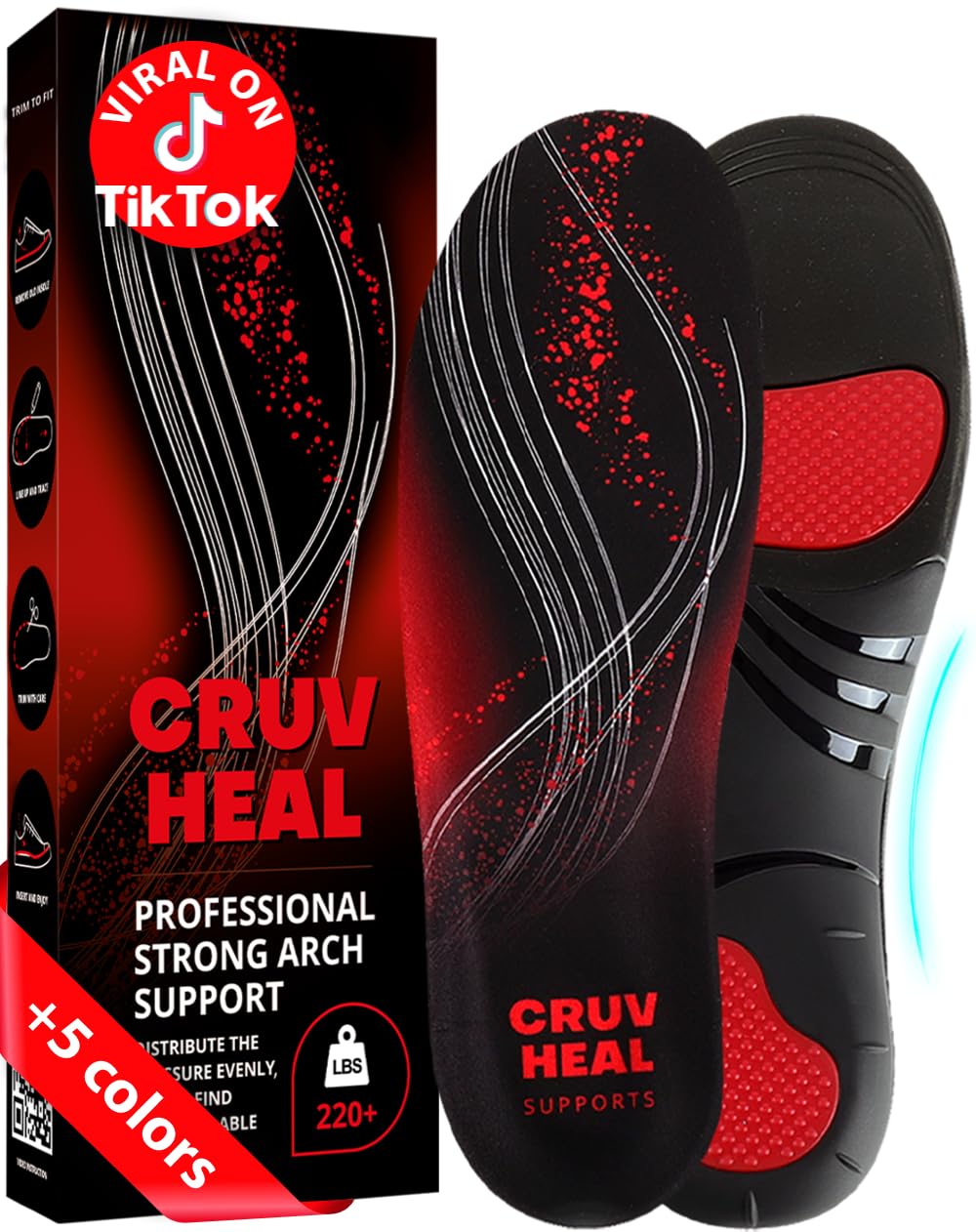
CRUVHEAL 220+ lbs

88 /100
Trail Score Excellent

Key details

Heel
Gel pad
Arch Height
1.4 in.
Weight Rating
220+ lbs
Check Price on Amazon

Spend ten hours on concrete at 230 pounds and most insoles quietly give up by lunchtime. The CRUVHEAL is built for that person: a 1.4-inch arch, a gel pad under the heel, and enough material underfoot to hold its shape instead of flattening into the shoe. It is the pair we point heavier readers to first.

The arch height is the part you notice. It presses firmly along the middle of the foot in a way the low-profile picks do not, which is exactly what takes strain off the fascia — and it also means the first few days feel strange, something the brand says up front. At 9.17 ounces there is real mass here, and that mass is what keeps the arch from collapsing under a heavier body.

Plan around the volume. It wants a work boot, a wide running shoe, or a roomy sneaker, and in a slim casual shoe it will crowd your toes. The support is also firm rather than plush, so it is a poor first insole for anyone who has already found rigid orthotics painful. The year of support the brand attaches to each pair is a better backstop than most here offer.

Pros

  • 1.4-inch arch holds its shape under load
  • Gel pads cushion the heel and absorb shock
  • Positive feedback across comfort, arch support, and fit
  • A year of brand support with each pair

Cons

  • Takes up room in slim shoes
  • Firm while your feet adapt
Our verdict

We recommend it for heavier adults on hard floors, where the tall arch and gel heel earn their bulk.

Check Latest Price
3

Best for Tight Shoes

Airplus Plantar Fascia 3/4

88 /100
Trail Score Excellent

Key details

Heel
Gel heel cup
Length
3/4 length
Shoe Types
Dress, casual, athletic
Certification
APMA certified
Check Price on Amazon

A three-quarter insole answers a specific problem: a shoe with no removable footbed and no spare room above the toes. The Airplus is that shape, built around an arch plate with a gel drop under the heel, and it slides into dress shoes, flats, and low-profile sneakers where a full-length insole would turn the shoe into a clamp.

The APMA seal on the package is worth something. It is the only insole here carrying the American Podiatric Medical Association's endorsement, and while a stamp is not a test result, it does mean a podiatric body looked at the design. The gel heel is the part we notice most — it softens the contact instead of passing it straight up the leg.

Where it gives ground is everything in front of the arch. There is nothing under the ball of your foot, so it is not the pick for someone who wants a full footbed, and in a large shoe the front edge can land in an awkward spot — this is a design for smaller shoes and tighter fits. Treat it as the dress-shoe solution rather than the everyday one, and the lowest price here starts to look like a smart buy.

Pros

  • Slim 3/4 shape fits dress shoes and heels
  • Gel heel cup cushions and stabilizes
  • APMA certified for foot health
  • The least expensive pair on this list

Cons

  • Nothing under the forefoot
  • Can shift in a loose shoe
Our verdict

The one to buy when the shoe is the problem: a three-quarter insole with a gel heel that fits where full-length designs cannot.

Check Latest Price
4

Best Gel Cushioning

PROFOOT Orthotic Insoles

88 /100
Trail Score Excellent

Key details

Heel
Gel insert
Length
Full length
Sizing
Women's 6-10
Included
Exercise guide
Check Price on Amazon

Gel under the heel, a modest arch, and a size range that stops at a women's 10 — the PROFOOT is the least intimidating insole on this page. It is thin enough to drop into a shoe you already own without changing how that shoe fits, and at barely an ounce you will not feel it as a slab underfoot.

We like it most for the morning. The gel pocket sits under the spot that hurts when you first stand up, and it is soft in a way the orthotic-style picks are not, which makes it an easy first purchase if you are not ready to commit to a firm arch. The exercise guide in the box is a nicer extra than it sounds — a printed stretching routine saves you a search in the first painful week.

The limits are real. Women's sizes 6 to 10 only, with nothing for a men's foot or a women's 11. And because it is low-profile it can migrate in a roomy shoe; a snugger pair holds it better than a loose one. If you want genuine correction rather than cushioning, this is the wrong tool.

Pros

  • Gel heel pocket cushions the first step
  • Thin and light enough for shoes you own
  • Exercise guide included in the box

Cons

  • Women's sizes 6-10 only
  • Soft enough that support is modest
Our verdict

We point to it when a heel wants cushioning rather than correction, and it is the softest option here for women's sizes 6 to 10.

Check Latest Price
5

Best for High Arches

PowerStep Pinnacle High Arch

89 /100
Trail Score Excellent

Key details

Length
Full length
Arch Support
High arch
Designed For
High arches, supination
Check Price on Amazon

Nearly every insole here is built on a neutral arch, which leaves a high instep hanging in the middle. The Pinnacle High Arch is the answer to that foot: the same full-length body as the standard Pinnacle, with a taller, firmer contour and extra control for the outward roll that often comes with a high arch.

For a high arch, this is our pick. The contour runs the length of the foot instead of peaking and dropping away, so the whole arch gets contact, and the fit is one of the steadier things about it — it stays where you put it in a shoe with a removable footbed. It also takes load off the outside edge that a neutral insole leaves bearing weight.

The catch is that it is a specialist. Under a flat foot the arch pushes where nothing needs pushing, and the standard Pinnacle is the better call there. For a high-arched foot with heel pain, though, the extra contour earns its keep.

Pros

  • Taller contour fills out a high instep
  • Full-length support with a stable fit
  • Addresses the outward roll that comes with high arches

Cons

  • Built for high arches only
  • The priciest insole here
Our verdict

If your arch is high, buy this one — the taller contour supports an instep that a neutral insole leaves unsupported.

Check Latest Price
6

Best Budget

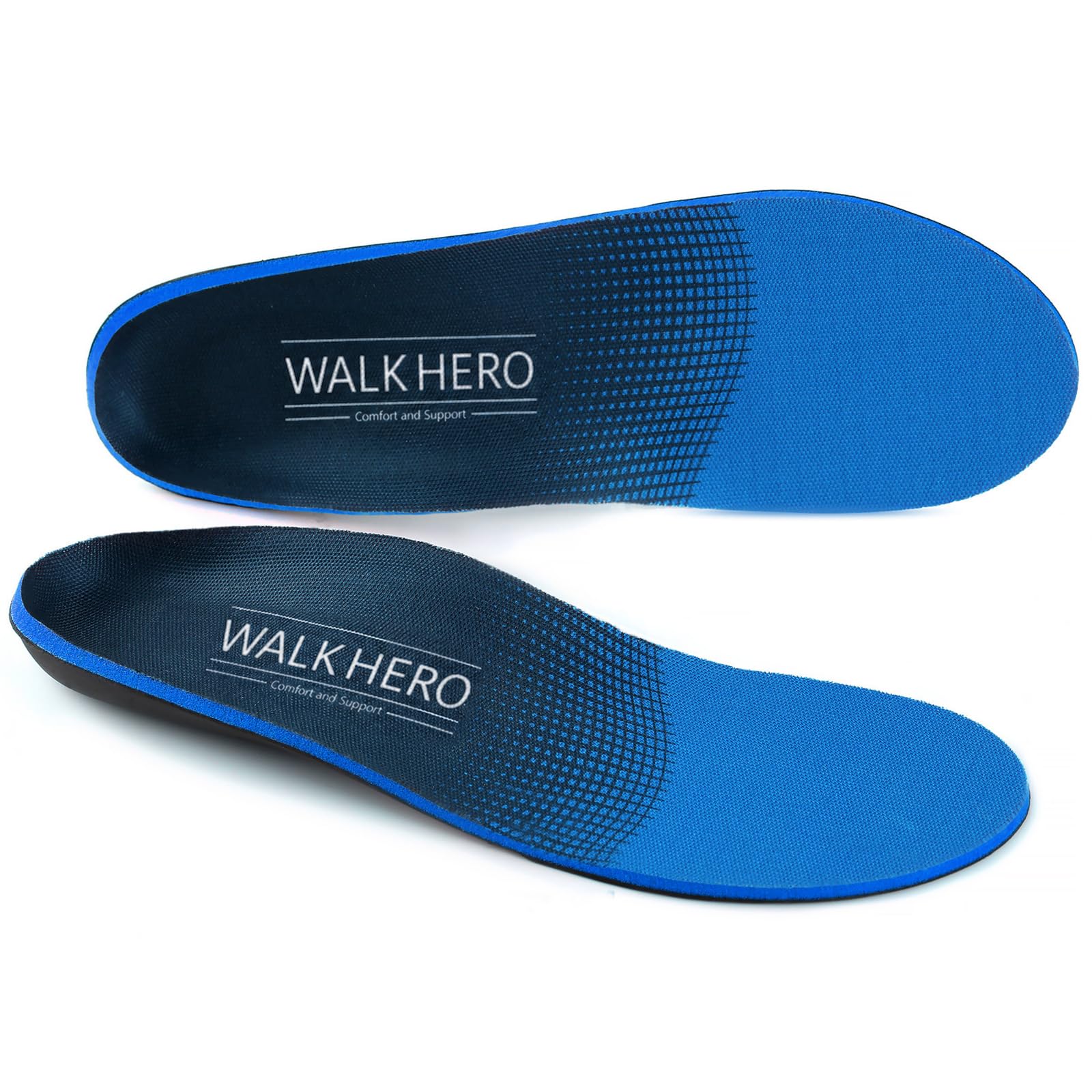
WalkHero Arch Support

88 /100
Trail Score Excellent

Key details

Heel
Deep heel cup
Sizing
Trim to fit
Material
EVA
Shoe Fit
Wide, high-volume
Check Price on Amazon

There is a case for starting cheap. The WalkHero costs a fraction of the orthotic-style picks, and if you have never worn an arch support before, it tells you whether the idea works for your foot before you spend serious money on one.

What it is not is soft. The EVA body is stiff, and that stiffness is the thing we minded most — great for holding an arch up, less great when you wanted cushioning under the heel. Give it a few days; the support tends to settle in rather than the insole softening.

The shape is the other consideration. It is built for wide, high-volume shoes — work boots, basketball shoes, roomy running shoes — so it is a poor match for a slim sneaker or a dress shoe. Size up if you are between sizes, too: these run short enough that the smaller of two options will crowd your toes.

Pros

  • Low cost makes it an easy trial
  • Deep heel cup stabilizes the foot
  • Strong arch support for the money

Cons

  • Firm, with almost no cushioning
  • Made for wide, high-volume shoes
Our verdict

A fair first insole if you are testing whether arch support helps at all, though the firm ride takes getting used to.

Check Latest Price
7

Trim-To-Fit Basics

Dr. Scholl's Plantar Relief

89 /100
Trail Score Excellent

Key details

Heel
Deep heel cup
Length
Full length, trimmable
Sizing
Men's
Arch Support
Contoured arch
Check Price on Amazon

Trimming an insole sounds like a chore until you have tried to force a pre-cut one into a shoe that is half a size off. The Dr. Scholl's full-length insole arrives long and gets cut down to your shoe, which makes it the easiest of these to fit into an odd-sized pair.

Inside is a deep heel cup, a shock-absorbing layer under the heel, and a contoured arch running the length of the foot. This listing is the men's version, and the trim line is marked across the toe, so fitting it is a two-minute job with scissors. We appreciate that the markings are clear enough to cut without measuring three times.

The arch is the soft spot. It is a moderate contour rather than a firm orthotic platform, so if you need a high, rigid arch to hold your foot up, this will not give you one. It is better at cushioning a heel than at correcting a foot, and the cushioning itself is thinner than the gel picks here.

Treat it as the widely available, low-commitment option rather than the best one on the page. The box promises it will stop plantar fasciitis from coming back, which no insole can promise; what it does deliver is a decent heel cup, a gentle arch, and a price that makes buying a second pair for another shoe realistic.

Pros

  • Trims easily to an odd-sized shoe
  • Deep heel cup with shock absorption
  • Low cost makes a second pair realistic

Cons

  • Moderate arch, not firm correction
  • Thin cushioning underfoot
Our verdict

Widely sold, easy to trim, and cheap enough for two pairs — just do not expect the firm arch correction a true orthotic gives.

Check Latest Price
8

Work Boots

VALSOLE Heavy Duty

88 /100
Trail Score Excellent

Key details

Shoe Types
Work boots, shoes
Arch Support
High arch
Weight Rating
220+ lbs
Check Price on Amazon

The VALSOLE is a big insole for a big person: a high arch, a shock-absorbing build, and a shape aimed at work boots and heavy bodies rather than slim sneakers.

What we noticed first is how much arch there is. It is high and firm, and it holds the middle of the foot rather than letting it drop, which is the part that matters when you are standing all day. The heel takes the edge off each step, and the build impresses in the hand — it feels like a piece of gear rather than a trimmed sheet of foam.

The trouble is volume. A tall arch takes up room, and this one lifts your foot enough that a snug shoe stops working: toes crowd the front, heels start slipping out of loafers, and the fit you had before is gone. Size up, or keep these for the boots they were designed for.

That narrows the audience to people with roomy work boots and long shifts on hard floors, and for those buyers it is a fair alternative to the CRUVHEAL. Everyone else is better served by something lower-profile — the standard Pinnacle, or the Airplus if the shoe is tight.

Pros

  • High, firm arch for heavy-duty support
  • Shock absorption through the step
  • Strong quality feedback for the build

Cons

  • Raises your foot; needs a roomier shoe
  • Little padding under the ball of the foot
Our verdict

Worth it if your boots have room and your shifts are long; otherwise the extra volume will crowd your toes.

Check Latest Price

How We Tested a Dozen Pairs of Plantar Fasciitis Insoles

We started with a list of more than 40 pairs and cut it down using the things that actually matter here: an arch that stays raised under body weight, a heel cup deep enough to keep the foot centered, sizing that matched our testers' shoes, and whether the insole could be trimmed to fit narrower footwear. Cost counted too, since insoles are a low-stakes experiment compared with custom orthotics. That filtering left us with 12 pairs to wear.

Over eight months, every pair went into a real shoe and stayed there — work boots, running shoes, and the flat loafers one tester wears to the office. We wore them for that first walk of the morning, when the fascia is tightest, then again at the end of a day spent standing on tile and concrete. Each tester rated the first step out of bed every morning, noted whether the arch felt genuinely supported or merely padded, and logged anything that slid forward, bunched under the toes, or ran long enough to crowd the toe box before we trimmed it.

At the three- and six-month marks we pulled every pair out and looked for the heel pad compressing, the top cloth peeling away from the foam, and the arch losing height — the quiet quality problems that don't show up in the first week. We pressed a thumb into each arch to feel how firm it was cold, then stood on one foot to see how much it gave. We also weighed cost against wear: a cheap pair that flattens in a season is worse value than a pricier one that keeps its shape.

How to Choose Insoles for Plantar Fasciitis

Match the arch to the foot you actually have

Arch height is the first thing to get right and the easiest to get wrong. A neutral contour under a high instep leaves a gap where the foot wants to fall, while a tall arch under a flat foot pushes up from underneath and can make the whole leg ache by evening. Check a wet footprint on tile — a narrow band means a high arch, a wide smear means a flat one — or pull the factory insole out and look at where it has worn.

High, rigid arches want the PowerStep Pinnacle High Arch. Flat and average feet are better served by the standard Pinnacle's neutral contour, and the heavy-duty designs should only come into play if your weight genuinely needs them.

Decide how firm you want it under the heel

Firmness splits this category more than any other spec. A firm shell is what holds an arch up; a soft one collapses the moment you put weight on it. But firm support against a hard surface is punishing under a sore heel, which is why the better insoles here pair a rigid base with a cushion layer or a gel pocket.

If you have already tried a rigid orthotic and hated it, start with a gel design like the PROFOOT. If a soft insole has already flattened on you, go the other way. Expect a few days of strangeness from anything with real arch height — that is adaptation, not a bad fit.

Check what your shoe has room for

Full-length insoles replace the factory footbed, so they only work in shoes where that footbed lifts out, and even then a thick insole takes up volume. Insoles never make a shoe bigger; they make it smaller. If the shoe is already snug, go up half a size or choose a three-quarter design like the Airplus, which leaves the toe box untouched.

The test takes a minute: pull the existing insole, drop the new one in, and stand up. If your toes touch the top of the shoe or your heel lifts, it is the wrong insole for that pair, however good it is.

Weigh your weight and your hours

Body weight and time on your feet decide how much insole you need. Designs rated for 220 pounds and up use denser material and gel pads, and that is a real difference if you are on concrete for ten hours a day. It is dead weight in a light sneaker if you are not.

A lighter person in a heavy-duty insole does not get more support so much as less cushioning. Match the build to the load, then spend the leftover budget on a second pair for your other regular shoes.

Frequently Asked Questions

Final Verdict

Our first recommendation for plantar fasciitis is the PowerStep Pinnacle. A neutral arch covers most feet, the firm base with a cushion layer over it handles both jobs at once, and it drops into almost any shoe with a removable footbed — which is more than most insoles on this list manage.

If you are over 220 pounds or spend the day on concrete, the CRUVHEAL's taller arch and gel heel earn their extra bulk. And if the shoe is the problem rather than the foot, the Airplus three-quarter insole fits where nothing full-length will.