Best Hydrocolloid Bandages for Wounds of 2026

A hydrocolloid bandage isn't just a sticker you put over a cut. The gummy inner layer draws fluid from the wound and turns it into a soft gel — the damp surface healing actually likes — while the outer film holds water and dirt back. What separates a box you'll rebuy from one that ends up curled in the trash is mechanics, not chemistry: how the adhesive handles a knuckle, how thick the pad sits over a weeping blister, and whether the whole thing survives a shower. We spent three months with 16 of them, and the gaps were wider than I expected.

The trick is knowing what it's for. Hydrocolloid isn't the pad you press on a cut that's still bleeding — it's what goes on afterward, once the wound is clean and only lightly oozing. We judged coverage in the sizes people actually reach for, whether edges lifted overnight, how the pad sat on sensitive skin, and what each box costs per bandage. The picks below are the ones I'd hand to a friend.

1

Best Overall

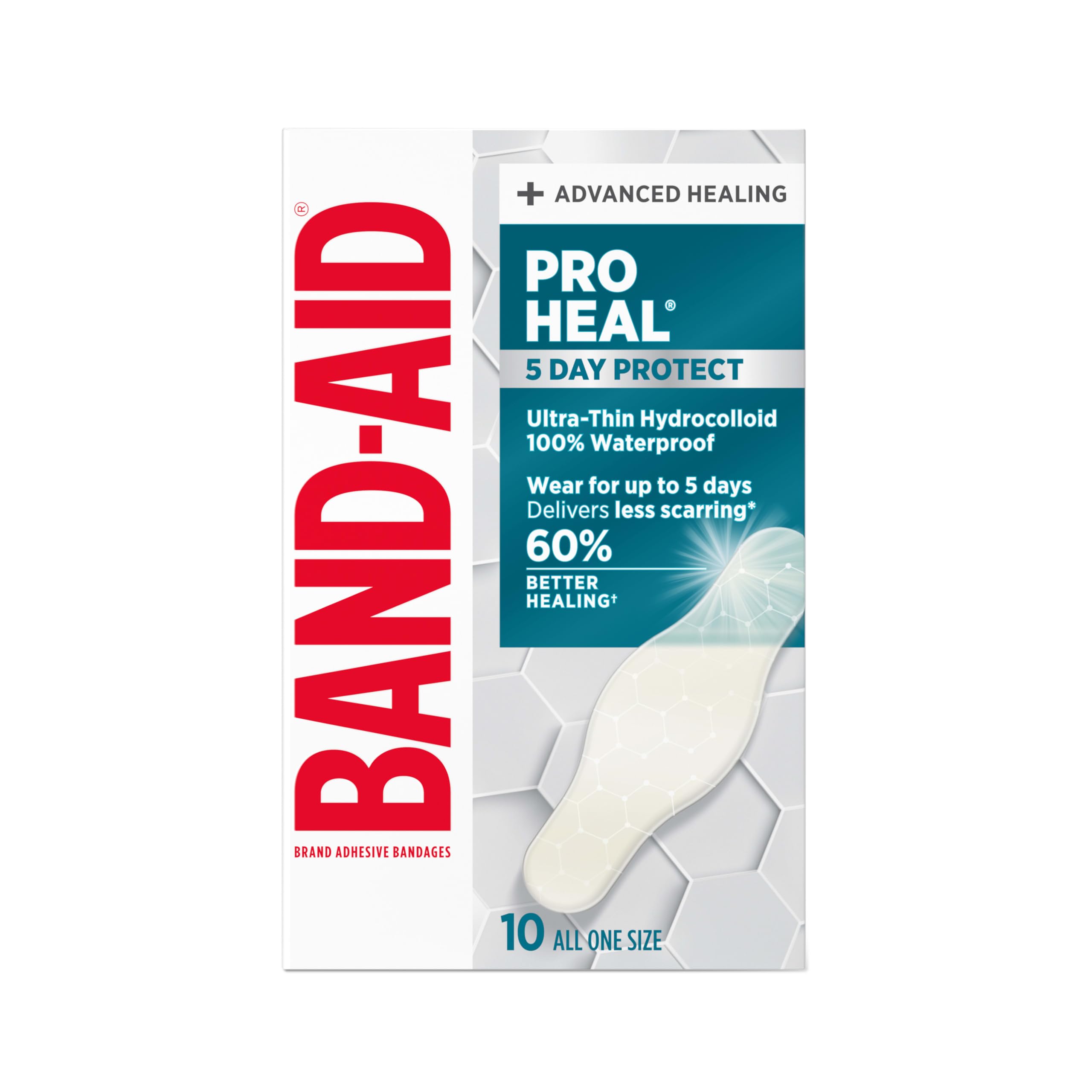
Band-Aid Pro Heal 5 Day Protect

93 /100
Trail Score Outstanding

Key details

Size
One Size
Count
10 bandages
Wear Time
Up to 5 days
Waterproof
Yes
Check Price on Amazon

Five days is a long time for a bandage to stay put, so we paid close attention to the edges first. The Pro Heal film is genuinely thin and clear; on a forearm or knuckle it all but disappears, and there is no absorbent pad to bunch up under a sleeve. We liked that best for everyday cuts and scrapes because it turns a minor wound into something you can forget about between showers. The package claims up to five days of continuous protection, and our experience matches the useful part of that claim when the dressing is on a flat, dry area.

Where it falls short is the same place most films do: the edge. On a sweaty back, a hairy forearm, or a joint that bends constantly, the border can curl before the wound is ready to be uncovered. We cleaned and dried the skin, pressed the edges down firmly, and avoided lotion under the adhesive; that helped, but it did not make the bandage immune to movement. If you need a dressing for a high-friction spot, a stretchier pad is the better tool.

The gel pad is the other detail worth knowing. It starts clear and turns cloudy as it absorbs fluid, which gives you a visual cue without peeling the dressing off. We appreciated that for a scrape that was still oozing slightly, though a heavily draining wound needs a different dressing and a clinician's eye. For a clean cut, a popped blister, or a minor burn, the combination of low profile and water resistance is the reason this is our default.

Pros

  • Thin, clear film disappears on skin
  • Waterproof enough for handwashing and showers
  • Up to five days of wear per bandage
  • Gel turns cloudy as it absorbs

Cons

  • Only 10 bandages per box
Our verdict

For everyday cuts and scrapes, we recommend the Pro Heal film for its low profile, waterproof seal, and useful multi-day wear, provided you can keep the edges flat.

Check Latest Price
2

Best for Sensitive Skin

Nexcare Advanced Healing Pads

90 /100
Trail Score Outstanding

Key details

Use
Minor burns, cuts, scrapes
Count
6 pads
Design
Stretchy, unique shape
Adhesive
Water-resistant
Check Price on Amazon

The first thing we noticed about Nexcare's Advanced Healing pad is that it does not demand bone-dry skin. The adhesive is water-resistant and the pad is stretchy, so it can go on a finger or a knuckle that has just been washed and still hold. That matters more than it sounds: most hydrocolloid failures start with a dressing that never fully seals because the skin was damp or the shape tented over a joint.

We kept this one for the awkward spots. The pad has a distinct shape with a wider margin around the gel center, which gives you something to press down without touching the wound, and the stretch lets it follow a bend instead of fighting it. It is not the box we reach for when we need to cover a long scrape. But for a finger cut, a knuckle scrape, or skin that reacts to standard bandage adhesive, it is the one we prefer.

Application takes a little care. The pad is fiddly to place one-handed, and once it touches down, repositioning it weakens the seal. We set it on clean skin, held the edges for a few seconds, and left it alone. The reward is a dressing that stays comfortable through handwashing and moves with you rather than pulling tight.

Pros

  • Sticks to damp skin
  • Stretchy pad follows fingers and joints
  • Water-resistant for handwashing
  • Cushioned gel center

Cons

  • Only six pads per box
Our verdict

We recommend Nexcare for fingers, joints, and sensitive skin because it seals on damp skin and stretches with movement instead of tenting.

Check Latest Price
3

Best Value Precut

Niceful Hydrocolloid Bandages 2x2

90 /100
Trail Score Outstanding

Key details

Size
2 x 2 inches
Count
20 dressings
Thickness
Extra-thin
Exudate Level
Light to moderate
Check Price on Amazon

A 2-inch square is the size we reach for most often, and the Niceful box makes that size easy to live with. You get 20 borderless dressings, each thin enough to sit flat under clothing, and you can trim one down for a small cut without feeling like you are wasting a large pad. We liked the lack of a bulky border for a forearm scrape: there is no raised rim to catch on a sleeve.

The trade-off is that borderless design leaves little room for error. Once the film touches down, it grips, and pulling it up to reposition can wrinkle the edge and spoil the seal. We cleaned the skin, let it dry fully, and placed the center over the wound before pressing outward. On a curvy area, a slightly larger pad or a stretchier product is easier to manage.

For light-to-moderate drainage, the dressing does the quiet work you want: it keeps the wound covered, stays put through a normal day, and comes off without a dramatic rip. We did not find it the plushest pad here, and it is not the one for a deep or heavily draining wound. As a straightforward box for everyday scrapes, it earns its place.

Pros

  • Twenty thin 2-inch dressings
  • Trims to fit small cuts
  • Low profile under clothing
  • Suits light-to-moderate drainage

Cons

  • Only one size per box
  • Thin film can be hard to handle
Our verdict

We recommend the Niceful box for small cuts and scrapes when you want a thin, trim-to-fit dressing without paying for a specialty patch.

Check Latest Price
4

Best for Large Wounds

Dimora Hydrocolloid 4x4 20 Pack

92 /100
Trail Score Outstanding

Key details

Size
4 x 4 inches
Count
20 patches
Thickness
0.3 mm
Waterproof
Yes
Check Price on Amazon

A 4-inch hydrocolloid square looks like overkill until you have a scrape that is wider than a standard bandage. This Dimora pad covers a whole knee or a patch of road rash in one piece, and the 0.3 mm film bends enough to sit down on an elbow without tenting at the center. We liked that best for large, shallow wounds where a smaller dressing means overlapping edges and a mess of seams.

The size is also the catch. On a small cut, a full square is more dressing than you need, and the excess adhesive can pull at skin when you remove it. We cut the pad down when we wanted a smaller piece, but that means handling the film more than with a precut bandage. For a wound with mild exudate, the payoff is coverage and a seal that does not depend on lining up four separate strips.

Removal deserves a mention. The adhesive is strong enough to stay put through a shower, and on thin or hairy skin it can feel less gentle than the thinner films here. We peeled slowly along the skin rather than pulling upward, which made a real difference. It is the pick for coverage first, not for a nearly invisible dressing on a tiny cut.

Pros

  • Large 4-inch coverage
  • 0.3 mm film flexes on joints
  • Waterproof and cut-to-size
  • Useful for mild exudate

Cons

  • Only one size per box
Our verdict

We recommend the Dimora 4x4 for broad scrapes and shallow wounds where one flexible square beats a patchwork of smaller bandages.

Check Latest Price
5

Best Customizable Roll

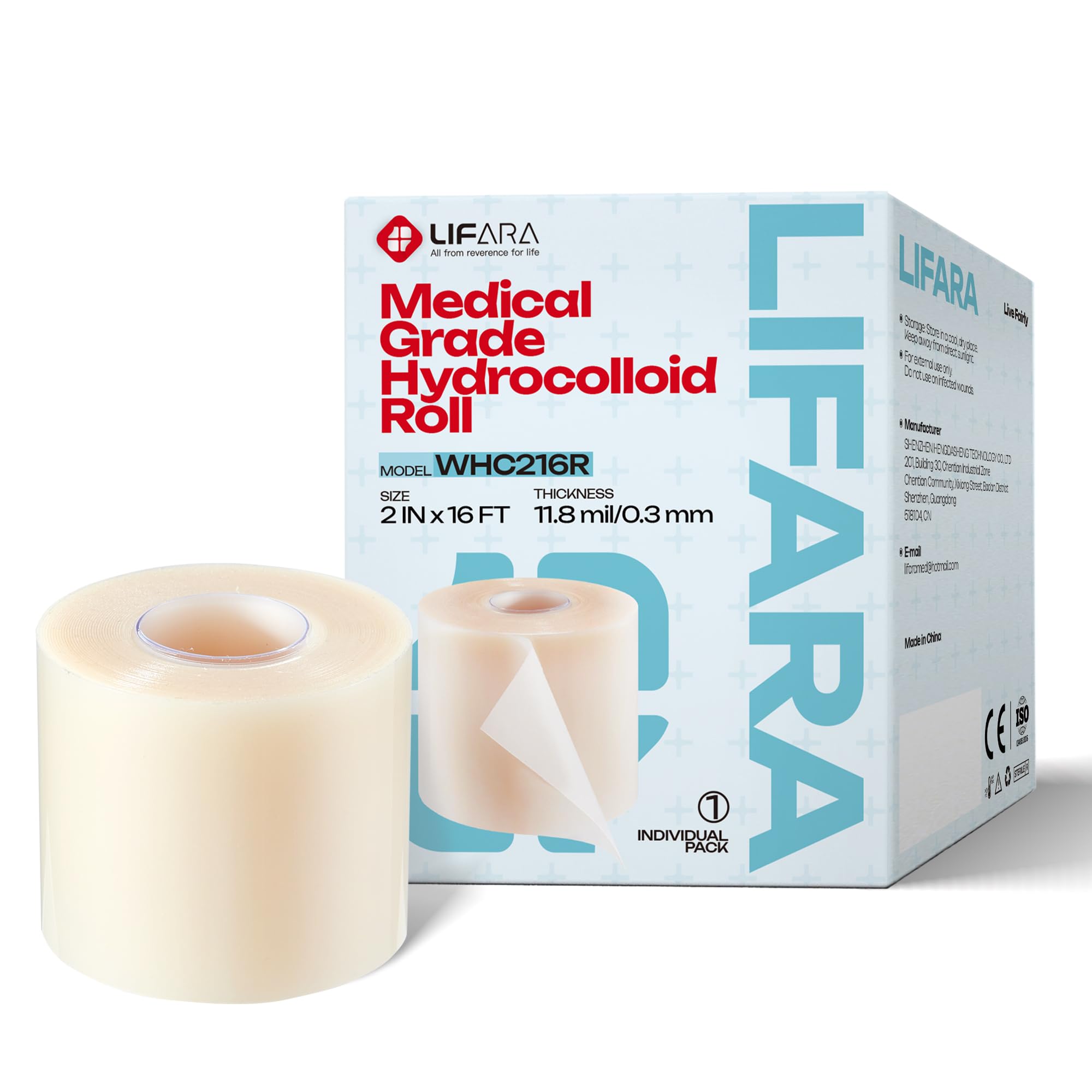
LIFARA Hydrocolloid Roll

90 /100
Trail Score Outstanding

Key details

Roll Size
2 in x 16 ft
Thickness
0.3 mm
Cut-to-size
Yes
Hypoallergenic
Yes
Check Price on Amazon

The roll format is the reason we kept the LIFARA in the first-aid drawer. A 2-inch by 16-foot roll lets you cut a long strip for a forearm, a short piece for a fingertip, or a shape that follows a curved scar, and you are not stuck with a precut size that is almost right. The 0.3 mm film is thin enough to flex at a knee, and the backing peels away without tearing if you go slowly.

Cutting is the part to practice. The roll is easy to trim with clean scissors, but the film is clingy, and a rushed cut can leave a ragged edge that lifts sooner. We cut a little larger than the wound, rounded the corners, and kept the backing on until the piece was positioned. That routine made the difference between a dressing that stayed put and one that curled at the first handwash.

Adhesion is the caveat. On clean, dry, flat skin the roll holds well, but on a damp or hairy area it can slide before it sets. We patch-tested a small square before using it on a larger scrape. For odd shapes and repeat changes, the flexibility is worth the fuss; for a simple cut, a precut pad is faster.

Pros

  • Long 2-inch by 16-foot roll
  • Cut any shape for odd contours
  • Thin 0.3 mm film flexes
  • Hypoallergenic claim

Cons

  • Can irritate sensitive skin
Our verdict

We recommend the LIFARA roll when you need to cut a dressing for an odd-shaped wound and want the flexibility to resize it as healing progresses.

Check Latest Price
6

Finger Joints

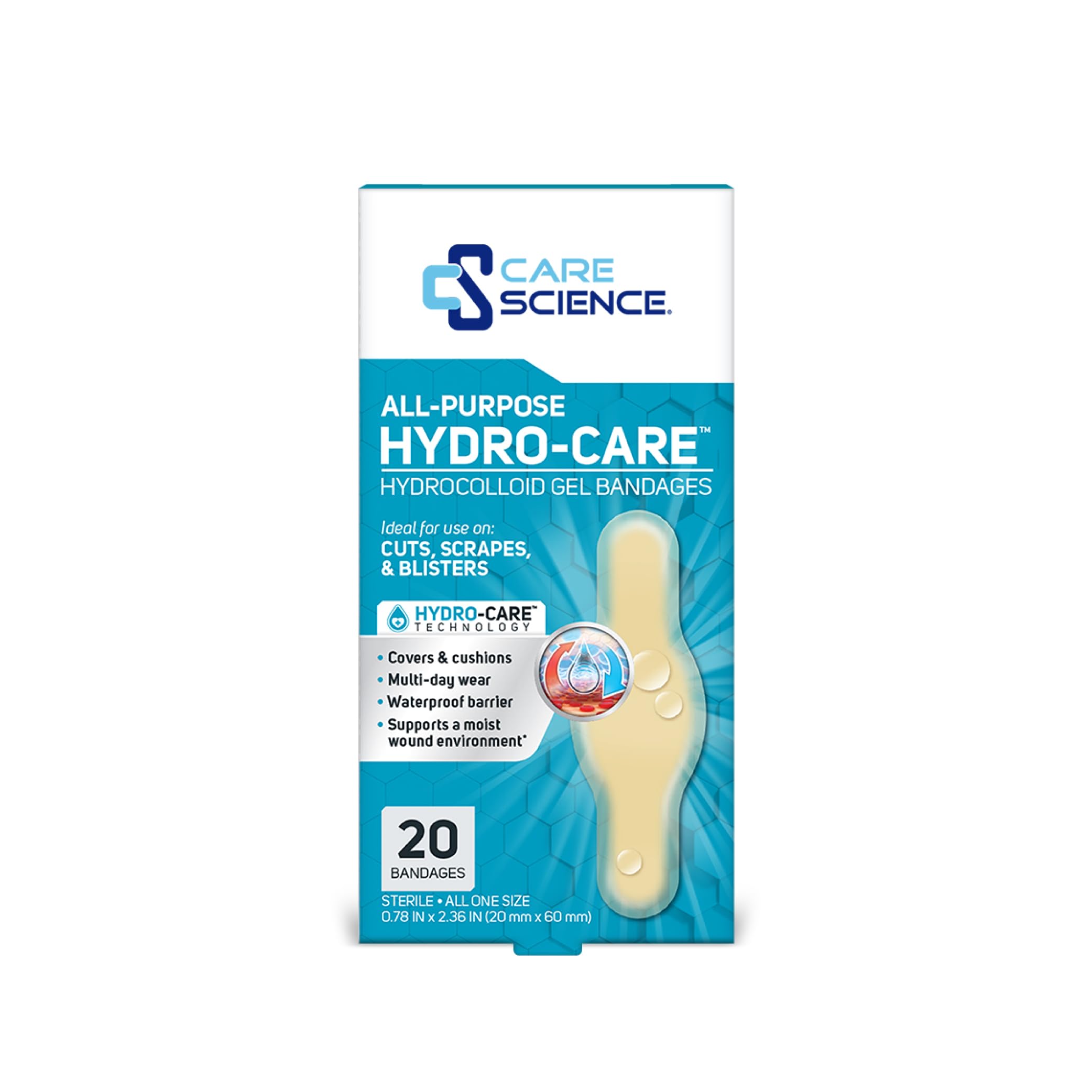
Care Science Hydrocolloid Gel Bandages

90 /100
Trail Score Outstanding

Key details

Size
0.78 x 2.36 inches
Wear
Multi-day
Count
20 bandages
Waterproof Barrier
Yes
Check Price on Amazon

Care Science's strip is shaped more like a traditional bandage than a bare hydrocolloid square, and that makes it easy to place on a finger or a small joint. The pad has a bit more cushion than the thinnest films here, so it feels less like a piece of tape and more like a dressing. We liked that for a scrape on a knuckle where the skin needs a little protection from the next bump.

The strip format is best for fingers and small joints; on a broad scrape, a 2-inch square or a roll is the better shape. We found it easiest to apply with the finger straight and the backing peeled halfway, then press the edges down as we removed the rest. That keeps the pad centered instead of letting it fold onto itself.

Water resistance is decent rather than absolute. The edges are the first part to lift after a long soak, and the adhesive can feel strong on thin skin. We kept it for handwashing and short showers, not for a day at the pool. For small, awkward spots and multi-day wear, it is a useful box to have; for a big dressing, look elsewhere.

Pros

  • Cushioned strip for fingers
  • Multi-day wear
  • Waterproof barrier
  • Twenty bandages per box

Cons

  • Narrow strip limits coverage
  • Can irritate sensitive skin
Our verdict

We recommend the Care Science strips for small finger and knuckle wounds where a little cushioning matters more than broad coverage.

Check Latest Price
7

Bordered Protection

Dynarex DynaDerm Hydrocolloid Dressing

90 /100
Trail Score Outstanding

Key details

Size
2 x 2 inches
Count
20 per box
Border
Bordered
Sterile
Yes
Check Price on Amazon

The border is the first thing we noticed on the DynaDerm patch. It gives the dressing a defined rim to press down, which is useful on a pressure sore or an abrasion where you want a sealed margin around the gel center. The pad is sterile and water-resistant, and it feels more like a clinical dressing than a drugstore bandage.

That clinical feel comes with thickness. The pad is more padded than the thin films here, which helps over a bony area but makes it less discreet under tight clothing and less flexible at a joint. We preferred it for a flat, awkward spot that needs cushioning, not for a finger that bends all day.

The 2-inch size is smaller than the outer package suggests once the border takes its share. We measured the wound against the gel center, not the whole patch, and that is the number to use when deciding whether one pad will cover the area. For a larger wound, the 4-inch Dimora square is the easier choice.

What we appreciate most is the clear margin for error. The border gives you a place to press without touching the gel, and the sterile packaging makes it easy to keep the dressing clean until it is on. It is not the most flexible or the most discreet option here, but for a bordered, cushioned dressing, it does the job we want.

Pros

  • Sterile bordered design
  • Cushioned pad for bony areas
  • Water-resistant
  • Clear adhesive margin

Cons

  • Only one size per box
  • Premium price for a small patch
Our verdict

We recommend the DynaDerm patch for small pressure sores and abrasions that need a sterile, cushioned, bordered dressing.

Check Latest Price
8

Wide Coverage

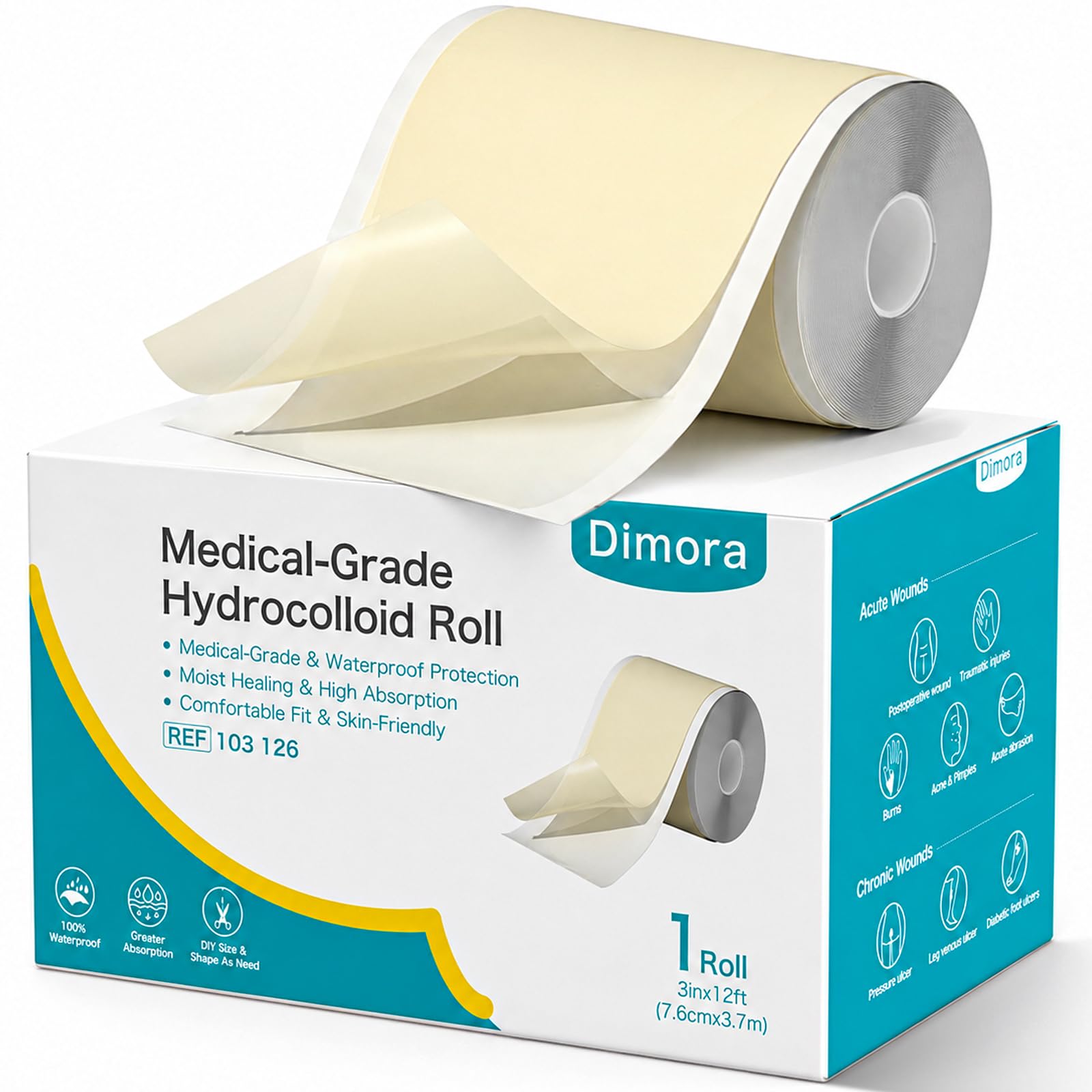
Dimora Hydrocolloid Roll 3x12 ft

90 /100
Trail Score Outstanding

Key details

Extras
Silicone tape
Material
Medical-grade hydrocolloid
Roll Size
3 in x 12 ft
Cut-to-size
Yes
Check Price on Amazon

A 3-inch roll is a different tool from a box of precut squares. The Dimora roll gives you a wide strip for a forearm or a larger abrasion, and you can cut it down to a small patch when that is all you need. We liked the width for covering a wound in one piece instead of overlapping two narrower strips.

The reserved edge is the detail we did not expect to care about. It gives you a clean tab to start peeling, so you are not picking at the backing with a fingernail while the film curls. The included silicone tape is the second practical touch: it lets you secure the edges of a larger dressing without hunting for medical tape.

The film is very thin. That makes it comfortable and flexible, but it does not add much cushion over a bony point or a blister. We reached for a thicker pad when the wound needed protection from pressure, and kept the roll for flat areas and larger coverage. The thinness also means a clean cut matters; a ragged edge lifts faster.

For a household first-aid kit, the roll earns its place because it can replace several sizes of precut dressing. The thin film is not the one for every wound, and the roll is a premium choice. But when we need a wide, custom piece and a way to secure the edges, this is the roll we choose.

Pros

  • Wide 3-inch roll
  • Reserved edge eases peeling
  • Silicone tape included
  • Cut-to-size for large areas

Cons

  • Very thin, so little cushioning
  • Premium price for a roll
Our verdict

We recommend the Dimora roll for larger or irregular wounds when you want a wide custom piece and the included tape to secure the edges.

Check Latest Price

What We Put Every Hydrocolloid Bandage Through

I started with more than thirty boxes pulled off drugstore shelves and pharmacy listings — plain rectangles, heel shapes, oval blister patches, whisper-thin films and chunky pads — then filtered out anything that didn't list its dimensions or couldn't be bought in a multipack. That left 16, from cheap generics to the pricier imports, and we wore them for three months.

Testing happened where bandages actually end up: on a picked cuticle during dish duty, on a heel blister through a week of lunchtime walks, on a shaved knee under jeans, on a small kitchen burn, and overnight on a chin that kept getting touched. Each one went onto both a flat forearm and a joint that flexes all day, so we could time how long the edges held before lifting, and each came into the shower with us to see whether water crept under the seal. Every patch came off after 24 hours for a look: a pad that swelled into a milky dome was doing its job of pulling fluid, while one that stayed flat over a weeping wound wasn't.

We also tracked what was left behind. After removal we checked for a red ring or itching on sensitive skin and noted which adhesives peeled off cleanly versus taking hair with them. Coverage was judged by whether the pad cleared the wound by a margin on every side — too small and the seal sits right in the ooze — and value by cost per bandage once we counted how many of the sizes in a box were actually usable. Durability came down to showers survived, not hours worn. None of this replaces medical care for a wound that's deep, infected, or still bleeding; for everyday scrapes and blisters, these held up.

How to Choose Hydrocolloid Bandages for Wounds

Match the dressing to the wound

Hydrocolloid works by reacting with wound fluid to form a soft gel, which keeps the surface moist and protects it from friction. That makes it a good fit for shallow cuts, scrapes, minor burns, and blisters with light-to-moderate drainage. It is not the right first choice for a deep, infected, or heavily draining wound, where a clinician should guide care.

Shape follows the job. A borderless square like the Niceful 2x2 is simple and low-profile for a small cut, while a bordered pad like the Dynarex DynaDerm gives you a clear adhesive margin around a fragile area. A roll makes more sense when the wound is irregular or you expect to change the dressing often.

Treat adhesion as the real wear-time spec

A five-day claim depends on the edge staying down. Sweat, hair, joints, and repeated handwashing all attack the border first, and once a corner lifts, the seal is compromised. Clean, dry skin helps, but so does choosing a shape that follows the body instead of fighting it.

We reach for the Band-Aid Pro Heal on flat areas where discretion matters and for the Nexcare Advanced Healing pad on a finger or knuckle that bends. Press the edges down for several seconds after application, and keep lotion or ointment away from the adhesive unless the dressing is designed for it.

Choose size and cut-to-fit coverage

A 2-inch square handles most everyday scrapes, while a 4-inch square like the Dimora 4x4 is better for road rash, a broad abrasion, or a wound that needs a margin beyond the gel center. Measure the wound, then add a little extra for the adhesive border; the outer package size is not the same as usable coverage.

Rolls are the flexible option. The LIFARA roll lets you cut a long strip for a forearm or a small patch for a fingertip, and you can round the corners to reduce lifting. Cut with clean scissors, keep the backing on until the piece is positioned, and do not stretch the film so hard that it tents over the wound.

Plan for skin sensitivity and removal

Hydrocolloid adhesive can irritate sensitive skin, and removal can pull thin or hairy skin if you rush it. Patch-test a small piece on a less visible area if you have reacted to bandage adhesive before. When it is time to remove the dressing, peel slowly back along the skin rather than pulling upward away from it.

If redness, itching, or a rash appears around the dressing, stop using it and let the skin settle. A dressing that stays put for days is only useful if your skin tolerates it; comfort and a clean removal matter as much as the seal.

Compare cost per usable dressing

A box price is not the whole story. Precut pads save time and are easy to keep in a purse or first-aid kit, while a roll can be cut into many shapes and sizes, which makes it economical if you use hydrocolloid often. The cheaper option is the one you actually use without waste.

We count cost per dressing that stays on. If a box of precut squares lifts at the edge and needs replacing early, the convenience is not saving anything. For a household kit, a roll plus one good precut box covers most situations without duplicating every size.

Frequently Asked Questions

Final Verdict

For most cuts and scrapes, the Band-Aid Pro Heal 5 Day Protect is the one we recommend. It is thin enough to forget, waterproof enough for handwashing, and the multi-day wear is useful when a wound sits in an awkward spot.

If your skin is sensitive or the wound is on a finger or joint, Nexcare Advanced Healing is the better shape because it goes on damp skin and stretches with movement. Choose the Dimora 4x4 when coverage matters more than discretion.