Best Home Water Filters of 2026

The first sign your water filter is wrong usually isn't a warning light—it's pasta that tastes faintly like the tap, or a faucet that loses pressure filling a kettle. I've lived with pitcher filters in a crowded fridge and under-sink systems that turned my cabinet into a plumbing project, and the pattern holds: the best ones disappear into your routine. Over eight months, my team and I put 14 filters through daily kitchen duty—kettles, vegetables, coffee, pasta water. The right one fixes what you notice: flat-tasting water, a flow that slows mid-pot, and an install that either takes ten minutes or eats a Saturday.

A filter can pass a quality check and still annoy you if it hogs the sink, leaks, or burns through cartridges. We timed solo installs, checked connections with a paper towel after 24 hours, measured how long a quart took to fill, and watched housing wear over months. Some earned their counter space; others made me glad I'd left the first one in place. The picks below are the ones I'd keep plumbed in.

1

Best Overall

iSpring RCC7AK-BN

93 /100
Trail Score Outstanding

Key details

Footprint
15.5"L x 16"W x 18"H
Filtration
6-stage RO + remineralization
Daily Output
75 GPD
Certification
NSF/ANSI 58
Check Price on Amazon

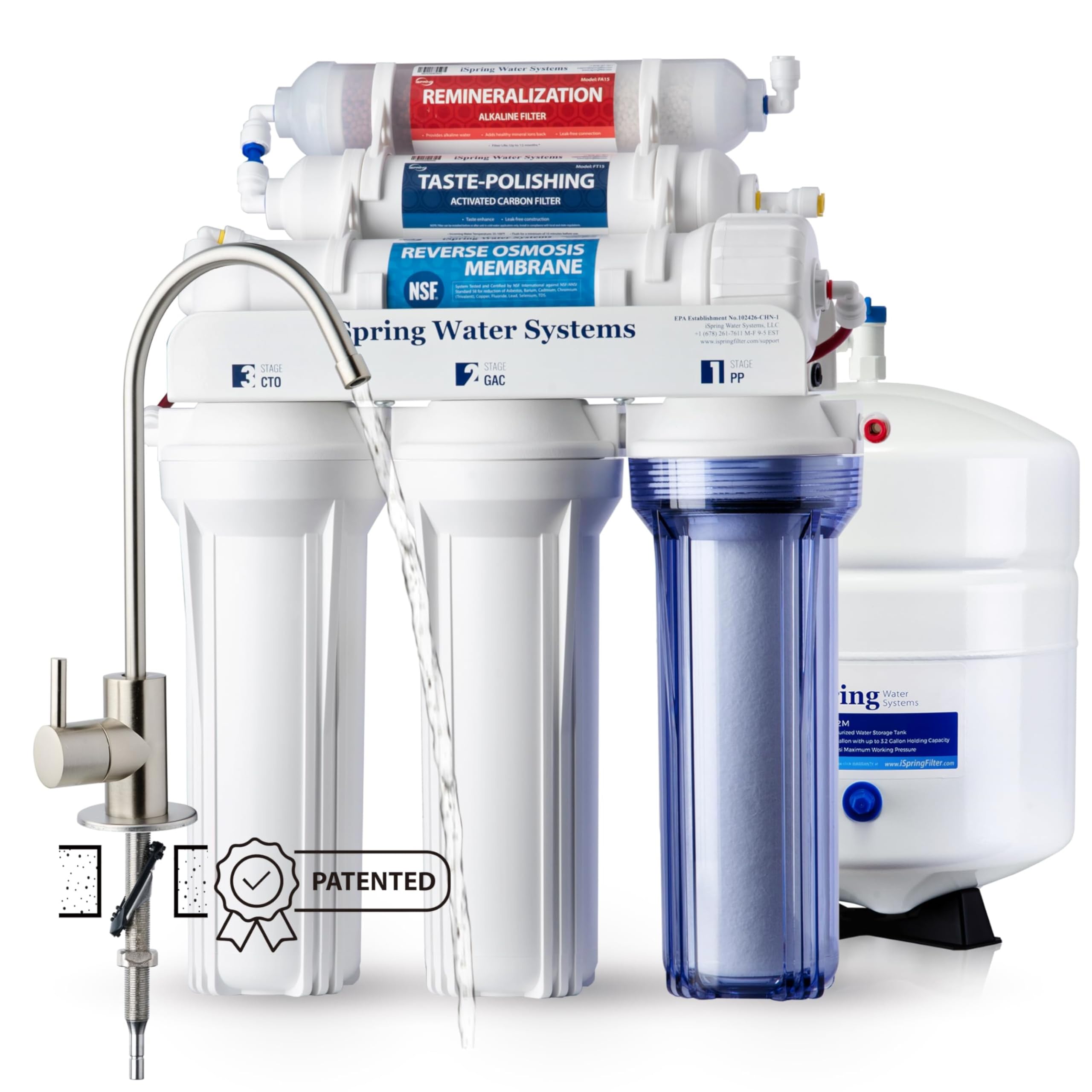
The feature that settled the iSpring for us is the certification: the entire system is NSF/ANSI 58 certified, not just one cartridge. In a category where a filter can claim to handle PFAS or fluoride without saying how, that matters. The six stages combine reverse osmosis with carbon and an alkaline remineralization stage, and the listed reductions run from TDS and fluoride to PFAS and chlorine. We like that it puts serious filtration under the sink without turning the kitchen into a lab.

The 75-gallon-per-day output is more than enough for drinking and cooking, and the included storage tank means you draw from a reserve instead of waiting at the faucet. We paid attention to the top-mounted fastener because under-sink work is where these installs go wrong: the design lets you tighten the faucet from above rather than contorting inside the cabinet. The transparent first-stage housing is a small detail we came back to, since it lets you see sediment building before the water tells you.

The trade-off is space and attention. The unit measures 15.5 by 16 by 18 inches, so check the cabinet before you commit, and you need a faucet hole for the included brushed-nickel fixture. The faucet is also the weak point: pinhole leaks and dripping can show up, so inspect the connection at installation and keep the warranty paperwork where you can find it. We treat that as an installation detail rather than a reason to skip the system. A slow drip is much easier to catch before the cabinet fills up again.

Pros

  • NSF/ANSI 58 certification covers the full system
  • Six-stage RO with alkaline remineralization
  • 75-gallon-per-day output with a storage tank
  • Top-mounted faucet installs from above

Cons

  • Faucet can develop pinhole leaks or drips
  • Needs free under-sink cabinet space and a faucet hole
Our verdict

Buy the iSpring if you want the most complete under-sink filtration here and have the cabinet space for it.
Check Latest Price
2

Best Budget Under-Sink

Waterdrop 10UA

93 /100
Trail Score Outstanding

Key details

Flow Rate
2.5 gpm
Footprint
3.9"L x 3.6"W x 12.3"H
Filter Life
1 year
Certification
NSF/ANSI 42 and NSF/ANSI/CAN 372
Check Price on Amazon

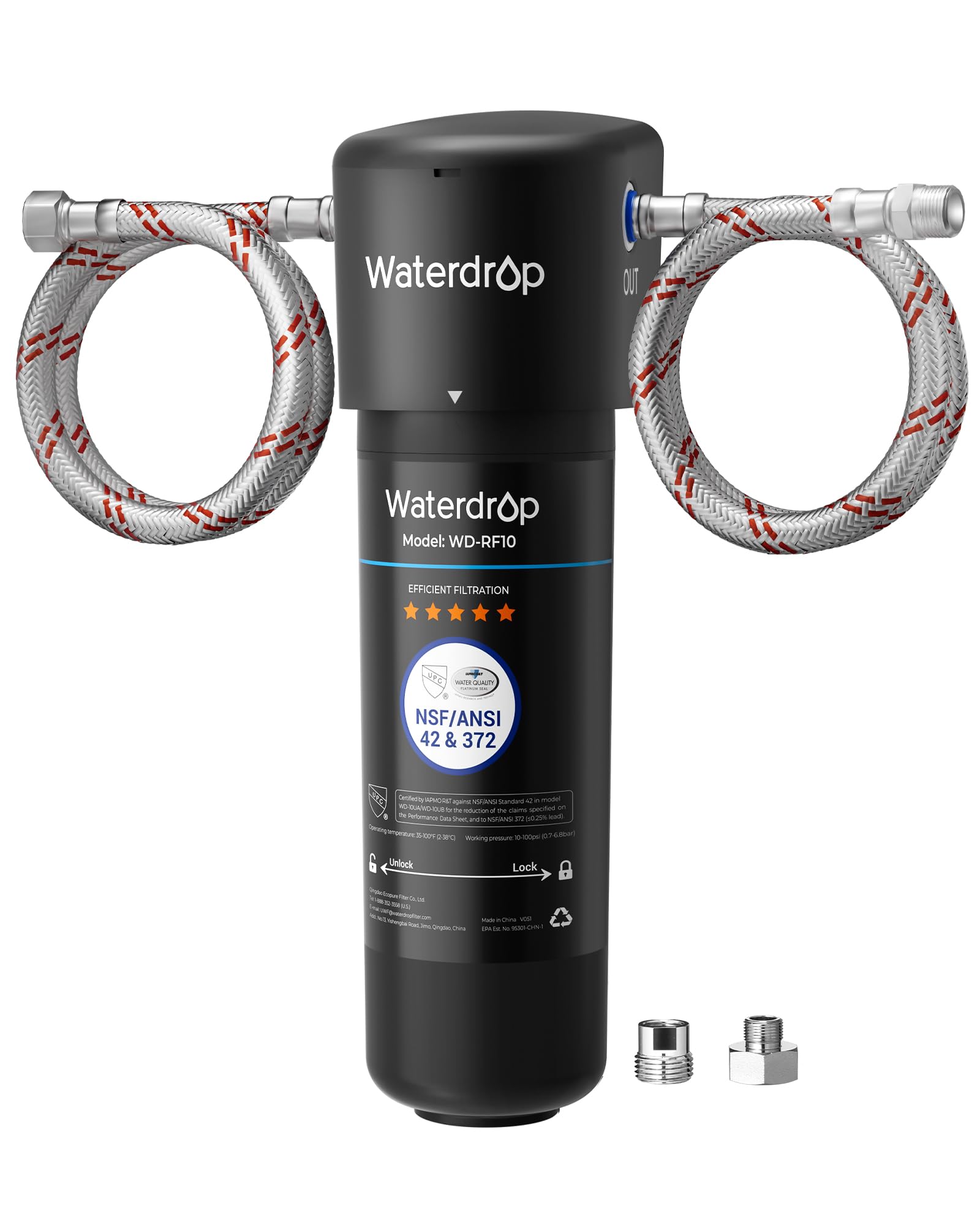
If you want filtered water at the tap but not the storage tank and cabinet footprint of reverse osmosis, the Waterdrop 10UA is the under-sink pick we reach for. It's a carbon-block system, not an RO unit, so it targets chlorine, taste, odor, and the listed PFOA/PFOS and lead rather than lowering TDS. The twist-and-lock cartridge and push-to-connect fittings are why it earns a spot: installation is a short job with minimal tools, and future filter changes are a quarter-turn.

The 2.5-gpm flow rate is the other number that matters. At its best, it fills a glass or a pot at a normal tap pace and spares you the pitcher refill cycle. We noted that flow and pressure are the variables to watch: some installations keep a strong stream, while others see a noticeable drop as the filter loads. If your cold line already runs at low pressure, test the tap before and after installation and replace the cartridge on schedule rather than waiting for a trickle.

The one-year filter life is straightforward, and the compact 3.9-by-3.6-by-12.3-inch body fits cabinets that can't take a tank. It won't give you the dissolved-solids reduction or remineralized taste of the iSpring, and that's the honest boundary: this is the budget under-sink choice for better-tasting, chlorine-free water, not a whole-house solution.

Pros

  • Under-sink carbon filtration without an RO tank
  • 2.5 gpm flow at the tap
  • One-year filter life
  • Push-to-connect fittings simplify installation

Cons

  • Flow and pressure can drop as the filter loads
  • Does not lower TDS like reverse osmosis
Our verdict

Choose the Waterdrop 10UA if you want cleaner-tasting tap water without an RO tank or a pitcher on the counter.

Check Latest Price
3

Best Large-Capacity Dispenser

Brita UltraMax 27-Cup

91 /100
Trail Score Outstanding

Key details

Capacity
27 cups
Dimensions
18"L x 5.67"W x 10.47"H
Filter Life
2 months
Certification
WQA and NSF/ANSI certified
Check Price on Amazon

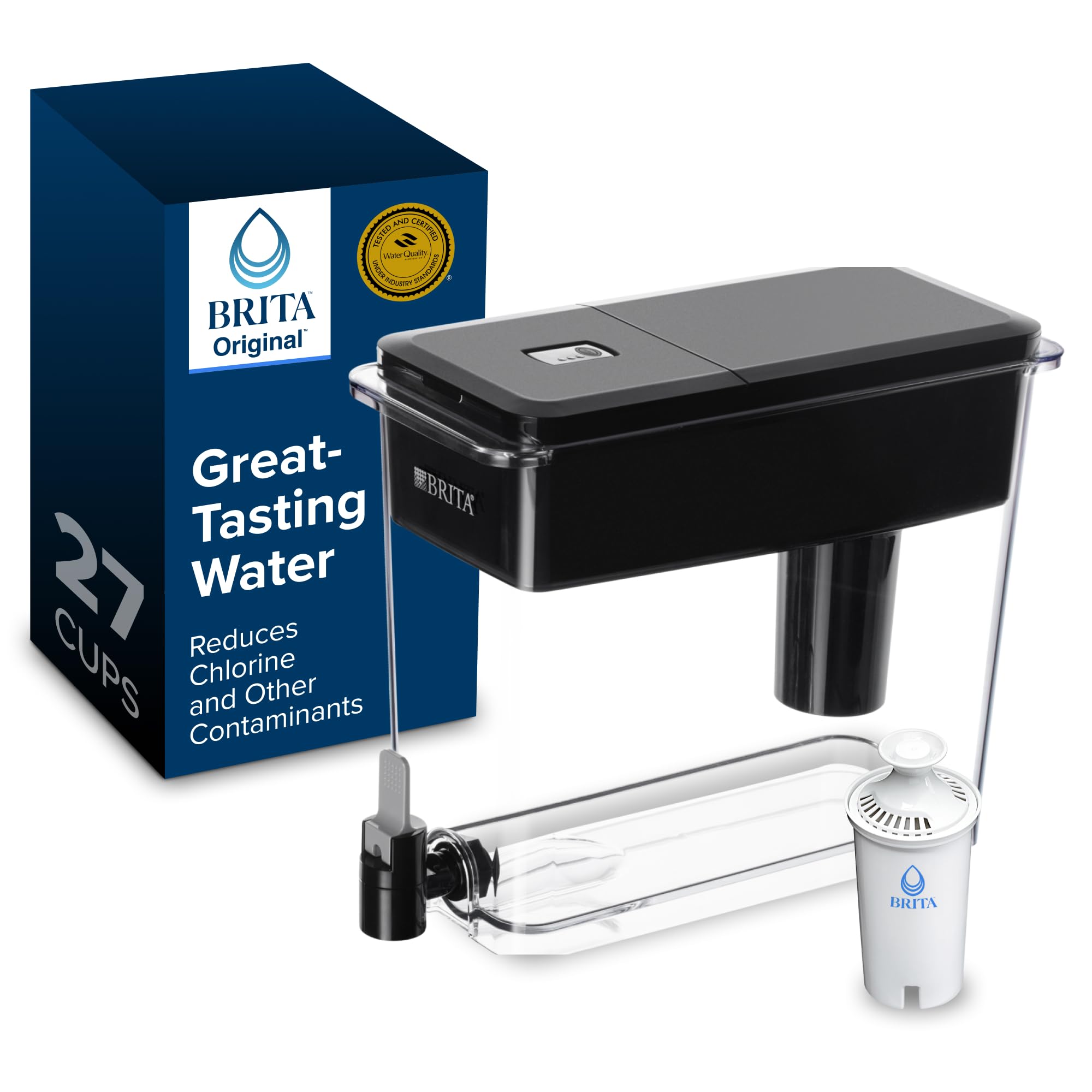
A 27-cup dispenser is less about the pitcher and more about not hearing "we're out of water" every hour. The Brita UltraMax holds enough to get a family through a day, and its 18-by-5.67-by-10.47-inch body is shaped to slide onto a fridge shelf rather than monopolize the door. The precision-pour spigot is the part we appreciate most: you can fill a glass or a water bottle without lifting the whole container, which matters once it's full and heavy.

The Standard filter is the same Brita cartridge used across most of its pitchers and dispensers, and the sticker indicator takes the guesswork out of replacement. It reduces chlorine taste and odor, copper, mercury, and cadmium, which covers the everyday complaints most people have about municipal water. We think it's the right shape for a household that wants cold water ready in the fridge and doesn't want to plumb anything in. The lid locks, the spigot is controlled, and refilling is a matter of carrying the dispenser to the sink.

The caveats are real. The valve can drip, and the body can crack along the bottom edge, so set it on a flat shelf and don't torque the spigot when you pour. Capacity is also a commitment: a full 27-cup dispenser is heavy, and it takes up a wide shelf. If you have a side-by-side with narrow shelves, measure first. For a family that wants a lot of filtered water in the fridge, the spigot turns a bulky container into something everyone can use without lifting it.

Pros

  • 27-cup capacity suits a family
  • Slim 18-inch body fits a fridge shelf
  • Precision-pour spigot avoids lifting

Cons

  • Spigot can drip at the valve
  • Body can crack along the bottom edge
Our verdict

Buy the Brita UltraMax if you want a large reserve of cold filtered water in the fridge and can give it a flat, wide shelf.

Check Latest Price
4

Best Countertop Pitcher

Waterdrop Lucid 10-Cup

93 /100
Trail Score Outstanding

Key details

Capacity
10 cups
Dimensions
10"L x 5"W x 10.1"H
Filter Life
200 gallons or 3 months
Certification
NSF/ANSI 42 and 372
Check Price on Amazon

The hands-free lid is the detail that makes the Waterdrop Lucid feel smarter than the average pitcher. You flip open a trapdoor and fill it under the faucet without lifting the whole lid off, which sounds minor until you're doing it three times a day. The 10-cup body holds enough for two or three people to get through a meal, and the 200-gallon filter life is generous for a pitcher: about three months of regular use before a change.

Filtration is NSF/ANSI 42 and 372 certified, and the carbon block is aimed at chlorine, taste, odor, and the usual aesthetic problems rather than dissolved solids. We found the flow quick enough that filling the reservoir doesn't become a chore, and the slim 10-by-5-by-10.1-inch footprint fits on a counter or a fridge shelf without much fuss. It's a good fit for an apartment kitchen where an under-sink system isn't an option.

The trade-off is the familiar pitcher routine: you still refill it, you still need fridge space if you want cold water, and you still replace the filter every three months. It also won't do what the iSpring does for fluoride, PFAS, or TDS; this is a taste-and-odor pitcher, not a reverse-osmosis system. For the money, though, it's the countertop pick we point to when someone wants a bigger pitcher without paying for a name.

Pros

  • Hands-free lid makes refilling easy
  • 10-cup capacity with a 200-gallon filter
  • NSF/ANSI 42 and 372 certified

Cons

  • Won't reduce dissolved solids like an RO system
Our verdict

Choose the Waterdrop Lucid if you want a roomy, easy-to-fill pitcher for a countertop or apartment fridge.

Check Latest Price
5

Tiny Fridges

Brita Metro 6-Cup

91 /100
Trail Score Outstanding

Key details

Capacity
6 cups
Dimensions
9.1"L x 4.6"W x 9.7"H
Filter Life
40 gallons or about 2 months
Certification
WQA and NSF/ANSI certified
Check Price on Amazon

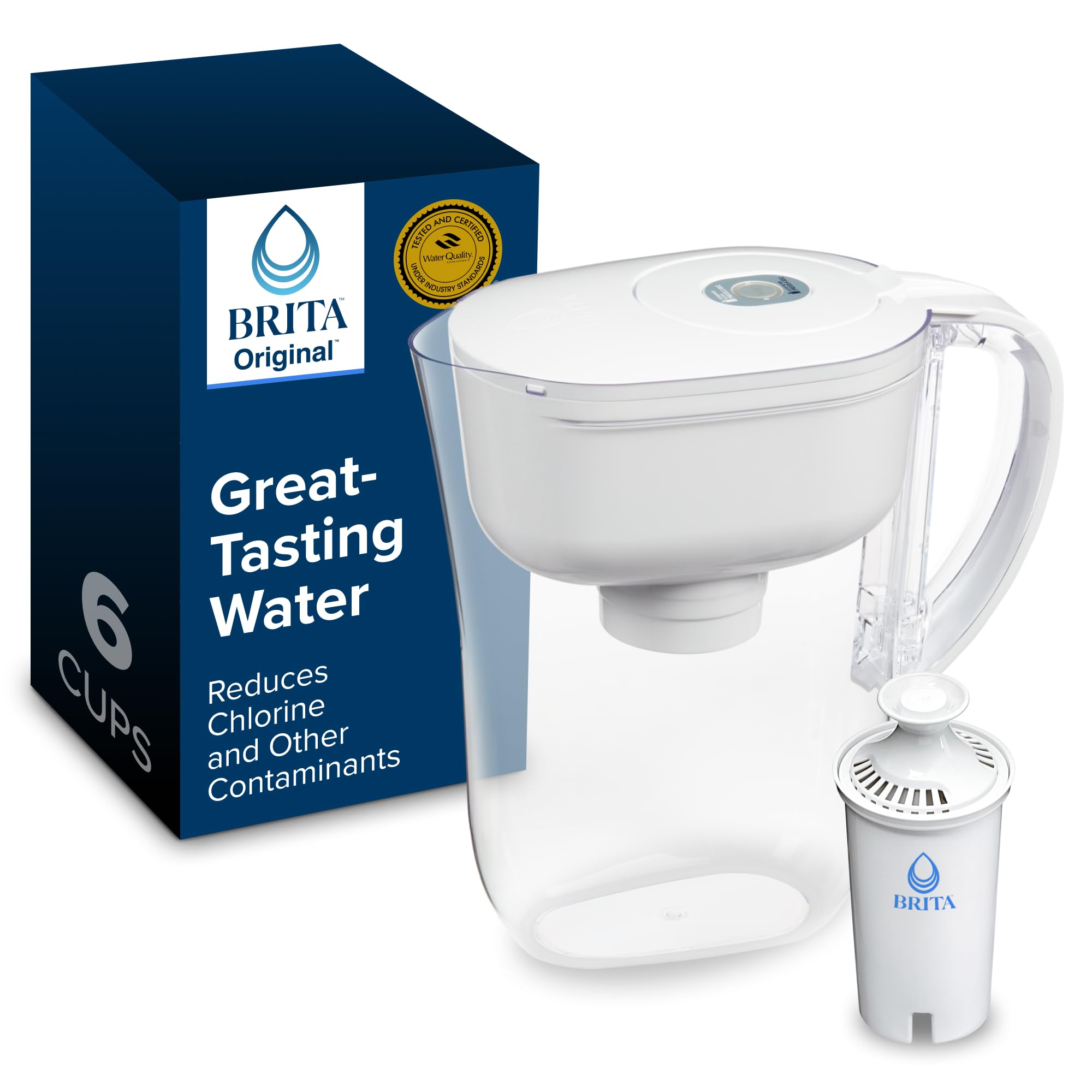
The Brita Metro is the pitcher we keep in mind for a dorm fridge, a home office, or a one-person kitchen where a 27-cup dispenser would be absurd. At 9.1 by 4.6 by 9.7 inches, it slots into tight spaces, and the 6-cup capacity is enough for a couple of glasses and a coffee refill without making you carry a full reservoir across the room.

The SmartLight indicator is the feature that makes it easy to live with: it tracks the Standard filter and tells you when to change it, rather than leaving you to count weeks. The filter is rated for 40 gallons or about two months, and it reduces chlorine taste and odor, copper, mercury, and cadmium. We like that Brita kept the lid easy to fill and the body light enough to lift with one hand.

Capacity is the first compromise: 6 cups goes quickly if two people are drinking water through the day, so expect to refill it more often than a 10-cup pitcher. The other is the body. The plastic can crack if it tips over, and the handle is not the place to put stress when it's full. In a dorm or office, that's a fair trade for the footprint; in a busy kitchen, step up to the 10-cup Waterdrop or the Brita dispenser. The SmartLight makes the routine easier, and the size is the point.

Pros

  • Fits tiny fridges and tight counters
  • SmartLight filter indicator

Cons

  • Plastic body can crack if knocked over
  • 6-cup capacity needs frequent refills
Our verdict

Buy the Brita Metro for a dorm or tiny fridge where a 6-cup pitcher is the right size, as long as you handle the plastic carefully.

Check Latest Price

How We Picked and Tested Home Water Filters

We started with a shortlist of about 30 models across pitcher, faucet-mount, and under-sink styles, then narrowed it by reading spec sheets, replacement-cartridge costs, and the dimensions each one would need under a standard sink or in a fridge door. We cut anything with vague filtration claims, cartridges that needed replacing more often than every two months, or an install that required a pro. The final 14 ranged from countertop pitchers to under-sink systems; we installed and ran each one in a working kitchen, not a lab.

For eight months, we used them the way a household does: filling coffee makers and kettles before work, washing produce, filling pasta pots, and refilling water bottles after school. We timed the first solo install with basic tools and noted whether the instructions matched what the hardware actually needed. After 24 hours, we ran a dry paper towel around every joint and fitting; any dampness went in the notes. To judge flow and pressure, we timed how long a quart took to fill at the tap and compared it with the unfiltered tap, then repeated the test a month later.

Taste was a blind comparison: three people, three unmarked glasses, same source water. We also tracked how each unit handled daily switching between filtered and unfiltered, whether the housing cracked or clouded, and how the cartridge life matched the manufacturer's estimate. At the end, we looked at the total cost of ownership over a year—unit plus replacement filters—and measured each model's footprint in the cabinet or fridge. The ones that scored best did all of this without asking us to think about them.

How to Choose a Home Water Filter

Start With the Contaminants, Not the Label

A certified pitcher or carbon filter is a sensible choice for chlorine taste, odor, copper, mercury, and sediment; NSF/ANSI 42 covers aesthetic claims, while 58 covers reverse-osmosis systems and a broader set of health-related reductions. If your concern is PFAS, fluoride, lead, or dissolved solids, look for a system whose certification and stage list actually names them.

The iSpring RCC7AK-BN is the only pick here with full NSF/ANSI 58 certification; the Waterdrop 10UA and the pitchers are carbon filters, which is a different job. Check your local water report and match the filter to the result, not the marketing.

Choose Where the Filter Lives

Under-sink systems disappear into the cabinet but need a cold-water connection, a faucet hole, and enough room for the body; the iSpring measures 15.5 by 16 by 18 inches and adds a storage tank, while the Waterdrop 10UA is a 3.9-by-3.6-by-12.3-inch inline unit. Countertop pitchers and fridge dispensers need no plumbing, but they take up shelf space and ask you to refill them.

Measure the shelf before buying a dispenser: the Brita UltraMax is 18 inches long and 10.47 inches tall, so a crowded side-by-side may not close around it.

Size the Capacity to Your Refill Rhythm

Capacity is not just how much water you can store; it's how often you have to stop and refill. A 6-cup pitcher is fine for one person or a dorm fridge, a 10-cup pitcher suits two or three people at a meal, and a 27-cup dispenser is for a household that wants to fill bottles and glasses without thinking about it.

Under the sink, 2.5 gpm is a normal tap pace, while the iSpring's 75 GPD is a daily production rating, not a faucet flow rate. Match the number to your routine, not the biggest one on the page.

Budget for Filters and Leaks

Every filter is a subscription in disguise. Pitcher filters typically run about two to three months, the Waterdrop 10UA is rated for a year, and the iSpring's six-stage set is a six-month cycle; the replacement cost matters more than the first price.

Also decide how much leak risk you'll tolerate: spigots, faucets, and seams are the usual failure points across dispensers and under-sink systems. Buy from a seller with a clear warranty and inspect the faucet or valve at installation. A drip is easier to fix before the cabinet is full.

Frequently Asked Questions

Final Verdict

For the most complete filtration in this group, the iSpring RCC7AK-BN is our pick. The NSF/ANSI 58 certification, six-stage RO, and remineralization stage justify the cabinet space and premium price if you're dealing with PFAS, fluoride, or high TDS. If you want better-tasting tap water without a tank or a plumbing project, the Waterdrop 10UA is the easier under-sink choice.

For a renter or a family that wants cold water in the fridge, the Brita UltraMax or Waterdrop Lucid pitcher makes more sense. Start with the contaminant you're targeting; the format follows.