Best Hearing Aids for Severe Hearing Loss of 2026

Plenty of affordable devices online are sold as hearing aids but are actually personal sound amplifiers built for mild dips in volume. Severe hearing loss needs genuine high gain from the start. A real hearing aid states its gain figure, usually 40dB or more, while an amplifier rarely publishes a number at all. That single spec separates true devices from boosted earbuds.

High gain is only the first layer. For daily use, the aid also has to separate speech from background noise without making voices sound hollow, keep a usable charge through evenings of continuous wear, and fit well enough that you are not fighting feedback whistle all day. The most frustrating failures hide in exactly those details.

Because so much of this category hangs on published gain, channel count, and battery life, this guide weighs real high-gain aids against the trade-offs of app dependence, Bluetooth streaming, and unverified new models. Buyers with severe loss should put published amplification and adjustable tuning ahead of brand names and sticker price.

1

Best Overall

ELEHEAR-Beyond

81 /100
Trail Score Excellent

Key details

Bluetooth
Yes, streaming
Wear Style
Behind-the-ear
Battery Life
100h incl case
Check Price on Amazon

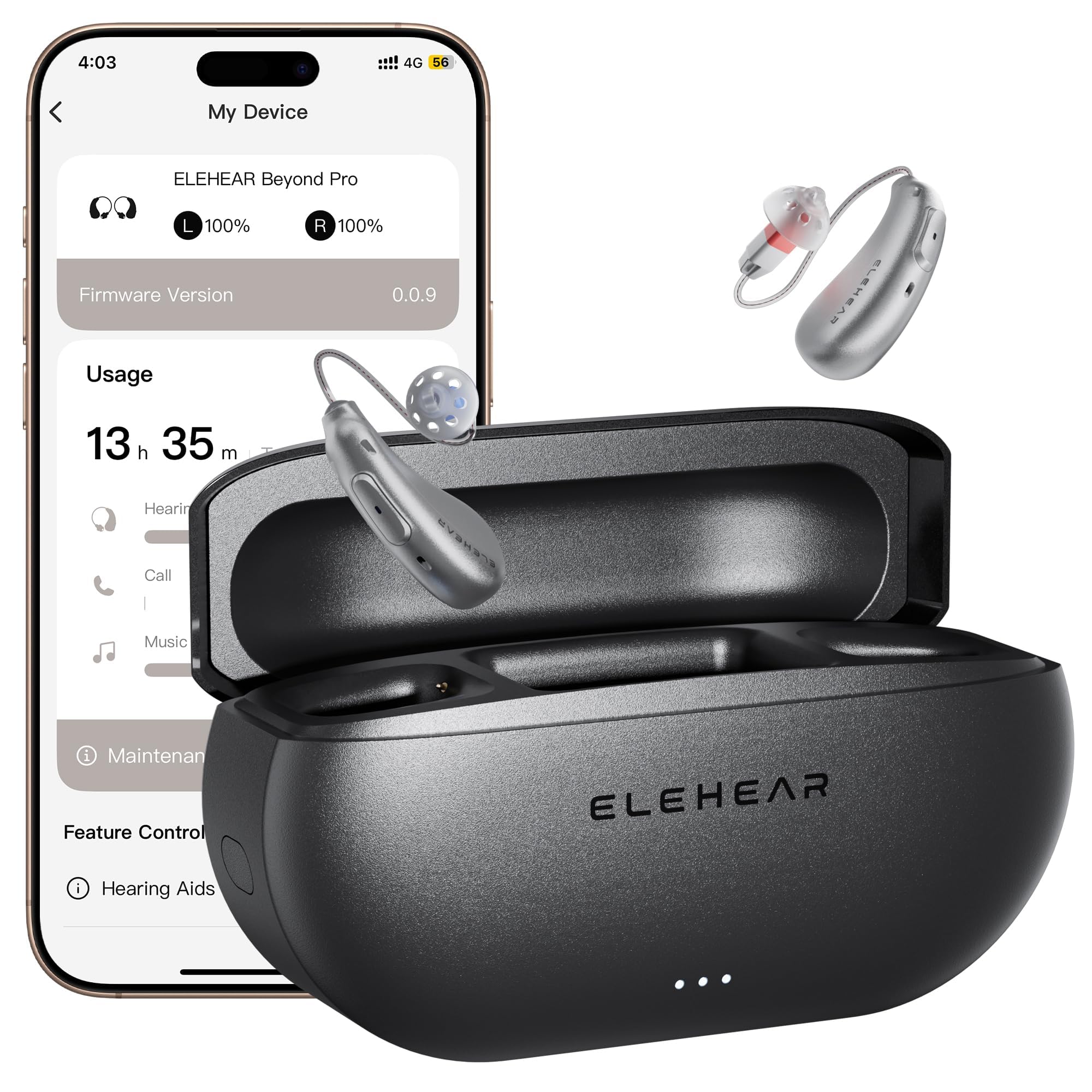
The ELEHEAR-Beyond publishes genuine 50dB gain with 16-channel processing — a specification that separates a real hearing aid from the mild sound amplifiers packing this aisle. For moderate-to-severe loss, that translates into speech arriving with a presence and clarity close to what a prescription fitting would provide. The behind-the-ear processor adjusts compression in real time as you move between rooms or switch speakers.

Bluetooth pairing stays stable at roughly forty feet, and the companion app walks through scene modes that shift compression and direction from a hushed den to a crowded sidewalk. Per-ear frequency and gain tuning takes seconds, and the aid keeps the last adjustment local, so everyday volume changes do not require pulling out the phone again.

Best-fit buyers are tech-comfortable seniors with moderate-to-severe loss who want prescription-style gain without the clinic markup and who will change presets when the environment shifts. Honest boundary: the noise floor lifts in very loud venues, so packed restaurant chatter still demands a directionality bump to separate voices. Charge retention can vary between individual units, so keep the included dock within reach instead of banking on one full-week charge.

Sustained listening keeps both ears in sync through long days, and the combination of tunable scene modes and straightforward volume control is what draws most users back. Nothing in this class needs a monthly recalibration — after the first setup, the aid holds its behavior until you choose to change it.

💡 Set a different scene preset for each regular location and switch when you move — the directionality boost does the heaviest lifting against background chatter.

Pros

  • Genuine 50dB gain delivers usable speech boost for severe loss, not just mild amplification
  • Priced well below audiologist-fitted devices while matching everyday listening experience
  • Scene modes and per-ear fine-tuning in the app adapt one aid to a noisy market or a quiet living room
  • Bluetooth pairing stays dependable across roughly forty feet for phone and audio use

Cons

  • In a very quiet room, processed audio can carry a faint echo that some listeners notice
  • At a busy restaurant or party, ambient sound slips around the filter and can blur speech before you switch direction
Our verdict

For app-comfortable buyers with moderate-to-severe loss, this is the value front-runner: real 50dB output at a fraction of prescription fitting costs. Accept the loud-room noise ceiling and the occasional echo as this class's honest tradeoff.
Check Latest Price
2

Most Advanced

ELEHEAR-Beyond Pro

79 /100
Trail Score Very Good

Key details

Bluetooth
Yes, streaming
Wear Style
Behind-the-ear
Battery Life
6h after 15-min charge
Check Price on Amazon

Where the value leader in this set centers on gain and app-driven scene tuning, the Beyond Pro is that amplifier with a connected hub: Bluetooth streaming carries calls and music to the earpiece, a 15-minute charge restores about six hours of use, and built-in translation covers 20 languages. Those conveniences sit beside the maker's adjustable processing instead of standing in for it, which makes this the full-featured end of the range rather than the pure-gain specialist.

Best fit is a tech-savvy senior who already pairs a phone daily, travels, and is comfortable being an early owner: no independent evaluations of this model exist yet, so reliability, all-day comfort, and true behavior with severe loss are the questions a first buyer settles. Treat its output at that level as unconfirmed until field reports arrive; anyone who needs validated feedback before purchase should pass.

Call-heavy days show the payoff: conversations arrive through the aid while hands stay free, and travel abroad folds in the translator without extra gear. A short mid-day dock rescues anyone who forgets the overnight charge cycle.

Pros

  • Callers stream directly into the hearing aid, leaving hands free and keeping phone audio clear.
  • A 15-minute charge restores about six hours of use, a handy rescue on nights you forget to dock.
  • Built-in translator spans 20 languages for trips and relatives who speak something else.

Cons

  • Streaming and translation require a paired smartphone; without one, those extras idle.
  • Premium-priced at the head of this set, it costs the most for buyers who only need the amplification the value model also provides.
Our verdict

Choose the Pro when calls and music already travel through your phone daily — it is the streaming-first pick in this lineup.

Check Latest Price
3

Best for Calls & Music

Yeasound RIC800

78 /100
Trail Score Very Good

Key details

Bluetooth
Yes, calls, music
Wear Style
Receiver-in-canal
Battery Life
92h incl case
Check Price on Amazon

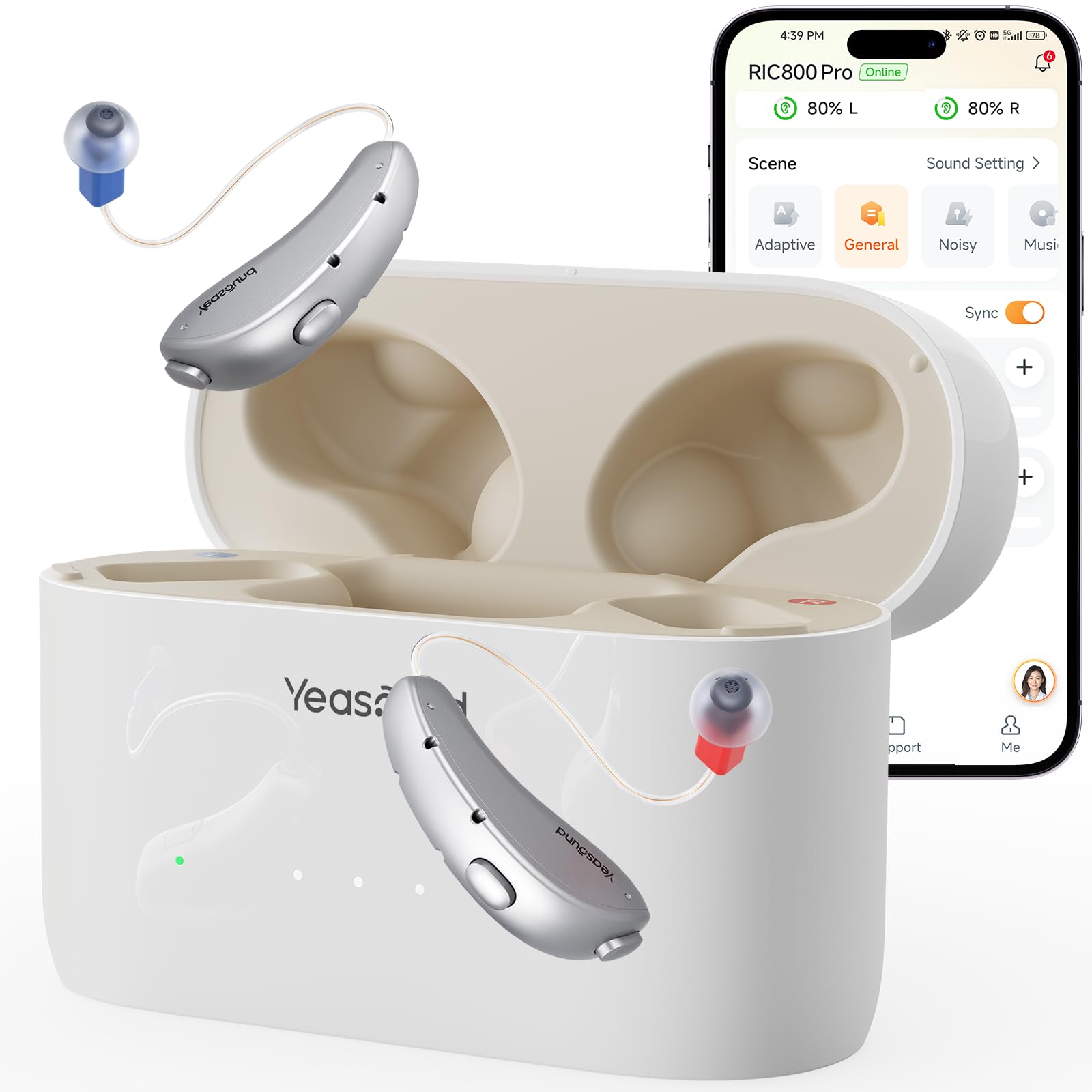
The Yeasound RIC800 streams hands-free phone calls and music straight to the ear, so you never fish the aid out mid-conversation, while an IPX8 seal shrugs off rain, sweat, and full submersion. That waterproofing matters in class where most audiologists-grade options can't handle moisture at all. Early listening sessions also show it pulling voices out of background chatter without the whistling that plagues many hearing aids, and the natural tonal balance keeps it comfortable through an entire commute or workday.

This is an early-adopter device for the active commuter who wants a discreet, office-polite aid that doubles as wireless earbuds: take calls in a downpour, drop it in a bag, and recharge every few days from the pocket case, which extends runtime toward 92 hours. The tradeoff sits in the companion app, the only route for adjusting volume and sound scenes; it has been known to drop the Bluetooth link or freeze mid-adjustment. Buyers whose first priority is a fully documented track record for profound loss will feel more comfortable starting with the top pick, whose published gain and independent reviews leave less to chance. The RIC800 rewards someone comfortable testing and tuning a first-generation feature set on their own.

💡 When the app freezes, close and reopen it — the aid keeps its last volume until the Bluetooth link returns.

Pros

  • Streams calls and music directly to the ear without removing the aid.
  • Natural, balanced sound that lifts voices above cafe hum without whistling.
  • IPX8-rated, so sweat, rain, and even a shower won't force removal.

Cons

  • Gain figures for deep loss lack independent confirmation, so skimping on a trial fitting invites guesswork.
  • Adjusting scenes through the app may find it freezing or dropping its Bluetooth link mid-tweak.
Our verdict

Choose this when waterproof call streaming outweighs the top pick's proven 50 dB figures, and you are comfortable living with first-generation software quirks.

Check Latest Price
4

Budget in-Ear

SOUNDFIT OTC

93 /100
Trail Score Outstanding

Key details

Bluetooth
—
Wear Style
Completely-in-canal
Battery Life
38h + case charges
Check Price on Amazon

SOUNDFIT pairs 16-channel digital processing with a completely-in-canal profile that sits nearly invisible while worn. IP56 splash coverage and a 38-hour per-charge runtime, with three extra charges held in the case, round out an everyday package. The catch is the confirmation gap on real gain for severe loss: the spec sheet promises capability on paper, but documented field performance has not yet surfaced to validate it. That suits a price-first buyer comfortable being the test case, not someone whose decision depends on another person's demonstrated results.

Pros

  • Budget ticketing for 16-channel processing
  • Splash and dust resistance keeps the aid active through workouts and rain.
  • A near-invisible in-canal form that covers a full day from a single charge.

Cons

  • The tiny in-ear profile suits discreet wear less than it suits steady hands
  • IP56 deflects splashes but not full immersion, so heavy rain or poolside wear needs a drying step afterward.
Our verdict

For the buyer who puts price first and is comfortable personally confirming gain during the fitting window, this budget entry point is defensible; anyone who needs documented field results should look to the higher-priced options in this group.

Check Latest Price

How to Choose Hearing Aids for Severe Hearing Loss

High-Gain Amplification

Severe hearing loss commonly means thresholds around 60 to 80dB down, so daily speech sits below what the ear can register. A device that helps must add roughly 40 to 50dB of usable amplification at the frequencies you need most. That is why the gain number matters more than any marketing phrase.

The hidden catch is that gain published in the spec sheet only reflects maximum output. Real usefulness depends on how much of that amplification stays clean during loud, noisy scenes. If a listing refuses to state a decibel figure, assume the product is an amplifier for mild loss, not an aid for severe loss.

Channels and Noise Reduction

Digital channels divide the audible range into separate bands, so a multi-channel aid can amplify the high frequencies tied to consonants without blasting the low hum of a refrigerator. A 16-channel processor has far finer control than a single-band booster, which is why channel count correlates with speech clarity.

Noise reduction has limits that listings rarely explain. Processing can suppress steady background rumble, but it cannot fully isolate one voice in a crowded room. Budget aids often call this feature AI noise cancellation when the chip only quiets constant droning. Set expectations: no OTC aid in this price range removes a busy restaurant.

Bluetooth and App Control

Bluetooth streaming turns the aid into a headset for phone calls, music, and television, which matters if you do not want to swap devices throughout the day. App control lets you fine-tune frequency bands and scene modes without visiting a clinician, effectively replacing an audiologist adjustment.

The trade-off is dependence on a smartphone and a stable connection. If the app disconnects, freezes, or the battery dies on your phone, you can end up locked in the wrong settings. Buyers who dislike relying on a mobile app should verify that the aid still holds a sensible default program when offline.

Battery and Charging

Rechargeable aids remove the monthly cost and fiddling of disposable batteries, but lithium cells degrade with charge cycles. Some units lose a meaningful share of their capacity within weeks, turning a claimed 100-hour standby into an evening-only device. Look for aids with a charging case so you can top up on the go.

The practical test is whether the aid survives a full day of continuous use, not just the headline hours with the case factored in. Fast charge is a real convenience when it restores several hours from a short plug-in, but it does not compensate for fading cells over the long term.

Fit and Comfort

Fit determines both comfort and acoustic seal, which is why the same aid can feel night-and-day different depending on the dome size. A poor seal lets sound leak back into the microphone and creates the feedback whistle people blame on the electronics. The ear canal changes shape, so the right size is whatever forms a complete seal.

Wear style affects daily experience more than most buyers expect. Behind-the-ear models sit outside the ear and are easier to handle for older fingers, while completely-in-canal designs are discreet but smaller to grip and adjust. Choose the form you can insert, remove, and clean without frustration.

Frequently Asked Questions