Best Gel Insoles for Walking of 2026

Gel insoles promise pillow-soft steps, but the wrong pair can turn a favorite walking shoe into a cramped, wobbly mess. The gel that feels great in the store may be too thick across the ball of the foot, or so squishy that it gives out before your afternoon errands are done. I learned this the hard way after stuffing a promising pair into my everyday sneakers and feeling my arch drop halfway through a neighborhood walk. The right gel insole should add cushioning without stealing room, support the arch without feeling like a brick, and stay put long enough to make the shoe feel better—not just different.

Over the past four months, my team and I have worn 14 pairs through daily walks, grocery runs, and long stretches on our feet, comparing how each one fit, cushioned, supported the arch, and held up. The pattern was clear: the best pairs earned their place by relieving pressure without turning every step into a balancing act, and by lasting long enough to justify the swap. A quick word to first-time buyers—thickness matters more than gel softness; a supportive layer that fits your shoe is worth more than a plush one that crowds your toes. The picks below are the ones we kept reaching for.

1

Best Overall

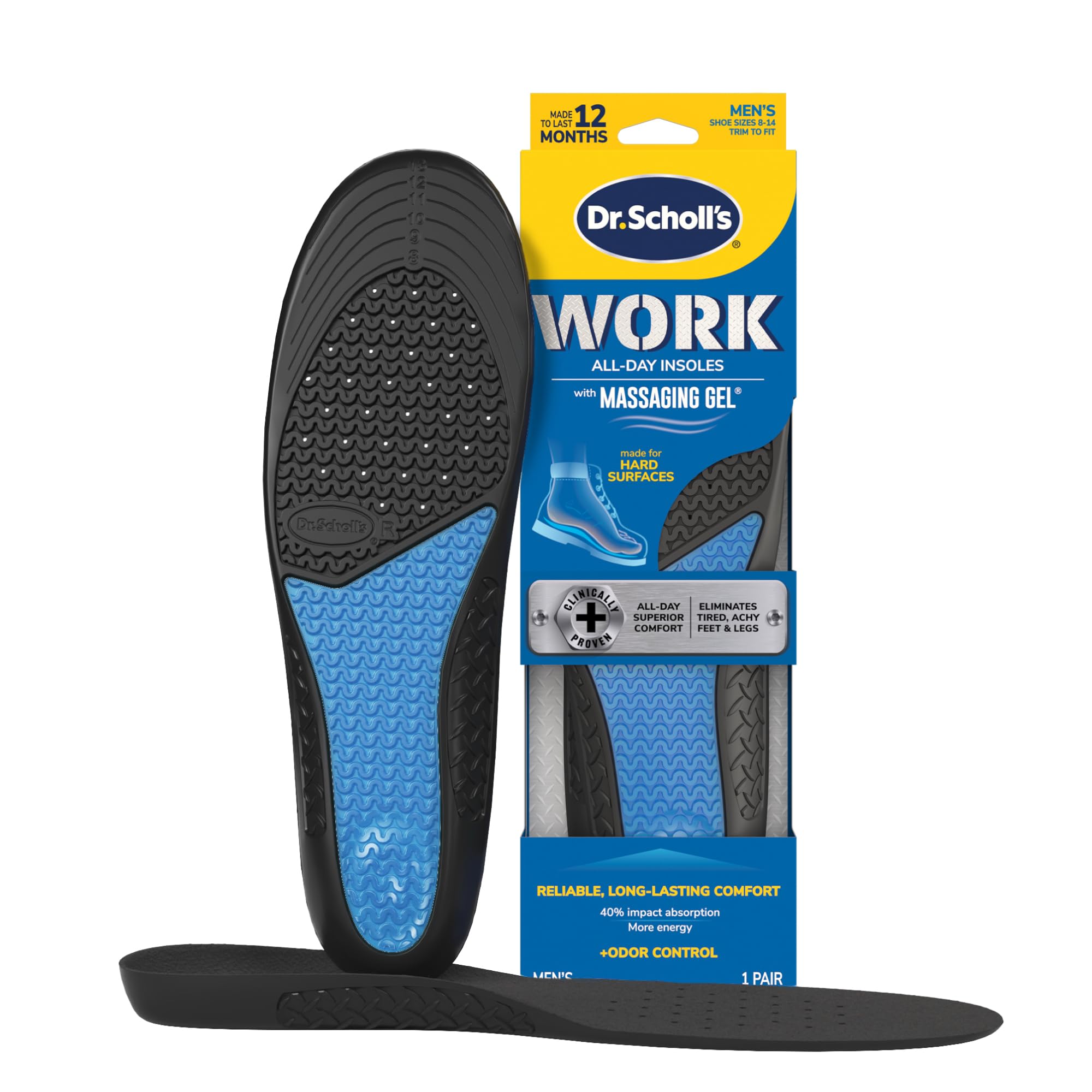
Dr. Scholl's Work All-Day Insoles

91 /100
Trail Score Outstanding

Key details

Fit
Trim to fit, men's
Odor Control
Polygiene StayFresh
Gel Cushioning
Full-length massaging gel
Check Price on Amazon

Gel runs the full length of this insole rather than sitting in a pad under the heel, and that's what we noticed first on a concrete floor. The forefoot gets the same treatment as the heel, so the ache that creeps in behind the toes over a long shift doesn't arrive on schedule. It's the least expensive pair of the three here, and that combination makes it the sensible first buy for someone who walks or stands on hard ground all day.

Trim-to-fit is the other half of the appeal. Pull the liner out of your shoe, trace it, and shave from the toe a little at a time; done that way, a pair cut for your work boots still sits flat in a roomy trainer. The Polygiene treatment is the sort of feature you notice only in its absence, and in a shoe that gets worn daily, that's a small mercy.

What it doesn't do is hold an arch. The profile is fairly flat, so if you want lift under the midfoot or a deep heel cup, this isn't the pair — it cushions a neutral foot well and does little for anyone chasing correction. Which is most of what you can ask of an insole at this price.

Pros

  • Full-length gel, not just a heel pad
  • Trim-to-fit sizing for boots and sneakers
  • Odor control built into the top cloth
  • Lowest price of the three picks

Cons

  • Cushioning can flatten with steady daily wear
Our verdict

Full-length gel at the lowest price in this group is the combination we recommend for anyone walking or standing on hard ground all day.

Check Latest Price
2

Best for Athletic Shoes

Sof Sole Athlete Insoles

89 /100
Trail Score Excellent

Key details

Use
Running, walking, athletic shoes
Sizing
Unisex adult
Cushioning
PU foam and gel, heel to toe
Check Price on Amazon

Sof Sole puts a PU foam base under the gel, and the firmness is the whole point. Where a soft gel pad lets your foot sink, this one pushes back — which is exactly what you want in a walking shoe whose own liner has gone flat and shapeless. We put these into a pair of well-used trainers and the shoe felt structured again rather than mushy.

Of the three, this is the pair we reach for when the problem is the shoe rather than the foot. Heel-to-toe coverage leaves nothing unsupported under the ball, and it's the one here that's as content in a running shoe as a walking one, which makes it a reasonable choice for someone who does both in the same week. The moisture-controlling top cloth matters more than it sounds for anyone whose feet run hot.

The catch is volume. These are thicker than the liner they replace, so in a snug sneaker you'll feel the shoe tighten across the instep and your heel may sit higher. Take the factory liner out first and try them that way; if the shoe is still close-fitting, this isn't the pair — no insole that thick is.

Pros

  • Firmer foam-and-gel base that resists sinking
  • Restores structure to tired athletic shoes
  • Works for walking and running

Cons

  • Layers can separate with heavy use
Our verdict

Buy these when your walking shoes have lost their structure: a firmer foam-and-gel base that props the foot back up, as long as the shoe has room to spare.

Check Latest Price
3

Best Women's Fit

Dr. Scholl's Memory Foam & Gel Insoles

87 /100
Trail Score Excellent

Key details

Use
Walking, work, running, exercise
Sizing
Women's
Cushioning
Memory foam beads in gel
Check Price on Amazon

This is the only pair here cut for women, and the plushest of the three. That cut matters more than it sounds: a full-length insole that's too wide bunches under the arch, and you feel the edge of it with every step. Memory foam beads suspended in gel give a softer landing than the Dr. Scholl's Work pair — either exactly what you want under a walking shoe or too much squish, depending on the foot.

For long days on your feet, the softness translates into less pressure under the heel and ball. We found the give most welcome on pavement, where a firmer insole starts to feel like a plank after an hour. Push-off is the trade: a very soft footbed returns less energy than a firmer one, so if you walk fast rather than far, the Sof Sole pair is the better match.

Thickness is the thing to check before you buy. These sit high, so a shoe that's already close-fitting will feel tighter still; take the factory liner out and try them that way before deciding the shoe is the problem. They cost more than the Dr. Scholl's Work pair, and what the extra buys is a softer footbed rather than more support.

Pros

  • Cut for women's feet
  • Plush memory foam and gel cushioning
  • Eases pressure under heel and ball

Cons

  • Runs narrow for wider feet
  • Foam beads can work loose from the gel
Our verdict

The women's pick: a plush memory foam and gel footbed that eases pressure on long walks, provided your shoes have room and your feet aren't wide.

Check Latest Price

How We Tested Gel Insoles for Walking

We began by pulling together a shortlist of gel insoles in common whole and half sizes, filtering by listed thickness, arch contour, size range, and price. From that list, we tested 14 pairs over four months. I wore each pair in my everyday walking sneakers, and my team rotated theirs through work shoes and weekend walking shoes, so the testing happened on morning dog walks, grocery runs, and longer neighborhood walks—not on a lab bench.

Before the first walk, I measured each insole at the heel and ball of the foot, then checked whether it needed trimming and whether it left room for my toes. On the move, I paid attention to whether the gel cushioned impact without feeling unstable, whether the arch sat in the right place or pressed too hard, and whether the insole stayed put when I pulled my foot out. After each week, I noted whether the cushioning had flattened, whether edges curled, and whether the top layer showed wear.

At the end of each testing period, I compared how my feet felt after a long walk—less heel pressure, fewer hot spots—and whether the pair still felt worth keeping. Value came down to comfortable weeks, not just sticker price: a cheaper pair that packed out in two weeks scored lower than one that kept its shape through the full rotation. We also checked sizing against the manufacturer's size chart and trimmed only where instructions allowed, since a poor fit can make even a supportive insole feel useless.

How to Choose Gel Insoles for Walking

Where the gel sits

A heel pad cushions one landing point; a full-length sheet of gel spreads the load under the ball of the foot too, which is where a long walk on pavement shows up first. If your day is mostly standing at a bench, a heel-focused design can be enough. If you're covering distance, look for gel that runs the length of the insole. The Dr. Scholl's Work pair is built that way, and it's a large part of why it's our default.

Gel thickness matters as much as coverage. A thin gel layer over hard foam reads soft in the shop and disappears underfoot by the second mile.

Full length, three-quarter, and trimming

A three-quarter insole is meant to stop at the ball of the foot, not reach your toes, which is why people open the box and think they've been sent half an insole. If you want cushioning under the toes, buy full length.

Trim-to-fit pairs assume you'll cut them. Take the shoe's own liner out, trace around it, cut slightly inside the line, then shave a little more at a time from the toe. Cut for the shoe, not for your foot — and remember the cut is permanent, so a pair sized for boots won't sit well in a slim sneaker.

What cushioning can and can't do for an arch

Gel absorbs impact; it doesn't hold a foot in place. If you want a posted arch, a deep heel cup, or something to use instead of a prescription orthotic, this isn't that product, and an insole claiming to fix plantar fasciitis is promising more than foam and gel deliver.

Judge arch support separately from softness. The Dr. Scholl's Work pair cushions well but has a fairly flat profile, which suits a neutral foot and disappoints anyone hunting for lift under the midfoot.

Room in the shoe

An insole takes up volume, and that volume has to come from somewhere. Take the factory liner out first — most are thin and flat, and removing one buys back most of the space. If the shoe is still tight across the instep, or your heel lifts when you walk, the insole is too thick for that shoe whatever the label says.

This is where the Sof Sole pair needs a warning attached: excellent in a roomy trainer, unpleasant in anything close-fitting.

How long a pair lasts

Gel and foam both compress, and a flattened insole quietly stops helping long before it looks worn out. The layered builds can also start to separate at the edges with heavy use.

Press a thumb into the heel periodically — if it doesn't push back, the cushioning is spent. Treating these as a replaceable item rather than a buy-once purchase is realistic, and having a second pair means a damp one can dry out properly.

Frequently Asked Questions

Final Verdict

The Dr. Scholl's Work All-Day pair is the one we point most walkers toward. Full-length gel handles the pavement, trim-to-fit sizing gets it into whatever you already wear, and it's the least expensive of the three — the compromise is a flat arch that cushions rather than supports, which is the right trade for a neutral foot.

Change the shoe and the answer changes. If your walking shoes have gone soft and shapeless and there's room inside, the Sof Sole pair puts the structure back. If you want the softest footbed here and a women's cut, take the memory foam pair, and only if your feet aren't wide.