Best Walking Shoes for Men of 2026

Most men don't start shopping for walking shoes until a pair lets them down: a hot spot halfway through vacation, a sole that feels flat by the afternoon commute, or laces that need retying every block. What you actually want is simpler—a shoe that feels broken in from the first mile, supports your arch without pressing into it, and looks normal with jeans or chinos. Cushioning and support don't always come together; some shoes feel plush for a week and then bottom out, while others stay stiff long after you want them to soften.

I wore 12 pairs over eight months—on dog walks, commutes, errands, and weekend days—and my team did too. We tried them in our usual size and a half size up, noted where toes and heels rubbed, and kept wearing stiff pairs to see if they broke in. A few looked sharp but wore through at the heel early; others felt great in the box and lost their shape by month three. The picks below held up and looked presentable.

1

Best Overall

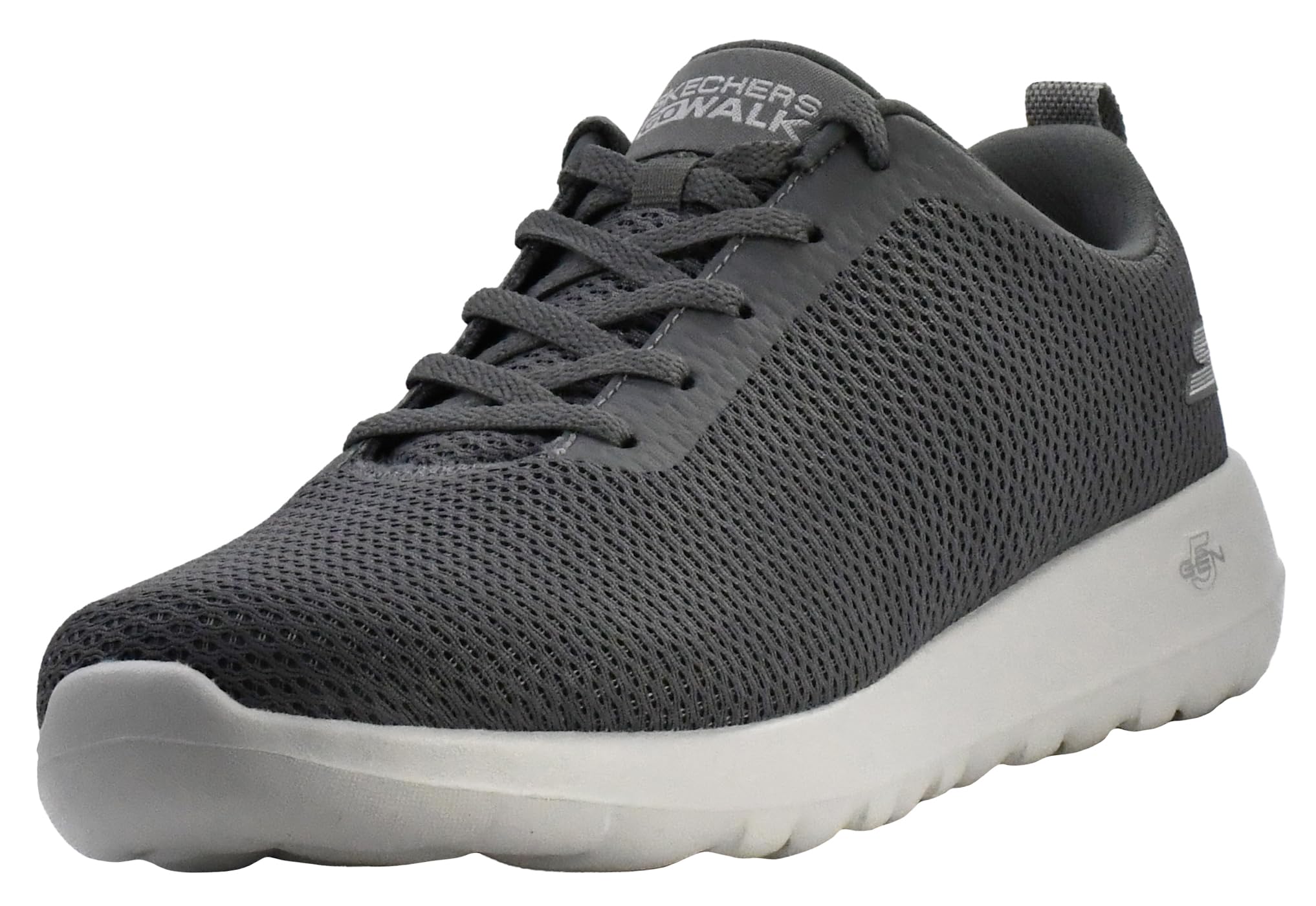
Skechers Go Walk Max Effort

93 /100
Trail Score Outstanding

Key details

Style
Athletic walking sneaker
Upper
Breathable mesh
Outsole
Curved rocker shape
Check Price on Amazon

Soft is the whole idea here, and this is the softest shoe in the roundup. The Go Walk Max Effort is what we point to when someone wants to walk more and think about their feet less: the cushioning is deep enough to take the sting out of a concrete sidewalk, the shoe weighs next to nothing, and it costs less than every other pair on this page. For a first walking shoe, or for a job that keeps you upright all day, that combination is hard to argue with.

Airflow is the other thing it gets right. The mesh upper moves heat out instead of trapping it, which matters more than it sounds for something worn from May through September. There is almost nothing to break in, either — it feels soft from the first walk, which is not something we can say for the leather pair further down. The look is plain enough for jeans and does not announce itself as gym gear.

What the softness costs is stability. The sole is curved and cushy, and across a rutted field or a sloped lawn it rolls toward the outer edge rather than planting, so we keep this pair to sidewalks, park paths, and the treadmill. Arch support is light, too; if you have high arches, drop in your own insert and let the cushioning do the rest of the work. On flat, paved ground — which is most of what walking is — neither of those shows up.

Pros

  • Deep cushioning that softens concrete
  • Barely-there weight for long days
  • Breathable mesh upper for warm weather

Cons

  • Outsole and heel cushioning wear out before the upper does
Our verdict

We recommend the Go Walk Max Effort to anyone who wants the softest ride for the least money — it is the most comfortable shoe here, as long as your walking stays on paved ground.

Check Latest Price
2

Best for Wide Feet

New Balance 608 V5

93 /100
Trail Score Outstanding

Key details

Style
Cross-training sneaker
Widths
Wide and extra-wide
Closure
Lace-up
Check Price on Amazon

The 608 is filed under cross-training, which undersells what it is good at. It is a wide, structured shoe for errands, standing shifts, and the dog walk rather than the gym, and of the pairs here it has the most convincing arch support.

Fit is why it earns a place. New Balance builds this one in wide and extra-wide, and the standard width already leaves room across the toe box — the opposite of the narrow, tapered forefoot most sneakers push you into. If your feet have spent years being squeezed, this is the pair that stops it. The laces, incidentally, run absurdly long, so trim them or tuck the ends.

The ride is firmer than the softest picks here: a planted, structured feel instead of a pillowy one. That suits standing and steady walking, and it is the wrong choice if what you want is a shoe you sink into. Standing is where it makes the most sense. Eight hours on a concrete floor is a different job from a three-mile loop, and the firm platform with support under the midfoot does more for that than another half inch of foam.

Pros

  • Wide and extra-wide options with a roomy toe box
  • Strongest arch support of the pairs here
  • Firm, planted platform for long standing shifts

Cons

  • Sole separation can develop within months of daily wear
  • Sizing runs short in the toe on some pairs
Our verdict

Buy the 608 if you need a wide, supportive shoe for standing or walking all day — it is the roomiest and most structured pair here, though the ride is firmer than the Skechers.

Check Latest Price
3

Best Hands-Free

Skechers Summits High Range Slip-In

93 /100
Trail Score Outstanding

Key details

Entry
Hands-free step-in
Style
Slip-in sneaker
Cushioning
Memory foam insole
Check Price on Amazon

The case for this shoe takes about four seconds to make: you step down into it, the heel collar folds out of the way, and you are in. There are no laces to tie, no tongue to hold, and nothing that asks you to bend over at six in the morning or in an airport security line.

That reads as a small convenience until you have had a bad back, a knee that does not bend the way it used to, or a flight to catch. We think it is the most useful pair here for travel and for anyone whose shoes have become a daily negotiation, and the hold is better than a laceless design suggests: the collar grips the heel, so the shoe stays on without slapping. It is light for its size, too.

Skechers also hid the function well. It reads as an ordinary sneaker rather than a medical shoe, and the neutral styling works with jeans and shorts alike. The cushioning is softer than the price suggests, though it is not as deep as the Go Walk Max's — over a few hours on your feet, you can feel the difference between the two.

Pros

  • Hands-free step-in with no bending
  • Collar holds the heel without laces
  • Looks like a normal sneaker, not a medical shoe

Cons

  • Runs narrow through the toe box
  • Soles wear through faster than the upper
Our verdict

We point you to the Summits High Range when bending down to tie a shoe has become a chore — it is the most useful hands-free pair here for travel days and sore mornings.

Check Latest Price
4

Dressier Wear

Rockport Eureka

88 /100
Trail Score Excellent

Key details

Upper
Leather
Weight
2.5 lb
Closure
Lace-up with stretch laces
Check Price on Amazon

The Eureka is the one pair here that does not look like athletic wear. A leather upper, a low flat profile, and laces with enough stretch to stay tied — it walks a city all day and still looks right with chinos at dinner. If your walking is mixed in with the rest of your day rather than set aside for it, that counts for more than another half inch of foam.

Comfort is genuinely good once you get there, and getting there takes some work. The leather starts stiff and the tongue is thick enough to press on the front of the ankle for the first week or two, so wear them around the house before committing to a long errand. After that the shoe settles into a firm, supportive ride with proper arch support under the midfoot.

It is flatter and firmer than the mesh shoes here, closer to a dress shoe in feel than a running shoe, which suits pavement and office floors and can feel hard after a long stretch on concrete. Leather also holds more heat than mesh on a hot day, so this is not the pair to pack for a summer vacation.

Pros

  • Leather upper that passes with chinos
  • Stretch laces that stay tied
  • Firm arch support for pavement walking

Cons

  • Sizing runs inconsistent between pairs
  • Sole separation can develop with steady wear
Our verdict

Choose the Eureka when you want one pair that walks all day and still looks presentable with trousers — just plan on a break-in and check the sizing carefully.

Check Latest Price

How We Tested the Best Walking Shoes for Men

We started by pulling together more than 40 men's walking shoes from brands known for everyday comfort, then cut the list to 12 based on available sizes, whether the insole came out, return policy, and whether the upper looked casual enough for jeans as well as shorts. We also read through customer reviews for complaints about heel slippage, narrow toe boxes, and soles that wore down too fast.

For eight months, we wore the 12 pairs on commutes, dog walks, grocery runs, and full days standing at kids' games or walking through airports. Each tester tried their usual size and a half size up, then walked a few blocks to check toe room and heel slip; we flexed every sole by hand and wore the stiffest pairs for a full week to see whether they creased and loosened at the toe or stayed boardlike. We noted hot spots after two hours and again at the end of the day, and wore our own orthotics in pairs with removable insoles to judge arch support.

To judge durability and quality, we checked outsole tread at the heel, seam stitching, and upper creasing at the end of the test, and we compared that wear against each shoe's price. We wore them with jeans, chinos, and shorts to see which looked like a normal everyday shoe rather than a gym sneaker. Ease of use came down to laces, pull tabs, and whether we could get them on without sitting down—small things that matter on the way out the door.

How to Choose Men's Walking Shoes

Cushioning Is Not the Same as Support

A thick, soft midsole absorbs impact, and that is most of what makes a walking shoe feel good in the first ten minutes. What it does not do is hold your foot in place. The deeper and softer the foam, the more the foot is free to roll toward the outer edge, which is why a pillowy shoe can feel wonderful on a sidewalk and vague on a sloped lawn or a gravel path.

Match the shoe to the surface. For pavement, errands, and treadmill time, the softest pair here — the Go Walk Max Effort — is the right call. If your walks cross rough ground, or balance is a concern, a firmer, flatter shoe like the New Balance 608 V5 is the safer pick.

Get the Width Right Before Anything Else

Almost every walking shoe is built on a medium-width last, and a tapered toe box pushes the big toe inward with every step. The trap is adding length to buy room: size up and the flex point slides forward, leaving you with a shoe that is long and still narrow. If that has been your workaround for years, look for a shoe sold in wide and extra-wide instead.

The 608 V5 is the pair here that is genuinely roomy across the forefoot; the Summits High Range Slip-In is the narrowest. Measure late in the day, when your feet are at their largest, and try both shoes on — pairs from the same box are not always identical.

Laces or a Step-In?

Laces let you tune the hold across the instep, which is why a laced shoe stays secure as the upper softens through the day. A step-in leans on a stretch collar instead: quicker, kinder to a bad back or a knee that does not bend, and slightly less adjustable. For travel and for anyone who dreads the shoehorn, that trade is worth it — the Summits High Range Slip-In grips the heel well enough for a full day of walking. For long daily miles, we still take laces.

One rule if you go laceless: a step-in that feels sloppy in the heel usually tightens up a half size down, but one that pinches across the toes never will.

Compare Cost per Mile, Not Sticker Price

Walking shoes wear at the heel edge and under the ball of the foot, and the midsole compresses long before the upper looks tired — which is why a pair can look fine and feel dead. The least expensive shoe here, the Go Walk Max Effort, is also the one whose outsole and cushioning go soonest, and that is a fair trade rather than a flaw: buy it cheaply and replace it without guilt.

If you want one pair to last, the leather Rockport Eureka is the most substantial shoe in the group, and also the one whose fit you should check most carefully before committing.

Mesh or Leather, Depending on Your Week

Mesh breathes, dries quickly, and needs no break-in — the right upper for a shoe worn with shorts and caught in the occasional shower. Leather looks better with trousers and holds its shape, but it takes a week or two of short wears before it stops pressing on the ankle. If you want a single shoe for both, decide which end of your week matters more and accept the compromise at the other.

Frequently Asked Questions

Final Verdict

For most men, the Skechers Go Walk Max Effort is the pair to buy. It has the deepest cushioning in this group, weighs the least, and costs less than anything else here, which makes it the easy default for daily walks, long shifts, and travel.

The one reason to step away from it is width or arch support. If you need either, the New Balance 608 V5 is the better shoe and worth the extra money.