Best Folding Wheelchair for Travel of 2026

I've learned that a travel wheelchair has to do two opposing things: collapse small enough to vanish into a trunk, and still feel solid on a cracked sidewalk or a curb cut. The wrong chair lets you feel every seam in the pavement, or folds so stiffly that loading it solo becomes a wrestling match. What you're really buying is a calmer day—one where getting from the car to the gate doesn't leave you or your companion worn out. The best folding wheelchairs balance fold, push, and seat comfort without making you sacrifice one for another.

Over eight months, our team tested seven folding wheelchairs in airports, doctors' offices, and the back of a hatchback. We focused on fold speed, push over carpet and pavement, fit for different bodies, and whether the brakes and frame still felt sturdy after months of use. One lesson worth knowing: a lighter chair isn't automatically easier—if the frame flexes, every transfer feels less secure. The picks below are the ones that got that balance right for the money.

1

Best Overall

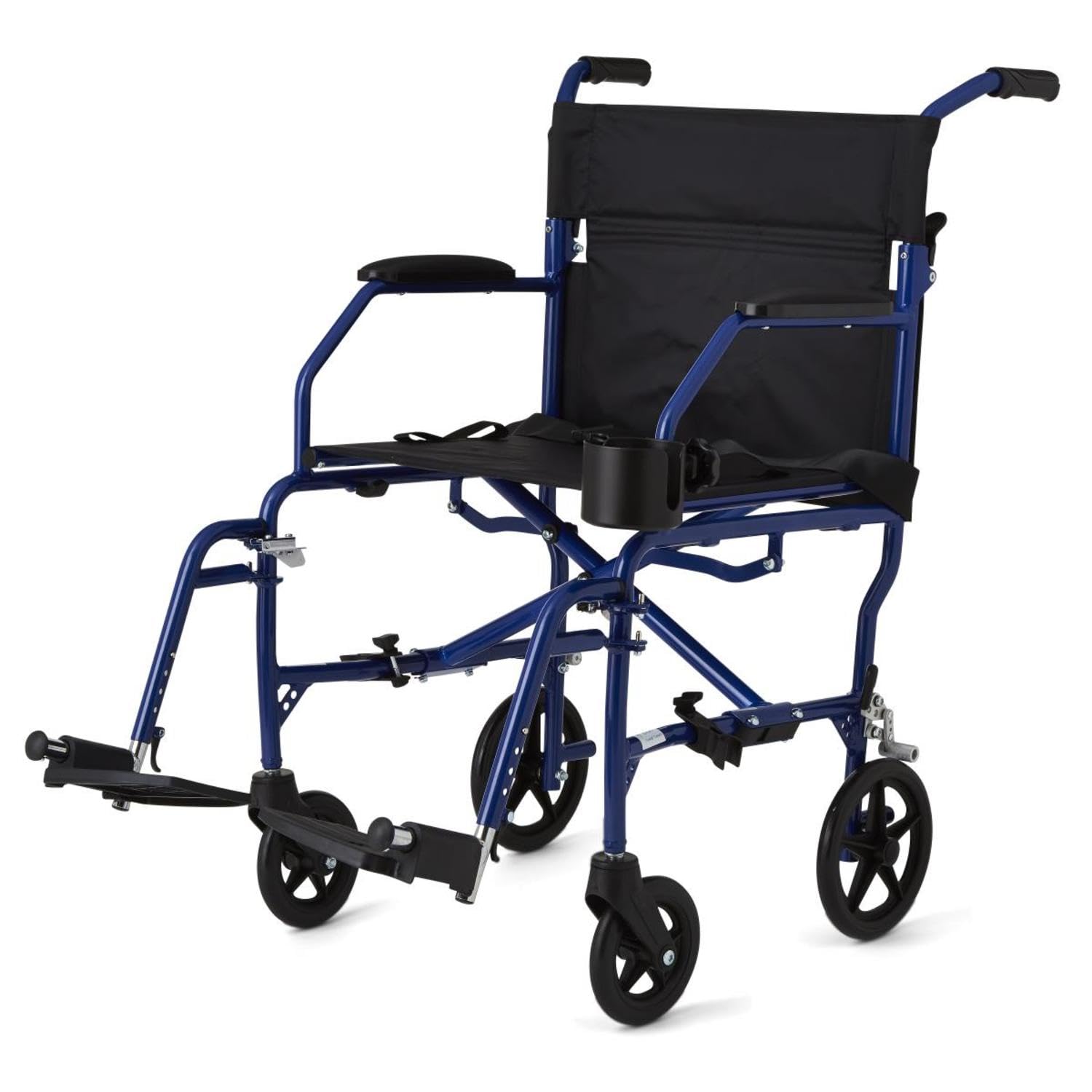
Medline Ultra Lightweight Transport Chair

93 /100
Trail Score Outstanding

Key details

Weight
17 lb
Seat Width
19 in
Rear Wheels
8 in
Weight Capacity
300 lb
Check Price on Amazon

The Medline Ultra Lightweight is the chair we reach for when a trip involves a car trunk, a terminal, and a companion doing the pushing. Its back and handles fold down, the swing-away footrests tuck out of the way, and the whole package is easy to lift and slide into a trunk. That combination—not one dramatic feature—is why it earns the top spot.

The 19-inch seat is the detail that makes it broadly useful. It is wide enough for many adults without turning the chair into a barge, and the 300-pound capacity gives bigger riders more room than the budget picks. The 8-inch rear wheels roll easily on smooth floors, pavement, and airport concourses. We also appreciate the swing-away footrests during transfers; they clear the path for feet and legs without a wrestling match.

This is a transport chair, so the rider cannot push it. That is the trade-off for the low weight and compact fold, and it is the right trade for a companion-led trip. If the traveler needs to self-propel, this is not the chair. The seat is supportive rather than plush, so a cushion is worth adding for longer days.

What sold us was the everyday ease: it arrives assembled, folds without a sequence of tricks, and leaves room in the trunk for luggage. For most people traveling with a companion, that is the whole job.

Pros

  • Folds compactly for car trunks
  • One of the lightest transport chairs here
  • 19-inch seat with 300-pound capacity
  • Swing-away footrests ease transfers

Cons

  • 8-inch rear wheels favor smooth surfaces
Our verdict

We recommend this Medline for most caregiver-led trips: it folds small, lifts easily, and the 19-inch seat and 300-pound capacity fit a wide range of riders.

Check Latest Price
2

Best Budget

Drive Medical Folding Transport Chair

89 /100
Trail Score Excellent

Key details

Frame
Steel
Weight
26 lb
Seat Width
17 in
Rear Wheels
8 in
Check Price on Amazon

The budget pick here is not the plushest chair in the group, and it does not pretend to be. What it does is fold flat, roll on 8-inch wheels, and take up less space in a trunk than the larger transport chairs. For a short trip, a clinic visit, or a spare chair that lives in the car, that is often enough.

We recommend it most for smaller riders and tighter storage spots. The 17-inch seat is the number to check before ordering; it is noticeably narrower than the 19-inch Medline, and larger users will feel the difference. If the seat fits, the swing-away footrests and padded armrests make the chair easy to live with, and the steel frame feels planted when someone is pushing.

The trade-off is weight and finish. At 26 pounds, it is not the chair to haul up stairs or lift overhead, and the steel frame gives it a more utilitarian feel than the aluminum picks. But as a low-cost chair that folds and travels, it earns its place.

Pros

  • Budget-friendly transport chair
  • Folds flat for trunk storage
  • Swing-away footrests and padded arms

Cons

  • 17-inch seat is narrow for larger riders
Our verdict

We point budget-minded shoppers to this Drive when a 17-inch seat fits: it folds flat, rolls into a trunk, and keeps the essential transport-chair job simple.

Check Latest Price
3

Best Self-Propelled

Drive Medical Blue Streak Wheelchair

91 /100
Trail Score Outstanding

Key details

Weight
41.3 lb
Seat Width
18 in
Turn Radius
12 in
Weight Capacity
300 lb
Check Price on Amazon

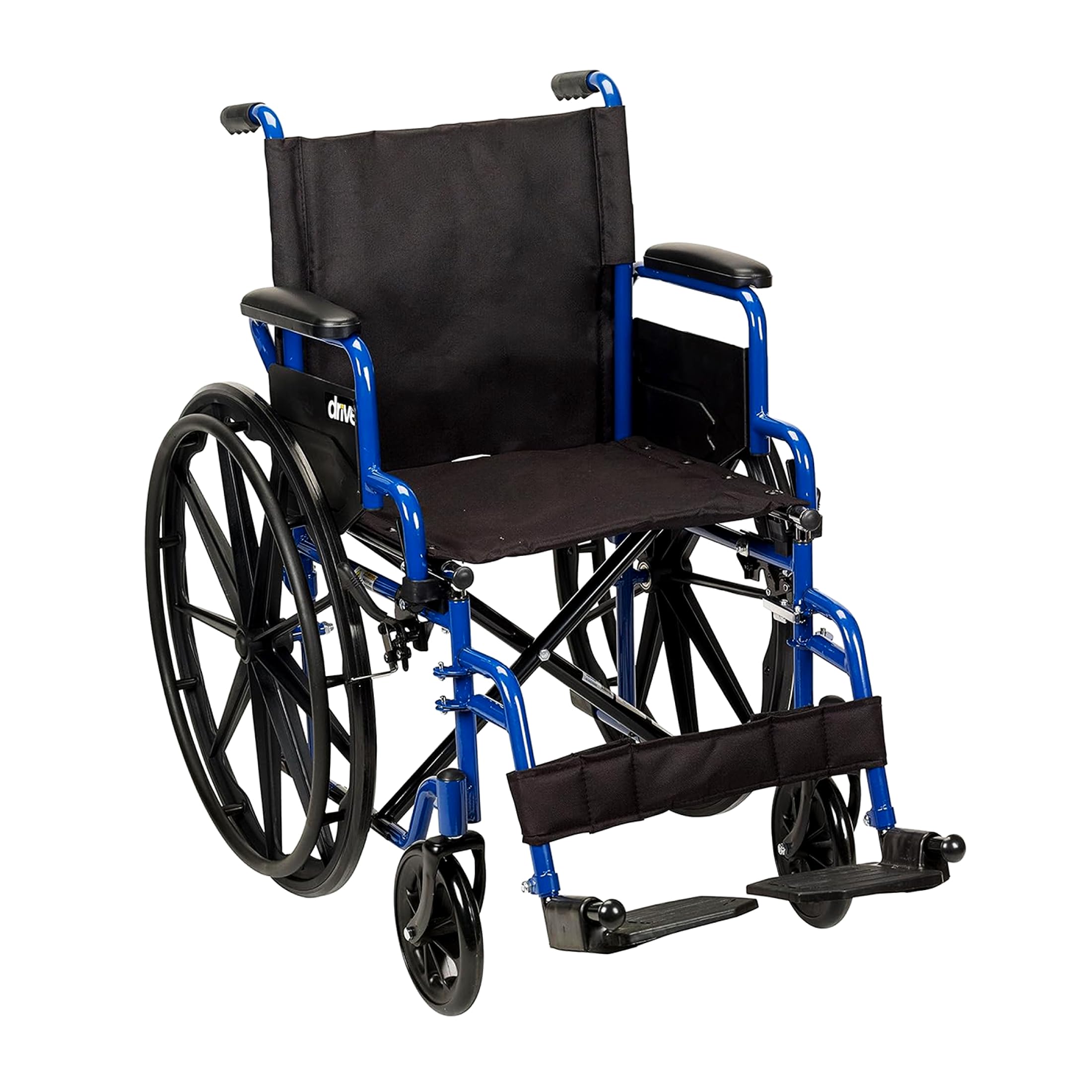
Self-propulsion costs weight, and the Blue Streak pays that bill in full. The large rear wheels and handrims let a rider move independently, while the 18-inch seat and 300-pound capacity handle a range of adults. The desk-length arms flip back for transfers, and the swing-away footrests clear the path to the seat.

We paid close attention to the rolling feel because a self-propelled chair lives or dies by its wheels. The solid tires are low-maintenance and roll predictably on smooth floors and pavement, and the 12-inch turn radius helps in hotel rooms and tight hallways. The steel frame feels substantial, which is reassuring when someone is pushing hard—but it is also the reason this chair is not a one-hand lift.

This is the practical choice for a rider who wants independence and a caregiver who can handle the weight. It folds for a car, but it is not the chair we picture for air travel or repeated trunk loading. If the rider can push and the companion can lift, the independence is worth the bulk.

Pros

  • Self-propelled for independent travel
  • 18-inch seat and 300-pound capacity
  • Desk arms and swing-away footrests

Cons

  • Front casters can develop wobble
Our verdict

For riders who need to push themselves, this is the self-propelled chair we recommend here—provided you can manage its 41.3-pound frame and have room for a larger fold.

Check Latest Price
4

Best with Hand Brakes

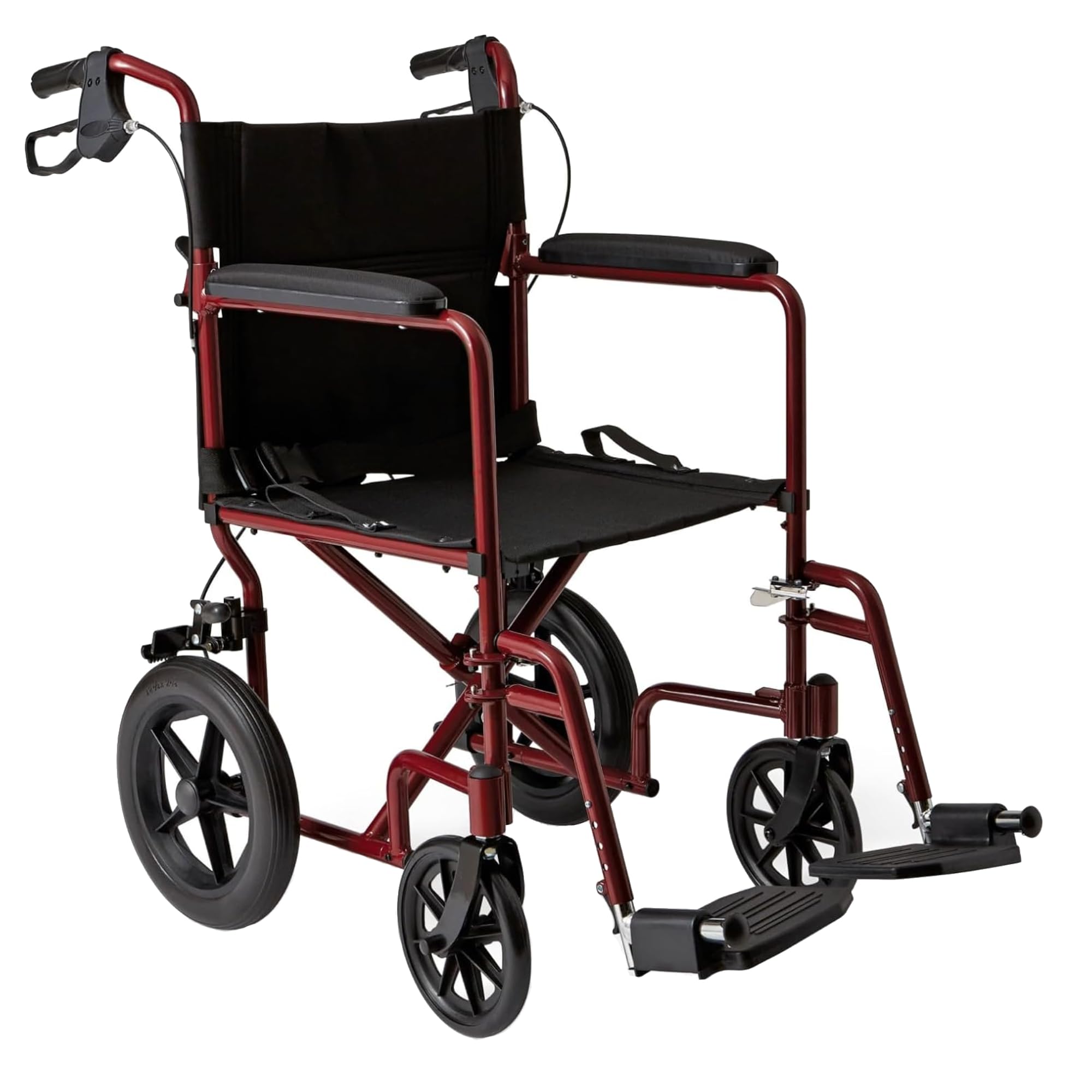
Medline Lightweight Transport Chair with Handbrakes

91 /100
Trail Score Outstanding

Key details

Weight
22 lb
Seat Width
19 in
Rear Wheels
12 in
Weight Capacity
300 lb
Check Price on Amazon

The reason to move up to this Medline is the brake and wheel setup. The caregiver gets hand brakes plus rear-wheel locks, and the 12-inch rear wheels roll over pavement, thresholds, and the kind of cracked sidewalk that stops a small-caster chair. The 19-inch seat and 300-pound capacity keep it roomy for a transport chair.

We recommend it for neighborhood walks, medical appointments, and trips where the chair will be pushed over less-than-perfect ground. The hand brakes are the feature we test first on arrival; they can need adjustment before they hold firmly, and you want that sorted before a ramp or a sloped driveway. Once set, they make stops and transfers feel more controlled.

It is heavier than the ultralight Medline, so it is not the first choice for frequent folding or a tight trunk. The payoff is a more planted ride and better control on rough surfaces. If your travel is mostly airports and smooth floors, the lighter chair is easier; if it is sidewalks and parking lots, this one makes more sense.

Pros

  • Hand brakes plus rear wheel locks
  • 12-inch rear wheels handle rougher pavement
  • 19-inch seat and 300-pound capacity

Cons

  • Hand brakes can need adjustment
Our verdict

We choose this Medline when the route includes uneven sidewalks and ramps: the hand brakes and 12-inch rear wheels give the person pushing more control.

Check Latest Price
5

Everyday Errands

Carex Transport Wheelchair

91 /100
Trail Score Outstanding

Key details

Frame
Steel
Weight
25 lb
Seat Width
19 in
Safety Belt
Included
Check Price on Amazon

The Carex is a midweight transport chair with a few practical details that are easy to overlook: a 19-inch seat, a safety belt, and adjustable swing-away footrests that come off for storage. It folds with one hand, which matters when the other hand is holding a door or a bag.

The steel frame feels sturdy, and the 25-pound weight is manageable for a caregiver who is not looking for an ultralight chair. We noticed the belt is useful on ramps and in unfamiliar buildings, where a little extra security helps the rider settle in.

What holds it back is the push on soft carpet and uneven thresholds; it takes more effort than the smooth-floor chairs here. On hard floors and straightforward errands, it is a solid, comfortable choice.

Pros

  • 19-inch seat with included safety belt
  • Folds with one hand
  • Adjustable, removable footrests

Cons

  • Can feel tight in narrow doorways
Our verdict

We keep this Carex in the mix for its 19-inch seat, included safety belt, and one-hand fold, though tight doorways and carpet can make it feel less nimble.

Check Latest Price
6

Travel Packages

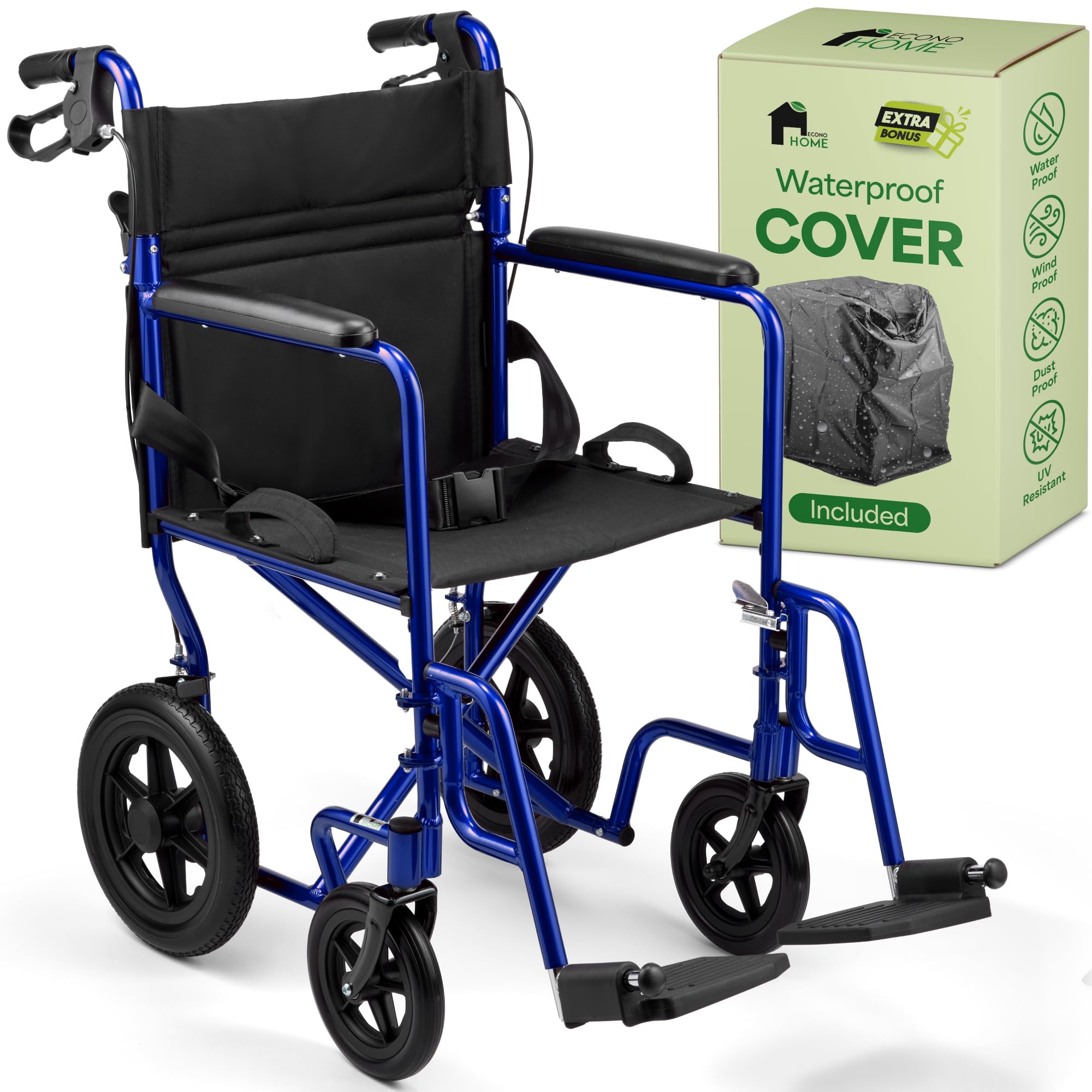
EconoHome Lightweight Transport Wheelchair

87 /100
Trail Score Excellent

Key details

Cover
Included
Weight
22 lb
Brake Type
Hand brakes
Weight Capacity
300 lb
Check Price on Amazon

The EconoHome is the chair we point to when someone wants the travel extras sorted in one order. It arrives fully assembled, has companion hand brakes and a seat belt, and comes with a waterproof cover. At 22 pounds, it is light enough for one person to lift into a trunk without a production.

The aluminum frame supports up to 300 pounds, and the fold-flat design and swing-away footrests make it easy to store. We found the hand brakes straightforward to set and release, and the cover is the kind of small inclusion that saves you from buying a separate bag before the first trip.

The fit is the caveat. The seat runs long from front to back, and shorter riders may feel like they are swimming in it; the armrests also sit high for some. If the rider is taller or wants a chair that doubles as a comfortable seat for appointments, it works. If not, the 19-inch Medline is the safer fit.

Pros

  • 22-pound aluminum frame
  • Hand brakes and seat belt included
  • Waterproof cover included

Cons

  • Seat depth may be long for shorter riders
Our verdict

We like this EconoHome as a travel-ready package: it arrives assembled, weighs 22 pounds, and includes hand brakes and a cover—though the seat is not for every body.

Check Latest Price
7

Cruise Cabins

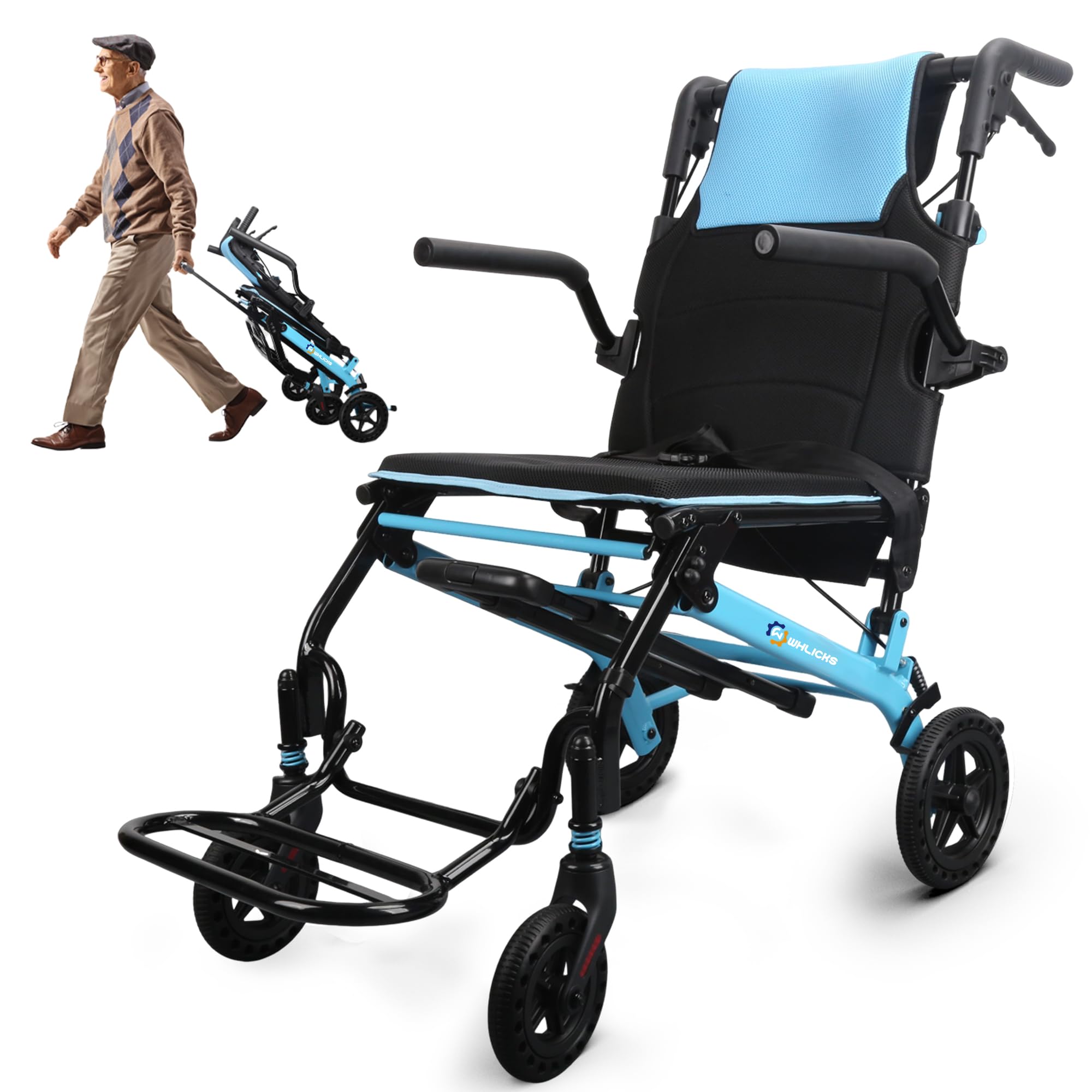
WHLICKS Transport Wheelchair

85 /100
Trail Score Excellent

Key details

Handle
Telescopic
Weight
22.1 lb
Folding
3 seconds
Front Wheels
360° swivel
Check Price on Amazon

The telescopic handle is the first thing you notice, and it is more than a styling cue. It gives you a place to grab and roll the folded chair instead of bending to lift it, which is useful in a cruise cabin, a hotel closet, or a trunk with luggage already in it.

The chair folds down close to flat and uses 360-degree front casters, so it turns easily in tight spaces. The aluminum frame keeps the weight around 22 pounds, and the hand brakes and parking feature give the person pushing a way to hold it steady. The PU wheels are quieter on indoor floors than hard plastic casters.

The limits are real. The chair can catch on a raised threshold and need a slight tilt to get through, and the design has a shorter track record than the established picks. We also found the folded package takes a deliberate lift, even with the handle.

For a traveler who values a compact footprint and a handle that saves the back, this is a clever choice. For everyone else, the 19-inch Medline is the more proven, easier-to-justify pick.

Pros

  • Telescopic handle aids lifting and rolling
  • Folds nearly flat for tight spaces
  • Hand brakes and 360-degree casters

Cons

  • Premium price for a newer design
Our verdict

We recommend this WHLICKS for cruisers and tight trunks: the telescopic handle and near-flat fold make it easier to move and store, if the premium price fits.

Check Latest Price

How We Tested Travel Wheelchairs

We started by pulling together folding wheelchairs that are actually marketed for travel, then narrowed the list by checking folded dimensions, seat width and depth, weight capacity, frame material, brake type, and price against what each chair promised. We cut models with vague specs or folded sizes that wouldn't clear a standard car trunk. Seven made the cut, and we used each one for eight months—not just in a showroom, but on airport trips, doctor visits, grocery runs, and the daily loop from the front door to the car.

We folded and unfolded each chair multiple times a day, sometimes one-handed while balancing a bag, and noted whether latches caught, frames pinched, or the chair needed a second person to collapse. We pushed them across terminal carpet, sidewalk cracks, curb cuts, and tight clinic hallways, watching for shimmy, effort at the push rims, and whether the chair tracked straight. For portability, we lifted each chair into a hatchback and back seat, checked how it sat beside groceries, and had different caregivers load it alone.

Comfort and fit got judged over longer sits: we paid attention to seat pressure, backrest height, armrest position, and whether the chair fit riders of different heights and widths without feeling cramped. We tested brakes on ramps and uneven pavement, set them and pushed to see if the chair crept, and checked whether the frame stayed tight after months of transfers and trunk loading. At the end, we compared what each chair cost against how well it folded, rolled, held up, and kept its rider comfortable—because value here isn't the lowest price, it's the chair you won't have to replace before your next trip.

How to Choose a Folding Wheelchair for Travel

Decide who will push

A transport chair has small rear wheels and must be pushed by a companion. A self-propelled wheelchair has large rear wheels and handrims, so the rider can move independently. That choice comes before weight or price. If the traveler cannot push and will always have a companion, a transport chair is lighter and easier to fold. If independence matters, accept a heavier chair; the self-propelled pick here weighs more than 40 pounds, while the transport chairs run much lighter. Be honest about the trip, not the ideal.

Match the chair to the trunk, not the brochure

Lightweight is a relative word in this category. A 22-pound transport chair is easy for many caregivers; a 38- or 41-pound self-propelled chair is a different lift, especially at the end of a travel day. Check the folded dimensions against the trunk opening and the back seat, and practice the fold before you leave. A chair that folds flat but weighs more than you can lift is not travel-friendly. The ultralight Medline folds small and lifts easily; the self-propelled chairs are better left in the car unless you have help.

Measure the seat and the doorway

Seat width is the fit dimension that most often goes wrong. A 17-inch seat suits smaller riders and tighter hallways; 19 inches is the roomier middle ground; 20 inches gives larger users more space but can be tight in older bathrooms. Check the rider's widest point and the narrowest doorway on the trip, then compare both to the chair. Do not exceed the stated weight capacity, even for a short ride. The top pick's 19-inch seat and 300-pound capacity are a broadly useful combination.

Choose wheels and brakes for the ground

Small 8-inch casters are fine for airports, clinics, and smooth pavement. If the route includes cracked sidewalks, gravel, or sloped driveways, 12-inch rear wheels and hand brakes give the person pushing more control. Self-propelled chairs use large rear wheels for the rider's hands, not for curb climbing; they still need a helper on rough ground. Test the brakes before the first trip, especially on a ramp, and make sure the rider can transfer with the footrests swung away.

Plan the fold and the extras

A one-hand fold, removable footrests, and a back that folds down make a chair easier to store in a car or a cruise cabin. A cover is optional, but it keeps the chair clean in a trunk and makes the folded package easier to carry. If you plan to fly, check the airline's rules for manual wheelchairs before you buy; folding size and weight matter more than the marketing name. Practice the fold at home, with the footrests off, so the first attempt is not in a parking lot.

Frequently Asked Questions

Final Verdict

For most people traveling with a companion, the Medline Ultra Lightweight Transport Chair is the one we recommend. It folds small, lifts easily, and the 19-inch seat and 300-pound capacity fit a broad range of riders. The main trade-off is that the rider cannot self-propel.

If the rider needs to push themselves, choose the Drive Blue Streak and plan for a heavier lift. If the budget is tight and a 17-inch seat fits, the Drive Medical Folding Transport Chair is the sensible fallback.