Best Wheelchair Cushions of 2026

A wheelchair cushion has one job that matters more than any spec sheet: it has to keep you comfortable and supported through a day of sitting, transfers, and rolling. The wrong one can turn a short errand into a countdown to a pressure point, while the right one quietly disappears beneath you. I’ve learned to judge these by how they feel at hour four, not minute four. Over eight months, we tested 12 cushions for comfort, cushioning, pain relief, support, and overall quality, plus firmness, stability, size, and weight.

Here’s what first-time buyers don’t always hear: a cushion that feels plush in the store can bottom out by lunch, while a firmer one may protect your sit bones through a long afternoon. Size matters too — overhang catches on transfers, but too little leaves the chair frame doing the work. We put every cushion through real days, not a quick sit, so the picks below are sorted by pressure relief, steadiness during transfers, easy cleanup, and all-day comfort. The right match is in here.

1

Best Overall

Everlasting Comfort Wheelchair Cushion

91 /100
Trail Score Outstanding

Key details

Base
Non-slip
Fill
Gel memory foam
Cover
Machine-washable
Weight
2.29 lb
Check Price on Amazon

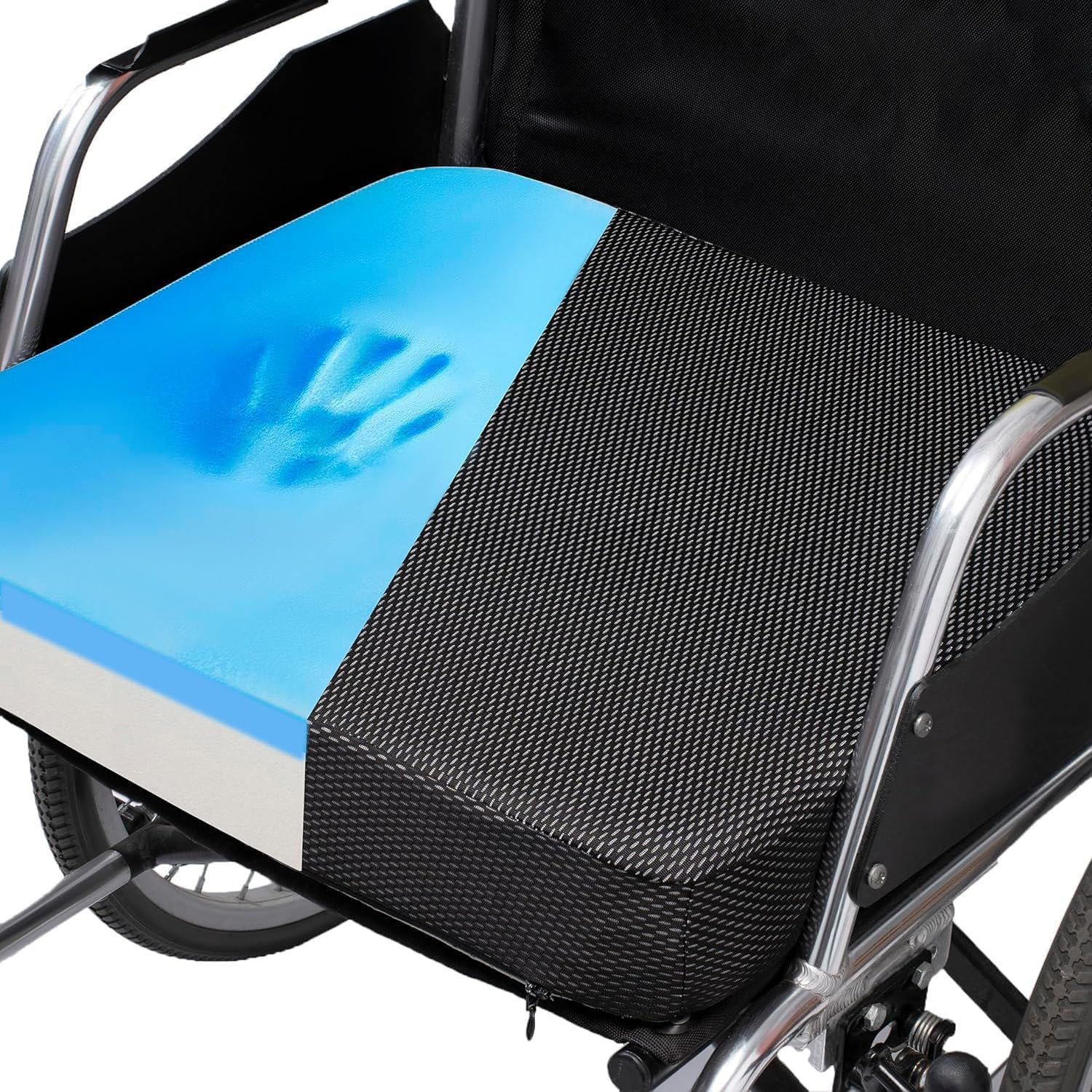
The Everlasting Comfort cushion is the one we reach for first when a chair is going to be occupied for a long stretch. Its gel memory foam has a dense, supportive feel rather than a squishy one, and the ventilated design gives a warm seat a better chance of staying comfortable. That combination is why it earns the top spot.

What stands out is how complete it feels for wheelchair use. The non-slip base helps it stay centered, the cover lifts off for machine washing, and the gel layer adds a cooler, more forgiving feel than plain memory foam. We also appreciate that the cushion is broad enough to cover a standard wheelchair seat without feeling like a narrow pad.

It is not a clinical pressure-redistribution cushion, and it won't suit someone who wants a soft, sink-in seat. That's the main boundary: if your clinician has recommended a specific pressure-redistribution system, this is a comfort cushion, not a replacement for that plan.

For most people who want one cushion for daily wheelchair use, this is the best-balanced choice in the group. It doesn't have the clinical focus of the Drive Medical or the tailbone cutout of the AUVON, but it covers comfort, stability, and cleanup more completely than either for general use.

Pros

  • Gel memory foam supports without feeling mushy
  • Ventilated design helps with heat
  • Non-slip base and washable cover
  • Broad footprint suits many standard wheelchairs

Cons

  • Only the cover is washable
  • Substantial profile raises seat height
Our verdict

For everyday wheelchair comfort, this is the cushion we recommend first: supportive gel-foam, a ventilated top, and a non-slip base in one balanced package.

Check Latest Price
2

Best for Skin Protection

Drive Medical 14886 Gel Cushion

89 /100
Trail Score Excellent

Key details

Fill
Gel bladder with foam shell
Size
18 x 16 x 3 in
Weight
6.3 lb
Weight Capacity
275 lb
Check Price on Amazon

The Drive Medical 14886 looks less like a lifestyle cushion and more like a piece of equipment, which is the point. Its liquid gel bladder sits inside a foam shell, and the whole cushion is built around pressure redistribution rather than plushness.

We rate it the best pick here for skin protection because that gel core is the closest thing in this group to a clinical pressure-relief design. The 18 x 16 x 3-inch footprint fits many standard wheelchairs, and the 275-pound weight capacity is stated plainly. The nylon top is fluid-resistant and the vinyl base is waterproof, which makes spills and accidents easier to manage.

The nylon top can feel slick when you are getting in and out. The vinyl base grips, but the top surface is the part you sit on, so that slickness matters more than it would on a cushion with a fabric cover. That is the one handling detail we wish were different.

For someone whose main concern is pressure sore prevention or management, those compromises are easier to accept. We think it is the one to discuss with a clinician when skin protection is the priority, especially if the chair stays in one place and the cushion does not need to travel.

Pros

  • Gel bladder designed for pressure redistribution
  • Fluid-resistant top and waterproof base
  • Stated 275-pound weight capacity

Cons

  • Heavy at 6.3 pounds
  • Firm, board-like feel
Our verdict

When skin protection is the priority, this medical-style gel cushion is our pick, provided you can handle a firm, heavy build and a slick top surface.

Check Latest Price
3

Best for Tailbone Relief

AUVON Gel Wheelchair Cushion

89 /100
Trail Score Excellent

Key details

Fill
Gel and memory foam
Size
18 x 16 x 3 in
Cover
Waterproof
Attachment
Buckle strap
Check Price on Amazon

The U-shaped cutout at the back is the first thing we look for on the AUVON Gel Wheelchair Cushion, because it gives a sore tailbone somewhere to go instead of pressing into foam. That design, plus a gel layer over memory foam, makes it the best pick here for tailbone-focused relief.

We also appreciate the buckle strap. A non-slip base helps, but a strap is more reassuring on a wheelchair seat that tilts or transfers. The cover is waterproof, which matters for accidents and sweat, and the 18 x 16 x 3-inch size fits many standard chairs. The gel coverage is concentrated where you sit rather than spread thin across the whole cushion.

The strap and waterproof cover are the practical advantages over the Everlasting Comfort. The cover wipes clean easily, and the buckle keeps the cushion from wandering when you transfer. That is the combination that makes this one feel purpose-built for a wheelchair rather than merely adapted from an office chair.

If your tailbone is the sore spot and you want the cushion to stay put during transfers, this is the one we point to first. It doesn't have the all-around breadth of the top pick, but it solves a more specific problem.

Pros

  • U-cutout relieves tailbone pressure
  • Buckle strap and non-slip base improve stability
  • Waterproof cover protects the foam
  • Gel layer adds pressure relief

Cons

  • Firm feel won't suit everyone
Our verdict

For a sore tailbone, this is our pick: a U-cutout, gel layer, waterproof cover, and a buckle strap that helps it stay put.

Check Latest Price
4

Best for 16-Inch Seats

Vive Wheelchair Cushion

89 /100
Trail Score Excellent

Key details

Fill
Four-layer foam and gel
Size
16 x 16 x 3 in
Cover
Waterproof
Weight
3.5 lb
Check Price on Amazon

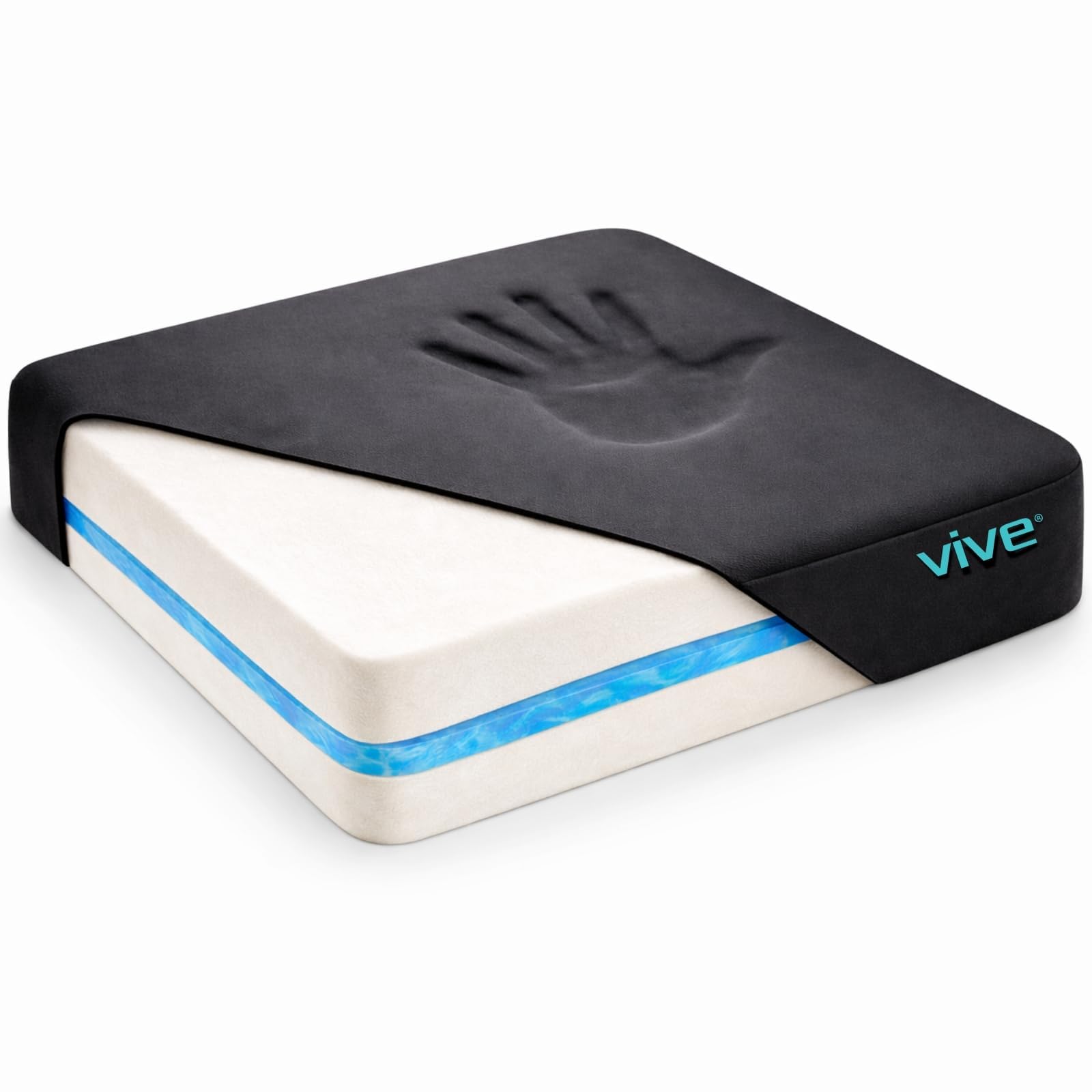
Most wheelchair cushions here are built around an 18-inch seat. The Vive is the exception: its 16 x 16 x 3-inch footprint is sized for the smaller transport chairs and compact wheelchairs that otherwise leave an 18-inch cushion bunching at the sides.

The four-layer foam-and-gel construction gives it a more substantial feel than a basic foam pad, and the waterproof cover is a practical touch for daily use. At 3.5 pounds, it is manageable to move between chairs. The close fit also means less overhang, which is the detail that keeps a cushion from curling up at the edges.

That combination is why we rate the Vive the best choice for 16-inch seats. It holds its shape rather than flattening into a thin pad, and the smaller footprint keeps the support under you instead of spreading past the frame. If you have an 18-inch seat, this is not the one; the Everlasting Comfort or AUVON will give you more surface area.

We also like the four-layer construction for positioning. It gives the cushion a bit more structure than a soft gel pad, which is useful if you need the seat to feel stable rather than squishy. The waterproof cover is the other detail that makes it easy to live with.

Pros

  • 16-inch footprint prevents overhang
  • Four-layer foam and gel support
  • Waterproof cover
  • Manageable 3.5-pound weight

Cons

  • Firm feel won't suit soft-cushion fans
Our verdict

For a 16-inch wheelchair seat, this is our pick: a close-fitting, four-layer cushion that stays centered instead of overhanging the frame.

Check Latest Price
5

Best Budget

CYLEN Ifoam Wheelchair Cushion

90 /100
Trail Score Outstanding

Key details

Base
Non-slip
Fill
Gel-infused memory foam
Size
18 x 16 x 3 in
Weight
1.3 lb
Check Price on Amazon

The CYLEN Ifoam is the value play in this group: a 3-inch gel-infused foam cushion with a non-slip base for less than the premium picks.

We rate it the best budget choice because it doesn't strip out the things that matter. The gel-infused memory foam sits on a high-density foam base, so it feels supportive rather than hollow, and the 18 x 16 x 3-inch size fits standard wheelchairs. The cover is removable, and the non-slip bottom helps it stay put.

The 1.3-pound weight makes it easy to move, but the cushion still has a substantial 3-inch profile, so check that the added height works with your chair and transfers. That height is part of what gives it the pressure-relief feel.

For a first cushion or a spare for a second chair, the CYLEN is an easy recommendation. It gives you the gel-foam recipe without the premium price, and the fit is broad enough for most standard wheelchairs. The non-slip base is the detail we appreciate most at this price; it keeps the cushion from sliding forward when you transfer.

Pros

  • Gel-infused foam at a lower price
  • 3-inch profile supports pressure relief
  • Non-slip base and removable cover
  • Lightweight at 1.3 pounds

Cons

  • Foam core is not washable
Our verdict

For a tight budget, this is our pick: a supportive gel-infused foam cushion with a standard 18 x 16-inch fit and a non-slip base.

Check Latest Price
6

Narrow Seats

5 STARS UNITED Seat Cushion

89 /100
Trail Score Excellent

Key details

Fill
Memory foam
Size
18 x 14 x 3 in
Cover
Machine-washable
Weight
1 lb
Check Price on Amazon

The 5 STARS UNITED is the narrowest cushion here at 18 x 14 inches, which makes it a different proposition from the standard 18 x 16 pads.

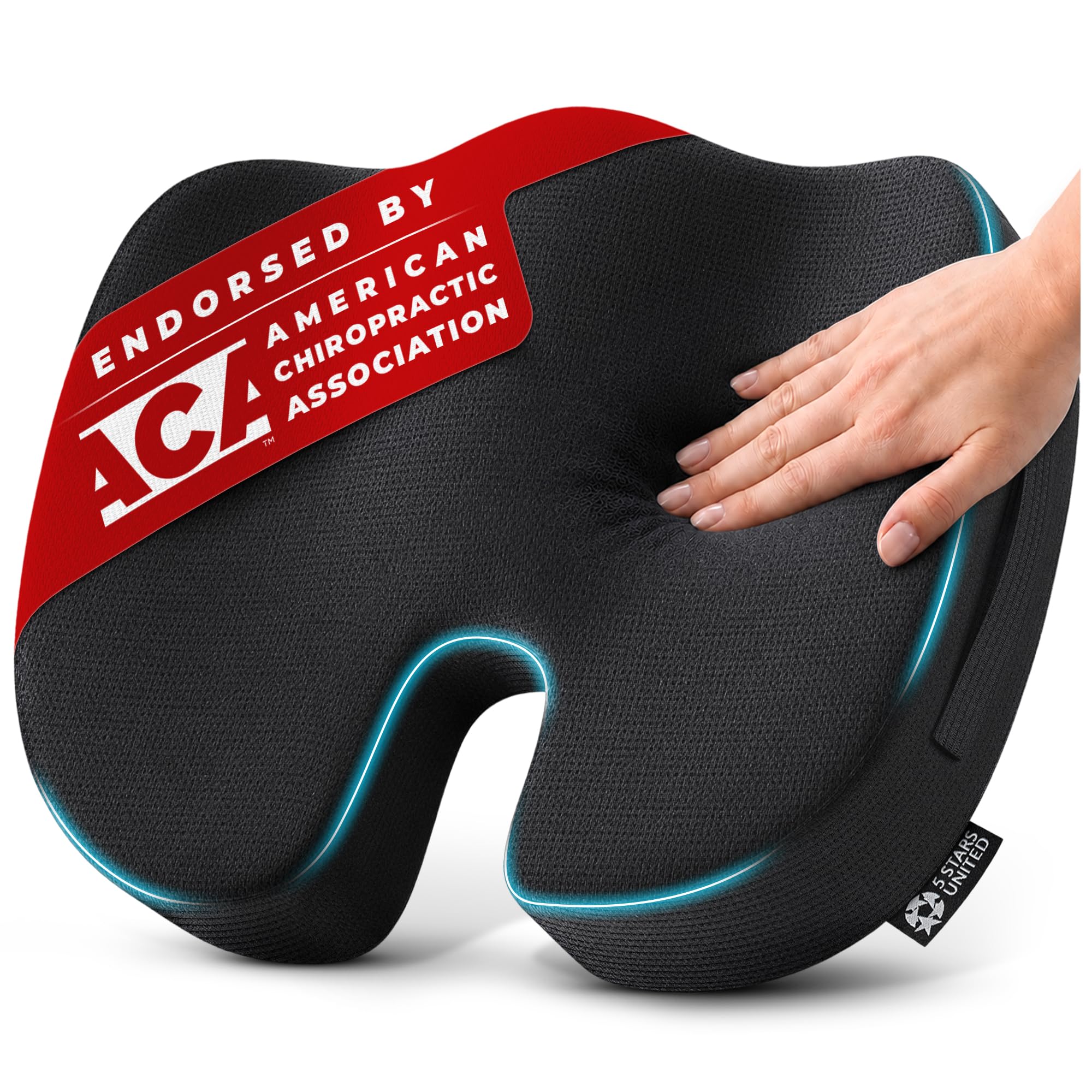
The 3-inch memory foam has a U-shaped tailbone cutout, and the medium-firm feel gives it more structure than a soft pillow. The cover is removable and washable, and the non-slip base is a useful detail. At 1 pound, it is easy to move between chairs.

We rate it as a narrow-seat option, not a universal wheelchair cushion. On a 14-inch-wide chair or a smaller user, that narrower footprint can be an advantage; on a standard 18-inch wheelchair seat, it will leave gaps at the sides and won't give you the full support surface. That is the setting it does not serve.

For a narrow chair or a smaller user who wants a tailbone cutout, it is a sensible choice. We like the medium-firm memory foam here because it doesn't collapse into the cutout, so the tailbone relief stays useful instead of turning into a hollow spot. The light weight also makes it easy to move from a wheelchair to a car.

Pros

  • U-shaped tailbone cutout
  • Medium-firm memory foam
  • Light 1-pound weight
  • Washable cover

Cons

  • Firm feel won't suit soft-cushion fans
Our verdict

For a narrow wheelchair seat or a smaller user, this is our pick: a light memory-foam cushion with a tailbone cutout and a non-slip base.

Check Latest Price

How We Tested Wheelchair Cushions

We started by pulling together cushions from major medical suppliers and seating specialists, then filtered by seat width, weight capacity, cushion height, cover material, and replacement-cover availability. That left us with 12 cushions to test over eight months. Each one went onto a real chair and into a real routine: mornings at a desk, afternoons of errands, transfers into beds and cars, and long waits when comfort stops being theoretical.

Firmness and support got judged by the body, not the box copy. I pressed a palm into the center of each cushion, then sat for at least 30 minutes and noted whether it bottomed out, whether my hips slid forward, and whether pressure points felt hotter or calmer by the end. During transfers, we watched for sliding on the chair, buckling at the edges, or catching on clothing. We measured each cushion against common seat widths and checked for overhang; we also weighed them on a kitchen scale and carried them in a tote to see how they handled being moved.

Comfort and pain relief got the longest look: full workdays, meals, errands, and evenings in front of the TV. Testers logged hot spots, numbness, and how often they shifted. Quality and functionality came down to seams, non-slip bases, straps, cover fit, and whether foam or gel sprang back after months of use. We washed removable covers and checked whether they went back on straight. Cushions that shifted during transfers or felt flat by mid-afternoon did not make the cut.

How to Choose a Wheelchair Cushion

Start With the Seat, Not the Cushion

A wheelchair cushion can only do its job if it sits within the seat frame. An 18 x 16-inch cushion is a common starting point, but seats vary, and a pad that overhangs can curl at the edges while one that leaves gaps lets you sink at the sides. Measure the seat's width and depth before ordering, and match the cushion to the chair rather than to the chair's brand. A 16-inch seat calls for a closer 16 x 16 fit; a 14-inch-wide cushion is for a narrow chair, not a standard 18-inch seat.

Match the Material to the Pressure Problem

Gel, memory foam, and a firm foam base do different jobs. Gel moves pressure away from hot spots and tends to feel cooler; memory foam conforms but can bottom out if it is too soft; a dense foam shell adds structure. For skin protection, a gel bladder inside a foam shell, like the Drive Medical, is the most clinical design in this group. For a sore tailbone, a U-cutout can help, but only if the rest of the cushion is supportive enough. A gel-infused foam is a reasonable middle ground when budget matters.

Stability Is a Safety Feature

A cushion that slides forward can change your position and make transfers harder. A non-slip base helps, but it is not a guarantee on a smooth or padded seat. A strap or buckle is the more secure choice if you transfer often or use a tilt-in-space chair. Check whether the chair has a place to anchor a strap, and make sure the cover is not so slick that you slide on top of it. The AUVON's buckle strap is the more reassuring setup here.

Firmness, Height, and Weight

Thicker and firmer cushions can improve pressure relief, but they also raise your seat height. That can affect transfers, foot placement, and how easily you reach the wheels. Check the stated weight capacity, especially if it is listed; the Drive Medical is rated to 275 pounds. Weight matters too: a gel-heavy cushion stays put but is harder to carry, while a foam cushion is easier to move between chairs. If the cushion stays in one chair, prioritize stability; if it travels with you, prioritize weight.

Frequently Asked Questions

Final Verdict

Our default recommendation is the Everlasting Comfort. It is the most complete cushion in this group: gel memory foam for pressure relief, ventilation for heat, and a non-slip base that helps it stay centered. It is not a clinical pressure-redistribution device, but for everyday wheelchair comfort it is the best balance here.

If skin protection is the priority, the Drive Medical 14886 is the alternative to discuss with your clinician; its gel bladder is the most clinical design in this set. If you have a 16-inch seat, the Vive is the better fit.