Best Wheelchair Transfer Boards of 2026

A transfer board looks like a simple slab of material, but if it slips mid-transfer, it's anything but simple. That's the fear I brought to this category: a board that slides, flexes, or has a rough edge can turn a routine move from wheelchair to bed or car into a risky scramble. A good one bridges that gap safely, turning a difficult lift into a controlled slide—and it should feel solid, smooth, and predictable under your hands. Over the past six months, we've tested 12 transfer boards, from flat plastic models to arched wooden designs, and the differences in slipperiness, length, and weight were immediately obvious.

I quickly learned that a glossy finish can be as treacherous as a wet floor, and that smoothness matters as much as length—too short and you're stretching, too long and it's unwieldy. The arched designs aren't just for looks; they can help clear the wheelchair wheel, but only if the construction is stiff enough not to flex. The boards below earned their place by being effective, well-built, and genuinely useful in daily transfers—not just on paper.

1

Best Overall

YPCBYNBS 30" Transfer Board

85 /100
Trail Score Excellent

Key details

Handles
Two cutouts
Material
Rubber wood
Length X Width
30 x 8 in
Weight Capacity
440 lb
Check Price on Amazon

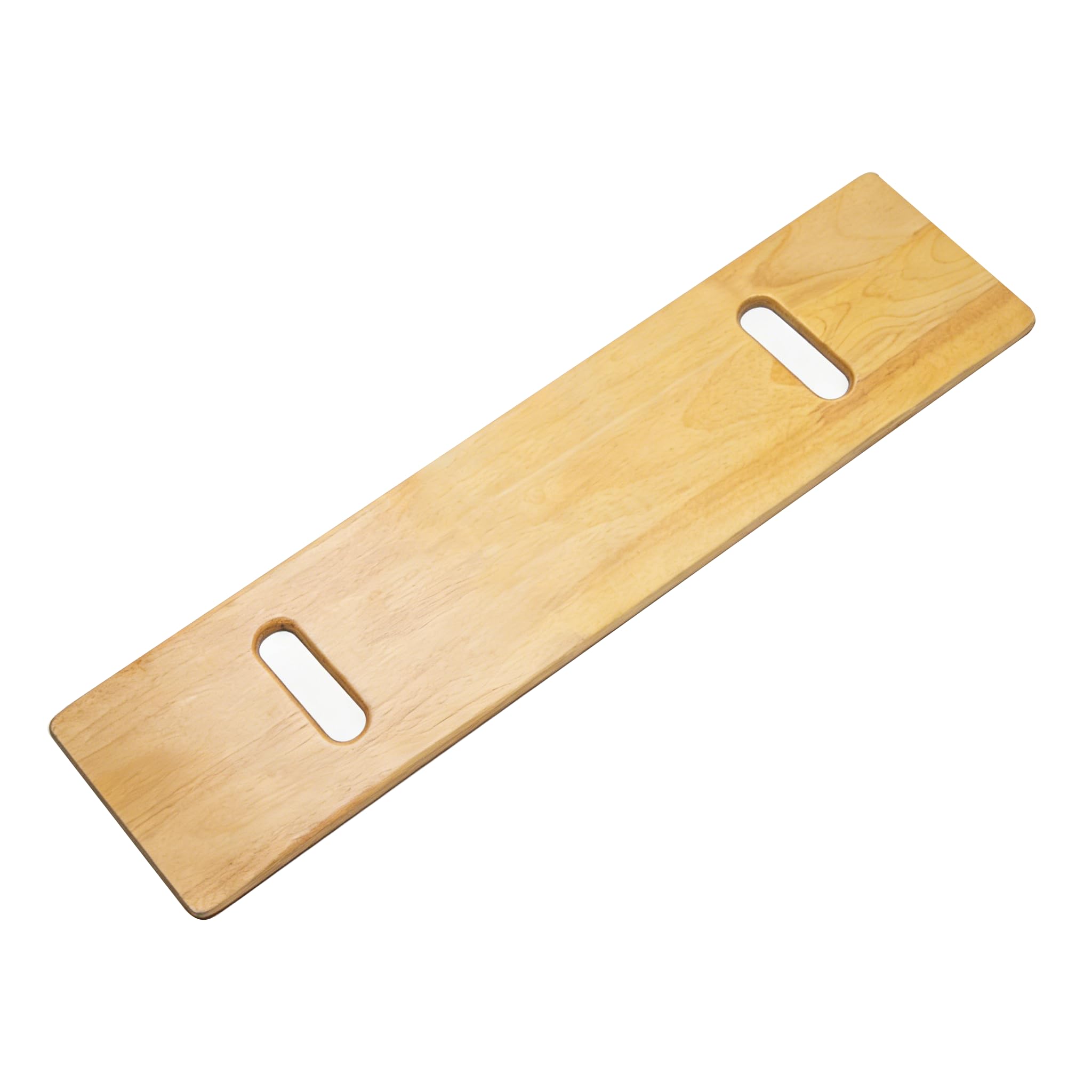
The 30-inch span and tapered ends are what make the YPCBYNBS the board we recommend first for most home transfers. A 30-inch board covers the common gap between a wheelchair and a bed, chair, or car seat without the extra bulk of a longer board, and the ends taper to about a quarter inch so you can start the slide under a thigh instead of lifting over a lip. We also like that the two cutout handles sit at opposite ends, giving both the user and a caregiver a place to grip and steady the board.

The rest of the package is just as sensible. It is made of rubber wood, sealed and sanded, with a 440-pound weight capacity and a wipe-clean care instruction. That capacity is the same as several boards here, but the YPCBYNBS pairs it with a full 8-inch width and a 0.75-inch thickness, so it feels like a proper platform rather than a strip. The beveled ends are the detail we appreciate most; they make the first few inches of the transfer less of a negotiation.

Otherwise, this is the board we point to when you want one standard-size board for several rooms and do not need the extras of a premium kit. Its sealed surface wipes down after bathroom or kitchen transfers, which is a small thing that makes it easier to keep in service. If you want a lighter board with a published weight, the Vive is the one to compare.

Pros

  • 30-inch span suits most home transfers
  • 440-lb capacity
  • Tapered ends and sealed rubberwood
  • Two cutout handles

Cons

  • No published board weight
Our verdict

We recommend the YPCBYNBS as the default 30-inch board for most home transfers: it combines a 440-pound rating, two cutout handles, and tapered ends in a sealed rubberwood body.

Check Latest Price
2

Best Budget

DMI Wood Transfer Board

89 /100
Trail Score Excellent

Key details

Material
Scotch pine
Thickness
1 in
Length X Width
30 x 8 in
Weight Capacity
440 lb
Check Price on Amazon

The DMI is the board we keep for the tight-budget transfer: a 30-inch, 8-inch-wide Scotch pine board with a 440-pound rating and two cutout handles. It is an inch thick, which is more board than some of the lighter picks here, and the cutouts are rounded and sanded rather than punched and left sharp.

What we like is the amount of board you get for the money. The 1-inch thickness gives it a substantial feel, and the two handles let a caregiver steady the board without grabbing the user. It is not a delicate board; it is the one we leave by the bed for daily transfers.

At 2.89 pounds and an inch thick, it is not the lightest board here. That weight buys a solid feel and more material to grip, so it matters most if you carry the board from room to room. For a board that stays in one spot, the trade-off is easy to live with. The thick pine body gives you more to grip when you position it under a thigh.

Pros

  • 30-inch span at a budget price
  • 440-lb capacity
  • Two rounded cutout handles
  • Thick 1-inch pine body

Cons

  • Finish can arrive rough or inconsistent
Our verdict

Buy the DMI if you want a 30-inch, 440-pound board with two handles at the lowest price here and a solid, thick body for daily transfers.

Check Latest Price
3

Best Compact

Allvinda 24" Transfer Board

91 /100
Trail Score Outstanding

Key details

Handles
Two cutouts
Material
Hardwood
Length X Width
24 x 8 in
Weight Capacity
500 lb
Check Price on Amazon

A 24-inch board is not a compromise if your transfers happen in tight spots; it is the point. The Allvinda keeps the shorter length, an 8-inch width, and a 0.75-inch thickness, which makes it easier to store behind a seat or slide into a bag than the 30-inch boards here.

We like that the shorter board still carries a 500-pound rating and two cutout handles. That combination is the reason it earns a place: it gives a smaller user or a tight car transfer a real board rather than a stripped-down stub. The sealed hardwood surface is smooth, and the ends are tapered for the first push onto the board.

The trade-off is reach. A 24-inch board needs a narrower gap between the two seats, so it is not the one to choose for a deep bed or a wide SUV seat. For wheelchair-to-car transfers where the door opening is the limiting factor, it is the compact pick we point to. Its sealed surface also wipes clean, which matters for a board that lives in a car or bathroom.

Pros

  • 24-inch length fits tight transfers
  • 500-lb capacity
  • Two cutout handles
  • Sealed hardwood surface

Cons

  • No published board weight
Our verdict

Buy the Allvinda if your transfers happen in tight car, chair, or bathroom spaces and you want a 24-inch board with a 500-pound rating.

Check Latest Price
4

Best with Slide Sheet

suboton 31.5" Transfer Board

85 /100
Trail Score Excellent

Key details

Handles
Three
Included
Slide sheet, 28 x 28 in
Board Weight
4.85 lb
Length X Width
31.5 x 8 in
Check Price on Amazon

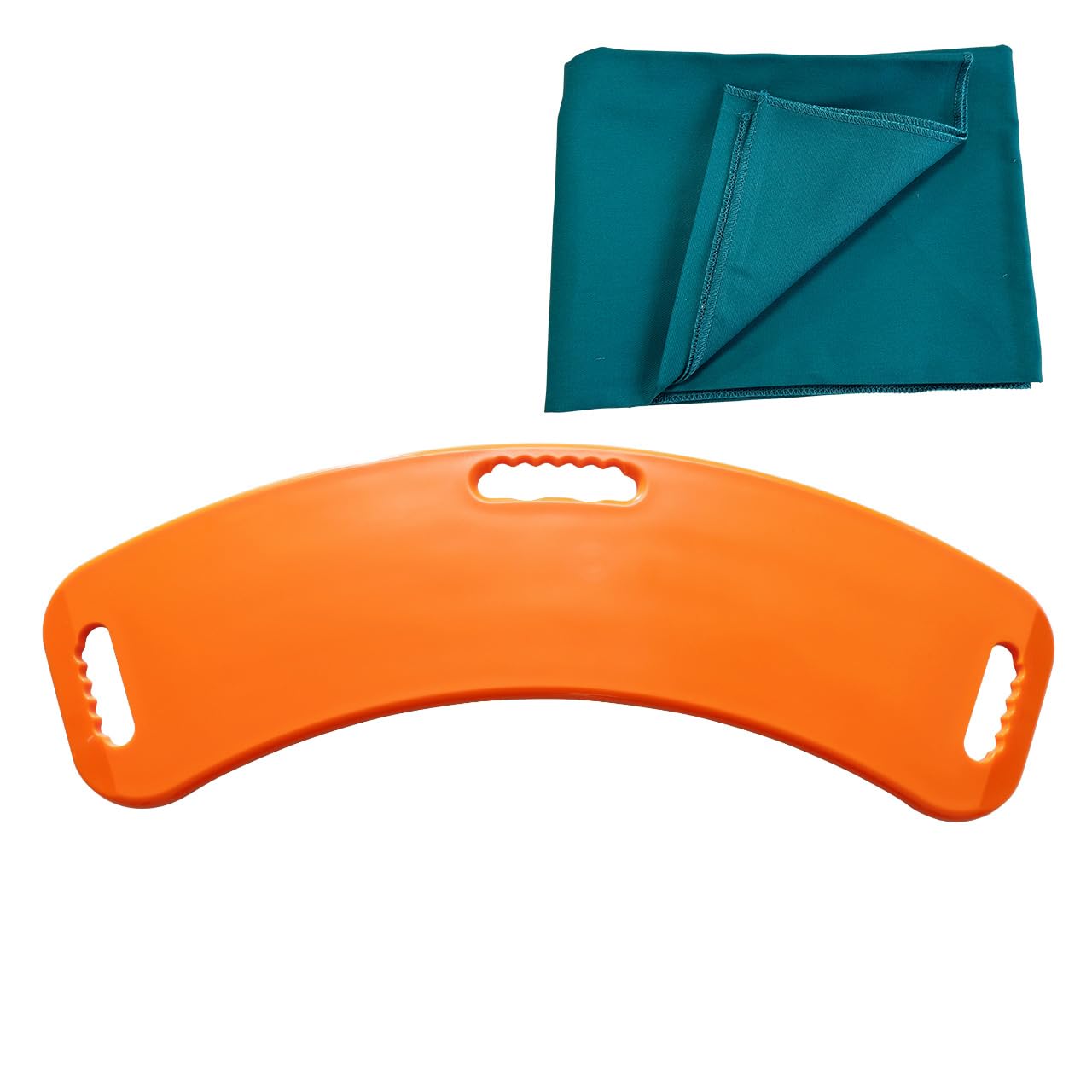
The slide sheet is the first thing you notice in the suboton kit: a 28-inch square of green fabric that reduces friction between the user and the board. That changes the job the board does. Instead of relying only on a slick finish, you have a second surface to manage, and for some transfers that is the difference between a push and a slide.

The board itself is 31.5 inches long and 8 inches wide, with three handles and an anti-slip grid on the back. The extra length is useful for a bed or a car seat, and the third handle gives a caregiver another place to hold. The curved edges are rounded, so there is no sharp corner digging into a thigh.

We like the kit for low-friction transfers, especially if a therapist has already shown you how to use a slide sheet. The missing piece is a published weight capacity; no capacity is given, and that is a stop sign if you need a rated board for a heavier user. Confirm the limit with the manufacturer before you buy. The curved shape is also a personal fit: it can help clear a wheelchair arm, but it does not suit every transfer.

Pros

  • Includes a 28-inch slide sheet
  • 31.5-inch span with three handles
  • Anti-slip back
  • Rounded curved edges

Cons

  • No published weight capacity
Our verdict

Choose the suboton if you want a longer board and a slide sheet in one kit for low-friction transfers, but confirm the weight limit first.

Check Latest Price
5

Best Caregiver Kit

COW&COW Board and Belt Kit

87 /100
Trail Score Excellent

Key details

Included
60-in transfer belt
Board Size
30 x 8 x 0.75 in
Belt Capacity
350 lb
Board Capacity
300 lb
Check Price on Amazon

The reason to look at the COW&COW kit is the 60-inch transfer belt, not the board alone. The belt is a cotton strap with a metal buckle and a 350-pound rating, and it gives a caregiver something to hold while steadying the user. We like that the board and belt arrive together for two-person assists, because the belt is the piece people forget to buy.

The board is 30 inches long, 8 inches wide, and 0.75 inches thick, with two cutout handles and tapered ends. It is rated to 300 pounds, which is the lower number in the kit and the one to check. If the user is close to that limit, a 440-pound board is the safer default, even if you keep the belt.

At 4.95 pounds, the kit is heavier than a bare board, and the belt adds another item to store. That weight buys a substantial feel and a complete caregiver setup. If you already have a belt, a lighter board is easier to handle; if you are starting from nothing, this is the simplest way to get both pieces.

Pros

  • Includes a 60-inch transfer belt
  • 30-inch board with two handles
  • Tapered ends and sealed hardwood
  • Belt has a 350-lb rating

Cons

  • Board capacity is 300 lb
Our verdict

Buy the COW&COW kit if you want a 30-inch board and a transfer belt together for caregiver-assisted moves, and a 300-pound board rating covers the user.

Check Latest Price
6

Best Lightweight

Vive 30" Transfer Board

83 /100
Trail Score Excellent

Key details

Handles
Two cutouts
Board Weight
2 lb
Length X Width
29.5 x 7 in
Weight Capacity
440 lb
Check Price on Amazon

At two pounds, the Vive is the board we pick when the caregiver is doing the lifting and repositioning. That is not a small detail: a board that stays by the bed can be heavy, but one that moves between a car, a chair, and a bathroom gets lifted dozens of times a day.

The Vive is sold as a 30-by-8-inch board, but its own specifications give 29.5 by 7 inches, so check the width if you need a full 8-inch platform. It has a 440-pound capacity, two cutout handles, tapered ends, and a sealed wood surface. The two-pound weight is the reason it earns a place; it is easy to slide under a thigh and easy to hang by a handle.

We like the lighter weight and the familiar two-handle layout. The trade-off is the narrower deck: 7 inches is enough for many users, but a wider seat or a larger user may want the full 8-inch width of the YPCBYNBS or DMI. If the board will live in one room, that difference matters less than the two-pound weight.

Pros

  • Two-pound board is easy to lift
  • 440-lb capacity
  • Two cutout handles
  • Tapered sealed wood ends

Cons

  • Finish can arrive rough
Our verdict

Buy the Vive if you need a genuinely light board with a 440-pound rating and two handles, and you can work with a 7-inch-wide deck.

Check Latest Price
7

Non-Wood Transfers

YHK Steel Transfer Board

81 /100
Trail Score Excellent

Key details

Material
Plasticized steel
Thickness
0.47 in
Length X Width
31 x 8 in
Weight Capacity
440 lb
Check Price on Amazon

The YHK is the board that does not look like the wooden ones: a plasticized steel plate with a toothed back and a curved handle. If you have dealt with splinters, dents, or a wooden board that needs sanding, the material is the first reason to look.

It measures 31 by 8 inches and 0.47 inches thick, with a 440-pound capacity and a listed weight of 4.35 pounds. The toothed granule pattern on the back is meant to bite into the receiving surface, and the curved handle is easy to grab from above. The thin steel plate wipes clean and does not need the same care as sealed wood.

The single handle is the detail that changes the fit. A board with two cutouts gives the user and the caregiver separate grip points; this one gives you one. For a solo transfer where the user can push and steady with the other hand, that can be enough. For a two-person assist, the YPCBYNBS or DMI is easier to control.

We like the YHK as the non-wood option in this group, and the toothed back is the feature we trust most for keeping the board from skating. The 4.35-pound weight is the cost of the steel, and the single handle is the trade-off. If you want a board that wipes down and does not splinter, it earns a place.

Pros

  • Steel plate resists splinters
  • 31-inch span
  • 440-lb capacity
  • Toothed back for grip

Cons

  • Single handle limits two-handed control
Our verdict

Buy the YHK if you want a metal board that wipes clean and has a grippy back, and one handle is enough for your transfers.

Check Latest Price

How We Tested the Best Wheelchair Transfer Boards

We started by researching the market, filtering for boards with positive feedback on effectiveness, construction quality, and overall functionality. We eliminated models with reports of flexing or sharp edges, and narrowed the field to 12 boards across price points and materials—plastic, wood, and composite. Testing ran for six months, with each board used in real transfers by a full-time wheelchair user and two caregivers of different strengths.

In daily life, that meant transferring from wheelchair to bed, car seat, shower chair, and sofa. For slipperiness, we placed each board between two surfaces, shifted our full weight onto it, and noted whether it stayed put or crept. We ran bare hands along every edge and surface to check the finish for rough spots or glossy patches that felt slick. To gauge smoothness, we slid a weighted bag across the board and watched for catching or drag. Length was tested against different gap widths—from a tight car seat to a wider bed—and we measured how much board extended past each surface. Weight mattered too: we weighed each board and carried it one-handed to see if it was manageable for travel or quick repositioning.

Arched models got extra attention: we checked whether the curve cleared wheelchair wheels without lifting the board's center too high, and whether the arch compromised stiffness. For construction, we pressed down hard on the center of each board while it was supported at both ends, listening for creaks and watching for flex. After six months of repeated use, we noted which boards still felt solid and which showed wear at the edges. Ultimately, we judged effectiveness by one measure: did the board make transfers feel safer and easier, or did we avoid using it? The picks below are the ones we reached for without thinking.

How to Choose a Wheelchair Transfer Board

Start With the Transfer You Do Most

A transfer board is a bridge, so the first question is how wide the gap is and what is on each side. A 24-inch board like the Allvinda is easier to store and works well for tight car or chair transfers; a 30-inch board like the YPCBYNBS or DMI gives you more reach for a bed or a deep seat. Width matters too: 8 inches is the common standard, while the Vive runs 7 inches. Measure the gap and the seat you are landing on, not just the board.

Check Capacity Before Anything Else

The stated weight capacity is the number that decides whether a board is safe for a user, and it should have margin rather than sit exactly at the user's weight. The YPCBYNBS, DMI, Vive, and YHK are rated to 440 pounds; the Allvinda goes to 500; the COW&COW board stops at 300. The board's own weight is a separate figure, and it matters for the caregiver who lifts and repositions it. The Vive is two pounds; the COW&COW kit is nearly five.

Look for a Predictable Surface

A board has to do two opposite things: let the user slide and stay put under the load. A sealed, smooth surface helps the slide; a tapered end helps you start it; an anti-slip back or toothed pattern helps the board stay on the receiving surface. The suboton kit adds a slide sheet for low-friction transfers, while the YHK uses a toothed steel back. Finish is the variable to inspect on any board: a rough patch can make a transfer drag, and a board that is too slick gives less control.

Plan for Technique and Assistance

No board replaces a lift or good transfer technique. A board works best when both surfaces are stable, the user can help with upper-body strength or a caregiver can guide the hips, and someone has practiced the movement. If you are learning, ask a therapist or experienced caregiver to check your setup and the board's placement. A slide sheet or a transfer belt can make a two-person assist easier, but it does not remove the need to check capacity and footing.

Frequently Asked Questions

Final Verdict

We recommend the YPCBYNBS 30-inch transfer board as the default for most home transfers. It gives you a standard 30-inch span, a 440-pound rating, two cutout handles, and tapered ends, and its sealed rubberwood surface is the most complete standard-size package in this group. If your transfers happen in a tight car or chair, choose the 24-inch Allvinda; if you want a slide sheet in the box, choose the suboton, but confirm its weight limit first. For a caregiver who needs a belt, the COW&COW kit is the practical pairing.