Best Fitness Trackers of 2026

A fitness tracker earns its place on your wrist only when you believe the numbers it shows. The one that congratulated you on a great night's sleep after you were up twice, or logged 10,000 steps from a slow wander around a grocery store, ends up in a drawer by spring. The right one makes the basics feel effortless: it reads your pulse honestly through a workout, holds a charge through a week of real life, and syncs to your phone without a fight.

I've worn a tracker on one wrist while counting reps and taking my own pulse on the other more times than I'd like to admit. Over the past six months, my team and I have lived with 12 trackers — running, swimming, sleeping, and sitting through meetings in them — and the gap between the good ones and the rest shows up in the small stuff. Here's something nobody tells a first-time buyer: the battery life on the box usually assumes the always-on display and GPS are switched off, so the number you actually get is smaller. A few of these got nearly everything right, and they're below.

1

Best Overall

Garmin Forerunner 165

93 /100
Trail Score Outstanding

Key details

GPS
Built-in
Display
1.2-inch AMOLED
Battery Life
Up to 11 days
Water Resistance
50 meters
Check Price on Amazon

A built-in GPS and an 11-day battery are the two specs that turn the Forerunner 165 from a step counter into a training tool. The 1.2-inch AMOLED screen is bright enough to read mid-run, and the combination of touch and physical buttons means you can start a workout without looking down. Garmin lists more than 25 activity profiles, including running, cycling, HIIT, and strength, so it covers gym days as well as road miles.

We think it's the strongest default in this set because it does the unglamorous work well: pace and distance come from the watch itself, heart rate is reliable enough for daily training, and the morning report gives you sleep, recovery, and training context before you decide how hard to go. Compared with the Xiaomi Mi Band 10, you're paying for independence from your phone and more credible outdoor pacing; compared with the Fitbit Air, you get a screen and GPS but give up the forget-you're-wearing-it feel.

The watch is light at 1.38 ounces, and the 43mm case is sized for visibility rather than subtlety. Battery life drops to about 19 hours in GPS mode, which is still enough for a long run or a race. We also appreciated the physical buttons when our hands were sweaty; touchscreens alone are miserable in the rain.

Pros

  • Built-in GPS for phone-free pacing
  • Bright AMOLED display with physical buttons
  • 24/7 heart rate and training guidance
  • 11-day battery in normal use

Cons

  • 43mm case may overwhelm narrow wrists
  • Sync can occasionally need a retry
Our verdict

We recommend the Forerunner 165 to anyone who wants one watch for everyday steps, sleep, and serious run training; its GPS and accurate pacing justify the larger case.

Check Latest Price
2

Best Battery Life

Xiaomi Mi Band 10

88 /100
Trail Score Excellent

Key details

Weight
1.06 oz
Display
1.72-inch AMOLED
Battery Life
Up to 21 days
Water Resistance
5ATM
Check Price on Amazon

Twenty-one days is the number that changes how you live with the Mi Band 10. Instead of a nightly charger ritual, you top it up roughly once every three weeks, and the 1.72-inch AMOLED screen stays readable at 1500 nits in direct sun. At 0.03 kg, it disappears on the wrist in a way heavier smartwatches don't. We think it's the best battery-first pick here because it makes the tracker feel like a bracelet rather than another device to maintain.

The band covers the basics well: all-day steps, heart rate, sleep stages, and a full set of workout modes through the Mi Fitness app. The 5ATM rating means sweat, rain, and pool laps are within its comfort zone, and the display is responsive enough for quick glances. It's a fitness tracker first, not a watch replacement; notifications are there, but you won't want to type a reply.

The compromises are practical rather than mysterious. The app's deeper sleep and workout analysis is less polished than Garmin's or Fitbit's, and the band's interface is basic. If you mainly walk, run, and want the longest possible break between charges, that simplicity is a fair trade; if you need a training coach on your wrist, spend more for the Garmin.

Pros

  • Up to 21 days of battery life
  • Bright 1.72-inch AMOLED display
  • Light enough to wear overnight
  • 5ATM water resistance

Cons

  • No built-in GPS
  • Distance settings are metric-only
Our verdict

We recommend the Mi Band 10 to anyone who wants a light, bright tracker and refuses to charge it every few days; just know it's metric-first and phone-dependent for GPS.

Check Latest Price
3

Best Screenless Tracker

Fitbit Air

87 /100
Trail Score Excellent

Key details

Weight
0.18 oz
Display
No display
Battery Life
Up to 5 days
Water Resistance
50 meters
Check Price on Amazon

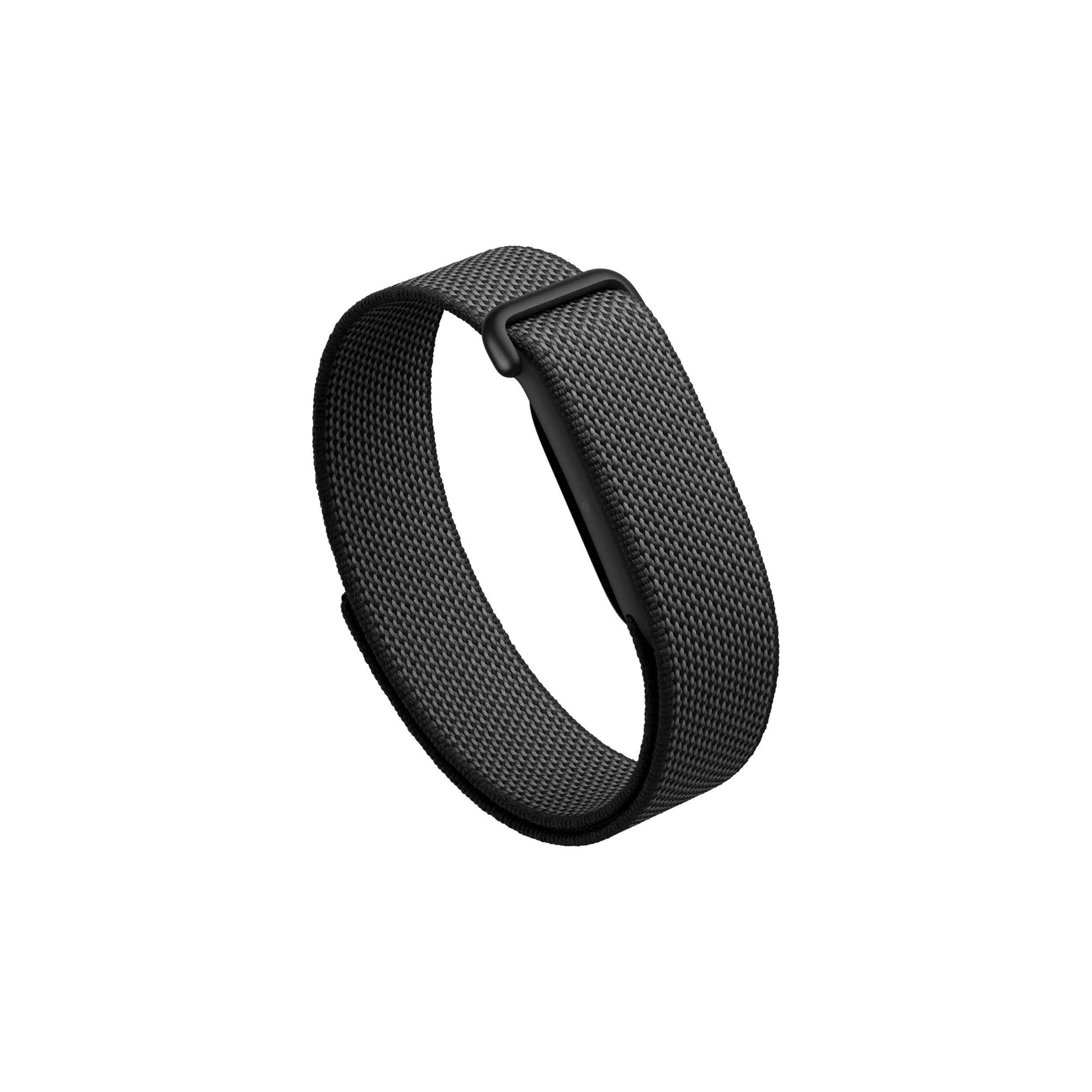
The absence of a screen is the whole point of the Fitbit Air. At 5.07 grams, it sits on the wrist like a thin bracelet, and the micro-adjustable band is designed for sleep, workouts, and everything between. There's no display to light up your bedroom, and the 50-meter water resistance means you can keep it on in the shower or pool.

The tracker covers optical heart rate, skin temperature, blood oxygen, and sleep, with the Google Health app pulling the data together. Battery life is about five days, and a five-minute charge gets you roughly a day of use, which is the kind of top-up that fits a morning routine. Because there's no screen, every glance turns into a phone check; that's the trade for the lighter feel.

We kept choosing the Air for overnight wear because it doesn't press into the wrist or glow in a dark room. That makes it the best screenless pick here for sleep and all-day tracking, even though the WHOOP 5.0 goes deeper on recovery coaching. If you want a screen and on-wrist stats, the Garmin is the safer choice; if you want to forget you're wearing a tracker, this is the one.

Pros

  • Very light and comfortable for sleep
  • No screen to disturb you
  • Five-day battery with fast charge

Cons

  • Sleep and step accuracy can drift
  • Syncing can be unreliable
Our verdict

We recommend the Fitbit Air to anyone who wants sleep and all-day tracking without a screen; it's the most comfortable tracker here, provided you can live with mixed accuracy and app quirks.

Check Latest Price
4

Best for Recovery Coaching

WHOOP 5.0

85 /100
Trail Score Excellent

Key details

Display
Screenless
Membership
12 months included
Battery Life
14 days
Water Resistance
IP68
Check Price on Amazon

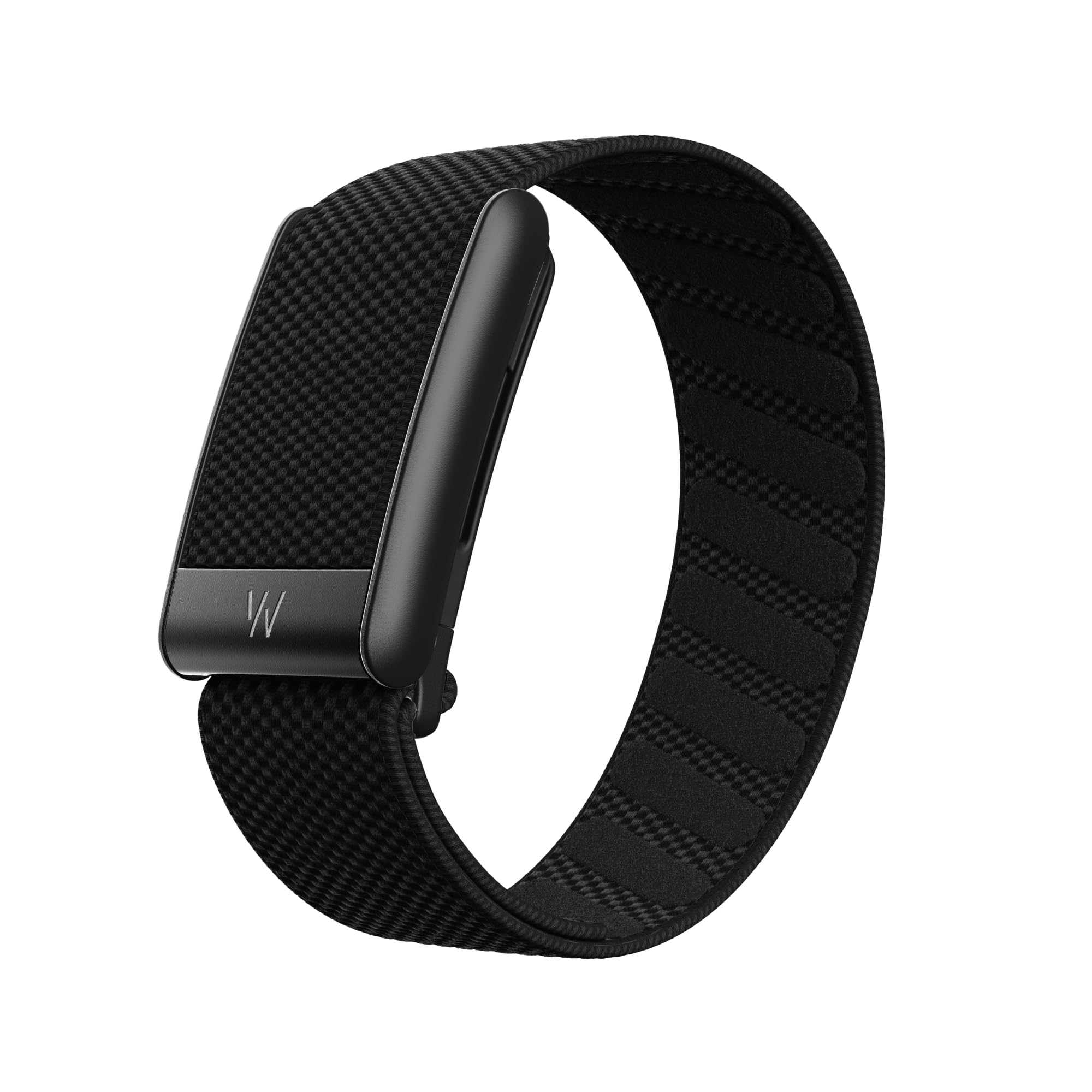
The membership model is the first thing to understand about the WHOOP 5.0. You're buying a 12-month Peak membership, and the screenless tracker is included with it; the subscription is what unlocks the app's coaching, recovery scores, and healthspan analysis. If you prefer to own hardware outright and skip recurring fees, this is the wrong tracker for you.

On the wrist, the SuperKnit band is built for 24/7 wear, including sleep. The 14-day battery and IP68 rating mean you can shower and train without babying it, and the included PowerPack lets you charge while wearing the band. The app turns heart-rate variability, sleep, strain, and recovery into a daily readiness picture; the AI coach then suggests what to do next.

The healthspan feature is the part that feels different from a standard step tracker: it analyzes nine key metrics and shows how daily habits may affect long-term health. The membership is HSA/FSA eligible, which is a meaningful practical detail if you have those funds. Setup has a learning curve, and the screenless design means every check runs through the app.

We think it's the best pick here for recovery-focused athletes because it treats sleep and strain as a system rather than a score to chase. The catch is the subscription: you're paying for coaching, not a screen, and the yearly commitment is part of the decision. If you want on-wrist stats and no recurring fee, the Garmin or Apple Watch is easier to live with; if you want a coach that tells you when to back off, the WHOOP earns its place.

Pros

  • Deep recovery and sleep coaching
  • 14-day battery with wearable charging
  • Comfortable screenless band for overnight wear
  • HSA/FSA eligible membership

Cons

  • Requires a 12-month membership
Our verdict

We recommend the WHOOP 5.0 to people who want recovery and sleep coaching more than a daily step display; the membership is the real cost, and the screenless design is the real reward.

Check Latest Price
5

Best for iPhone Users

Apple Watch SE 3

94 /100
Trail Score Outstanding

Key details

Safety
Fall and crash detection
Case Size
40mm
Battery Life
18 hours
Health Sensors
Temperature sensing
Check Price on Amazon

The iPhone pairing and safety features are what make the Apple Watch SE 3 more than a fitness tracker. It slots into the iPhone's health and notification ecosystem, adds fall and crash detection, and brings temperature sensing for cycle and vitals insights. We think it's the best iPhone-first pick here because the integration is the feature, not an afterthought.

For workouts, it tracks steps, heart rate, sleep, and a wide range of activities, with the Vitals app pulling together overnight signals. The 40mm case is compact, and the display is easy to read mid-workout. Faster charging than the previous generation helps, and the watch is comfortable enough for sleep tracking.

The watch is also a smartwatch first, which is why the fitness case is narrower than the Garmin's. You get notifications, Siri, and safety alerts, but the training tools are shallower than Garmin's. For an iPhone owner who wants one device for workouts and daily wear, that's a reasonable trade; for a runner chasing pace and recovery, the Forerunner is the more focused tool.

Pros

  • Deep iPhone integration
  • Fall and crash detection
  • Temperature sensing for cycle tracking

Cons

  • 18-hour battery needs daily charging
  • Older iPhone models may not pair
Our verdict

We recommend the Apple Watch SE 3 to iPhone owners who want fitness tracking inside a polished smartwatch; the 18-hour battery is the compromise, not the tracking.

Check Latest Price
6

Budget Smartwatch

IKT Smart Watch

88 /100
Trail Score Excellent

Key details

Straps
3 included
Display
1.83-inch TFT
Battery Life
Up to 7 days
Water Resistance
IP68
Check Price on Amazon

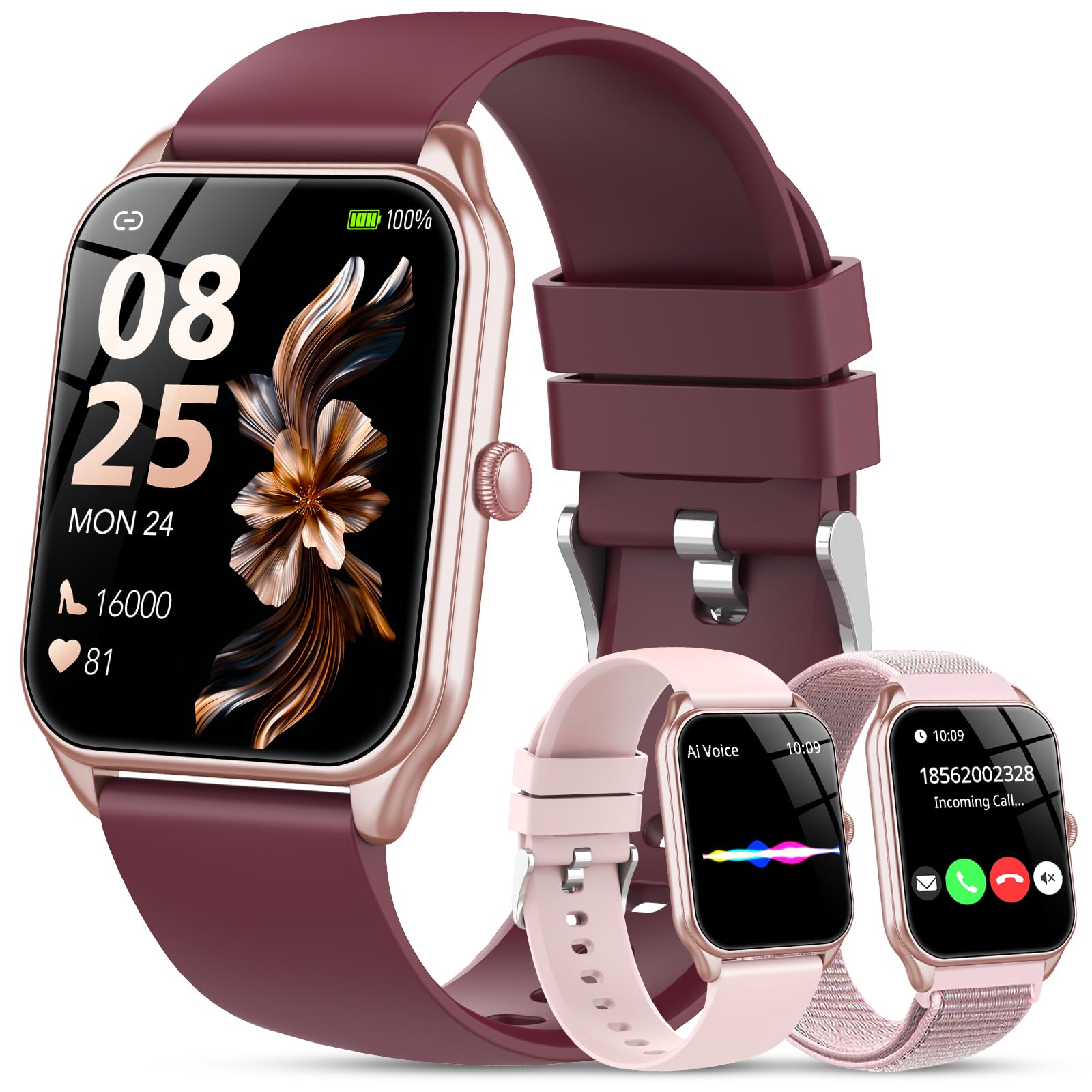
Three straps and a 1.83-inch display make the IKT feel more like a fashion watch than a bare-bones tracker. You get a pink silicone strap, a burgundy silicone strap, and a pink woven strap in the box, plus a 466 x 466 screen that's easy to read at arm's length. The 95% screen-to-body ratio is the kind of detail that makes the watch look more expensive than it is.

The feature list is broad for the money: Bluetooth calls, notifications, heart rate and SpO2 monitoring, sleep tracking, and more than 120 sports modes. The 7-day battery and IP68 rating cover daily sweat and splashes. It's a smartwatch that also tracks fitness, rather than a training tool with a screen.

The magnetic clasp and 22mm band are easy to swap, which is part of the appeal if you like changing the look. The case is large, so it reads as a statement piece rather than a hidden tracker. That makes it a daytime watch more than an overnight sleep tracker.

We see it as the budget smartwatch in this set, not the best pure fitness tracker. The large screen, calls, and three straps are the reason to choose it; if you want a discreet band for sleep and workout data, the Fitbit Air or Xiaomi Mi Band 10 is the better fit. It earns a place for someone who wants smartwatch features first and fitness tracking second.

Pros

  • Large 1.83-inch display
  • Bluetooth calls and notifications
  • Three straps included

Cons

  • Heavy 77-gram body
  • No GPS for outdoor runs
Our verdict

We recommend the IKT smartwatch to someone who wants calls, a big screen, and workout modes on a tight budget; it's a smartwatch first, and the 77-gram body makes that clear.

Check Latest Price
7

Simple Slim Tracking

MorePro Health Fitness Tracker

94 /100
Trail Score Outstanding

Key details

Display
1.47-inch
Watch Faces
300+
Sports Modes
7
Water Resistance
IP68
Check Price on Amazon

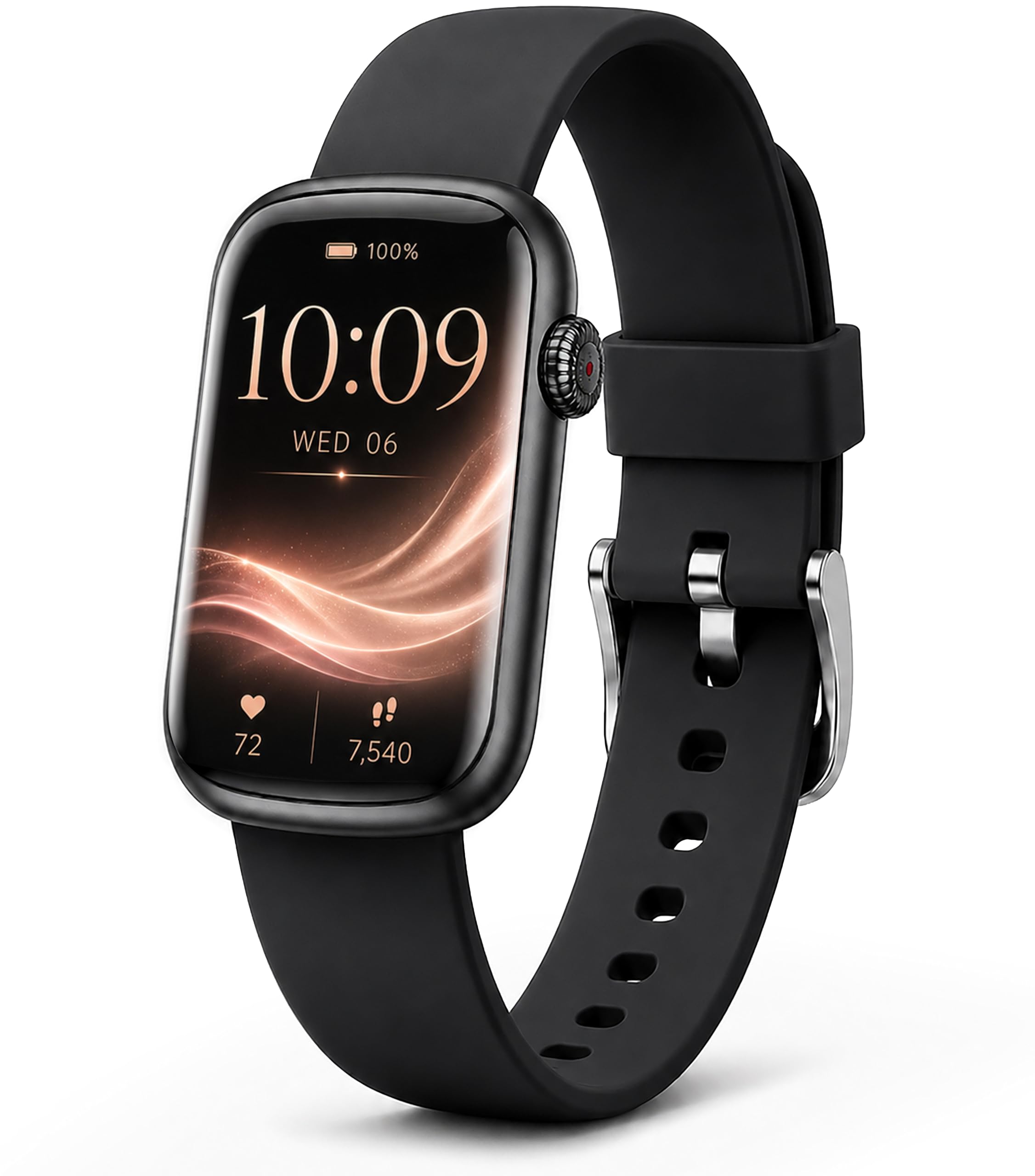
A slim 1.47-inch case and 300 watch faces are the MorePro's way of standing out. It's designed to look like a fashion bracelet as much as a fitness tracker, with a 16mm band and a display that won't dominate a small wrist. If you want a tracker that disappears under a cuff, that shape is the main draw.

The feature set is basic but broad: 24/7 heart rate, blood pressure monitoring, sleep tracking, steps, calories, and seven sports modes covering running, climbing, cycling, basketball, walking, elliptical, and yoga. IP68 water resistance handles sweat and splashes, and the women's health features add cycle tracking. The blood pressure number is a wellness trend, not a medical reading.

We think it's a sensible pick for someone who wants the basics without a bulky watch. The seven modes are enough for a beginner or a casual gym-goer, and the 300 faces let you make it look less like a gadget. It's not a training coach, and the app won't give you the depth of Garmin or Fitbit.

Pros

  • Slim 1.47-inch design
  • 300+ watch faces
  • IP68 water resistance

Cons

  • Only seven sports modes
Our verdict

We recommend the MorePro to someone who wants a slim, inexpensive tracker with a big watch-face library and simple workout modes; it's a basic step-and-sleep device, not a training coach.

Check Latest Price
8

Ultra-Budget Tracking

Bakoor Fitness Tracker

78 /100
Trail Score Very Good

Key details

App
Keep Heath
Display
1.10-inch AMOLED
Sports Modes
25
Water Resistance
IP68
Check Price on Amazon

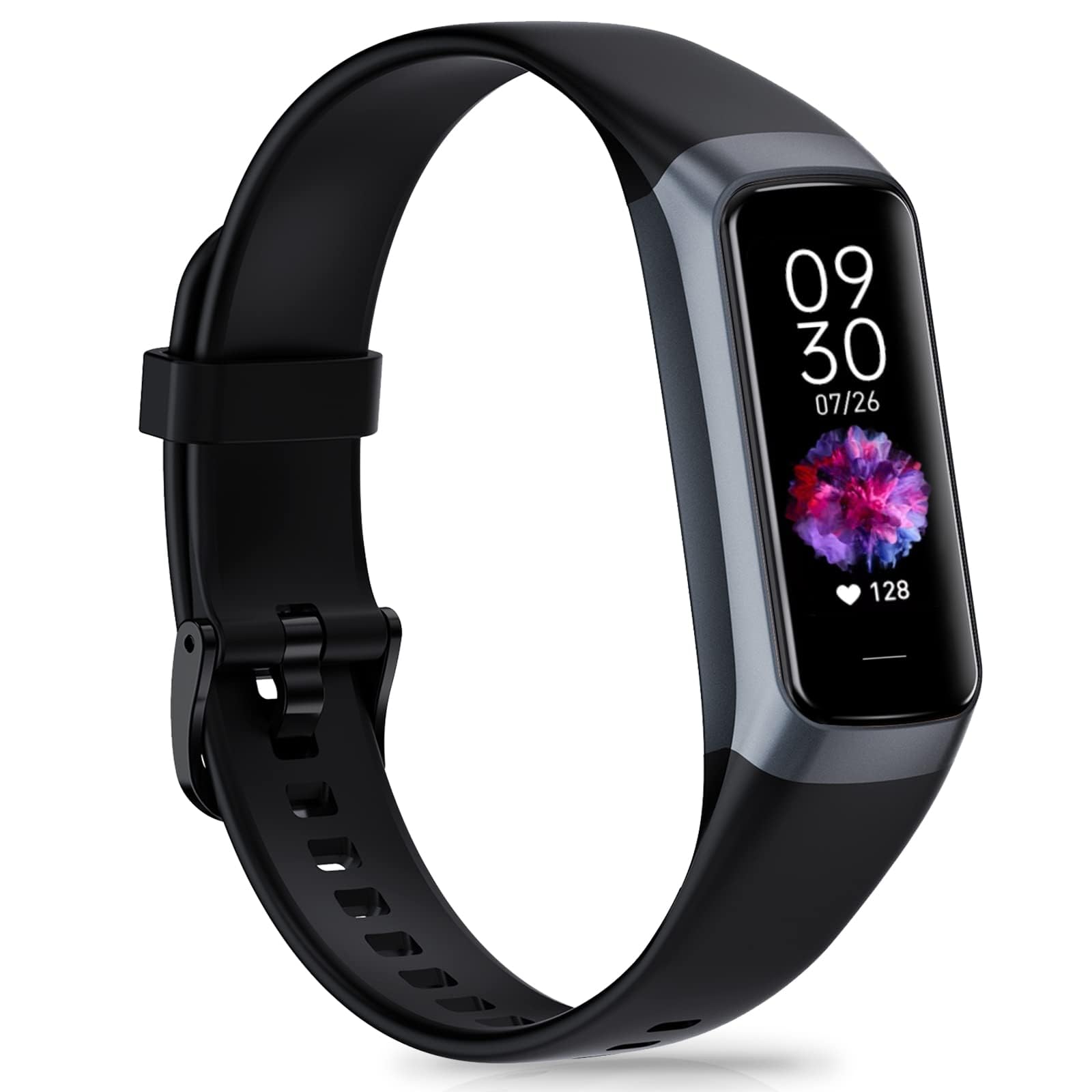
An AMOLED screen at a budget price is the Bakoor's headline. The 1.10-inch display is small but bright, and the silicone band keeps the whole thing light enough for all-day wear. For someone who wants a readable screen without smartwatch bulk, that combination is appealing.

The tracker covers 24/7 heart rate, sleep, steps, calories, distance, and 25 sports modes, with the Keep Heath app showing blood pressure and oxygen data. We think the 25 modes and AMOLED screen make it a strong starter tracker for someone who wants readable basics, not a training coach. Treat the extra metrics as wellness trends rather than medical measurements.

The 25 modes are more than the MorePro offers, and the AMOLED display is the reason to choose the Bakoor over a plain step counter. The trade-off is that the tracking is basic: steps, calories, distance, heart rate, and exercise time, without the training depth of the Garmin. It's a starter tracker, not a replacement for a dedicated training watch.

The small AMOLED screen makes the step and heart-rate readouts feel less like a compromise. If you want a cheap second tracker for travel or a first step into wearables, the Bakoor is easy to justify; if you need dependable training data, spend more.

Pros

  • Bright 1.10-inch AMOLED screen
  • 25 sports modes
  • IP68 water resistance

Cons

  • Accuracy can drift during arm-heavy tasks
  • Charging can be finicky
Our verdict

We recommend the Bakoor to someone who wants an AMOLED screen and basic workout tracking for very little; it's a budget extra, not a primary training tool.

Check Latest Price

How We Chose and Tested the Best Fitness Trackers

We started with roughly 40 trackers on the market and cut that list to 12 by filtering on the things people actually use: heart-rate and sleep tracking, built-in GPS, phone notifications, water resistance, and app support for both iOS and Android. Anything that locked basic stats behind a subscription didn't make the cut, and neither did bands that only worked with one phone platform.

Testing ran six months, with each band worn for at least three weeks. They went on runs, into lap pools, on bike commutes, through overnight sleep, and through full workdays of typing and meetings. We fitted every band on a 5.5-inch wrist and an 8-inch one, since a tracker that slides around or leaves a red mark is one you quietly stop wearing. Setup was timed from unboxing to first recorded workout, with the manual left in the box.

To check whether the numbers held up, we counted steps by hand on a measured mile and compared, ran intervals against a chest strap, and wrote down the times we woke up overnight to see what the sleep report said the next morning. Each tracker was paired and unpaired five times; we walked out of Bluetooth range to see how fast it reconnected and noted any workout that failed to sync. Battery levels were logged every morning after an overnight charge, and at the end of the six months we asked ourselves the blunt question: would we buy this one again at full price?

How to Choose a Fitness Tracker

Start With How You'll Wear It

A tracker you notice at night won't last as a sleep tool. Screenless bands such as the Fitbit Air (5.07 grams) and slim bands such as the Xiaomi Mi Band 10 (0.03 kg) are the easiest to forget, while a 43mm training watch or a 77-gram smartwatch is better suited to workouts and daytime wear. Look at case size, band width, and whether the display lights up your bedroom. If sleep tracking is the main reason you're buying, wear the tracker overnight before the return window closes; a snug band that leaves a mark by morning is the wrong fit.

Battery Life Is a Habit, Not a Spec

Battery life matters because it decides how often you think about the charger. An Apple Watch SE 3 runs about 18 hours, so it joins your phone on the nightstand; the Fitbit Air stretches to about five days; the Garmin Forerunner 165 and Xiaomi Mi Band 10 run for 11 and 21 days respectively. We prioritise a week or more for a dedicated fitness tracker because it keeps sleep tracking honest. Remember that GPS workouts drain faster: the Forerunner 165 drops from 11 days to about 19 hours in GPS mode. Pick the charging cadence you'll actually keep.

Match Sensors and GPS to Your Workouts

If your main workout is walking, gym sessions, or classes, wrist-based heart rate and a phone-connected app are enough; the Mi Band 10 and Fitbit Air cover those without adding bulk. For outdoor pace, distance, and route data, built-in GPS is the feature that separates a training watch from a step counter; the Garmin Forerunner 165 is the clearest example here. Wrist heart rate can lag during intervals or strength work, so treat it as a trend and tighten the band for hard sessions. Swimmers should check for a 5ATM or 50-meter rating rather than assuming IP68 means pool-ready.

Check the App, Subscription, and Phone Fit

The app is where you'll actually read your data, so check phone compatibility before you commit. Apple Watch SE 3 is iPhone-focused; Fitbit and Garmin work with both iOS and Android; Xiaomi's app is capable but metric-first, which is a daily annoyance if you think in miles. Subscription costs are separate from the hardware: WHOOP 5.0 includes a 12-month membership, while Fitbit's Premium coaching is optional. We treat a mandatory membership as part of the purchase price, not a footnote. If you want to own the device outright and skip recurring fees, choose a tracker that works without one.

Frequently Asked Questions

Final Verdict

The Garmin Forerunner 165 is the fitness tracker we recommend first because it handles the whole job: everyday steps and sleep, wrist heart rate, built-in GPS, and 11 days of normal battery life. It's the one for someone who wants a single watch for training and daily wear.

If you refuse to charge often, the Xiaomi Mi Band 10 is the battery-first alternative; if you want no screen at all, the Fitbit Air is the sleep-friendly pick. The deciding question is whether phone-free GPS is worth the larger case and more frequent charging than the Mi Band.