Best Fitness Trackers Without a Subscription of 2026

A fitness tracker that charges a monthly fee for the insights you already paid for is like buying a car and then renting the steering wheel. The best subscription-free trackers give you the essentials—steps, heart rate, sleep, workouts—without a recurring charge, and they still feel finished. I've worn one for years, but for this guide my team and I strapped on 12 models for eight months to see which ones deliver.

The surprise isn't that cheap trackers get the basics right; it's how many mid-priced ones stumble on comfort or battery life once you live with them 24/7. A tracker you have to charge every other day, or one that digs into your wrist during sleep, won't last in your routine. We paid attention to the details you notice after a week—strap softness, days between charges, and whether the app makes sense without an upgrade prompt. The picks below are the ones that stuck.

1

Best Overall

Google Fitbit Air

87 /100
Trail Score Excellent

Key details

Display
None (screenless)
Band Fit
One size, 130–210 mm
Battery Life
Up to 7 days
Water Resistance
50 m
Check Price on Amazon

A subscription only matters if the free version is the useful one, and the Fitbit Air is the clearest case of that split in this group. Sleep stages, resting heart rate, blood-oxygen readings, skin-temperature variation, and irregular-rhythm alerts all land in the Google Health app without a membership; what the paid tier adds is Gemini-built coaching and a deeper read on the same numbers. That is the check we ran first on every tracker here, and it is why this one sits at the top.

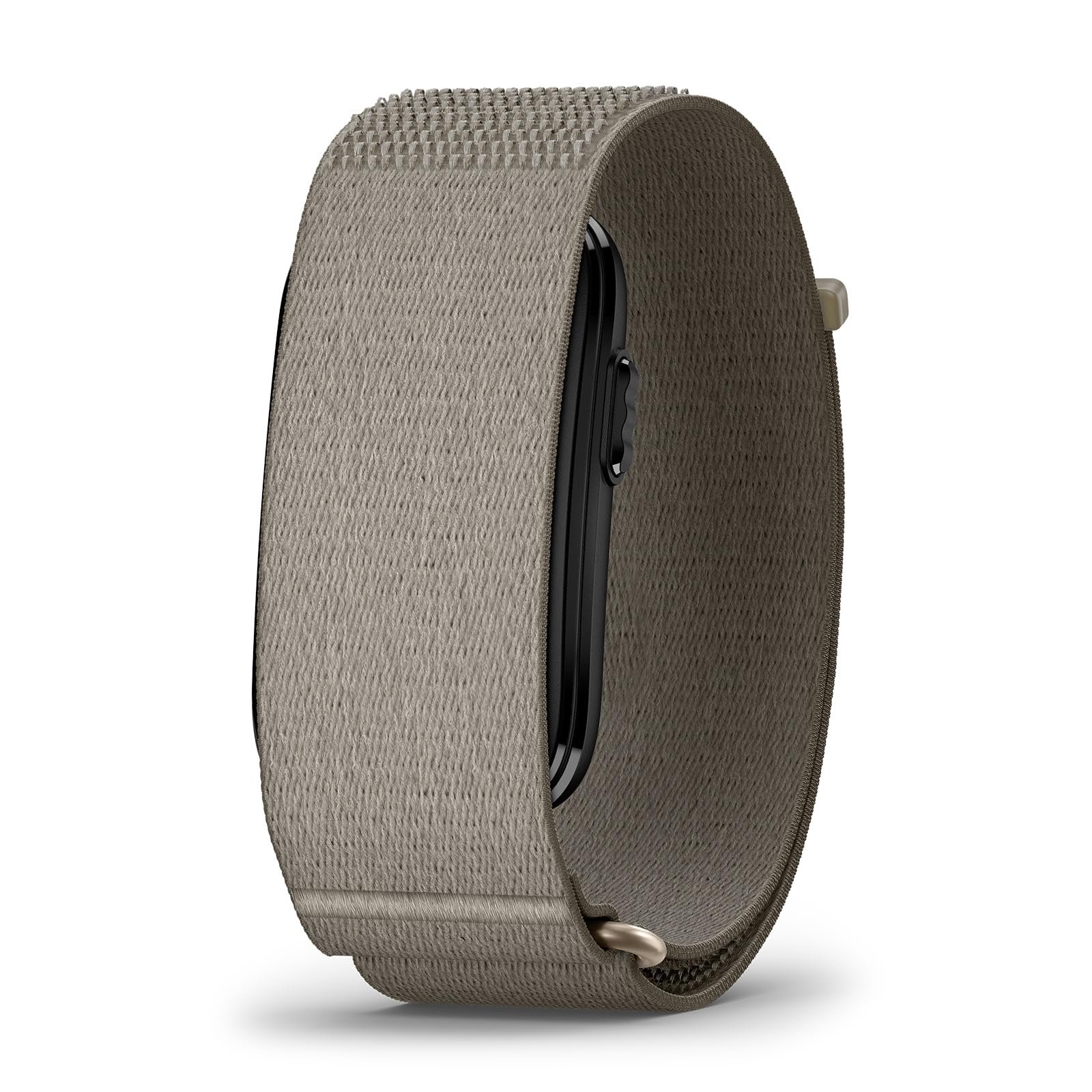
On the wrist it barely registers. At 5.07 grams with no display, there is nothing to catch a sleeve or light up a dark room, and the band swaps between a bracelet, a workout loop, and a sleep strap without tools. Battery runs up to a week, and a five-minute top-up buys a full day — the kind of charging you do while you shower rather than while you plan.

Step counts are the part to take with salt. Hand-heavy work — sanding, folding laundry, pushing a cart — gets logged as walking, and sleep stages are inferred rather than observed. That is true of every optical wrist sensor, not just this one, but it is worth knowing before you commit to a step goal you intend to defend.

Where it stops being the right answer is the clock. There is no display, so there is no time on your wrist, and if you normally wear a watch you will be wearing two things on one arm. Buy it for the sleep and recovery picture and keep the watch if the watch is the point.

Pros

  • Free tier covers sleep, SpO2, and rhythm alerts
  • 5 g screenless band for overnight wear
  • A week per charge, one-day top-up in five minutes
  • Bands swap between bracelet, workout, and sleep

Cons

  • One size only, so wrists outside 130–210 mm are out
  • Syncing can stall and need a second try
Our verdict

We point most people to the Fitbit Air: every health metric that matters works without a membership, and at five grams you will forget it is there.

Check Latest Price
2

Best for Training

Amazfit Helio Strap

87 /100
Trail Score Excellent

Key details

GPS
None
Display
None (screenless)
Battery Life
10 days
Water Resistance
50 m
Check Price on Amazon

Counting reps is the trick most trackers cannot manage. The Helio Strap separates sets from rest periods, then layers training load, VO2 max, recovery time, and a HybridCharge score on top — a daily number that shifts with your workouts and your stress. There is a dedicated HYROX race mode in there, which tells you exactly who Amazfit built this for.

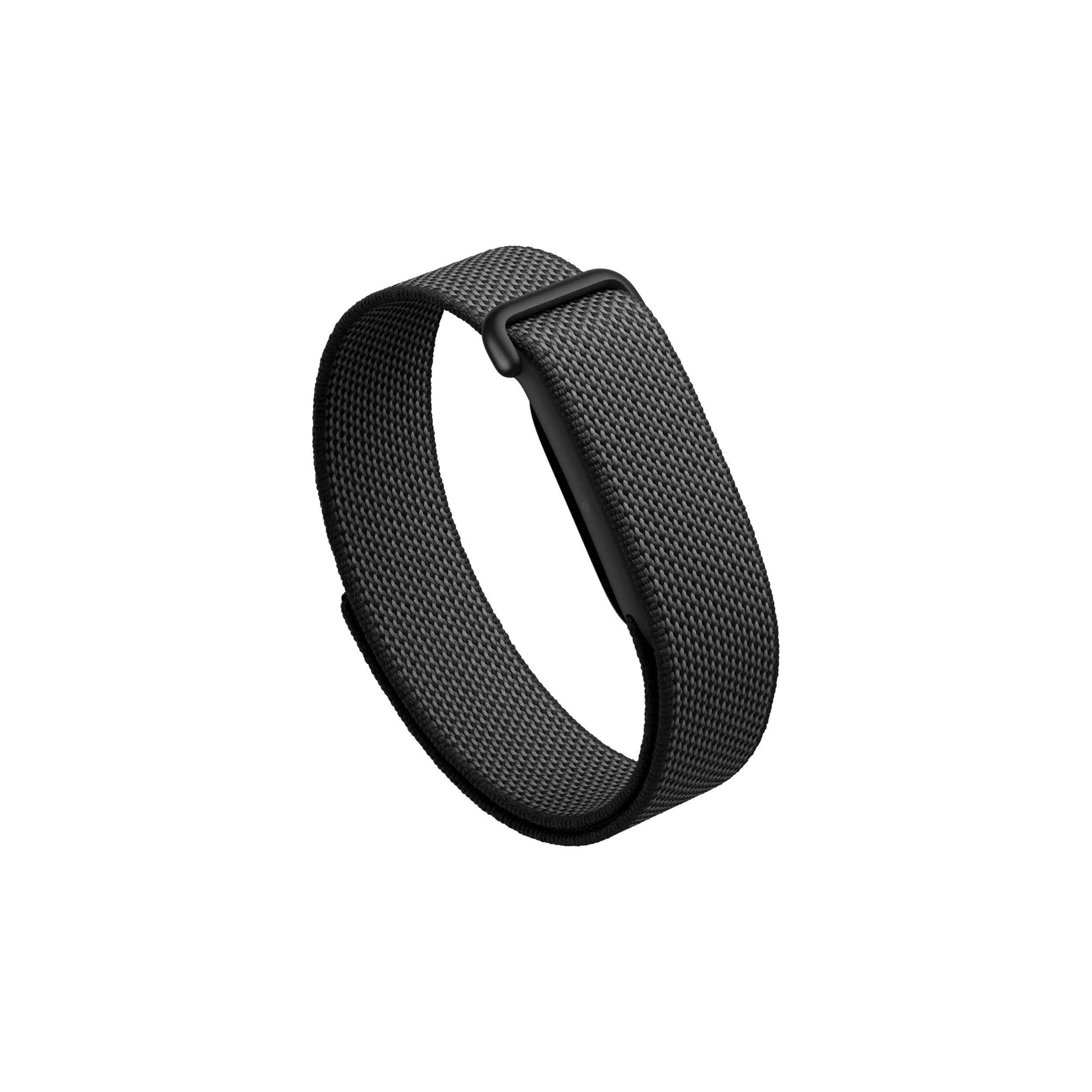
We like the nylon hook-and-loop band for the same reason: it cinches down for a session, does not hold sweat the way silicone does, and stays put through a set of rows. Ten days per charge at 18.14 grams, screenless, water resistant to 50 metres, and a Zepp app that leaves almost everything open without a subscription — for a training strap, free access to the recovery numbers is the whole point. It also pairs with an Amazfit watch, splitting the load between the two if you already own one.

The gap is navigation. There is no GPS inside, and unlike the Fitbit Air it does not borrow your phone's, so outdoor pace and route simply are not part of the record. Gym work, track intervals, and pool sessions do not care; road runners will, and they belong with the Garmin CIRQA instead.

Pros

  • Separates reps, sets, and rest periods
  • Ten days per charge at 18.14 g
  • Zepp app keeps nearly everything free
  • Nylon band stays put through sessions

Cons

  • No GPS, built in or borrowed from a phone
  • Some units stop charging or connecting within months
Our verdict

For lifters and interval chasers this is the strongest training tool here: real set tracking, ten days of battery, and no paywall on the recovery data.

Check Latest Price
3

Best Budget with a Screen

MorePro Air6

81 /100
Trail Score Excellent

Key details

Display
1.52 in LCD
Sport Modes
120+
Battery Life
Up to 7 days
Water Resistance
IP68
Check Price on Amazon

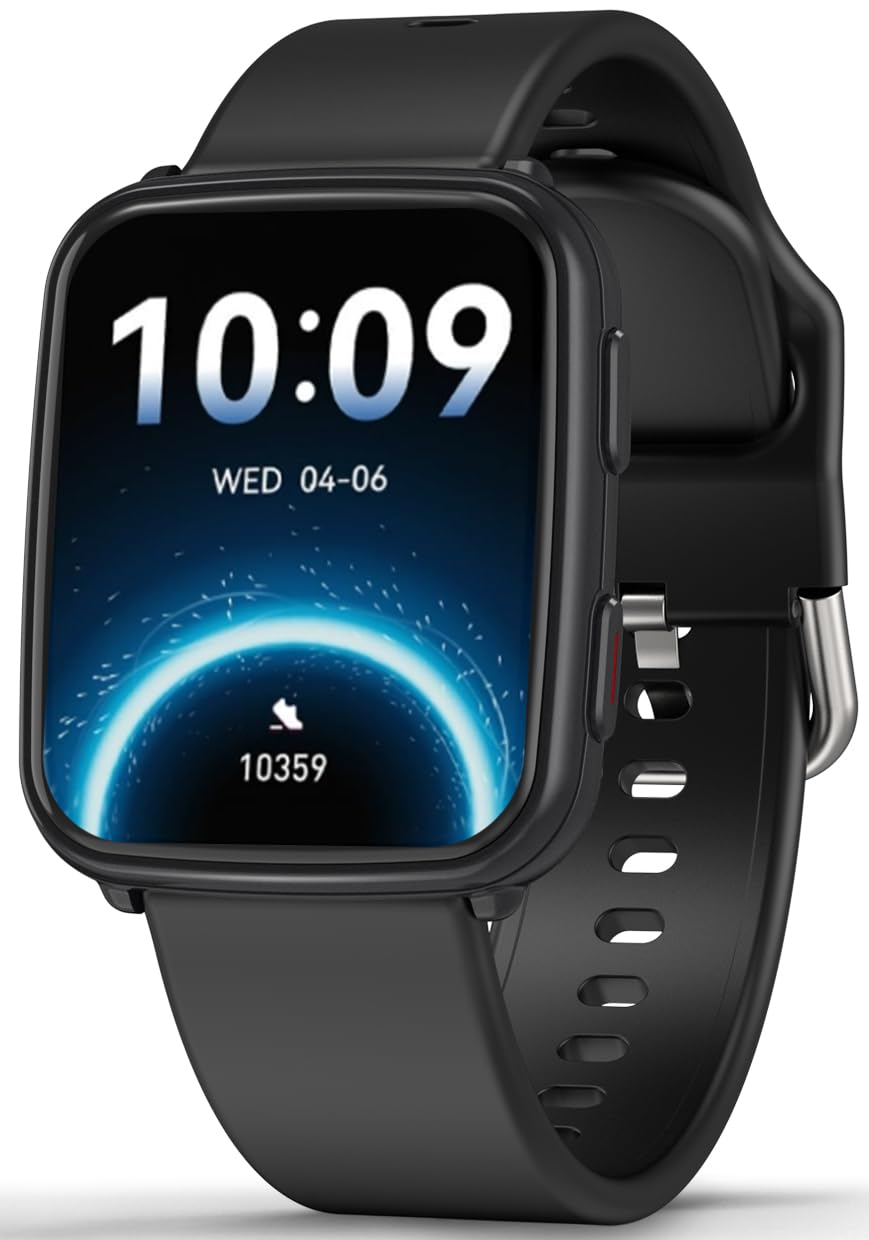
A 1.52-inch color screen, 120-plus sport modes, IP68 sealing, and a week of battery is a lot of watch for the money. The screen is the part that holds up: big enough for three lines of workout data at arm's length, and the whole thing weighs 1.12 ounces, so it is not a brick on your wrist overnight.

Setup is where budget trackers usually lose people, and this one is quick — pair it, name it, and it is tracking. Steps, heart rate, and sleep land in the app, the battery runs about a week with notifications on, and the extras people actually use are bundled rather than sold separately: cycle tracking, sedentary nudges, hydration reminders, weather, and a find-my-phone button.

The gap is outdoors. There is no GPS here, built in or borrowed from your phone, so a run's distance comes from arm movement rather than satellites. That is fine for a walk around the block and less useful if you are tracking a training route week to week, and it is the clearest line between this watch and the two screenless picks above it.

What you give up is polish: the panel is LCD rather than AMOLED, and the app is functional rather than elegant. Neither has ever made us want to take the watch off, and neither gets in the way of the daily job.

Pros

  • 1.52-inch color screen is easy to read
  • 120+ sport modes at a budget price
  • About a week between charges
  • Light enough to wear overnight

Cons

  • No GPS, built in or borrowed from a phone
  • Wrist blood pressure is an estimate, not a reading
Our verdict

If you want a screen without a monthly fee, this is the one: steps, sleep, heart rate, and 120-plus sport modes, with an app that stays out of the way.

Check Latest Price
4

Best Premium

Garmin CIRQA

80 /100
Trail Score Excellent

Key details

GPS
Connected GPS via phone
Display
None (screenless)
Activities
80+
Battery Life
Up to 10 days
Check Price on Amazon

The most expensive tracker here has no screen, so the justification has to come from somewhere else. With the CIRQA it is the app: a 17-gram fabric band with a single button, 80-plus activity profiles, GPS borrowed from your phone, and ten days per charge — none of it behind a subscription. What you are paying for is Garmin Connect, the deepest training log in this group.

We think that trade is worth it for one kind of buyer: someone who already logs workouts, knows the difference between an easy run and a threshold run, and wants the record to survive a phone upgrade. If you want steps, sleep, and a resting heart rate, the Fitbit Air covers it for less and disappears on the wrist just as completely.

The hardware is deliberately plain — soft nylon, a buckle, no display, and a button that starts whichever activity you set up in advance. Wearing something that quiet for a fortnight is the argument for it: nothing glows at night, nothing demands fiddling, and you check the battery out of curiosity rather than need. The band comes in S/M and L/XL, so measure your wrist rather than guessing.

Pros

  • 80+ activity profiles through Garmin Connect
  • No subscription for any of the tracking
  • Ten days per charge at 17 g
  • On-device button starts a chosen activity

Cons

  • Priciest tracker in this set
  • Usually ships in one to two months
Our verdict

If you already train with data, the CIRQA earns its premium: Garmin Connect and 80-plus activities, with no subscription attached to any of it.

Check Latest Price
5

Infrequent Charging

PJIVE DS10 Smart Band

87 /100
Trail Score Excellent

Key details

Display
None (screenless)
Sport Modes
170+
Battery Life
40–60 days (rated)
Water Resistance
IP68
Check Price on Amazon

Charging is the chore that ends most wearable habits, and the DS10 attacks it head-on: the battery is rated at 40 to 60 days on a charge. Treat that as a ceiling rather than a promise — continuous heart-rate and blood-oxygen monitoring pull it down — but even half of it turns a weekly ritual into an occasional one, and that alone changes how the thing feels to own.

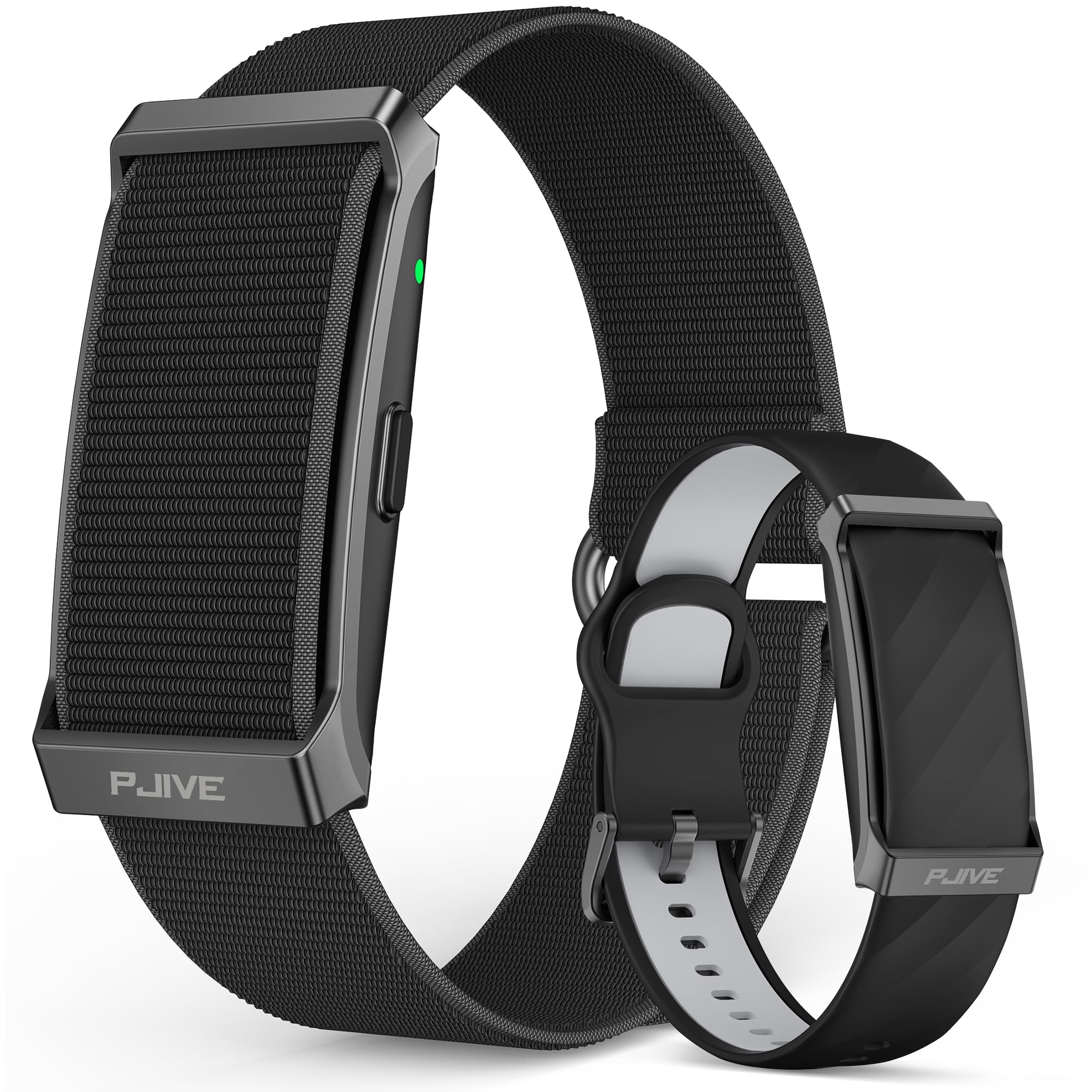
The rest of the package aims at the same buyer: no display, 170-plus sport modes, IP68 sealing, two straps in the box (one nylon, one silicone), and a free QWatch Pro app that carries heart rate, blood pressure, blood oxygen, sleep, steps, and notifications. Distance comes from your phone's GPS rather than from the band.

The sensors deserve the caveat that applies across this whole category. Heart rate is useful for spotting trends, while blood pressure and blood oxygen from a wrist band are estimates, not measurements, and nothing here should stand in for a medical reading. What you are buying is stamina and simplicity, not a lab.

Pros

  • Rated 40 to 60 days per charge
  • 170+ sport modes in a screenless band
  • Two straps included in the box
  • QWatch Pro app is free

Cons

  • No display, so every number needs the phone
  • No built-in GPS; distance needs your phone
Our verdict

The pick for anyone who resents charging: a 40-to-60-day rating, 170-plus sport modes, and a free app, provided you do not need a screen.

Check Latest Price
6

Small-Wrist Budget

Bakoor Fitness Tracker

78 /100
Trail Score Very Good

Key details

Display
1.1 in AMOLED
Warranty
None
Sport Modes
25
Water Resistance
IP68
Check Price on Amazon

The smallest screen in this group belongs to the cheapest tracker in it: a 1.1-inch AMOLED panel that is bright enough to read in a glance and small enough to disappear under a cuff. On a narrow wrist it looks like a watch rather than a computer, which is not nothing at this end of the market.

For that you get 24/7 heart rate, automatic sleep tracking with light and deep stages, 25 sport modes, IP68 water resistance, and the Keep Health app for the graphs. It is a familiar budget formula, and the AMOLED panel is what separates it from the other budget watch here — steps and heart rate are legible at a glance instead of a squint.

Two caveats decide it. Step counting is inconsistent enough that it is worth walking a hundred counted paces and comparing before you set a daily goal, and there is no warranty behind the watch at all. For a device that lives on a wrist and takes knocks, that is the risk you accept in exchange for the price — a fair trade if this is a first tracker rather than a forever one.

Pros

  • AMOLED display is crisp at 1.1 inches
  • Automatic light-and-deep sleep tracking
  • IP68 sealing and 25 sport modes

Cons

  • No warranty at all
  • Step counts are inconsistent
Our verdict

The cheapest way to get a bright AMOLED screen on your wrist, with the basics covered — as long as you accept there is no warranty behind it.

Check Latest Price

How We Tested Subscription-Free Fitness Trackers

We started with trackers that promised full access to core features without a subscription—no premium tier for step counts, heart rate, sleep stages, or workout logging. We filtered out anything that locked GPS, recovery scores, or detailed sleep data behind a paywall, then cross-checked specs for battery claims, water resistance, and phone compatibility. That left 12 trackers, and we wore each for at least three weeks across an eight-month testing period.

Testing happened where the trackers live: on morning runs, at the gym, during bike commutes, and overnight. I wore each for a full week straight—showering, sleeping, and working—to see how the strap felt after 24 hours and whether the screen was readable in sunlight. We logged battery percentage every morning and noted how many days passed before a charge was needed, then compared that to the manufacturer's claim. For fitness tracking, we counted steps manually on a measured walk and compared heart rate readings to a chest strap during intervals. Sleep tracking got the same scrutiny: we noted whether bedtime and wake times matched our logs, and whether the app showed useful trends without nudging us to subscribe.

Connectivity was tested by syncing each tracker to two different phones, one from each major platform, noting dropouts and how quickly data appeared in the app. We checked how the app handled a full week of data—whether workout history was easy to find, and if any features were dangled as upgrades. Value came down to what you got without ever entering a credit card: a tracker that costs more but includes GPS and reliable sleep tracking is a better deal than a cheaper one that frustrates you into an upgrade. We kept notes on build quality, too—strap fraying, clasp security, and whether the screen scratched after a few weeks.

How to Choose a Fitness Tracker without a Subscription

Start with the free tier, not the hardware

Hardware is cheap to make; recurring revenue is where the money is, so the first thing to check is what a plan actually unlocks. Install the app before you buy and open its subscription page — if sleep stages, workout history, or recovery scores sit behind it, you know what you are really signing up for. The Fitbit Air is the cleanest example of the split done well: the metrics stay open to everyone and the paid tier adds coaching on top of them.

A second check is how far back the free history goes. A rolling week of trends is a novelty; months of it is what shows you whether anything is changing.

Decide whether you want a screen

A screen has always cost battery, but the bigger trade is attention. A screenless band — the Fitbit Air, the Amazfit Helio Strap, the Garmin CIRQA, the PJIVE DS10 — disappears under a cuff, sleeps comfortably, and never lights up in a meeting. What it cannot do is tell you the time, which is why the screenless choice usually means a second watch on the other wrist. Count how often you check the time before you decide; that habit is harder to give up than any stat.

Fit is a measurement, not a size label

Wrist sizing is where returns come from. Some bands come in one length and the range is the whole story: the Fitbit Air covers 130 to 210 millimetres and nothing outside it. Others split into S/M and L/XL, and then the sizing chart matters more than the model name. Run a tape around your wrist above the bone and buy toward the middle of the range.

Weight belongs in the same conversation as sizing. Five grams vanishes overnight; seventeen is noticeable by morning, and a band you notice at 3 a.m. is one you stop wearing to bed.

Treat battery ratings as ceilings

Every day count in this category assumes default settings. Continuous blood-oxygen sampling, always-on heart rate, and GPS sessions all pull the number down, which is why a ten-day rating can feel like six in ordinary use. Match the rating to your charging habits rather than chasing the biggest one: a week is plenty if you already plug in a phone every night, while a forty-day figure matters only if you know you will never remember the cable.

Fast charging changes the maths too. Five minutes for a day of use makes a weekly top-up almost painless, and that matters more than a headline number you never reach.

Know what wrist data can and cannot tell you

Steps drift when your hands are busy — sanding, chopping, pushing a stroller — and sleep staging is inferred from movement and pulse rather than measured. Before you trust a daily goal, count a hundred paces and check the tally against the band.

Heart rate is the most dependable of the wrist metrics. Blood pressure and blood oxygen are the least: a band that reports them is showing you a trend to watch, not a reading to act on, and a cuff is the only thing worth comparing against.

Frequently Asked Questions

Final Verdict

The Fitbit Air is the tracker we point most people to, because the free tier is the full health picture rather than a teaser, and five grams disappears on the wrist. Two changes move the answer: if you train with weights or intervals and want set-by-set detail, the Amazfit Helio Strap is the better tool; if you want a screen without a subscription, the MorePro Air6 covers the basics for less.