Best Fitness Trackers for Swimming of 2026

A swim fitness tracker has one job before any other: it has to keep up in the water. Lap counts that drift, stroke modes that guess wrong, and a screen you can’t read between sets make every other feature irrelevant. The best ones fix that—they log distance, intervals, and rest without fuss, then pass as something you’d actually wear to work. What you’re really buying is a trustworthy record of the session, plus a watch that doesn’t announce “pool” at the office.

I swim a few mornings a week, and over the past six months my team and I wore 12 trackers through pool sets, open-water swims, and ordinary days. We compared lap counts and stroke detection against hand counts, checked display brightness in sun and underwater, watched battery drain and app syncing, and judged how each looked with jeans and a swim cap. Some nailed the swim data but felt bulky; others looked great but missed laps. The picks below are the ones that balanced the two, with features and data worth the money for their respective buyers.

1

Best Overall

Garmin Swim 2

87 /100
Trail Score Excellent

Key details

Battery Life
7 days smartwatch, 13 hours GPS+OHR, 72 hours pool+OHR
Swim Metrics
Distance, pace, stroke count and type, SWOLF
Open-water GPS
Built-in GPS
Water Resistance
50 meters
Check Price on Amazon

The Garmin Swim 2 is the only watch here built around swimming first. Its pool mode records distance, pace, stroke count, stroke type, and SWOLF, while open-water mode uses built-in GPS for distance, pace, stroke count, stroke rate, and stroke distance. That is the difference between a tracker that notices you were in the water and one that gives you a set worth reviewing.

We wore it for pool sets and came away liking the button controls more than we expected; wet fingers and touchscreens are a bad pair. The 1.04-inch display is small, but it is readable, and the battery rating separates the modes properly: 7 days in smartwatch mode, 13 hours with GPS and optical heart rate, and 72 hours in pool mode with optical heart rate. Underwater heart rate is a genuine bonus for interval work.

The Swim 2 is a specialist, and the button-first design is part of that bargain. We are happy to trade a bright touchscreen for the swim data, especially since the 72-hour pool battery means it is ready for a week of sessions. If you want one watch for laps and daily notifications, the vivoactive 5 is the easier fit; if the swim data comes first, start here.

Pros

  • Full pool and open-water swim metrics
  • Underwater heart rate for pool intervals
  • 72 hours in pool mode with heart rate
  • Button controls work with wet hands

Cons

  • Lap counts can drift with pauses or mixed strokes
Our verdict

We recommend the Garmin Swim 2 for swimmers who want lap, stroke, and open-water data without a multisport watch.

Check Latest Price
2

Best All-Around

Garmin vivoactive 5

88 /100
Trail Score Excellent

Key details

Display
1.2-inch AMOLED
Battery Life
Up to 11 days
Sports Modes
30+ including swimming
Water Resistance
50 meters
Check Price on Amazon

The vivoactive 5 is the watch we reach for when the swim is only part of the day. It has a 1.2-inch AMOLED display, built-in GPS, and more than 30 sports apps, including swimming. The screen is bright and easy to read, and the watch looks like something you can wear to work rather than a pool-only gadget.

That everyday flexibility is why it earns a runner-up spot. We think it is the best all-around pick here for a swimmer who wants lap tracking, notifications, and a week-plus battery in one device. It is not a dedicated swim computer, so the Swim 2 remains the choice for the deepest set data, but the core swim and GPS tracking is there.

Battery life is rated up to 11 days in smartwatch mode, and the AMOLED display is a big step up from the Swim 2's screen. The watch is comfortable enough to sleep in, and the app is rich with training data. If you want one device for pool laps, runs, and daily wear, this is the better fit.

Pros

  • Bright 1.2-inch AMOLED display
  • Up to 11 days of battery
  • 30+ sports including swimming
  • Built-in GPS and daily smartwatch features

Cons

  • Sync can be fussy
Our verdict

We think the vivoactive 5 is the best all-around pick here for swimmers who want pool tracking, GPS, and a watch they can wear all day.

Check Latest Price
3

Best Budget

Xiaomi Smart Band 10

88 /100
Trail Score Excellent

Key details

Display
1.72-inch AMOLED
Battery Life
Up to 21 days
Swim Direction
Electronic compass
Water Resistance
5ATM
Check Price on Amazon

The Smart Band 10 is the budget answer for swimmers who want the basics without charging every night. It carries a 5ATM water-resistance rating, a 1.72-inch AMOLED display, and a battery rated at up to 21 days. The swim-specific hook is an electronic compass that tracks swimming direction, which is more useful in open water than on a pool wall.

We like it most as a pool companion: it is light, the screen is bright, and the battery life means you can leave the charger at home. It logs a swim and gives you heart rate and basic activity data, but it is not a lap-counting training tool. There is no built-in GPS, so open-water distance is out.

For casual swimmers, that is enough. It is light, the battery is outstanding, and the price makes it an easy second watch or first tracker. If you want stroke-by-stroke data, the Swim 2 is the better tool; if you want a simple swim-ready band, it is the easy choice.

Pros

  • Up to 21 days of battery
  • 5ATM water resistance
  • Bright 1.72-inch AMOLED display
  • Light enough for all-day wear

Cons

  • Metric-only settings
  • Bluetooth can drop
Our verdict

We recommend the Smart Band 10 for budget-minded swimmers who want 5ATM protection and long battery, not lap-by-lap training data.

Check Latest Price
4

Everyday Pool Wear

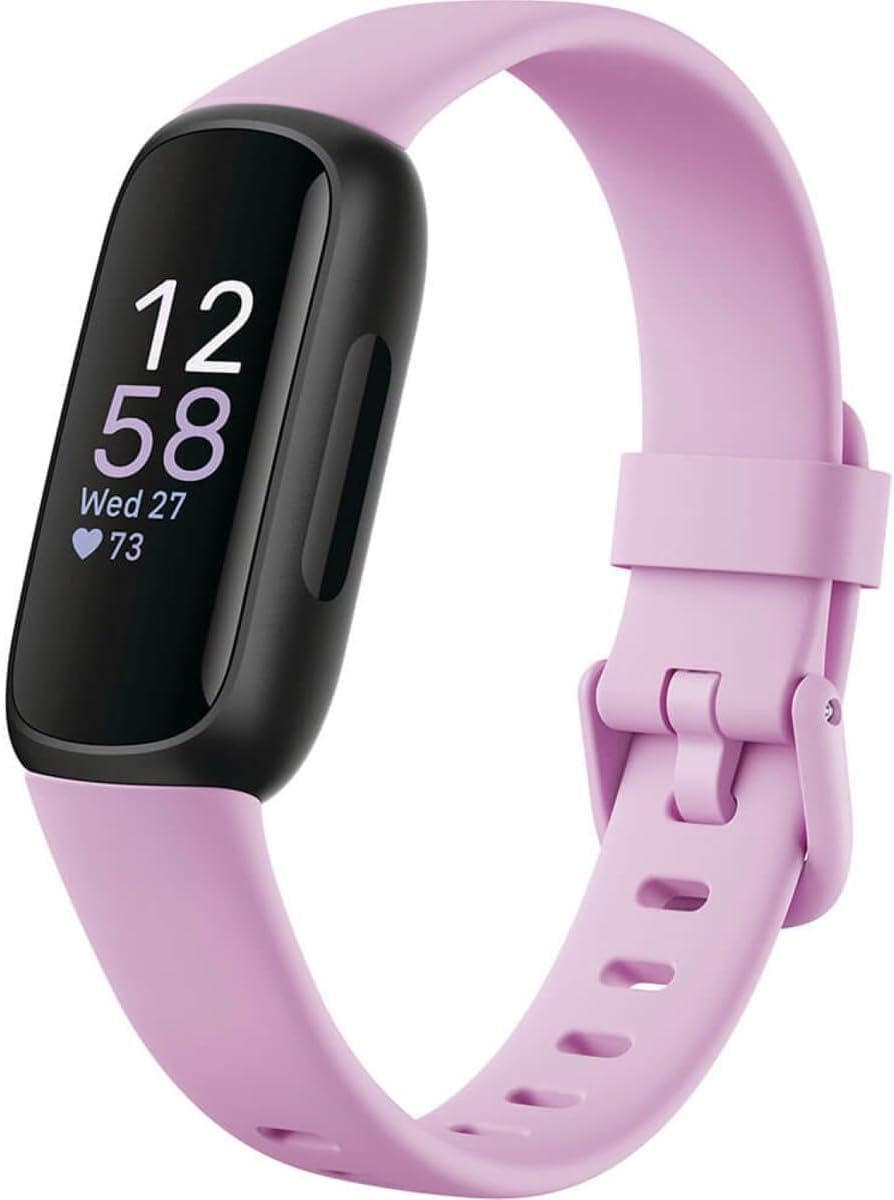
Fitbit Inspire 3

86 /100
Trail Score Excellent

Key details

Display
0.76-inch color touchscreen
Battery Life
Up to 10 days
Exercise Modes
20+
Water Resistance
50 meters
Check Price on Amazon

The Inspire 3 is not a lap-counting swim watch, and that is the first thing to know. It is a slim, 50-meter water-resistant tracker with a 0.76-inch color touchscreen and a battery rated at up to 10 days. We like it as an everyday tracker you can wear in the pool, not as a training tool for sets.

What it does well is disappear on the wrist. The band is light, the screen is small but readable, and the 20+ exercise modes cover the basics. We found it comfortable enough for sleep tracking and daily steps, and the 10-day battery means it is not another device begging for a charger.

For casual swimmers, that is enough. The light band and long battery make it easy to keep on between swims, and it is simpler to live with than a dedicated swim watch. If you want lap-by-lap feedback, the Swim 2 is the better tool; if you want a pool-safe tracker for steps and sleep, it is worth keeping on your short list.

Pros

  • Slim, comfortable design
  • Up to 10 days of battery
  • 50-meter water resistance
  • 20+ exercise modes for everyday tracking

Cons

  • No built-in GPS or open-water distance
  • App sync can be unreliable
Our verdict

We like the Inspire 3 for casual swimmers who want a slim, pool-safe everyday tracker, as long as they do not expect lap-by-lap swim data.

Check Latest Price

How We Tested Swim Trackers in and Out of the Water

We started by narrowing the field to trackers that explicitly support pool and open-water swimming, then filtered by water resistance, app compatibility, battery claims, and price. That left 12 models, which we wore for six months.

Each tracker came to the pool for early-morning sets and to a local lake for open-water swims. I counted laps by hand and compared them with the tracker’s distance, alternated freestyle, backstroke, and kick sets to see whether stroke detection held up, and checked split times against the pace clock. Between sets, I glanced at the display in direct sun and underwater to judge brightness. After each swim, I synced the workout to its app and noted dropped connections or missing data. We also wore them to work, on runs, and in the shower, watching for strap wear, case scratches, and chlorine or sunscreen stains.

Battery life got tracked from a full charge through GPS swims, notifications, and sleep tracking; we logged how many days each lasted and how quickly it recharged. We judged appearance with office clothes and a swim cap, and checked how clearly the app broke down laps, splits, and rest. At the end, we compared each tracker’s accuracy and reliability over repeated sessions, the depth of its data, and what its features delivered for the money.

How to Choose a Fitness Tracker for Swimming

Start with the swim mode, not the water rating

Water resistance tells you the tracker can survive a swim; it does not tell you it can measure one. A pool swim mode uses the accelerometer to count laps and strokes, while an open-water mode needs built-in GPS to record distance. If you train sets, look for pool metrics like pace, stroke count, and SWOLF. If you swim in a lake or ocean, built-in GPS is the feature that matters. A 5ATM band without a swim mode is pool-safe, but it is not a swim tracker.

Decide how much data you will use

Lap count is the baseline. Pace, stroke type, and SWOLF add context, but only if you review them after the swim. A casual swimmer who wants to log time and heart rate can save by choosing a simpler band; a masters swimmer working on efficiency will get more from a watch that separates stroke types and scores each length. More data is not automatically better—it is only useful if it changes what you do in the next set.

Check battery in the mode you will use

Headline battery life is usually smartwatch mode, not swim mode. A watch rated for a week of daily wear may run for only hours with GPS and optical heart rate on. Look for the pool-swim and GPS runtimes separately. If you swim three times a week, a 72-hour pool-mode rating is plenty; if you do long open-water sessions, GPS runtime matters more. Charge before a long swim, because a dead watch records nothing.

Fit, buttons, and the app matter in a wet environment

Wet fingers are clumsy, and a touchscreen can be frustrating mid-set. Button controls are easier to hit when your hands are wet, while a slim band is easier to wear all day and overnight. Check the app before you buy: you want swim data that is easy to find, not buried under three menus. A watch that syncs reliably and feels comfortable for an hour in the water is more useful than one with an extra metric you never open.

Frequently Asked Questions

Final Verdict

For most swimmers, the Garmin Swim 2 is the one to buy: it records the pool and open-water data that actually helps you review a set, and it does it without making you charge every night. If you want one watch for laps, runs, and daily notifications, the vivoactive 5 is the better all-rounder. If you want the least expensive way to get 5ATM protection and long battery, the Smart Band 10 is the budget pick—just accept that it will not count strokes for you.