Best Ear Wax Removal Kits of 2026

The instinct to dig wax out of your ear is the wrong one. Cotton swabs mostly push it deeper, and the steady hand you thought you had tends to wobble once you're aiming at your own eardrum. What actually helps is seeing where you're going, which is why so many kits now put a tiny camera on the end of a soft silicone tip. The good ones clear a blockage in a couple of minutes without a clinic visit; the bad ones hand you a blurry feed, a stiff tip, and a sore ear — I've had all three. We spent four months with 14 kits sorting one from the other.

Camera quality turned out to matter more than any spec sheet suggests. A sharp feed that stutters is worse than a modest one that streams smoothly, and app connectivity is where most of these kits quietly fall apart. Comfort and size come next — a tip that's slightly too wide reads as pressure long before it reads as pain. And a tool that clogs with the first bit of wax it grabs is just an expensive flashlight. The picks below earned a spot in the bathroom drawer, not the junk one.

1

Best Overall

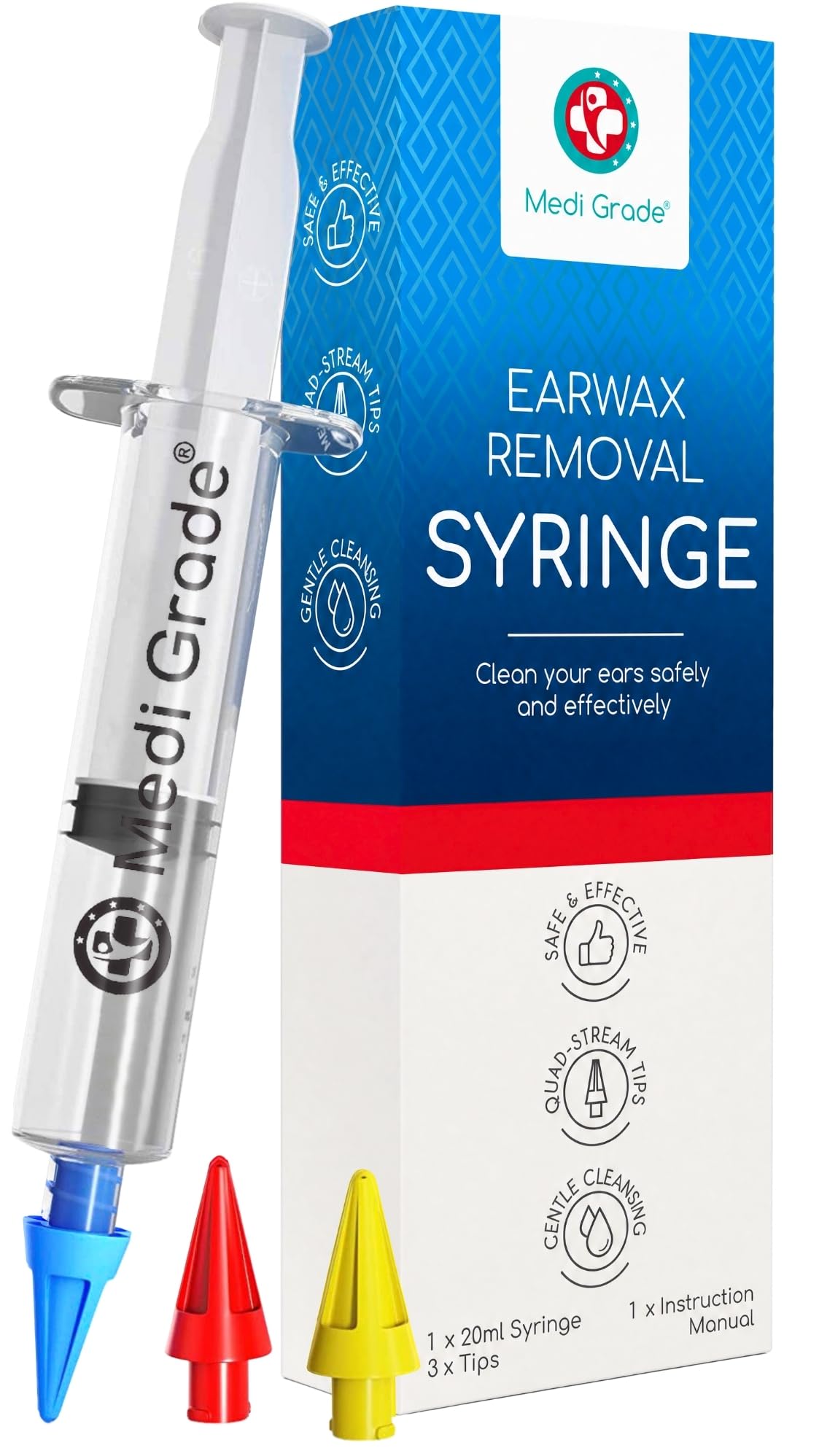
Medi Grade 20ml Ear Syringe

88 /100
Trail Score Excellent

Key details

Capacity
20 ml
Reusable
Yes
Dimensions
1.97 x 0.83 x 5.71 in
Tips Included
3 quad-stream tips
Check Price on Amazon

The detail that sold us on this kit is the tip. Instead of one narrow hole firing water at the canal wall, the quad-stream nozzle splits the flow into a 360-degree ring. In use, that feels less like pressure and more like a soft flush, which is the difference between a kit you reach for and one you avoid. The three tips lock onto the 20 ml syringe barrel, so there is no wobble when you squeeze.

We also like the scale. The barrel is small enough to work with one hand, and the 20 ml capacity is enough for a few gentle flushes without turning the bathroom into a wet zone. It is reusable, rinses clean, and stores in a drawer. For everyday wax — the kind that builds up after earbuds or a hearing aid — that combination makes this our default.

Where it asks for patience is the pumping. A manual syringe gives you control, but you have to refill and re-aim between rounds, and a steady hand matters more than with a bulb. We still prefer it to a plain single-stream syringe for comfort, and we keep a towel nearby because irrigation is never a tidy job. If your ear feels blocked after a couple of tries, stop and let a clinician look; this is a maintenance tool, not a cure for a hard impaction.

Pros

  • Quad-stream tip feels gentle
  • Three tips lock securely
  • Small 20 ml barrel is easy to control
  • Reusable and easy to rinse

Cons

  • Manual pumping needs refills and steady aim
Our verdict

We recommend this syringe first for most homes: the quad-stream tip is gentle, the three tips lock in place, and it is simple enough to use without a mirror.
Check Latest Price
2

Best Electric Irrigation

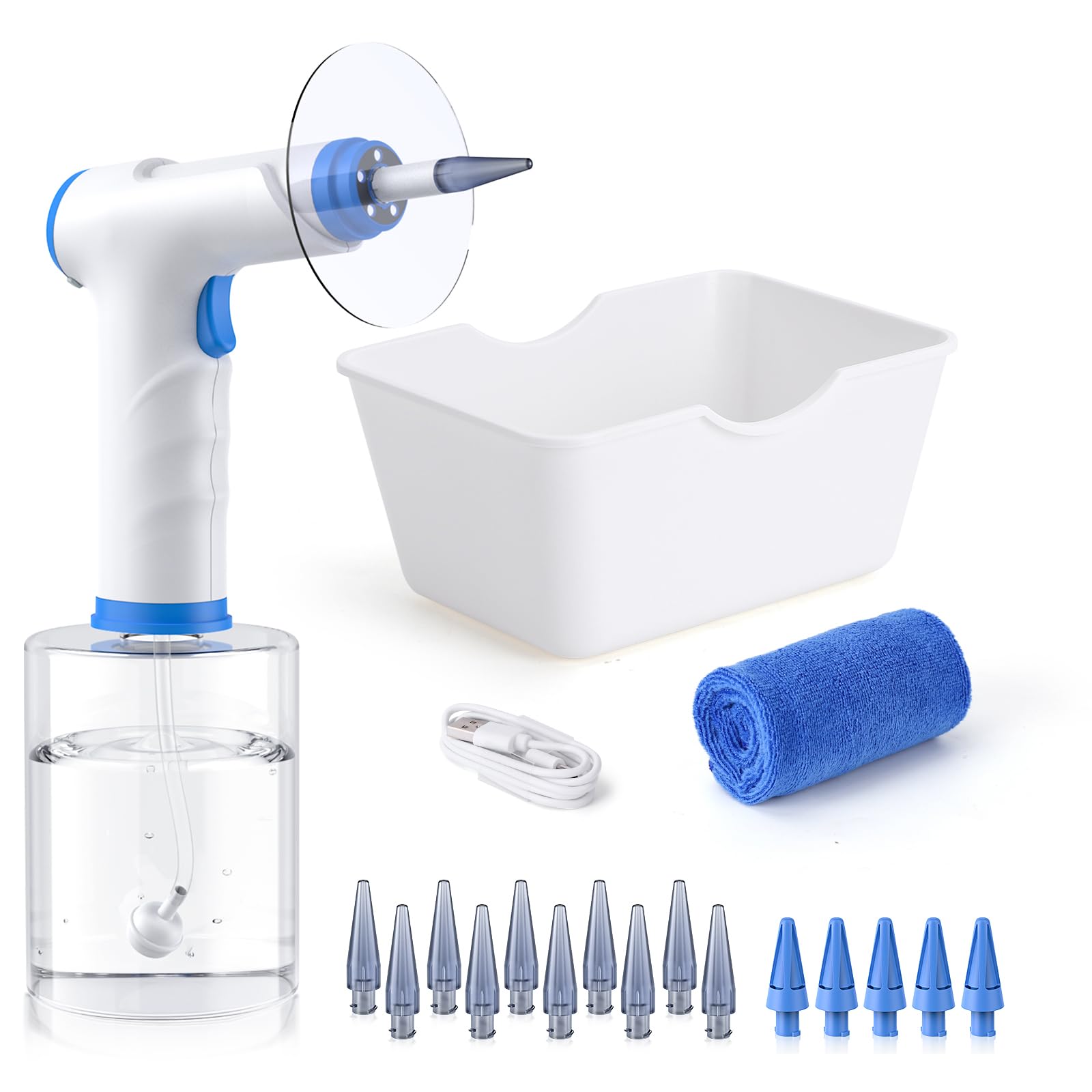
Lebbtl Electric Ear Irrigation

90 /100
Trail Score Outstanding

Key details

Charging
USB-C
Reservoir
500 ml
Tips Included
15 silicone tips
Cleaning Modes
4
Check Price on Amazon

An electric irrigator earns its place when a hand syringe runs out of patience. The Lebbtl has four modes — Normal, Soft, Pulse, and Power — and the one we used most is the gentlest, because steady pressure matters more than force. The 500 ml bottle holds enough water to work through a full session without stopping to refill.

The control that makes it feel less intimidating is the trigger under the index finger. You can stop the stream without moving the nozzle, which is exactly what you want when your ear says enough. Five LED lights help you see where the water is going, and the kit includes 15 silicone tips — 10 single-hole and 5 five-hole — so each person in the house can have a set. We like that the five-hole tips divide the stream instead of firing one jet.

It is a bigger commitment than a manual syringe: the unit is bulkier to store, it needs charging, and you have to assemble the bottle and tip before use. We found the trade-off worthwhile for thicker wax and for anyone who struggles to squeeze a bulb repeatedly. If your ears are sensitive to pressure, start on the soft mode and keep the tip at the opening of the canal, not aimed at the eardrum.

Pros

  • Four flow modes, including a gentle setting
  • 500 ml reservoir limits refills
  • Finger trigger stops flow without re-aiming
  • 15 silicone tips for household use

Cons

  • Bulkier to store and charge than a manual syringe
Our verdict

For stubborn wax and family use, we reach for this electric irrigator: the trigger stops the flow instantly and the large reservoir means fewer refills.

Check Latest Price
3

Best Camera Kit

LEIPUT Camera Ear Cleaner

88 /100
Trail Score Excellent

Key details

Camera
1080P
Dimensions
6.77 x 2.56 x 0.71 in
Compatibility
iOS and Android
Included Tools
5-piece ear set
Check Price on Amazon

The camera is the reason to buy this one, not the tool count. On a phone screen, the 1080P view is sharp enough to show the texture of wax against the canal wall, and the light is bright without washing out the image. We used it to check the opening of the ear before reaching for a scoop, which is the safest way to use any camera-guided cleaner.

The kit includes five ear tools, and the scoop tips are the ones we kept coming back to. They are soft enough to feel forgiving, but the tip must be pressed firmly onto the camera barrel before it goes anywhere near an ear. We check that seating every time; a loose tip is the one failure mode that turns a clever tool into a clinic visit.

The app is the weak link. Pairing is straightforward when it works, but the connection can drop, and a frozen image is worse than no image when you are holding a tool in your ear. We prefer to set it up before we start and keep the phone within arm's reach. For occasional checking and gentle cleaning, it is a useful home tool; for a fully blocked ear, it is not a substitute for a clinician.

Pros

  • Clear 1080P camera view
  • Five-piece ear tool set
  • Works with iOS and Android
  • Compact kit stores easily

Cons

  • App connection can drop mid-use
Our verdict

If you want to see what you are doing, this is the camera kit we recommend: the 1080P view is clear and the five-piece tool set covers more than scooping.

Check Latest Price
4

Best Gentle Flush

Medi Grade Bulb Syringe

91 /100
Trail Score Outstanding

Key details

Capacity
75 ml
Includes
Storage bag
Material
TPE
Tip Type
Quad-stream
Check Price on Amazon

A bulb syringe is the least intimidating way to irrigate an ear, and this one gets the details right. The body is a single piece of soft TPE, so there is no plunger to stick, no O-ring to lose, and no separate tip to misplace. You squeeze, release, and repeat. The 75 ml reservoir holds more water than the small syringe that comes in a drops kit, which means fewer breaks to refill.

The quad-stream tip spreads the water into a wider rinse, and the bulb's soft walls make it easy to modulate pressure by feel. We like it for a child or a nervous adult for that reason: there is no button, no battery, and no app to distract you. The storage bag is a small thing, but it keeps the tip covered between uses.

What it gives up is precision. A bulb delivers a softer, less directed flush than a syringe, and you cannot hold a steady stream the way you can with a manual plunger. We still choose it when we want a gentle rinse rather than a targeted clean, and we keep the tip at the entrance of the canal. It is a good first kit for a household that wants simple, not clinical.

Pros

  • One-piece TPE body is simple to clean
  • 75 ml reservoir needs fewer refills
  • Soft bulb lets you modulate pressure
  • Storage bag keeps tip covered

Cons

  • Less precise than a syringe
Our verdict

We keep this bulb syringe for gentle, low-tech flushing: the one-piece body has nothing to lose, and the 75 ml reservoir is larger than the syringes packed with drops.

Check Latest Price
5

Best Budget Camera

JEGOAT Camera Ear Cleaner

89 /100
Trail Score Excellent

Key details

Camera
1296P HD
Connection
Wi-Fi
Tips Included
12 replaceable tips
Water Resistance
IP67
Check Price on Amazon

The feature we did not expect to care about is the eardrum proximity alert. A camera-guided cleaner can make you feel invincible because you can see where you are going; the alert is a second check that stops the scoop before it gets too close. It is not a substitute for a steady hand, but it is the kind of guardrail we want in a tool aimed at the ear canal.

The 1296P camera is clear enough to show wax and skin texture, and the 12 replaceable tips mean you are not reusing a scoop that has been in someone else's ear. The app connects over the device's own Wi-Fi, and when it holds, the live view is smooth. We set it up before we start because pairing can take a moment, and a camera that drops out mid-clean is more annoying than helpful.

The kit is compact for what it includes, and the IP67 rating means the business end can be rinsed without treating it like a fragile piece of electronics. It is not a diagnostic tool, and it is not for chasing a deep plug. For seeing the outer canal and clearing what is in view, it is a lot of capability for the money.

Pros

  • 1296P camera with bright light
  • Eardrum proximity alert
  • 12 replaceable tips
  • IP67 rinsable body

Cons

  • Wi-Fi pairing can be slow
Our verdict

We point camera-first shoppers here when value matters: the 1296P view is clear, the 12 tips are replaceable, and the eardrum alert is a genuinely useful safeguard.

Check Latest Price
6

Softening Wax First

Debrox Ear Wax Removal Kit

88 /100
Trail Score Excellent

Key details

Age
12 years and up
Includes
Bulb syringe
Drops Size
0.5 fl oz
Active Ingredient
6.5% carbamide peroxide
Check Price on Amazon

Debrox is not a pick for someone who wants to see inside their ear or clear a plug in one sitting. It is a two-step kit: 6.5% carbamide peroxide drops soften the wax, then the soft bulb syringe flushes with water. We treat it as preparation, not a rescue. When the wax has had time to loosen, the flush has something to move.

The drops are easy to administer, and the 0.5 fl oz bottle lasts through several sessions. We like that the kit includes the bulb instead of sending you hunting for one, and the instructions are straightforward: five to 10 drops, then flush. The catch is patience. This is not the kit for a hard, impacted plug that has been building for months, and it is not for children under 12 without a doctor's advice.

What we appreciate most is the low barrier to trying the gentlest step first. If your ear feels full after a flight or a week of earbuds, softening before irrigating makes sense. If you have pain, drainage, or sudden hearing loss, skip the kit and get checked; those are not wax-maintenance problems. For the right ear, it is a sensible, inexpensive start.

Pros

  • Softens wax before flushing
  • Includes a bulb syringe
  • Simple five-to-10-drop routine
  • Small bottle stores easily

Cons

  • Not for children under 12
  • May not clear hard impacted wax
Our verdict

For a drops-first routine, we still keep Debrox in the mix: the carbamide peroxide softens wax before the bulb syringe flushes, and the kit is simple to follow.

Check Latest Price
7

Manual Touch-Ups

Geengle 8-Piece Ear Pick Set

88 /100
Trail Score Excellent

Key details

Pieces
8
Includes
Cleaning brush and case
Material
Surgical-grade stainless steel
Dimensions
5.71 x 1.18 x 0.39 in
Check Price on Amazon

The first thing you notice about these picks is how small the scoops are. That is not a defect; it is the reason they work for the outer canal and the little itchy spot that a cotton swab never reaches. The stainless-steel tips are polished and rounded, and the set includes a cleaning brush and a slim storage case.

The set covers several scoop shapes, and we reach for the flat one most often. We use a light so we can see the edge, and the brush is genuinely useful for the grooves. The case keeps the tips from rattling around in a drawer, which matters because these are tools you want to find clean when you need one.

What these picks cannot do is clear a soft plug that is sitting against the eardrum. The scoops are small, the handles are short, and the margin for error is thin. We use gentle strokes near the opening and stop at the first hint of resistance. Anyone with a perforated eardrum, ear tubes, or a history of ear surgery should leave metal picks alone.

For the right job — a bit of visible wax, an itch, a touch-up between irrigations — this is a useful little kit. Keep it away from children, and do not use it as a substitute for a syringe when the ear feels full. It earns its place as a detail tool, not the main event.

Pros

  • Eight tools in a slim case
  • Rounded stainless-steel tips
  • Cleaning brush included
  • Easy to rinse and reuse

Cons

  • Small scoops are not for deep plugs
  • Metal tips require a steady hand
Our verdict

We keep this set for quick external touch-ups and itch relief, not for deep impaction: the rounded scoops are gentle, and the case keeps eight tools organized.

Check Latest Price
8

Family and Pets

DEETOK Camera Ear Cleaner

88 /100
Trail Score Excellent

Key details

Camera
1080P HD
Included Set
7-piece earwax set
Compatibility
iOS and Android
Ear Pick Accessories
50
Check Price on Amazon

The practical detail here is the pile of ear-pick accessories. The DEETOK kit includes 50 and a seven-piece earwax set, which sounds like overkill until you are cleaning a partner's ear and then a child's. A fresh accessory for each person is simpler than scrubbing the same scoop between uses, and it is the reason this kit stays in our family-use pile.

The 1080P camera is clear enough to show the canal wall and the wax sitting on it, and the light is bright without blowing out the image. The app works with iOS and Android, and the device creates its own Wi-Fi signal, so you do not need home internet. We set it up before we start because the connection can take a moment, and a dropped feed is the most common frustration with this category.

The included seven-piece pick set is for the wax you can see, not for digging blind. We use the camera to guide a soft scoop along the wall, then stop. The kit is compact for everything it includes, but it is still a small case with a lot of pieces, so it takes a drawer rather than a medicine cabinet shelf.

It earns its place for household use because the accessory supply solves the sharing problem better than most. It is not the kit for a painful ear, a sudden hearing change, or a plug that will not budge; those need a clinician, not a better camera. For visible, stubborn wax and a family that wants to stop guessing, it is a sensible pick.

Pros

  • Clear 1080P camera
  • 50 ear-pick accessories
  • Seven-piece pick set included
  • iOS and Android compatible

Cons

  • App connection can take a moment
  • Many small pieces to store
Our verdict

For families who want one camera kit with plenty of disposable accessories, we like this one: the 1080P view is clear and the 50 ear-pick accessories make sharing less fussy.

Check Latest Price

How We Tested 14 Ear Wax Removal Kits

We started by pulling every camera-tipped kit we could find with a live app feed, then cut anything with a fixed tip, no spare parts, or a price that climbed into clinic-visit territory. That left 14 kits, from budget picks to near-professional kits, and four testers with very different ears: one with a recurring blockage, one with narrow canals, one who'd only ever used drops, and one who had never put anything smaller than a finger in there.

Each kit went home with a tester for four months and got used where people actually use them — perched on the edge of the tub after a shower, slouched on the couch, once on a hotel bed at midnight. We timed how long it took to get from opening the app to a live picture on both an iPhone and an Android phone, and counted the pairing attempts it took to get there. A feed that dropped mid-session counted against a kit. To compare picture quality fairly, we pointed each camera at the same line of small print from a set distance and noted how much of it we could read, then waved a cotton swab in front of the lens to see how far the image lagged behind.

We measured tip width with a caliper against the narrowest ear in the group, and then we just paid attention: any tip that produced a pressure ache on insertion got swapped down a size, and anything that genuinely hurt got set aside. For effectiveness, testers used the kits on real wax and we watched how the scoop basket handled it — whether wax wiped off cleanly or clogged the opening and fogged the camera window, forcing the tool out mid-session. Value came down to what came in the box and what still worked weeks later: spare tips, a case, and whether the thing paired without fuss on the tenth use as easily as the first.

How to Choose an Ear Wax Removal Kit

Match the Method to the Wax

Start with how much wax you are dealing with. A manual syringe or bulb is the simplest choice for occasional fullness after earbuds, a hearing aid, or a flight; it uses warm water and gentle pressure. An electric irrigator gives a steadier flow and a larger reservoir, which helps with thicker wax but adds charging and storage. Camera-guided kits help you see the outer canal, not diagnose an impaction. Metal picks are for visible wax near the opening and itch relief, not for a plug against the eardrum.

Prioritize Control Over Force

With irrigation, the difference between comfortable and miserable is usually the tip and the stop. A quad-stream or multi-hole tip spreads the flow instead of firing one jet at the canal wall. A trigger or a soft bulb lets you stop the moment your ear feels full. We prefer a kit that lets you pause without re-aiming, especially if you are working alone. Manual syringes are not weaker; they are more dependent on a steady hand.

Count the Tips Before You Share

If more than one person will use the kit, count the tips before you buy. Replaceable silicone covers are easier to keep hygienic than a single shared scoop, and a kit with 10 or more covers lasts through several sessions. Metal picks should be rinsed, dried, and wiped with alcohol; bulb syringes should be squeezed dry and stored open. A storage case is not glamorous, but it keeps the tip from picking up lint between uses.

Know When to Stop

An at-home kit is for wax you can see or softening before a gentle flush, not for pain, drainage, sudden hearing loss, or a perforated eardrum. If you have ear tubes, a history of ear surgery, or an active infection, ask a clinician before irrigating or using drops. Stop if you feel sharp pain, dizziness, or bleeding. A kit that makes you feel pressure to keep digging is the wrong kit, no matter how many tips it includes.

Frequently Asked Questions

Final Verdict

For most people, the Medi Grade 20 ml syringe is the kit we recommend first: the quad-stream tip is gentle, the three tips lock on, and the manual control keeps you from overdoing it. If you are dealing with thicker wax or want a steadier flow, the Lebbtl electric irrigator is the upgrade, with a 500 ml reservoir and an index-finger trigger. And if seeing inside the ear is what gives you confidence, the LEIPUT camera kit is the one we reach for, provided you check the tip seating before every use.