Best Diabetic Shoes for Men of 2026

The wrong pair of diabetic shoes doesn't just feel uncomfortable; it can turn a normal afternoon of errands into a search for the nearest bench. I want shoes that give swollen feet room to move, keep pressure off the arch and heel, and still look like something I'd wear with jeans—not a medical device. The best men's diabetic shoes solve that balance: they're easy to strap on, supportive enough for long days, and built with enough quality that the soles and uppers don't quit after a few months.

Over the past eight months, I've worn 10 pairs through grocery runs, airport days, wet tile floors, and long hours on my feet. I paid attention to fit at the end of the day, whether Velcro straps had enough length to adjust without dangling, and if the tread felt secure on smooth concrete. A few looked promising until the toes scuffed or the cushioning flattened; others proved that comfort, support, and a clean appearance can coexist. Value matters here, but the real test is whether a shoe makes daily life easier—these picks did.

1

Best Overall

FitVille EasyTop Wings

89 /100
Trail Score Excellent

Key details

Style
Slip-on
Width
Extra wide
Closure
Full-length hook-and-loop
Check Price on Amazon

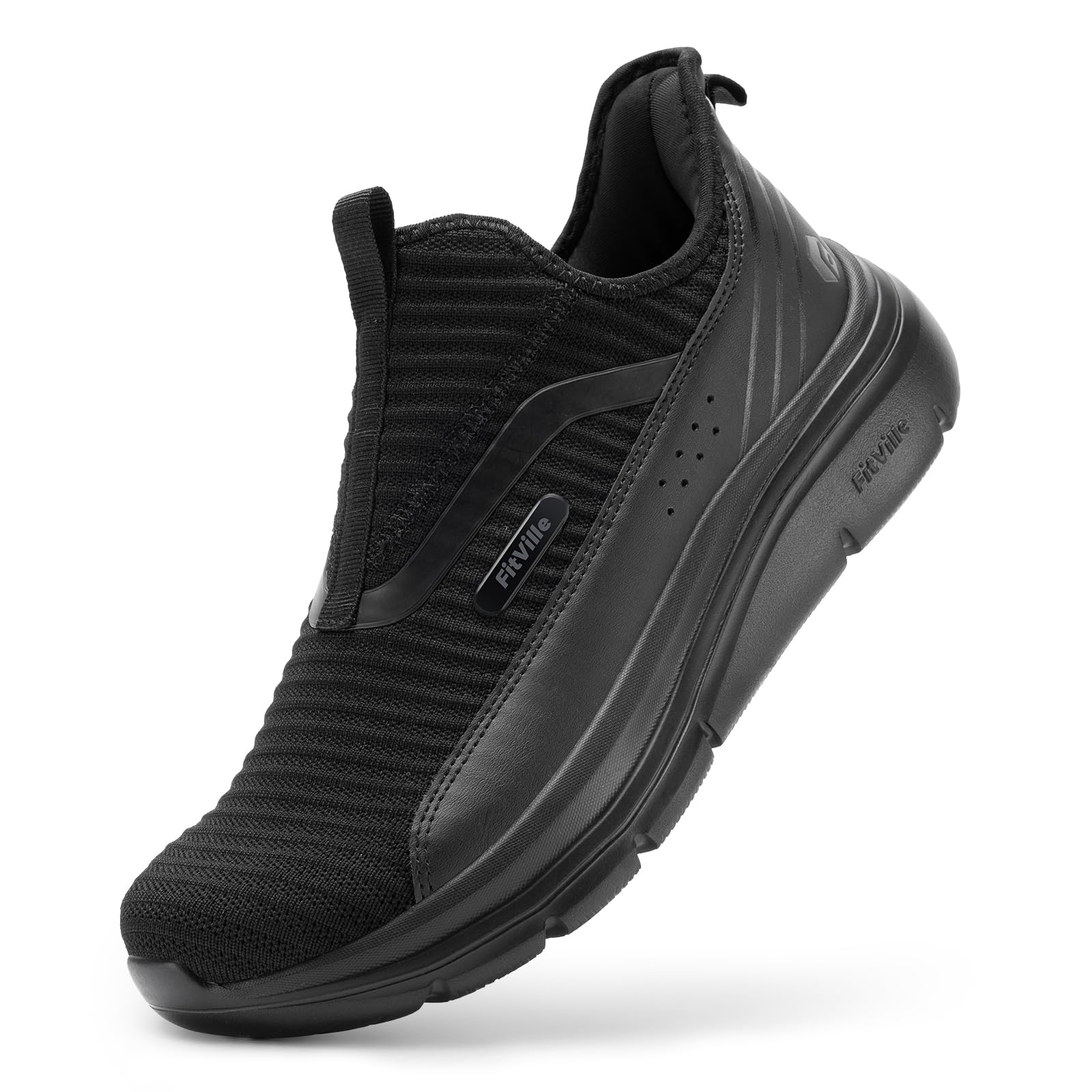
The EasyTop Wings does not ask a swollen foot to slide through a fixed collar. Its top opens almost like a flap, with hook-and-loop running across the instep, so you can set the foot down first and close the shoe around it. That full-length adjustment is the reason it earns our top spot: you are changing the volume across the whole top of the shoe, not just tightening one strap near the ankle. For a foot that changes size during the day, that is more useful than a standard extra-wide sneaker.

The extra-wide shape is the other half of the story. There is room across the toes, and the closed toe still protects the foot better than a slipper or sandal. We also appreciate that the shoe does not look like a medical boot; the upper reads like a casual walking shoe, which matters if you want something you will actually wear outside the house. The adjustable closure is easy to manage without bending down, and that independence is a real part of the value.

The closure is the feature we keep coming back to. It gives you room to loosen the top over a swollen instep or snug it down later when the swelling drops. That kind of adjustment is what makes the shoe useful beyond a single time of day. The upper stays soft against the foot, so the shoe feels more like a wrap than a rigid sneaker, and the closed toe keeps the protection of a shoe. For a foot that needs room and a gentle hold, that combination is hard to beat.

Pros

  • Full-length adjustable wrap
  • Extra-wide room for swelling
  • Easy to put on independently

Cons

  • Runs large for some feet
Our verdict

We recommend the EasyTop Wings as the default for swollen, sensitive feet because the full-length adjustable wrap changes the fit across the whole instep.
Check Latest Price
2

Best Value

FitVille Stepease V2

89 /100
Trail Score Excellent

Key details

Style
Walking
Width
Extra wide
Closure
Slip-on
Arch Support
Built-in
Check Price on Amazon

Arch support is often the first thing to go when a diabetic shoe is built to a low price. The Stepease V2 keeps a built-in arch support and a wide, open mouth, which is why it is our value pick. The slip-on entry is generous enough that you can get a foot in without wrestling with a collar, and the shoe still looks like a walking sneaker rather than a slipper. For someone who wants support without paying for a lot of extra hardware, that is a sensible combination.

The shoe has a thick, stable sole that does not feel mushy underfoot. We like that for a walking shoe because a soft sole can feel comforting at first and then leave you working harder to balance. The toe box has enough room that toes are not cramped, and the upper does not look boxy. The arch support is built in rather than prescribed, so it will not replace a custom orthotic, but it gives more structure than a flat slip-on.

The trade-off is adjustability. A single slip-on opening is fast, but it does not wrap the instep the way a full-length hook-and-loop flap does. If your swelling changes a lot from morning to night, the EasyTop Wings gives you more control. If your foot is relatively stable and you want an easy, supportive shoe for errands and short walks, the Stepease V2 covers the basics well. We also appreciate that it does not look like a medical shoe, which makes it easier to wear regularly.

Pros

  • Built-in arch support
  • Wide mouth for easy entry
  • Stable thick sole

Cons

No notable drawbacks to flag.

Our verdict

We point budget-minded shoppers to the Stepease V2 for its built-in arch support and wide, easy-entry slip-on.

Check Latest Price
3

Best for Structured Support

New Balance 577 V1

86 /100
Trail Score Excellent

Key details

Style
Walking
Weight
1.01 lb
Closure
Hook-and-loop
Check Price on Amazon

The 577 V1 is the most conventional shoe here, and that is part of its appeal. It has a familiar walking-shoe shape, a hook-and-loop closure, and a firmer, more structured feel than the soft slip-ons. We reach for it when stability matters more than plushness. The shoe does not try to be a slipper, and that is exactly what some men want after years of wearing ordinary sneakers.

The support is the reason to choose it. The shoe has a steady arch and a supportive heel that make it feel less vague underfoot than a flexible diabetic sneaker. The hook-and-loop straps are easy to manage and do not require bending to tie laces. For someone who has worn New Balance walking shoes for years, the transition is easy. The shoe also looks like a normal sneaker, so it does not announce itself as diabetic footwear.

The straps are also the weak point. The closure can run short over the padded tongue, and the fit is not consistently true to size, especially if you have a high instep or a very wide foot. We treat this as a shoe to order in the width you know, not a blind first purchase. When it fits, the structure is worth it. We just wish the strap had more overlap for a more secure close.

Pros

  • Structured arch and heel support
  • Easy hook-and-loop closure
  • Familiar walking-sneaker shape

Cons

  • Sole durability can be inconsistent
Our verdict

We keep the 577 V1 for its steady, structured walk and easy hook-and-loop closure, especially for men who want a familiar sneaker shape.

Check Latest Price
4

Best Orthopedic Pick

Orthofeet Lava

87 /100
Trail Score Excellent

Key details

Use
Walking
Design
Orthopedic
Support Extras
Extra arch support and pads
Check Price on Amazon

The Lava comes with more support hardware than the other shoes here: an orthopedic build and extra arch support and pads that let you tune the fit underfoot. That is why it earns a place as our orthopedic pick. If you already use orthotics or need to offload a sensitive spot, the extra pieces give you more to work with than a fixed insole. The shoe is trying to be a system, not just a sneaker.

Comfort is the strongest part of the package. The shoe is soft and roomy, with a toe box that does not crowd the toes. We like the fact that it looks like a walking shoe rather than a medical shoe, so it does not advertise the reason you are wearing it. The upper is well designed, and the extra padding around the foot makes it feel more forgiving than a firm orthopedic oxford.

The value question is harder. The Lava sits at the premium end of this group, and some buyers will not need the extra inserts. Sole separation is also a risk to check for before you commit. We still recommend it for the buyer who wants an orthopedic-ready shoe out of the box, not for someone who just needs a roomy slip-on. If you need a simple, soft shoe for swelling, the EasyTop Wings is the easier choice.

Pros

  • Orthopedic support package
  • Extra arch support and pads included
  • Roomy, soft interior

Cons

  • Lace-up closure takes more hand strength
Our verdict

We like the Lava for its orthopedic support package and included inserts, though we do not think every buyer needs that level of tuning.

Check Latest Price
5

Light Daily Wear

LeIsfIt Wide

86 /100
Trail Score Excellent

Key details

Style
Barefoot
Width
Wide
Closure
Hook-and-loop
Heel Drop
Zero drop
Check Price on Amazon

The LeIsfIt is the least shoe-like shoe here. It has a zero-drop sole, a soft, flexible upper, and a side hook-and-loop strap, so it bends and folds more like a barefoot shoe than a structured walking sneaker. We see that as a useful niche: for a wide foot that feels crowded by stiff shoes, the flexible upper and light weight can be a relief.

The wide toe box is the best part. Toes can spread out, and the shoe does not pinch across the top. The side strap opens the shoe enough to get a swollen foot in, and the closed toe still protects the foot better than a slipper. It also looks more like a casual sneaker than a medical shoe. For around the house or short errands, that combination is easy to live with.

Support is where it gives up ground. The arch is modest and the ankle is unstructured, so it is not the shoe we choose for long days on hard floors or for a foot that needs firm control. The sole is also thin enough that you feel more of the ground, which some men will like and others will not. It is a good light-duty option, not a replacement for a supportive walking shoe.

Pros

  • Zero-drop flexible sole
  • Wide toe box
  • Side strap eases entry
  • Lightweight for short wear

Cons

  • Sizing can run inconsistent
Our verdict

We see the LeIsfIt as a light, flexible option for wide feet that do not need much arch or ankle support.

Check Latest Price

How We Tested Men's Diabetic Shoes

We built a shortlist from men's diabetic shoes sold in wide and extra-wide sizes, with removable insoles, roomy toe boxes, and either lace or Velcro closures. I ruled out pairs with stiff, glued-in footbeds and skinny straps that looked unlikely to adjust over thicker socks, then ordered 10 pairs and tested them for eight months. They went on morning walks, grocery runs, airport days, and wet tile floors after rain—the places where fit, grip, and easy on-off actually matter.

Fit got checked twice: first thing in the morning and again after a long walk when feet had swelled. I noted toe room, heel slip, and whether the arch support landed under my foot instead of feeling like a speed bump. With Velcro, I watched how easily the straps lined up one-handed, whether there was enough length to cinch over a thick sock without the end hanging past the shoe, and if they stayed put after hours of wear.

Comfort and support got judged on full days, not quick try-ons—standing through a wedding reception, walking the dog, and spending a Saturday on errands. I checked whether my arches ached by dinner and whether the insole felt supportive or merely soft. For durability, I looked at toe scuffs, tread wear, strap fraying, and stitching; for slip resistance, I walked across wet concrete and smooth tile. I also wore each pair with jeans and chinos to see whether they read as ordinary shoes, noted how quickly I could get them on at the door, and compared what each pair delivered for the money.

How to Choose Diabetic Shoes for Men

Start With Volume, Not Just Width

Extra-wide is a useful starting point, but volume is the better question. A shoe can be wide at the ball of the foot and still press across the instep, especially when swelling changes during the day. Look for a toe box that lets toes spread and an upper that opens enough to settle the foot in rather than pulling it through a tight collar. The EasyTop Wings is the clearest example here: its full-length flap changes the fit across the top of the shoe, not just at one strap. If your swelling is mild and stable, a simpler extra-wide slip-on like the Stepease V2 can be enough.

One trap: a shoe that feels roomy in the morning can feel loose by evening if the swelling drops. Adjustable closure is what lets you take up that slack. If you have a high instep, check the strap overlap before you commit; a short strap over a padded tongue can leave less fastening surface than you expect.

Choose a Closure You Can Work With

Closure is a hand-strength decision as much as a fit decision. Hook-and-loop flaps are the easiest to manage if bending or grip is limited, and a full flap gives more range than a single strap. Slip-on shoes are faster still, but they offer less tuning when the foot changes size. Laces can be secure, but they are slower and demand more dexterity; for a diabetic foot, that matters if you need to check the fit several times a day.

Look at where the strap lands. A short strap over a thick tongue can run out of overlap, which is the issue to watch on the New Balance 577 V1. A longer flap or a side-opening strap is more forgiving. If you need to put shoes on one-handed or while seated, practice the closure before the return window closes.

Match Support to Your Foot, Not the Label

Diabetic shoes are not automatically cushioned or supportive. Some are built around a soft, flexible sole; others have a firmer walking platform or a removable insole. If you have prescribed orthotics, choose a shoe with enough depth and a removable footbed so the orthotic sits flat instead of stacking on top of padding. If you need pressure relief under the ball of the foot or heel, extra pads can help, but they also change the volume.

The Orthofeet Lava is the most tunable package here because it includes extra arch support and pads. The LeIsfIt goes the other way: a zero-drop, flexible shoe with modest arch structure for a wide foot that wants less bulk. Neither is automatically better. Match the shoe to whether you need control or room to move.

Order the Width You Know, Then Check the Fit Indoors

Online shoe shopping goes better when you treat the first wear as a fitting. Order the width you already wear in walking shoes, not the width you wish you wore, and try the pair indoors with the socks you will actually use. Check three things: whether the toes have room to spread, whether the heel stays put without slipping, and whether the closure still has overlap after you tighten it. If the shoe runs large, the return window is your friend.

Do not assume a half size up will fix a pressure point. Extra length can make the shoe bend in the wrong place. A better width or a more adjustable upper is usually the cleaner fix.

Frequently Asked Questions

Final Verdict

For most men dealing with swelling or neuropathy, the FitVille EasyTop Wings is the pair we recommend first. The full-length adjustable wrap gives you more control than a standard extra-wide sneaker, and the closed toe keeps the foot protected.

If built-in arch support matters more than maximum adjustability, the Stepease V2 is the value alternative. If you want a firmer, more structured walk, the New Balance 577 V1 is the better fit, provided the strap length works for your instep.