Best Countertop Reverse Osmosis Systems of 2026

Under-sink reverse osmosis gives you lovely water, but it also means clearing a cabinet, drilling a hole, and finding a plumber. Countertop systems skip the mess: they sit by the sink, plug into an outlet, and turn tap water into a pitcher at a time. The catch is that you're working with a small reservoir and a filtration cycle that can feel slow if you're filling a stockpot. A good one fixes your bottled-water habit without turning your kitchen into a construction site.

I've been living with one on my own counter for months, and my team has spent nine months with seven models, from compact one-button units to larger tanks with app controls. We paid attention to taste and water quality first—flat, plasticky water is the whole point of avoiding bottled—then ease of use, filtration speed, and what replacement filters actually cost over a year. The best units earned their counter space; the rest made me appreciate a simple pitcher.

1

Best Overall

Bluevua RO100ROPOT

92 /100
Trail Score Outstanding

Key details

Max TDS
1,000 ppm
Dimensions
10.9"L x 15.4"W x 14.3"H
Filtration
5-stage RO + remineralization
Filter Life
12–24 months
Check Price on Amazon

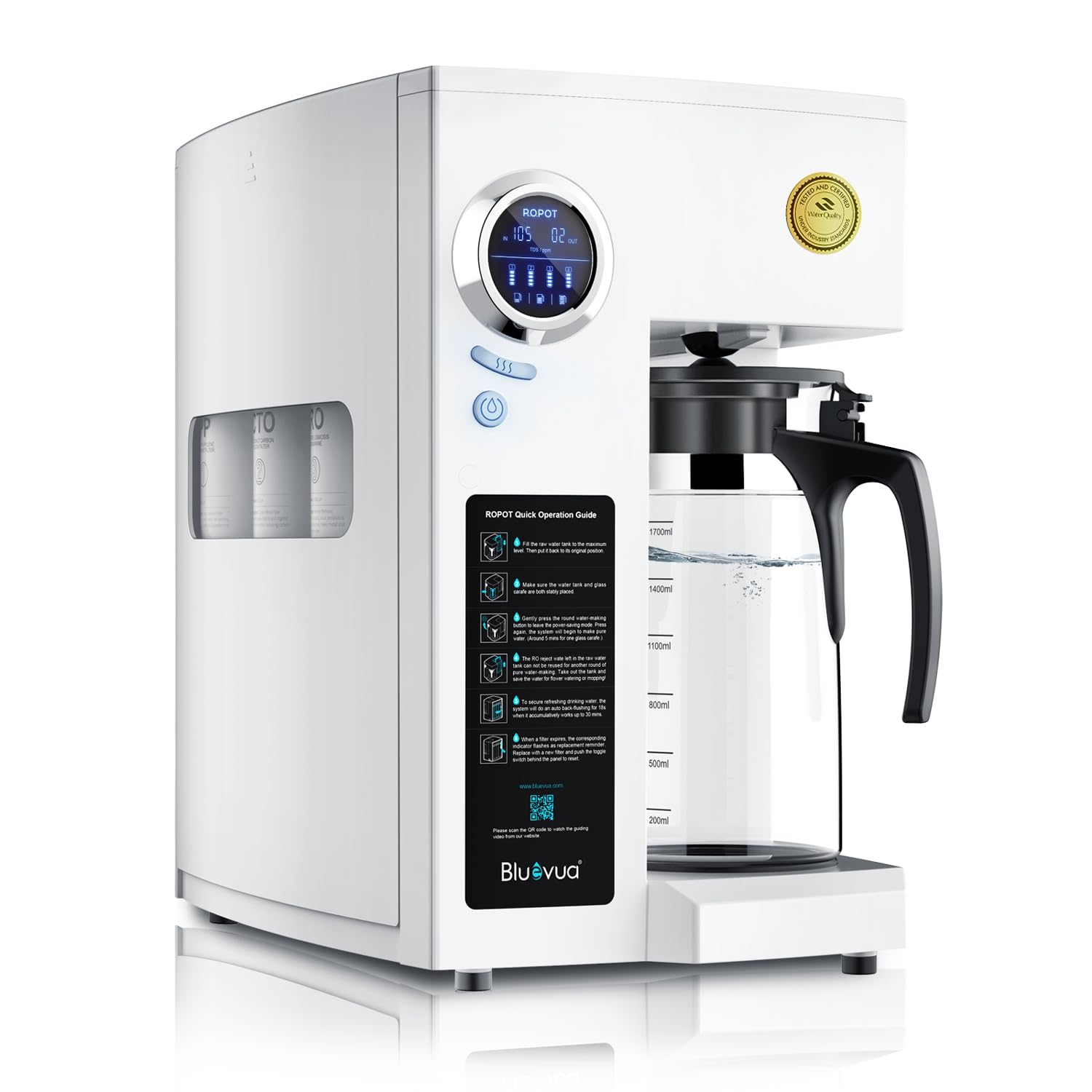
A 1,000-ppm feed-water limit and a filter schedule that stretches to 12–24 months are the two specs that separate the Bluevua RO100ROPOT from most of this group. Its five-stage RO stack includes a remineralization filter, and the unit carries WQA and NSF certification. The glass carafe and 10.9-by-15.4-inch footprint keep it in appliance territory rather than plumbing-project territory.

We rank it first because it covers more water situations with fewer compromises. The higher TDS ceiling matters if you're on well water or a municipal supply that runs hard, and the longer filter interval means less fuss and less ongoing cost. The remineralization stage answers the flat taste that straight RO water can have, and the glass carafe is a nicer serving vessel than the plastic pitchers many rivals use. The filter monitor is a small convenience, but a useful one when a year passes quickly.

The 1,000-ppm ceiling is a ceiling, not a target; check your source water before assuming any countertop RO will keep up. The filter monitor and standby mode are small things, but they add up in daily ownership. For most kitchens, this is the unit that asks the fewest compromises.

Pros

  • Tolerates up to 1,000 ppm feed water
  • 12–24 month filter life
  • Remineralization filter included
  • Glass carafe and WQA/NSF certification

Cons

  • Carafe is the practical limit for big households
Our verdict

The Bluevua is our default countertop RO because it handles higher-TDS water, stretches filter changes to a year or more, and adds minerals back; buy it if you want the fewest compromises in one unit.

Check Latest Price
2

Best Budget

DREO RO 113

87 /100
Trail Score Excellent

Key details

Max TDS
500 ppm
Capacity
5 liters
Dimensions
15.7"L x 6.7"W x 13.4"H
Filtration
7-stage RO
Check Price on Amazon

At 6.7 inches wide, the DREO RO 113 is the unit we point to when counter space is the real constraint. It still holds 5 liters and comes with two autofill pitchers, so the narrow body does not leave you filling a shot glass. The seven-stage RO system, real-time TDS display, and 3:1 pure-to-drain ratio are serious features for a compact unit.

We like the two-pitcher setup for a couple or a small family: one can be filling while the other is in the fridge, and the machine stops when the pitcher is full. The touch controls are straightforward, and the filter-life indicator takes the guesswork out of reordering. Flow is adequate for glasses and bottles, and the 5-liter capacity is enough for a day of drinking for two people.

If your priority is a slim footprint at a lower entry point, the DREO is the easy call. It handles the basics of good-tasting RO water without demanding a dedicated appliance garage.

Pros

  • 6.7-inch slim footprint
  • Two autofill pitchers included
  • Real-time TDS display
  • 5-liter capacity

Cons

  • 500-ppm TDS limit
  • Six-month filter changes
Our verdict

Buy the DREO RO 113 if your counter is tight and your water is within its 500-ppm limit; it's the best small-footprint value here.

Check Latest Price
3

Best Compact

Waterdrop C2S

81 /100
Trail Score Excellent

Key details

Pitcher
40 oz glass
Dimensions
15.8"L x 6.1"W x 11.4"H
Filtration
6-stage RO
Filter Capacity
528 gallons
Check Price on Amazon

A 40-ounce glass pitcher is the reason to look at the Waterdrop C2S. It is the most dinner-table-ready vessel in this group, and the 6.1-inch width makes the unit easy to tuck into a short run of counter. The six-stage RO system carries a 528-gallon filter capacity and a 3:1 pure-to-drain ratio, so the small footprint does not mean a toy filtration system.

We appreciate the glass pitcher for serving and for the way it avoids the plastic-pitcher feel of most countertop units. The smart display and voice alerts are more helpful than they sound when you are learning the refill rhythm, and the guided first rinse takes some of the mystery out of setup. The C2S is also one of the least expensive ways into countertop RO, which makes it a sensible first unit for a renter or a one-person kitchen.

The catch is the base. Leaks around the bottom are the thing to watch; keep it on a tray or a waterproof mat until you are confident in the seals. That caveat does not cancel the appeal for a small kitchen, but it does define who should buy it.

Pros

  • 6.1-inch narrow footprint
  • 40-ounce glass pitcher
  • 528-gallon filter capacity
  • 3:1 pure-to-drain ratio

Cons

  • Pitcher suits one or two people
Our verdict

The Waterdrop C2S is our pick for a tiny counter and a glass-pitcher habit; just keep it within its small-household capacity and watch the base for drips.

Check Latest Price
4

Best for Fast Flow

SimPure Y9A

82 /100
Trail Score Excellent

Key details

Max TDS
500 ppm
Dimensions
16"L x 9.3"W x 14.3"H
Filtration
6-stage RO + alkaline
Flow Rating
300 gallons per day
Check Price on Amazon

The side-mounted tank is the design detail that makes the SimPure Y9A easier to live with than a rear-tank unit. You can lift the tank off from the side without pulling the whole machine out from under a cabinet, which matters in a kitchen where the counter is already tight. SimPure also rates the Y9A at 300 gallons per day, so filling a pitcher is not an exercise in waiting.

The six-stage filtration includes a remineralization stage that adds alkaline minerals back after the RO membrane. We like that combination for people who find straight RO water flat but do not want to add drops at the glass. The 500-ppm feed-water limit is the boundary to check first; if you are on high-TDS well water, the Bluevua is the safer choice.

The 18-inch vertical clearance is not a suggestion; measure before you commit the spot. For a household within its water range, though, the side tank and fast flow make the Y9A one of the most convenient units here.

Pros

  • Side tank refills without moving the unit
  • 300-gallon-per-day flow rating
  • Alkaline remineralization stage
  • Six-stage RO filtration

Cons

  • Six-month filter changes
Our verdict

Choose the SimPure Y9A if you want fast dispensing and alkaline water from a unit you can refill from the side; it's the most convenient workflow here for a family within its 500-ppm limit.

Check Latest Price
5

Best Large Tank

VonWater CT910G

85 /100
Trail Score Excellent

Key details

Dimensions
13.4"L x 8.2"W x 15.3"H
Filtration
7-stage RO
Tank Capacity
5.5 liters
Filter Capacity
528 gallons
Check Price on Amazon

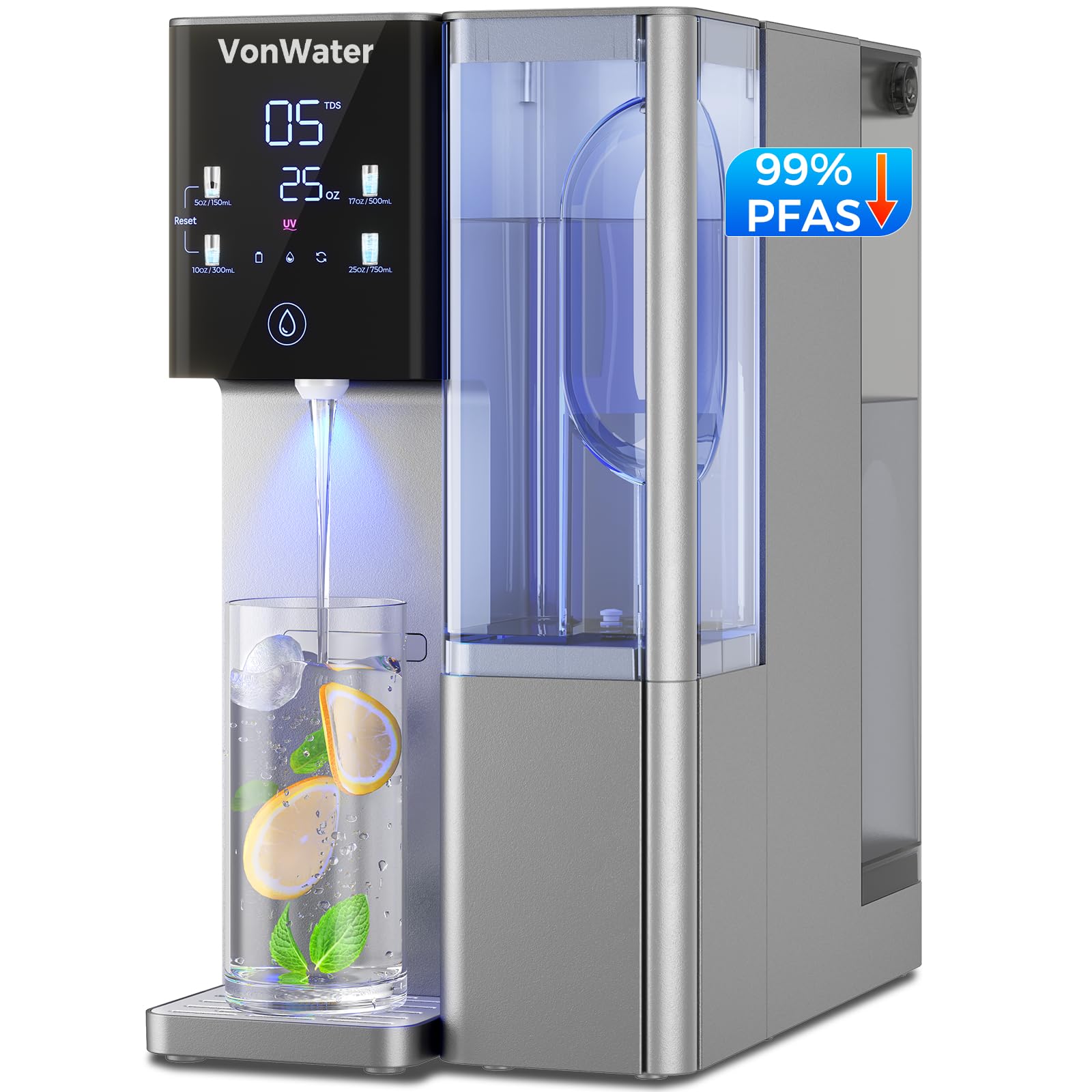
The VonWater CT910G is built around a 5.5-liter feed tank and a removable pitcher, which is the right combination for a family that does not want to babysit a small carafe. The tank lifts off for refilling, and the 13.4-inch width leaves room for a kettle or coffee maker beside it. The seven-stage RO system carries a 528-gallon filter capacity and a 3:1 pure-to-drain ratio.

The LED touch screen and real-time TDS readout make the unit feel less like a blind box; you can see when the water is ready and when the filter is nearing the end. The NSF/ANSI 372, 42, and 58 testing is the reassurance to look for if you are comparing certification claims.

The 15-pound body is not something you want to drag out every time you refill, but the removable tank means you do not have to. The unit needs a stable spot rather than a shelf you clear every night.

We like this one for the daily volume: a large tank, a removable pitcher, and a filter that lasts. It is not the most polished countertop RO in the group, and the controls are more utilitarian than the glass-and-touch designs. For a busy kitchen, though, the capacity and the refill routine matter more than the finish.

Pros

  • 5.5-liter removable tank
  • 528-gallon filter capacity
  • NSF/ANSI 372, 42, and 58 testing
  • 3:1 pure-to-drain ratio

Cons

  • Needs 15.3 inches of height
Our verdict

The VonWater CT910G is the one we point to for a large household that wants a removable tank and a lower entry point; check the height before you commit counter space.

Check Latest Price
6

Best with Hot Water

Waterdrop M6HG

80 /100
Trail Score Excellent

Key details

Capacity
4 liters
Hot Water
5 presets up to 203°F
Dimensions
15.9"L x 9.3"W x 14.5"H
Filtration
8-stage RO + minerals
Check Price on Amazon

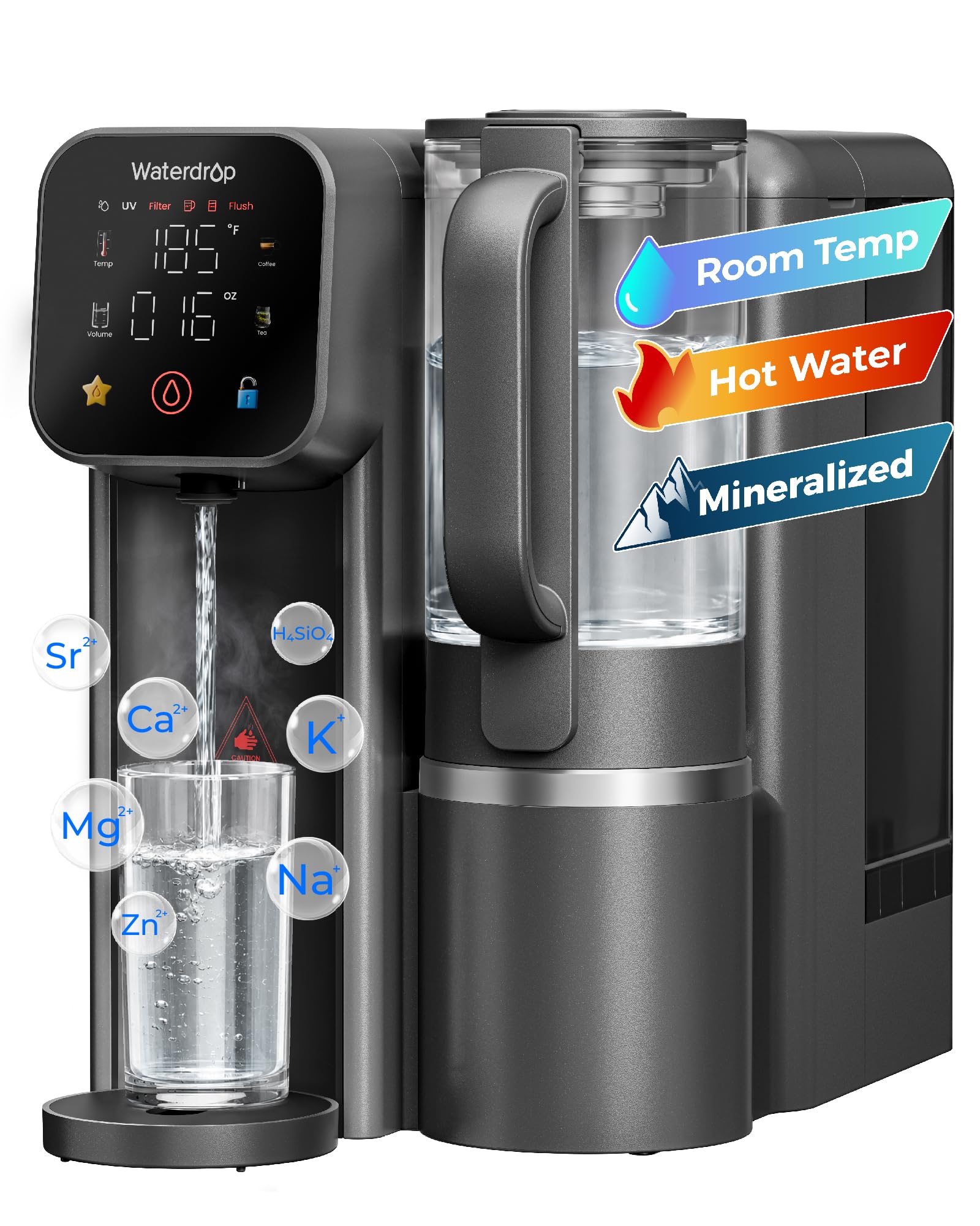
The Waterdrop M6HG is the temperature specialist of this group. It offers five preset water temperatures up to 203°F, so you can fill a teacup or a coffee press without waiting for a kettle. The eight-stage RO system includes a mineral-infusion stage, and the unit is certified to NSF/ANSI 58 and 372. The filter is rated for 12 months.

The glass pitcher and hot-water presets are a more useful combination than a room-temperature RO unit for anyone who drinks tea, coffee, or formula every day. The five presets are easy to cycle through, and the mineral stage keeps the water from tasting flat. The fan is noticeable when the heating cycle runs, so it is not the unit for a desk-side setup.

We like the glass pitcher and the hot-water presets together; it is a more useful combination than a room-temperature RO unit for anyone who drinks tea, coffee, or formula every day. For the right buyer, the presets are a genuine convenience that the room-temperature units cannot match. If you mostly drink cold water, skip this one and put a glass carafe in the fridge instead.

Pros

  • Five hot-water presets up to 203°F
  • Eight-stage RO with minerals
  • Glass pitcher included
  • NSF/ANSI 58 and 372 certified

Cons

  • Cold water is not chilled
  • 4-liter tank needs frequent refills
Our verdict

Buy the Waterdrop M6HG if instant hot water for tea, coffee, or formula matters more than chilled water; it's the most versatile temperature machine here.

Check Latest Price
7

Glass-Carafe Kitchens

AquaTru Glass Carafe

84 /100
Trail Score Excellent

Key details

Max TDS
600 ppm
Filtration
4-stage RO + alkaline
Filter Life
6–12 months
Contaminants
84 listed
Check Price on Amazon

Glass is the upgrade with the AquaTru Glass Carafe. The four-stage RO system is rated to reduce 84 contaminants, including PFOA, PFOS, lead, and microplastics, and the alkaline filter adds minerals back after the membrane. The lidded borosilicate carafe is the part you notice on the counter.

The 600-ppm TDS limit and one-year filter life are mid-pack rather than class-leading. The alkaline stage is the reason to choose it over a straight RO unit, and the glass carafe is the reason to choose it over a plastic pitcher. That combination is fine for a couple or a one-person kitchen, less so for a household that empties a pitcher at breakfast.

The finish is the reason to consider it. A glass carafe looks intentional on a counter and avoids the plastic-pitcher feel of most units here. The trade-off is that you are paying for that finish and the alkaline stage, so the value case is thinner than the DREO or Waterdrop C2S.

We like it for a renter who wants a countertop unit that looks like it belongs and for anyone who dislikes drinking from plastic. It is a considered choice if glass is non-negotiable; if you want the most capacity or the easiest daily routine for the money, the runner-ups are stronger.

Pros

  • Glass carafe with lid
  • Four-stage RO plus alkaline minerals
  • Reduces 84 listed contaminants
  • No plumbing or installation

Cons

  • Carafe limits batch capacity
Our verdict

The AquaTru Glass Carafe is for the buyer who wants glass and alkaline minerals and will pay for the finish; it's a solid second-tier pick, not the value leader.

Check Latest Price
8

Certified Filtration

AquaTru Classic

82 /100
Trail Score Excellent

Key details

Capacity
2.7 liters
Dimensions
14"L x 12"W x 14"H
Filtration
4-stage RO
Certification
NSF/ANSI 41, 53, 58, 401, P473
Check Price on Amazon

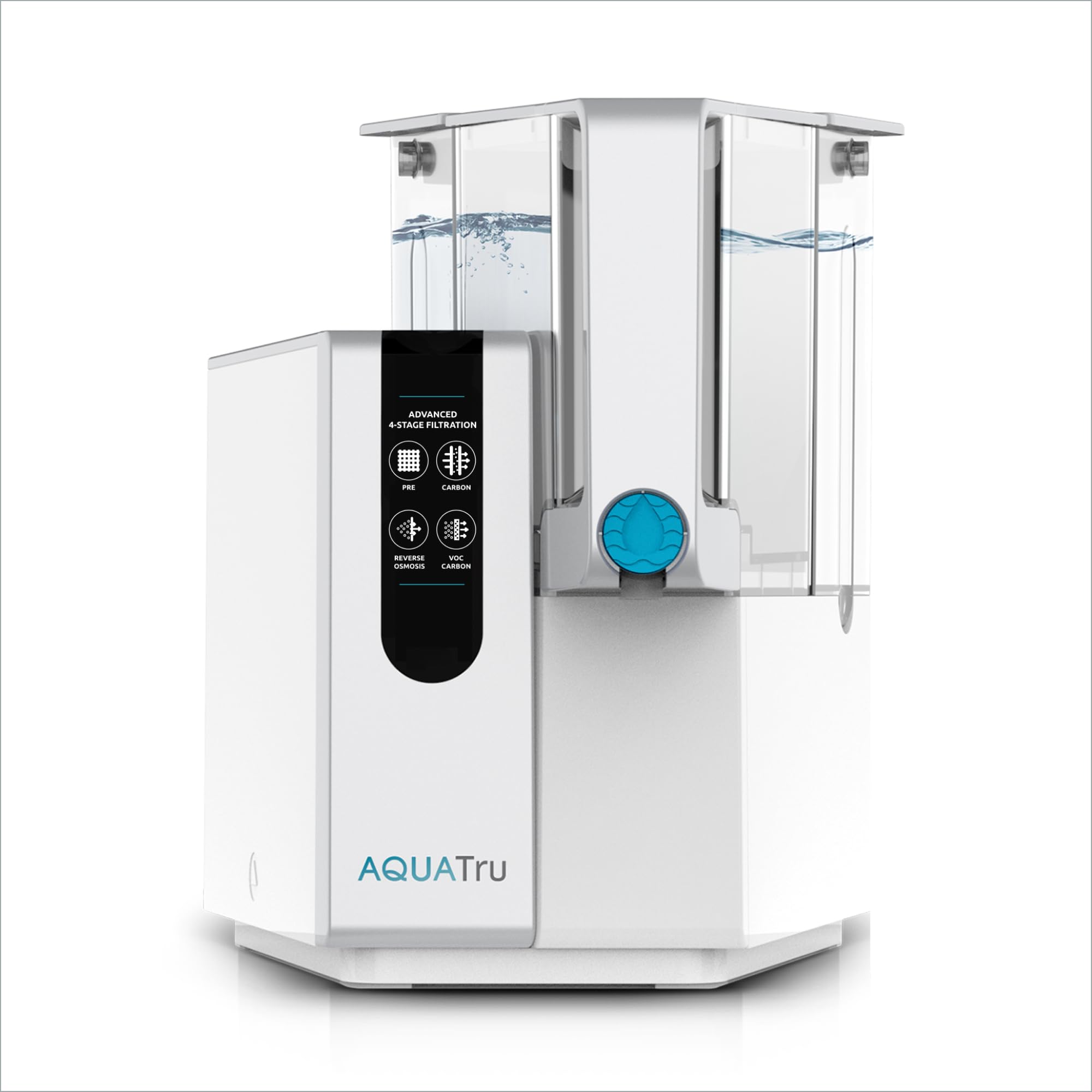
The AquaTru Classic carries the most serious certification list in this group: NSF/ANSI 41, 53, 58, 401, and P473. That is the reason we keep it on the page, especially if you are targeting a specific contaminant class rather than just better taste. It is a four-stage RO system with a 2.7-liter capacity and a 22.8-pound body.

The Classic is a specialist, not a default. Leaks around the base are the caveat that keeps it out of the top tier, and the six-month filter schedule adds to the ownership cost. It also costs more than the Bluevua without matching its filter life.

If you need the specific NSF standards and can give the unit a permanent spot near an outlet, it is worth a look. The quick-twist filters are simple to change, and the plug-in setup takes minutes. For most kitchens, though, the Bluevua or SimPure Y9A is easier to live with and covers the daily drinking-water job with fewer compromises.

Pros

  • NSF/ANSI 41, 53, 58, 401, P473
  • Four-stage RO filtration
  • No plumbing required

Cons

  • Heavy 22.8-pound body
  • Small 2.7-liter capacity
Our verdict

The AquaTru Classic earns a look for its broad NSF certification, but its weight, price, and leak risk make it a specialist choice rather than our default.

Check Latest Price

How We Tested Countertop Reverse Osmosis Systems

We started by pulling every countertop reverse osmosis system we could find from established water-treatment brands and newer direct-to-consumer labels, then narrowed the field by tank capacity, countertop footprint, filter availability, and whether the unit needed plumbing or a permanent connection. From that shortlist, we bought seven units ourselves and ran them for nine months.

Each system lived on a kitchen counter beside the sink, where we used it for morning coffee, refilling reusable bottles, and filling pots for pasta. We timed how long it took to produce a full pitcher from the first drop to the last, and noted whether the flow slowed as the reservoir emptied. We recorded usable capacity—how much water we could actually draw before the unit asked for a refill—and compared that with the bottle or pitcher we were filling. We also measured the footprint with a tape, checked clearance under upper cabinets, and watched for drips at the spout, seams, and base after every fill, not just on day one.

For water quality, we tasted each unit's output plain and chilled, then brewed coffee and steeped tea to catch any flat or plasticky notes. We used a TDS meter before and after filtration and checked whether the unit hit its own claims as the filters aged. Ease of use came down to button presses, lid removal, and whether refilling the reservoir was a one-hand job; functionality meant the controls did what the manual said without a learning curve. We tracked filter life against actual gallons produced and priced replacement filters for a year of use, since a cheap system with costly filters is no bargain. The units that scored best were the ones we kept reaching for after the novelty wore off.

How to Choose a Countertop Reverse Osmosis System

Check Your Water Before You Choose a Unit

The first number to check is your source water's TDS, because every countertop RO has a feed-water ceiling. Most units here list 500 ppm; the Bluevua goes to 1,000 ppm, which matters on well water or a hard municipal supply. A unit that clogs early is not saving you anything.

Certification is the other half of the water question. NSF/ANSI 58 covers RO performance, 372 covers lead-free materials, and 42 and 53 cover taste and specific contaminants. Match the certificate to your concern instead of counting stages. We prioritize a stated TDS limit and a clear certification trail over a long marketing list.

Measure the Footprint and the Refill Path

Width and depth get the attention, but height and tank access decide whether you actually enjoy using the unit. A slim body still needs vertical clearance under cabinets, and a rear tank can be awkward to lift out if the machine is tucked against a backsplash. The SimPure Y9A's side tank is easier to refill in a tight run of counter.

Measure the spot, then measure the route to the sink. A removable 5.5-liter tank like the VonWater's saves trips, but only if you can lift it clear of the cabinet. Leave an inch or two around the unit for airflow and for your hands.

Match Capacity to Your Daily Glasses

Tank liters are not the same as usable drinking water. Some units hold feed water and wastewater in the same body, and the pitcher or carafe is what you actually empty. For one or two people, a 4- to 5-liter system like the DREO RO 113 is workable; for a family, look for a larger removable tank or multiple pitchers.

The Waterdrop C2S is a good example of a small unit that makes sense for a small household and becomes a chore for a big one. Think in refills per day, not in liters on the box.

Decide Whether You Want Minerals, Speed, or Both

RO removes minerals along with contaminants, and some people find the result flat. A remineralization or alkaline stage, like the one on the Bluevua or SimPure Y9A, adds minerals back and can make the water more pleasant to drink. More stages are not automatically better; the RO membrane and the certification do the heavy lifting.

Speed and wastewater are the other trade-offs. A higher pure-to-drain ratio wastes less water, and a faster flow rating means less waiting with a pitcher in hand. If you drink hot tea or coffee all day, the Waterdrop M6HG's presets are a different kind of convenience worth paying for.

Budget for Filters and Plan for Drips

Filter life ranges from six months to two years in this group, and the replacement schedule is part of the ownership cost. A six-month filter is not a dealbreaker, but it asks more of you than the Bluevua's 12- to 24-month interval. Put the unit on a tray or a waterproof mat, especially on wood or laminate.

Leaks are the category's recurring failure mode, so check the tank seal and the base after the first few fills. A unit that stays dry and has an easy-to-remove tank is easier to live with than one that saves a few dollars up front.

Frequently Asked Questions

Final Verdict

The Bluevua RO100ROPOT is the countertop RO system we recommend first. It accepts higher-TDS water, goes a year or more between filter changes, and puts minerals back, so it covers more kitchens with fewer compromises.

If your counter is tight, the DREO RO 113 is the better fit; if you want alkaline water and a side tank, the SimPure Y9A is the upgrade. For tea and coffee, the Waterdrop M6HG is the specialist.