Best Cervical Traction Devices of 2026

The morning you turn to back out of the driveway and your neck stops halfway — that's usually the moment people start searching for one of these. A cervical traction device does one job: it gently separates the vertebrae, takes weight off the discs and strained muscles, and gives a spasming neck permission to let go. It won't fix a herniated disc on its own, but for the everyday desk-and-pillow variety of neck pain, the relief is real.

Here's what first-timers get wrong: more pull is not better. Crank a collar until your jaw aches, or lie back in a wedge that fights your neck's natural curve, and you'll finish stiffer than you started. We've spent six months with 12 devices — inflatable collars, door-anchored rigs, foam wedges — and the keepers all pulled gently, held steady, stayed comfortable past the ten-minute mark, and cost less than a single session with a physical therapist. The picks below are the ones we'd hand to a friend with a bad neck, sorted by the kind of support you're after.

1

Best Overall

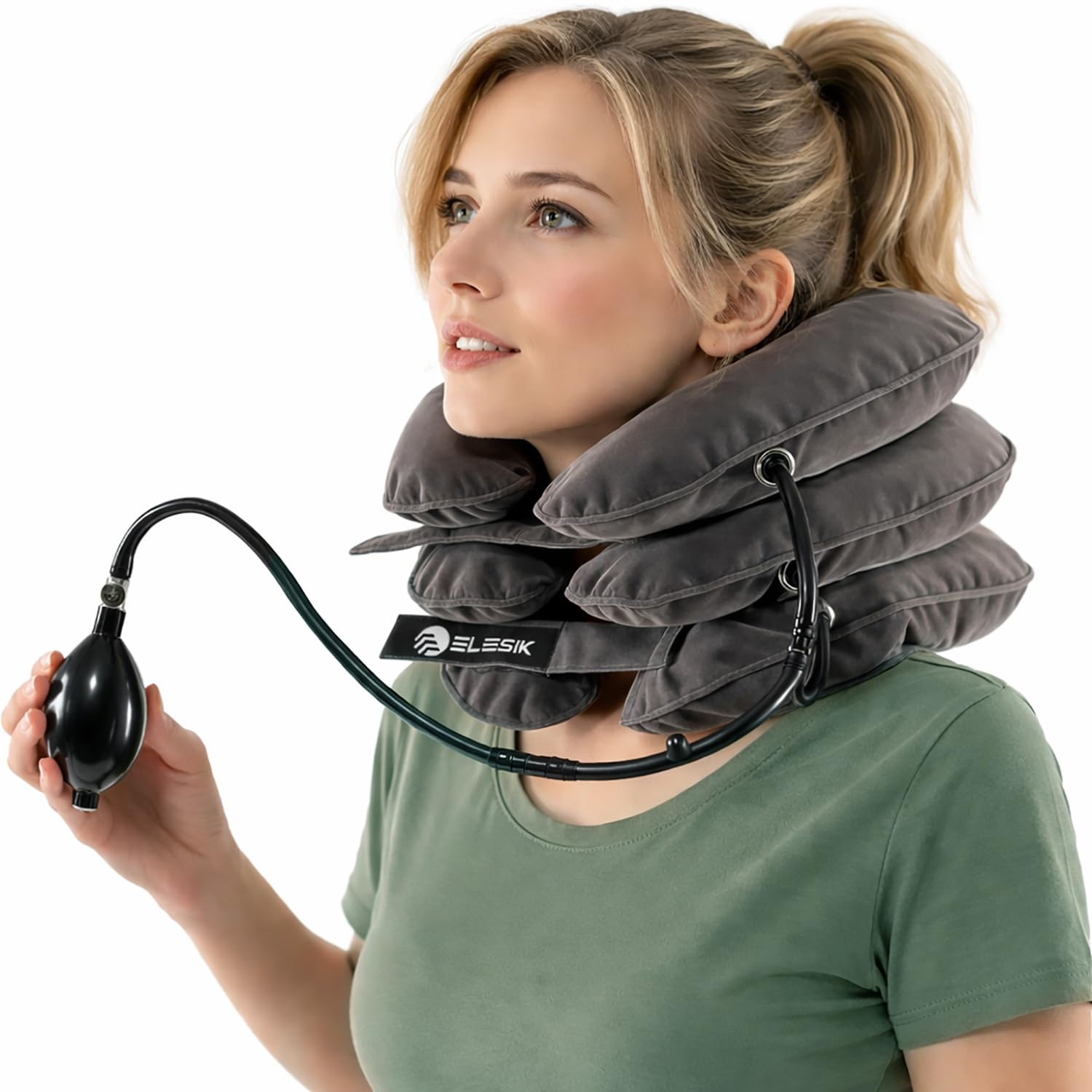
ELESIK Inflatable Neck Stretcher

85 /100
Trail Score Excellent

Key details

Fit
Adjustable straps
Type
Inflatable neck collar
Folded Size
6 x 6 x 0.5 inches
Pressure Control
Hand pump and AirLock valve
Check Price on Amazon

The hand pump is why this is our top pick. You add air in small steps, pause, and release pressure if the collar starts to feel tight, which makes the difference between a useful stretch and a clenched jaw. The contoured shape and adjustable straps keep the collar under the chin instead of riding up, and the AirLock valve holds the setting while you relax.

Comfort is the other reason it rises above the firm foam blocks here. The padded collar gives a gentle stretch you can hold for a few minutes without a towel or a countdown, and it works sitting at a desk as well as lying down. It also packs flat: deflate it, fold it, and it takes up less room than a water bottle.

What it does not do is deliver the deep, sustained pull of a full traction kit. Treat it as daily decompression and tension relief, not a replacement for clinician-guided traction. If your neck needs a stronger fixed angle, the ComforTrac or the Lumia block is the better tool. For most people starting at home, the ability to control pressure and stay comfortable is what earns the top spot.

Pros

  • Adjustable hand-pump pressure
  • Comfortable for short daily sessions
  • Packs flat for travel and small spaces
  • Easy to use without a helper

Cons

  • Gentle pull is not a high-force traction substitute
Our verdict

We recommend the ELESIK as the best first cervical traction device for most people: the hand pump lets you dial in a gentle stretch, and it packs flat for desk breaks or travel.

Check Latest Price
2

Best Budget

RESTCLOUD Neck and Shoulder Relaxer

86 /100
Trail Score Excellent

Key details

Type
Foam neck stretcher
Weight
8.78 oz
Material
Polyurethane foam
Dimensions
8.7 x 6.9 x 4.9 inches
Check Price on Amazon

Ten minutes on the floor is the whole ritual with the RESTCLOUD: lie back, let the C-curve settle under your neck, and let gravity do the work. It is the least complicated device here, and the low profile makes it easy to keep beside a yoga mat or under a coffee table.

The shape is what earns it a place. The curve supports the neck at a fixed angle, and the two knobs press into the muscles at the base of the skull. We found it gives a deeper stretch than an inflatable collar because there is no give: you set your head down and the foam holds its shape. That is also the catch: it is firm, and the first few sessions can feel aggressive. Start with five minutes, put a folded towel under it if the pressure is too sharp, and build up.

As the least expensive pick here, it is the easy way to try daily traction without committing to a pump or a kit. It is not an all-night pillow, so set a timer and use it for short sessions. When we want a firm, familiar pull after a long day, this is the one we keep coming back to.

Pros

  • Deep, fixed-angle neck stretch
  • Simple ten-minute routine
  • Lightweight and easy to store
  • Budget-friendly entry point

Cons

  • Fixed shape does not adjust to neck length
Our verdict

If you want a simple, intense stretch and do not mind a firm surface, the RESTCLOUD is the budget pick we reach for after a long day.

Check Latest Price
3

Best Adjustable Foam Block

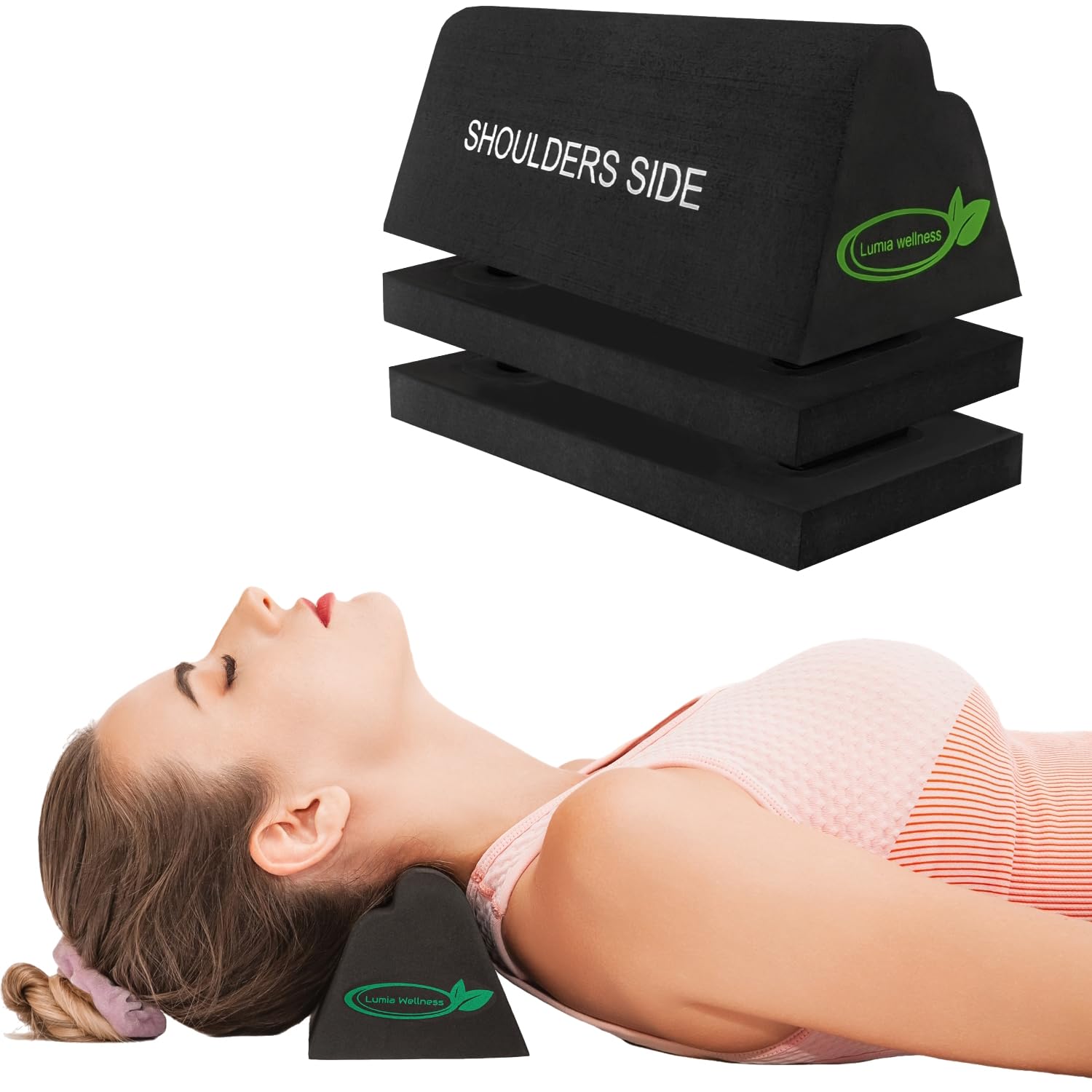
Lumia Cervical Traction Block

86 /100
Trail Score Excellent

Key details

Type
Adjustable foam block
Material
Closed-cell EVA foam
Dimensions
8 x 4.5 inches
Height Settings
3 levels
Check Price on Amazon

Three stacked foam layers do not sound like much until you lie down on the lowest one and realize you can add height without changing position. The Lumia block uses that trick to let you dial in the stretch: start with one layer, add the next when your neck relaxes, and use the different contours along the length of the block to target the base of the skull or the upper shoulders.

The foam is dense EVA, not a soft pillow. That is deliberate, because a squishy block would not hold the neck in a traction position, but it also means the first session can feel like a lot of pressure. We like that the height adjustment gives you an escape hatch: if the full stack is too much, take a layer out. The narrow width also lets you work one side of the neck at a time, which is useful if your tension is lopsided.

It is not the most comfortable device in this group, and the firmness is the trade-off for that precise, adjustable stretch. If you want something you can sink into, an inflatable collar is the easier place to start. But if you have been using a rolled towel and want a more repeatable angle, the Lumia is the adjustable block we choose.

Pros

  • Three height levels for gradual traction
  • Dense EVA holds its shape
  • Narrow profile targets specific spots
  • Light and easy to store

Cons

  • Pressure changes come in three fixed steps
Our verdict

For a firm, adjustable stretch that targets the whole cervical spine, the Lumia block is the one we choose, just start on the lowest height.

Check Latest Price
4

Best Full Traction Kit

ComforTrac-Deluxe Home Traction Kit

82 /100
Trail Score Excellent

Key details

Type
Full traction kit
Weight
7 lb
Incline
10, 15, 20 degrees
Pressure Control
Hand pump
Check Price on Amazon

A full traction kit is a different purchase from a foam stretcher. The ComforTrac gives you a padded headrest, a hand pump, and an incline you can set to ten, fifteen, or twenty degrees. That range is the point: you are not just lying on a curve and hoping the angle is right; you are choosing an angle and adding air until the pull feels therapeutic.

We like the independent neck wedges and memory-foam headrest because they let the head settle instead of clamping it. The kit also packs into a carrying case, which matters if you want to use it in a different room or take it with you. The pump makes it easy to add traction in small steps rather than committing to a fixed shape, and that control is what separates a serious home kit from a simple stretcher.

The catch is cost and complexity. This is the most expensive pick here, and it takes up more space than a block or collar. The pump is also the part to watch: if it loses pressure, the kit stops doing its job. That is a real durability question for a premium purchase, so buy from a seller with a clear return policy and test the pump in the first few sessions. If you just want a ten-minute stretch after desk work, the ELESIK is easier. If you need a more clinical-feeling pull, the ComforTrac earns its place.

Pros

  • Adjustable 10/15/20-degree incline
  • Hand pump adds traction gradually
  • Memory-foam headrest and neck wedges
  • Carrying case keeps it portable

Cons

  • Pump can lose pressure or fail
  • Premium price and larger footprint
Our verdict

The ComforTrac is the closest thing to a physical-therapy traction setup at home, and it is our pick if you need a sustained, adjustable pull and will use it consistently.

Check Latest Price
5

Partner-Assisted Stretch

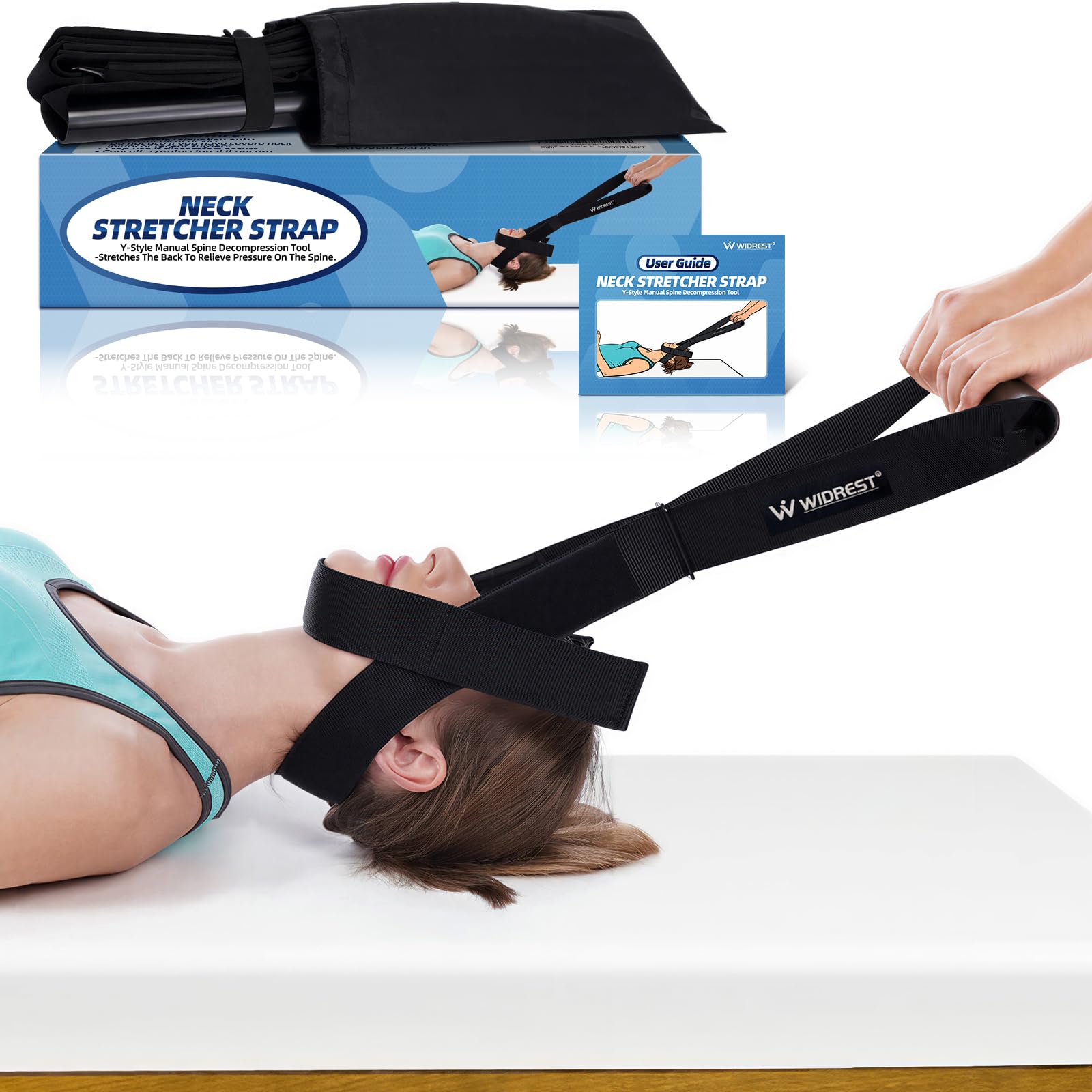
WIDREST Neck Stretcher Strap

87 /100
Trail Score Excellent

Key details

Type
Assisted strap
Weight
10.2 oz
Included
Neck strap, chin belt, manual
Material
Polyester
Check Price on Amazon

The WIDREST asks for something most traction devices do not: a second person. You fit the chin belt, anchor the strap, and have someone pull steadily while you relax. That sounds like a hassle, and it is, but it also gives you a stretch that is difficult to get on your own, because the pull comes from outside your body rather than from the weight of your head.

The strap is well made and the chin belt is adjustable, but the hook-and-loop closure is the weak point. Make sure it is seated correctly before each pull; if it is not, the strap can slip or dig in. We like it best as a short, supervised session: five minutes, slow pulls, and a partner who listens when you say stop. It is not the device to reach for if you are alone or if you want to zone out.

Compared with the inflatable collar, this is a more active, assisted stretch. It will not be the right fit for everyone, and it is not the one we hand to a first-timer without instructions. But if you have a willing partner and you have been cleared to try traction, it fills a gap the solo devices here do not.

Pros

  • Controlled assisted traction
  • Adjustable chin belt
  • Compact and easy to store
  • Well-built strap and chin belt

Cons

  • Requires a helper to pull
Our verdict

The WIDREST is the assisted-stretch pick: with a partner on the other end, it gives a controlled pull that solo collars cannot match.

Check Latest Price
6

Upper-Back Tension

CranioCradle Home Therapy System

87 /100
Trail Score Excellent

Key details

Type
Soft foam cradle
Weight
5 oz
Material
Polyfoam
Dimensions
6 x 4.5 x 2.75 inches
Check Price on Amazon

The CranioCradle is a small, soft foam cradle that you place under the back of your head, neck, or upper back. It does not hold a fixed cervical angle the way a block does; the point is to let your body weight sink into the contours and release tension around the base of the skull. That makes it a different tool from the rest of this list, and a useful one if your tightness sits at the top of the neck and shoulders.

We like it for the end of a workday, when the goal is relaxation rather than a measured stretch. It is light enough to keep in a desk drawer or a carry-on, and the multiple positions make it easy to experiment until you find the spot that feels right. It feels gentle and forgiving, and it will not dig in like a hard block.

If you have serious cervical pain or need a measurable angle, this is not the device we start with. If you want a small, forgiving tool for tension headaches and upper-back tightness, it is a nice one to have around. Just do not expect it to replace a dedicated traction device.

So we treat it as a complementary tool rather than a primary traction purchase. It earns its place for the moments when a hard block feels like too much and you want something soft to sink into for a few minutes. That is a narrower job than the other picks do, but it is one none of them handles as comfortably.

Pros

  • Soft foam contours to the neck and back
  • Multiple positions for trigger points
  • Very portable at five ounces
  • Gentle enough for relaxation

Cons

  • Small size can feel limiting
Our verdict

The CranioCradle is the pick for upper-back and suboccipital tension, not for a strong cervical pull, so think portable relief rather than a full traction setup.

Check Latest Price
7

Chin-Up Stretch

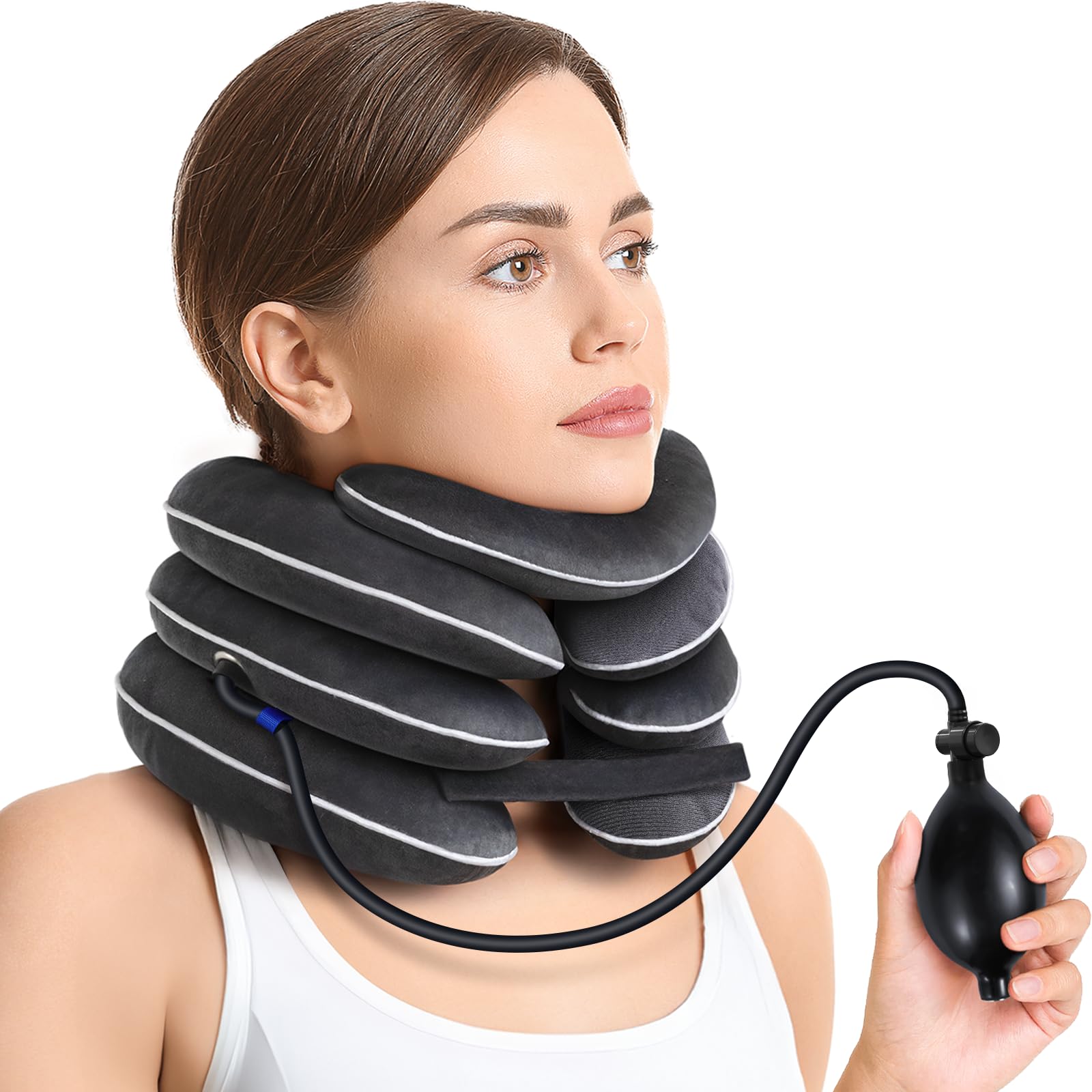
AUVON Inflatable Neck Stretcher

83 /100
Trail Score Excellent

Key details

Size
L (14–16.5 inch neck)
Type
Inflatable chin-up collar
Material
PVC with foam support
Chin Angle
15 degrees
Check Price on Amazon

The AUVON's chin-up design is the reason to look at it: the collar is shaped to hold your chin at a slight upward angle while the air chambers support the neck. That can feel more like a directed stretch than a simple collar, and it is a useful option if you tend to crane your head forward at a desk.

The fit is the make-or-break detail. This L size is intended for necks measuring 14 to 16.5 inches around, and the wider base is meant to keep the collar from digging in. We like that the size is stated plainly, because an inflatable that is too small will not sit where it should. Measure before you order; if you are at the edge of the range, the ELESIK is the more forgiving shape.

In use, the pump gives you control, but the chin-up angle will not suit everyone, and the collar can feel bulky around the face. It is a more specialized fit than our top pick, and that is why it sits in also-consider rather than the top tier. If the chin-up position matches your problem area and the circumference matches your neck, it is worth a try.

Pros

  • Chin-up angle for a directed stretch
  • Stated 14–16.5-inch fit range
  • Hand pump controls pressure
  • Wider base for support

Cons

  • Can press on the jaw or throat
Our verdict

The AUVON is worth a look if you want a chin-up stretch and your neck falls in its stated size range; otherwise, the more forgiving ELESIK is the safer first buy.

Check Latest Price

How We Chose and Tested 12 Cervical Traction Devices

We started by reading through listings on major retailers and specialty medical supply sites, then narrowed with three filters: does the pull adjust down far enough to be gentle, does the maker say what neck height or curve it suits, and is there a return window if it doesn't fit. Anything sold only as one-size-fits-all got cut. That left 12 devices, which we used for six months.

Testing happened where neck pain actually happens — at a desk after a long morning of calls, in a hotel room after a six-hour drive, on the mornings after a bad night's sleep, and after upper-body workouts. We timed how long it took to get set up and get out again, marked where the chin and the base of the skull sat before and after each 15-minute session to see how much real stretch was happening, and noted whether the pull landed at the base of the neck or dragged on the jaw.

Comfort and firmness got checked the way you'd check them at home: 15 minutes, three days running, then again in week six. We noted where padding went hard, whether an inflatable collar held its pressure overnight or slowly sagged, whether foam wedges kept their shape, and whether straps and seams survived being folded and shoved into a closet. We also watched how the chin sat during use, tucked or jutting, since a device that pushes the head forward isn't doing your posture any favors. Then we divided each price by the number of sessions we'd realistically get out of it.

How to Choose a Cervical Traction Device

Match the traction style to your routine

A fixed foam curve gives a deep stretch with no setup, but you have to lie on the floor and accept the shape as it is. An inflatable collar is gentler, adjustable, and easy to use sitting up, which is why we make the ELESIK our default for desk breaks and travel. A full kit like the ComforTrac adds a pump and an adjustable incline for longer, more clinical-feeling sessions. If you have a partner, an assisted strap can add a controlled pull that solo devices cannot.

Fit and adjustment matter more than maximum force

A collar that is too small will press on the jaw and throat instead of stretching the neck, and a foam block that is too short will miss the curve you are trying to reach. Look for a stated neck circumference on inflatables and for multiple height levels on blocks. The Lumia's three layers let you start low and add height; the AUVON lists a 14-to-16.5-inch range, which is useful if you are near the edge. When a size range is given, measure before you order rather than guessing.

Expect firmness, and start shorter than you think

Foam traction devices are supposed to be firm, because a soft block will not hold the neck in position, but that firmness can feel like a lot on the first try. Start with five minutes rather than ten, use a folded towel between you and the foam if the pressure is sharp, and add time only when the stretch feels manageable. Inflatables are more forgiving, but they can still feel bulky or tight. The goal is a gentle, steady stretch, not the hardest pull you can tolerate.

Check the hardware and your own limits

A strap, clip, or pump is doing real work, so inspect it before each session and replace anything that looks worn. Door-mounted hammocks and assisted straps put load on an anchor, and a slip can be jarring; use a secure anchor and a partner who listens. Cervical traction is not for everyone. If you have a recent neck injury, surgery, or numbness, tingling, or weakness in your arms, get a clinician's advice before you start. Stop if you feel dizzy or worse.

Frequently Asked Questions

Final Verdict

Our default is the ELESIK because it gives you the most control over pressure and is comfortable enough to use for the ten minutes that actually fit into a day. If you want a firmer, deeper stretch and do not mind lying on the floor, the RESTCLOUD is the budget choice. For a more clinical, sustained pull, step up to the ComforTrac; just be prepared to watch the pump.