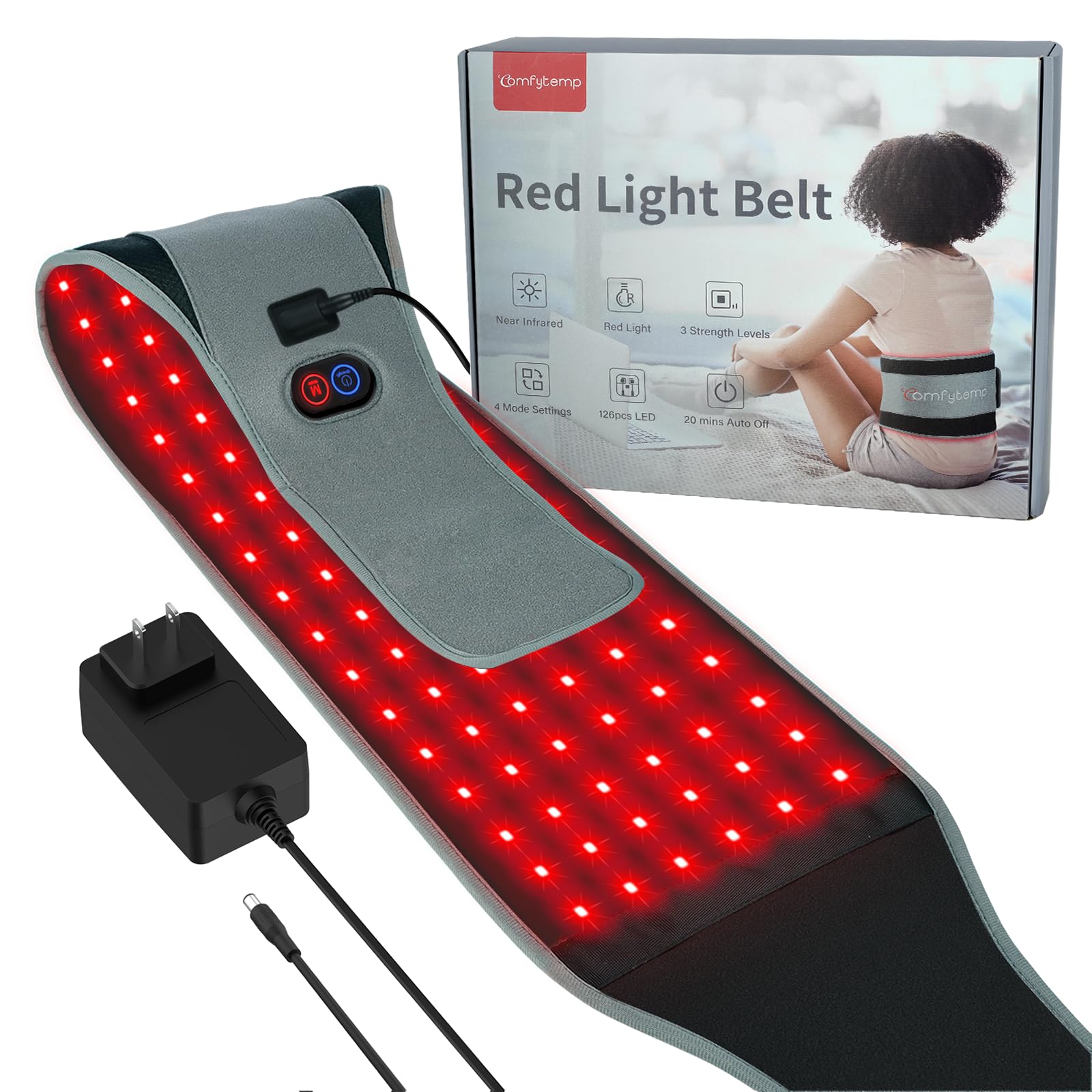
Best Red Light Therapy Belts of 2026

A red light therapy belt is a strip of LEDs you strap against a sore lower back, shoulder, or knee, sending wavelengths into the tissue underneath. The trouble is that the gap between a good belt and a forgettable one is nearly invisible on a product page — LED counts, wattage, and wavelength mixes start to look interchangeable, and no spec sheet tells you how a belt feels after 20 minutes pressed against your spine. The right one fixes something specific: it turns a session into something you'll actually keep up with instead of another gadget that ends up in a drawer.

Over eight months, my team and I wore 12 of these belts around the house — under a shirt at the desk, on the couch after a run — and the differences in warmth, fit, and battery life showed up fast. One thing first-timers rarely realize: corded belts are almost always stronger than wireless ones, so decide up front whether you want maximum output or the freedom to move around. Everything below was judged on whether it eased pain, held a charge, and felt worth the money.

1

Best Overall

Comfytemp Corded Red Light Belt

88 /100
Trail Score Excellent

Key details

LEDs
126 dual-chip beads
Power
22W, corded
Lit Area
22 x 8 in
Belt Size
50 x 8 in
Check Price on Amazon

Twenty-two inches is the number that decides this one. That's the lit section of the belt — 22 by 8 inches of glow set into a 50-inch strap — and it's wide enough to sit across a whole lower back from hip to hip without hitching it sideways halfway through a session. The 126 beads each carry a 660nm red chip and an 850nm near-infrared chip, and the controls are buttons on the belt itself, with four modes and three levels.

Having the controls on the belt rather than on a remote at the end of a cord turned out to matter more than we expected. Strap it on, press what you want, and forget it; nothing swings off the couch or slides under a cushion. It also runs warm — noticeably warm on the top setting, closer to a heating pad than to a light-only wrap — which feels good on a stiff back and is worth a layer or a quick skin check the first few times.

Wall power is the trade. Twenty-two watts through a cord is why it heats up quickly and never dims as the session runs, but it also means you're within reach of an outlet. Our advice on longevity is the same for every belt here: these are flexible electronics with thin wiring, units do give out, and buying somewhere with a straightforward return window is worth more than saving a little.

Pros

  • 22 x 8 inch lit area covers a whole lower back
  • 126 beads with red and near-infrared chips
  • Controls on the belt, no remote to lose
  • Runs warm, like a heating pad with light

Cons

  • Corded only, so you're tied to an outlet
Our verdict

The belt we point most people to: a 22-inch lit area that covers a whole lower back, on-belt controls you can work by feel, and wall power that never fades mid-session.

Check Latest Price
2

Best Premium Belt

Lifepro Allevared Red Light Belt

88 /100
Trail Score Excellent

Key details

LEDs
105 triple-chip beads
Power
USB-powered
Weight
14.1 oz
Belt Size
49.5 x 7.7 in
Check Price on Amazon

This is the most expensive belt in the group, and the money goes into the light engine: 105 beads with three chips apiece, so 315 diodes sharing the work between red and near-infrared, a timer you can set anywhere from one minute to thirty, and a pad just under half an inch thick that weighs 14 ounces. It's the lightest full-size belt here, and the only one that runs off a USB power bank as happily as a wall adapter.

That flexibility is the whole argument. Wrapped around a shoulder while you answer email, with a battery pack in a pocket, it doesn't tether you to a wall the way the corded belts do, and the thin pad molds to a knee or an elbow instead of standing off it. The three modes — red, near-infrared, or both — cover the same ground as the cheaper belts. What you're paying for is shape and power source, not extra light.

The included USB cable is short, which we noticed the first time we tried to sit somewhere comfortable; a longer cable or a pocketed battery fixes it, and that's how we ran it after the first week. Fifteen to twenty minutes is where we settled on the timer. The thirty-minute setting mostly gets used when we forget it's on.

Pros

  • 105 triple-chip beads, 315 diodes in total
  • Runs from a wall adapter or a USB power bank
  • Half-inch pad molds to knees and shoulders

Cons

  • Some units quit within days of arriving
Our verdict

Buy it if you want a full-size belt thin enough to forget about and the freedom to run it off a power bank; the premium buys flexibility, not toughness.

Check Latest Price
3

Best Cordless Belt

Comfytemp Cordless Red Light Belt

86 /100
Trail Score Excellent

Key details

Modes
4 modes, 9 settings
Power
13W
Battery
5000mAh, 80-250 min
Fits Waist
Up to 70 in
Check Price on Amazon

Cordless belts live or die on runtime, and this one is rated at 80 minutes on full brightness and up to 250 on the lower settings, from a 5,000mAh battery and a 13-watt light engine. We plan around the low end: 20 minutes a day, four days between charges, no blackout halfway through a session.

The point of paying for a battery is that the session actually happens. Strapped around your waist while you make coffee or fold laundry, this one works — it's light, the extension strap takes it to a 70-inch waist, and four modes with nine settings give you somewhere to start that isn't full blast. It doesn't get as warm as our top pick, and we missed that on a cold morning; on a sore hip after a run, the gentler heat was fine.

Charging is the routine to build. A full top-up takes a while, so pick the outlet nearest where you keep the belt and plug it in at the same time each day. Do that and it earns its place in the drawer: this is the belt that gets used on the evenings you'd otherwise skip.

Pros

  • 80 to 250 minutes of light per charge
  • Fits waists up to 70 inches with the extender
  • No cord to catch on chair arms or door handles

Cons

  • Full brightness runs the battery down in about 80 minutes
Our verdict

The one for people who won't sit still: strap it on for 20 minutes of cooking or desk work, then charge it overnight.

Check Latest Price
4

Long, Full-Length Coverage

GMOWNW Red Light Therapy Belt

84 /100
Trail Score Excellent

Key details

LEDs
105 triple-chip beads
Power
Outlet or power bank
Timer
5-30 min auto shut-off
Lit Area
7 x 50 in
Check Price on Amazon

The plug where the cable meets the controller lets go with a tug. That's the first thing we noticed in daily use, and it sets the terms: this is a belt for settling into a chair, not for pacing the kitchen. Route the cord under the strap and it stays put; reach for a coffee cup without thinking and you'll feel it pop.

What you get in exchange is light along the whole strap rather than a patch in the middle. The work area is 7 by 50 inches, with 105 beads at three chips each — 315 diodes, one red and two infrared per bead — so it's the belt to wrap around a thigh or run the length of your spine. Three modes, six timer settings from five minutes to thirty, and it runs off a wall outlet or a power bank.

Two things to know. It's the heaviest belt here at 1.52 pounds, which you feel on a shoulder more than across a back. And it gets properly warm, so start low if you're heat-sensitive. For the money it's a lot of light and a lot of coverage, and the dual power means it doesn't have to live next to an outlet.

Pros

  • Light runs the full 50-inch length, not just a middle patch
  • Wall outlet or power bank for power
  • Six timer settings from 5 to 30 minutes

Cons

  • Heaviest belt here at 1.52 pounds
Our verdict

Pick this one if you want light running the full length of the strap — around a thigh, up a spine — and you're happy to sit still while it works.

Check Latest Price

How We Tested Red Light Therapy Belts

To build the shortlist, I read through spec sheets and customer reviews for more than 40 belts, then filtered by the things that genuinely change a session: whether the panel mixed 660nm and 850nm wavelengths, how many diodes were packed in, whether it was corded or battery-powered, and how far the strap could extend. Twelve made the cut, and we spent eight months with them.

They went everywhere a sore back goes. I wore one under a shirt at my desk, my team strapped them around shoulders after a morning of gardening and knees after weekend runs, and one lived in the car for long drives. Each session ran the full time the manufacturer recommended, and we logged a pain rating before and after.

Fit got checked by standing up mid-session to see whether the belt shifted or the panel drifted off the spot. For the wireless models, we timed every one from a full charge to dead on the highest setting and compared that to the claim, and we stretched each charging cable from a wall outlet to a chair to see whether we could realistically use the belt while it topped up. Warmth was a running note: a pleasant build over ten minutes, or uncomfortable within five. After every wipe-down and wash, we looked for flickering diodes, frayed stitching, and stretched elastic. At the end, we weighed what each belt cost against how often we reached for it, since the best value here is the one you don't resent strapping on.

How to Choose a Red Light Therapy Belt

Coverage: Patch, Band, or Full Strip

Belts differ in where the light actually sits. Our Comfytemp top pick concentrates 22 inches of light into an 8-inch-wide patch, which suits a lower back or a pair of shoulders. The GMOWNW lights its entire 50-inch length instead, which is what you want wrapped around a thigh or run up a spine.

Measure the area you're treating before you buy. A short lit section on a long strap leaves most of the belt dark — fine for a knee, frustrating for a back. Width matters too: 8 inches is generous across a back and unwieldy on a wrist.

Corded or Cordless

The corded belts here run 22 watts from a wall outlet; the cordless one runs 13 watts from a 5,000mAh battery. Wall power means more warmth and no dimming as the session runs, and no battery to age. Battery power means you can wear the belt while you move, at the cost of a session limit and a nightly charge.

Decide from your habits rather than the spec sheet. If you'll sit for 20 minutes anyway, corded is better value. If you know you'll be tidying or cooking, cordless is the one that gets used.

Chip Counts and Wavelengths

Every belt here pairs 660nm red with 850nm near-infrared; the difference is how the diodes are stacked. A three-in-one bead holds three diodes — usually one red and two infrared — so 105 beads means 315 diodes, not 105. That figure tells you how the light is spread out, not how strong it is. Stated wattage is the better guide, and it's what we'd look at first.

The trap is buying the biggest number. More beads spread across a longer strip can mean less intensity at any one point, so a 315-diode belt is not automatically twice the device of a 126-diode one.

Fit, Straps, and Skin Contact

Light has to reach the skin, and a belt that sags away from your back is doing very little. Look for a strap that pulls the pad flat rather than one that simply closes the loop — compression is the point of the design. Check the maximum waist size, since extension straps vary widely; the cordless Comfytemp reaches 70 inches with its extender.

Velcro is universal at this price and it does snag fleece and sheets. Close the strap on itself before you store the belt and you'll avoid most of the snagging.

Build, Failure Points, and Returns

The weak point is almost always mechanical: the junction where the cord meets the controller, or the wiring inside the pad. That's why a belt can work beautifully for three weeks and then quit. Treat the purchase accordingly — buy from a seller with a real return window, keep the packaging for the first month, and unplug by the plug rather than by the cord.

None of that is a reason to skip the category. It's a reason to think of these belts as something you'll replace rather than an appliance you'll hand down.

Frequently Asked Questions

Final Verdict

Start with the Comfytemp corded belt. It covers more of a back than anything else here, the wall power means it never dims halfway through, and the controls sit where your hand already is. For most people shopping this category, that's the whole decision.

If you know you'll be moving — tidying, cooking, walking the dog — take the cordless Comfytemp and charge it overnight. And if a thin pad you can run off a battery pack matters more than money, the Lifepro is the upgrade, as long as you buy it somewhere with a generous return window.