Best Balance Trainers of 2026

A balance trainer is a simple idea: a rubber dome on a flat base that turns squats, planks, and single-leg work into a negotiation with gravity. The difference between a good one and a frustrating one shows up fast—in how stable the platform feels underfoot, whether the surface grips a sweaty hand, and whether it still holds air after a few weeks. The right one gives you a controlled wobble; the wrong one slides, bottoms out, or goes soft mid-set.

I’ve used balance trainers in physical therapy and at home, and I’ve learned inflation matters more than shoppers expect: too firm hides instability, too soft collapses under your weight. Over eight months, I tested 10 balance trainers, noting how quickly they set up, how well they gripped bare feet and sneakers, and whether they stayed firm through squats and planks. Quality, durability, and value separated the keepers—some felt solid on day one but scuffed or lost air by month two. The picks below are the ones that earned their floor space.

1

Best Overall

LifePro Horizon Half Ball

93 /100
Trail Score Outstanding

Key details

Modes
Dome-up or base-up
Capacity
440 lb
Dimensions
23.6 x 23.6 x 8.5 in
Check Price on Amazon

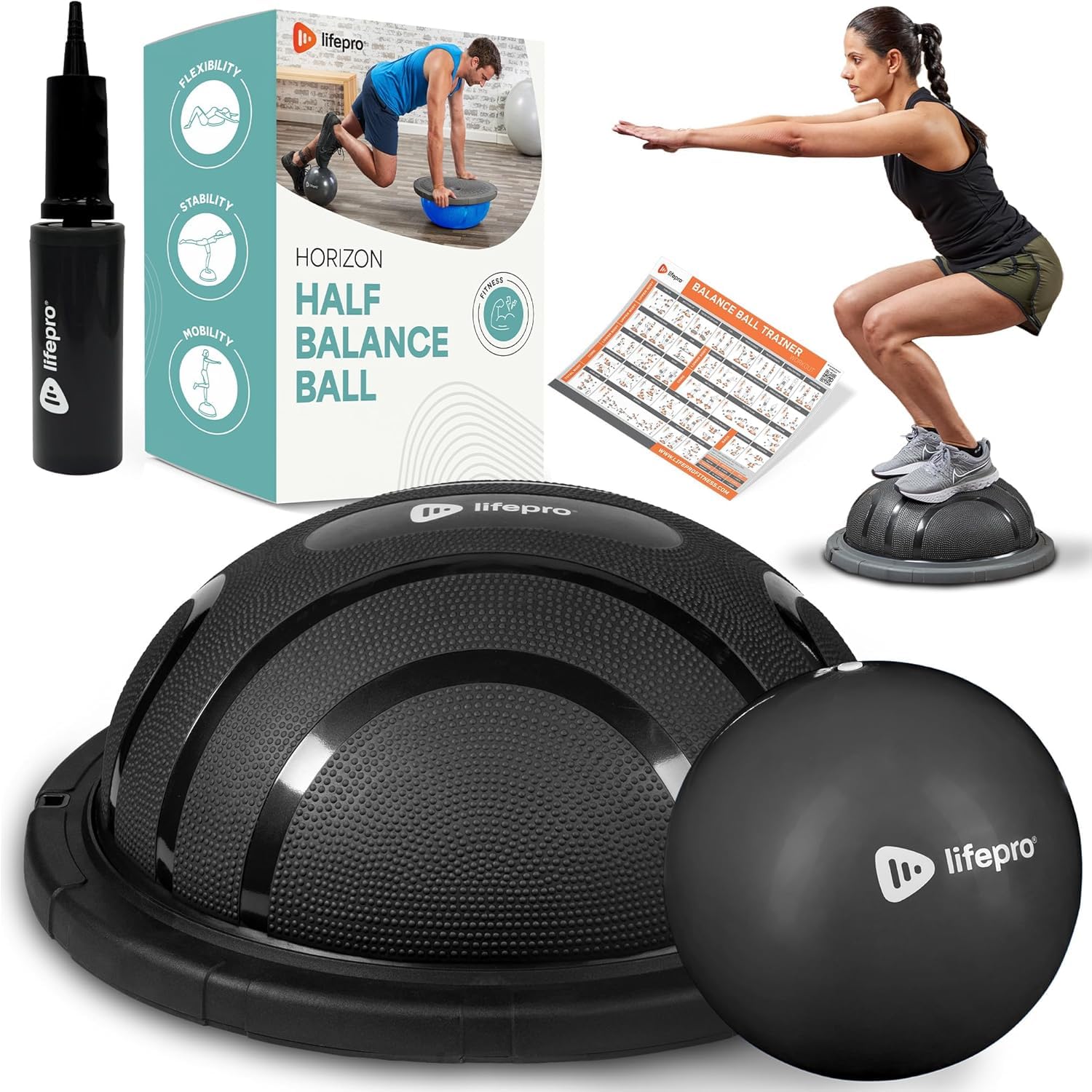
Two trainers in one body is the pitch, and the Horizon is where that idea holds up best. Dome up, it gives you a soft, multi-directional surface for a two-foot stance; flipped base up, the flat platform rides on the dome and turns a plank or a push-up into a fight to stay level. We spent most of our sessions on the dome side and came away convinced by the 23.6-inch surface: wide enough that your feet are not hunting for the edges, small enough that the wobble is there from the first second.

Capacity is the quiet advantage. At 440 pounds it is rated higher than any other dome in this guide, and the PP and TPE base stays firm underfoot rather than squashing out at the rim. The box carries a pump, a 10-inch Pilates ball, an inflation straw, a tape measure, and plugs, so setup is self-contained.

What it will not do is grade a single direction the way a rocker does. If a clinician has you working ankle range one way at a time, the StrongTek board is the more precise tool; the Horizon's value is breadth. Base-up mode is genuinely humbling, and that is the setting that keeps it in rotation once standing on a dome stops being interesting.

Pros

  • Two orientations give two difficulty levels
  • 440-pound capacity, highest dome rating here
  • Pump and 10-inch Pilates ball included

Cons

  • Firming the dome takes patient pumping
Our verdict

Our default recommendation: two surfaces, the highest dome capacity here, and a pump in the box make it the balance trainer that suits the widest range of home workouts.

Check Latest Price
2

Best for Guided Workouts

BOSU Balance Trainer

91 /100
Trail Score Outstanding

Key details

Height
8.5 in
Capacity
300 lb
Includes
Guided workout and pump
Dome Diameter
26 in
Check Price on Amazon

Twenty-six inches across and 8.5 inches tall, this is the biggest dome in the guide, and the height does more than the width. Standing on it lifts your hips above where a flat board puts them, so the work starts at the ankle and runs upward instead of settling into a gentle rock.

We think the guided workout program is what justifies this one over the cheaper domes. A dome is only as useful as the drills you know, and having a progression ready removes the guesswork for anyone who has never stood on one. The rubber surface is tacky under bare feet and still grips a shoe, and the 300-pound rating is fine for most homes but trails the Horizon's 440.

Air is the part that decides whether you get a good one. A dome that arrives reluctant to inflate, or softens over the first week, needs sorting out promptly: fill it fully, let it sit a day, top it up, and check it again before you build a routine around it. On the one we kept, the surface has stayed tacky and the deck has not wandered across the floor.

Pros

  • Ships with a guided workout program
  • 26-inch dome, the largest platform here
  • Tacky rubber holds bare feet and shoes

Cons

  • Short 90-day warranty
Our verdict

The one to choose if you want a program to follow: it is the only dome here that ships with guided workouts, on the 26-inch platform gyms have used for years.

Check Latest Price
3

Best for Board Sports

Revbalance 101 v2

95 /100
Trail Score Outstanding

Key details

Stops
Magnetic, tool-free
Surface
DuraSoft traction
Capacity
400 lb
Board Weight
6.8 lb
Check Price on Amazon

The feature that earns this board its money is a magnetic stop you slide by hand, with no tools and no pins to lose. Set the stops close together and the deck barely travels, which is how a beginner gets on without a handhold; walk them out and the same board becomes a proper fore-and-aft ride that will find you out.

The deck surface is the other half of the story. Revbalance's traction is soft rather than gritty, so it is comfortable in socks and does not scuff the way emery paper does, and the 400-pound rating sits on a board that weighs under seven pounds and moves between rooms without a second trip. Handcrafted in the USA, and the finish looks it.

Where this one wins is progression. A fixed board is a fixed challenge, and this one moves with you from a nervous first week to something that still catches you out when you get cocky. If you snowboard, skate, or surf, the rolling motion trains the ankle and hip corrections those sports ask for, and that is the whole case for spending more here than on a fixed deck.

Pros

  • Tool-free magnetic stops adjust in seconds
  • Soft traction deck is kind to bare feet
  • 400-pound capacity on a light board

Cons

  • The most expensive board here
Our verdict

Worth the extra if board sports are the point: the magnetic stops let you start safe and progress without buying a second board.

Check Latest Price
4

Best All-In-One Kit

Sportneer 7-Mode Board

95 /100
Trail Score Outstanding

Key details

Modes
7
Capacity
450 lb
Includes
Board, roller, and ball
Deck Size
31.5 x 14.17 in
Check Price on Amazon

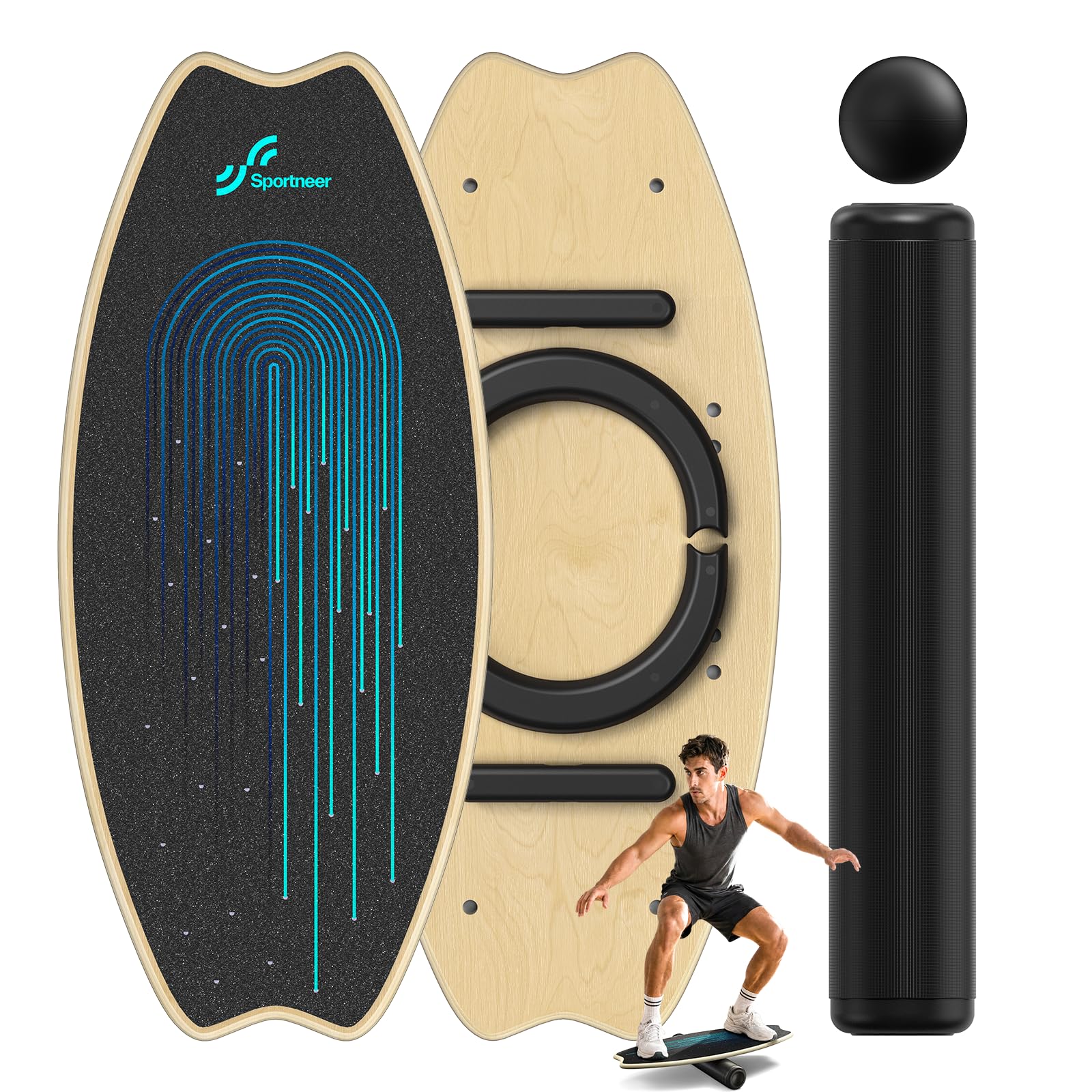
Three pieces arrive: a birch deck, a roller, and an inflatable ball. The combinations are the product. Roller underneath for fore-and-aft work, ball underneath for a rounder and far less predictable wobble, or the deck alone on the floor as a stable platform for push-ups and planks.

At 31.5 inches long and 14.17 wide, it is the longest deck in this group, and the length gives you room to shift your stance rather than a wider platform to stand on. The stoppers move without tools, so a first session can be short-travel and a tenth one can be quick, and the matte top holds a sock foot without the sandpaper bite of the cheaper boards.

The 450-pound rating is the highest here, and the birch deck does not flex under a two-foot stance. Ball mode is the weak link in the sense that it is brutal: a ball under a wooden deck is a much livelier ride than any dome, and it is the configuration we reach for least, while the roller gets the most use.

For a board several people will use, this is the pick. Seven configurations mean a cautious beginner and a teenager with a skateboard habit can both get something out of the same deck, and it does that for less than the Revbalance. Choose the Revbalance for the simplest possible progression; choose this for variety, and accept that the roller and ball need somewhere to live.

Pros

  • Seven configurations from one kit
  • 450-pound rating, highest in this set
  • Long deck leaves room to shift stance

Cons

  • Three separate pieces to store
  • Long deck needs more floor space
Our verdict

The best pick for a shared household: board, roller, and ball give beginners and confident riders a reason to use the same deck.

Check Latest Price
5

Best Budget Roller Board

Yes4All Surf Balance Board

93 /100
Trail Score Outstanding

Key details

Capacity
300 lb
Deck Size
29.53 x 11.22 in
Construction
15-ply pressed wood
Stop Distances
11, 16, and 22 in
Check Price on Amazon

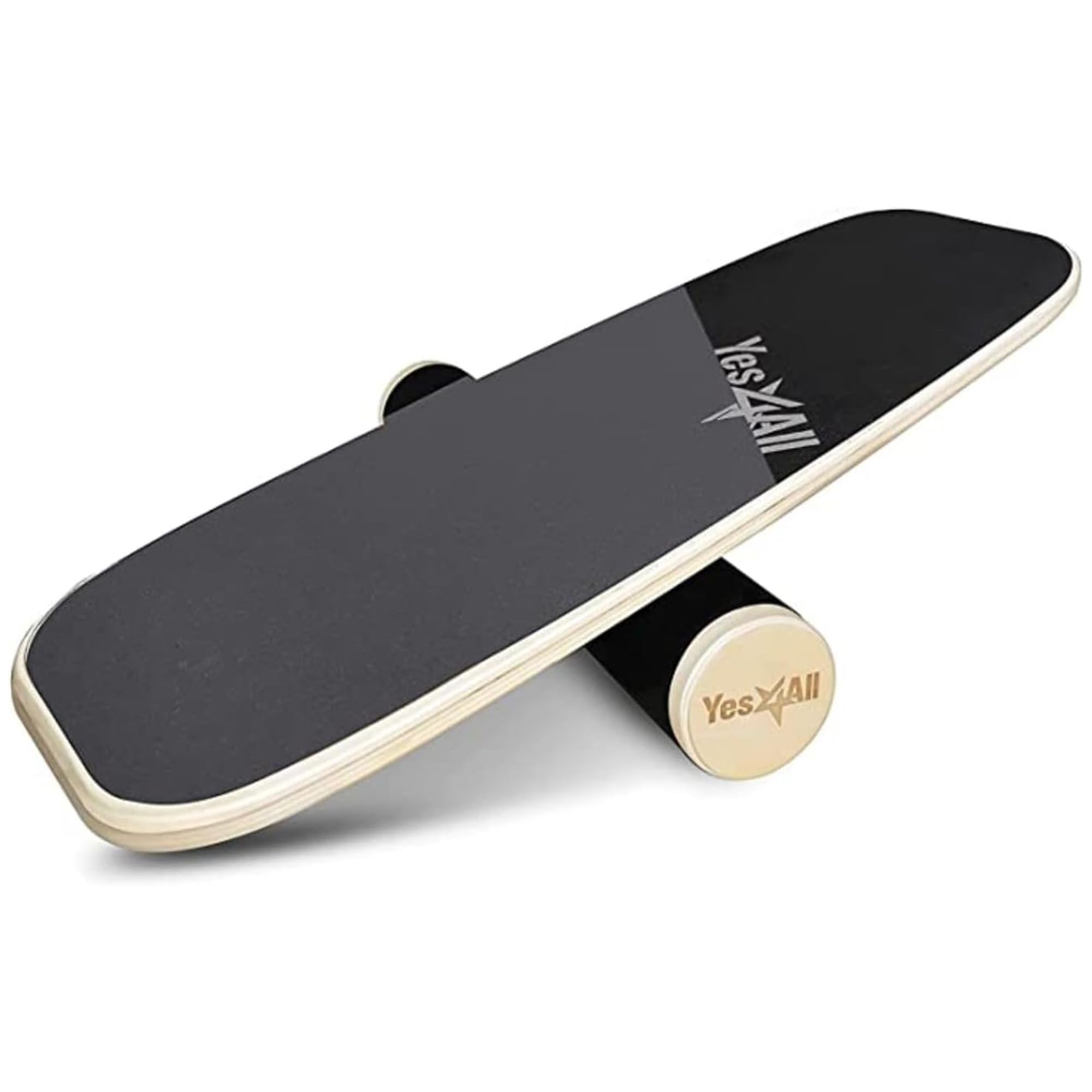
Set this beside the Revbalance and the difference is the stops: a peg you pull and drop into one of three positions rather than a magnetic slide. The 11, 16, and 22-inch settings carry you from first-timer to genuinely quick, and the 15-ply deck is stiff enough that you are balancing against the roller rather than against flex.

On the widest setting it does what a surf trainer should, tipping fore and aft while you correct from the ankles and hips, and it does it for a lot less money than the premium boards. Two things to know before you order: the emery surface is coarse enough that bare feet complain, and the roller covering is the first part to show wear, so keep the board off gritty floors and check the roller every few weeks.

Pros

  • Three stop distances cover beginner to advanced
  • Stiff 15-ply deck at a budget price
  • Grip paper holds shoes securely

Cons

  • Grip surface is rough on bare feet
  • 300-pound limit is the lowest roller rating here
Our verdict

For surfers and snowboarders watching the budget, this does the roller-board job with three stop positions and no fuss.

Check Latest Price
6

Best Rocker for Rehab

StrongTek Wooden Balance Board

92 /100
Trail Score Outstanding

Key details

Weight
4.7 lb
Capacity
350 lb
Dimensions
17.5 x 13.5 x 3 in
Check Price on Amazon

A rocker is the least glamorous tool here and the one a physical therapist is most likely to hand you: it tips along a single axis, so you work ankle strength and control in a direction you can grade instead of fighting a surface that moves everywhere at once. The StrongTek does exactly that on a 17.5 by 13.5-inch wooden deck.

Build quality is the reason to pick it over a plastic rocker. The plywood deck is finished rather than raw, the textured top is comfortable under bare feet, and rubber pads underneath keep it from skating across hardwood or digging into carpet. At 4.7 pounds it moves from living room to office without effort, and the 350-pound rating covers most adults.

The narrow deck is the trade-off. A 13.5-inch width gives you a hip-width stance, which is right for ankle work and tight for wide squats; if you want room under both feet, a dome is more forgiving. What you get in return is a board you can keep beside a desk and step onto in socks for two minutes at a time, which is how balance work actually gets done.

One ordering detail is worth catching before you pay. This listing covers both a basic rocker and an advanced 360-degree wobble version, and the two behave nothing alike. Check the variant name you are adding to the cart, because the rocker is the controlled rehab tool and the wobble version is a different piece of equipment entirely.

Pros

  • Wooden deck with pads that stay put
  • Textured top comfortable under bare feet
  • Light enough to move room to room

Cons

  • Narrow deck limits wide stances
Our verdict

If a clinician has you working one direction at a time, this solid wooden rocker is the tool for the job.

Check Latest Price
7

Best Pad for Standing Desks

ProsourceFit Balance Pad

96 /100
Trail Score Outstanding

Key details

Weight
12 oz
Material
TPE
Dimensions
15.5 x 12.75 x 2.25 in
Check Price on Amazon

Half an hour at a desk on this pad is the least intimidating balance work in this guide. The 2.25-inch TPE slab gives just enough under a standing foot to keep small corrections ticking over while you answer email, and it is soft enough to kneel on when you drop to the floor to stretch.

The 15.5 by 12.75-inch surface fits one pair of feet or two knees, not a lunging stride, and at 12 ounces it goes under a couch or into a bag without a second thought. TPE is the right call for something you will sweat on: it wipes clean and keeps its grip rather than going slick the way cheaper foam can.

What it cannot do is grow with you. There is no inflation, no stops, and no second surface, so once balancing on it stops asking anything of you, it is a pad again, which is still worth having as a desk cushion and a knee pad. If you want a challenge that lasts, put the money toward a dome or a roller and keep this for the days you are standing at a counter.

Pros

  • Turns desk standing into balance practice
  • Wipes clean and resists sweat
  • Doubles as a kneeling pad for floor work

Cons

  • No way to raise the difficulty
Our verdict

Buy it to stand on at a desk or kneel on during floor work; it is the least intimidating way to add balance training to an ordinary day.

Check Latest Price
8

First-Time Balance

Amazon Basics Wood Wobble Board

93 /100
Trail Score Outstanding

Key details

Weight
2.8 lb
Capacity
265 lb
Dimensions
15.75 x 15.75 x 3.15 in
Check Price on Amazon

The deck is a 15.75-inch square of solid wood with a rough, sandpaper-like top, and it does exactly one thing: it pivots. No adjustment, no second configuration, no pump. You step on, find the balance point, and step off again.

That simplicity is the appeal. It looks like a piece of furniture rather than gym kit, the surface grabs a sock foot, and the whole board weighs under three pounds, so it lives against a wall and comes out while the kettle boils. Standing on it through a phone call at a standing desk is the realistic use.

Floor contact is where it gets fussy. On smooth hard floors the board can slide, and on thick carpet the pivot digs in and the motion turns sluggish, so a thin mat underneath is worth planning for. The pivot itself is short, which makes the board forgiving on day one and less interesting once the novelty goes.

Buy it as a starter rather than as equipment. If you want to know whether you will actually use a balance board, this is the least committing way to find out, and it doubles as a standing-desk wobble in the meantime. If balance work sticks, hand it to a teenager and move up to a roller.

Pros

  • Solid wood deck for very little money
  • Light enough to tuck against a wall
  • Simple pivot suits first-time users

Cons

  • Short pivot is easy to outgrow
  • 265-pound limit is the lowest here
Our verdict

A good first board if you want to find out whether balance work sticks: simple, wooden, and easy to keep beside a desk.

Check Latest Price

How We Chose and Tested Balance Trainers

We started by pulling together 10 models that represented the range of what’s actually sold: half-dome trainers with and without handles, textured and smooth surfaces, and bases that ranged from wide and planted to compact and easy to stash. I ruled out anything that arrived without a pump or clear inflation guidance, then lived with each one for eight months in a small home gym, on a living-room rug, and on garage concrete. Setup was timed from unboxing to first use, including how long each took to inflate and whether the pump and valve were easy to work without help.

Stability and balance came first. I did single-leg holds, squats, lunges, planks, and step-ups barefoot and in sneakers, watching whether the dome tilted, the base lifted, or the whole thing skated across the floor. For grip, I tried damp feet and sweaty hands on the surface, then checked whether dust and pet hair made it slick. I measured each footprint and stored it between a coffee table and a wall to see how much floor space it really demanded. Inflation got checked at week one, week four, and week eight with a gauge, and I noted which domes softened or needed re-pumping.

Functionality and ease of use mattered as much as the wobble. I noted whether the edge was comfortable for push-ups, whether the base had a handle for carrying, and whether the surface gave enough feedback for balance drills without feeling punishing. After eight months, I inspected seams, valves, and bases for scuffs, cracks, or slow leaks, and compared what each trainer included against how often I actually reached for it. The ones that held air, stayed put, and felt worth the floor space made the final list.

How to Choose a Balance Trainer

Start With the Direction You Want to Train

Every product here is unstable in a different way, and that shape decides what you can do on it. A rocker like the StrongTek tips along one axis, which is why clinicians reach for it after an ankle or knee injury: you control how far and how fast you travel. A pivot wobble board is the simple all-directions version, and a roller under a deck tips fore and aft, closer to what a snowboard or surfboard does underfoot.

A dome does the most. Dome up, it wobbles every way at once for two-foot standing work; base up, it becomes a platform for planks and push-ups. A foam pad is the gentlest option and the easiest to leave on the floor permanently. Match that to your goal and the shortlist gets very short.

Progression Is What Keeps a Board Useful

A fixed board is a fixed challenge, and a short pivot stops asking much of you quickly. Adjustable stops, a second riding position, or a change in air pressure let one purchase keep working as you improve. The Revbalance's magnetic stops and the Yes4All's peg positions both do this: short travel for a first session, longer travel once your ankles stop panicking.

One trap worth naming: several listings sell a basic rocker and a 360-degree wobble version from the same product page, and the two behave nothing alike. Read the variant name before you order, then decide which motion you actually want.

Deck Size, Stance, and Rated Capacity

Width is about your stance, not your height. A 15.75-inch square is fine under a hip-width stance and cramped for wide squats, while a 23.6-inch dome or a 31.5-inch roller deck gives you room to shift. If you plan to move your feet mid-set rather than lock them down, buy length.

Capacity matters most when a board is shared. Ratings in this group run from 265 to 450 pounds, and that range decides whether a heavier adult can use the same board as a teenager. Check the number before you plan on passing it around the house.

Floor, Footwear, and Where It Will Live

Grip surfaces fall into two families: gritty paper that holds a shoe and complains against bare feet, and soft traction that is comfortable in socks. Whichever you choose, plan for the floor. A hard surface lets a board slide, thick carpet makes a short pivot sluggish, and a thin mat underneath solves both without much fuss.

Then measure the space, and the height as well as the width. A 2.25-inch pad slides under a couch; an 8.5-inch dome does not. And if the board is going under a standing desk, remember that standing on three inches of wood effectively lowers the desk by three inches, so raise it before your shoulders pay for it.

Frequently Asked Questions

Final Verdict

Start with the LifePro Horizon. It covers the widest range of home balance work, from two-foot standing to planks and push-ups on either face, and its 440-pound rating is the highest among the domes here, which makes it the safest default for a household of mixed sizes and ambitions.

If you want a set program to follow, the BOSU is the alternative. And if board sports are the reason you are shopping at all, take the Revbalance instead: its magnetic stops are the difference between a board you try and a board you keep.