Best Balance Boards of 2026

A balance board looks like a toy until you step on one and feel your ankles negotiating with gravity. The good ones turn a few minutes of standing around into real balance practice—and become the thing everyone gravitates toward during a TV break. The bad ones slide under a sock foot, wobble unpredictably, or creak loudly enough that you stop trusting them. What separates the two is rarely marketing; it’s the deck surface, the rocker’s shape, and whether it’s sized for actual feet in an actual room.

I’ve kept a balance board near my desk for years, and over the past eight months my team and I put 12 boards through daily use. We stood on them barefoot, in sneakers, and in socks, on carpet and hardwood, and handed them to kids, runners, and one tester rehabbing an ankle. The keepers were stable without feeling dead, grippy without demanding shoes, and sturdy enough that nobody hesitated to step on after a long day. The right board should make you want to use it, not just prove you can. The ones that pulled that off are below.

1

Best Overall

Revbalance 101 v2

95 /100
Trail Score Outstanding

Key details

Deck Material
Plastic
Weight Capacity
400 lb
Adjustable Stops
MagSwitch, tool-free
Traction Surface
DuraSoft
Check Price on Amazon

The magnetic stop system is the first thing we noticed, and it is what separates the 101 v2 from simpler roller boards. The stops slide to shorten or lengthen the roller's travel in seconds, so a nervous beginner can start with a small, controlled roll and open it up as balance improves. The DuraSoft traction surface is comfortable under bare feet but still grippy with shoes, and the 400-pound capacity means it accommodates a wide range of users. At 6.8 pounds, it is easy enough to move out of the way but still feels substantial underfoot.

What we appreciate most is how the board grows with the rider. Instead of a fixed challenge that becomes too easy, the 101 v2 lets you tune difficulty without tools, which is why it is our top pick for households with mixed experience levels. The roller rolls smoothly on carpet and hard floors, though we still use a mat on a polished floor to protect the finish and keep the board from wandering. The shorter stop setting is the detail that surprised us: it turns a shaky first attempt into a controlled exercise, then opens into a real challenge when you are ready.

Pros

  • Tool-free stops adjust difficulty in seconds
  • DuraSoft deck comfortable barefoot or with shoes
  • 400-pound capacity supports shared use
  • Solid, handcrafted construction

Cons

  • Costs more than the basic boards here
Our verdict

We recommend the Revbalance 101 v2 as the default all-around balance board because its tool-free stops let beginners progress without buying a second board.
Check Latest Price
2

Best Classic Surf Trainer

Indo Board Original

96 /100
Trail Score Outstanding

Key details

Included
Board and roller
Material
Maple wood
Deck Dimensions
30"L x 18"W x 0.5"H
Weight Capacity
350 lb
Check Price on Amazon

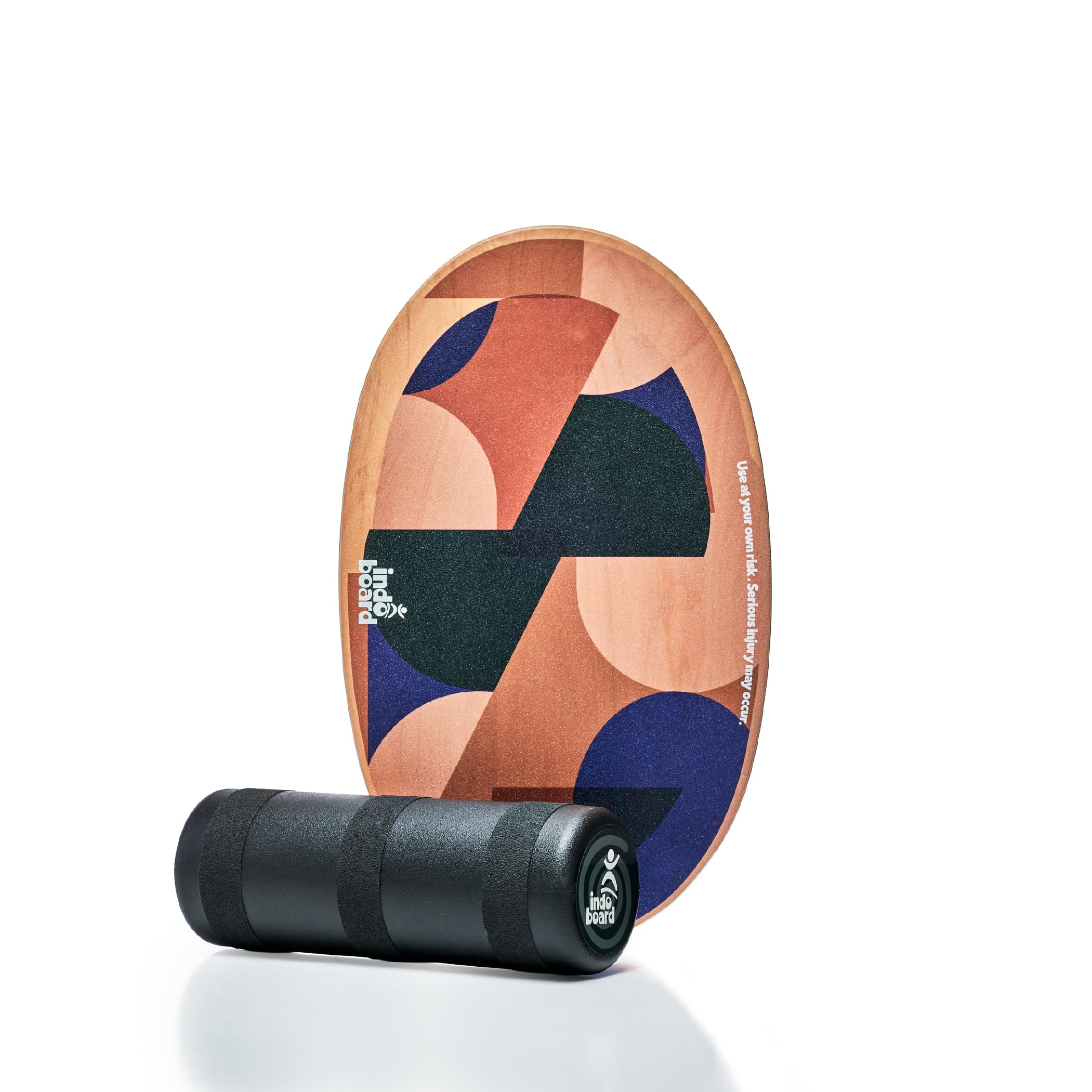
The first few minutes on the Indo Board are humbling. The maple deck sits on a roller with no shortcut, and the board demands that you find the center before it gives you anything. That steep learning curve is exactly why surfers and skaters like it: the heel-to-toe and side-to-side corrections feel closer to a real board than the guided, stop-limited trainers here. The 30-by-18-inch deck is generous enough for a comfortable stance, and the 350-pound capacity covers most adults. We found the board and roller roll smoothly on carpet and reward short, frequent practice more than long sessions.

What we like is the simplicity. The setup is a board and a roller, and the learning comes from feeling the roller travel under you. That makes it less forgiving for a beginner who wants a controlled first step, and it is the main reason we do not recommend it as the default for every household. If you have a specific board sport to train or you enjoy the challenge of a classic setup, the Indo Board is worth the patience. The deck is beautiful, too, with the kind of finish that makes it feel at home in a living room rather than only a gym.

Pros

  • Classic surf-style roller feel
  • Generous 30-by-18-inch maple deck
  • 350-pound capacity

Cons

  • Premium price for a classic setup
Our verdict

Choose the Indo Board if you want the classic surf-training feel and are willing to earn it; the steep first sessions are part of the point.

Check Latest Price
3

Best Versatile Value

Sportneer Balance Board

95 /100
Trail Score Outstanding

Key details

Material
Birch
Set Includes
Board, roller, and ball
Deck Dimensions
31.5 x 14.17 inches
Weight Capacity
450 lb
Check Price on Amazon

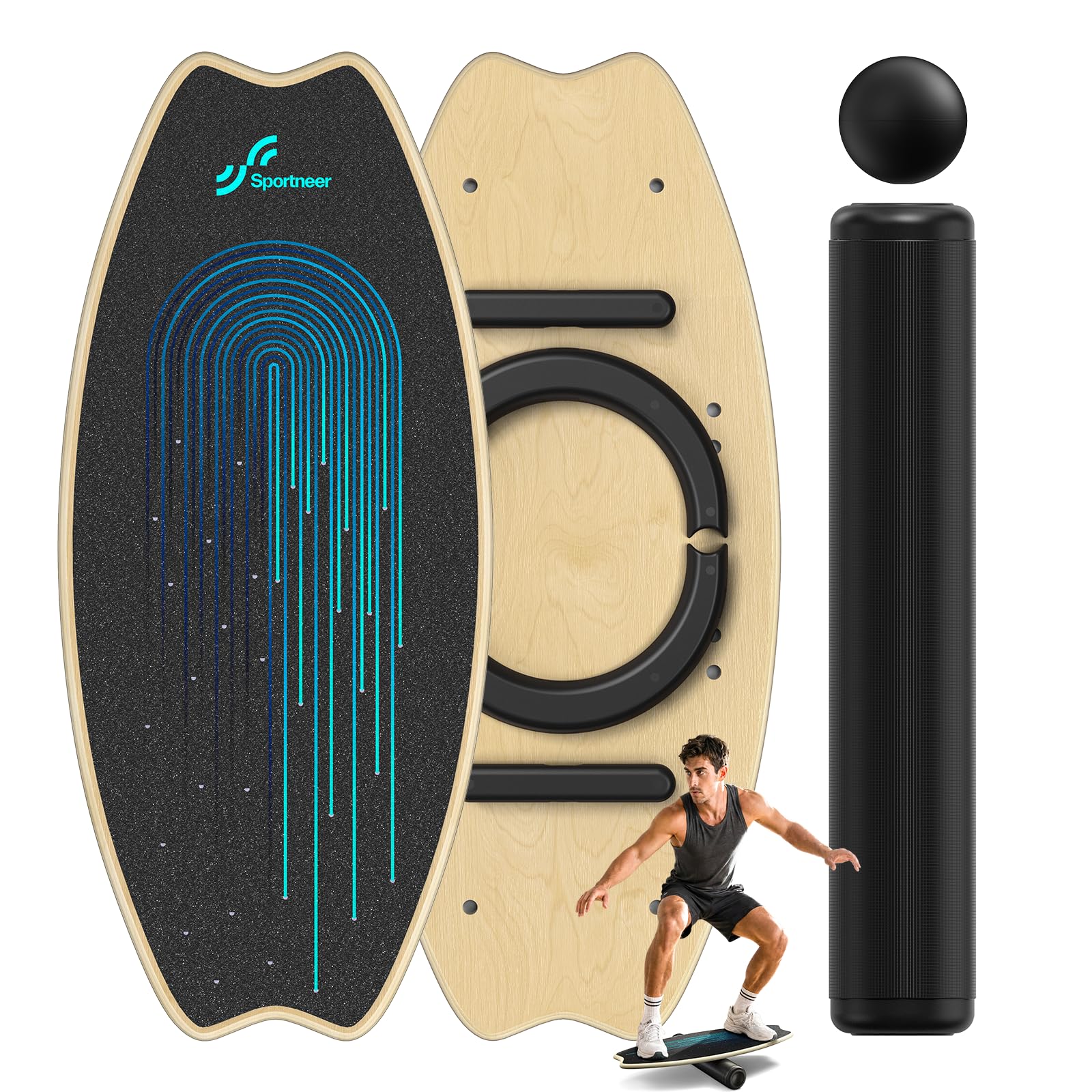
The Sportneer set arrives as three pieces: a birch deck, a roller, and a ball. That gives the same board three different jobs, from a gentle side-to-side trainer to a fore-and-aft surf trainer to a much twitchier balance challenge. The adjustable stoppers are the useful part; they let you shorten the roller's travel before you move to the ball. The matte deck has a non-skid feel that works barefoot or with shoes.

We were surprised by how much the ball changes the exercise. On the roller, the board gives you a clear line to follow; on the ball, it becomes a 360-degree balance drill that asks more of your ankles and hips. The 450-pound capacity is generous, and the 31.5-by-14.17-inch deck is wide enough for most adults. The stoppers are easy to move, and the whole set feels more substantial than the price tier suggests.

Our take: this is the board we recommend when you want one purchase to cover several skill levels. The ball configuration is not where a beginner should start, but if you have a family with mixed experience or you like to vary your training, the Sportneer covers more ground than a single-purpose rocker. We kept coming back to the stopper settings because they let us make the board easier on a tired day and harder when we wanted a challenge.

Pros

  • Board, roller, and ball cover multiple training modes
  • Adjustable stoppers change difficulty
  • 450-pound capacity
  • Matte deck grips bare feet or shoes

Cons

  • Narrower deck than a full surf trainer
  • Three pieces to store
Our verdict

The Sportneer set is the best versatile value here: one box gives you a roller, a ball, and adjustable stoppers for beginner-to-advanced balance work.

Check Latest Price
4

Best Budget Roller

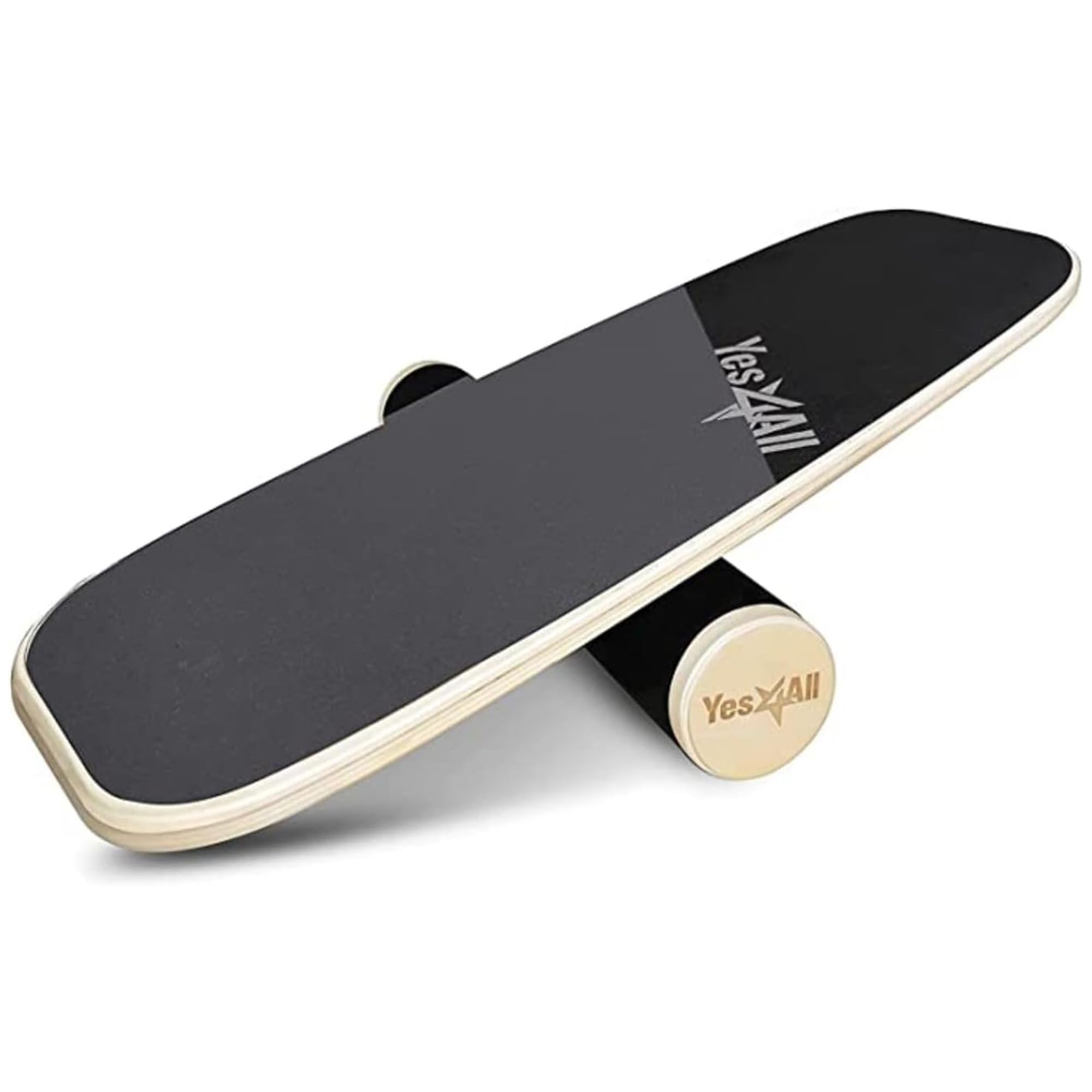
Yes4All Balance Board Trainer

93 /100
Trail Score Outstanding

Key details

Dimensions
29.53"L x 11.22"W x 5.12"H
Weight Capacity
300 lb
Deck Construction
15-ply pressed wood
Stopper Distances
11, 16, and 22 inches
Check Price on Amazon

The Yes4All trainer is the board we point to when someone wants the roller-board feel without paying premium prices. The 15-ply deck supports up to 300 pounds, and the emery-paper surface gives bare feet a secure grip. The stoppers are the feature that matters: they set the roller's travel at roughly 11, 16, or 22 inches, so you can start with a short, controlled roll and lengthen it as you improve. The deck is 29.53 inches long and 11.22 inches wide, which is compact enough for a small room.

What we noticed is that the board feels best on carpet, where the roller does not run away from you. The emery surface is grippy enough for socks, but we prefer bare feet. The roller is the least premium part of the set; keep it on a clean surface and avoid dragging the board across grit. The stoppers are easy to move, and the deck feels stable enough for a beginner who respects the roller. For a first roller board or a second setup for a teenager, it is a strong value.

Pros

  • Three stopper distances for progression
  • 15-ply wood deck with emery grip
  • Budget price for a roller board

Cons

  • Narrow deck demands precise foot placement
Our verdict

The Yes4All Balance Board Trainer is the budget roller we recommend for surf-style practice, with three stopper distances that make it easier to learn than a fixed roller.

Check Latest Price
5

Best Budget Rocker

StrongTek Wooden Balance Board

92 /100
Trail Score Outstanding

Key details

Surface
Textured, slip-resistant
Material
Lauan hardwood plywood
Dimensions
17.5"L x 13.5"W x 3"H
Weight Capacity
350 lb
Check Price on Amazon

The StrongTek is the board we reach for when the goal is gentle, repeatable ankle and knee work rather than surf tricks. Its rocker base gives a controlled tilt, and the textured top is comfortable under bare feet. The 350-pound capacity and 17.5-by-13.5-inch deck make it a reasonable fit for most adults, and the Lauan hardwood plywood feels solid without being heavy. We especially like that it is easy to step on and off, which matters when you are using it for short rehab sessions at home.

The trade-off is the stance. The rocker feet sit inboard rather than at the edges, so the board can feel tippy if you stand wide or shift your weight toward a corner. We noticed it most when we tried a broader athletic stance; a narrower, centered stance feels more secure. That is not a dealbreaker for ankle and knee exercises, but it is why we do not recommend it as the main board for a tall or wide-stanced rider. The wood finish looks better than most budget boards, and the size is easy to tuck away.

Pros

  • Rocker base for controlled tilt
  • Textured slip-resistant top
  • Budget-friendly rehab tool

Cons

  • Fixed rocker difficulty; no adjustment
Our verdict

The StrongTek is our pick for a simple, budget-friendly rocker board for ankle and knee rehab, as long as you do not need a wide stance.

Check Latest Price
6

Best Adjustable Rehab Rocker

Fitterfirst Professional Rocker

94 /100
Trail Score Outstanding

Key details

Material
Baltic birch plywood
Deck Width
20 inches
Tilt Angles
10, 12, and 15 degrees
Weight Capacity
350 lb
Check Price on Amazon

The Fitterfirst's adjustable spheres are the reason to consider it over a basic rocker. You can set the board to 10, 12, or 15 degrees of tilt, which changes how much ankle and knee motion you get without changing the board. The 20-inch-wide deck gives you a stable stance, and the Baltic birch plywood feels dense and reassuring underfoot. It is a single-plane rocker, so it is for controlled front-to-back or side-to-side work rather than 360-degree balance drills.

We used it for short rehab-style sessions and appreciated how easy it is to step on and find the center. The board does not have the playful, surfy feel of a roller; it is a tool, and it behaves like one. The adjustable spheres are simple to move, and the wide deck makes it easier to keep your feet flat. If you are working through a knee or ankle issue, that stability is the point.

The surface is the one detail we wish were different. It can feel slick under bare feet, especially when you are working up a sweat. We wore shoes or put a mat under the board, which solved it, but it is worth knowing before you start.

None of that changes our recommendation for the right buyer. The Fitterfirst is the board we choose when the goal is measurable, adjustable rehab work and we want a wide, stable platform. It is more board than you need for general balance play, and the single-plane motion will not satisfy someone who wants surf-style training. But if you are rehabbing an ankle or knee and want to progress the tilt without buying another board, the adjustment is worth it.

Pros

  • Adjustable 10, 12, and 15-degree tilt
  • Wide 20-inch deck for stable stance
  • Baltic birch build
  • Designed for ankle and knee rehab

Cons

  • Premium price for a single-plane rocker
  • Heavier and bulkier than compact rockers
Our verdict

The Fitterfirst Professional Rocker is the most adjustable rehab rocker here, with three tilt settings and a wide stance for therapy-focused buyers.

Check Latest Price
7

Best Budget Wobble

Amazon Basics Wood Wobble

93 /100
Trail Score Outstanding

Key details

Surface
Non-slip
Material
Wood
Dimensions
15.75"L x 15.75"W x 3.15"H
Weight Capacity
265 lb
Check Price on Amazon

The Amazon Basics board is about as simple as a balance trainer gets: a 15.75-inch square wooden deck on a curved base, with a sandpaper-like surface. It supports up to 265 pounds and weighs about 2.75 pounds, so it is easy to move with one hand. The deck is small enough to tuck beside a desk or slide under a coffee table.

We found it most useful for standing balance and short core sessions, not for structured surf training. The fixed wobble is either easy or hard depending on the day, and there is no stopper to shorten the roll. On smooth floors, the board can slide, so we put a mat underneath. The sandpaper texture is grippy under bare feet but rough on forearms during planks; if you plan to do floor exercises, a towel or shirt helps.

For the money, it is a useful first board and a low-risk way to add movement at a standing desk. It is not the board we choose for rehab progression or serious balance work, because the challenge does not adjust. But if you want a compact wobble board for occasional use, it does the job without asking for much space or commitment.

Pros

  • Very affordable first board
  • 265-pound capacity
  • Grippy sandpaper surface
  • Compact and light enough to move easily

Cons

  • Small deck for larger feet
Our verdict

The Amazon Basics Wood Wobble is the budget board we recommend for basic standing balance and short core sessions.

Check Latest Price
8

Family Play

Gentle Monster Wooden Wobble

94 /100
Trail Score Outstanding

Key details

Material
Wood
Age Range
3+ years
Deck Shape
Curved rocker
Weight Capacity
480 lb
Check Price on Amazon

The Gentle Monster board is 35 inches long and curved like a shallow boat, which is why kids treat it as a bridge, a ramp, a seat, and a rocker before they treat it as exercise. The 480-pound capacity means adults can use it too, and the natural wood finish looks at home in a playroom or living room. It is a different category of balance board from the adjustable trainers here: lower to the ground, more open-ended, and less about measurable progression.

We like it most for family play and gentle balance work. A child can rock, balance, or slide on it, and an adult can use it for stretching or a light core challenge. The long deck gives you room to shift your weight, and the curved base is forgiving. It is not the board we choose for surf training or rehab, because the shape does not offer the same controlled tilt or adjustable difficulty.

The board is also a piece of furniture in the best sense. It looks good enough to leave out, and the open-ended shape invites movement without a workout plan. That is a real advantage if you want kids to use something without being told to exercise. It is less useful if you need a repeatable, measurable training tool.

For the right household, the Gentle Monster is a lovely thing to have around: it encourages movement without feeling like a workout. It is not a substitute for a dedicated balance trainer, but if you want a board that kids and adults will actually pick up, the open-ended shape is the draw.

Pros

  • Long 35-inch deck for kids and adults
  • 480-pound capacity
  • Open-ended shape encourages creative play

Cons

  • Long board takes up floor space
  • Can arrive with chips or rough edges
Our verdict

The Gentle Monster Wooden Wobble is a family-friendly curvy board for creative play and gentle balance work.

Check Latest Price

How We Tested the Best Balance Boards

To build the shortlist, I started with boards that show up in physical therapy clinics, skate shops, and living rooms, then filtered by deck material, weight capacity, footprint, and price. I ruled out slick plastic decks and rockers that looked like they’d crack under a 200-pound tester. That left 12 boards, which we used for eight months in the places balance boards actually live: the living room rug, a strip of hardwood in the kitchen, and the corner of a home office where I keep one within reach during calls.

Each board got the same rotation. We stood on it barefoot, in socks, and in sneakers, noting whether the surface held or turned slippery. We shifted weight front to back and side to side, watching for wobble that felt predictable versus an edge that dumped us off. We timed one-legged holds and simple squats, and we handed boards to kids after school and to a tester working through ankle rehab. We also paid attention to who reached for a board without being asked—fun shows up in repeat use, not in a spec sheet. Size got checked in real rooms: stance width, whether it tucked behind a couch, and how annoying it was to carry from room to room.

After eight months, we looked for wear at the pivot point, scuffs on the deck, and any creaks or flex under heavier testers. We compared what each board cost against how it was built and how often it got used. The ones that stayed in rotation were sturdy without feeling dead, grippy without needing shoes, and sized for a room rather than a showroom.

How to Choose a Balance Board

Start With the Movement, Not the Label

A rocker board tilts on a curved base or two feet; it is the most controlled option and the one we prefer for ankle, knee, and single-plane rehab work. A wobble board adds 360-degree movement, which is useful for standing desks and ankle stability but less structured. A roller board is the surf-style trainer: the deck rolls over a cylinder, so it asks for more coordination and rewards practice. If you want one board for general fitness, a roller with adjustable stops covers the widest range. If your goal is rehabilitation, start with a rocker and a wide stance.

Adjustability Is a Learning Tool

Adjustable stops and tilt settings are not marketing extras; they are what let a board stay useful after the first week. On a roller board, moving the stops changes how far the deck can travel, which controls difficulty. On a rocker, changing the tilt angle changes how much ankle and knee motion you get. We look for tool-free adjustment because you are more likely to use it. A fixed board can be fine for a single, familiar exercise, but an adjustable one is easier to share with a family member or progress through a rehab plan. The Revbalance 101 v2 and Fitterfirst are the clearest examples here.

Check the Deck Against Your Stance

Deck size matters more than it looks in photos. A 14-inch-wide roller deck is manageable for a centered stance, but a wider 18-inch deck gives bigger feet and broader stances more room. Weight capacity is a hard limit, not a suggestion; check it before you buy, especially if the board will be shared. Compact boards are easier to store, but they can feel twitchy under a tall or wide-stanced rider. Measure the floor space you can leave clear, then choose the largest deck that fits comfortably.

Grip and Flooring Change the Feel

A grippy deck is only half the equation; the floor decides how much the board slides. On carpet, most rollers are slower and more forgiving, while hard floors let them run faster and can let the board wander. We prefer a mat under any board that slides on smooth flooring, and we wear shoes on decks that feel slick under bare feet. Sandpaper-like surfaces grip well but can be rough on forearms during planks; padded traction is kinder to bare feet. Match the surface to the work you plan to do.

Spend Where It Changes Your Training

The jump from a basic board to a premium one usually buys adjustment, a wider deck, better traction, or a more specialized shape. That is worth paying for if you will use the settings or need the stability; it is not worth it if you only want occasional standing movement. A simple wobble board can be a sensible first purchase, and a budget rocker can handle basic rehab work. We prefer to see you buy the board that matches your routine than the one with the longest feature list.

Frequently Asked Questions

Final Verdict

The Revbalance 101 v2 is the board we recommend first because its tool-free stops let a beginner start small and keep progressing, and the 400-pound capacity and comfortable traction make it a long-term household board. If you want the classic surf feel and do not mind a steeper climb, the Indo Board is the choice; for a budget roller, the Yes4All trainer is the practical one. The right purchase is the board that matches the way you will actually use it, not the one with the longest feature list.