Best Forearm Trainers of 2026

The trouble with most forearm trainers is that they punish you for using them. Cheap springs bite into your palm, fixed resistance stalls your progress after a week, and the whole thing ends up in a drawer by February. A good one should build grip endurance and wrist stability without leaving your hands raw or your elbows angry—it's the difference between a tool you reach for during a work call and one you dread. That's the balance I went looking for.

I've been using grip trainers on and off for years, mostly at my desk and after climbing sessions, and I've learned that adjustability matters more than raw resistance. Over the past four months, my team and I put 12 forearm trainers through daily use, from five-minute desk breaks to full workouts. The ones that earned a spot in this guide share a few traits: honest construction, a grip that holds when your hands are sweaty, and resistance you can actually tune. Below are the picks that survived.

1

Best Overall

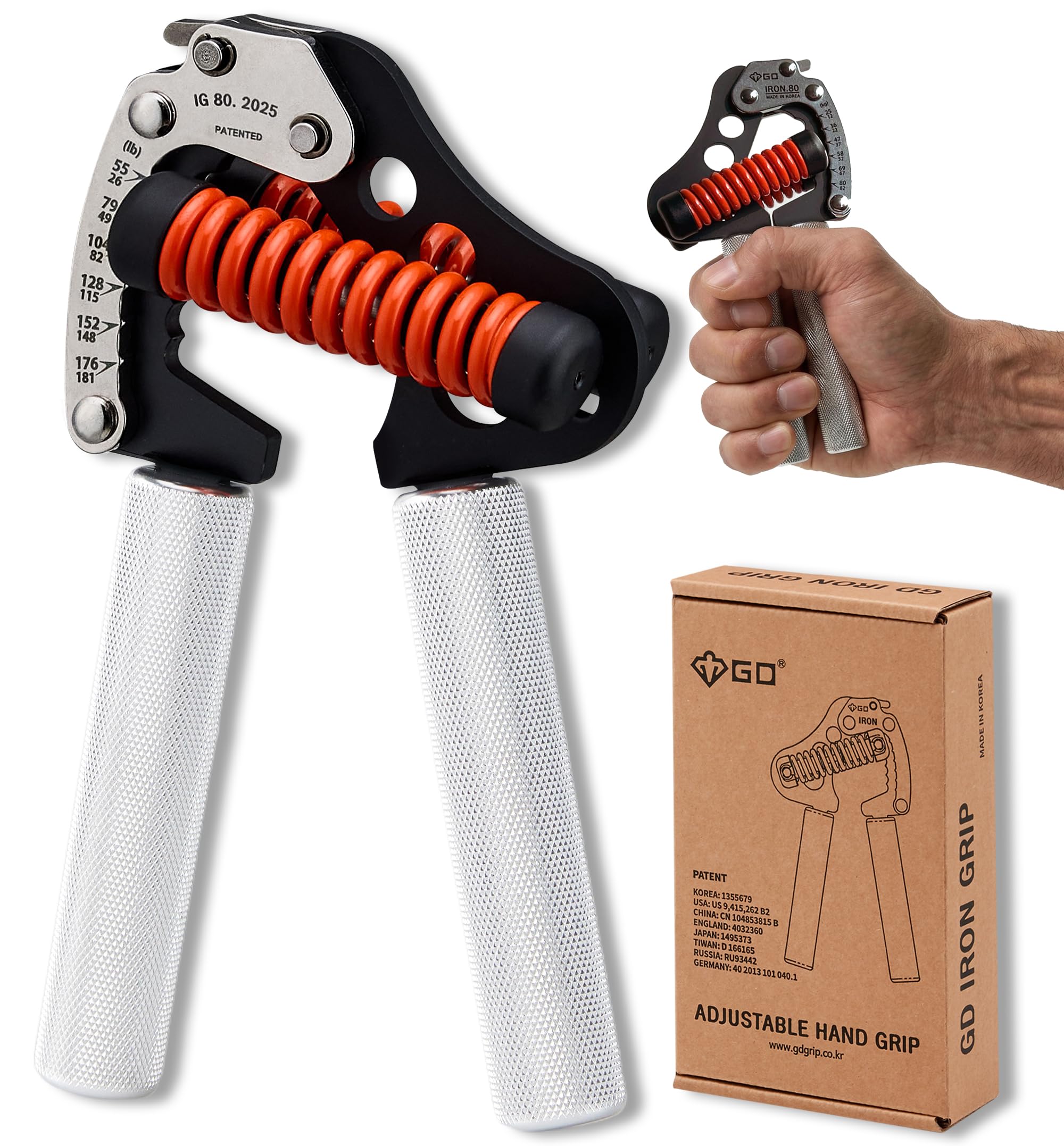
GD IRON GRIP Grip Strength Trainer

96 /100
Trail Score Outstanding

Key details

Frame
4T steel, stainless pins
Weight
1.08 lb
Handle Width
3 positions
Resistance Range
26–181 lb (12 levels)
Check Price on Amazon

A gripper is a spring held between two handles, and nearly everything that goes wrong with one happens where the handle meets the pin. This one skips the plastic there: a 4T steel frame, a high-tensile spring and stainless steel pins, at 489 g. It feels like a tool rather than a toy the first time you pick it up.

Twelve notches cover 26 to 181 pounds, roughly 14 pounds between settings, and that spread decides it for us. The low end is light enough for a warm-up or a wrist still coming back; the top end is a goal rather than a starting point. The three-position handle width is the detail we did not expect to care about, because it changes the angle your fingers close at, so the same gripper fits a small hand and a large one.

The knurled aluminum handles are what to decide about before ordering. They bite like a barbell shaft, which is why they do not slip, and they are rough on soft hands, so a wrap of athletic tape takes a minute and settles it. The spring mechanism runs quiet, which means it will not announce itself across a shared office.

What it does not do: it trains one hand at a time, so a session takes twice as long as it would with a pair, and it is the most expensive gripper in this group by a wide margin. What the money buys is the part that matters, a frame with no obvious failure point and twelve small steps instead of four big ones. If you will use it most days, that arithmetic works out.

Pros

  • Twelve steps from 26 to 181 lb
  • Steel frame and stainless pins
  • Handle width adjusts to hand size
  • Quiet enough for an office

Cons

  • One gripper, so hands alternate
Our verdict

This is the gripper we point people to when they want one tool that lasts: steel where the others use plastic, and twelve steps from 26 to 181 pounds.
Check Latest Price
2

Best Wrist Roller

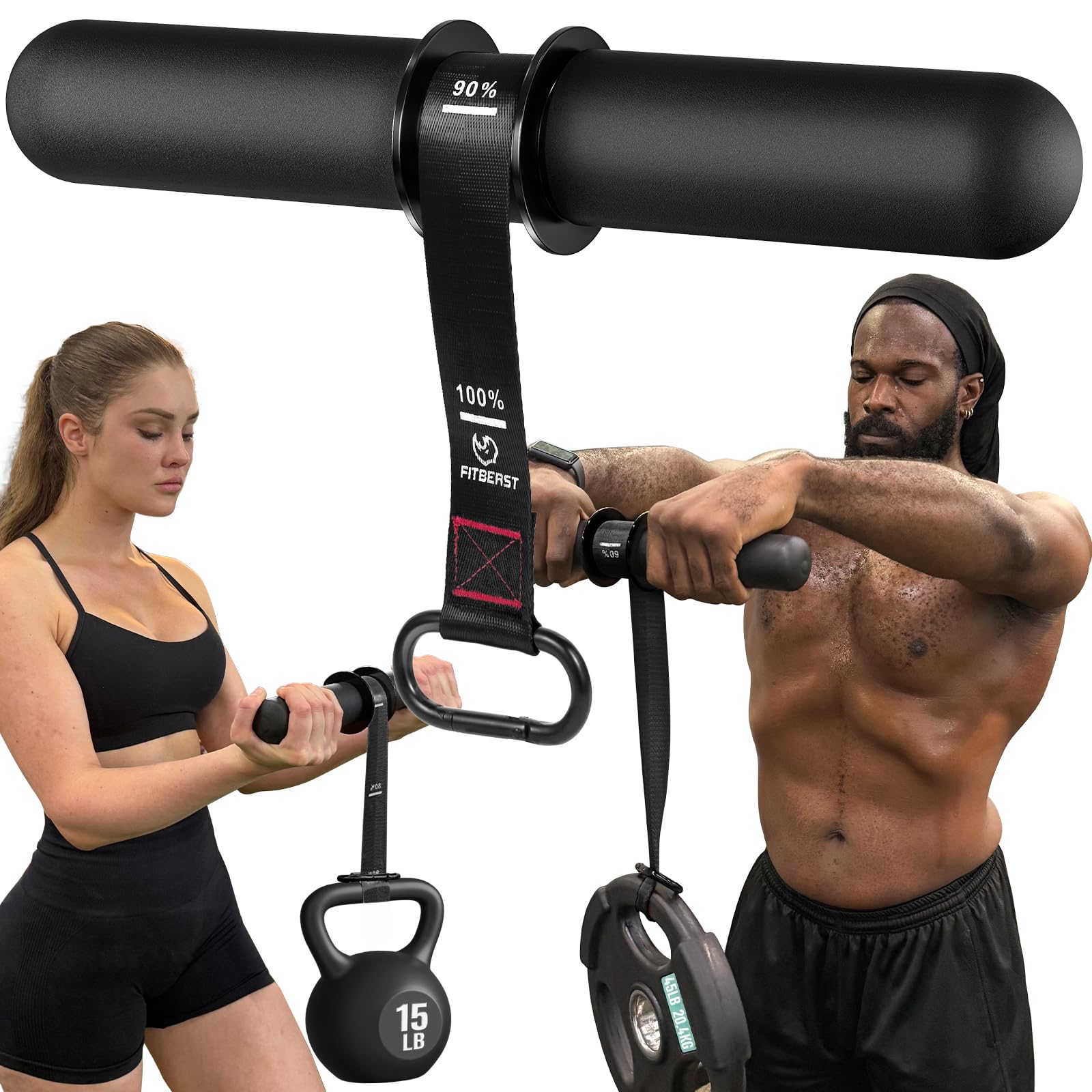
FitBeast Forearm Strengthener & Wrist Roller

94 /100
Trail Score Outstanding

Key details

Handle
25% thicker than standard
Weight
1.9 lb
Strap Capacity
240 lb
Extension Strap
20.4 in
Check Price on Amazon

A wrist roller is a bar on a strap, and the bar is the only real variable. This one is 25% thicker than a standard handle, which sounds minor until you roll with it: a fat bar holds your fingers open, so closing them becomes half the work and the burn arrives well before the weight does. We like that trade. You need less on the strap for a serious set, which matters when the heaviest plate in the house is not very heavy.

The hardware is iron and nylon at 0.86 kg, with a strap rated to 240 pounds and a 20.4-inch extension strap for wrapping around a rack upright, a bench leg or a dumbbell handle. A 5- or 10-pound dumbbell on the clip is enough for the first few weeks, and the strap takes standard plates once a dumbbell stops being enough.

Setup is clip, strap, weight, roll, and the five-year warranty is the longest of anything in this group. The part worth planning is the unwind. Lowering the weight under control is where most of the benefit sits, and letting it drop gives away the set you just did. Roll it out standing over a bench rather than from the floor, so your first attempt does not end with a plate on your foot.

Pros

  • Fat handle adds difficulty without weight
  • Strap rated to 240 lb
  • Extension strap adds mounting options

Cons

  • Fat grip is hard on small hands
  • Nothing to roll without your own weight
Our verdict

Our pick for the best wrist roller here: fat handles that make a light plate hard work, and a strap with more capacity than most home setups will use.

Check Latest Price
3

Best Budget

NIYIKOW Grip Strength Trainer

93 /100
Trail Score Outstanding

Key details

Size
6.1"L x 3.93"W
Weight
4.94 oz
Material
Metal and plastic
Resistance Range
22–132 lb
Check Price on Amazon

At 140 g and about six inches long, this is the gripper that ends up in a door pocket or a desk drawer and actually gets used. That sounds like faint praise for training equipment. It is not: the best forearm tool is the one within reach when you have two free minutes.

Resistance runs from 22 to 132 pounds on a dial, and the dial is the weak part of the experience. The markings are small and hard to read at a glance, so the numbers are a rough guide and feel is a better one. The handles are shaped and covered rather than bare metal, which is why a high-rep set does not leave your palm raw.

We got more reps out of this one than out of anything else here, simply because it stayed in reach, and for light-to-moderate work such as warm-ups, rehab sets or something to squeeze on a commute, it does everything the expensive grippers do. Where it stops making sense is a daily maximum attempt at the top of the range. For that, spend the money on the GD instead.

Pros

  • Adjusts from 22 to 132 lb
  • 140 g and pocket-sized
  • Covered handles stay comfortable

Cons

  • Spring can fail when run at max tension
Our verdict

Buy this if you want a capable adjustable gripper for very little and will keep it in a bag or a car. It rewards frequent light use rather than max attempts.

Check Latest Price
4

Best Graduated Set

ZEAGUS Metal Hand Grip Strengthener Kit

92 /100
Trail Score Outstanding

Key details

Handles
Knurled aluminum
Set Weight
12.8 oz
Grippers Included
4
Resistance Levels
50, 100, 150 and 200 lb
Check Price on Amazon

There is no dial on any of these. ZEAGUS winds four separate grippers to fixed ratings, 50, 100, 150 and 200 pounds, and the resistance you feel is whatever that spring was wound to. Nothing to adjust, nothing to drift, nothing to misread at arm's length.

Each one is knurled aluminum with a wound spring, and the set weighs 12.8 ounces. They feel identical in the hand apart from the weight, so your technique carries from one to the next, and moving up means putting one down and picking the next up. We prefer that to a dial: progress sits visibly on the desk in front of you, and there is no mechanism to wear out.

The catch is the spacing. Fifty pounds is a large first step, and the gap from 50 to 100 is the one that takes the longest to clear. The higher ratings are nominal too, so a 150 is not precisely the 150 in the next box. Starting from nothing, buy the set and expect a few weeks on the lightest one; if you already close 100 pounds, the top two are the ones you will use.

Pros

  • Four fixed levels from 50 to 200 lb
  • All-metal build, no plastic parts
  • Nothing to adjust or wear out

Cons

  • 50-lb jumps between levels
  • Knurled handles rough on bare hands
Our verdict

A well-made four-step ladder for someone who likes fixed resistance; start at the bottom and expect the 50-to-100 gap to take a while.

Check Latest Price
5

Best Chain-Loading Roller

Vikingstrength Forearm Strengthener Wrist Roller

91 /100
Trail Score Outstanding

Key details

Handle
Thick-grip cylinder
Weight
2.65 lb
Loading
Chain and clip for any plate
Bar Size
12"L x 1"W
Check Price on Amazon

The handle is the whole argument here. It is a fat 12-inch cylinder, and the diameter is what turns a modest plate into a hard set: your fingers have to hold on while your wrists do the rolling, so the forearms take load from two directions at once. The fingers noticed it first, which is not what a thin wooden roller does.

Load comes from a chain with a clip rather than a strap, which speeds up plate changes and lets you hang a kettlebell without threading anything. The body is 1.2 kg of steel, it sits still while you turn it, and the grip does not slide in the hand the way a foam-covered bar can.

One thing to plan for: the chain runs long, so a bench, a rack or a high pull-up bar gives you room to roll, while a low anchor turns the bottom of every turn into a scrape. Set it up at roughly chest height and the length stops mattering.

Pros

  • Thick handle loads the fingers too
  • Chain fits any standard plate
  • Solid steel that does not flex

Cons

  • Chain hook is the part to watch
Our verdict

The most substantial roller in this group, and the one for lifters who already have plates on the floor and want the fingers worked as hard as the wrists.

Check Latest Price
6

Desk and Rehab

Marcy Wrist and Forearm Developer

89 /100
Trail Score Excellent

Key details

Weight
1.2 lb
Dimensions
14.5"D x 6"W x 7.75"H
Grip Adjustment
Sliding knobs
Resistance Levels
5
Check Price on Amazon

This is the only trainer here you can work with one hand while the other holds a phone, and the only one that loads your wrist in both directions. Rest your forearm in the padded cradle, take the handle and rock: resistance climbs through the turn, so the end of the rep is the hard part.

Five levels come from a dial on the side, and two red knobs slide the grip closer to or further from the cradle to match your arm length. At 14.5 by 6 by 7.75 inches and 1.2 pounds it sits on a desk or under a couch without being in the way, which is most of the point.

The ceiling is what to know before buying. Even the top setting is light, fine for a beginner, a wrist coming back from injury or someone who wants reps during meetings, and nowhere near enough for anyone who can already close a heavy gripper. What it has going for it is that nothing needs tape, chalk or inspection before a set, because the cradle is padded and the handle is covered as it comes.

Pros

  • Loads both wrist directions
  • One-handed, seated use
  • Five levels on a dial
  • Compact at 1.2 lb

Cons

  • Cradle digs into the forearm on long sets
Our verdict

The one to buy if your forearm work happens at a desk or during recovery: one hand, both wrist directions and five light levels you can dial without thinking.

Check Latest Price

How We Tested 12 Forearm Trainers

We started by pulling together the forearm trainers that kept surfacing in reviews and at gyms—adjustable models, fixed-resistance classics, and a few oddball designs—then narrowed the list by specs: resistance range, grip material, overall length, and price. That left us with 12 trainers, which we used for four months.

Testing happened wherever forearms get worked: at a desk during meetings, on the couch during baseball games, in a gym bag after climbing sessions, and on a weekend road trip. Each trainer got five- to ten-minute sessions several times a day. We noted whether the grip stayed put once our hands got sweaty, whether the texture left hot spots or calluses, and how easy it was to change resistance mid-session. We also measured length against palm size and checked whether each unit fit into a small gym bag.

Every couple of weeks, we inspected springs, straps, and handles for fraying, loosening, or rust. To judge effectiveness, we tracked whether we could complete more reps or hold a squeeze longer over time, and whether our forearms felt worked rather than inflamed the next morning—some models left wrists and elbows irritated, which we counted against them. At the end, we compared construction and price to see which trainers delivered real value rather than a clever look.

How to Choose a Forearm Trainer

Squeeze, Roll, or Rock

Three designs, three jobs. A gripper loads the muscles that close your hand, which are the ones holding a barbell, a suitcase or a racquet. A wrist roller takes the wrist through its full range with a weight on the end, curling it up and lowering it under control, and that lowering phase is where the deep forearm work sits. A wedge like the Marcy loads both directions, one arm at a time, from a seated position.

If you own no weight plates, buy a gripper: it is complete on its own. If you already have a dumbbell or a few plates on the floor, a roller gives you more forearm work per minute and is the closer match to what people mean by forearm training.

How Fine the Steps Are

The number printed on a gripper is a nominal rating, not a calibrated load. Two units marked 150 pounds can feel noticeably different, and the markings on an adjustable dial are a rough guide at best. What you can control is the size of the gaps. Twelve notches across a wide range, as on the GD IRON GRIP, lets you add a small amount of resistance every week or two. Four fixed grippers that jump 50 pounds at a time means you will sit at one of those gaps for a while.

When two options cost roughly the same, take the one with more steps, or the one whose second-smallest setting you can already close for a clean set of ten.

The Spring Is the Part That Fails

A gripper is stored energy held by a spring between two handles, and the joint where they meet is where cheap ones give out, usually when you are working near the top of the adjustment range and the spring is under the most strain. Look for a metal frame, a spring that is held in place rather than clipped in, and a pin that does not depend on plastic to stay put.

If a spring bends, cracks or starts to catch, retire the unit. A snapped spring releases everything at once and the handles follow it. This is the one place in the category where spending more is usually the cheaper decision.

Weights, Hands, and Where It Lives

Rollers need something to hang. A 5- or 10-pound dumbbell is enough for the first weeks, and the plate you already own beats the one you buy. Handle diameter matters as much as the load: a fat bar is harder on the fingers, which is the entire point, but it is a real obstacle for smaller hands, so check whether the grip is fixed or the width adjusts.

Then be honest about the setting. A plastic gripper travels in a bag and gets used at a desk; a chain roller does not. The trainer that fits your day will outperform the better one that stays in a closet.

Frequently Asked Questions

Final Verdict

If you want one piece of equipment still doing its job a few years from now, buy the GD IRON GRIP. Twelve steps between 26 and 181 pounds, a width setting that fits most hands, and steel where the cheaper grippers use plastic are worth the premium.

If you already own plates and want the most direct forearm work here, the FitBeast wrist roller's fat handle gets more out of a 10-pound plate than anything else in this group. And if the goal is simply to spend least and still train daily, the NIYIKOW will do it.