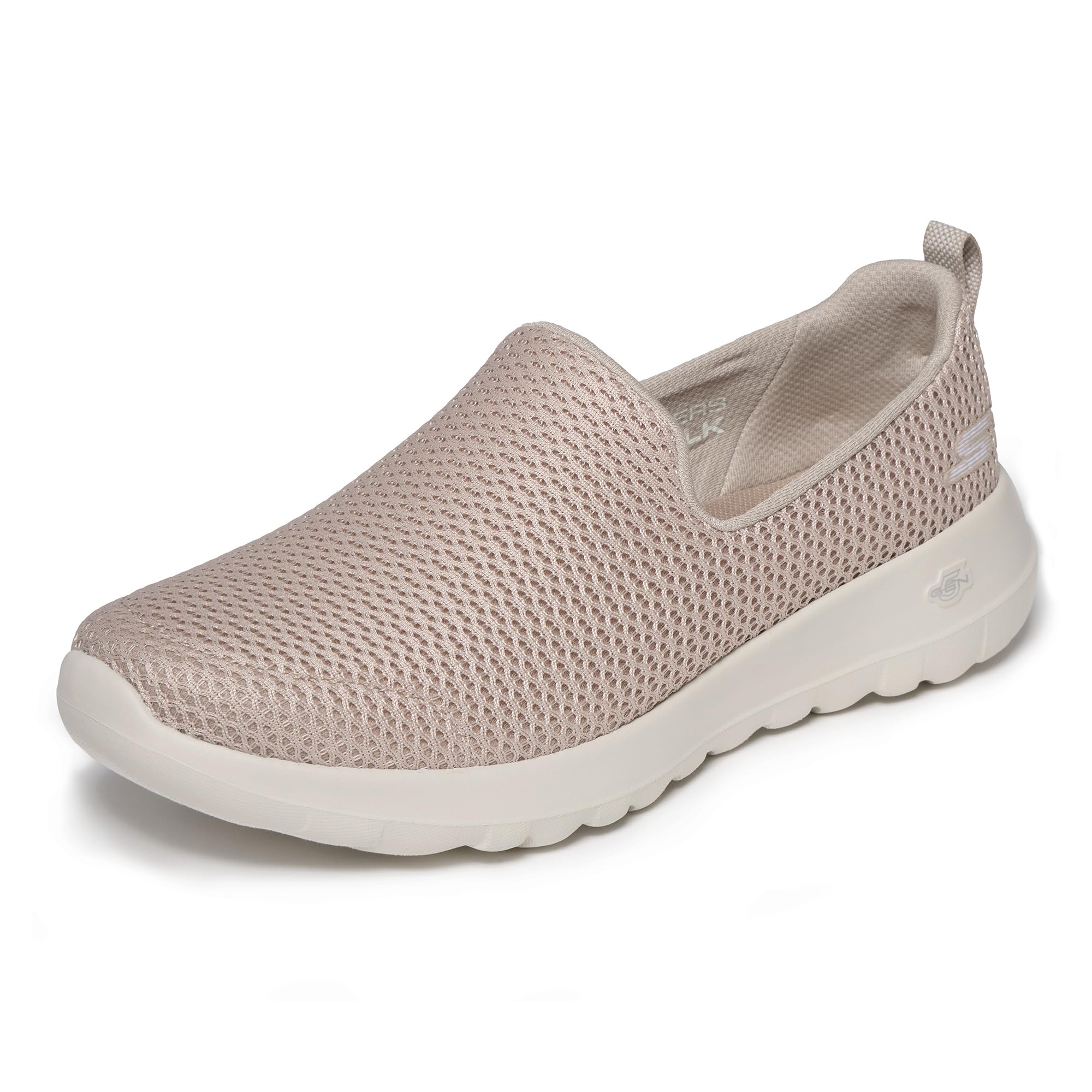
Best Women's Walking Shoes for Lower Back Pain of 2026

Every step you take lands as a small shock, and your lower back pays part of the bill. Cushioning that's too soft lets your arch collapse; a sole that's too stiff turns each heel strike into a jolt that travels straight up the chain. I spent a whole winter commuting in flat sneakers that felt fine for the first mile and like a mistake by the third. What a good walking shoe actually fixes is the string of small compensations — the shortened stride, the braced hips, the hesitation before stepping off a curb.

Over the past six months, my team and I have walked 12 pairs into the ground, and the ones that helped weren't the softest. They had a firm heel counter, support under the arch you could feel without it digging in, and a fit that left room in the toe box without letting the heel slide. We also paid attention to the unglamorous stuff: whether the sizing ran true, how they looked with actual clothes, and whether the sole still gripped on wet tile. The shoes below are the ones we kept reaching for.

1

Best Overall

ALLSWIFIT Slip-On Walking Shoe

88 /100
Trail Score Excellent

Key details

Style
Slip-on walking sneaker
Underfoot
Soft cushioned insole
Insole Depth
Room for orthotics
Check Price on Amazon

Softness sells shoes and quietly ruins walks. A footbed that's too pillowy lets the foot roll inward with every step, and the lower back spends the mile correcting for it. This is where we start for a sore back, because it gets the balance right: cushioned enough that pavement stops being the story of the walk, shaped enough under the arch that the foot stays planted. There's also genuine depth inside, so an insole doesn't push your heel up over the collar.

The step-in collar is the second reason it holds the top spot. Nothing about a bad back enjoys the fold-and-yank of lacing a shoe, and this one takes a foot in a single push. It's light, too — closer to a slipper on the foot than most of the trainers here — which is why it's the pair we reach for on errands and long airport days rather than just the twenty minutes around the block.

Two things to plan around. It runs snug through the middle, so if you're between sizes or walk in thick socks, go up rather than hoping it gives. And the hollow channels under the outsole collect grit on gravel and wet grass; a couple of heel taps before you go back inside sorts it. Neither is a reason to look elsewhere.

Pros

  • Cushioned without giving up stability
  • Room inside for your own insoles
  • Steps on with one push, nothing to tie
  • Light enough for a full day

Cons

  • Needs a short break-in before it softens
  • Grit collects in the outsole channels
Our verdict

Our pick for most women walking through back pain: cushioned but not mushy, shaped under the arch, and deep enough inside that your own insole still fits.
Check Latest Price
2

Best Cushioned Ride

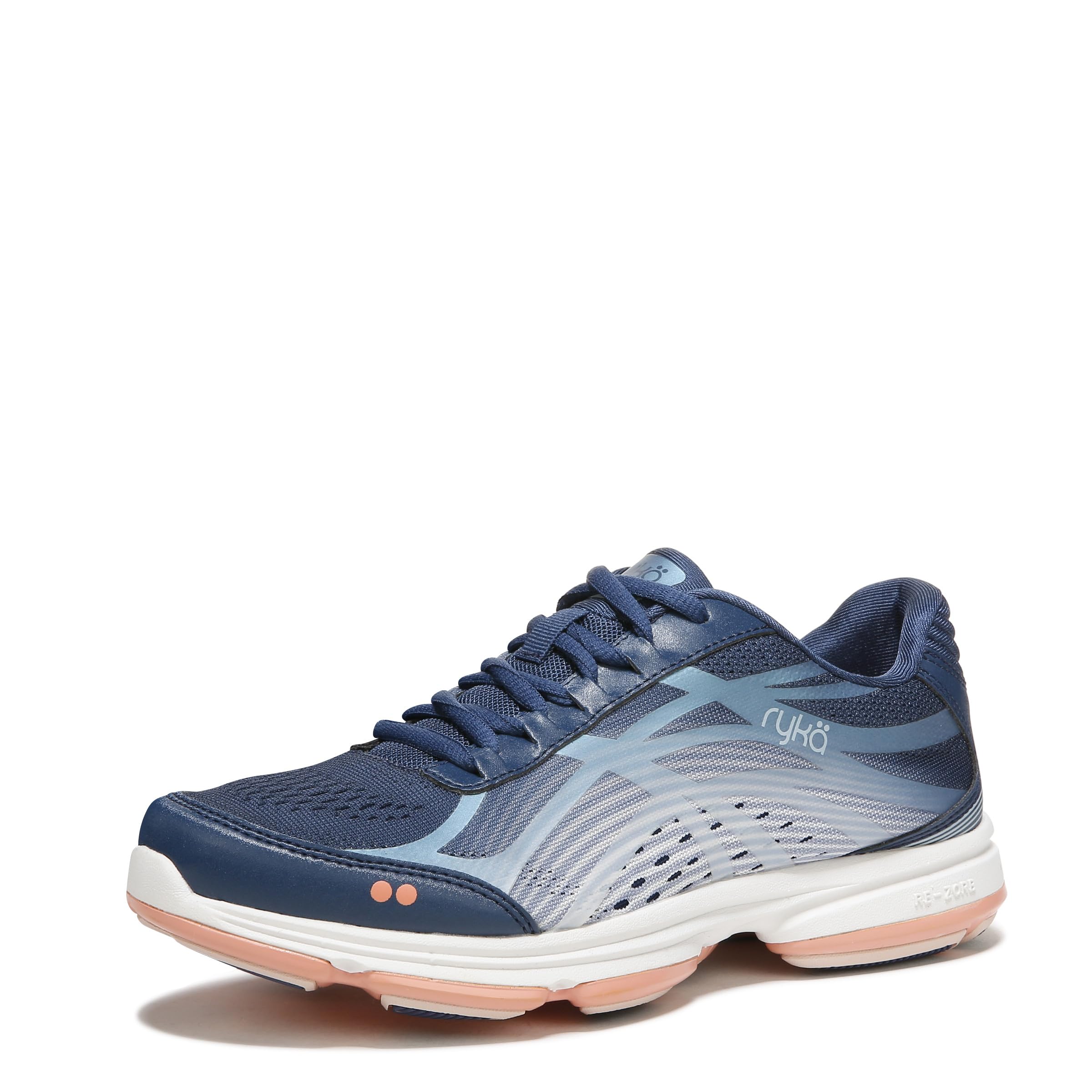
Ryka Devotion Plus 3

86 /100
Trail Score Excellent

Key details

Model
F77103M652
Toe Box
Wide and roomy
Underfoot
Thick cushioned sole
Check Price on Amazon

Set this next to the Skechers slip-ons and the difference is in your hand before it's on your foot: a thicker slab of foam, a wider platform, and more shoe between you and the sidewalk. For anyone who wants the ground to feel further away, that's the entire argument, and it's why this is the pick for long days rather than quick errands.

The toe box is what earns it a place. It's cut wide and tall, so toes spread on push-off instead of stacking, and after an hour on a hard floor that shape matters more than another millimeter of foam. The arch support is there without feeling like a hard lump under the midfoot, and it runs true to size — not a given among the shoes on this page.

It's the friendliest of these for a broad forefoot, too. The cut is generous enough that a wide foot rarely has to size up and give away length at the toe, which is the usual compromise. Tie the laces loosely and the shoe still stays with you rather than sliding at the heel.

Pros

  • Thick, forgiving sole on hard floors
  • Roomy toe box for a wide forefoot
  • Supportive arch without a hard ridge
  • True to size out of the box

Cons

  • Outsole wears through while the upper still looks new
Our verdict

Buy it if you want the thickest, roomiest sole here for long days on hard floors, and a toe box that lets a wide forefoot spread.

Check Latest Price
3

Best Easy-On

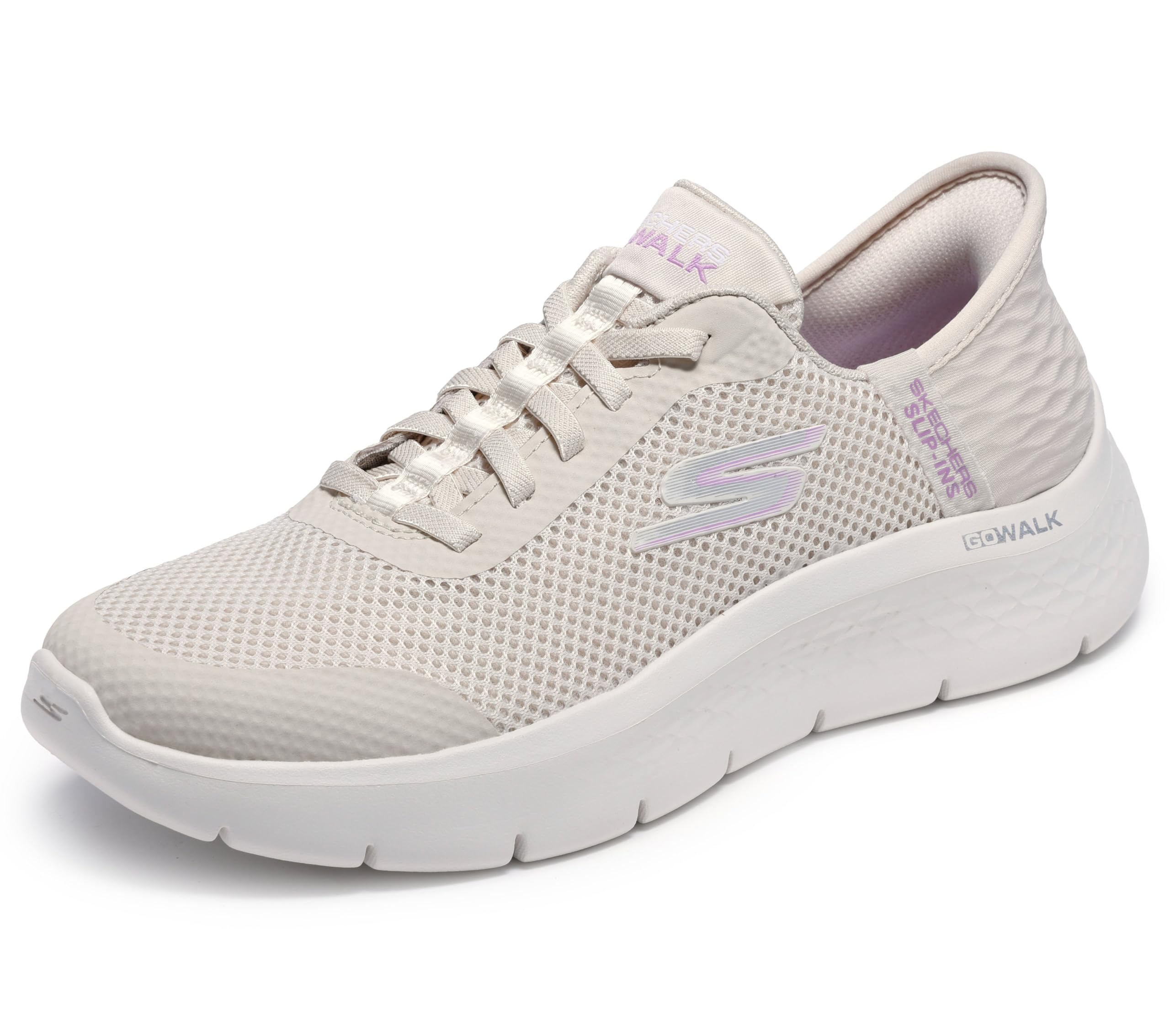
Skechers Go Walk Flex Grand Entry

89 /100
Trail Score Excellent

Key details

Upper
Breathable knit
Weight
Lightweight
Closure
Slip-on, no laces
Check Price on Amazon

If bending to tie a lace is the moment your back reminds you it's there, start here. The Flex is a real step-in — no laces, no pulling — and, more importantly, the heel stays down once your foot is in. Slip-ons that paddle along behind the heel are worse than laces; this one doesn't.

It also has the best arch support of the slip-ons in this group. The footbed is shaped rather than flat, which is the difference between a shoe that carries your foot and one it rolls around in. It's light, the knit upper breathes on a warm commute, and there's no break-in to get through before it feels right.

Weather is the other place it earns its keep: the knit upper dries quickly after a soaking, so a wet walk doesn't turn into a squelching afternoon. That's a small thing until you're caught out twice in one week. We'd call it the most practical pair here for someone who wants one shoe for the school run, the dog and the grocery store.

Pros

  • Slips on with a single push
  • Heel stays put when you walk
  • Shaped footbed with real arch support
  • Light and breathable

Cons

  • Runs narrow across the instep for high arches
Our verdict

This is the slip-on we hand anyone whose back complains at the thought of tying laces — it steps on in one push and the heel still stays put.

Check Latest Price
4

Best Soft Ride

Skechers Go Walk Joy

91 /100
Trail Score Outstanding

Key details

Model
15600WNVW
Widths
Standard and wide
Closure
Slip-on, no laces
Check Price on Amazon

This is the shoe that lives by the door: soft the moment you put it on, no break-in, no laces, and a knit upper that takes a machine wash without losing its shape. It's also one of the least expensive picks here, which is why it's the pair to buy in two colors and stop thinking about.

As a comfort shoe it's hard to beat for the money. This is what to reach for when your back is sore enough that you want to step into something soft without a fight — the pair for errands, the school run and the flight home, when the goal is a gentle, easy day rather than a corrective ride.

There's one thing to sort before you order: this isn't a shoe to size up in, and the wide width is the fix for a broad forefoot rather than extra length. Buy two if you walk daily. Foam needs a day to recover between walks, so a rotation outlasts either pair on its own.

Pros

  • Pillow-soft from the first wear
  • No laces, easy on and off
  • Knit upper handles a machine wash
  • One of the least expensive picks here

Cons

  • Little arch support under the midfoot
Our verdict

Reach for this if you want soft, simple and washable at a low price, and you're after comfort rather than correction.

Check Latest Price
5

Wide, Swelling Feet

Scurtain Wide Walking Shoe

86 /100
Trail Score Excellent

Key details

Closure
Adjustable hook-and-loop
Toe Box
Extra wide
Heel Drop
Zero drop
Check Price on Amazon

The strap across the top is why this one is on the list. Hook-and-loop opens the shoe up wide, so you set your foot down flat and snug the upper back over it — no lace, no shoehorn, no wrestling match. If your feet swell through the day, or pressure across the top of the foot is the thing that hurts, that adjustability is worth more than any amount of foam.

The box is genuinely wide, wide enough that a broad forefoot sits in the shoe rather than on its edge, and the whole thing weighs almost nothing. The upper is light and airy rather than structured, which suits a foot that needs less shoe around it, and it comes in the sort of colors you'd wear outside the house.

What you're not buying is a supportive ride. The sole is flat and thin next to every other pick here, and the arch is the weakest in this group, which for a back-pain buyer is the entire question. We rate it as a specialist: the shoe for feet that need room and adjustability, best paired with an insole you already trust, and not the pair for a five-mile daily walk.

Pros

  • Strap opens wide for swollen feet
  • Genuinely roomy wide toe box
  • Very light on the foot
  • Low cost for a specialty fit

Cons

  • Almost no arch support built in
  • Heel can slip on a narrow foot
Our verdict

The one to buy when feet swell or a wide forefoot needs room — the strap opens it right up, and you accept a flat, lightly supported sole in exchange.

Check Latest Price
6

Standing All Day

YHOON Slip-On Walking Shoe

88 /100
Trail Score Excellent

Key details

Sole
Air-cushion
Weight
Lightweight
Closure
Slip-on
Check Price on Amazon

A long shift on a hard floor is a different problem from a two-mile walk, and this is the cheaper answer to it. The sole is built as air chambers rather than a solid slab, so there's a spring in the step, and the shoe is light enough that your legs aren't lifting extra weight all day.

For standing work, that combination is the point: soft underfoot, light on the foot, and inexpensive enough that a job which trashes shoes doesn't cost you a week's pay. It slips on without a lace, needs no break-in, and the upper stays cool enough through a summer shift.

Where it lands in your rotation depends on your day. If your back aches after standing in one place rather than after a long walk, this is a low-cost way to soften the floor and it earns its keep. If it aches after two miles of pavement, put the money into the top pick and keep this one for the shifts that ruin shoes.

Pros

  • Air-cushion sole softens hard floors
  • Very light for all-day wear
  • Slips on with no laces
  • Low cost for a work shoe

Cons

  • Seams and toe can give out within months
  • Tight opening makes them hard to pull on
Our verdict

A cheap, light, springy shoe for long shifts on hard floors; keep your walking miles for a pair with more support under the arch.

Check Latest Price

How We Tested 12 Pairs Over Six Months

We started by gathering every walking shoe we could find that promised arch support or back-friendly cushioning, then narrowed the field by the specs that matter here: heel-to-toe drop, whether the insole lifts out for orthotics, available widths, and weight. Pairs that came only in a standard width, or that showed a pattern of sizing complaints in customer reviews, got cut. That left 12 pairs, some from brands we already trust and a few we were simply curious about.

Each pair went to a tester who wore it for at least 40 miles — on a two-mile paved commute, on errands that stretched into four hours on foot, and through full workdays that ended with a train platform wait. We wore them with jeans, with trousers, and with a dress on mornings we didn't want to think about it. On the first wear we noted whether they needed breaking in or went straight on without a blister, and whether we could pull them on standing up with a bag in one hand.

Comfort showed up in where the ache went: whether it moved from our backs into our feet, or disappeared. We checked arch support by standing on one foot to see if the shoe held, and by pulling the insole out to judge whether it was worth keeping. Testers who normally size up half logged whether they had to here, and we tracked durability across the miles — heel tread wear, creasing over the toe box, and whether the heel counter softened into mush by month three. Grip got tested on wet supermarket tile and a rain-slicked wooden deck, and every pair was measured against the most expensive shoe in the lineup to see what the extra money did or didn't buy.

How to Choose Walking Shoes for Lower Back Pain

Start With the Midsole, Not the Upper

Cushioning takes the jar out of walking, but the amount matters less than whether it recovers. A very soft midsole compresses under your weight, the foot rolls in, the knee follows, and the pelvis drops on that side — which is the chain your lower back feels by evening.

Two quick checks at the shelf. Cup the heel in one hand and press the toe up with the other; a shoe that folds in the middle like a book won't hold your arch. Then walk a few steps on a hard floor and listen for a slap, which usually means the sole is bottoming out instead of absorbing.

What Arch Support Is Actually For

An arch isn't a bump that should press into your foot. It's the part of the shoe that stops the foot rolling inward after the heel lands, and that roll is what travels up. A flat, cushioned footbed feels lovely standing still and does nothing for it.

Stand on one foot in the shoe and look down. If the inner edge flattens against the floor, it isn't holding you. This is the practical gap between our top pick and the softest shoe on this list: both feel good on the first step, only one keeps its shape under load.

Width and Toe Room

Fit is the one thing you can't fix later. Shop at the end of the day when feet are at their largest, and check that you can't feel the edge of the footbed under your little toe. A toe box that's wide at the ball lets toes spread on push-off instead of stacking.

If you have a broad forefoot, order the wide rather than going up a size — extra length puts the shoe's flex point in the wrong place and lets the heel lift. The Ryka is the most generous cut here for a wide foot.

Getting Them On Without Loading Your Back

Bending to tie a lace is a small movement a sore back notices, especially first thing in the morning. Slip-ons solve it but bring a trade: a collar loose enough to step into can let the heel lift with every step, which turns a walk into a string of small corrections.

Check the heel before you commit — walk away from the mirror and feel whether it stays down. A slip-on that paddles behind you is worse than a lace. The Go Walk Flex is built with that in mind, and it's why it's our pick for anyone who can't bend.

What the Extra Money Buys

More money mostly buys denser foam and a longer useful life, not more comfort on day one. A cheap cushioned shoe can feel wonderful for a season and then flatten, and since it's the foam doing the shock absorption, a flattened shoe stops helping your back even while the upper still looks fine.

Our advice: spend in the middle if you walk daily, and go cheap for a job that destroys shoes. The YHOON earns its place for standing shifts precisely because you won't mind replacing it.

Frequently Asked Questions

Final Verdict

For most women walking through lower back pain, the ALLSWIFIT is the pair to start with: soft enough to take the sting out of pavement, shaped enough under the arch to hold the foot, and deep enough inside that an insole still fits.

If you want the plushest sole and the roomiest toe box, the Ryka is the step up. If laces are the problem, the Skechers Go Walk Flex gets you out the door without bending — and if your feet swell, the Scurtain opens up wider than anything else here.