Best Women's Walking Shoes for Heel Spurs of 2026

The real signature of a heel spur isn't the spur — it's the wince on the first step out of bed, or the ache that blooms after forty minutes on a grocery-store floor. After years of managing a cranky heel, the lesson that took me longest was that the shoe does more work than any stretch. You want pressure spread across the foot instead of parked on one sore spot, a toe box wide enough that your toes don't curl, and a sole that doesn't turn wet pavement into a skating rink. The right pair won't cure anything, but it gives you your walks back.

That was the bar over six months with 14 pairs, worn on sidewalks, kitchen tile, and a wet parking lot. Two things surprised me: a shoe can feel bottomless in the store and go flat by mile 60, and several pairs that eased the heel beautifully looked like they came from a sensible-footwear catalog. The picks below held their cushioning, stayed light through long days, and ran wide enough for real feet.

1

Best Overall

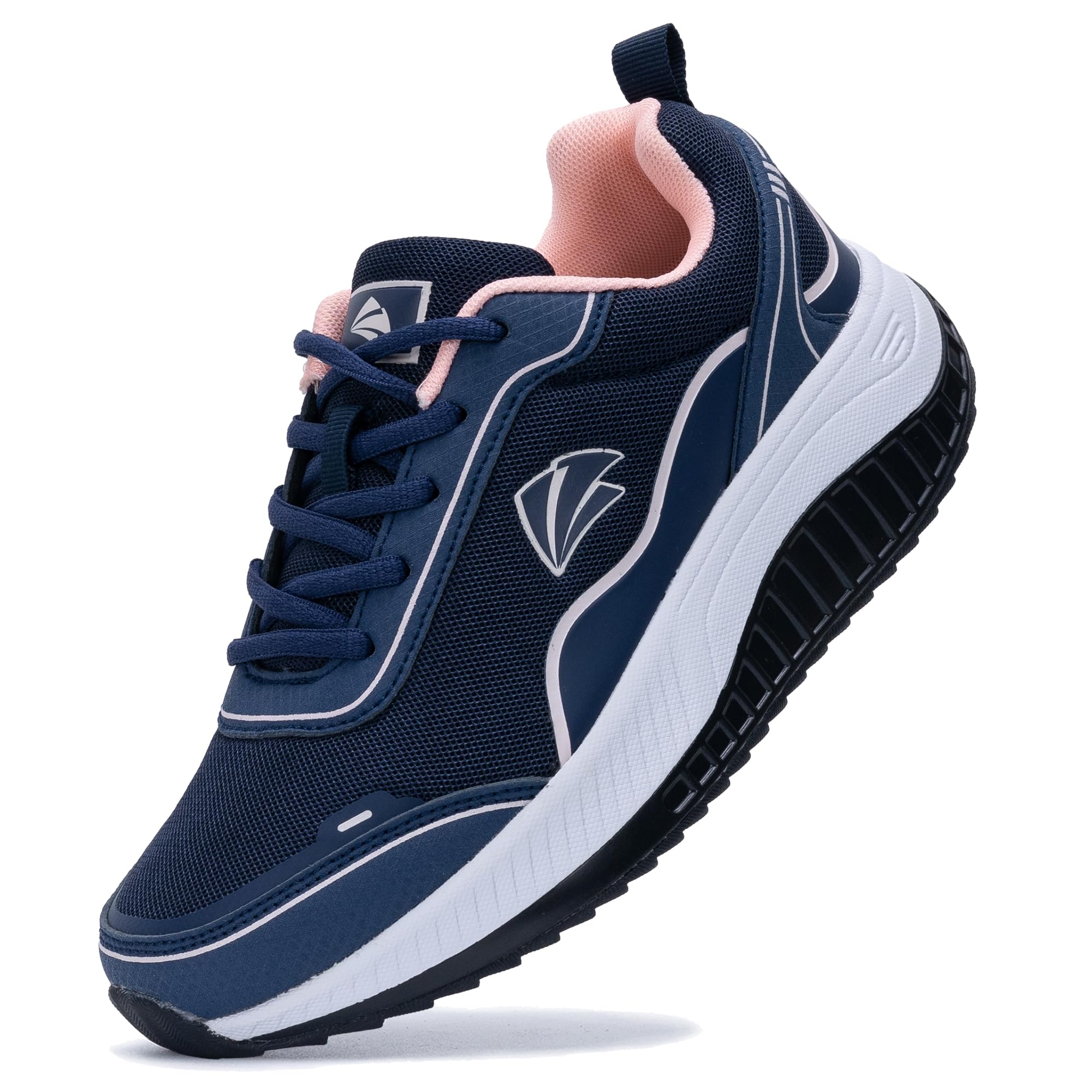
NORTIV 8 Walking Shoes

88 /100
Trail Score Excellent

Key details

Toe Box
Wide
Shoe Type
Walking sneaker
Cushioning
Plush, bouncy midsole
Check Price on Amazon

The toe box is why this one sits at the top of our list. NORTIV 8 cuts the shoe wide across the forefoot, and that room is what keeps a sore heel from turning into a sore everything else: your toes spread instead of stacking, and nothing presses on the outside edge of your foot by mid-afternoon. The cushioning carries the rest of the case. The midsole is soft enough that pavement stops being the enemy, and there's a real arch underneath it rather than a flat board, which is the combination most walking shoes for heel pain get half right.

Sizing runs true for most feet, so width is the thing to think about rather than length; if you wear thick socks through the winter, going up half a size keeps the toe box generous without turning the shoe into a slipper. The upper is soft from the first wear, so there's no break-in to plan your week around. These are the shoes we point people toward when they want one pair for the dog, the grocery store, and a shift on their feet, and the color range is wide enough that nobody has to wear something that looks clinical.

Pros

  • Wide toe box with real toe room
  • Soft midsole with a supportive arch
  • Comfortable with no break-in
  • Colors that don't look clinical

Cons

  • Tight opening makes them slow to pull on
Our verdict

Our default for a sore heel: a wide, softly cushioned walker with real arch support that costs less than most of the shoes here.
Check Latest Price
2

Best Cushioning

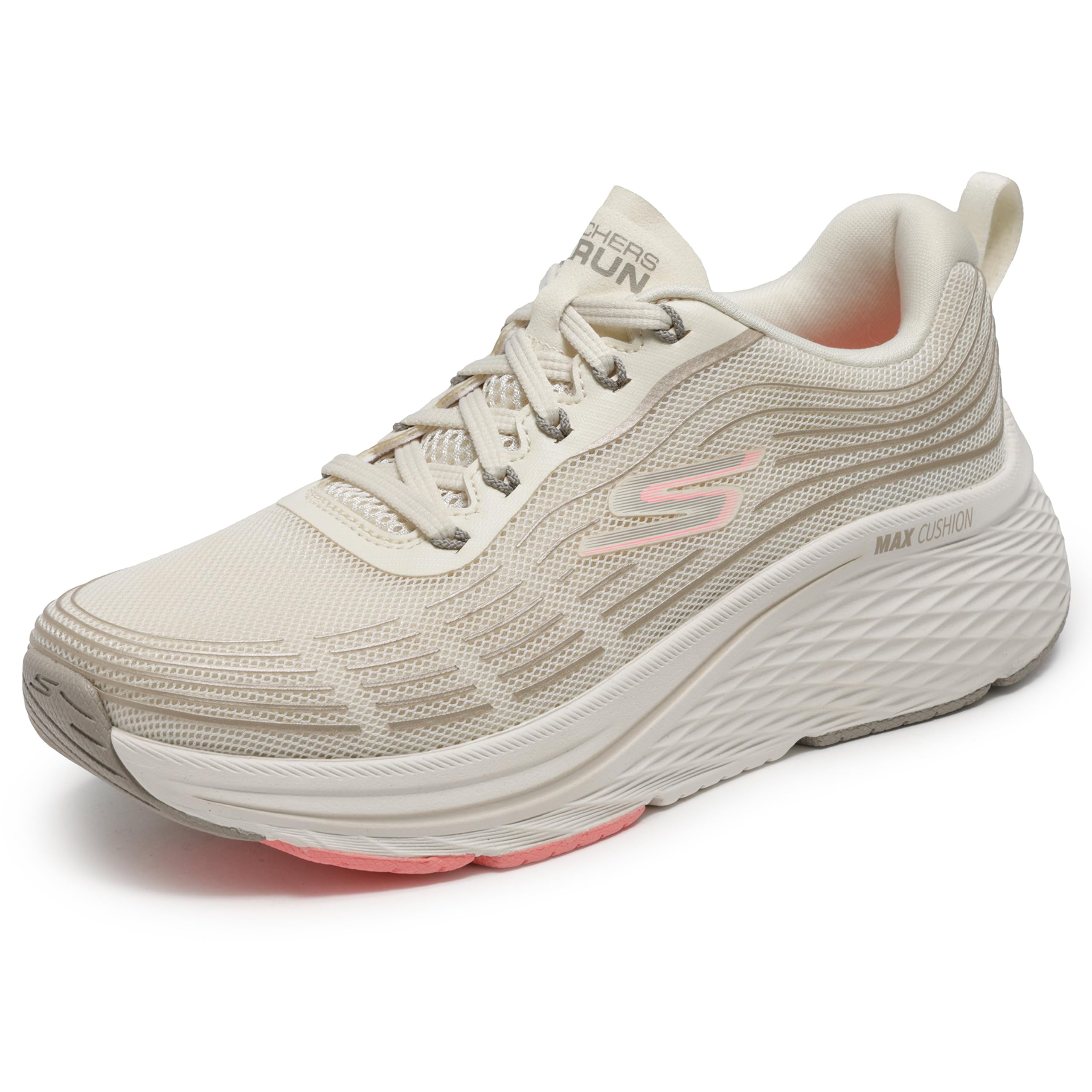
Skechers Max Cushioning Endeavour

91 /100
Trail Score Outstanding

Key details

Toe Box
Wide
Cushioning
Max Cushioning midsole
Listed Dimensions And Weight
12 x 8 x 4.5 inches; 1.5 pounds
Check Price on Amazon

Skechers files the Endeavour under road running, and that label is the first thing to look past. What it actually is, is the most cushioned shoe in this guide: a thick, giving midsole that swallows the jolt of a heel landing on concrete instead of passing it up your leg. For a heel spur, that's the entire argument, and it's why we rank it this high despite the shelf it sits on.

The fit helps. The toe box is genuinely wide, wide enough that the shoe feels roomy rather than loose, and the upper is soft from the first wear. The listing puts it at 1.5 pounds, and it doesn't drag on a long walk the way some max-cushion shoes do, so you get the padding without the sense of wearing weights. The color range also runs well past the usual gray-and-white.

Where it gives ground is firmness. This is a soft, tall shoe, and if you like feeling the pavement, or you walk a lot of gravel and uneven paths, the flatter, firmer picks here will feel more planted under you. On sidewalks, in stores, through a long errand day, the cushioning earns its keep, and that's the walking most sore heels actually do.

Pros

  • Thick, forgiving midsole for pavement
  • Wide toe box with a soft upper
  • Comfortable from the first wear

Cons

  • Outsole can wear thin with heavy daily mileage
Our verdict

If your heel aches on concrete, this is the most cushioned shoe we covered: sold as a road runner, worn as a walker, and worth it for the midsole alone.

Check Latest Price
3

Best Lightweight

Ryka Dash 3

88 /100
Trail Score Excellent

Key details

Shoe Type
Women's walking sneaker
Arch Support
Built-in, firm
Listed Dimensions And Weight
11.2 x 7.7 x 4.2 inches; 1.7 pounds
Check Price on Amazon

Put the Dash 3 next to our top pick and the trade is clear: a firmer, closer fit and less foam underfoot, in exchange for a light, planted feel that's easy to keep walking in. It's a walking shoe first, and it shows in how little shoe there is between you and the ground.

The heel is the part we keep coming back to. It's cupped and snug without pinching the top of the foot, so the back of your heel stays put instead of lifting and rubbing with every step, which is the small movement that makes a spur feel worse by the end of a walk. Arch support is firm rather than soft, and it suits higher arches or anyone who finds a pillowy shoe vague under the midfoot.

What you give up is depth of cushioning. The footbed is thinner than our top pick's, and if your heel wants a pillow, this isn't that shoe; if you want to feel the ground and stay light on your feet through a long walk, it is. Length runs true and the toe box has a little room without being sloppy, and the light weight is the reason it stays in the guide.

Pros

  • Light on long walks
  • Snug heel hold that stops rubbing
  • Firm arch support for high arches

Cons

  • Side stitching can tear with steady use
Our verdict

A light, low-slung walker with a snug heel and firm arch support, best for higher arches and anyone who dislikes sinking into foam.

Check Latest Price
4

Best for Problem Feet

Orthofeet Coral

84 /100
Trail Score Excellent

Key details

Footbed
Removable
Shoe Type
Orthopedic walking sneaker
Arch Support
Inserts included
Check Price on Amazon

Orthofeet ships the Coral with arch-support inserts in the box, and that tells you most of what you need to know: this is a shoe built around problem feet rather than around a look. The forefoot is roomy, the footbed lifts out, and there's space for thick socks without the upper pressing down on your toes.

We keep it in the guide for the person who has already tried the cheap route. The arch support is the firm, stabilizing kind, and the shoe stays light for how much structure it has, so a full day in it doesn't feel like clomping around in a medical device. If you already own an orthotic, the removable footbed means you can put yours in and keep the shell.

The inserts take a little setting up: you lift the factory insole out, drop the arch piece underneath, and settle it back in, and the shoe fits slightly differently depending on which combination you land on. It's worth doing that before your first long walk rather than after one, and worth doing in the house where you can still change your mind.

Pros

  • Arch inserts come in the box
  • Removable footbed takes your own orthotic
  • Roomy enough for thick socks

Cons

  • Sizing varies from pair to pair
Our verdict

For problem feet rather than everyday errands: arch inserts in the box, a removable footbed, and a roomy forefoot, with sizing you should confirm before you commit.

Check Latest Price
5

Best Budget

Scurtain Wide Walking Shoes

86 /100
Trail Score Excellent

Key details

Sole
Zero-drop, flat
Closure
Hook-and-loop straps
Toe Box
Wide
Check Price on Amazon

This is the least expensive pair in the guide, and it's the one we reach for when the question isn't cushioning but access. Two hook-and-loop straps across the top let you open the shoe wide, set your foot down, and close it over whatever the day has done to your feet, which is a different job from lacing up a trainer.

Everything about it is wide and light. The forefoot has room for toes to sit apart, the upper weighs almost nothing, and the sole is flat with no drop from heel to toe, a shape some feet love and others find odd for the first week. It's also the easiest shoe here to get on when bending over is a chore, and the straps make a loose fit adjustable without re-tying anything.

The honesty part lands here: the sole is thin and the arch support is minimal, so we don't recommend these as a heel-spur shoe on their own. We recommend them as the pair you can get into on a bad morning, with an insole you already trust dropped in, and at this price a second pair by the door is a reasonable thing to own.

Pros

  • Hook-and-loop straps adjust over swelling
  • Very light and simple to slide on
  • Wide forefoot at the lowest price here

Cons

  • Heel slips unless the straps are snug
Our verdict

The cheapest, easiest pair here to put on and adjust, with a thin sole, so plan on adding your own insole for heel support.

Check Latest Price
6

Hard Floors

QAUPPE Orthotic Walking Shoes

84 /100
Trail Score Excellent

Key details

Sole
Rocker bottom
Arch Support
Built-in orthotic
Listed Dimensions And Weight
11.81 x 3.15 x 3.94 inches; 14.11 ounces
Check Price on Amazon

The first few steps in a rocker sole feel strange: the shoe tips you forward before your heel settles. Then, on a hard floor, the point of it lands. Instead of stopping dead on the heel, you roll over it and keep going, which is exactly the motion a sore heel wants less of, and it's the reason this shoe is in the guide at all.

Under the foot the arch support is the firm, built-in kind, and the shoe stays stable through a long shift on tile or concrete. It's firmer than the plush picks here, so don't expect a marshmallow; the ride is about guidance rather than sinking in. It also doesn't need breaking in, which matters if you're buying a shoe because tomorrow already hurts.

We kept this one in as a specific tool rather than an everyday shoe. If your walking is corridor laps, kitchen floors, and a standing shift, the rocker does real work for you. On gravel or a bumpy path the curve feels less sure underfoot, and this is not the shoe for a long trail walk with the dog.

Pros

  • Rocker sole eases the roll off the heel
  • Firm support that holds up on hard floors
  • No break-in needed

Cons

  • Narrow toe box for a wide forefoot
Our verdict

A rocker sole that rolls your step forward and off the heel, making it the pick for hard floors and long shifts, not for wide feet.

Check Latest Price
7

Light All-Day Wear

New Balance Fresh Foam Arishi V4

86 /100
Trail Score Excellent

Key details

Midsole
Fresh Foam
Toe Box
Wide
Listed Dimensions And Weight
12.7 x 7.9 x 4.5 inches; 2.1 pounds
Check Price on Amazon

Arch support is the first thing we check in this category, and the Arishi is the shoe where it pays to look before you buy. This is a lightweight neutral trainer built around soft Fresh Foam rather than around a posted arch, so what's under the midfoot is gentle at best. That's a design choice, not a defect, but it matters when the reason you're shopping is a painful heel.

What it does well is disappear on your foot. It's light, the toe box is roomy enough that your toes don't bunch, and the upper is easy to get on and off, the kind of shoe you leave by the door and step into for a walk around the block.

Fit is the friendliest part. Length runs true, the forefoot has room, and the shoe doesn't press across the top of the foot, which makes it an easy one to wear with thicker socks once the weather turns.

So where does that leave it? If your heel pain is manageable and you want a light, roomy sneaker for errands and short walks, this one is comfortable and inexpensive enough to try, with your own insole in it from day one. If you need support built into the shoe, start with our top pick instead.

Pros

  • Very light on the foot
  • Roomy toe box and easy on-off
  • Soft Fresh Foam underfoot

Cons

  • Little arch support built in
  • Upper and laces are the first parts to go
Our verdict

Light, roomy, and softly sprung, with a minimal arch, so buy it for short walks if you're adding an insole you trust.

Check Latest Price
8

Long Standing Shifts

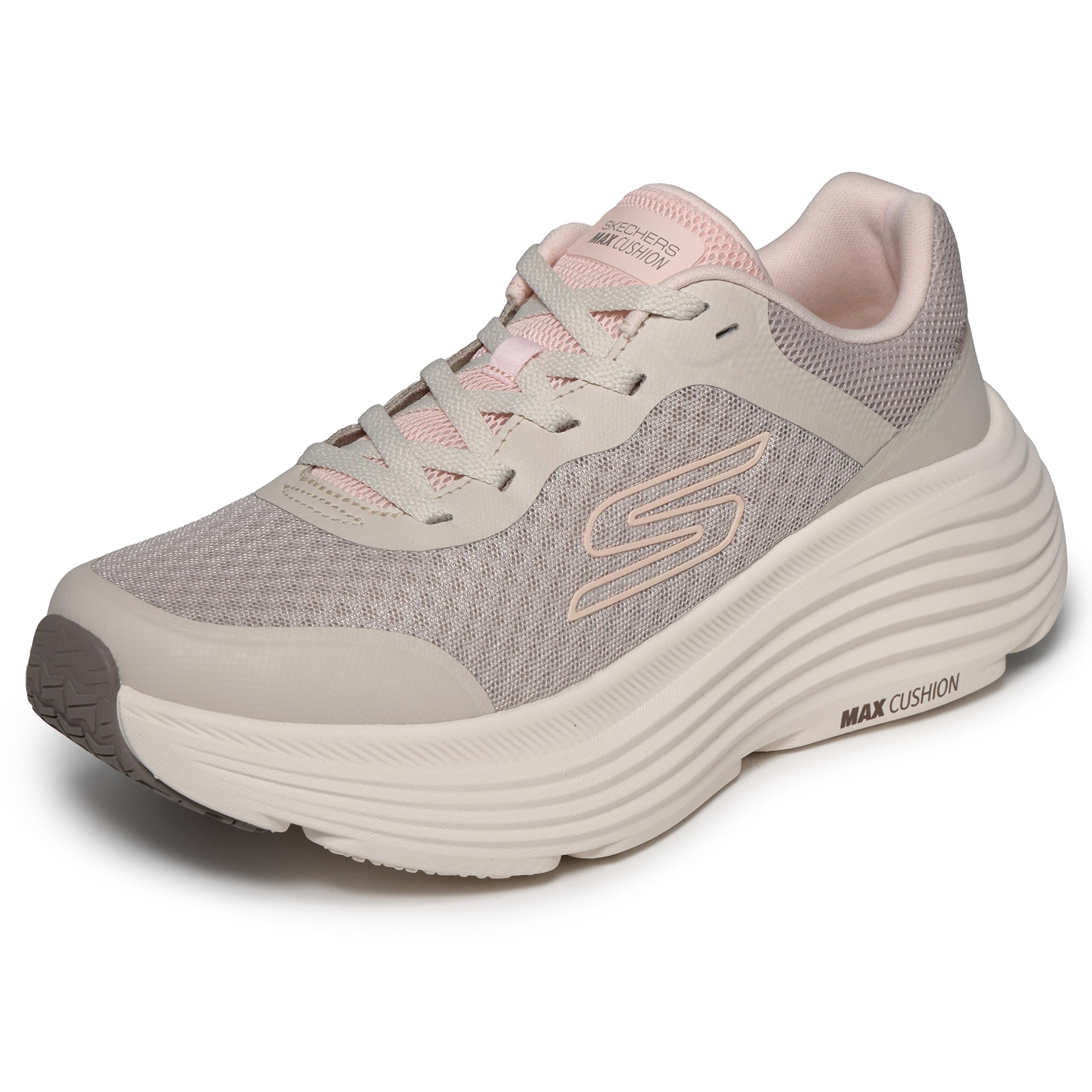
Skechers Max Cushioning Elite 2.0

90 /100
Trail Score Outstanding

Key details

Toe Box
Roomy, wide sizes
Cushioning
Max Cushioning Elite midsole
Arch Support
Built-in
Check Price on Amazon

Skechers puts two max-cushioning shoes in this guide, and the Elite 2.0 is the dearer of the pair: the same wide, soft approach, more shoe underfoot, and a price that asks you to be sure before you commit.

The case for it is standing. The heel is deeply cushioned and stays comfortable when you're on your feet in one place for hours rather than moving, which is the difference between a walking shoe and a shoe you wear at work. Arch support is there without being aggressive, and the toe box is roomy enough that wide feet have somewhere to go, including in the wide sizes.

It's also light for the amount of midsole it carries, so it doesn't feel like a platform boot by the end of a shift, and the upper breathes well enough for a long day indoors.

What holds us back is the money. The Elite 2.0 costs more than our top pick and more than the Endeavour, and it doesn't walk better than either of them, it stands better. If your day is a counter, a ward, or a classroom rather than a sidewalk, that's a trade worth making; if you're logging miles, put the difference toward the cheaper shoe and a good insole.

Pros

  • Deep heel cushioning for long shifts
  • Roomy toe box, including wide sizes
  • Light for its midsole

Cons

  • Sole separation can develop with steady wear
Our verdict

The pick for standing shifts rather than long walks: deep heel cushioning, a roomy toe box, and a premium that's easier to justify when you're on your feet all day.

Check Latest Price

How We Tested Walking Shoes for Heel Spurs

We started by pulling every pair we could find that listed a removable insole, a toe box offered in wide widths, and a sole cushioned or rockered under the heel. Then we read customer reviews the way I read them now — hunting for the complaints that matter: a heel counter that rubs, an arch that presses in the wrong place, cushioning that dies within two months. Price only counted in ratio to how long a shoe held up.

All 14 pairs went into the same rotation for six months. The first test each morning was twenty steps from the bed to the kitchen, because that's where a heel spur announces itself. From there: a two-mile sidewalk loop with the dog, a full day standing on tile at the kitchen counter, a 10,000-step Saturday of errands, and one deliberately sloped, rain-slicked driveway. Two testers with wider feet wore the wide sizes where a shoe came in one.

At each stage we kept a running log. We traced every tester's foot and checked for a thumb's width of clearance at the widest point of the toe box, and we pulled the stock insoles to see whether custom orthotics would sit flat or perch on a ledge. Each shoe went on a kitchen scale, and we noted which ones we forgot we were wearing by 4 p.m. Every pair came back for inspection at 50 miles and again at 100: thumb pressure into the midsole to feel for compression, a look at the outer heel edge for wear, and a note on whether the heel pain was better, worse, or unchanged the morning after a long day.

How to Choose Women's Walking Shoes for Heel Spurs

Start with what sits under the heel

A heel spur hurts most at the moment the heel lands, and the midsole is the part that absorbs that jolt. Press a thumb into the foam under the heel: if it compresses and springs back, it will do something for you on pavement; if it bottoms out against something hard, it won't, however soft the upper feels. Plenty of pretty sneakers are firm as a board underneath.

Depth matters more than a brand name. Our most cushioned pick, the Skechers Endeavour, is the shoe to judge others against: thick, giving, and sold as a road runner because that's where Skechers files its max-cushion line.

Arch support and heel hold

Arch support does two jobs: it stops the foot rolling inward, and it spreads load that would otherwise land on one spot. Firm support suits higher arches; a soft, neutral midfoot suits feet that don't want to be pushed. Neither is better in the abstract, but a shoe with nothing under the arch is the wrong tool for a painful heel.

Squeeze the heel counter, the stiff cup at the back. A firm one holds the foot so it doesn't roll or slide, and that stability is what lets cushioning do its job. The Ryka Dash 3 is the firmest, most held-in shoe in this group.

Fit, width, and the swelling you should plan for

Feet swell through the day, and a shoe that fits at nine in the morning can be tight by dinner. Try shoes on late, leave a thumb's width between your longest toe and the front, and check that the widest part of your foot sits at the widest part of the shoe.

A wide toe box, like the NORTIV 8's, keeps pressure off your toes, but width up front doesn't fix a heel that slides. If swelling is part of your day, a strap closure like the Scurtain's adjusts in seconds where laces make you sit down and start over.

Weight, break-in, and how long the cushioning lasts

Lighter shoes are easier over distance, but lightness usually comes out of the midsole, which is the part a sore heel depends on. That's the trade behind a shoe like the New Balance Arishi: lovely and light, with less between you and the pavement.

Nothing here needs a break-in, but foam does have a life. When the creases in the midsole stop springing back and the shoe feels flat under the heel, replace it rather than adding another insole on top. Rotating two pairs spreads the wear and keeps cushioning under you for longer.

Frequently Asked Questions

Final Verdict

For most women shopping with a heel spur, we point to the NORTIV 8. It has the roomiest forefoot here, cushioning that takes the sting out of pavement, and enough arch support to keep the foot settled, all at a price that doesn't make the decision agonizing. It's the pair we hand over first.

If you want more foam under the heel and don't mind a shoe built for the road, the Skechers Endeavour is the softer, more forgiving ride on concrete. Add the Orthofeet Coral only if you already wear an orthotic or want inserts supplied, and the Scurtain if getting a shoe onto a swollen foot is the daily battle.