Best Wobble Boards for Ankle Rehab of 2026

The first time a physical therapist handed me a wobble board, I thought it looked like a toy — until I stood on one foot and lasted about four seconds. That's the whole idea: the board keeps asking your ankle to catch itself, which is the motion that rebuilds strength after a sprain and helps prevent the next one. What you're really buying is trust — a deck you can stand on barefoot without sliding, at a difficulty that meets your ankle where it currently is.

I've kept one in my living room since then, and the boards that survive daily use tend to be the unglamorous ones. We tested 12 over four months, from thin plastic discs to heavy wooden rockers, and the gaps in stability, grip, and durability showed up within a week. The best were also the most versatile and, frankly, the most fun, which counts for a lot when you're doing balance drills for the third time in a day. Here's what held up.

1

Best Overall

Amazon Basics Wood Wobble Board

93 /100
Trail Score Outstanding

Key details

Tilt
Round base, all directions
Deck Height
3.15 inches
Weight Limit
265 lb
Platform Size
15.75 x 15.75 inches
Check Price on Amazon

Square, plain, and made of wood, the Amazon Basics board is the least complicated thing here: no roller, no ball, nothing to adjust. It is also the one we recommend to most people rehabbing an ankle, because everything on it points at the job — a 15.75-inch deck wide enough for a two-foot stance in the first weeks and a single-leg stance later, sitting on a round base that lets the deck tip in any direction you lean.

The surface is real grip tape, and it works. We never had a foot slide while balancing on one leg, even in socks. It is rough, though: a plank or a push-up on this deck is unpleasant on bare forearms, and anyone with sensitive feet will want socks or shoes. That same grit is why the board still works when a swollen ankle will not fit back into a shoe.

The one number to check is 265 pounds, the lowest limit of any board here. If two adults will share it, or you are on the heavy side, one of the 350-pound boards — the HAPOO or the StrongTek — gives you margin. Everyone else can stop worrying about it; the deck feels solid every time we step on.

A one-year limited warranty comes with it, which we like on something that gets stood on every day, and the price sits at the bottom of this group. If you are buying one board and are not certain you will keep up with the exercises, this is the one that costs least to be wrong about.

Pros

  • Wide 15.75-inch deck for two-foot and single-leg work
  • Grip tape holds feet even in socks
  • Solid wood at the low end of the price range
  • One-year limited warranty

Cons

  • 265-pound limit is the lowest in this group
Our verdict

We think this is the board most sprained ankles should start on: a stable wood deck, a round base that moves in every direction, and a price that leaves room for a second board later.
Check Latest Price
2

Best for Progressive Difficulty

Sportneer 7-Mode Balance Board

95 /100
Trail Score Outstanding

Key details

Included
Board, roller, ball
Deck Size
31.5 x 14.17 inches
Difficulty
Adjustable stoppers
Weight Limit
450 lb
Check Price on Amazon

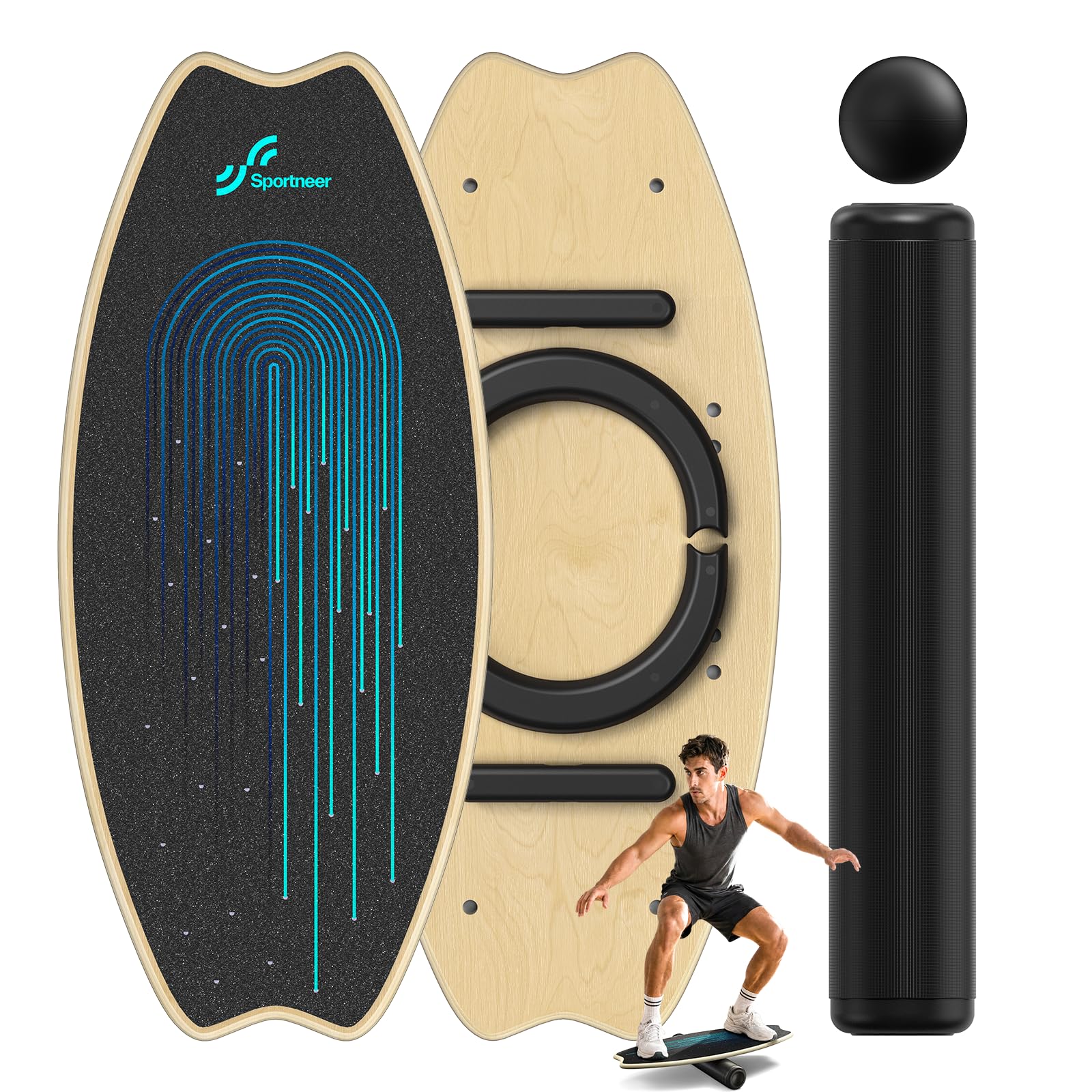
Two movable blocks on the rail are the whole idea here. Slide them together and the roller can only travel a few inches; slide them apart and you get the full run. That is a difficulty dial, and it is why this is the only board in the guide that can follow an ankle from a nervous first roll to a fast, surf-style set without you buying another piece of equipment.

The kit is a birch deck, a roller, and an inflatable ball, and the three cover seven setups between them. We got more out of the roller for ankle work: it forces a slow, controlled front-to-back roll you can feel through the joint rather than a general wobble. The ball is closer to a pure balance challenge and much less forgiving, which makes it the later step.

It is not where you start. The rail is 31.5 inches long and the kit weighs just under 11 pounds, so it claims a fixed patch of floor instead of living under the couch, and the roller only challenges you along one axis at a time. It is a different tool from a round-base board rather than a better one.

What you get is the best-built thing in the group: a 450-pound limit, a matte top that grips barefoot or in shoes, and stoppers that stay where you set them. If you are already past the early weeks and want one board for the long haul, this is the one we point to.

Pros

  • Movable stoppers change how far the roller travels
  • Roller and ball give two distinct challenges
  • 450-pound limit, the highest here
  • Matte deck grips barefoot or shod

Cons

  • Long 31.5-inch rail needs permanent floor space
  • Priciest board in this group
Our verdict

We recommend this if you are past the first weeks of rehab and want one board that keeps getting harder, because the movable stoppers and the ball turn a single deck into a whole progression.

Check Latest Price
3

Best Step Up From a Rocker

StrongTek Cross-Base Board

90 /100
Trail Score Outstanding

Key details

Base
Cross base, 360° wobble
Material
Lauan hardwood plywood
Deck Size
17.5 x 13.5 inches
Weight Limit
350 lb
Check Price on Amazon

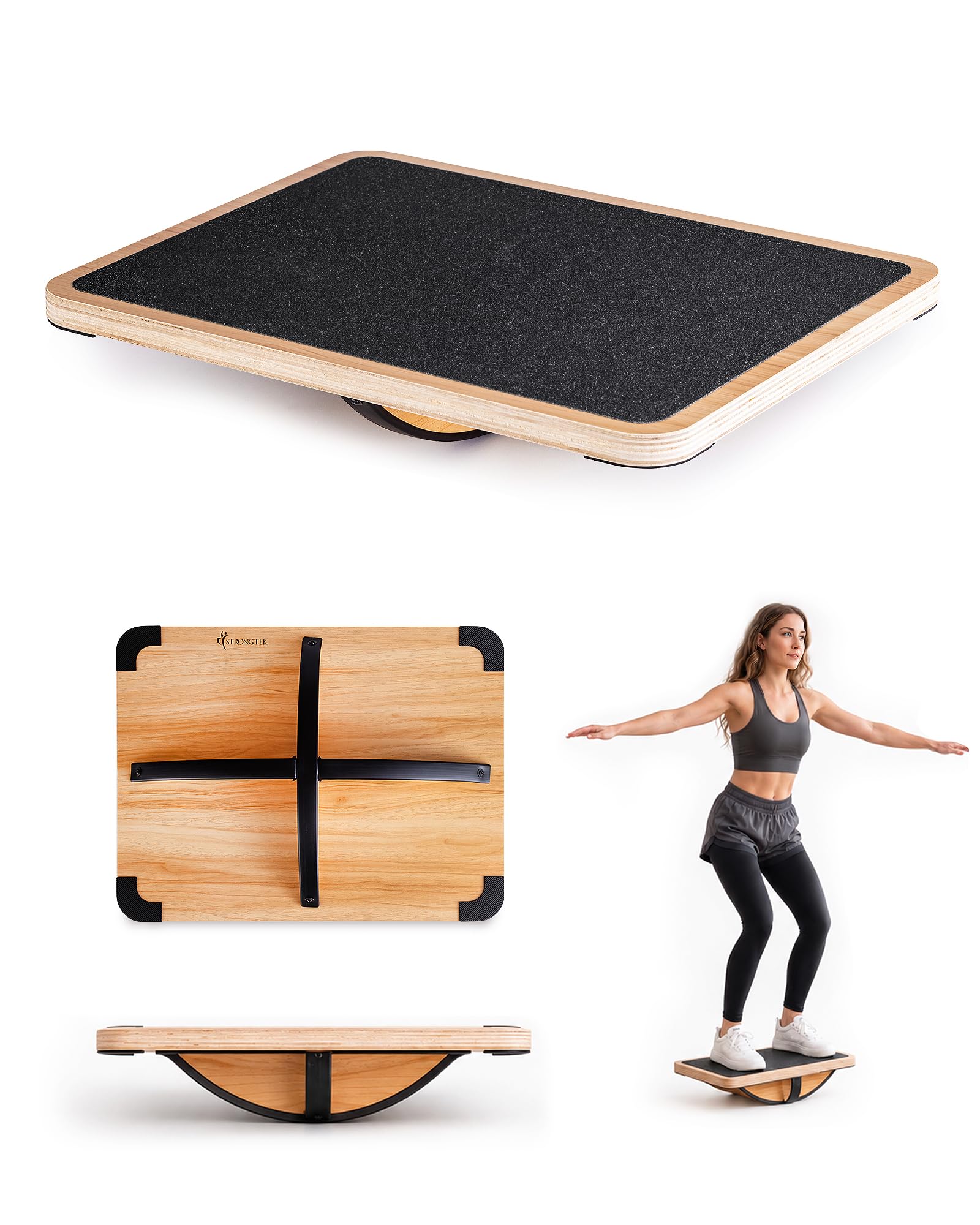
A round-base board tips the moment you shift weight; that is its job. The StrongTek softens the same movement with a cross-shaped base instead of a dome, so the deck has four contact points on the floor and much more room to lean before it lets go. The result is a board you can put weight through on a stiff ankle without it skittering away, which is exactly what the early weeks call for.

The maker's own copy names ankle rehab and physical therapy, and the design backs it up: 17.5 by 13.5 inches of Lauan plywood, roomy enough for a wide stance, with a textured top and a 350-pound limit. Three inches tall and 17.5 inches long, it slides under a bed or a couch between sessions.

The catch arrives later. Once your ankle is strong, the cross base's extra contact area is precisely what you do not want, and a board that gives way slowly stops asking anything of you. We think of it as the middle rung: buy it if you are early or if a full wobble feels like too much, and expect to add a round-base board when it starts to feel easy.

Bare feet will notice the grit of the tape, which is the price of a deck that does not slip. For a first multi-directional challenge that will not punish a weak ankle, it is the most sensible board here.

Pros

  • Cross base slows the tip without locking it
  • Roomy 17.5 x 13.5-inch deck
  • 350-pound limit with a textured top
  • Three inches tall, stores under furniture

Cons

  • Stops challenging once your balance returns
Our verdict

This is our pick for the ankle that is not ready for a full wobble: the cross base tips in every direction but gives way more slowly than a round-ba.

Check Latest Price
4

Best Low-Profile Board

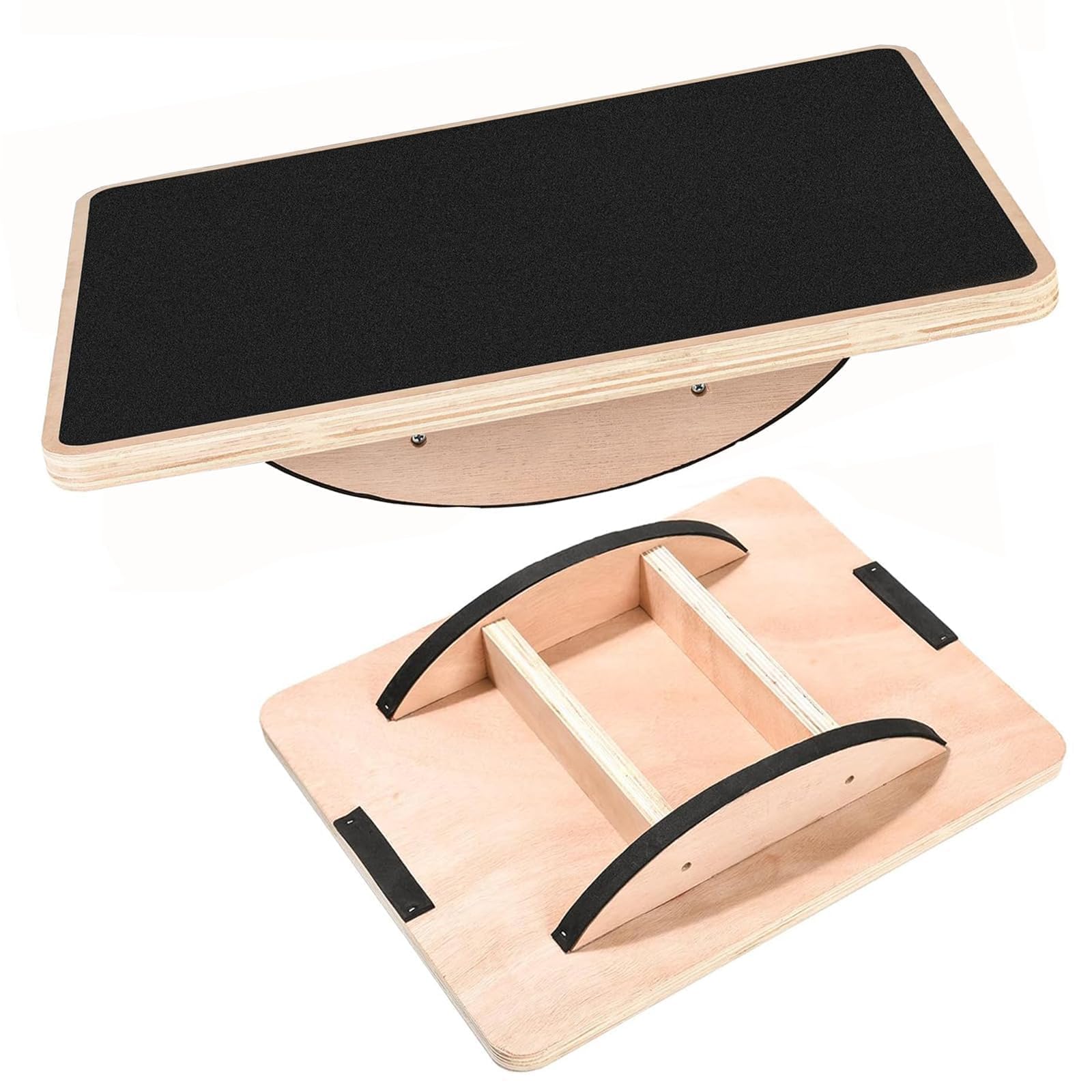
HAPOO Wooden Wobble Board

90 /100
Trail Score Outstanding

Key details

Grip
Anti-slip top and base pads
Deck Size
16 x 13 inches
Deck Height
2.5 inches
Weight Limit
350 lb
Check Price on Amazon

At 2.5 inches tall, this is one of the lowest decks here, and that is the point. A swollen ankle does not want to step up onto a 4-inch platform, and the lower the deck, the less the board shifts while you are getting on it. The deck is 16 by 13 inches of wood, rated to 350 pounds.

What we appreciate more is the padding on both faces. There is an anti-slip pad across the top and rubberized pads under the rocker feet and around the edges, which does two jobs at once: the board stays where you put it on hardwood, and the edges do not mark the floor. In a rental with laminate, or a finished basement, that is the detail that decides whether it stays out.

The tilt is two-axis, side to side and front to back, rather than a full 360-degree wobble. For ankle work that is less a compromise than a match: inversion and eversion are the directions a healing ankle has to learn to control, and you can work them with a hand on the counter without the board spinning out from under you. Rocking through a TV episode is a realistic way to get the repetitions in.

The 13-inch width is the other limit: fine for a single-leg stance, snug for a wide two-foot one, especially in boots. Step on with your feet closer together and it stops mattering.

Pros

  • Anti-slip pads on deck and under the base
  • Low 2.5-inch deck is easy to step onto
  • 350-pound limit on a wood deck
  • Edge pads keep floors unmarked

Cons

  • Two-axis tilt stops challenging a strong ankle
Our verdict

We like this one for the first weeks back: a 2.5-inch deck with grip on the top and pads underneath, so it stays where you put it while you rock a stiff ankle.

Check Latest Price
5

Best Compact Board

CanDo Economy Balance Board

88 /100
Trail Score Excellent

Key details

Height
2 inches
Weight
1.25 lb
Surface
Raised textured circles
Platform Size
14 inches diameter
Check Price on Amazon

Fourteen inches across and 1.25 pounds, this is the smallest and lightest board in the guide. It is a molded plastic disc with a low pivot and raised circles across the top — the classic clinic shape, and the one that fits under a desk, beside a couch, or in a drawer.

Light matters more than it sounds. When you are hopping on one foot, or you can only carry one thing from room to room, a board you can lift with two fingers gets used and a 10-pound roller does not. The 2-inch profile helps too: there is barely a step up for an ankle that is still stiff.

The trade-offs are size and surface. Fourteen inches means a two-foot stance hangs over the edge, so this is really a single-leg and partial-weight tool, and the raised-circle texture is rough on a bare sole — fine in socks, less pleasant barefoot.

Where it earns its place is between other things: a set at the counter while the kettle boils, a few rocks before you head upstairs. Balance work adds up in short pieces, and this is the board that makes short pieces easy.

Pros

  • Light 1.25-pound plastic, easy to move one-handed
  • Low 2-inch profile suits a stiff ankle
  • Small enough to keep under a desk

Cons

  • 14-inch deck rules out a wide two-foot stance
Our verdict

The one we reach for when floor space is tight: 14 inches of plastic, 1.25 pounds, and a wobble gentle enough to use beside a desk.

Check Latest Price
6

Higher Weight Limit

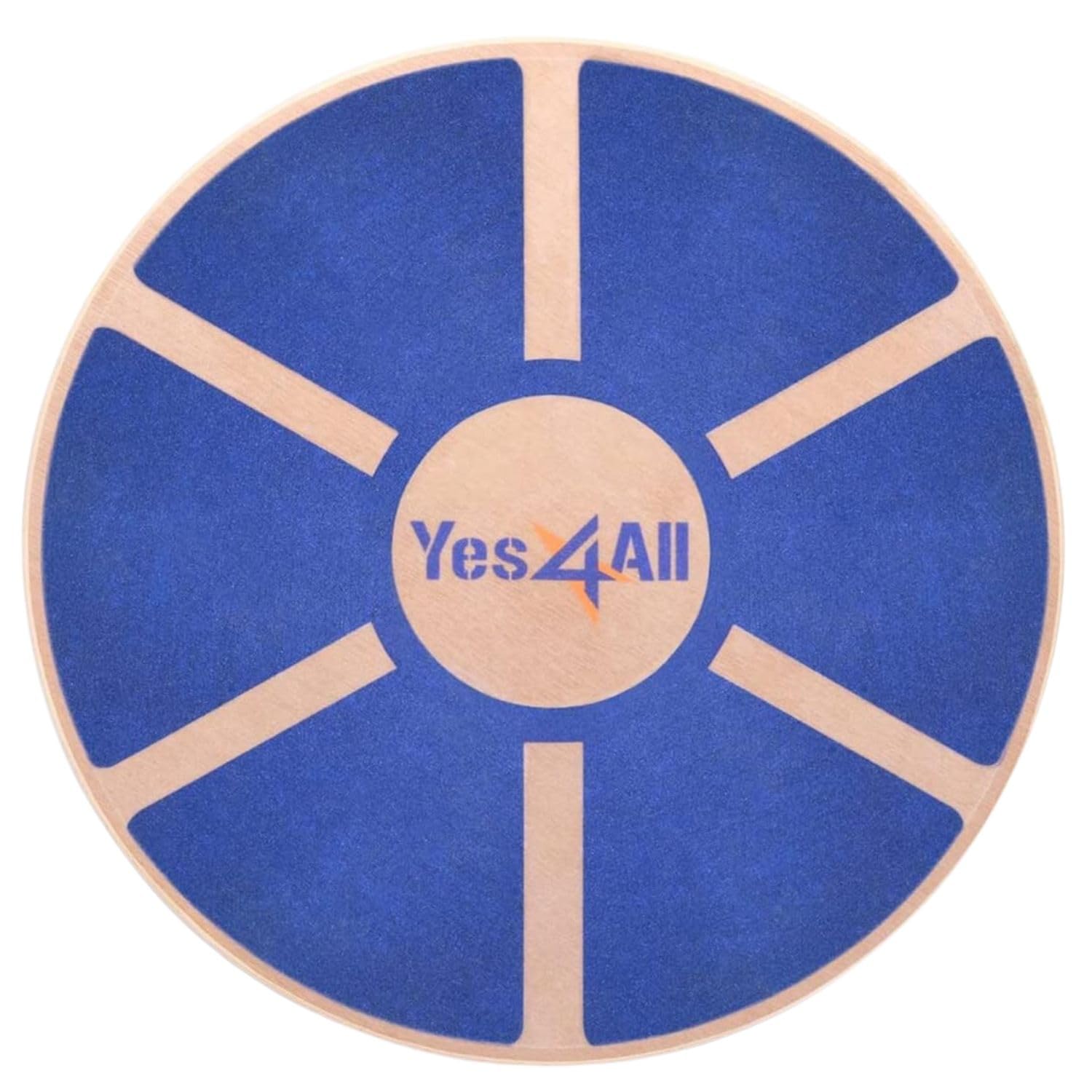
Yes4All Wooden Wobble Board

91 /100
Trail Score Outstanding

Key details

Tilt
15° tilt, 360° rotation
Warranty
1 year
Weight Limit
300 lb
Platform Size
15.75 inches diameter
Check Price on Amazon

This is the closest thing here to the Amazon Basics board: same 15.75-inch round deck, same wood, same all-directions tilt. The difference is on the spec sheet — 300 pounds instead of 265, and a published 15-degree tilt angle that gives you a number to track as the ankle comes back.

For about the same money, that is a fair trade if two people will share the board or you are near the top of the weight range. We also like that the angle is stated at all. Most boards here do not tell you how far they lean, and a number is genuinely useful when you are measuring progress week to week.

There is no strong reason to choose it over the Amazon Basics board unless you need those extra 35 pounds or want the angle written down. After rehab it makes a serviceable standing-desk rocker, and the 30-day return window with a one-year warranty takes most of the risk out of trying it.

The deck is the usual wood-and-sandpaper arrangement: secure in shoes, rough on bare feet, and best kept on a mat or a rug rather than bare hardwood.

Pros

  • 300-pound limit, higher than the top pick
  • Published 15-degree tilt for tracking progress
  • Anti-skid pad with 360-degree movement

Cons

  • Rough grip tape under bare feet
Our verdict

We point people here when the top pick's 265-pound limit is the only hesitation: same round wood deck, a bit more headroom, and a stated 15-degree tilt.

Check Latest Price
7

Home Rehab

VANKUTL Wooden Wobble Board

89 /100
Trail Score Excellent

Key details

Assembly
None required
Deck Size
16.45 x 12.99 inches
Deck Height
2.91 inches
Weight Limit
350 lb
Check Price on Amazon

It arrives assembled, which sounds like a small thing until you have spent an evening driving screws into a board you then have to stand on. Sixteen and a half inches long, thirteen wide, just under three inches tall, 350 pounds — the numbers put it right alongside the HAPOO.

The build is the part we trust: plywood with a double reinforcement strip underneath, anti-slip pads across the deck, and anti-scratch pads around the base and edges. It is built for a home rather than a clinic, which is the right call at this level.

Thirteen inches across is fine for a single-leg stance and tight for a wide two-foot one, so if you plan to start with both feet planted, measure your stance before you order rather than after.

The pads are the detail that decides it for us. A board that does not mark a floor is a board that stays out in the room instead of going back in the closet, and staying out is most of the battle with balance work.

Pros

  • 350-pound capacity on a plywood deck
  • Anti-slip pads on the deck, anti-scratch pads below
  • Arrives fully assembled

Cons

  • Just under three inches tall is a real step up
Our verdict

We keep this on the list for home rehab on a budget: 350 pounds of capacity, pads on both faces, and nothing to assemble.

Check Latest Price

How We Tested Wobble Boards for Ankle Rehab

We started wide, pulling every board sold for ankle rehab or balance training and then filtering by deck size, tilt height, fixed versus adjustable tilt, material, and price. Anything that couldn't fit a barefoot adult foot, or that locked you into a single difficulty with no path forward, came off the list. Twelve boards made it into the four-month test.

Those boards lived in houses, not a lab. Testers stood on them barefoot on bathroom tile while the kettle boiled, in socks on hardwood, and in sneakers on a garage floor, working through single-leg holds, heel taps, and slow circles in both directions. We timed single-leg holds on day one and again at the end, noted where a deck felt twitchy versus forgiving, and checked grip with damp feet, since a July rehab session is a sweaty one.

Size we measured against real feet — a women's 7 and a men's 10 — because a deck that looks roomy online can leave your heel hanging off the edge. Adjustable boards earned points for versatility, letting one household run a cautious early-rehab session and a cockier month-three session on the same deck, but only when the pin was easy to move with the board on the floor, which we timed. We watched for wear as well: plastic flexing underfoot, screws backing out, non-slip texture smoothing off. The boards still sitting out in the living room are the ones below.

How to Choose a Wobble Board for Ankle Rehab

Start With the Tilt, Not the Hype

Round-base boards tip in every direction at once. That is the full proprioceptive challenge, and it is what most people picture when they hear wobble board. Two-axis rockers tilt side to side and front to back only, and cross-base boards land between the two, because a wider floor contact slows the tip without locking it.

If you are still holding a counter, a two-axis rocker such as the HAPOO is easier to control and works the inversion and eversion an ankle actually needs. When a two-foot stance stops feeling like effort, a round base or a cross base takes over; the StrongTek is the gentle way into multi-directional work, and the 15.75-inch rounds are the full version.

Deck Size and Deck Height

Fifteen to sixteen inches is the useful range for adult feet. A 14-inch deck like the CanDo is a single-leg and partial-weight tool, because a two-foot stance hangs over the edge, while 17.5 inches such as the StrongTek leaves room to spare. Measure your natural stance width before you order rather than assuming the photo shows a normal-sized board.

Height matters just as much and gets discussed far less. A 2- to 2.5-inch deck is a small step for a stiff ankle; anything over three inches is a real climb when you are not fully weight-bearing. Lower decks also shift less underfoot while you are getting on, which is when most people lose their nerve.

Grip at the Top and at the Floor

Two surfaces decide how safe a board feels: the deck, which keeps your foot in place, and the base, which keeps the board where you put it. Abrasive tape grips well and is rough on bare skin; molded plastic decks are smooth and get slick; rubberized pads on both faces, as on the HAPOO and the VANKUTL, solve the floor half of the problem for you.

The trap here is the phrase non-slip, which in most listings describes the deck and says nothing about the base. Even a well-taped board will walk on smooth hardwood. Put a yoga mat or a low-pile rug under it and the whole question goes away.

Weight Limits, Material, and What You Pay For

Capacities in this group run from 265 to 450 pounds, and the number should clear the heaviest person who will use the board, not just the person rehabbing. Wood is the safer bet for a board that gets stood on daily, and several people sharing one is exactly the case where a plastic deck gives out first.

Spend up only for something you will use. Plain wood decks sit at the low end; cross-base boards in the middle; adjustable roller kits at the top. The extra money buys adjustability and capacity, not a better rehab outcome, so a basic board plus a mat is a perfectly good place to start.

Frequently Asked Questions

Final Verdict

For most people working an ankle back from a sprain, we would reach for the Amazon Basics board every time. It puts 15.75 inches of non-slip wood deck on a round base, carries a 265-pound limit that covers most riders, and sits at the bottom of this group on price.

If your ankle is not ready for a 360-degree tilt yet, start on the HAPOO and keep a round board for later; if you want one kit that will follow you all the way back, the Sportneer's movable stoppers do that job at a premium.