Best Water Rowing Machines of 2026

A water rowing machine works on a simple, satisfying principle: you pull a handle, and a paddle wheel spins through a tank of water, creating resistance that builds the harder you row. That design is why the good ones feel less like gym equipment and more like a piece of furniture you happen to exercise on. The trade-offs are real, though—water rowers cost more, need careful assembly, and take up floor space. The right one fixes all of that: a full-body, low-impact workout at home that’s quiet enough for an apartment and handsome enough to leave out.

After eight months and seven water rowers, our team knows which details matter. A quiet tank is lovely, but so is a readable monitor, footplates that adjust without swearing, and a frame that doesn’t wobble at speed. We assembled each one ourselves, rowed several times a week, and lived with them long enough to catch leaks, loose bolts, and finishes that dulled fast. The picks below are the ones that made the price feel fair.

1

Best Overall

MERACH R280

89 /100
Trail Score Excellent

Key details

Storage
180° fold, built-in wheels
Warranty
1 year
Max User Weight
400 lb
Assembled Footprint
60"D x 18"W x 30"H
Check Price on Amazon

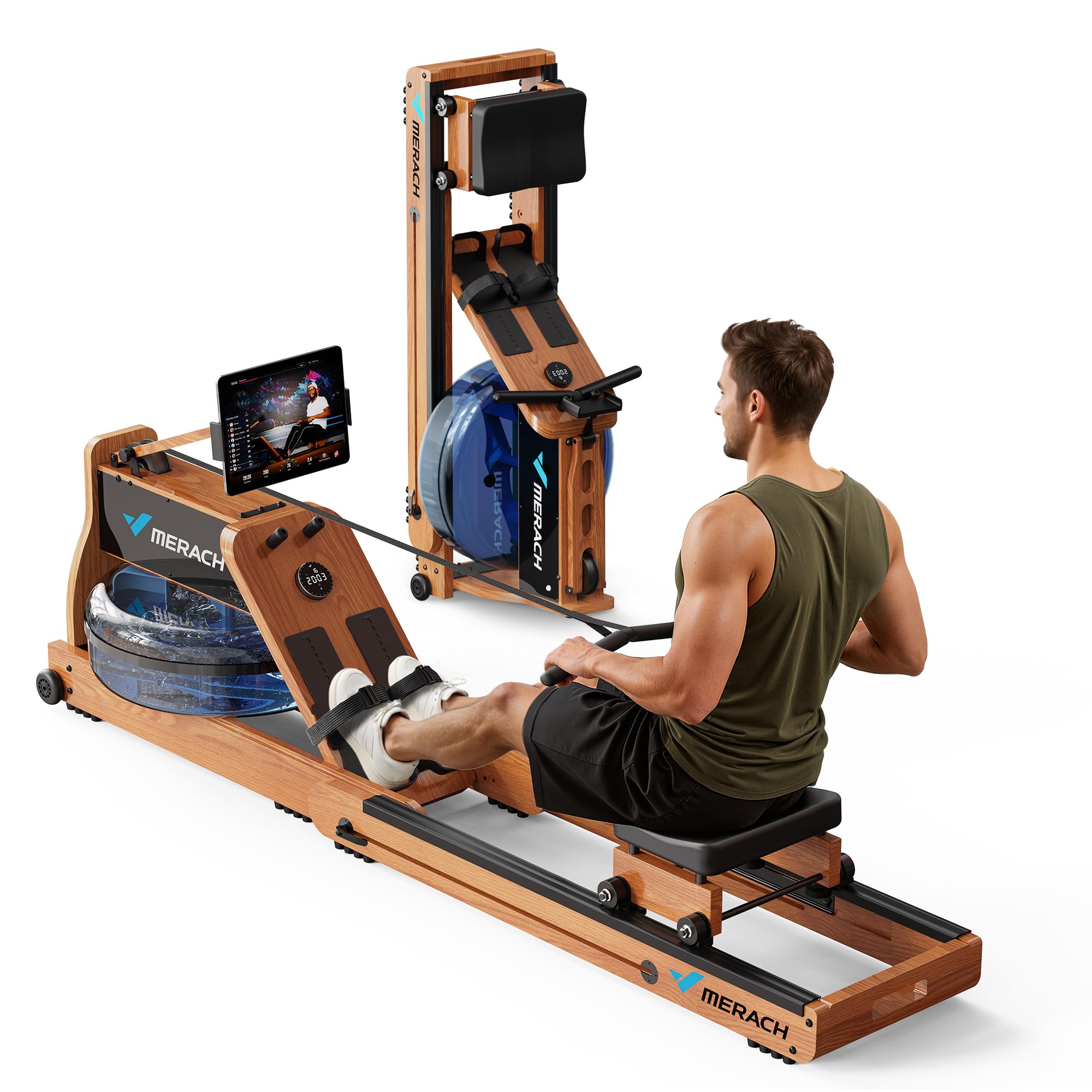
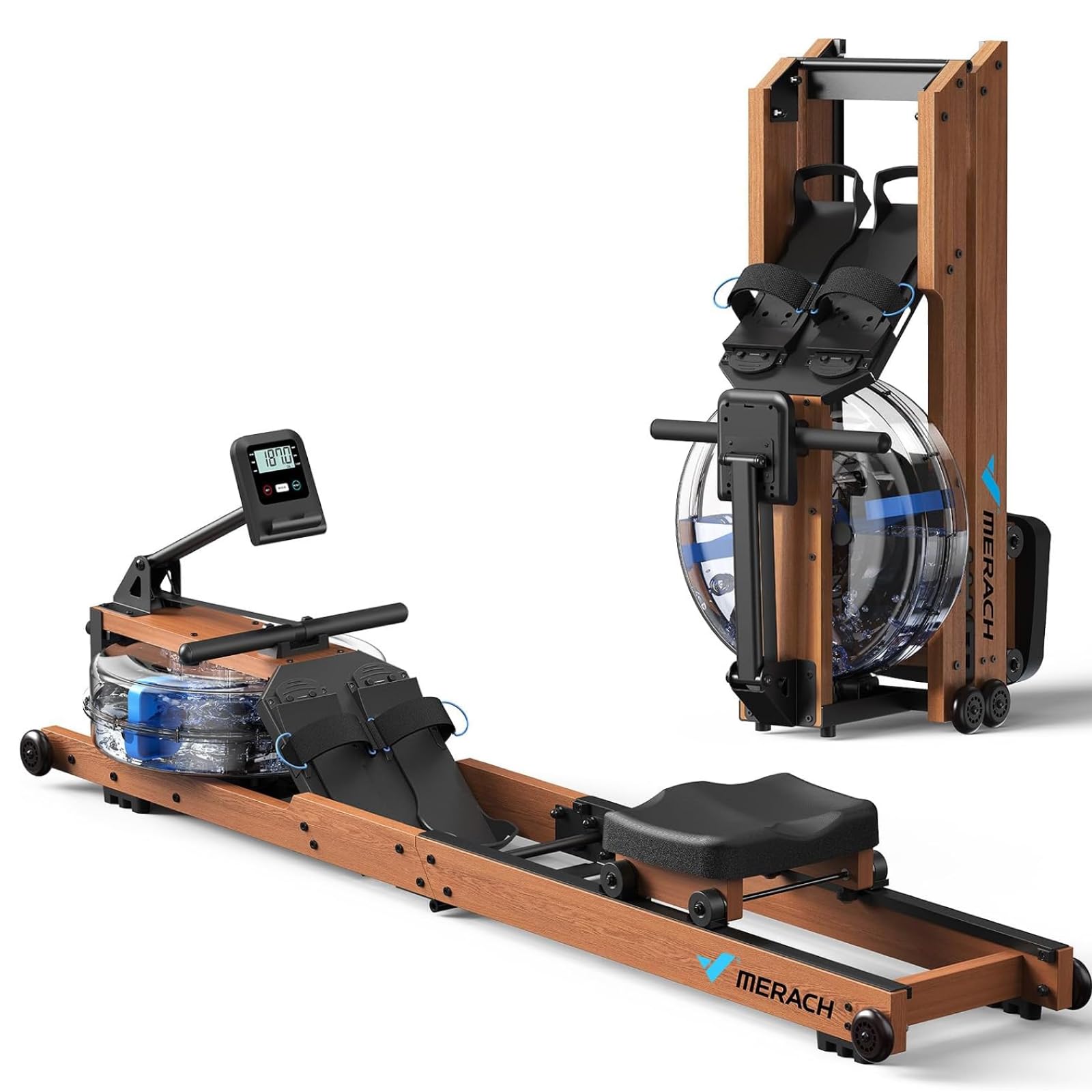
Folded, the R280 takes up about the floor space of a dining chair, and that is the argument for it. The frame swings through 180 degrees on a single hinge, wheels at the base take over once it's upright, and the 60-inch footprint it needs mid-workout disappears the moment you tip it back. In a one-bedroom, that difference decides whether a rower gets used or becomes somewhere to hang laundry.

It earns the top spot because nothing else here asks so little of your room while still taking a 400-pound rower. The solid wood frame feels planted under a hard drive, assembly is a ten-minute job, and the electric pump and water-treatment tablets come in the box — filling the tank takes longer than building the machine does. We kept coming back to the small stuff too: the one-handed fold genuinely works one-handed, and the finish is good enough to leave out.

Resistance comes from how much water is in the tank and how hard you pull, which is the honest water-rower arrangement: the paddles bite harder the faster you drive, so a steady aerobic piece stays conversational while a sprint gets heavy. The monitor covers distance, time, speed, stroke count and calories over Bluetooth, and it's plain enough that you glance at it rather than study it.

At 23 kg it's a one-person move, and the rail runs smooth enough that longer pieces don't turn into a fidget. The tank has stayed sealed through our sessions and the water noise is genuinely pleasant, which matters more than it sounds when the machine lives in the room where you watch television.

Pros

  • Folds to roughly a dining-chair footprint
  • 400-pound frame rating on solid wood
  • Ten-minute assembly, pump and tablets included
  • Looks like furniture rather than gym kit

Cons

  • Top water level leaves little headroom for strong rowers
  • One-year warranty is the shortest here
Our verdict

Our default pick: it folds to the size of a dining chair, holds a 400-pound rower, and costs less than most of the wood machines here.
Check Latest Price
2

Best for Tall Rowers

YOSUDA Water Rower

91 /100
Trail Score Outstanding

Key details

Warranty
2 years
Water Tank
22 liters
Rider Height
Up to 6'6"
Max User Weight
400 lb
Check Price on Amazon

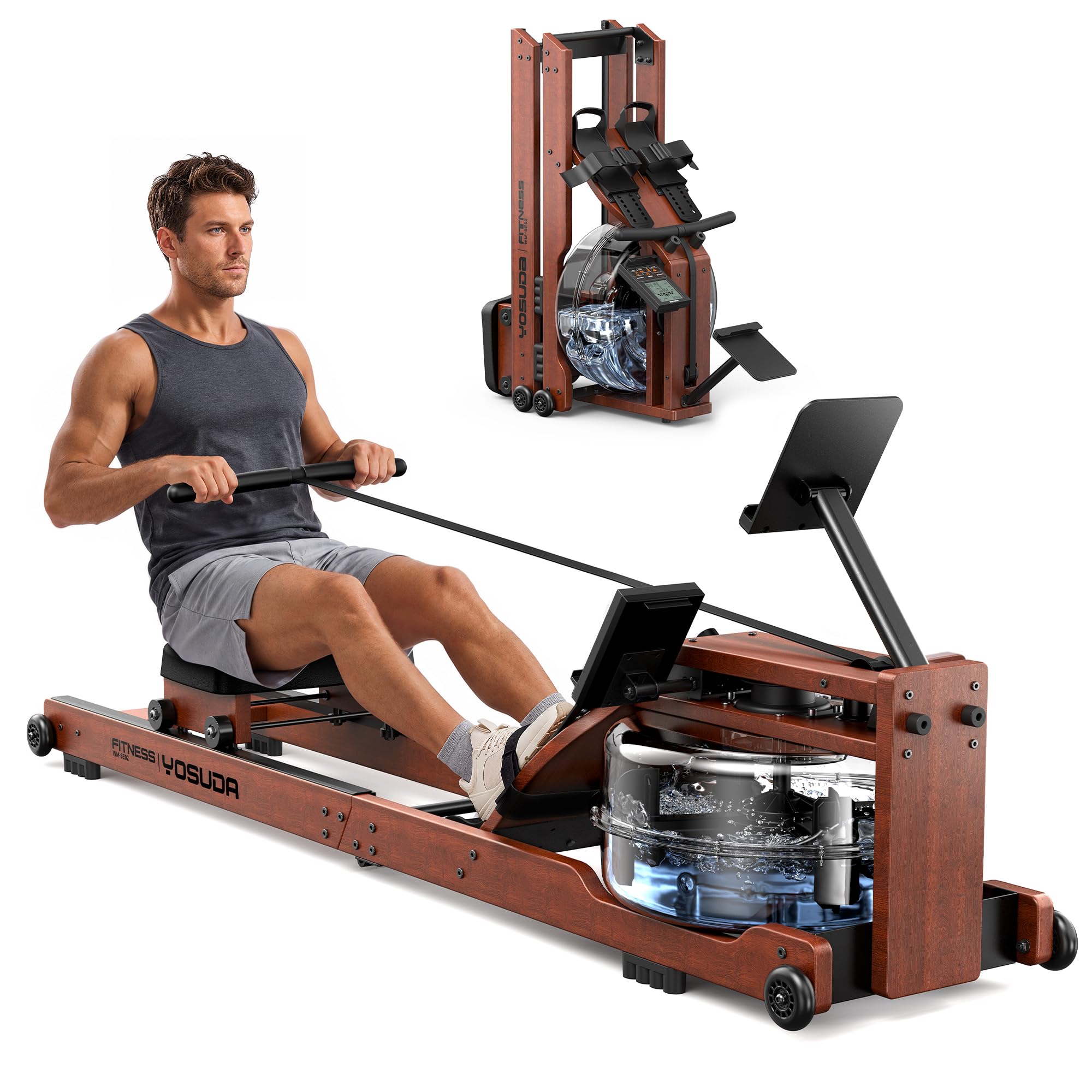
Twenty-two liters is a lot of water to pull against, and it's why we hand the YOSUDA to tall and powerful rowers first. The tank is the biggest stated on this page, and the frame carries a 400-pound rating with room for users up to 6 feet 6 inches, so a long-limbed rower gets a full stretch at the catch instead of a shortened one. A deep tank on a long frame is hard to find at this price, and that pairing is the whole reason it's here.

The frame is 30 mm FSC-certified beech, folding through 180 degrees and rolling on built-in wheels. At 55 pounds it's light enough for one person to stand against a wall between sessions, and assembly is a straightforward sit-down with an Allen wrench rather than an afternoon.

On the water, the four-blade paddle gives a smooth, consistent pull and the resistance rises with your effort the way it should. The monitor tracks distance, time, strokes and calories, and it pairs with Kinomap, Apple Health and Google Fit — the difference between a repetitive half hour and something closer to a guided class. Straps, seat and handlebar are unremarkable in the right way: nothing to think about once you're in.

What you're buying is headroom — a tank and a rail that don't run out on a strong rower. Stand it against a wall, roll it out when you want it, and it does the one thing a rower has to do, which is give a big rower somewhere to put the effort.

Pros

  • 22-liter tank is the largest in this set
  • Rated for rowers up to 6'6" and 400 pounds
  • Pairs with Kinomap, Apple Health and Google Fit
  • Two-year warranty, the longest here

Cons

  • Foot straps are the least substantial hardware
  • 73.6-inch footprint needs a long wall
Our verdict

The pick for tall or powerful rowers: a 22-liter tank and a 6-foot-6 height ceiling give you more to pull against than anything else here.

Check Latest Price
3

Best Premium

WaterRower Oak S4 BLE

92 /100
Trail Score Outstanding

Key details

Frame
American-made solid oak
Monitor
S4 BLE with app connectivity
Max User Weight
700 lb
Assembled Footprint
87.75"D x 22.25"W x 20"H
Check Price on Amazon

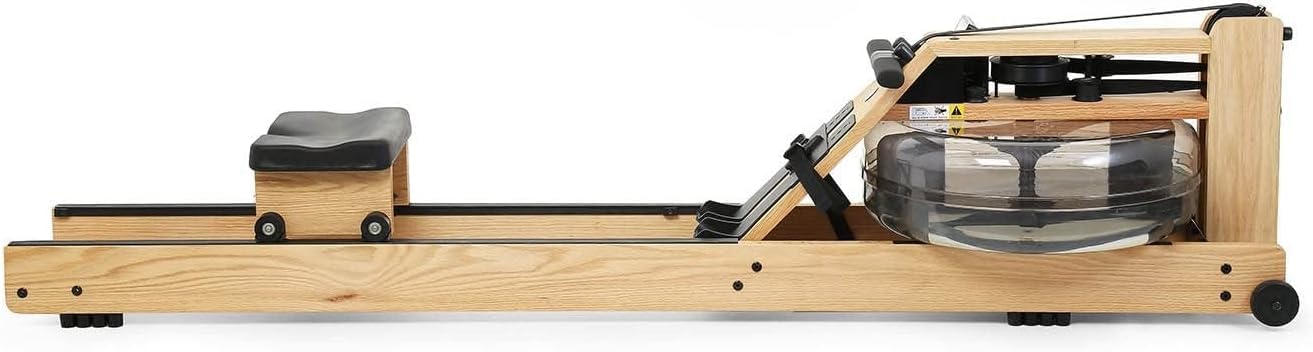
This is the most expensive machine on the page, and what you're buying is commercial-grade hardware in a hardwood frame built in the United States. The oak is Appalachian-sourced, the user rating is 700 pounds — more than double anything else here — and the components are the ones the maker has put into gyms by the tens of thousands.

The WaterFlywheel is the part that earned the reputation: water in the tank resists more the harder you drive it, so a forty-minute steady piece and a set of hard intervals feel genuinely different without touching a setting. The S4 BLE monitor reads distance and heart rate and connects to WaterRower Connect and CITYROW for guided sessions. It runs on four AA batteries rather than a cable, which quietly makes it easier to site.

We think the premium is worth it for one buyer in particular: someone who wants a single machine, has 87.75 inches of clear wall, and would rather stand it upright than fold it. Storage is upright, the way these live in gyms, and at 38 kg it stays put when you tip it. The rowing feel is the best of this set — smooth, quiet, and weighted in a way the cheaper machines approximate without matching.

It is also the least forgiving machine to site. Nothing folds, the footprint is the longest here, and the frame is heavy enough that moving it is a two-hands job. Buy it because you want the reference rower and have the wall for it, not because you want the most convenient one.

Pros

  • 700-pound rating, the highest here
  • Smoothest, most authentic rowing feel here
  • American-made hardwood frame
  • Stores upright in a corner

Cons

  • One-year warranty is short at this price
Our verdict

Buy this once and stop shopping: the American-made oak, the 700-pound rating and the pull are what the premium pays for.

Check Latest Price
4

Best for Guided Workouts

JOROTO MR280PRO

89 /100
Trail Score Excellent

Key details

Setup
90% pre-assembled, about 15 minutes
Monitor
Bluetooth LCD with JOROTO app
Max User Weight
400 lb
Assembled Footprint
70.9"D x 17.5"W x 21.7"H
Check Price on Amazon

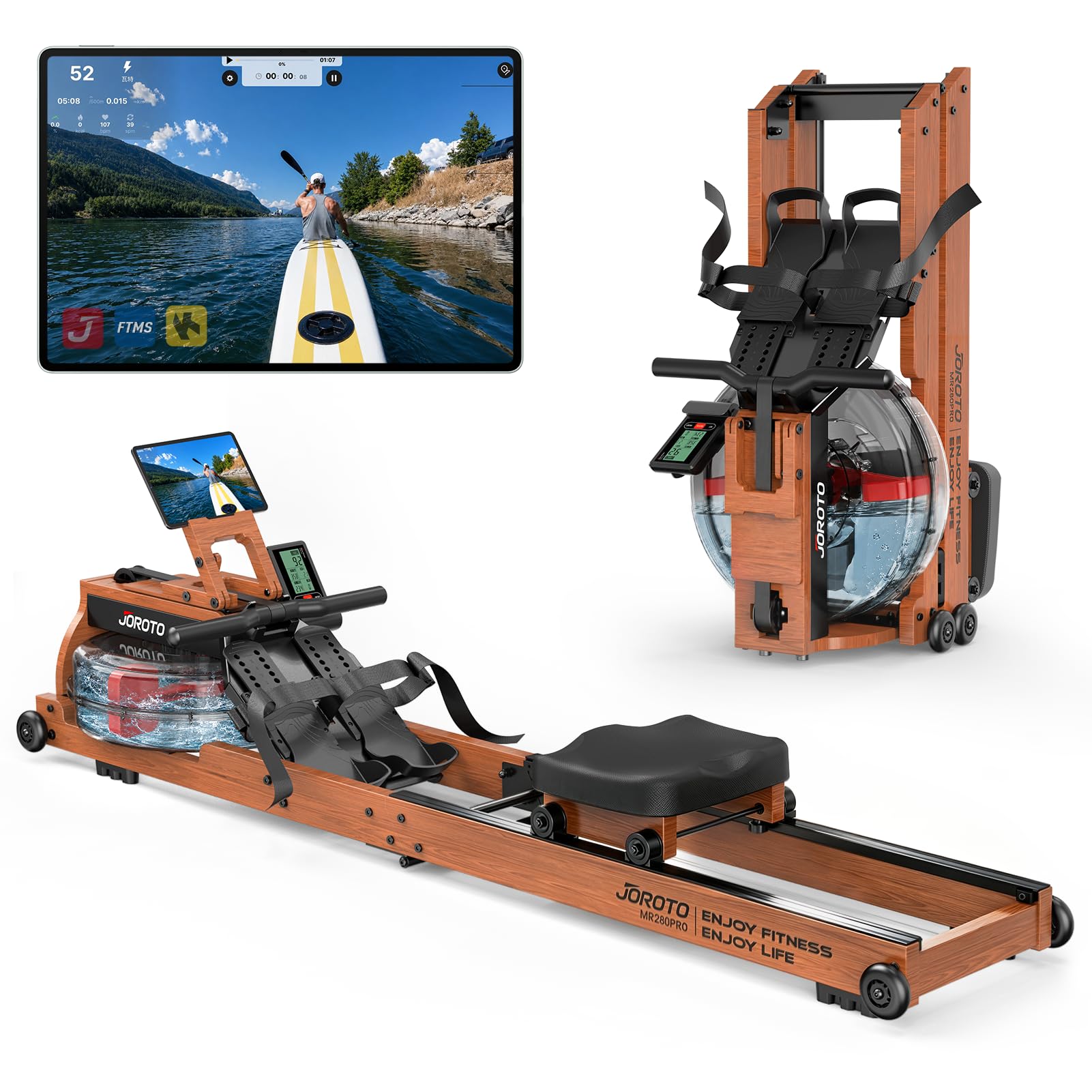
Ninety percent of the MR280PRO arrives already built, and fifteen minutes after the box is open you can be rowing. That's what sold us on it as the convenience pick — no evening with an Allen key, no half-finished frame blocking the hallway. The oak is FSC-certified, the frame is rated to 400 pounds, and the 180-degree fold plus transport wheels gets it out of the room in under a minute.

The water resistance behaves the way it should: pull harder, get more, with the sealed tank holding steady. Where this one separates itself is the Bluetooth monitor and the JOROTO app, which includes free guided workouts for as long as you own the machine. If you're the sort of rower whose sessions stop when it's just you and a wall, that's worth real money.

At 70.9 inches long and 52 pounds it's a middleweight — long enough for a full stroke, light enough that one person can shift it. The seat glide is smooth and the whole thing runs quiet enough for a shared apartment.

The software is the weak spot: the app is the least polished part of the package and the monitor's stroke data is basic. The hardware underneath it isn't, and a rower is judged on the pull rather than the dashboard.

Pros

  • 90% pre-assembled, about 15 minutes to finish
  • Free guided workouts in the JOROTO app
  • 400-pound oak frame with a smooth, quiet glide
  • Folds through 180 degrees to free the floor

Cons

  • App and monitor are basic next to the hardware
Our verdict

Nine-tenths of it arrives built; if you want guided workouts on day one rather than an evening of assembly, this is your rower.

Check Latest Price
5

Best for Interval Training

MERACH 950

79 /100
Trail Score Very Good

Key details

Resistance
Water plus magnetic, 16 levels
Item Weight
65 lb
Max User Weight
350 lb
Assembled Footprint
78"D x 19"W x 20.5"H
Check Price on Amazon

Sixteen resistance levels and a knob to move them: that's the reason the 950 exists. Under the oak sits both a water tank and a magnetic brake, so you keep the whoosh and the responsive feel of water while gaining a resistance you can set to a number and repeat next Tuesday. Nothing else on this page does both.

We like it for structured training, and specifically for intervals. The auto-follow setting moves resistance with the target of the workout, which is the closest thing in this set to a coached session without a subscription, and sixteen steps mean a hard block and an easy block actually feel different. Rowers who just want to pull steadily for half an hour are paying for a mechanism they won't use.

The drawer-style fold is the neatest here: pull, stand it on end, and it takes a corner. At 65 pounds it's the heaviest of the folding machines, which you notice dragging it out and forget once you're rowing.

Build is solid oak, the motion is smooth, and the water sound is quiet enough to be meditative. If you train in blocks rather than long steady pieces, this is the one to stretch for.

Pros

  • Sixteen magnetic-plus-water resistance levels
  • Auto-follow resistance for structured workouts
  • Neatest folding mechanism in this set
  • Oak build with a quiet water sound

Cons

  • 350-pound user limit trails the 400-pound machines
  • Costs more than the other folding wood rowers
Our verdict

Sixteen dialed resistance levels make this the pick for interval training — the only water rower here you can tune without touching the water.

Check Latest Price
6

Best for Smaller Rowers

Wenoker Water Rower

88 /100
Trail Score Excellent

Key details

Frame
FSC-certified solid oak
Warranty
2 years
Water Tank
14 L
Max User Weight
350 lb
Check Price on Amazon

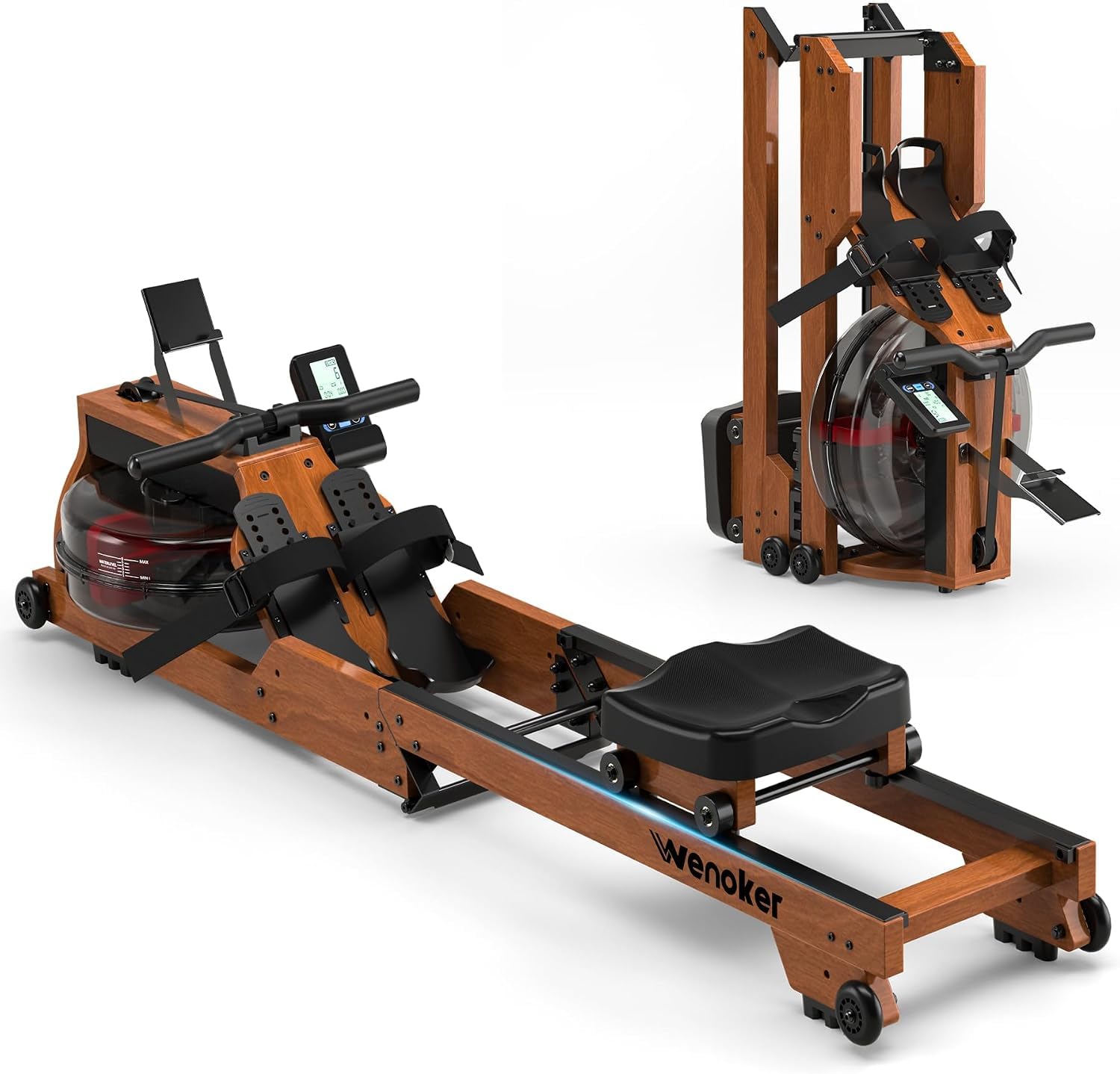
At 350 pounds the Wenoker won't take every rower in a household, and it's better to know that before you order than after. Under that ceiling it's the easiest of the oak machines to live with: 14 liters of water in a sealed tank, a 180-degree fold, and a two-year warranty that matches the longest coverage on this page.

The frame is FSC-certified solid oak with a finish that reads as furniture rather than fitness equipment. Assembly is mostly bolting pre-built sections together with the included tools, and the transport wheels do the moving once it's folded.

What we noticed in use is how calm it is. The water is a soft wash rather than a churn, the seat glides without snagging, and half an hour goes by without the machine demanding anything of you — no squeaks, no drift, no reason to get off early.

The monitor is plain: distance, time and calories on an LCD, with Bluetooth for app pairing rather than a full training ecosystem. That suits a machine like this. It's for someone who wants oak, a small footprint and a quiet pull, and who doesn't need a dashboard to get on it.

Pros

  • Two-year warranty, the longest here
  • Solid oak with a furniture-grade finish
  • Folds through 180 degrees to a small footprint
  • Quiet, smooth water resistance

Cons

  • Seat padding is firm on longer rows
Our verdict

A handsome oak rower for lighter rowers who want something that folds small, pulls quietly, and doesn't look like gym equipment.

Check Latest Price
7

Tight Budgets

Dripex Water Rower

86 /100
Trail Score Excellent

Key details

Water Tank
14 L
Item Weight
55.6 lb
Max User Weight
400 lb
Resistance Levels
6 water levels
Check Price on Amazon

Six water levels is the full adjustment range on the Dripex, and where you run out of road is the question that decides whether it's your machine. Filled to the top mark it gives a decent steady-state pull; stronger rowers find the ceiling early and stay there. That's the trade for being the cheapest machine here.

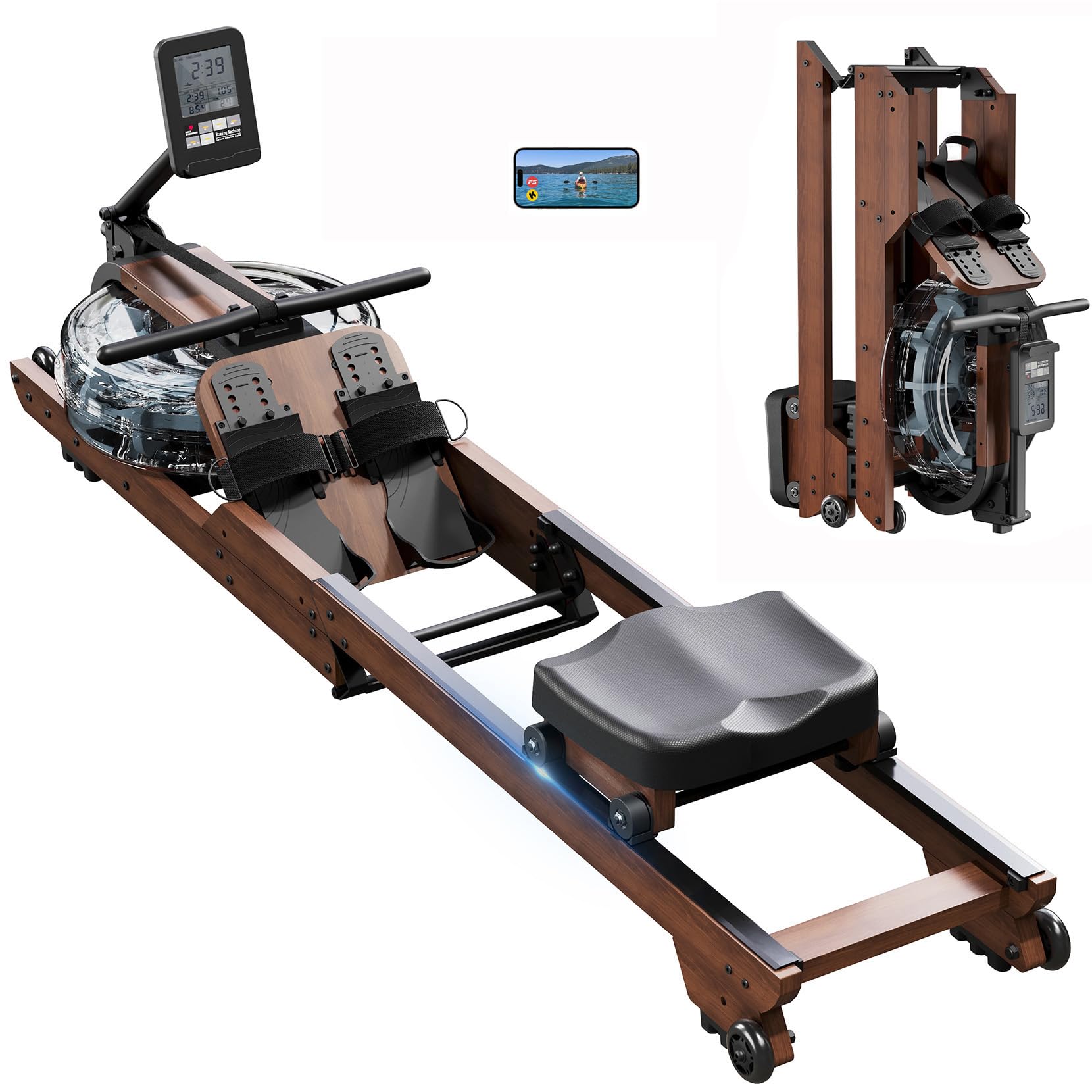
The rest of the package overdelivers on that. FSC-certified oak, a 400-pound rating, 55.6 pounds, a 180-degree fold with transport wheels, and an LCD covering time, distance, strokes and calories with Bluetooth app pairing on top. The supplied tools do the job, though they're the plainest part of the kit.

It runs 72.8 inches, putting it in the same bracket as the JOROTO, and the seat rail stays smooth under a long piece. Give the footboard a proper adjustment before you start rather than mid-session; it takes a moment to get right.

Our read is that it's the right first rower for someone building a habit at a steady pace, and the wrong one for a fit rower chasing a hard, repeatable pull. If resistance headroom is what you're after, put the difference toward the MERACH or the JOROTO.

Pros

  • Cheapest water rower in this set
  • 400-pound rating on an oak frame
  • Straightforward assembly with clear instructions
  • Smooth seat glide and quiet water sound

Cons

  • Foot straps are the flimsiest component
Our verdict

The cheapest way into a wood water rower, provided you're not chasing a hard, high-resistance pull.

Check Latest Price
8

Daily Training

Sunny SF-RW5910

86 /100
Trail Score Excellent

Key details

Frame
Alloy steel
Item Weight
88.2 lb
Rail Length
42 inches
Max User Weight
300 lb
Check Price on Amazon

Steel instead of oak, 88.2 pounds instead of 55, and a 42-inch rail: the SF-RW5910 is built like the rowers in a commercial gym, and it feels like one underfoot. Sixteen hydro blades sit in a vertical tank, and the load rises with stroke speed, so the machine responds the way water should.

The monitor is the busiest here on paper — time, 500-meter split, strokes per minute, total strokes, calories, pulse, even ambient temperature — on a swivel mount. A device holder sits in front of it, which is the kind of small thing that decides whether a forty-minute piece happens.

The seat is set high, easier on knees and hips than dropping onto a low rail, and the pedals are non-slip with nylon straps. Storage is upright against a wall on non-marking rubber wheels, and the three-year structural frame warranty is the longest coverage here by a distance; parts and components get 180 days.

Where it earns its place is volume and stability: a machine for someone who rows most days, wants steel under them rather than wood, and has a wall to stand it against. It's the least domestic rower here, and for the right rower that's the appeal.

Pros

  • Three-year structural frame warranty
  • 42-inch rail on a stable steel frame
  • Monitor tracks 500m split, SPM and pulse
  • Stores upright on non-marking wheels

Cons

  • 300-pound user limit is the lowest here
  • Small, dim display is hard to read mid-stroke
Our verdict

A steel-framed tank of a machine for high-volume, no-fuss rowing, as long as the 300-pound ceiling and the heft suit your room.

Check Latest Price

How We Tested Seven Water Rowers Over Eight Months

We started by pulling together the water rowers that show up most often in customer reviews and comparing their specs side by side: tank size, frame materials, footprint, monitor features, adjustable footplates, and warranty terms. We ruled out models with a pattern of complaints about leaking tanks or vague assembly instructions, then narrowed the list to seven machines that spanned the price range without crossing into absurdity. Each was assembled solo with the tools in the box, timed from unboxing to first stroke.

For eight months, those seven rowers lived in a living room and a garage, and we rowed them three to four times a week for 20 to 30 minutes. We paid attention to resistance at different stroke rates—whether it felt smooth or snatched—and had a taller and a shorter tester adjust footplates, straps, and monitor angle before each session. We read the display at a glance mid-row and in dim light, and we noted whether we could hear the tank over a podcast from the same room and from the next room.

Every few weeks we checked tank seams for weeping, wiped the water tank to see whether it clouded, and tightened bolts that had worked loose. We also judged appearance the way a guest would: whether the frame looked like furniture or a gym castoff, and whether the finish showed smudges. Value came last, after we knew what each machine felt like to live with—what came in the box, how often we had to fiddle with it, and whether the price still seemed fair once the novelty wore off.

How to Choose a Water Rowing Machine

Where the Resistance Comes From

Water resistance is self-regulating: the blades in the tank bite harder the faster you drive, so a hard stroke feels heavy and a lazy one feels light. Tank volume and blade count set how much there is to pull against, which is why the 22-liter YOSUDA has more headroom than the 14-liter machines here.

A pure water rower has no dial. You change resistance by adding or draining water, which is fine for steady distance and awkward for intervals. If you want a resistance you can set to a number and repeat, the water-and-magnetic MERACH 950 is the one design in this set that gives it to you.

Footprint, Folding, and the Word Compact

Nearly every machine here folds or stands up, and the folded size is what a listing calls compact — so read the assembled length too. Ours run from 60 inches on the MERACH R280 to 87.75 on the WaterRower, and that span is the difference between a spot along a wall and a room of its own.

If you plan to store it upright, check the wall or ceiling height, and check the moving weight. Around 52 pounds is one person's job; the steel Sunny at 88.2 pounds is not.

Weight Limits and Rider Fit

Ratings across this set run from 300 to 700 pounds, and the number is about more than safety — a heavy rower on an under-rated frame feels the flex on every drive. If you're close to a listed limit, buy the higher-rated frame rather than assuming a margin.

Height matters just as much, and it rarely makes the headline. The YOSUDA is rated to 6 feet 6 inches, and rail length sets how far the seat travels at the catch, so make that comparison first if you're tall.

Water, Seals, and Storage

A tank is a small piece of plumbing and it rewards five minutes of attention. Fill with filtered water, drop in the treatment tablets that ship with the machine, and top up when the level falls — untreated water clouds and smells within weeks.

Check the fill cap and tank seam whenever you move the thing, and store it the way the maker specifies, since some tanks are sealed for upright storage and others are happier flat. Keep it out of a south-facing window; sun is hard on both the water and the wood.

Frequently Asked Questions

Final Verdict

Start with the MERACH R280. It folds to the size of a dining chair, takes a 400-pound rower, and costs less than most of the wood machines here — that pairing of a small footprint and a big capacity is what most homes actually need.

If you're tall or strong enough to want more water to pull against, the YOSUDA's 22-liter tank and 6-foot-6 ceiling make it the better buy. And if intervals rather than steady distance are the point, the MERACH 950's sixteen dialed levels are worth the step up.