Best Walking Shoes for Overweight Women of 2026

A cushioning midsole can feel like a cloud in the shoe store and like a brick by the third block. When you carry more weight, every step loads the foam, the arch, and the outsole harder, so that gap opens faster, and what closes it isn't more padding. It's a wider base under the foot, arch support that holds instead of pokes, and a sole that grips wet pavement.

Comfort alone isn't the whole test, either: the pair you keep reaching for is the one that looks decent with jeans and doesn't need two hands and a shoehorn to get on. Fit still beats everything, and a roomy toe box and honest arch support matter more than any gel pod. My team and I have spent six months walking in a dozen pairs, and the ones that earned a spot were the ones we stopped thinking about. Here's what held up.

1

Best Overall

Easy Spirit Romy Walking Sneaker

89 /100
Trail Score Excellent

Key details

Widths
Medium, wide, and extra wide
Closure
Lace-up
Toe Box
Roomy
Check Price on Amazon

Every cushioned shoe in this group asks a heavier walker to trade a little steadiness for softness. The Romy comes closest to refusing the trade. The footbed is cushioned enough for a full day on concrete, but the sole is broad and planted rather than tall and squishy, so you get support under the arch instead of a wobble between steps. We spent a long afternoon on hard floors in these and never felt the shoe bottom out.

Fit is why it ends up first. Romy runs from medium through extra wide, the toe box is genuinely roomy, and the lacing lets you snug the midfoot without pressing across the top of the foot. Most of us took our usual length and went down a width; if you are between sizes, that is the direction to move. It is rare in this group for the wide version to feel like a properly different shoe rather than a longer piece of fabric.

The arch is shaped and moderately firm rather than a soft pad — the kind of support that gives a flat foot something to push against. If you already wear orthotics, bring them when you try a pair on; the roomy fit leaves space, but a thick insole will crowd the toe box in a shoe this cushioned.

It won't win a style contest — it is a sensible-looking walking shoe and reads that way — but that is a fair trade for something this predictable underfoot. Our advice: buy two pairs if the budget allows and alternate them, because rotating shoes is the cheapest way to make any walking shoe last longer.

Pros

  • Cushioned for full days on hard floors
  • Roomy toe box in wide and extra-wide
  • Firm, shaped arch support

Cons

  • Wide widths run wider than expected
Our verdict

If you want one pair that stays comfortable and steady through long days on hard floors, this is the walking shoe we recommend — and its wide and extra-wide sizes mean more feet can actually wear it.

Check Latest Price
2

Best for Wide Toe Box

NORTIV 8 Walking Shoe

88 /100
Trail Score Excellent

Key details

Closure
Lace-up
Toe Box
Wide
Cushioning
Soft and bouncy
Check Price on Amazon

The first step into the NORTIV 8 is the softest in this group, and that is the whole reason it made the list. The midsole is thick and bouncy, the upper is soft enough that nothing presses on day one, and the toe box is wide while the shoe still looks like a sneaker. We wore them through a long standing shift and forgot we had them on, which is the review that matters.

Credit where it is due: the cushioning is the headline, but the arch underneath it surprised us. There is a shaped footbed above all that foam rather than a flat slab, so your foot does not slide inward with every step the way it can in a purely pillowy shoe. Soft on top with something to push against underneath is a harder combination to find than it should be.

Sizing runs true in length, and width is the more generous dimension, which is exactly why it suits a forefoot that spreads under load. It also needs no break-in: we walked a full first day in them without a hot spot, and the cushioning was still there at the end of it.

If your walking is mostly pavement — the commute, the park loop, the grocery run — these are the pair we reach for first. The colors are louder in person than online, and the pink is properly neon rather than pastel.

Pros

  • Plush, bouncy cushioning
  • Wide toe box without the bulk
  • Shaped arch under the soft foam

Cons

  • Soft midsole feels unsteady on slanted ground
  • Toe box can rub on the first long walks
Our verdict

The most generous toe box in this group, with plush cushioning to match — the pair for a wide forefoot that still wants a soft ride under it.

Check Latest Price
3

Best Cushioning

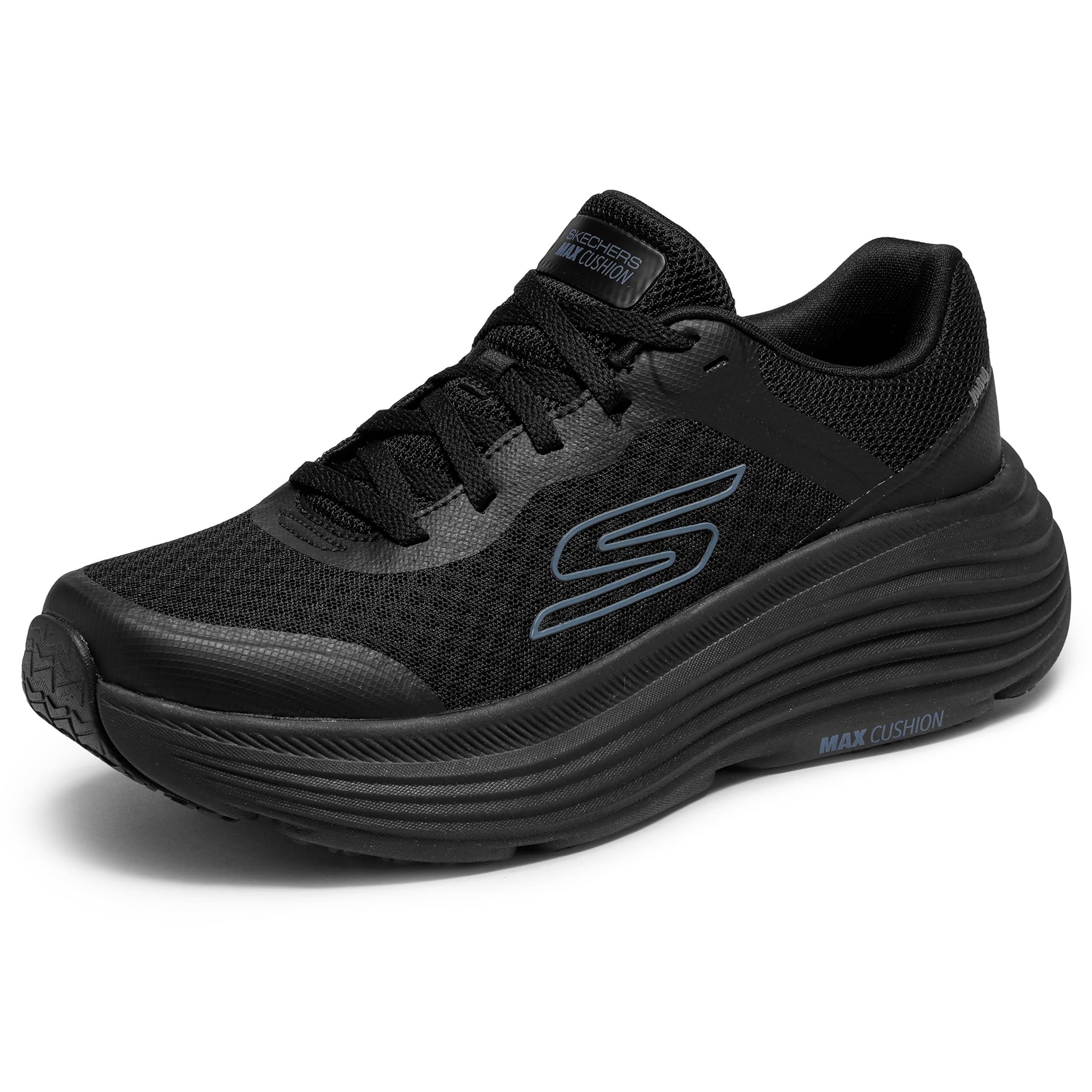
Skechers Max Cushioning Endeavour

91 /100
Trail Score Outstanding

Key details

Upper
Soft, unstructured
Widths
Extra wide available
Closure
Slip-on
Cushioning
Max Cushioning midsole
Check Price on Amazon

The Endeavour solves two problems at once: you need extra width, and you refuse to spend your day in something flat. Skechers builds it on the Max Cushioning platform, which means a tall, soft midsole with a soft upper over it, and the extra-wide sizes have real room across the forefoot rather than a token half inch.

We liked it best for standing-heavy days and long, flat walks. The stack height is the point — it takes the sting out of concrete and tile in a way the firmer picks here do not — and the upper is the quiet hero, soft enough that a sore toe does not get pressed and forgiving over the instep when your feet swell by afternoon.

The catch is that all that foam is a wear item. With this much soft midsole underfoot, the outsole and the cushioning go before the upper does for anyone logging real mileage, so plan on replacing these sooner than a firmer shoe. On flat pavement, with the plushest ride in the group, that is a trade worth making.

It is also the best-looking max-cushion shoe here, especially in the deep red, which reads as a sneaker rather than a gym shoe and hides scuffs better than the pale colorways.

Pros

  • Max-cushioning midsole softens pavement
  • Extra-wide sizes with real forefoot room
  • Soft upper that does not press on sore toes
  • Slips on without lacing

Cons

  • Tall sole feels less steady on rough ground
Our verdict

For heavier walkers who want the softest, tallest cushioning underfoot and need extra width while they are at it, this is the pair we point to.

Check Latest Price
4

Best Budget

Skechers Go Walk Joy

91 /100
Trail Score Outstanding

Key details

Fit
Runs large
Closure
Slip-on, no laces
Toe Box
Generous
Cushioning
Soft and pillowy
Check Price on Amazon

There is a budget end to this list, and the Go Walk Joy is the smartest buy in it. It is a stretchy slip-on with a soft footbed, no break-in and no bending over: we stepped into a fresh pair and walked out the door. For errands, the dog, the mailbox and short trips, that is most of what a walking shoe needs to do.

The trade is structure. The upper is soft and unstructured, which feels lovely across a wide forefoot and does nothing to hold a foot that rolls inward, so it is not the shoe to choose if your ankles turn over on long walks. For short trips it does not matter; past a couple of miles, a firmer pick earns its keep.

Sizing has a wrinkle: these run large for a lot of feet, and a slip-on cannot be laced tighter. Go down half a size if you are between sizes rather than up, and let the stretchy collar do the rest.

One more thing worth knowing: ours went through a cold machine wash and came out looking new, which makes them the pair we do not fuss over.

Pros

  • Soft footbed with no break-in
  • Slips on without bending
  • Comes through a machine wash
  • Affordable next to the midrange picks

Cons

  • Little arch support for long walks
Our verdict

The smartest buy at the budget end of this list, and the pair we keep by the door for errands — just do not count on it for arch support.

Check Latest Price
5

Swollen, Wide Feet

Scurtain Wide Walking Shoe

86 /100
Trail Score Excellent

Key details

Widths
Wide
Closure
Adjustable hook-and-loop
Toe Box
Extra roomy
Check Price on Amazon

Instead of laces or a stretchy collar, the Scurtain closes with hook-and-loop straps across the instep. That single decision is why it made the list: you can loosen and retighten as the day goes on, which matters if your feet swell, and the shoe opens wide enough to step into without bending.

It is also the roomiest toe box here. The front of the shoe is squared off and generous, and the upper is soft and light enough that nothing presses — a decent fit for a forefoot that spreads, a bunion, or a foot that is simply hard to fit in a standard width.

Support is where we raise a hand: the sole is flat and thin under the arch, and if you are used to a structured walking shoe this will feel like a step down. It is a shoe for feet that need accommodation more than cushioning, so treat a thin aftermarket insole as part of the purchase rather than an optional extra.

It is the cheapest shoe on this list, which makes it a low-risk way to find out whether an adjustable upper suits your feet before you spend more.

Pros

  • Adjustable straps accommodate swelling
  • Extra-roomy squared toe box
  • Very light on the foot

Cons

  • Grip is unreliable on wet floors
Our verdict

A low-cost, adjustable shoe for feet that swell and need room, with the honest caveat that you will want to add your own arch support.

Check Latest Price

How We Tested the Best Walking Shoes for Overweight Women

We started with a list of about 60 styles and cut it down before a single box arrived. Anything without a wide or extra-wide option was out, as were shoes with glued-in insoles we couldn't swap for our own orthotics, and models whose arch support was just a raised lump of foam. That left 12 pairs, a mix of stability shoes, rocker-bottom walkers, and cushioned everyday sneakers, which we wore for six months.

Each pair went into rotation for daily dog walks, grocery runs, and longer weekend miles on pavement, park paths, and a treadmill. Two testers spent full eight-hour days on their feet in them. We noted where hot spots appeared and when, whether in the first mile or the fourth, and whether a wide toe box actually kept toes from rubbing instead of just looking roomy.

Fit came first: we tried every pair with our own inserts, checked heel slip on a hill, and paid attention to whether the shoe still had room once the stock insole came out. For support, we pressed a thumb hard into the arch, then wore the shoes through an errand-heavy Saturday to see if arches ached by dinner. Durability got checked after every 20 miles, looking at outsole wear at the outer heel and whether the midsole foam sprang back or stayed flattened.

Grip was tested on wet tile, a painted garage floor, and damp grass on a downhill slope. Ease of use mattered more than we expected, so we timed getting each pair on and off, one-handed, and while leaning over a sore back, since some laces and pull tabs turned that into a two-minute job. We also asked which pairs we'd wear to a coffee shop versus only around the block, because a shoe that stays in the closet is poor value no matter what it costs.

How to Choose Walking Shoes for a Heavier Frame

Cushioning Without the Wobble

More foam is not automatically more comfort when you carry more weight. Soft midsoles compress under load, so a tall, pillowy shoe that feels wonderful in the store can bottom out and turn tippy half a mile in. What we look for is a broad, flared outsole and a midsole that springs back when you press it, so the cushioning is doing the work rather than the height.

Press your thumb hard into the heel: if it collapses and stays down, expect the same under your weight. The NORTIV 8 is the plush end of this group and the Romy is the firmer, steadier one, and both are legitimate choices depending on whether your routes are pavement or mixed terrain.

Width, Volume, and Toe Box Room

Feet spread when you stand, and they spread more when you are heavier, so the width that fit at nine in the morning is not the width you need at five in the afternoon. Try shoes late in the day, and go up a width before you go up a length — a longer shoe fixes nothing if the forefoot is still pinched.

Widths are not standardized between brands, so treat any wide as a starting point rather than a promise. The Romy's wide and extra-wide sizes run genuinely roomy, while the Go Walk Joy runs large even in its standard width, which is the opposite problem and easier to fix with a half size down.

Laces, Slip-Ons, and Feet That Swell

Closure is the most overlooked decision in this category. Laces give you the widest range of adjustment and hold the midfoot, which matters if your foot rolls inward or your arch needs the shoe snugged against it. Slip-on collars spare your hands, hips, and back — nothing to bend for — but they cannot be tightened, so the shoe has to fit correctly the moment you step in.

If swelling is part of your day, straps beat both. The Scurtain's hook-and-loop closure lets you loosen the instep at noon and tighten it again before the walk home, which no lace-up in this group does as easily.

Match the Shoe to Your Mileage

A soft, unstructured slip-on is perfect for errands and short loops and wrong for daily miles, because it gives you nothing to push against once you are tired. Be honest about your distance and buy for the longer half of your week, not the shortest trip you take.

Walking shoes also give up their cushioning before the tread looks worn, so the signal to replace is feel rather than appearance: when you can sense the pavement through the forefoot, or a familiar route leaves your knees aching, the midsole is done. Rotating two pairs spreads that wear and is cheaper than replacing one pair twice as often.

Frequently Asked Questions

Final Verdict

The Romy is the pair we recommend: cushioned enough for hours on concrete, steady enough that a heavier walker is not fighting the shoe, and offered in widths that actually fit. It is the least dramatic shoe here, and for daily walking that is the point.

If you want the plushest ride in the group, the NORTIV 8 delivers it as long as your routes stay on pavement. Need extra width and maximum cushion at the same time? That is the Endeavour. And if feet that swell or a wide, sensitive forefoot are the whole problem, start with the Scurtain and add an insole.