Best Trigger Point Massage Balls of 2026

For years my answer to the knot under my right shoulder blade was a tennis ball jammed between me and a doorframe. It worked, sort of, until the ball skidded sideways, thumped to the floor, and rolled off somewhere I couldn't reach without lying down on the rug. What I actually wanted was something that gripped instead of slid, dug into one stubborn spot without bruising everything around it, and let me dial the pressure up or down depending on the day. That's the whole job of a trigger point ball: sustained, targeted pressure on a single knot until the muscle gives up and lets go, for less than the cost of one massage appointment.

Over the past three months I've worked through 14 of them, from palm-sized smooth spheres to nubbed rubber ones that look like they escaped a pet store, and the differences are not cosmetic. Density is the thing nobody warns you about—a ball that squishes too easily feels pleasant and does almost nothing, while a rock-hard one will have you yelping and icing a bruise the next morning. Size decides which body parts you can even reach, and yes, whether it smells like a tire when you tear open the bag matters more than you'd think. A few of these have earned a permanent spot in my gym bag; the rest are in a drawer.

1

Best Overall

Yoga Tune Up Therapy Balls in Tote

95 /100
Trail Score Outstanding

Key details

Diameter
2.5 inches
Material
Natural latex with grippy shell
In The Box
2 balls + mesh tote
Check Price on Amazon

Most massage balls depend on you holding them in place with your own body, which is harder than it sounds once you're on the floor chasing a knot under one shoulder blade. These don't slip. The natural-latex shell is tacky enough to catch on a shirt or bare skin and stay put while you breathe and settle in, and that one property is why this pair sits at the top of our list.

Firmness is where they earn their keep on deeper work. The core compresses under a few pounds of pressure and pushes back, so you can settle onto a tight glute or the top of a shoulder and add weight in stages rather than dropping onto something unyielding. We could stay on a sore spot far longer with these than with a solid rubber ball, and the work felt closer to a therapist's thumb than to a doorstop.

Two balls ship with a drawstring mesh tote, which turns the set into something you can throw in a gym bag or a desk drawer. Ours split duties: one stayed home for evening floor work, the other went to the office for the twenty minutes after a long drive. The 2.5-inch size is the right compromise for shoulders, hips, and arches, though anyone hunting a knot the width of a thumb will want something smaller.

Pros

  • Grippy latex stays on skin and fabric
  • Compressible core lets you add pressure slowly
  • Two balls plus a mesh carry tote
  • Comfortable on neck, hips, and arches

Cons

  • Less aggressive than a lacrosse ball
  • Costs more than basic rubber pairs
Our verdict

We recommend this pair to anyone buying a first massage ball: the grippy latex holds a spot on skin or fabric and gives under pressure, so you lean in gradually instead of flinching.

Check Latest Price
2

Best Value

Kieba Massage Lacrosse Balls (2-Pack)

95 /100
Trail Score Outstanding

Key details

Weight
5.1 oz
Diameter
2.5 inches
Material
Solid rubber
In The Box
2 balls (blue and red)
Check Price on Amazon

If the Yoga Tune Up balls are a thumb, these are a knuckle. Kieba's pair is solid rubber at official lacrosse size and weight, 2.5 inches and 5.1 ounces apiece, and there is essentially no give in them. Put your weight on one and it goes straight into the tissue rather than disappearing into the ball.

That directness is what makes them the best value in this group. You get a blue and a red, so one can live in a gym bag while the other stays under the desk, and both shrug off sweat and wipe clean. The rubber is dense and odorless and won't mark a painted wall, they're easy to spot at the bottom of a bag, and having a spare in the car never feels like an extravagance.

Where they bite is thin tissue. Rolled over the inner edge of a shoulder blade or a tender spot near the ribs, the same hardness can feel like being poked with a doorknob, and it's easy to overdo it in the first week. Use them through a T-shirt or on carpet where you control how much weight lands and they're superb. One practical note: the maker also sells them as a dog fetch toy, so store them above nose height.

Pros

  • Rock-solid pressure with almost no give
  • Two balls for home and bag
  • Odorless rubber that wipes clean
  • Lowest-cost route to deep pressure here

Cons

  • Unforgiving on thin or bony areas
Our verdict

Buy these if you want maximum firmness and two balls to split between home and bag — there's almost no give in them, and that's exactly the point.

Check Latest Price
3

Best for Feet and Arches

TriggerPoint MobiPoint Massage Ball

92 /100
Trail Score Outstanding

Key details

Surface
Raised tips
Diameter
2 inches
Material
Solid plastic
Check Price on Amazon

The raised tips are the reason to pick this over a smooth ball of the same size. They're shallow, rounded nubs rather than spikes, and they do two jobs at once: they hold the ball against a sock or a bare arch instead of letting it skid, and they concentrate pressure into the small band of tissue under the foot where plantar fasciitis lives.

At two inches it's roughly golf-ball size, small enough to sit under an arch while you stand and work a heel without wobbling. The body is solid rather than hollow, so it takes your full weight without flexing, and it wipes clean after barefoot use — worth having if it's going to live in a bathroom or beside the sofa.

Ours has been within reach of the couch for months, and it's the ball that gets picked up most often for a two-minute roll while the kettle boils. It shows no wear against a heel after steady daily use, and the texture means you can work with less force than a smooth ball needs to do the same job. It's a specialist, and a very good one.

Pros

  • Textured tips grip socks and skin
  • Golf-ball size fits under the arch
  • Solid core takes full body weight
  • Wipes clean after barefoot use

Cons

  • Too concentrated for back and shoulder work
Our verdict

The one we hand to anyone with sore arches: a golf-ball-sized textured sphere that gets into an arch and along a heel without skating across the floor.

Check Latest Price
4

Best for Precision

RAD Rounds Massage Ball Set

92 /100
Trail Score Outstanding

Key details

Sizes
2.2 in, 1.6 in, 0.75 in
Material
Silicone
Densities
Soft, medium, firm
In The Box
3 balls
Check Price on Amazon

Half an inch of diameter sounds like a detail until you try to work the muscle at the base of the skull or the tissue on the outside of a wrist. Nothing else here gets in there. The 0.75-inch ball, the firmest of the three, is the reason to buy this set, and it's the one that lives in our bag.

The rest of the set is a graduated course in pressure. Green is the largest at 2.2 inches and the softest, blue sits at 1.6 inches at medium density, and black is the little firm one. Having all three means you can open up a stiff shoulder on green and finish on black without hunting for another tool, which is a gentler way to work than starting with the hardest thing you own.

Silicone gives them a smooth, slightly gliding surface, and at seven ounces for the trio they disappear into a dopp kit. Color coding sounds trivial until you're digging through a gym bag in a dim locker room trying to find the small one.

Our honest read is that two of the three are ordinary — a soft 2.2-inch ball feels pleasant, but it won't release much — while the black one is genuinely hard to replace. Buy the set for that ball and treat the other two as a warm-up you didn't have to shop for separately.

Pros

  • 0.75-inch ball reaches jaw and wrists
  • Three densities in one purchase
  • Smooth silicone glides on skin
  • Seven ounces for the whole set

Cons

  • The soft green ball is gentle for deep work
Our verdict

Buy the set for the tiny black ball: it's the only one here that gets into a jaw, a wrist, or the tissue between your shoulder blades.

Check Latest Price
5

Best for Lower Back and Glutes

Tune Up Fitness Alpha Ball

94 /100
Trail Score Outstanding

Key details

Weight
9.88 oz
Diameter
3.5 inches
Material
Natural latex with compressible core
In The Box
1 ball
Check Price on Amazon

Where a 2.5-inch ball digs into a glute like a thumb, this 3.5-inch one spreads the same weight over a wider patch of muscle, which is exactly what a seized lower back wants. It's our pick for the QL, the top of a hamstring, and the outside of a hip, and it's the ball we hand people who find lacrosse balls too aggressive to use daily.

The construction is natural latex over a compressible core, so it feels firm and then yields a little, and the surface is deliberately grippy. Against a wall it stays where you put it long enough to lean in and work a shoulder blade, which is more than most smooth balls manage. You can use light pressure and still feel the muscle respond, which is not something we can say about the hardest balls here.

It's one ball, not a pair, and that's the main thing to weigh before ordering. In exchange, a single large ball takes up almost no room and covers several body parts at once. For a back that stiffens after a day at a desk, it's the most forgiving way to get real pressure into the area.

Pros

  • 3.5 inches spreads pressure across a muscle
  • Grippy latex holds against a wall
  • Firm yet spongy, so light pressure still works

Cons

  • One ball per order, not a pair
  • Too broad for feet and hands
Our verdict

For a lower back that seizes up after a day in a chair, this is the ball we choose — wider than a lacrosse ball, so pressure spreads across the muscle instead of digging in.

Check Latest Price
6

Best for Large Muscle Groups

TriggerPoint MB5 Foam Massage Ball

93 /100
Trail Score Outstanding

Key details

Weight
6.38 oz
Diameter
5 inches
Material
Multi-density EVA foam
Check Price on Amazon

Five inches of foam is not a precision instrument. If you want to press into the knot beside a shoulder blade, this ball is the wrong shape: it rides over the top of small muscles instead of sinking into them. What it does is cover territory — a whole hip, the length of a quad, the flat of a shoulder.

That's a job worth having a tool for. The multi-density EVA compresses under weight and then grips the tissue, so rolling a hip on the floor feels closer to a forearm than to a hard sphere, and we got more useful work out of it on large muscles than we expected from foam. It is unyielding the first time you put your body weight on it, so start with part of your weight and add from there.

At just over six ounces it travels easily, even though five inches takes up real room in a bag. Skip it if your problem spots are small, and skip it if you want one ball that does everything — a 2.5-inch ball is the better compromise for that. For a hip that won't let go, it's the pick here, and it's the one we'd reach for after a long run rather than during a workday.

Pros

  • Five inches cover a hip or quad at once
  • Multi-density foam grips tissue as it compresses
  • Light enough to travel at just over six ounces

Cons

  • Costs the most of any pick here
  • Can't work small or narrow areas
Our verdict

It's the pick for a whole hip or a stubborn quad, not for pinpoint knots — five inches of foam that covers ground and costs accordingly.

Check Latest Price
7

Firm but Forgiving

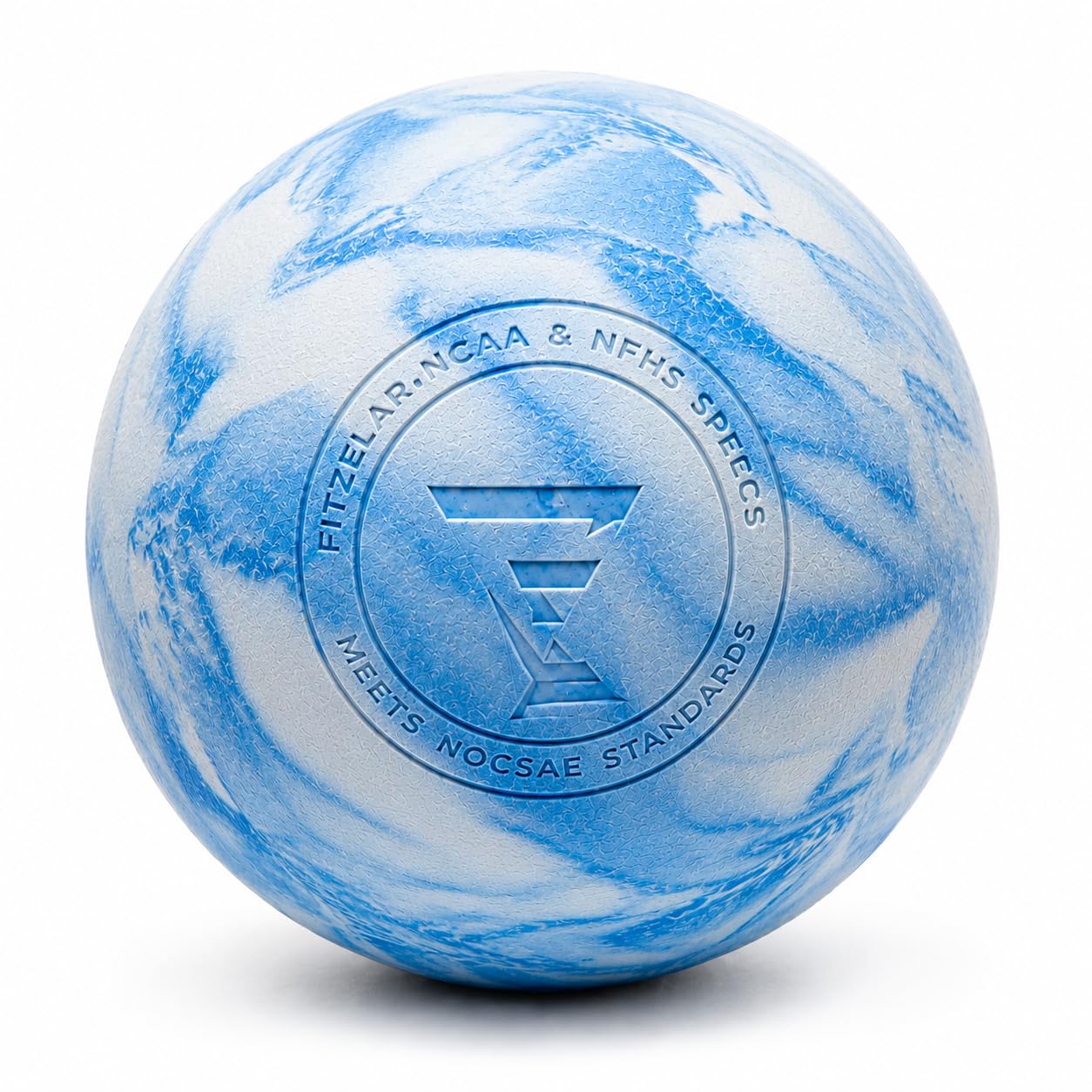
Fitzelar Massage Lacrosse Ball

94 /100
Trail Score Outstanding

Key details

Diameter
2.5 inches
Hardness
45 degree
Material
100% natural rubber
In The Box
1 ball + gift bag
Check Price on Amazon

The 45-degree hardness figure sounds like catalog filler until you hold it. This ball sits between a tennis ball and a golf ball, firmer than most therapy balls and noticeably more forgiving than a lacrosse ball, and for anyone who has tried a rock-hard ball and winced, that middle ground is the whole appeal.

It's 100% natural rubber and it doesn't carry the tire-shop smell that cheaper rubber balls do — a small thing until the ball is near your face for a minute at a time. At 2.5 inches and 5.3 ounces it matches a lacrosse ball in size, with a slightly spongier hand feel and a small gift bag for storage between sessions.

The catch is that you get one. If you want a ball at home and another at work, this isn't the efficient way to do it, and the single-ball price lands close to pairs that do more. What you're paying for is the density: it's the most comfortable firm ball here, and it's the one we hand to someone coming off a hard session who wants real pressure without a bruise.

Pros

  • Firm with just enough give
  • Natural rubber with no chemical smell
  • Holds up to repeated hard use

Cons

  • One ball per order
Our verdict

A firm ball with a little give: this is the one for anyone who wants lacrosse-ball pressure without the rock-hard feel against a shoulder blade.

Check Latest Price
8

Desk-Side Foot Roll

Due North Foot Rubz Massage Ball

92 /100
Trail Score Outstanding

Key details

Weight
2.08 oz
Surface
Flat rubber spikes
Diameter
1.9 inches
In The Box
1 ball
Check Price on Amazon

This one lives on the floor beside a chair. It's a two-ounce spiked ball small enough to roll an arch with while you answer email, which is how a lot of foot work actually gets done — in short bursts, several times a day, without changing clothes or lying down on anything.

The spikes are flat-topped rather than pointed, made of dense rubber, and they give a little under weight. That's a different sensation from the smooth balls here: more grip, more surface stimulation, and on a tender arch, more intensity in the first minute than most people expect. Start with a sock on and work barefoot later.

At 1.9 inches it's the smallest ball in this guide, and that's the design rather than a flaw. It fits the hollow of an arch and the palm of a hand, it's dense enough not to collapse when you stand on it, and the rubber gives under pressure instead of scuffing hardwood the way harder spiked plastic can.

It's the least expensive pick here and the least versatile, and both of those are fine by us. It does one job in one place, and it does it well enough that we kept reaching for it long after the novelty of the bigger balls wore off. A foot tool that stays in the same spot for months is doing something right.

Pros

  • Fits under an arch and in a palm
  • Flat rubber spikes grip without pointed edges
  • Won't damage flooring
  • Least expensive way to start

Cons

  • Too small for back and shoulder work
  • Spikes feel intense on a tender arch
Our verdict

A spiked two-ounce ball for arches and hands: it earns its keep beside a desk, and it is not the tool for a back.

Check Latest Price

How We Tested the Trigger Point Massage Balls

I started with a shortlist of roughly 40 balls pulled from sporting goods aisles, massage-therapy brands, and a few odd hardware-store finds that were clearly being sold as fitness products. I filtered out anything that didn't list a diameter, anything with a hollow core (those tend to crack along the seam), and anything that cost more than a half-hour session with an actual therapist. That left 14, ranging from a 2-inch sphere small enough for the arch of a foot to a 4-inch ball meant for hips and glutes, and I used each one for three months.

Testing happened where the tension does. I rolled each ball against the hallway wall for upper-back and shoulder work, sat on the floor after runs to work glutes and calves, and kept the smallest ones under my desk for barefoot arches during conference calls. I noted how much each ball compressed when I pressed my thumb into it, whether it stayed where I put it on a painted wall or skated away, and how the surface felt once my hands got sweaty—tacky, slick, or genuinely grippy.

Pain was measured honestly: I tracked whether I could hold a spot for a full 60 to 90 seconds without flinching, and whether I was sore in a good way the next morning or just sore. Nubs and ridges got judged on whether they dug into the muscle or merely tickled. I sniffed every ball straight out of its packaging, then again after a week sealed in a gym bag, and wiped each one down with soap and water to see whether the surface went tacky or started shedding. Firmness, size, and durability decided the winners; the ones that slid, stank, or split never made the list.

How to Choose a Trigger Point Massage Ball

Firmness comes before everything else

Solid rubber transmits almost all of your body weight into the tissue. That's a lacrosse ball, and it's why a therapist can do so much with one and also why it can feel brutal on a thin shoulder blade. A latex or silicone ball with a compressible core absorbs some of that force and hands it back as you lean in, which is easier to tolerate and much easier to control. Foam compresses furthest and covers the widest patch of muscle.

If this is your first ball, choose something with give. If you've done this before and want maximum pressure, solid rubber is still the most direct tool in the category — the Kieba pair is the straightforward route to that. The mistake we see most is buying the hardest ball available, then avoiding it on exactly the spot that needed work.

Diameter decides where the ball can reach

Pressure is force divided by area, and a smaller ball divides by much less. A two-inch ball under an arch, or a 0.75-inch ball at the base of the skull, puts your weight into a spot the size of a fingertip. A 3.5- or 5-inch ball spreads that same weight across a hip or a quad and feels closer to a forearm.

Most people end up wanting two sizes rather than one: something around 2.5 inches for shoulders, glutes, and calves, plus either a small ball for feet and hands or a large one for the lower back and hips. The trap is buying a single tiny ball for whole-body use. Outside the spots it was designed for, it feels like a knuckle pressing into you.

Grip and texture keep it in place

A smooth rubber ball against a painted wall or a hardwood floor slides out from under you, and you spend more time repositioning than releasing. A tacky latex surface, shallow raised tips, or flat spikes hold the ball against skin, a sock, or the carpet and let you work with less force for the same result.

The trade-off is intensity. Textured and spiked balls concentrate pressure and can feel sharp on a tender arch in the first minute, so start through a sock and work up. If your plan is to lean against a wall for shoulder and upper-back work, grip matters more than the size on the label.

One ball, a pair, or a graded set

A pair solves a logistics problem: one at home, one in the bag you actually carry. A graded set solves a coverage problem, letting you open up a tight shoulder on the soft ball and finish on the firm one. A single ball is the right buy when you already know the density you like and where you'll use it.

Think about where it will live before you order. A five-inch foam ball needs drawer space; a 0.75-inch ball disappears into a pocket. Then think about upkeep: solid rubber and silicone wipe clean with soap and water, foam holds sweat, and a rubber ball left on the floor tends to get claimed by a dog.

Frequently Asked Questions

Final Verdict

Buy the Yoga Tune Up pair if you want one set that handles a stiff neck, a tight hip, and a sore arch without making you flinch. The grippy latex and compressible core are what separate it from a plain rubber ball, and the tote means it travels without a second thought.

If you already know you want maximum pressure, the Kieba pair delivers it for the least money here and is the set we point experienced rollers toward. And if the knot you're chasing is the size of a pea at the base of the skull, skip both and take RAD Rounds.