Best Trigger Point Massage Canes of 2026

The first time a knot settled between my shoulder blades where my own hands couldn't reach, I bought a massage cane out of pure frustration. A trigger point massage cane is a simple tool: a rigid hook or S-curve that lets you lean in and work a sore spot without asking someone to dig an elbow into your back. What it fixes is reach — pressing into your calves, shoulders, and lower back at the angle you need, for as long as you need, without booking a session. That's the promise, anyway.

Over the past four months, my team and I have tested 14 canes. I kept one by the couch and another in my gym bag, and I learned that the longest, knobbliest cane is not automatically the best — what matters more is whether the tip stays where you put it once you add pressure. We noted which canes eased a knot, which felt solid after weeks of use, which were worth their price, and which ones we reached for without thinking. The picks below earned a permanent spot.

1

Best Overall

Thera Cane Massager

95 /100
Trail Score Outstanding

Key details

Weight
About 1 lb
Construction
One piece
Length X Width
24 x 15 in
Pressure Points
6
Check Price on Amazon

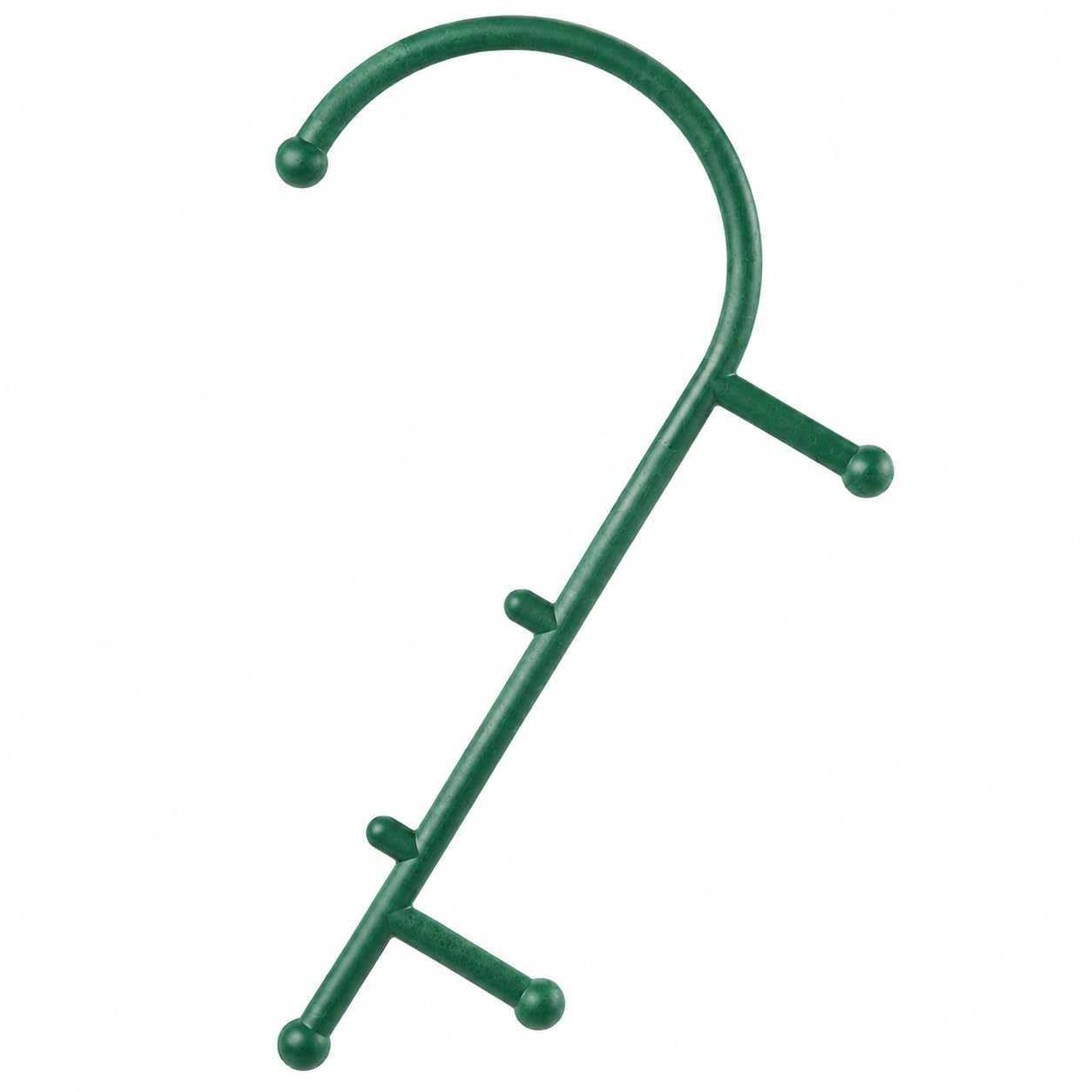
A 24-inch hook studded with six balls looks like it wandered in from a garden shed, and the Thera Cane has been getting away with that shape since 1988. What the shape buys is reach plus leverage: the big hook comes over your shoulder to the shoulder blade, the smaller hooks take the mid-back and the glutes, and the handles sit far enough out that pressing down with a hand drives a ball into the muscle. We recommend it first because that combination lets you hold a knot with your body weight instead of your arm strength, and by the third pass your arms are usually the thing that quits.

The specifications are unglamorous and sufficient. It measures 24 inches long and 15 wide, weighs about a pound, and is molded in one piece, so there is no joint to seat, no part to lose, and nothing to click together while you are twisted sideways. Six pressure points is fewer than some canes here offer. In use, placement turned out to matter more than the count: the large hook reaches the upper back, the hooked ends get into the top of the shoulder, and the ball at the base handles a glute or a thigh.

It is not a tool you master in one session. You are setting a ball on a spot you cannot see, by feel, and the first few tries land an inch off. What helps is that small movements of the handle change the pressure far more than pushing harder does, so you can hunt for the spot without bruising yourself finding it. Give a knot 30 to 60 seconds and breathe rather than jabbing at it.

The trade-off is storage. At 24 by 15 inches this is the cane that lives on a hook in the closet, not in a desk drawer, and there is no breakdown version of this exact tool; the MAX is a separate design with an extra part. What you get for the space is coverage from the base of the skull to the glutes with one tool.

Pros

  • Six pressure points cover shoulders, back, and glutes
  • Leverage handles let body weight do the pressing
  • One-piece build has no joint to loosen
  • 24-inch reach gets between the shoulder blades

Cons

  • 24 by 15 inches needs hanging storage
Our verdict

If you want one cane that reaches your whole back and lets body weight do the pressing, this is the one we recommend.

Check Latest Price
2

Best Compact

LiBa Deep Tissue Massager

93 /100
Trail Score Outstanding

Key details

Material
BPA-, PBDE-, TBBPA-free plastic
Construction
Two pieces, snap-together
Length X Width
14.5 x 10.25 in
Check Price on Amazon

The LiBa is the cane that fits in a drawer. Its listed envelope is 14.5 by 10.25 inches, well under the full-size hooks here, and the two halves snap apart so it can live in a desk at work or a gym bag. Ours has spent more time out of the closet than any other cane on this list, which is most of the battle with self-massage tools.

The smaller footprint is a real trade-off. Less hook means less reach, and the gap shows up below the shoulder blades, where the tool ends up doing more of a press than a hook. In the neck, the top of the shoulders and around the collarbone, though, the compact head is easier to place precisely than a 24-inch cane. What we did not expect from something this small is how solid it feels: the halves click together and stay put under load, and the surface is smooth rather than a molding seam.

The plastic is BPA-, PBDE- and TBBPA-free, and it is one of the few canes here the maker says is safe in water, so shower use is genuinely open to you. The joint is the part that would fail first on any two-piece cane; ours still seats with a firm click after weeks of leaning on it.

Pros

  • Compact envelope stores in a drawer or bag
  • Two halves click together and hold under load
  • Maker says it is safe for shower use

Cons

  • Less reach below the shoulder blades than a full-size hook
Our verdict

Buy it if your knots live in your neck and shoulders and your storage is a desk drawer; it is the small cane that still feels solid.

Check Latest Price
3

Best for Versatile Targeting

Body Back Buddy Classic

93 /100
Trail Score Outstanding

Key details

Knobs
11 in three shapes
Weight
1.25 lb
Construction
Two pieces, snap-together
Length X Width
27 x 17 in
Check Price on Amazon

Our first ten minutes with the Body Back Buddy were clumsy. Two hooks, 11 knobs and three knob shapes mean a lot of decisions when you are standing in front of a mirror working out which end goes over your shoulder, and a 27-inch frame does not make the angles any easier to find. If you want a tool that is obvious from the first grab, this is not it.

Give it a week. The acorn knobs dig in like a thumb, the round ones glide over a broad strip of muscle, and the double hook lets you work both sides of the spine without swapping hands. That last part matters more than it sounds, because approaching the same knot from either side of the spine often gets further than pressing harder from one.

We rate it the most versatile cane here. Where the Thera Cane asks you to position one shape cleverly, this one simply has more shapes to try, and on the day the knot has moved, 11 options get you there faster than six. The two-handed frame also spreads the load across both arms, which shows up on longer sessions.

One practical note: the mold seam on the knobs is rough enough to feel through a thin shirt. Start over clothing, smooth any sharp edge with an emery board, and it stops mattering.

Pros

  • 11 knobs in three shapes for different knots
  • Two hooks work both sides of the spine
  • Two-handed frame spreads effort across both arms

Cons

  • 27-inch frame needs real storage space
Our verdict

Worth the clumsy first week: no other cane here offers as many ways to find a knot you cannot see.

Check Latest Price
4

Best for Travel

Backnobber II

94 /100
Trail Score Outstanding

Key details

Weight
1 lb
Construction
Two pieces, snap-together
Length X Width
24 x 13 in
Check Price on Amazon

The Backnobber II comes apart at the middle, which sounds like a small thing until you are packing. At 24 inches it has full-size reach, but the two halves separate so it lies flat in a carry-on beside your clothes instead of running diagonally across the top. That is the argument for it, and it is a good one: it is the cane we take on trips.

Everything else about it is deliberately plain. One hook, a straight shaft, and leverage handles set so that pressing down near your hip drives the tip into your back. There is no catalogue of knobs and no numbering scheme; you get a handful of pressure points and a shape that is hard to misuse. Where the Body Back Buddy offers choices, this offers almost none, and on some days that is the more useful thing.

The halves lock into a single rigid tool, and ours has held through a full lean without play. The reach covers the upper back, the shoulders and the strip beside the spine, which is where most desk-work knots live. If you want to chase a knot around a shoulder blade with three different shapes, that is the Body Back Buddy's job, not this one's.

Pros

  • Separates into two pieces for a carry-on
  • About a pound, so overhead work does not tire you
  • Single hook is hard to misuse

Cons

  • Joint can work loose if the halves are not fully seated
Our verdict

The cane we pack: full reach that separates into two pieces and goes in a carry-on without a fight.

Check Latest Price
5

Best for Firm Pressure

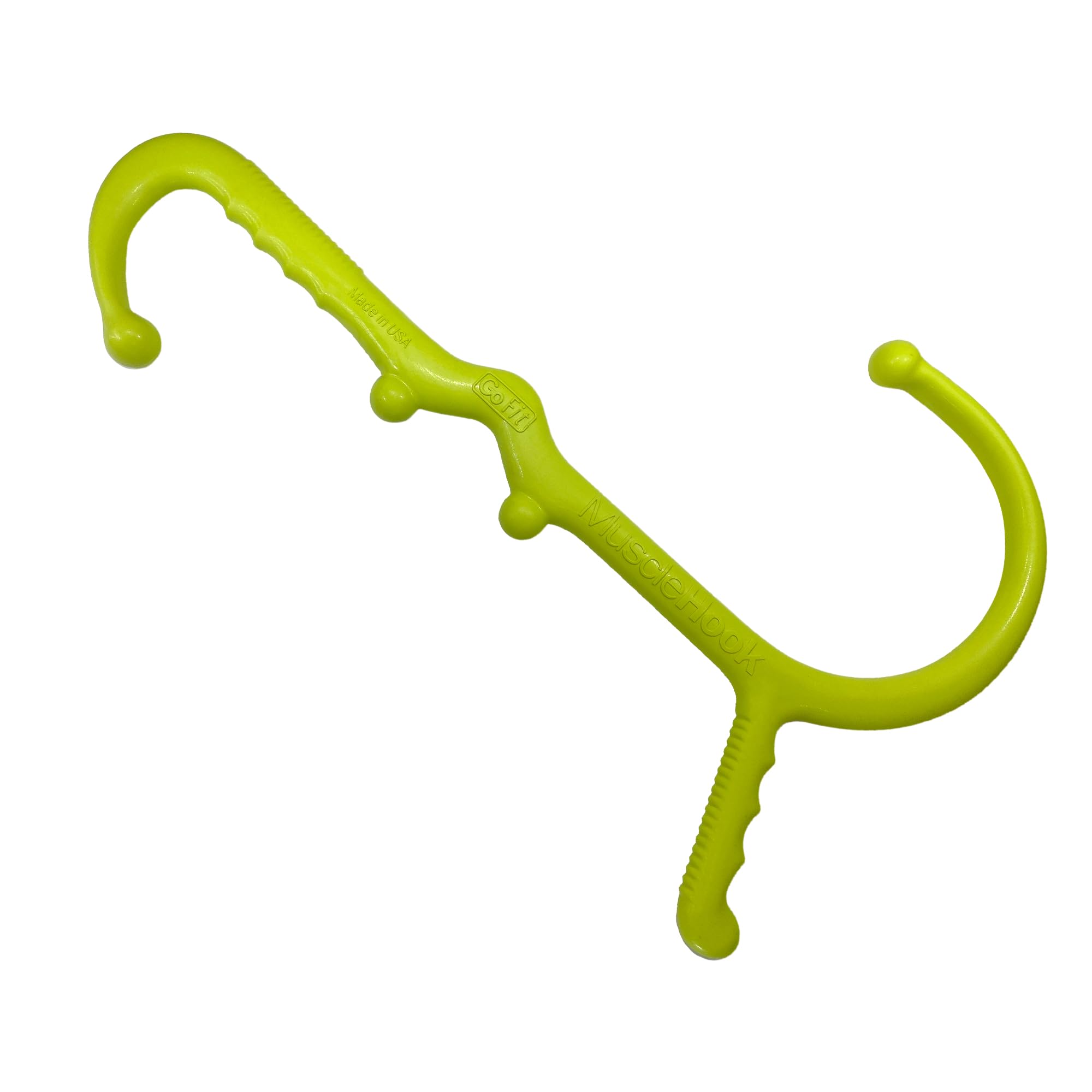
GoFit Muscle Hook Cane

92 /100
Trail Score Outstanding

Key details

Weight
2.09 lb
Material
Urethane
Construction
One piece
Length X Width
23 x 14 in
Check Price on Amazon

The knobs on the GoFit do not stick out on stalks. They are blended into the curve of the urethane as rounded lumps on a smooth arc, and that one decision changes how the tool behaves: instead of catching on the edge of a muscle, it slides along it, so you can sweep the length of a knot before settling on the spot. Of all the canes here, this feels least like a piece of plumbing.

We rate it the best of these for firm, sustained pressure. The body is a single molded piece of dense urethane at 2.09 pounds, and when you lean your weight into it, nothing gives. Lighter canes can flex a little under a hard press, which softens the point of contact; this one transfers everything you put into it. For a stubborn knot in the glute or the middle of the back, that is the difference between a press and a poke.

The heft is also the catch. Two pounds held overhead against the upper back gets heavy after a few minutes, and if your sessions run long, a one-pound cane will be kinder to your arms. The mold seam is rough in places too, so give it a minute with an emery board before it meets bare skin. For a minute of hard pressure on one spot, though, the extra weight stops feeling like a tax.

Pros

  • Dense urethane stays rigid under a hard press
  • Rounded knobs glide instead of catching
  • One-piece build with nothing to assemble

Cons

  • Does not break down for travel
Our verdict

Choose it when you want to lean your whole weight into a knot and have the tool stay exactly where you put it.

Check Latest Price
6

Packable Full-Size Reach

Thera Cane MAX

94 /100
Trail Score Outstanding

Key details

Weight
1.1 lb
Construction
Three pieces, threaded
Length X Width
24 x 15 in
Pressure Points
7
Check Price on Amazon

The MAX is the original Thera Cane taken apart. Three pieces, an upper section, a lower section, and a threaded link ball that joins them, plus a seventh pressure point where that ball sits. Assembled, it measures the same 24 by 15 inches as the one-piece version and weighs 1.1 pounds, so the shape and the leverage feel familiar.

The joint is threaded rather than snapped, which is the fussier of the two approaches. It takes a few turns to seat, and the link ball is a small part to keep track of in a hotel room. Once it is together, the cane is as rigid as the original, with no rattle and no give at the middle.

Whether it earns a place depends entirely on whether the cane travels. As a house tool it is a more complicated version of a design whose virtue is that there is nothing to assemble, and the one-piece original is the better buy. As a travel cane the three-piece breakdown packs shorter than the two-piece Backnobber II, at the cost of a few seconds of threading and one loose part.

It also arrives with a printed guide and a DVD, more instruction than most of these include and genuinely useful in the first week, when you are working blind. Pack the link ball in a zip bag and it will not go missing in a carry-on.

Pros

  • Breaks into three pieces for packing
  • Full 24-inch reach when assembled
  • Seven pressure points including the link ball

Cons

  • Threaded link ball is one more part to keep track of
Our verdict

Buy the MAX only if the cane travels; otherwise the one-piece original is simpler and just as effective.

Check Latest Price
7

Budget Full-Size Cane

Ranarose Deep Tissue Massager

91 /100
Trail Score Outstanding

Key details

Weight
1 lb
Warranty
3 years
Massage Nodes
8
Length X Width
24.2 x 14.7 in
Check Price on Amazon

Eight nodes and a three-year warranty is an unusual combination at the budget end of this category. The nodes run along a two-sided hook, so you can work a broad strip of muscle with one face and a single point with the other, and the warranty is longer than anything else stated on the canes here.

In the hand it feels like what it is: a molded plastic hook that snaps together in the middle. The joint seats firmly and the hook stays rigid under a two-handed press. At 24.2 by 14.7 inches it is a full-size tool rather than a compact one, and at about a pound it is not a chore to hold overhead.

Coverage is where it wins. Eight nodes across a 24-inch hook reach the neck, the shoulders, the strip beside the spine and the glutes without changing tools, and the two-sided arrangement means you are not hunting for the one knob that fits. It ships with usage diagrams as well, which is more than most canes include.

We rate it the best value among the budget canes here, and the warranty is the reason. A plastic tool that gets leaned on, dropped in a bag and left in a warm car is exactly the kind of thing that fails quietly after a year and a half; three years of coverage is a manufacturer saying it will not. The two-sided head is the other thing that keeps it in rotation: broad work on one face, a single point on the other, no swapping tools mid-session.

Pros

  • Eight nodes on a two-sided hook
  • Three-year warranty
  • About a pound for long sessions

Cons

  • Full-size hook needs real storage space
Our verdict

The budget cane we trust: full-size reach, eight nodes, and a three-year warranty behind a plastic tool.

Check Latest Price
8

First-Time Users

Cubetoou Trigger Point Cane

90 /100
Trail Score Outstanding

Key details

Weight
1.79 lb
Includes
Printed instruction guide
Construction
Two pieces, snap-together
Length X Width
23.5 x 14.5 in
Check Price on Amazon

The Cubetoou comes with a printed booklet and diagrams showing where to put the knobs, and that is not a throwaway extra. Most canes hand you a hook and wish you luck; if you have never done trigger point work, a map of placements shortens the awkward phase considerably.

The tool is a two-piece hook, 23.5 by 14.5 inches, with knobs spaced along the curve. It snaps together firmly and stays rigid under a hard press, and the molded body feels substantial rather than hollow.

Reach is full-size, which is the point: it gets to the upper back and between the shoulder blades, the spots that send most people looking for a cane in the first place. The two halves separate for storage, so it fits in a duffel even if it will not fit in a drawer.

For a first cane, we rate it a sensible buy: a printed guide, full reach and a joint that holds. It does not have the finish of the Thera Cane or the knob variety of the Body Back Buddy, but nothing about it feels like a corner cut, and the booklet is what separates it from the other budget canes.

Pros

  • Printed guide explains where to place the knobs
  • Full-size 23.5-inch reach
  • Two pieces separate for storage

Cons

  • 1.79 lb is heavier than the lightest canes here
Our verdict

A good first cane, with a printed guide that does real work while you learn where your knots are.

Check Latest Price

How We Tested 14 Trigger Point Massage Canes

We started by gathering every trigger point cane we could find from brands with clear specs on length, hook shape, tip material, and handle grip, then narrowed the field to 14 models that spanned the range of shapes and prices. I tested several at home in the living room and on my office chair, while my team used theirs after runs, at their desks, and on stiff calves after long sits. Testing ran for four months, long enough for repeated use to expose a wobbly tip or a handle wrap that started to peel.

For pain relief and effectiveness, each tester worked a specific tender spot for two minutes, then noted whether it felt looser right away and again an hour later. We tried the same spot with each hand and from seated, standing, and lying positions, which is where ease of use separated the field: some canes only worked at one angle, while others let us keep pressure on without repositioning. To judge quality, we flexed the shaft, checked whether the tip spun or stayed put, and inspected the grips after sweaty sessions. Value came down to whether a cane that cost less felt as sturdy as the pricier ones, and enjoyment was simple — we noted which ones we grabbed without thinking and which stayed in the closet.

How to Choose a Trigger Point Massage Cane

Reach decides more than anything else

A cane's overall length and width tells you what it can get to. The full-size tools here run roughly 23 to 27 inches long and 13 to 17 wide, enough to come over a shoulder to the shoulder blade and down the back to the glutes. The compact LiBa lists 14.5 by 10.25 inches: plenty for the neck and the tops of the shoulders, harder to place below the shoulder blades.

The trap is assuming longer is always better. A 27-inch cane is a lot of tool to steer behind your back, and if your knots sit in the neck and shoulders, the extra length mostly gets in the way. If you are short-waisted, a wide hook can feel like it wraps around more body than you have. Buy the size that matches your knots, not your height.

Leverage is what you are really paying for

On a well-designed cane, the handles sit far enough from the pressure point that pressing down with a hand drives the tip into your back. That is what lets you hold a spot for a minute without your arms shaking, and it is the difference between a cane you use daily and one that stays in the closet.

Weight is the other half of the equation. The GoFit's 2.09 pounds of urethane stays rigid when you lean into it, while the one-pound canes are easier to hold overhead but can flex a little under a hard press. If your sessions run long, stay near a pound. If you want maximum force on one stubborn knot, the heavier tool does more of the work.

One piece, a snap, or a thread

Every cane here is either molded in one piece or joined in the middle, and the joint is both the travel feature and the part that can let you down. One-piece tools have nothing to seat or lose. Two-piece canes click together and pack flat, which is the approach the LiBa, Body Back Buddy and Backnobber II take. The Thera Cane MAX threads together in three pieces, so it packs smallest but leaves you a small link ball to keep track of.

Before you lean weight into any joined cane, push the halves fully home and give them a tug. A joint that shifts mid-press slides off the knot instead of holding it. If the cane never leaves the house, buy one piece and stop thinking about it.

Knob shape matters more than knob count

Counts here run from six to eleven, and more is not automatically better. Acorn or pointed knobs concentrate pressure into a small area, round ones glide over a broad strip of muscle, and a long hook with a couple of shapes covers most situations. The Body Back Buddy's three shapes earn their keep when a knot moves between sessions; the Backnobber's single hook is faster to place because there is nothing to choose between.

Remember that you cannot see what you are doing back there. A cane you can position by feel beats one with a shape for every occasion, and the first week is spent learning where the knobs land. If you are new to this, start simple and add the knob-heavy tool later.

Seams, skin, and keeping it clean

Molded plastic can arrive with a rough seam along the edge of the knobs, and against bare skin that is a scratch rather than a massage. Do the first session over a thin shirt, then run a fingertip around the edges and take an emery board to anything sharp. Urethane tools like the GoFit are smoother but heavier, and a few plastic canes, including the LiBa, are sold as water-safe for shower use.

Wipe the cane down with a damp cloth and a little soap after use, particularly if it lives in the shower. Then leave it somewhere you will see it. A cane in a drawer you never open is a cane you did not need.

Frequently Asked Questions

Final Verdict

Thera Cane is the one we recommend to most people. It reaches from the base of the skull to the glutes, the handles let your body weight do the pressing, and the one-piece build has nothing to loosen. Travelers should take the Backnobber II instead, and anyone whose knots sit in the neck and shoulders with no room for a 24-inch hook will use the compact LiBa more often.