Best Lacrosse Massage Balls of 2026

A lacrosse ball is the cheapest deep-tissue massage you'll ever own: a dense rubber sphere you wedge between your back and a wall, or lie on until a knot gives up. The trouble is that "dense" covers a wide range. Some feel like a doorknob against your shoulder blade, some squash under a thumb and do almost nothing, and the surface finish decides whether the ball stays put or skates across the floor mid-stretch. Get the firmness and grip right, and ten minutes on the rug does the work of an appointment.

I keep one in my desk drawer and one in the bottom of my gym bag, so I've gotten picky about which is which. Over four months, my team and I put 14 balls through wall work, floor work, bare feet, and that spot at the top of the shoulder blade that never quite lets go. Smaller isn't automatically better, and a tacky surface matters more than most shoppers expect — a ball that slides is a ball you fight. The picks below cover both ends: something forgiving for the base of the skull, something firm for glutes that won't release.

1

Best Overall

Kieba Massage Lacrosse Balls (2-Pack)

95 /100
Trail Score Outstanding

Key details

Diameter
2.5 inches
Material
Solid rubber
Set Contents
2 balls
Check Price on Amazon

A pair is the practical unit, and this is the pair to start with: two 2.5-inch solid rubber balls, one blue and one red. The two colors are not decoration. When you are rolling the arch of a foot on a carpet, knowing which ball rolled under the couch matters more than you would think.

What earns it the top spot is range. The 2.5-inch size sits under an arch, into the meat of a glute, and against a wall for a shoulder blade, and the solid rubber is dense enough that leaning on a doorframe actually does something. We put it through the usual spots — the knot under the shoulder blade, the outside of the hip, the arch after a long walk — and it never felt like the wrong tool for the job. Two balls also means one can live in a gym bag while the other stays home, which is how most people actually use these.

The rubber itself is the detail we appreciated most. It is solid rather than hollow, so it does not flatten under a heel, and it does not leave a mark on painted walls or baseboards, which matters if your favorite place to work a knot is the nearest doorframe. There is no chemical smell to air out before the first use, either.

If you already know you want give — for an arch, a jaw, a neck that has been irritated for days — the latex pair below is the better call. For everything else, this is the set we hand people first, and it is usually the last one they buy.

Pros

  • Two balls, so one lives in a gym bag
  • Solid rubber holds its shape under a heel
  • Leaves no marks on painted walls
  • No chemical smell out of the box

Cons

  • 2.5-inch ball is fiddly to hold on the mid-back
Our verdict

We tell first-time buyers to start here: two firm 2.5-inch solid rubber balls that handle feet, glutes, and wall work without flinching or marking the paint.
Check Latest Price
2

Best for Teams and Shared Gyms

Signature Lacrosse Ball Set (8 Balls)

96 /100
Trail Score Outstanding

Key details

Grip
Tough Grip rubber
Material
Molded rubber
Set Contents
8 balls
Check Price on Amazon

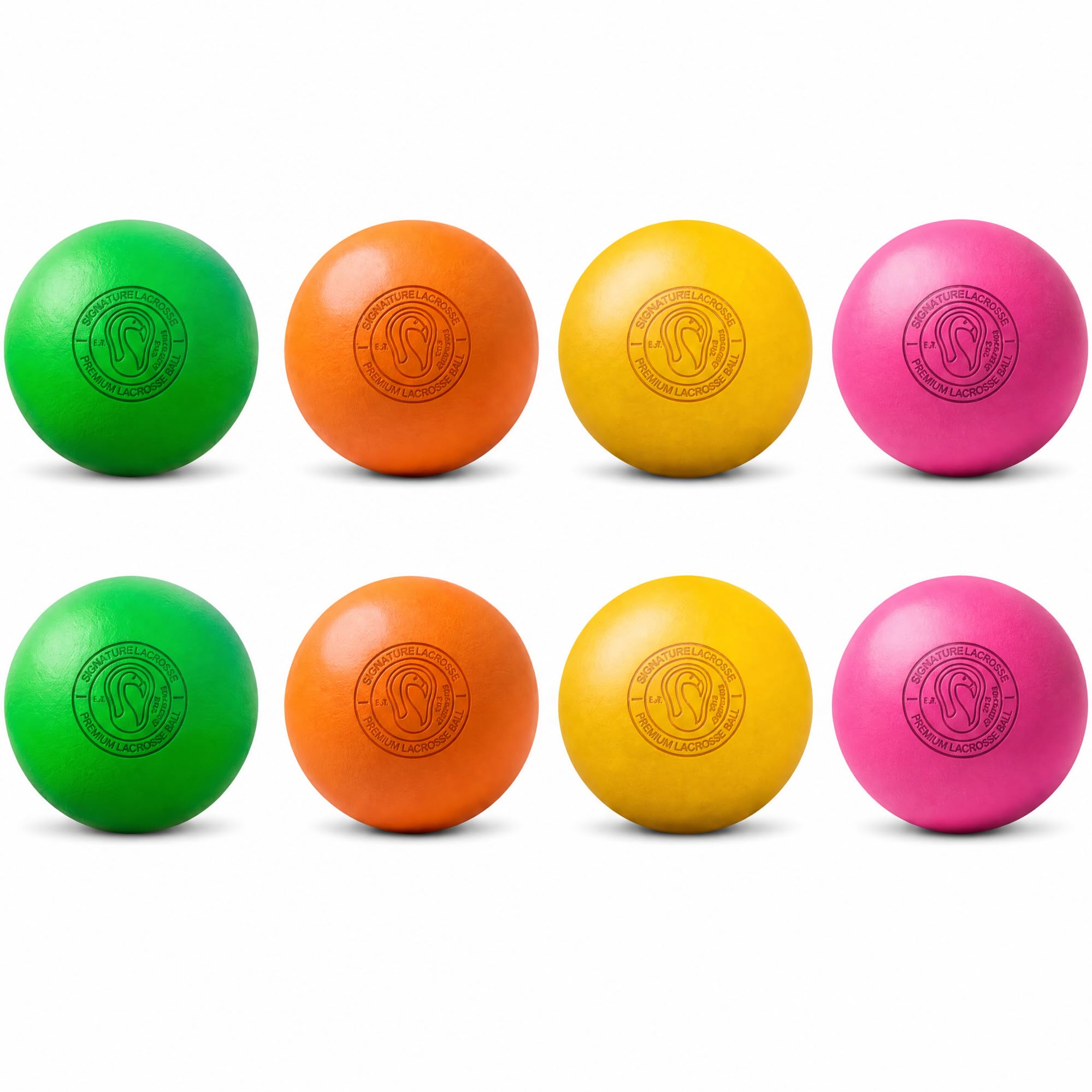
Eight balls is either exactly what you need or six more than you do, and there is not much middle ground. If you are outfitting a team bag, a gym, a treatment room, or a house where three people argue over the same ball, this is the sensible way to buy. These are genuine lacrosse balls, too, not massage balls borrowing the name.

The reason this pack is here rather than any other eight-ball box is the rubber. Signature's grip formula is built for stick handling, and the practical side effect is a ball that holds a wall instead of skidding down it — the difference between a useful shoulder-blade session and a frustrating one. Molded rubber, standard lacrosse size and weight, brightly colored enough to spot in grass or at the bottom of a bag.

They are bouncy, which only matters if someone in the house actually plays, and tough enough that a dog treating one as a fetch toy will not end the story. It is the pack to buy when the balls will be shared, loaned, or lost, and the one to skip if you have a single spot to work and a single bag to carry.

Pros

  • Genuine lacrosse balls that double as massage tools
  • Grippy rubber holds a wall instead of sliding
  • Bright colors are easy to spot in a bag

Cons

  • Eight balls is more than one person needs
Our verdict

Buy the eight-pack if the balls will be shared, loaned, or lost — they are real lacrosse balls, and the grip is what makes them useful against a wall.

Check Latest Price
3

Best for Tender Areas

Yoga Tune Up Therapy Balls

95 /100
Trail Score Outstanding

Key details

Diameter
2.5 inches
Material
Natural latex shell
Set Contents
2 balls and mesh tote
Check Price on Amazon

These are not lacrosse balls, and that is the reason to own them. The 2.5-inch balls have a natural-latex shell over a pliable core, so they compress a little under your weight instead of meeting it like a rock.

That give is exactly what you want on an arch, the side of a neck, or anything still angry from a previous session. The surface is tacky as well, which keeps the ball in place against a wall — even through a T-shirt, which matters more than it sounds when you are trying to hold a position and breathe at the same time.

We reach for these on days when a hard ball feels like too much, and they are what we put in the hands of anyone who has tried solid rubber and flinched. What you give up is the last bit of pressure a firm ball delivers on a stubborn glute; latex has more spring in it, so a deep knot takes longer to talk. The drawstring tote turned out to be a small thing we use constantly — two balls and a bag that stays together in a gym bag beats two balls rolling loose among the socks.

Pros

  • Pliable latex gives without losing all its depth
  • Tacky surface holds a wall, even through fabric
  • Drawstring tote keeps the pair together

Cons

  • Costs more than the solid rubber pairs here
Our verdict

These are the pair we hand anyone who finds solid rubber too sharp, and the tacky latex is why they stay put on a wall through a shirt.

Check Latest Price
4

Best Single Ball

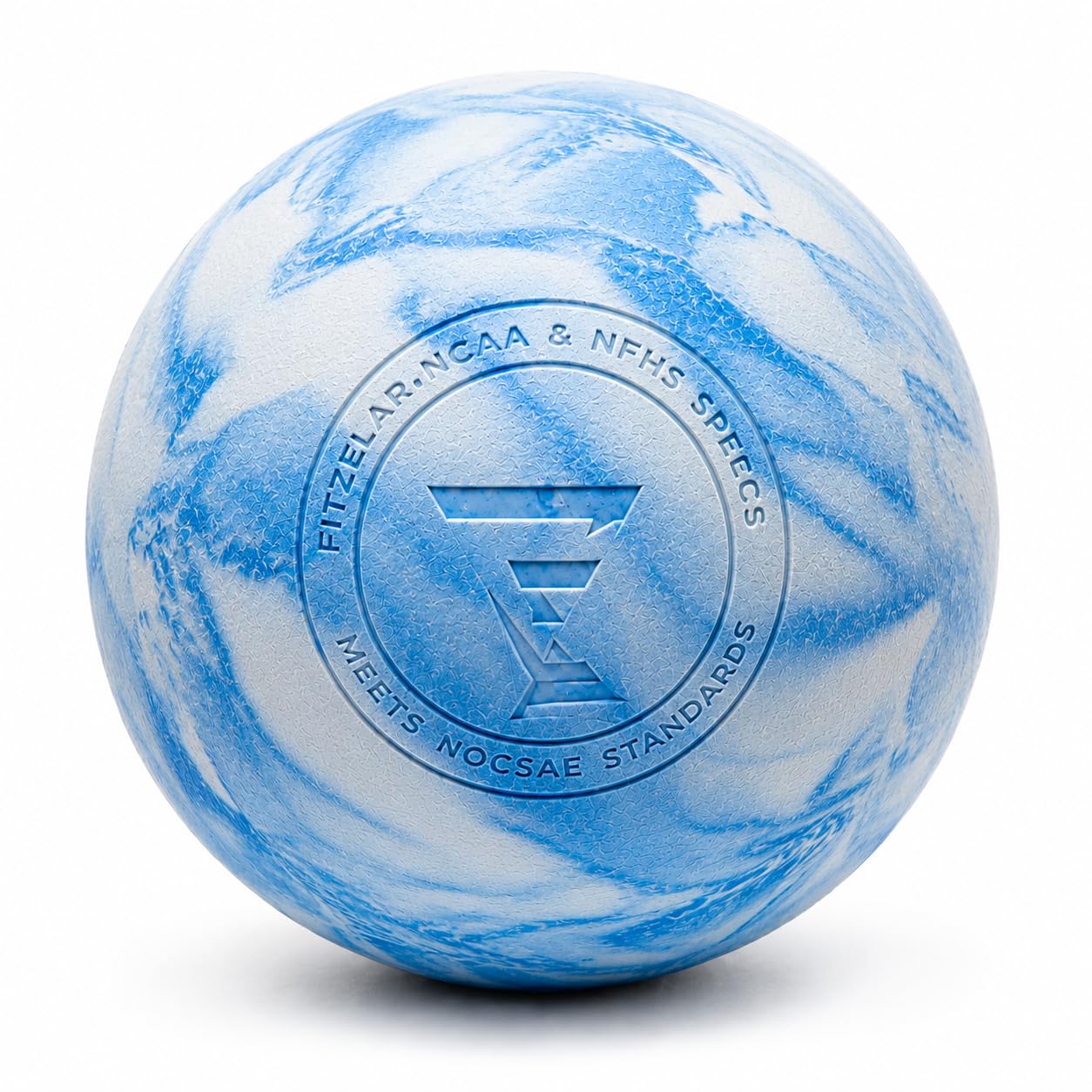
Fitzelar Massage Lacrosse Ball

94 /100
Trail Score Outstanding

Key details

Weight
5.5 oz
Diameter
2.5 inches
Hardness
45 degree rating
Material
Natural rubber
Check Price on Amazon

The figure to start with is the hardness rating: 45 degrees on the maker's own scale, which puts this ball between a golf ball and a tennis ball. That is a sensible place to land for massage — firm enough to get through a glute to a trigger point, forgiving enough that the first lean does not make you yelp. It is the reason this is the single ball we recommend.

It is one 2.5-inch ball of natural rubber at about 5.5 ounces, with a small drawstring bag that is more useful than it sounds: the ball has somewhere to live besides the bottom of a tote. The rubber has no chemical smell, the surface is smooth rather than tacky, and it is dense enough that a wall lean transfers pressure instead of squashing flat.

If your routine is one spot — the arch by the coffee maker, the shoulder at the end of the day — one ball in one place is all you need, and this is the one we point to. What you notice first is how controlled the pressure feels: it digs in where you aim it and stops short of the bruising edge a harder ball finds.

Pros

  • 45-degree hardness lands between golf and tennis ball
  • Natural rubber with no chemical smell
  • Small drawstring bag included

Cons

No notable drawbacks to flag.

Our verdict

The one to buy when you want a single ball: a stated mid-range hardness that reaches a trigger point without making you brace for it.

Check Latest Price
5

Best Budget Pair

Aegero Massage Lacrosse Balls (2-Pack)

93 /100
Trail Score Outstanding

Key details

Weight
5.3 ounces per ball
Diameter
2.5 inches
Set Contents
2 balls
Check Price on Amazon

This is the budget pair of the group, and it is a real pair: two 2.5-inch solid rubber balls in deep blue and purple, about 5.3 ounces each, identical to one another.

Two balls is the right shape for most people, and this is the budget route to it. We kept one in a desk drawer and one in a gym bag, and both held up to daily wall leans without flattening or going slick where they rubbed against the paint. The rubber is solid, the surface is smooth, and there is no break-in period to get through.

Where it differs from the pair we recommend is in extras: identical balls, no bag, a plainer finish. None of that changes the work. What it does mean is that you are buying spares rather than options, so if you want two different densities to choose between, the latex pair or the three-density set below is the better fit.

Pros

  • Two matched balls at the budget end
  • Solid rubber that holds up to daily wall work
  • Two colors, so you can tell them apart

Cons

  • Hard enough to feel intense under full body weight
Our verdict

A matched pair of solid rubber balls for the desk drawer and the gym bag, and the budget way into owning two.

Check Latest Price
6

Small, Precise Spots

RAD Rounds 3-Density Set

92 /100
Trail Score Outstanding

Key details

Material
Silicone
Densities
Soft, medium, and firm
Ball Sizes
2.2, 1.6, and 0.75 inches
Check Price on Amazon

The smallest ball in this set is three-quarters of an inch across, which sounds like a novelty until you press it into the tissue at the base of a thumb or the hinge of a jaw. RAD's kit runs from that firm little ball through a 1.6-inch medium to a 2.2-inch soft one, all silicone.

Silicone glides rather than grips, which changes technique more than the spec suggests: these roll over skin and fabric instead of dragging on it. The middle ball is the one that got the most use from us. It fits under the edge of a shoulder blade and behind the hip in a way a full-size ball cannot, and the give in the material makes the bony ground around it tolerable.

The 2.2-inch soft ball is the gentlest tool in this roundup, and the small firm one reaches the wrist and the pad below the thumb where nothing else on this list fits. Three graded densities also teach you something useful: after a week you know whether you are a soft-ball person or a firm-ball person, which is worth knowing before you spend more.

What the kit is not is a lacrosse ball. There is no 2.5-inch firm sphere in the box, so quads, glutes, and broad back work want a full-size ball alongside it. Buy it for precision — the jaw, the hands, the gap between ribs and shoulder blade — and keep a budget 2.5-inch ball for everything else.

Pros

  • Three graded densities in one kit
  • Silicone glides over skin and fabric
  • Small balls reach jaw, wrist, and hip

Cons

  • Premium price for three small balls
Our verdict

Buy this for the places a full-size ball cannot reach — the jaw, the thumb pad, the space behind a hip — not as your only massage tool.

Check Latest Price
7

Whole-Body Coverage

4KOR 3-Ball Recovery System

93 /100
Trail Score Outstanding

Key details

Material
Grooved rubber
Ball Sizes
4.75, 3.2, and 2.5 inches
Set Contents
3 balls and case
Check Price on Amazon

The 4.75-inch ball is the biggest thing in this roundup, and it is the one that gets closest to foam-roller coverage while keeping a ball's focused pressure. Put your weight on it at the hip and you feel why the size matters: it spreads the load across a whole glute instead of drilling one spot.

The kit pairs it with a 3.2-inch grooved ball for the upper back and a standard smooth lacrosse ball for the neck and the hamstring-glute tie-in. Those grooves are not cosmetic. They grip a wall or a floor instead of sliding, so the two larger balls work through a T-shirt, and a small pamphlet maps each ball to a body area so you are not guessing which one goes where.

The lacrosse ball in the box is an ordinary hard one — unremarkable, and exactly right for a tight spot beside the shoulder blade where a bigger ball would skate over the knot instead of finding it.

As a system, it is the most complete option on this page, and it suits someone who wants to work the whole body without assembling a kit piece by piece. It is a home tool rather than a pocket one, and it is the priciest set here; if your routine is one ball against a doorframe after a run, this is more kit than you need.

Pros

  • Three sizes cover hips, back, and neck
  • Grooved balls grip walls and floors
  • Pamphlet shows where each ball goes

Cons

  • Bulky and heavy to carry at about 1.8 pounds
Our verdict

The most complete kit here for someone who wants hips, back, and neck covered, and the closest a ball gets to foam-roller territory.

Check Latest Price
8

Trying Two Densities

KSONE Massage Ball Set

92 /100
Trail Score Outstanding

Key details

Diameter
2.5 inches
Material
Natural rubber
Set Contents
Hard ball, soft ball, 1.7-inch mini
Check Price on Amazon

Hard and soft in the same mesh bag is the whole idea here: a standard 2.5-inch lacrosse ball, a softer ball of the same size, and a 1.7-inch mini.

Having both densities in one purchase is more useful than we expected. The hard ball does the deep work on a calf or a glute; the soft one is what you reach for on a neck, an arch, or a spot that is already irritated. The mini is the one for the sole of a foot or the pad at the base of the thumb, and the mesh tote keeps all three from scattering through a gym bag.

What it solves is the ordering problem — the deep ball and the gentle one without buying two separate sets, plus a size the two-ball pairs do not offer. It is the kit we point to when someone is still working out how much they can take, because the answer is already in the bag, and starting gentle on a bad day is easier than pretending a rock is a pillow.

Pros

  • Hard and soft balls in one set
  • 1.7-inch mini for feet and thumbs
  • Mesh bag keeps all three together

Cons

  • The soft ball is gentle, not for stubborn knots
Our verdict

The set we hand someone who is not sure how much pressure they want, since the hard ball, the soft ball, and the mini are all in the bag.

Check Latest Price

How We Tested: Four Months, 14 Balls, a Lot of Wall Work

We started by pulling every lacrosse and massage ball we could find with published dimensions, material specs, and enough customer feedback to spot a pattern, then cut anything that showed up smelling like a tire or that shipped with a softening caveat. That left 14 balls, ranging from standard tournament-size rubber to oversized and textured versions, and we spent four months living with them.

Testing happened wherever these actually get used. Each ball went against a hallway wall for upper-back work while the coffee brewed, under a desk chair mid-afternoon, onto the living room rug for glutes and hamstrings after a run, and under bare feet at the kitchen counter after a long standing shift. We rolled them on hardwood, tile, and a yoga mat to see which ones held their spot and which took off across the room.

Firmness we judged by pressing a thumbnail in and timing how quickly the dent came back, then by whether a tender spot like the IT band or the base of the skull made us flinch — a few balls got benched for that alone. We tracked whether a tight spot actually let go afterward or just hurt while we were on it, and whether the surface picked up lint and pet hair or went slick once we were sweaty. Seams and mold lines got a look, and after eight weeks we re-checked every ball for flat spots, cracking, or a permanent lean. Size earned its own round: whether the ball truly fit under a shoulder blade or rolled off the ribcage, and whether it stayed controllable under one foot.

How to Choose a Lacrosse Massage Ball

Density Comes First

A solid rubber lacrosse ball takes nearly all of your body weight and drives it into a spot the size of a coin. That is exactly what you want on a glute, a quad, a calf, or the knot under a shoulder blade, where the tissue is thick and the pressure needs to arrive sharply. On an arch, a neck, or anything already irritated, the same ball can feel like a doorstop.

Pliable balls, like the natural-latex Yoga Tune Up pair, compress under you, so pressure builds gradually instead of all at once. Most people end up wanting one of each. If you are buying only one, be honest about where you carry your tension: thick muscle takes firm rubber, bony and tender areas take give.

Match the Diameter to the Spot

Two and a half inches is standard for a reason. It is small enough to sit under an arch or beside the spine and large enough to cover actual muscle. Smaller balls concentrate pressure further — the three-quarter-inch ball in the RAD set gets into a thumb pad or a jaw where nothing larger fits — while bigger ones spread it, which is why the 4.75-inch ball in the 4KOR kit behaves more like a small roller.

One trap: compact in a listing usually describes packing, not reach. A ball that disappears into a carry-on can still be too big to settle under a shoulder blade. Decide where you will use it, then check the diameter against that spot.

Grip Decides Whether Wall Work Is Bearable

Working a knot against a wall is the most convenient version of this, and it lives or dies on friction. Smooth rubber slides down painted drywall the moment you shift your weight; a tacky latex surface or a grooved ball holds its place. If your routine happens on a mat or carpet, grip matters less and glide becomes a virtue.

Try the ball on the surface you will actually use before you commit to a wall routine. A surface that grips also slides less easily into position, so there is a small trade in maneuverability for staying put.

How Many Balls, and Where They Will Live

A ball only helps if it is within reach, and they migrate. Two is the usual sweet spot: one by the couch or desk, one in the gym bag. A three-density kit buys options instead of spares, which is a different purchase — useful while you are still working out how much pressure you like, less so if you simply want the same tool in two rooms.

Check what comes with the set. A mesh tote is a small thing that keeps two balls from rolling loose in a bag; the Fitzelar ball and the Yoga Tune Up pair include one, and the budget pairs do not.

Frequently Asked Questions

Final Verdict

Buy the Kieba pair. Two firm 2.5-inch balls cover the arch, the glute, the calf, and the shoulder blade, the solid rubber does not flatten or mark a doorframe, and a second ball means the one you need is never in the other room.

If your tissue is tender, or a hard ball has already made you flinch, the Yoga Tune Up pair is the better first purchase — the latex gives just enough. And if the balls will be shared, loaned, or lost, buy the eight-pack and stop thinking about it.