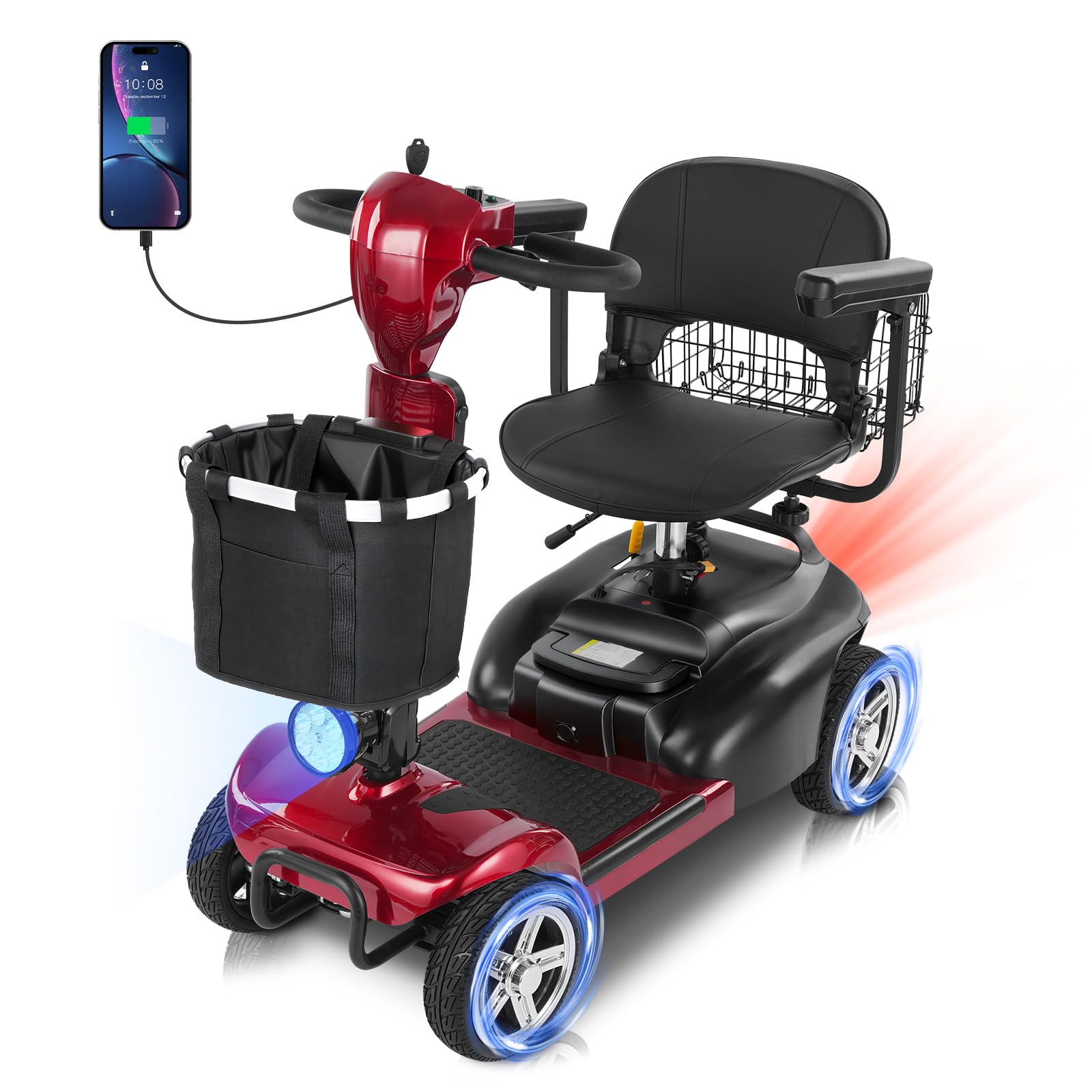
Best Travel Mobility Scooters of 2026

A travel mobility scooter is supposed to give you back the world beyond your driveway—the airport terminal, the farmer's market, the aisle you used to skip. The catch is that travel can mean fitting into a hatchback one day and surviving a cracked sidewalk the next; a model that folds in seconds can still be a misery to lift into the trunk. I care less about the spec sheet than whether it makes a day out easier and feels steady when you turn sharply or stop on a slope. The right one restores spontaneous errands without turning every outing into a logistics exercise.

We spent nine months with seven travel scooters, judging enjoyment, value, functionality, assembly, portability, and weight, plus battery life, turn radius, durability, and stability. Differences showed up in unglamorous moments: loading one into a sedan, assembling it after a flight, navigating a tight pharmacy aisle. The lightest scooter was rarely the most confidence-inspiring, and the easiest to assemble wasn't always the easiest to live with. The picks below balance real trips, not a showroom floor.

1

Best Overall

Aotedor Magnesium Scooter

88 /100
Trail Score Excellent

Key details

Range
Up to 22 miles
Weight
36 lb
Batteries
Two removable 10Ah
Seat Width
14.5 in
Check Price on Amazon

Most travel scooters only become travel scooters after you've taken them apart. The Aotedor folds in one piece, seat still attached, no tools, and once it's down it rolls on its own wheels like a suitcase. That single difference is why it's our pick for anyone who flies a couple of times a year and doesn't want a routine built around a tiller bolt.

At a listed 36 pounds it's a one-person lift into a trunk, and the two battery packs come out first, which is both less to carry and the thing an airline wants to see. Two packs also give it up to 22 miles of listed range: in practice one battery covers a day of museum floors while the second stays charged in the room, and we like that the spare comes in the box rather than as an upsell.

The magnesium frame explains the weight, and the fit adjusts more than most — armrests slide from 15 to 24 inches and the tiller height moves, which matters when two people of different heights share one scooter. The brake engages as you release the lever, so there's no squeezing to stop, and the four-wheel stance stays planted at walking pace.

Batteries are the part to manage: a pack that seems flat on arrival is usually one that never got its full first charge, so plug both in overnight before the first trip. The premium is the other trade — you're paying for the fold and the low weight, not for more range than the cheaper folders here.

Pros

  • Folds in one piece with no tools
  • Rolls like a suitcase once folded
  • 36 lb with both battery packs removable
  • Two batteries, up to 22 miles total

Cons

  • Premium price for the folding convenience
  • Narrow 14.5-inch seat
Our verdict

It's the travel scooter we reach for: one-piece folding that rolls like a suitcase, so a trunk transfer takes seconds instead of a five-piece reassembly.

Check Latest Price
2

Best for Tight Spaces

Rascal Venture 3-Wheel

89 /100
Trail Score Excellent

Key details

Range
Up to 10 miles
Turn Radius
33 in
Heaviest Piece
29.5 lb
Weight Capacity
300 lb
Check Price on Amazon

The number that decides the Rascal for us is 29.5 pounds — the heaviest of its five pieces. That's the lift between the ground and a trunk, and it's light enough that most adults can do it alone, which is the whole argument for a scooter that comes apart rather than folding. The complete scooter is 96.5 pounds, so it isn't a lightweight; it's a heavy thing in manageable pieces.

Its 33-inch turning radius is the tightest here, and you feel the difference in a hotel bathroom or a narrow galley corridor where a four-wheeler needs a three-point turn. Three wheels put less rubber on the ground up front, so the front end is the part to watch on wet pavement and lawn edges; at the 4 mph top speed that's a fair trade, and it's how we rode it.

Assembly is five pieces and a seat that swivels for getting off, and the brake is electromechanical — it slows as you release the throttle rather than giving you a lever to squeeze, which takes a lap or two to trust. The 17-inch seat sits 15 inches off the ground, and the frame carries a three-year warranty, the longest structural cover in this group.

What it won't do is glide. Ten miles of listed range and a 4 mph ceiling make it a scooter for neighborhoods, museums, and ship decks rather than a full day at a theme park, and the ride is firm over brick. For tight spaces and one-person loading, though, nothing else here comes close.

Pros

  • Heaviest piece is 29.5 lb
  • 33-inch turn radius, tightest here
  • Three-year frame warranty
  • Swivel seat for easier transfers

Cons

  • No hand brake lever; slows on throttle release
  • 96.5 lb total means several trips to the car
Our verdict

A three-wheeler that turns in 33 inches and breaks into pieces light enough to lift one-handed — our choice for apartments, small cars, and tight hotel corridors.

Check Latest Price
3

Best for All-Day Range

Drive Medical Scout

88 /100
Trail Score Excellent

Key details

Range
Up to 9 miles
Pieces
Five
Weight
110 lb
Battery
12Ah quick-connect
Check Price on Amazon

If you've rented a scooter at a theme park or a casino, you've probably driven something shaped like the Scout. That's the appeal: a tiller with a speed dial and a thumb lever, a seat that swivels, and no learning curve worth mentioning.

The 12Ah battery is listed at up to nine miles and connects with a quick release, so the pack comes out and charges indoors instead of running a cord out to the garage. It also breaks into five pieces, though the whole scooter is 110 pounds, so getting it into a trunk is a two-trip job or a two-person one.

Seating is where the Scout pulls ahead of the lighter, simpler scooters here: the seat height adjusts, the backrest folds, the armrests move outward to widen the seat, and the tiller tilts toward a taller rider. For a long day out — a fair, a zoo, a mall with a bad floor plan — that adjustability does more for comfort than an extra inch of foam, and it's why this stays our all-day pick.

The cost is the turning circle. A narrow hallway or a tight cabin will have you shuffling back and forth where a three-wheeler swings around in one go, and indoors that gets old. On pavement, park paths, and anything with room to spare, it stops mattering.

Pros

  • Nine-mile battery with a removable pack
  • Seat, armrests, and tiller all adjust
  • Controls most riders already know

Cons

  • 110 lb, so loading takes two trips
  • Wide turning circle indoors
Our verdict

The known quantity: a nine-mile battery, a seat that adjusts every way, and a proven five-piece breakdown — our pick when the scooter has to do a full day out.

Check Latest Price
4

Best for Air Travel

SuperHandy Passport

84 /100
Trail Score Excellent

Key details

Weight
35 lb
Wheels
3
Batteries
Two removable lithium
Weight Capacity
275 lb
Check Price on Amazon

Buy the Passport and you give up two things at once: armrests and a fourth wheel. What comes back is 35 pounds — light enough to lift into a trunk with one hand, and light enough that the friend meeting you at arrivals won't wince when they see it.

For flying, it's the pick here. Both battery packs come out, so the frame can be checked as luggage and the lithium travels under the carrier's rules rather than your seat; confirm that policy before you book, because it's the one part of the trip you can't sort out at the gate. The second pack is a genuine spare rather than a marketing line — about 6.5 miles each on the listing, swapped in seconds.

That range is honest rather than heroic: a port, a tender landing, a walk along the pier, not a 20-mile day. Without armrests you hold the handlebars the whole time, which is fine for half an hour and tiring by mid-afternoon, and the drum brake wants its adjustment checked as the shoes wear.

Three wheels also make it the nimblest thing here in an elevator and the least settled on a curb cut or a wet deck. Take driveway lips square-on and slow, keep the speed down on slopes, and it behaves; forget that on a cambered path and you'll feel the front end get light.

Pros

  • 35 lb, the lightest here
  • Two swappable lithium packs
  • Breaks into five pieces for a sedan trunk

Cons

  • No armrests, so you hold the bars
  • ⚠️ Three-wheel stance needs care on slopes and curbs
Our verdict

The one that genuinely goes on the plane: 35 pounds, two swappable battery packs, and a trunk-friendly footprint — as long as you can live without armrests.

Check Latest Price
5

Best Midrange Folder

Sugogo Lightweight Scooter

88 /100
Trail Score Excellent

Key details

Weight
48 lb
Battery
Removable 12Ah lithium
Folded Size
38 x 20 x 13.5 in
Weight Capacity
300 lb
Check Price on Amazon

The detail we keep coming back to is the battery: 12Ah of lithium at about five pounds, lifting out with one hand so it can charge on a hotel desk while the scooter stays folded in the car. That one design decision answers the airline question and the fourth-floor-room question at the same time, and it's why a mid-priced scooter earns a place next to the premium ones.

Folded, it measures 38 by 20 by 13.5 inches, and the whole thing is 48 pounds — a two-handed lift into an SUV, a real effort into a sedan trunk on your own. Setup out of the box runs a few minutes with the included tools, and the 300-pound capacity, 270-watt motor, and 8-inch flat-free tires put it line for line with the midrange class here.

Turning is the compromise. Tight corners in a small bathroom or a narrow ship corridor take a shuffle and a second go, and the 12-degree hill rating is the modest end of this group — fine for ramps and driveway lips, not for the steep street up from the harbor. On a promenade or in a grocery aisle, neither limit shows.

Charging runs about three hours on the listing, so a lunch stop covers most of a top-up, and the anti-tip wheels and electromagnetic brake are the right kit for a scooter aimed at new riders.

Pros

  • Five-pound battery lifts out to charge indoors
  • Folds in three steps to a 38-inch package
  • 300 lb capacity at a midrange price

Cons

  • 48 lb is a two-handed lift
  • Wide turns in tight interiors
Our verdict

A mid-priced folder whose five-pound battery pack comes out in one hand — the sensible buy if you want one-piece folding without paying the premium.

Check Latest Price
6

Best Budget

Rylox Foldable 4-Wheel

85 /100
Trail Score Excellent

Key details

Motor
250W
Tires
8 in puncture-proof
Heaviest Piece
50 lb
Weight Capacity
330 lb
Check Price on Amazon

At the bottom of this group's price range sits a scooter with a 330-pound capacity and a 15-degree hill rating, numbers that usually cost more. The Rylox gets there by keeping the frame simple: four pieces, no tools, and a heaviest part around 50 pounds.

It isn't stripped, either. Two removable baskets, a phone mount, a cup holder, a headlight, and an electromagnetic brake all come in the box, and the 8-inch puncture-proof tires mean no flats to deal with in a hotel parking lot. Those extras read as filler until you're doing a grocery run with a coffee in one hand.

What earns it the budget slot is that nothing essential was cut to hit the price. It still carries a rider at 330 pounds, still climbs a listed 15 degrees, and still comes apart into pieces one person can move. If the scooter lives in a garage and comes out for errands and the occasional weekend away, this is the one we point to first.

The limit is refinement. Over gravel or a rough car park the frame feels less settled than the Drive, and the turning circle is wide enough that a tight shop aisle needs a second pass. Neither is a dealbreaker at this price; if you ride daily or sit near the top of the capacity, the step up is worth it.

Pros

  • 330 lb capacity at the lowest price here
  • Two baskets plus phone and cup holders
  • Four-piece breakdown, no tools

Cons

  • Wide turning circle in tight aisles
  • Frame feels less settled on rough ground
Our verdict

The budget pick that doesn't feel like a compromise: 330 pounds of capacity, dual baskets, and a four-piece breakdown that fits a trunk.

Check Latest Price
7

Mixed Terrain

Mbxcooter MS20

87 /100
Trail Score Excellent

Key details

Motor
350W
Weight
81.5 lb
Battery
Detachable lithium
Max Slope
15°
Check Price on Amazon

The motor is the headline: 350 watts, the largest in this group, with a listed 15-degree climb and a rear taillight for the ride back to the hotel after dark. That's more power than a mall floor needs and about the right amount on a gravel towpath or a campground loop.

The rest is the standard recipe done competently: it folds, the lithium pack detaches so it can charge indoors, and at 81.5 pounds it's a two-handed lift rather than a two-person one. The taillight and the USB port are small things, but they're the ones that get used on a trip.

Turning is where it slips against the Rascal and the Aotedor — the radius is wide enough that small rooms and shop aisles need a second pass. Range is the other question mark: the listing quotes 20, 35, or 45 miles depending on which battery variant you buy, so the pack in the box decides how far you actually go.

For pavement and paved paths, the cheaper folders here are enough. What the MS20 buys is margin on the surfaces travel actually throws at you — a gravel overlook, a grass field turned into overflow parking, a ramp up to a boardwalk. If your trips leave the sidewalk, that margin is worth the step up.

Pros

  • 350W motor with a 15-degree hill rating
  • Detachable lithium pack charges indoors
  • Taillight and USB charging port

Cons

  • Range depends on which battery variant you buy
  • Wide turning circle indoors
Our verdict

A 350-watt folder for trips that leave pavement — gravel paths, fairgrounds, campsites — at a price that undercuts the premium folders.

Check Latest Price
8

Grass and Gravel

Golden Buzzaround EX

89 /100
Trail Score Excellent

Key details

Range
18 miles
Weight
150 lb
Turn Radius
54 in
Weight Capacity
330 lb
Check Price on Amazon

A 54-inch turning radius tells you most of what you need to know. This isn't a scooter you thread between a hotel bed and a dresser; it's the one you take to the park, the fairground, and the gravel path down to the water.

The payoff is the ride. Nine-inch pneumatic tires and a 5 mph top speed soak up grass and broken pavement in a way the solid-tired folders here can't, and an 18-mile battery covers a full day of wandering rather than a couple of errands. If your trips are outdoors and long, this is the one that keeps up.

Comfort follows from the same bulk: a wide seat, adjustment on nearly every surface, and 150 pounds of scooter that stays planted instead of skittering on a slope. That weight is also the catch. It breaks down for transport, but every piece is a two-hand lift, and it wants a ramp or a van rather than a sedan trunk.

So it earns a place for a specific trip — the one where the scooter is based at a house or a campsite and travels by vehicle once, rather than being folded and lifted twice a day. For flights and rental-car trunks, the Aotedor or the SuperHandy will serve you better, and cost less doing it.

Pros

  • 18-mile battery for full days out
  • Pneumatic tires handle grass and gravel
  • 330 lb capacity and a 5 mph top speed

Cons

  • 54-inch turn radius rules out small rooms
  • 150 lb needs a ramp or two people
Our verdict

Built for grass, gravel, and long days rather than trunk space: an 18-mile battery and air-filled tires, with a turning circle that rules out small rooms.

Check Latest Price

How We Tested the Best Travel Mobility Scooters

We started with a shortlist of travel scooters, filtering by folded dimensions, published weight, battery type and claimed range, assembly requirements, and price. From that list we brought in seven models that represented the real range of options—not the largest or fastest, but the ones a shopper could reasonably compare.

For nine months, each scooter lived through the same errands. We loaded it into a sedan trunk and a hatchback, assembled it at the curb, and timed solo setup without instructions; we noted how many steps it took and whether any part required force or a second pair of hands. On grocery runs and pharmacy aisles, we made tight turns between displays and practiced U-turns in a narrow hallway, watching for the point where the tiller felt twitchy. Battery life was tracked across several days of short trips, including a long park path and a gentle incline, and we recorded when the gauge dropped and whether power faded.

We also rolled each one over sidewalk cracks, curb cuts, and a gravel path to judge stability and brake response, then folded and unfolded it repeatedly to see if latches loosened or frames rattled. Weight and portability were judged with a luggage scale and a simple test: could one adult lift it into a trunk without help? Finally, we compared what each scooter included for the money and asked which one testers actually wanted to take on a day out—the clearest sign of enjoyment and everyday function.

How to Choose a Travel Mobility Scooter

Folding versus taking it apart

Two designs get a scooter into a trunk. A folder stays in one piece: the tiller drops, the frame collapses, and the whole thing rolls or lifts as a unit, the way the Aotedor and the Sugogo work. A disassembler comes apart into four or five pieces, which takes longer but keeps each lift lighter.

Folders save time at the curb; disassemblers usually save weight per lift. Decide which one you'll resent less at six in the morning in an airport parking lot, and let that settle it.

The weight number that actually matters

Total weight is what the listing shouts about. The heaviest single piece is what decides whether you can load it alone. A scooter with a piece near 30 pounds, like the Rascal or the SuperHandy, is a one-person job for most adults. Fifty pounds or more is a two-hand lift with a plan, and a 110- or 150-pound scooter that doesn't come apart wants a ramp.

Be honest about who lifts it and how often. That answer eliminates more scooters than any other specification.

Batteries, range, and flying

A lithium pack that lifts out is the travel-friendly choice: it's lighter than sealed lead-acid, it charges in a hotel room while the scooter stays in the car, and it's the part an airline will want removed. Two packs beat one big one, because a swap takes seconds and a spare that lives charged in your room removes the daily range worry.

Treat every range figure as a best case — flat ground, a lighter rider, a new battery. If a listing quotes several ranges at once, the battery in the box decides which one you actually get.

Three wheels or four

Three-wheelers turn in less space — the Rascal manages a full circle in 33 inches — and they're easier to steer in a bathroom or a ship corridor. Four wheels are more settled at speed and over rough ground, which is why the terrain-oriented scooters here run four.

If most of your riding is indoors or on smooth promenades, three wheels are an advantage. If it's grass, gravel, and curb cuts, take the fourth wheel and the wider circle that comes with it.

The seat and the second rider

Seat width, seat height, and armrest span decide whether a long day is comfortable, and they matter twice over if two people share the scooter. Look for a swivel seat for getting off, a backrest that folds, and armrests that move outward — the Drive adjusts all three.

Check the seat width against your widest rider rather than your tallest, and sit in one before a long trip if you're near the edge of the stated capacity.

Frequently Asked Questions

Final Verdict

The Aotedor is what we point most travelers to: it folds in one piece, rolls like a suitcase, and at 36 pounds it's a lift one person can make at the curb with both battery packs already out. If you fly, the SuperHandy's two swappable packs and 35-pound frame are the better answer, armrests or not.

If the scooter lives indoors and in a small car, the Rascal's 33-inch circle and 29.5-pound heaviest piece win. And if the budget is the deciding factor, the Rylox does the essentials for the least money — just don't expect it to feel like the Drive over gravel.