Best Transfer Bench for Bathtub of 2026

The bathroom is usually the first room that turns on you. After a hip replacement or a bad knee, the tub wall you used to step over without a thought becomes a wet, slippery hurdle — and grabbing the towel bar for balance is how people end up back in the hospital. A transfer bench fixes that: you sit on the half of the seat that's outside the tub, slide across, and swing your legs over one at a time. No balancing on one leg, no reaching for something that won't hold.

I've assembled a few of these in my own bathroom, once at midnight before a parent came home from surgery, and the gap between a good bench and a frustrating one shows up fast. Over the past six months, my team and I ran nine of them through daily showers. The spec sheet won't tell you what matters most: whether the seat height lines up with your tub rim, and whether the legs adjust enough to sit flat instead of hovering. Every pick below got both right.

1

Best Overall

Drive Medical Tub Transfer Bench

93 /100
Trail Score Outstanding

Key details

Frame
Aluminum
Weight
10 lb
Weight Capacity
350 lb
Height Adjustment
0.5-inch increments
Check Price on Amazon

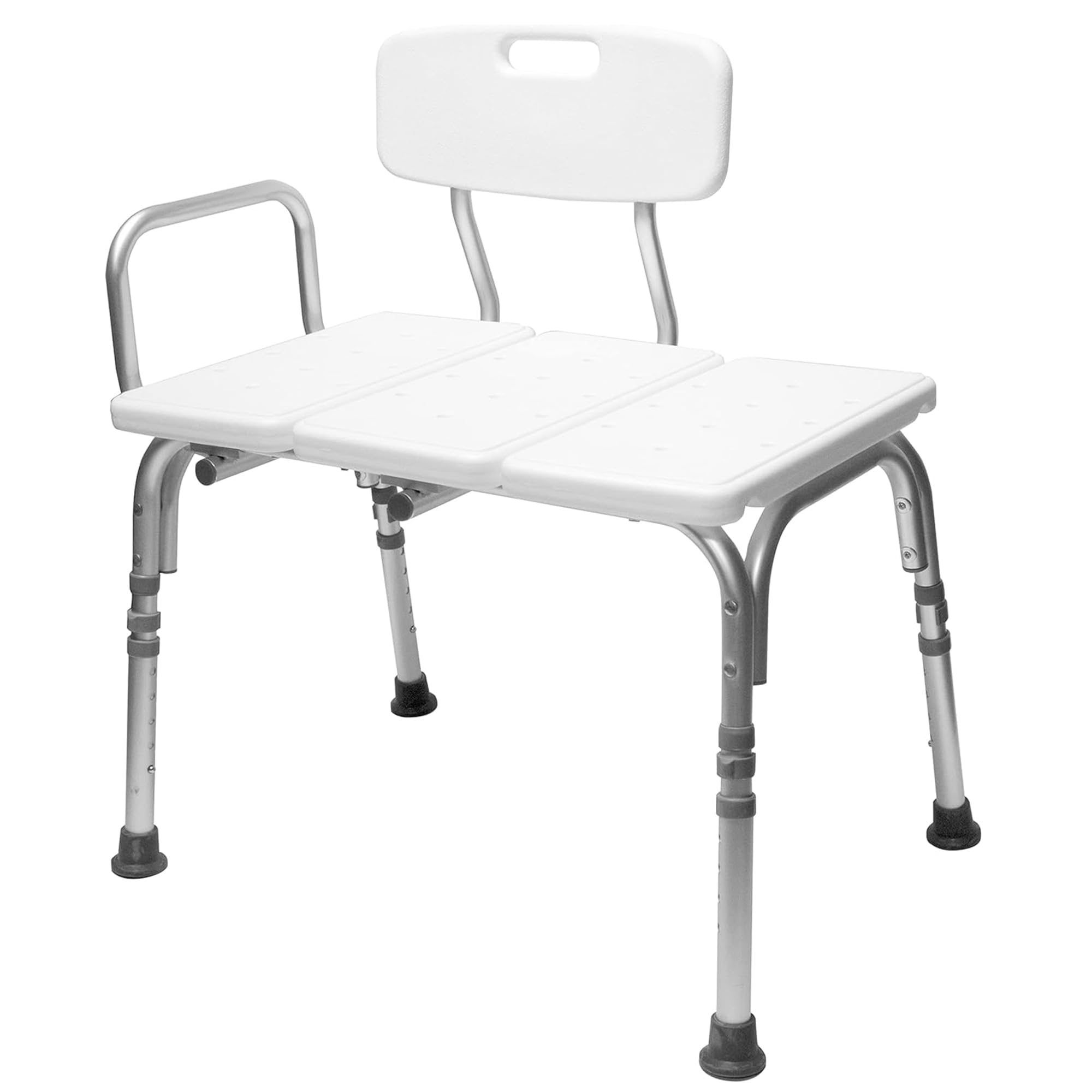
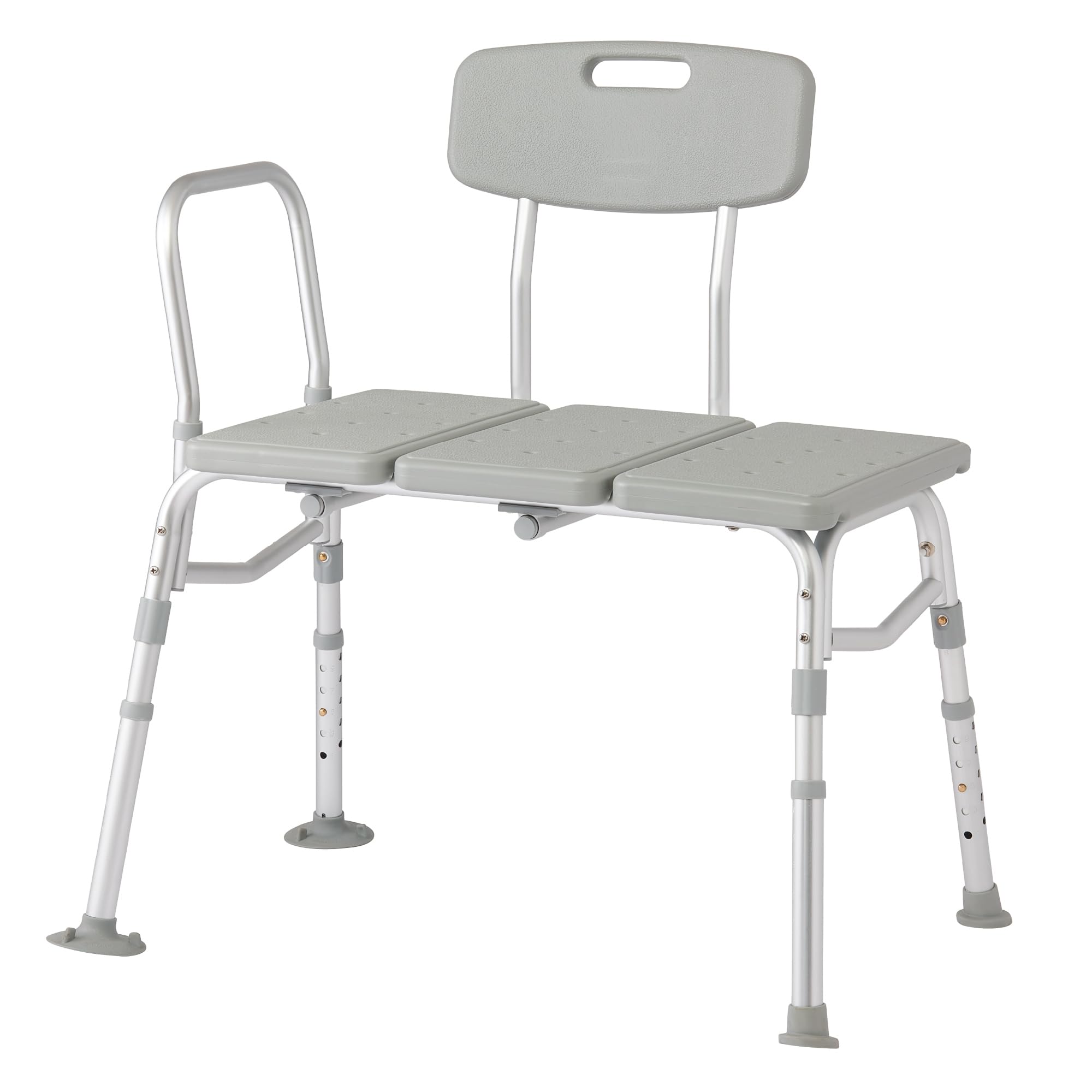
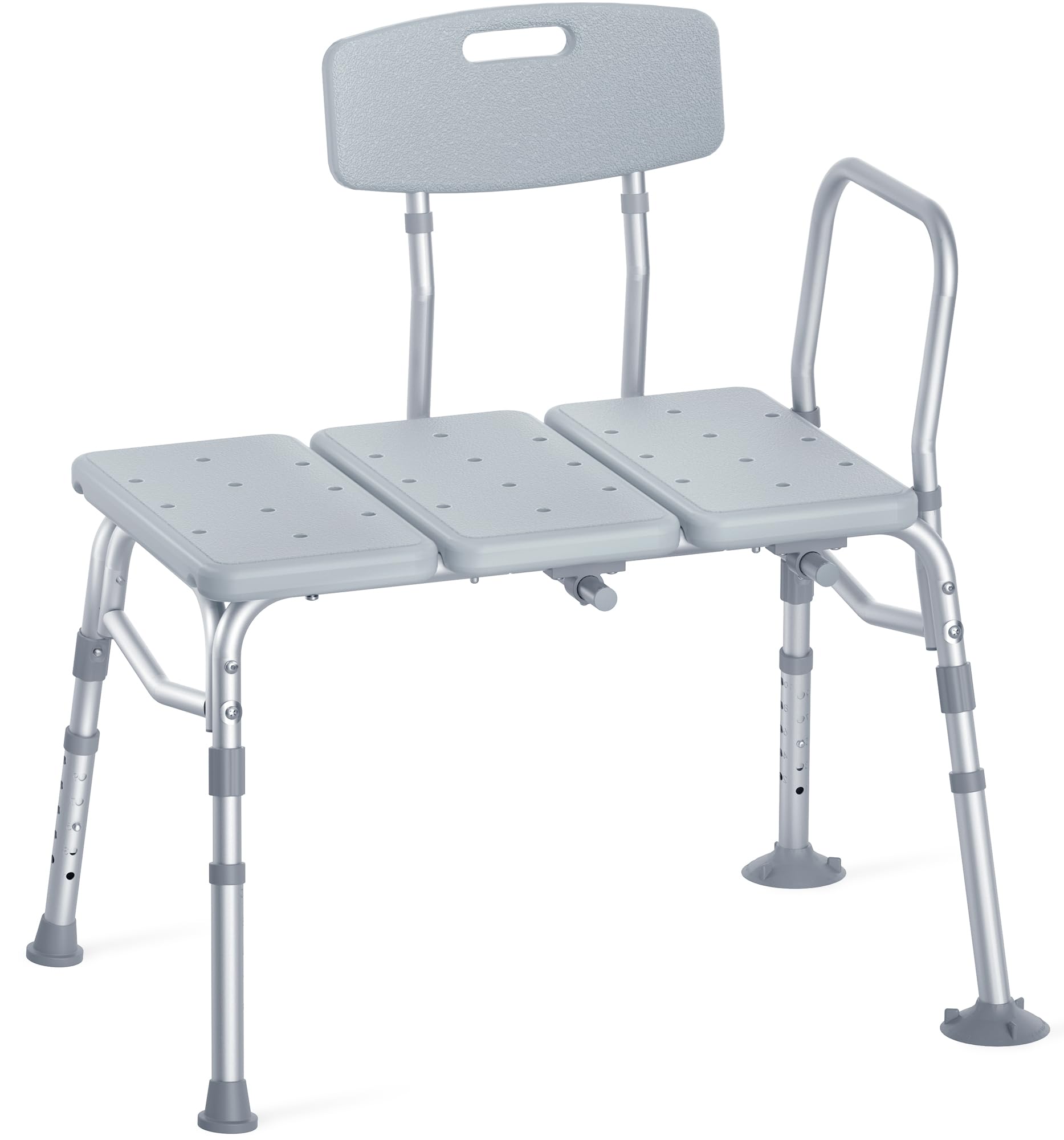
The half-inch height adjustment is the detail that makes this our default. Instead of jumping an inch at a time, the legs let us match the tub rim and bathroom floor more closely, which matters when two people share a bathroom or the floor slopes. The aluminum frame weighs 10 pounds, so one person can lift it aside for cleaning. We also like the supportive backrest and the simple fixed seat: you sit on the outside half, lift your legs over the rim, and slide across. That is easy for someone who can bear weight and lift their feet, and less so for a user who needs a caregiver to glide them.

The 350-pound rating covers many users. The bigger practical question is fit: the bench is listed at 29 inches wide, and a transfer bench always needs clear floor space beside the tub. In a tight bathroom, measure the tub rim and the swing of the door before ordering. The hard seat wipes down easily, and the open frame does not trap water. We recommend the Drive for a standard tub and a user who wants a straightforward, low-cost bench rather than a sliding mechanism.

Pros

  • Half-inch height adjustment
  • Light 10-pound aluminum frame
  • Simple fixed-seat transfer
  • Easy assembly for most users

Cons

  • 350-pound capacity is below heavier-duty picks
Our verdict

We recommend the Drive Medical as the best default for most people transferring into a standard tub: light, easy to assemble, and finely adjustable.
Check Latest Price
2

Best for Heavier Users

Medline Transfer Bench 400 lb

93 /100
Trail Score Outstanding

Key details

Assembly
Tool-free push-button
Seat Height
17.6–21.9 inches
Overall Width
28.7 inches
Weight Capacity
400 lb
Check Price on Amazon

If the user is close to 350 pounds, capacity comes before seat color. The Medline fills that gap with a 400-pound rating, and it does so without making the bench feel like a piece of hospital equipment. The push-button assembly is genuinely tool-free: the frame snaps together with locking buttons, and the backrest reverses for either side of the tub.

The 17.6-to-21.9-inch seat height and 28.7-inch overall width make this one of the easier benches to place in a tighter bathroom. We paid close attention to the feet because a bench that shifts at the tub edge is the thing that undermines confidence; the wide suction cups inside the tub and slip-resistant feet outside are the right combination. The seat is roomy at 26.5 inches wide, and the height range should cover most standard tub rims. We recommend it first for a heavier user or a caregiver who wants a setup that goes together without tools.

At 12.6 pounds it is still manageable for one person, though not as easy to move as the 10-pound Drive. If you want a cushion, the padded Medline is the model to choose; if you want capacity and a sensible footprint, this is the stronger buy.

Pros

  • 400-pound weight capacity
  • Tool-free push-button assembly
  • 28.7-inch overall width
  • Suction-cup feet inside the tub

Cons

  • Fixed seat requires a leg lift
Our verdict

For a heavier user or a caregiver who wants tool-free setup, the Medline 400-pound bench is the sturdier choice.

Check Latest Price
3

Best Budget Heavy-Duty

HOMLAND Tub Transfer Bench

91 /100
Trail Score Outstanding

Key details

Frame
Aluminum A-frame
Seat Height
17.5–22.5 inches
Overall Width
32.3 inches
Weight Capacity
400 lb
Check Price on Amazon

A 400-pound bench for less than the other 400-pound fixed picks is the reason this one earns a look. The HOMLAND does not make you choose between a budget and a useful capacity, and the A-frame is a more substantial shape than the basic benches at the same end of the market. It is not luxurious, but it covers the fundamentals: a backrest, non-slip rubber feet, and a seat height that runs from 17.5 to 22.5 inches.

That 17.5-to-22.5-inch range is the broadest here, which helps with a high tub rim or a taller user. The aluminum frame uses thicker tubing than standard models, and the 32.3-inch overall width is the trade-off: it needs more floor space than the narrower Medline. We recommend measuring the bathroom before ordering, especially if the toilet sits close to the tub.

What we like most is that the HOMLAND keeps the price low without shrinking the capacity or the adjustment range. For a caregiver buying a first bench on a budget, this is the one we recommend first; if the user needs a slide, the Carousel is the better design.

Pros

  • 400-pound weight capacity
  • Broad 17.5–22.5-inch height range
  • A-frame with non-slip feet
  • Lower price than other 400-pound picks

Cons

  • Fixed seat requires a leg lift
Our verdict

The HOMLAND is the heavy-duty bargain: a 400-pound rating and a broad height range for less than the other 400-pound benches.

Check Latest Price
4

Best for Easier Transfers

Carousel Sliding Transfer Bench

93 /100
Trail Score Outstanding

Key details

Weight
20 lb
Transfer
Sliding and pivoting
Seat Width
15 inches
Weight Capacity
330 lb
Check Price on Amazon

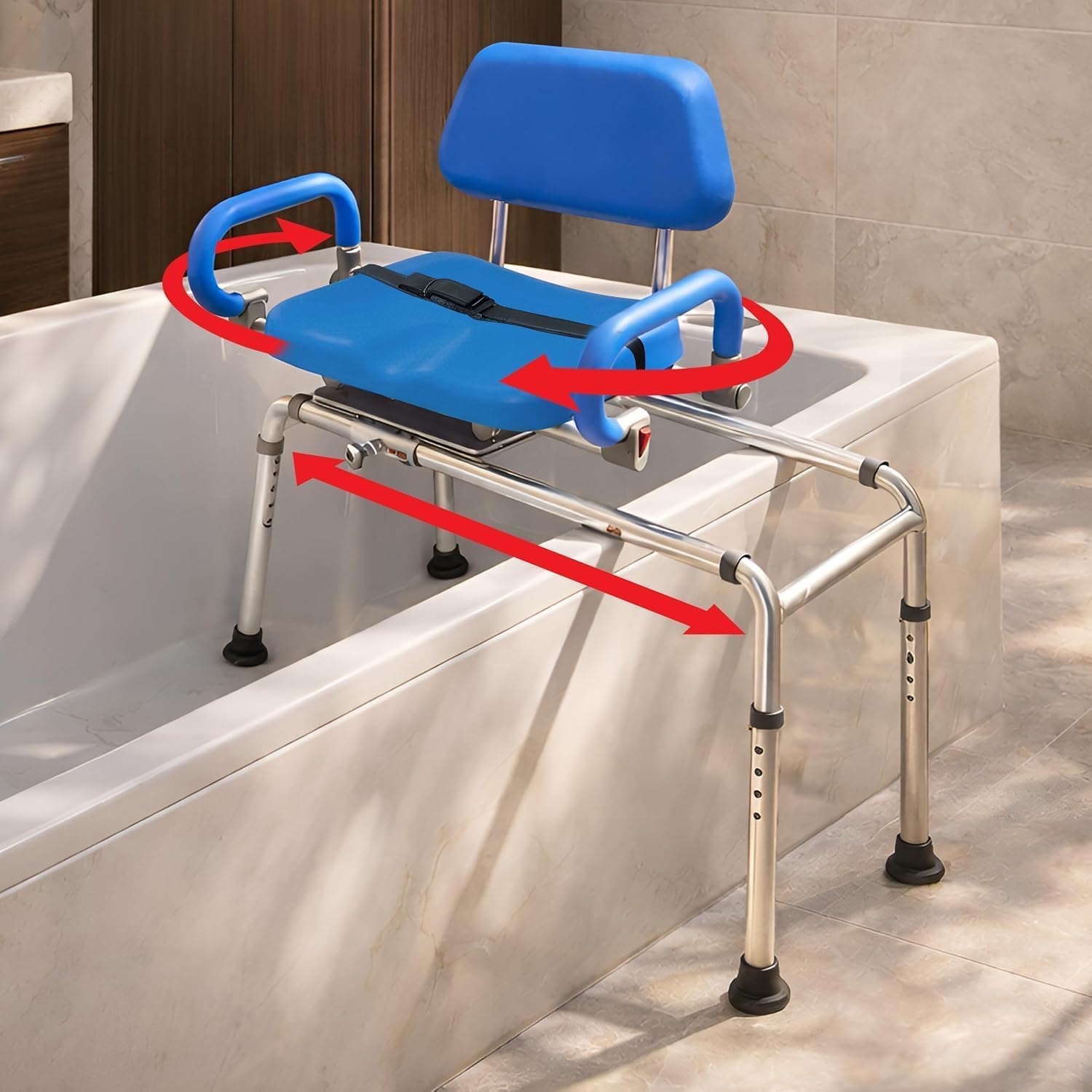
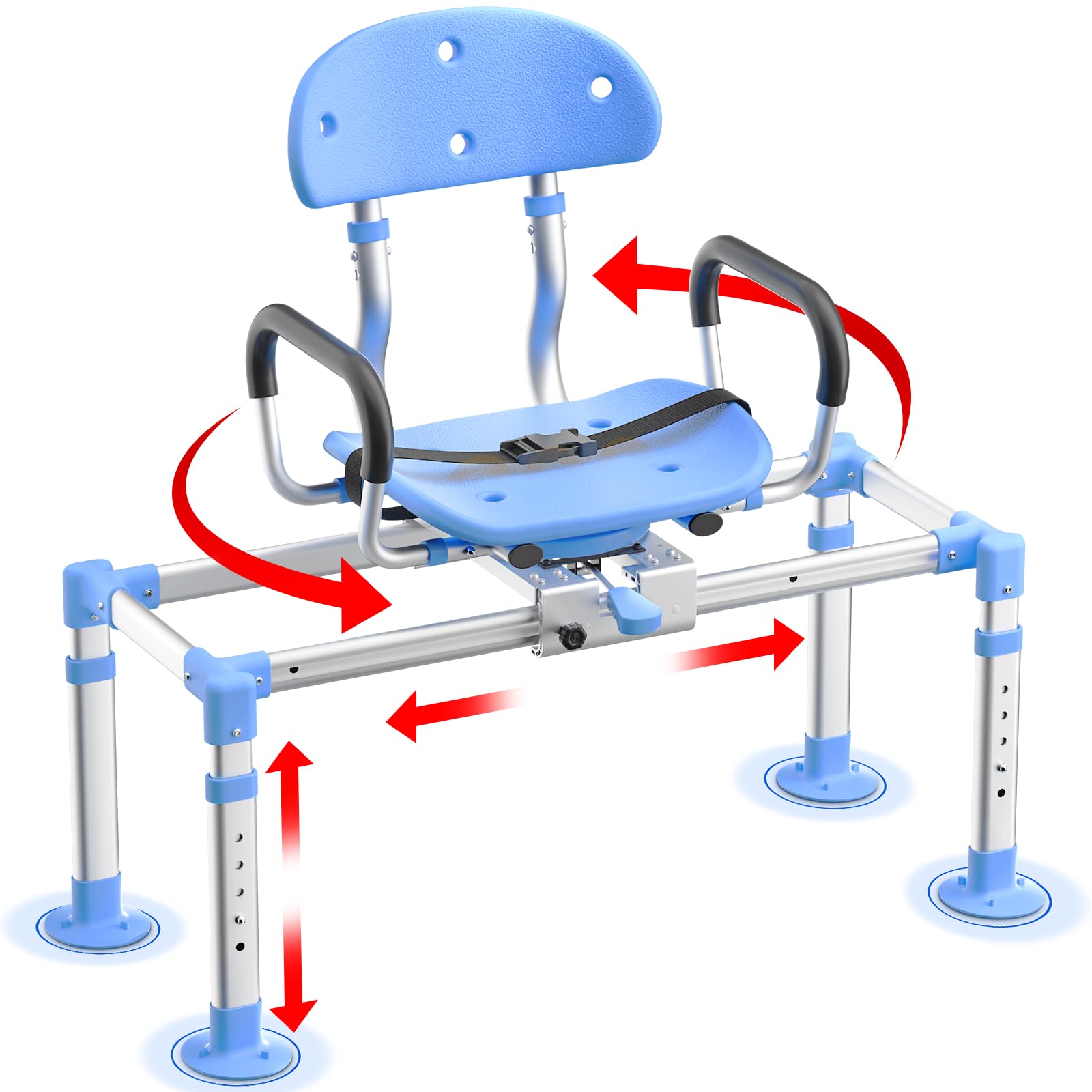
The sliding seat changes the transfer from a scoot to a glide. Instead of lifting and sliding across a fixed bench, the user sits on the outside portion and the seat carries them over the tub wall. That is the feature we value most for a caregiver helping someone who cannot easily lift their legs, and the pivoting motion makes it easier to turn and sit down facing the shower. The padded seat, back, and armrests are a genuine comfort upgrade over hard plastic.

The seat is 15 inches wide, which is narrower than the fixed benches here. A larger user may find that snug. What buys that back is the transfer itself: the sliding and rotating mechanism is the reason to choose this bench, and the armrests give a solid point to push against when standing. The frame is reversible for either side of the tub, which helps in a bathroom where the approach is fixed.

At 20 pounds, it is twice the weight of the Drive, so it is a bench that tends to stay put once installed. The premium is real, but so is the convenience. We recommend the Carousel when the user needs the seat to move and the bathroom has room for a larger frame; for a simple fixed transfer, the Drive or Medline costs less and takes up less space.

Pros

  • Sliding and pivoting transfer
  • Padded seat, back, and armrests
  • Reversible for either tub side

Cons

  • 330-pound capacity is below fixed heavy-duty picks
Our verdict

The Carousel is for the buyer who needs the bench to do the moving: padded, sliding, and pivoting, with a premium to match.

Check Latest Price
5

Best Premium for Wide Tubs

Moen Home Care Transfer Bench

90 /100
Trail Score Outstanding

Key details

Weight
17.2 lb
Seat Height
16.5–21 inches
Overall Width
32.75 inches
Weight Capacity
400 lb
Check Price on Amazon

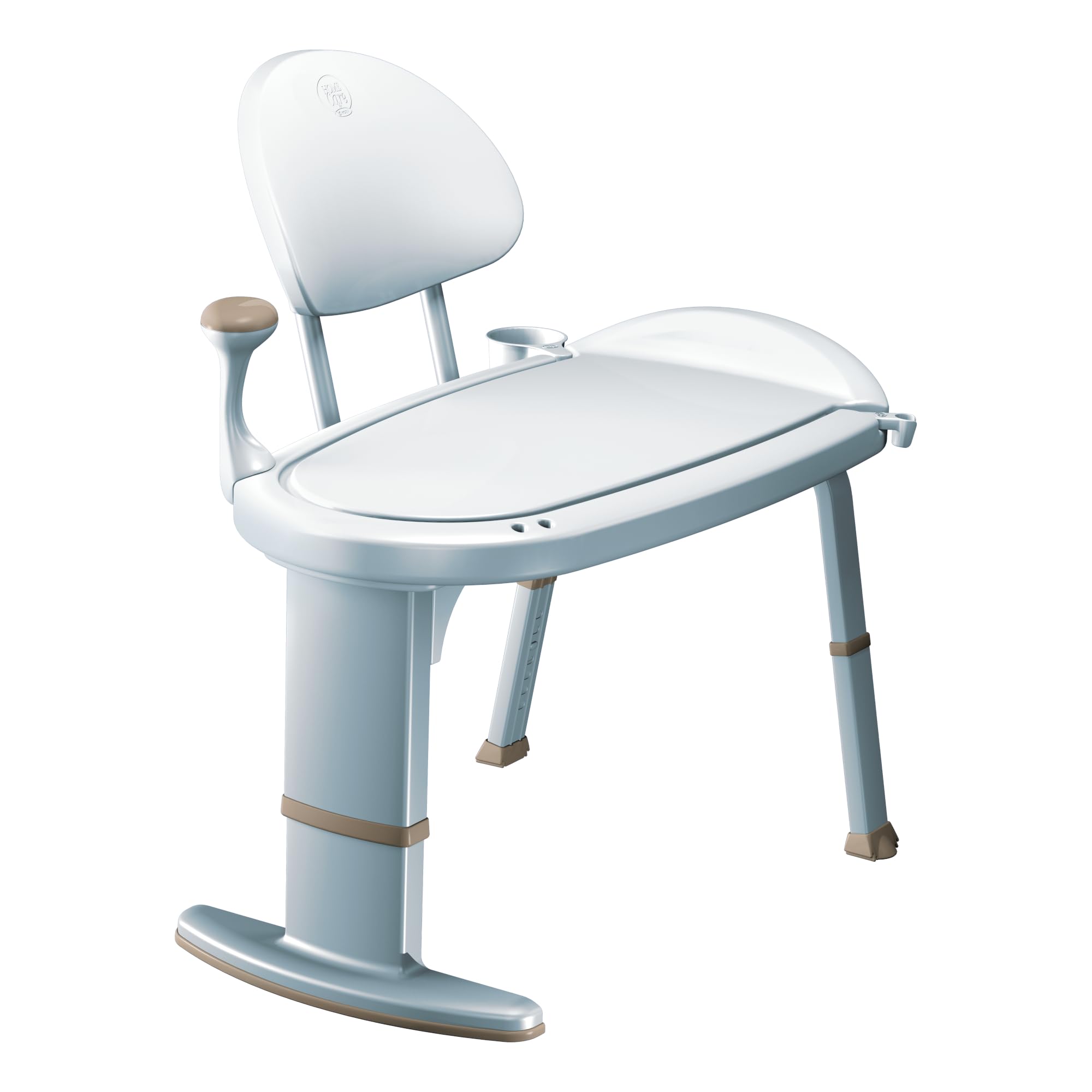
Most benches here are about 29 to 32 inches wide; the Moen runs wider and is built for a roomier tub. The extra span gives a broader seat and more room to shift your weight. At 32.75 inches wide, it is not the bench for a tight bathroom, but it is the one we point to when the tub is generous and the user wants a little more support.

The seat height starts at 16.5 inches, the lowest here, which helps with a shallow tub or a shorter user. The hand assist is the feature we appreciate most: it gives a steady point when sitting down or standing up, and it is more useful than the cup holder and shower-head bracket at first glance. Those extras are not gimmicks if you have nowhere to put soap or a handheld sprayer.

The backrest is optional, which is useful for a user who needs to slide on and off without an obstruction. The 400-pound capacity matches the heavy-duty fixed benches, and the aluminum frame is rated for long-term bathroom use. We also like the limited lifetime warranty; it is the kind of coverage that makes a premium bench easier to justify.

The catch is fit. A 32.75-inch frame needs a larger bathroom and a clear approach to the tub. If your tub is narrow, the 28.7-inch Medline is the better bet. The Moen earns its premium when the room is wide, the tub is shallow, and the hand assist matters.

Pros

  • 33-inch-wide seat
  • Low 16.5-inch minimum height
  • Hand assist and cup holder
  • 400-pound weight capacity

Cons

  • 17.2-pound frame is heavier than basic benches
Our verdict

For a roomy tub and a buyer who wants a more finished bench, the Moen's width and extras justify the step up.

Check Latest Price
6

Best Padded Comfort

Medline Padded Transfer Bench

90 /100
Trail Score Outstanding

Key details

Padding
Padded seat and backrest
Seat Width
24 inches
Seat Height
18–22 inches
Weight Capacity
400 lb
Check Price on Amazon

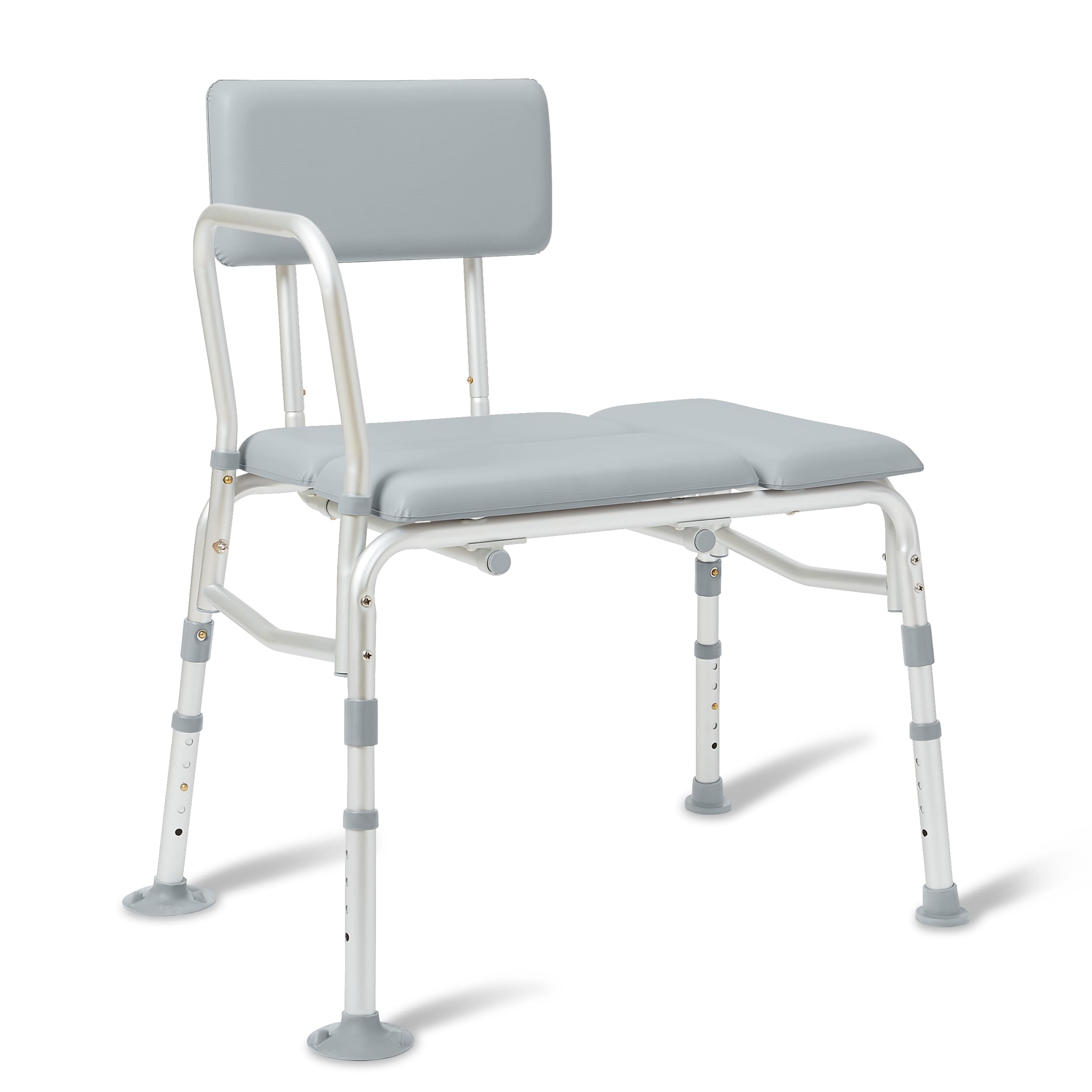
Padding is the first thing you notice on the Medline, and it changes the feel of a cold bathroom seat. The seat and backrest are cushioned, and the included side arm gives a push-off point that the basic fixed benches lack. That combination makes it the most comfortable fixed-seat bench in this group, even before you get to the 400-pound capacity.

The seat is 24 inches wide, which is narrower than the 26.5-inch Medline and the wide Moen. That is fine for many users, but a larger body may prefer the extra span. The height range runs from 18 to 22 inches, with push-button adjustment, and the overall width is 32 inches. The frame is aluminum, so the bench is not as heavy as the padding suggests.

Padded surfaces need a little more care than hard plastic. Wipe the seat and back after showering and leave the bench where air can reach it; that is the upkeep you accept for the comfort. The side arm is not a replacement for a grab bar, but it does give a useful steadying point when sitting down.

The Medline is the pick when comfort and a side arm matter. It carries a 400-pound rating, adjusts through a useful range, and feels more forgiving than the hard-seat benches. For a padded bench, that is a strong combination.

Pros

  • Padded seat and backrest
  • Side arm for push-off support
  • 400-pound weight capacity
  • 18–22-inch height range

Cons

  • Fixed seat, no slide
Our verdict

The padded Medline is the pick when comfort and a side arm matter more than sliding hardware.

Check Latest Price
7

Lightweight Storage

Carex Shower Bench

93 /100
Trail Score Outstanding

Key details

Weight
11.7 lb
Assembly
No tools required
Backrest
Reversible
Weight Capacity
300 lb
Check Price on Amazon

The Carex is the one we picture taking apart and tucking away. It weighs 11.7 pounds, assembles without tools, and the backrest reverses for either side of the tub. That makes it a sensible bench for a guest bathroom, a rental, or a user who wants to move the bench between tubs. The seat is a simple fixed design, and the frame is sturdy enough for the job. We also like that the legs adjust without tools; the height can be leveled on a floor that is not perfectly flat.

It is built for a smaller user, and the 31-inch overall width is not tiny; it still needs clear floor space beside the tub. What it does well is the basics: a solid seat, adjustable legs, and simple assembly. We recommend it for a smaller user who wants a bench that comes apart without hunting for tools, not for a household that needs a heavy-duty everyday seat.

The fixed seat also means the user has to lift their legs over the rim. That is fine for someone with good hip and knee movement; if that is the sticking point, a sliding bench is the better design.

Pros

  • Light 11.7-pound frame
  • No-tools assembly and disassembly
  • Reversible backrest

Cons

  • 300-pound capacity is the lowest here
Our verdict

The Carex is a sensible light-duty bench for a smaller user or a spare bathroom, provided 300 pounds is enough.

Check Latest Price
8

High-Capacity Swivel

KingPavonini Sliding Transfer Bench

90 /100
Trail Score Outstanding

Key details

Weight
23.2 lb
Seat Height
20.9–24.4 inches
Overall Width
34 inches
Weight Capacity
550 lb
Check Price on Amazon

A 550-pound rating and a 360-degree swivel are a lot of bench; the question is whether your bathroom can take it. The frame weighs 23.2 pounds, the heaviest here, and it is built for a user who needs a very high capacity and a seat that turns rather than a simple fixed bench. The 90-degree locking swivel lets the seat face the tub or the room, and the three-position glide moves left to right.

The seat height runs from 20.9 to 24.4 inches, which is higher than most benches here. That suits a tall user or a high tub rim, but a shorter user may find it a climb. The leg height also adjusts from 14.4 to 19 inches, so the frame can sit level on a bathroom floor that is not perfectly even. The flat, thicker aluminum tubing is meant to add support across the seat rather than concentrate it at the joints.

We recommend the KingPavonini when capacity and swivel are the priorities and the bathroom is large enough. It is not the bench to move for every shower, and it is not the easy choice for a small bathroom. For a very heavy user who needs the seat to turn, though, the combination is hard to match in this set.

Pros

  • 550-pound weight capacity
  • 360-degree swivel with 90-degree lock
  • Three-position glide
  • High 20.9–24.4-inch seat height

Cons

  • 34-inch width needs a generous bathroom
Our verdict

The KingPavonini is for a very heavy user who wants a swivel seat and has the bathroom space to handle it.

Check Latest Price

How We Chose and Tested the Best Transfer Benches

We started by pulling every transfer bench we could find from medical supply retailers, accessibility catalogs, and the pharmacy aisles of big-box stores, then narrowed the field by weight capacity, seat-height range, and whether the legs adjust independently — that last detail is what decides whether a bench sits level in a tub with a sloped floor. Nine benches made the cut, and each one lived in a real bathroom for six months.

The first stop for every bench was the living room floor. I unboxed each one alone and timed how long it took to get from taped carton to something I could sit on using only the tools in the box, and I noted which instruction steps skipped over a part that didn't match the hardware. Then it moved into the tub, where we checked whether the seat height lined up with the rim, whether the outside legs sat flat on the tile while the inside legs reached the tub floor, and whether the backrest crowded the wall behind it.

From there, each bench got used the way it actually gets used: wet, with someone a little nervous on it. Testers of different sizes sat down, slid across the seat, and stood back up while we watched for wobble at the joints, legs that crept out of adjustment, and rubber tips that skated on wet porcelain. A caregiver also helped with transfers to see whether the frame got in the way or left them reaching awkwardly. After six months of daily showers, we went back over every bench for rust at the bolt holes, cracking in the seat, and fasteners that had worked loose.

How to Choose a Bathtub Transfer Bench

Start With the Tub Opening, Not the Features

The benches here run from 28.7 inches wide on the Medline to 34 inches on the KingPavonini. That is overall width, not seat width, and it has to clear the tub rim, the toilet, and the door swing. Measure the tub rim and the floor area outside it, then tape out that footprint. A bench that barely fits is one you will wrestle every time you shower.

Match Weight Capacity and Seat Height

Capacity is a ceiling, not a target. A 300-pound bench is not the one for a 290-pound user; leave margin for the way someone sits down and shifts. The picks here range from 300 to 550 pounds. Seat height matters just as much: most adjust between about 16.5 and 24.4 inches, and the right setting lets the user sit with feet supported on the bathroom floor and tub floor. Check the minimum height for a shallow tub and the maximum for a high rim.

Choose the Transfer Motion

A fixed seat is the simplest and lightest: sit outside, lift legs over the rim, slide across. It suits someone who can bear weight and lift their feet. A sliding or swivel seat does more of the work, which helps a caregiver and a user with limited hip movement, but it adds weight, cost, and parts to clean. The Carousel and KingPavonini are the moving-seat picks here; both are heavier than the fixed benches. If the user can scoot, a fixed bench is easier to live with.

Weigh Comfort Against Cleaning

Padded seats and backrests feel warmer and more forgiving, especially for a user who sits for a long shower. They also need towel-drying and more careful storage than a hard plastic seat. Armrests and side arms give a push-off point, but they can get in the way of a lateral slide. We prefer padding when comfort is the main complaint and a hard seat when the bench will be shared or moved often. The padded Medline is the comfort pick; the basic Drive is the easy-clean pick.

Plan for Water, Storage, and Assembly

A transfer bench interrupts the shower curtain, so water can run along the seat and onto the floor. A U-shaped cutout or curtain slot helps, and a towel at the tub edge catches the rest. Think about where the bench lives: the Carex comes apart without tools at 11.7 pounds, while the KingPavonini is a 23.2-pound fixture. Tool-free push buttons are worth having if the height will change between users. Choose a bench you can leave in place if possible; one you move every shower is one more thing to get wrong.

Frequently Asked Questions

Final Verdict

For most people, the Drive Medical bench is the one to buy first. It is light, simple, and finely adjustable, and it costs less than the heavy-duty alternatives. The 350-pound capacity is the limit; if the user is close to it, move to the Medline 400-pound bench.

The Medline is also the better pick when tool-free setup and a slightly narrower footprint matter. If the user cannot lift their legs over the tub wall, the Carousel is worth the premium for its sliding, pivoting seat. That is the decision: fixed and simple for most, more capacity for heavier users, moving seat for an easier transfer.