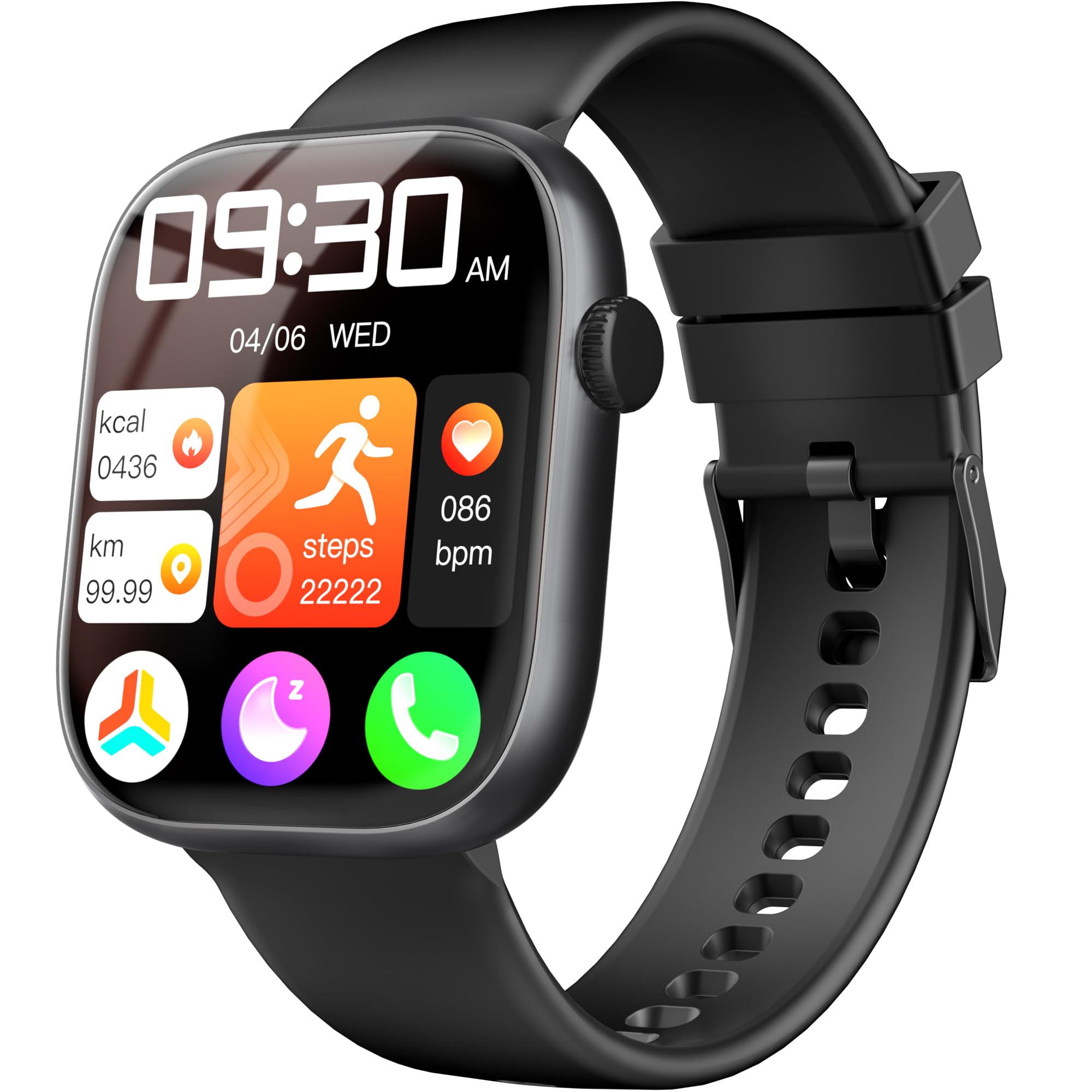
Best Smartwatch for Health Tracking of 2026

A smartwatch that reads your heart rate wrong is worse than no watch at all, because you'll start making decisions about rest days and caffeine off numbers that were never real. The appeal of the category is genuine, though: a good one turns your wrist into a quiet record of how you're sleeping, recovering, and moving, and it lets you take a call or glance at a message without digging your phone out of a bag. The difference between a helpful one and a frustrating one usually comes down to two things — whether the sensors stay accurate once you sweat, and whether the battery survives a night of sleep tracking.

Over the past seven months my team and I have worn ten smartwatches through workouts, overnight sleeps, workdays, and long drives. The lesson I keep relearning is that fit matters more than the spec sheet: a strap that sits a little loose will quietly wreck your heart-rate readings long before the sensor does. Below are the ones worth strapping on, sorted by who they actually suit.

1

Best Overall

Garmin vívoactive 5

88 /100
Trail Score Excellent

Key details

Battery
Up to 11 days
Display
1.2-inch AMOLED
Health Metrics
Body Battery, sleep score, HRV status, stress
Water Resistance
50 meters
Check Price on Amazon

Eleven days is the number that makes the vívoactive 5 a health watch rather than a fitness watch you take off at bedtime. Sleep is where most of the useful signal lives — resting heart rate, HRV, how much recovery you actually banked — and none of it exists if the watch spends the night on a charger. At 1.3 ounces in a 42mm case, it's light enough that wearing it to bed never becomes a decision.

What it does with that overnight data is deeper than anything else here. Body Battery rolls sleep, stress, naps, and workouts into a single number that answers the only question most of us have in the morning: go hard or take it easy. Add a sleep score with coaching, HRV status, stress and hydration tracking, and a 1.2-inch AMOLED that stays readable outdoors, and you get a watch that tells you something worth acting on before your first coffee. The detail that caught us was wheelchair mode, which counts pushes instead of steps and swaps in handcycle and push-based workouts — proof that activity tracking doesn't have to mean walking.

Sleep-stage breakdown and overnight blood oxygen are the softest readings in the package. Trust the overall score and the weekly trend; don't argue with the fine print about how much deep sleep you got on a random Tuesday. The polymer case and sporty look also read more gym than dinner, which is the trade you make for something this light. Neither changes our answer.

Pros

  • Body Battery turns sleep and stress into one readiness number
  • Up to 11 days per charge makes overnight tracking realistic
  • Sleep score, HRV status, and stress tracking in depth
  • Wheelchair mode counts pushes instead of steps

Cons

  • Always-on display cuts battery life to about five days
  • Pricier than every other pick here but one
Our verdict

Our top pick: Garmin's health metrics run deeper than anything else here, and the 11-day battery is why you'll actually wear it to bed.

Check Latest Price
2

Best for iPhone Owners

Apple Watch SE 3 (40mm)

94 /100
Trail Score Outstanding

Key details

Safety
Fall and crash detection
Battery
Up to 18 hours
Case Size
40mm
Health Features
Temperature sensing, Vitals app, cycle tracking
Check Price on Amazon

If there's an iPhone in your pocket, the SE 3 is the health watch that disappears into your day. The 40mm case is the smallest thing in this guide, setup is genuinely quick — hold it near the phone, confirm, done — and the size means it stays out of the way whether you're typing or sleeping.

The health features worth paying for are the ones a cheap tracker can't fake. Temperature sensing feeds both the Vitals app and cycle tracking, which is exactly the kind of overnight signal a watch is uniquely good at collecting: you can't take your temperature eight times a night by hand. Fall and crash detection, which can contact emergency services and the people you've listed, adds a safety layer that matters more the older you get or the more you train alone.

The deciding factor is the battery, and it cuts both ways. Eighteen hours means a daily charge, so charging overnight deletes the sleep data you bought the watch for. Plan a short top-up while you shower instead — charging is twice as fast as the previous generation — and the routine holds. We'd rather have three days, but the trade buys the smallest case here and the tightest integration with an iPhone.

One thing to clear first: it needs a reasonably current iPhone. If yours is several generations old, confirm compatibility before you order, because this isn't a watch that pairs with anything else.

Pros

  • Temperature sensing feeds the Vitals and cycle apps
  • Fall and crash detection can call for help
  • Smallest, lightest case in this guide
  • Charges twice as fast as the previous generation

Cons

  • 40mm case feels small on larger wrists
Our verdict

For iPhone owners, the SE 3 is the health watch we point to: temperature sensing, cycle tracking, and fall detection in the smallest case here.

Check Latest Price
3

Best for Android Phones

Samsung Galaxy Watch 5 Pro (Renewed)

88 /100
Trail Score Excellent

Key details

Weight
1.64 oz
Display
1.4-inch AMOLED
Battery Life
20 hours
Case Material
Titanium
Check Price on Amazon

This is last-generation Samsung flagship hardware in a titanium case, sold renewed — which is exactly why it's the cheapest route into a watch that feels genuinely expensive. The 1.4-inch AMOLED is sharp at 450 x 450, the titanium shrugs off the knocks that scuff plastic cases, and at 46.5 grams you know it's on your wrist.

We'd send Android users here for the sleep tracking. Overnight stages, heart rate, and the morning summary are the features that make a watch worth wearing to bed, and this is the pick where that data feels like the point rather than a bonus. The rugged build backs it up: it's one you can take hiking or into the gym without a case on it.

Buying renewed is the part to go into clear-eyed. Open the box, check the raised ring around the display for scuffs, and confirm it charges before you set anything up — that's your window to raise a problem. Do that and you're getting flagship sensors and a titanium body for roughly half what our top pick costs.

Pros

  • Titanium case and a sharp 1.4-inch AMOLED
  • Sleep stages and heart rate worth wearing to bed
  • Rugged enough for hiking and gym sessions
  • Roughly half the price of our top pick

Cons

  • Rated battery life is only about 20 hours
  • Renewed stock carries 90 days of coverage
Our verdict

Android users who want a premium-feeling watch and dependable sleep data should start here — just inspect the renewed unit the day it arrives.

Check Latest Price
4

Best Value

aeac Smart Watch for Women

89 /100
Trail Score Excellent

Key details

Battery
Up to 10 days
Display
1.32-inch AMOLED
Health Metrics
Heart rate, SpO2, sleep, stress
Water Resistance
3ATM
Check Price on Amazon

Our value pick costs more than the throwaway watches at the bottom of this list, and the extra buys two things you'll notice every single day: a 1.32-inch AMOLED panel at 466 x 466 that looks nothing like a budget screen, and a genuine ten-day battery that refills in about two hours. We think that's the right trade. A sharp display and a week and a half between charges will change how you use a watch far more than three extra sport modes you'll never open.

The health set covers the core four — heart rate, sleep, blood oxygen, and stress — plus cycle tracking, and you can read all of it on the watch without digging into the app. Calls come through the built-in speaker and microphone, which is genuinely useful when your hands are full, and the metal band makes it look dressier than the price suggests.

Bluetooth is the soft spot. Expect the occasional re-pair, and keep the phone nearby during workouts rather than counting on a stable link across the house. Set aside ten minutes on day one to get the connection settled and it behaves; skip that and you'll spend the first week fighting it.

Pros

  • 1.32-inch AMOLED at 466 x 466
  • Up to 10 days per charge, refilled in two hours
  • Heart rate, SpO2, sleep, stress, and cycle tracking
  • Metal band looks pricier than it is

Cons

  • Can answer calls but can't reply to texts
  • No built-in GPS; routes come from your phone
Our verdict

A sharp AMOLED screen, ten days of battery, and the core health metrics make this the value watch we actually recommend.

Check Latest Price
5

Best for Cycle Tracking

HOMOGO Smart Watch for Women

89 /100
Trail Score Excellent

Key details

Display
1.83-inch touchscreen
Bands Included
Stainless steel and silicone
Health Metrics
Heart rate, SpO2, stress, sleep, cycle
Water Resistance
IP68
Check Price on Amazon

Two bands in the box — a stainless steel link bracelet and a silicone strap — is the detail that makes this one feel like a gift rather than a gadget. Swap to steel for the office and back to silicone for the gym, and the 1.83-inch screen is big enough to read a heart rate zone at arm's length.

The health list runs wider than the price suggests: heart rate, blood oxygen, stress, sleep, and menstrual cycle tracking, all surfaced in the VeryFit app. Cycle tracking is the piece we'd point to first, because it's the feature budget watches most often skip or bury. It also auto-detects walking and running, so a lap around the block gets logged without you starting anything, and calls are handled on-wrist with room for 20 contacts stored on the watch.

Where it gives ground is the panel. LCD rather than AMOLED means greyish blacks and a narrower viewing angle, and in bright sun you'll be shading the screen with your hand. That's a fair trade at this price, and it doesn't touch the part that matters — the tracking itself stays simple and readable.

Water handling is the one thing to plan around. IP68 covers rain, sweat, and hand-washing, but the listing steers you away from hot water and seawater, so rinse it in fresh water after a beach day rather than wearing it into the shower. Everything else, from the auto-detected walks to the second band, is more than this price has any right to deliver.

Pros

  • Cycle tracking alongside sleep, SpO2, stress, and heart rate
  • Ships with stainless steel and silicone bands
  • Stores 20 contacts for calls from the wrist
  • Auto-detects walking and running

Cons

  • LCD panel instead of AMOLED
  • No built-in GPS
Our verdict

Cycle tracking, sleep, SpO2, and a steel band for very little — the HOMOGO is the budget pick we'd choose for women's health.

Check Latest Price
6

Long Battery Life

RUXINGX G62 Smart Watch

84 /100
Trail Score Excellent

Key details

Battery
Up to 30 days
Display
1.85-inch HD
Bands Included
Two
Water Resistance
3ATM
Check Price on Amazon

A 1,000 mAh cell inside a watch is unusual, and it's why this one claims up to 30 days between charges — several times what the Apple Watch manages. If your idea of a health watch is something you put on and forget about for weeks, that alone earns it a place. The 1.85-inch screen is the other draw: big, bright, easy to read mid-workout, with 200-plus faces if you like changing things up.

The health package covers heart rate, blood oxygen, blood pressure, and sleep, with 100-plus sport modes and 3ATM water resistance for pool sessions. Two bands come in the box, and setup runs off a QR code rather than a manual, which is about as painless as budget watches get.

What holds it out of the top tiers is the step count. Arm movement registers as steps on watches at this price, and this one is no exception, so chase a weekly trend rather than a daily number you defend. Everything else it promises — the screen, the battery, the calls — it delivers.

Pros

  • Claimed battery life of up to 30 days
  • 1.85-inch screen with 200+ watch faces
  • Heart rate, SpO2, blood pressure, and sleep tracking
  • Two bands and 3ATM water resistance

Cons

  • No built-in GPS; distance comes from your phone
Our verdict

Buy this one for the month-long battery and the big screen, and treat its step count as a trend rather than a scoreboard.

Check Latest Price
7

First Smartwatch

KIPTUMTEK T7 Smart Watch

81 /100
Trail Score Excellent

Key details

Weight
1.59 oz
Display
1.83-inch HD
Sport Modes
Running, swimming, yoga, hiking
Watch Faces
100+
Check Price on Amazon

At the very bottom of the price range, the T7 is honest about being a starter watch: a 1.83-inch screen, 45 grams on the wrist, Bluetooth calling, and the basics of heart rate, sleep, and step tracking.

More of the daily routine is covered than the price suggests. Calls come through the speaker, notifications land on the wrist, and the 100-plus watch faces keep it from looking like the cheapest thing on your arm. Setup on an iPhone or Android phone takes minutes.

The water rating is where we'd slow down. The listing gives IP67 in one place and IP68 in another, and those aren't the same promise. Treat this as splash-resistant rather than swim-proof, take it off before you get in the pool, and you won't be leaning on a rating the listing itself can't settle.

As a first smartwatch, a spare for travel, or a gift for someone testing whether they'll actually wear one, it earns its place. It won't tell you much about your recovery, but it will tell you whether a screen on your wrist fits your life — and that's the question worth answering before you spend more.

Pros

  • 1.83-inch screen in a 45-gram body
  • Bluetooth calling and wrist notifications
  • Heart rate, sleep, and step tracking
  • The lowest price in this guide

Cons

  • Needs charging every couple of days
Our verdict

The cheapest way to find out whether you'll wear a smartwatch at all — calls, notifications, and the basic health metrics included.

Check Latest Price

How We Tested the Best Smartwatches for Health Tracking

We started by pulling every watch that promised continuous heart-rate and sleep tracking and paired with both iPhones and Android phones, then cut anything with a vague sensor setup, a short warranty, or a price that felt out of step with what it delivered. Ten made the cut, from slim everyday models to chunky multi-day adventure watches. We bought each one at retail rather than accepting loaners, so the units on our wrists were the same ones you'd unbox.

Each watch spent seven months in rotation, worn overnight every night and through the day. In the morning we checked whether the reported sleep and wake times matched the clock, whether naps registered, and how long the sleep breakdown took to load. Battery life was timed from a full charge with the always-on display enabled: we counted the days until it hit 20 percent with sleep tracking and one GPS workout a day running, then noted how long a recharge took.

For accuracy, we ran the same measured 5K with two watches on at once, comparing average and peak heart rate, and counted 1,000 steps by hand to check the tally. Calls were taken from a windy parking lot and a quiet office, and we walked away from the paired phone until the connection dropped. Watches came into the shower, through yard work, and against more doorframes than I'd like to admit. To judge looks we wore each with a blazer and with gym shorts and swapped in a third-party strap; to judge ease, we handed each one to a parent who'd never worn a smartwatch and timed how long it took her to find the sleep score. We also logged which insights sat behind a monthly subscription.

How to Choose a Smartwatch for Health Tracking

Start With Overnight Battery Life

For sleep and recovery data, the watch has to be on your wrist in the middle of the night. A model rated for 18 hours needs a daily top-up, and if that top-up happens overnight, you've deleted the feature you bought the watch for. Our picks split cleanly: the Apple Watch SE 3 and the Galaxy Watch 5 Pro run roughly a day per charge, while the Garmin, the aeac, and the RUXINGX quote anywhere from 10 to 30 days.

The usual culprit when real-world battery falls short is the always-on display. The Garmin drops from 11 days to about 5 with it switched on, which is still a week better than the one-day watches here — but it's a switch you have to flip on purpose, not a setting to leave on and forget.

Pick Metrics You'll Act On, Not Just Count

Heart rate, sleep duration, and step count are the dependable core on every watch here. The rest — stress scores, readiness indexes, overnight blood oxygen — are trend tools, useful for spotting a pattern over weeks rather than for judging a single bad night. The question worth asking is what you'll do differently on a Tuesday morning.

If the answer is 'take it easier when my recovery is low,' pay for the deeper platform, like the Garmin's Body Battery or the Samsung's overnight staging. If you just want to know you moved enough today, a budget watch covers it. Five numbers you never open are worth less than two you check daily.

Match the Watch to the Phone You Carry

Health tracking lives or dies on syncing, and the phone in your pocket narrows the field fast. Apple's watch pairs with an iPhone and nothing else, and older iPhones can fall outside support — check your model and software version before you order rather than after it arrives. Samsung's health features work best alongside a Galaxy phone.

The budget watches here run through their own apps on either platform, which is simpler to set up but gives you a shallower picture: fewer insights, less historical trend, and a companion app you'll open mainly to look at yesterday.

Buy for the Wrist You'll Wear It On

Case size and weight matter more in this category than in any other kind of watch, because you're wearing it around the clock. The 40mm Apple Watch suits smaller wrists, the 46.5-gram Samsung is the heaviest pick here and feels like a piece of hardware, and the Garmin sits between the two at 1.3 ounces.

Bands count as well: silicone for sweat and sleep, metal for anything you'd wear to work. That's why the HOMOGO's two-band kit is more useful than it first appears. If a watch is uncomfortable at midnight, you'll take it off, and the sleep data disappears with it.

Frequently Asked Questions

Final Verdict

The Garmin vívoactive 5 is the watch we'd tell most people to buy. It tracks more of what matters — sleep quality, HRV, stress, and readiness — than anything else here, and the 11-day battery is why those numbers exist at all: you'll wear it to bed.

If you carry an iPhone and want temperature sensing and fall detection, the Apple Watch SE 3 is the better fit, as long as a nightly top-up doesn't bother you. Android users on a tighter budget should start with the renewed Galaxy Watch 5 Pro and inspect it the day it lands.