Best Rollators with Seats of 2026

A rollator with a seat should feel like a chair you can trust—not a folding stool that shifts under you. That's the first thing I check, because the point is to rest when your legs say stop, not to brace yourself while you do it. Over eight months, my team and I put 11 rollators through grocery runs, doctor's appointments, park paths, and the shuffle from front door to car. The good ones disappear under your hands; the bad ones announce every loose hinge.

The difference comes down to things you can't see online: how the frame locks when you sit, how the brakes engage when you stand, and how the whole thing feels when you lift it into a trunk. Assembly is another tell—some models took twenty minutes and a second cup of coffee, others clicked together in five. We checked seat height against kitchen counters and maneuverability in tight pharmacy aisles. Value isn't the lowest price; it's the rollator you're still using after six months. The picks below earned their place.

1

Best Overall

Drive Nitro Euro-Style

96 /100
Trail Score Outstanding

Key details

Weight
17.5 lb
Folding
One-hand side fold
Storage
Removable zippered pouch
Front Wheels
10 inches
Check Price on Amazon

The first thing we noticed about the Nitro is how much more calmly it rolls over a cracked sidewalk than the small-wheel models here. Those 10-inch front casters are the reason it earns our top spot: they carry over curb cuts, tree roots, and gravel without the jarring stop a 6-inch wheel can produce. The 17.5-pound frame is also lighter than several of the 20-pound-plus rollators on this list, which matters when you are lifting it into a car.

The seat and backrest give you a proper place to stop, and the backrest adjusts with a thumbscrew while the handles use push-button height adjustment. We like the one-hand side fold: the frame locks shut with an under-seat catch and stands compactly in a hallway or against a car seat. The removable zippered pouch is a useful size for a wallet, phone, and keys, and it comes off when you want a lighter load.

What we keep coming back to is the composure. The Nitro feels planted when you turn on a sloped driveway, and the larger front wheels make uneven pavement less of a negotiation. It looks less institutional than the basic steel rollators here, which is a small thing until you are the one using it every day. This is the premium choice in this group, so a budget shopper can get safe rolling support for less. If most of your walks are on smooth floors or you rarely lift the rollator, the extra spend is harder to justify. For sidewalks, gravel paths, and daily outdoor use, it is the one we reach for.

Pros

  • 10-inch front casters handle rough pavement
  • Folds compactly with one hand
  • Lighter than most 20-pound-plus picks
  • Removable zippered storage pouch

Cons

  • Firm seat may not suit long rests
Our verdict

This is our top pick for daily outdoor walking: the large front casters and relatively light frame make rough pavement feel manageable, though the premium price and firm seat are worth weighing.
Check Latest Price
2

Best Budget

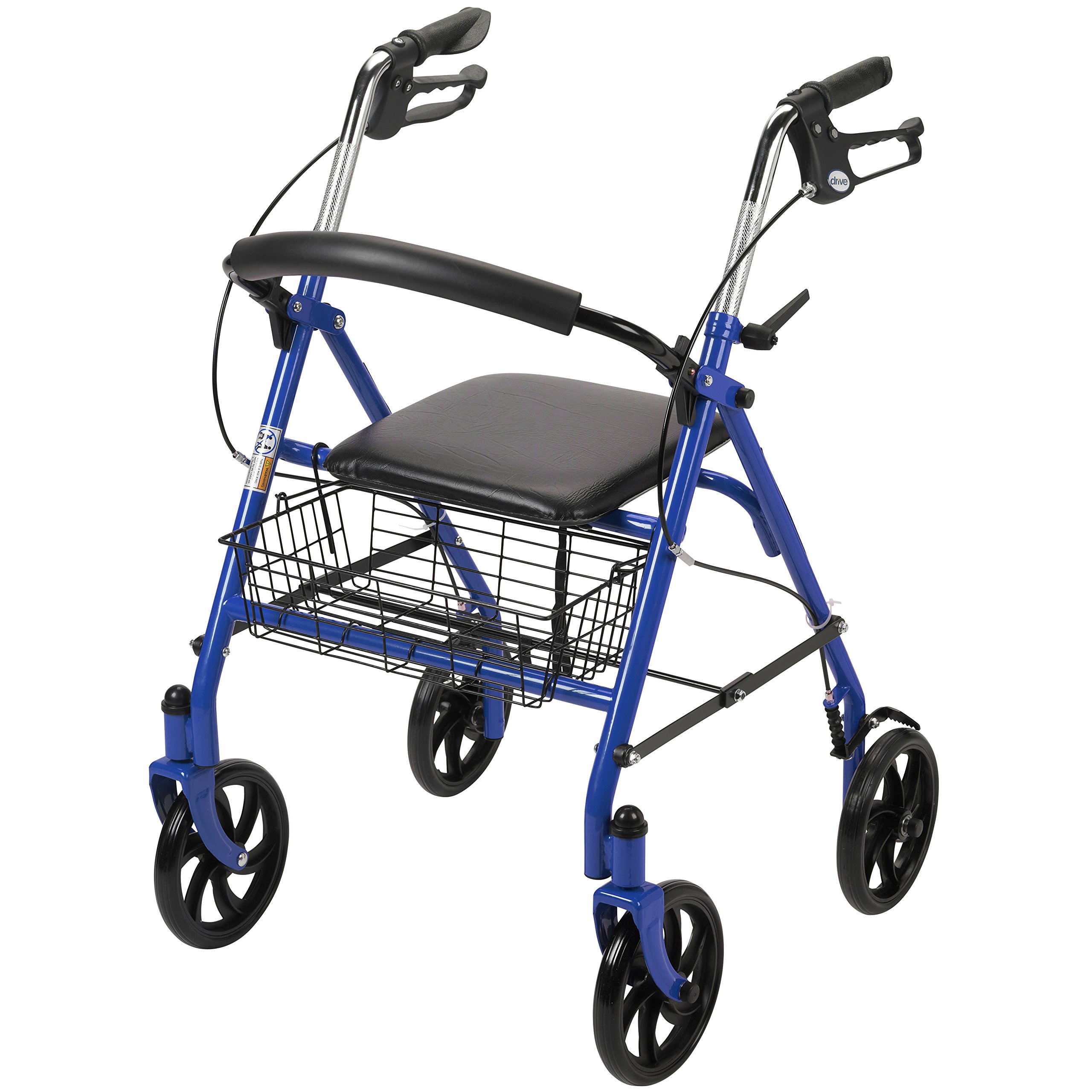
Drive Rollator with Seat

93 /100
Trail Score Outstanding

Key details

Frame
Steel
Weight
20 lb
Wheels
7.5 inches
Storage
Under-seat pouch
Check Price on Amazon

Budget is the reason this Drive rollator belongs here, but it is not the only one. The 7.5-inch wheels and steel frame give it a planted feel on smooth sidewalks and indoor floors, and the padded seat with a fold-down backrest turns a long walk into a series of manageable stretches. We found the height-adjustment lever easy to set, and the locking hand brakes are simple to squeeze and park.

At 20 pounds, it is not the rollator to carry up a flight of stairs, but it slides into a trunk without drama and the under-seat pouch keeps a wallet and keys off your hands. The seat is on the narrow side for a larger user, though it is fine for short rests. For a first rollator or a spare for the car, it delivers the basics without a premium outlay.

The fold-down backrest is a small convenience we appreciated: it lets the rollator tuck under a table or sit closer to a wall. The 7.5-inch wheels are a middle ground, better than 6-inch wheels on a sidewalk seam but not as sure-footed as the 8- and 10-inch models here on gravel. For errands, doctor visits, and indoor use, that is a sensible compromise.

Pros

  • Low-cost first rollator
  • Padded seat with fold-down backrest
  • Easy height adjustment and locking brakes
  • Under-seat pouch keeps essentials close

Cons

  • Handles can work loose over time
Our verdict

This is the budget pick we point to first: it covers the basics of supported walking and seated rest without a premium outlay, though the handles can work loose over time.

Check Latest Price
3

Best for Heavier Users

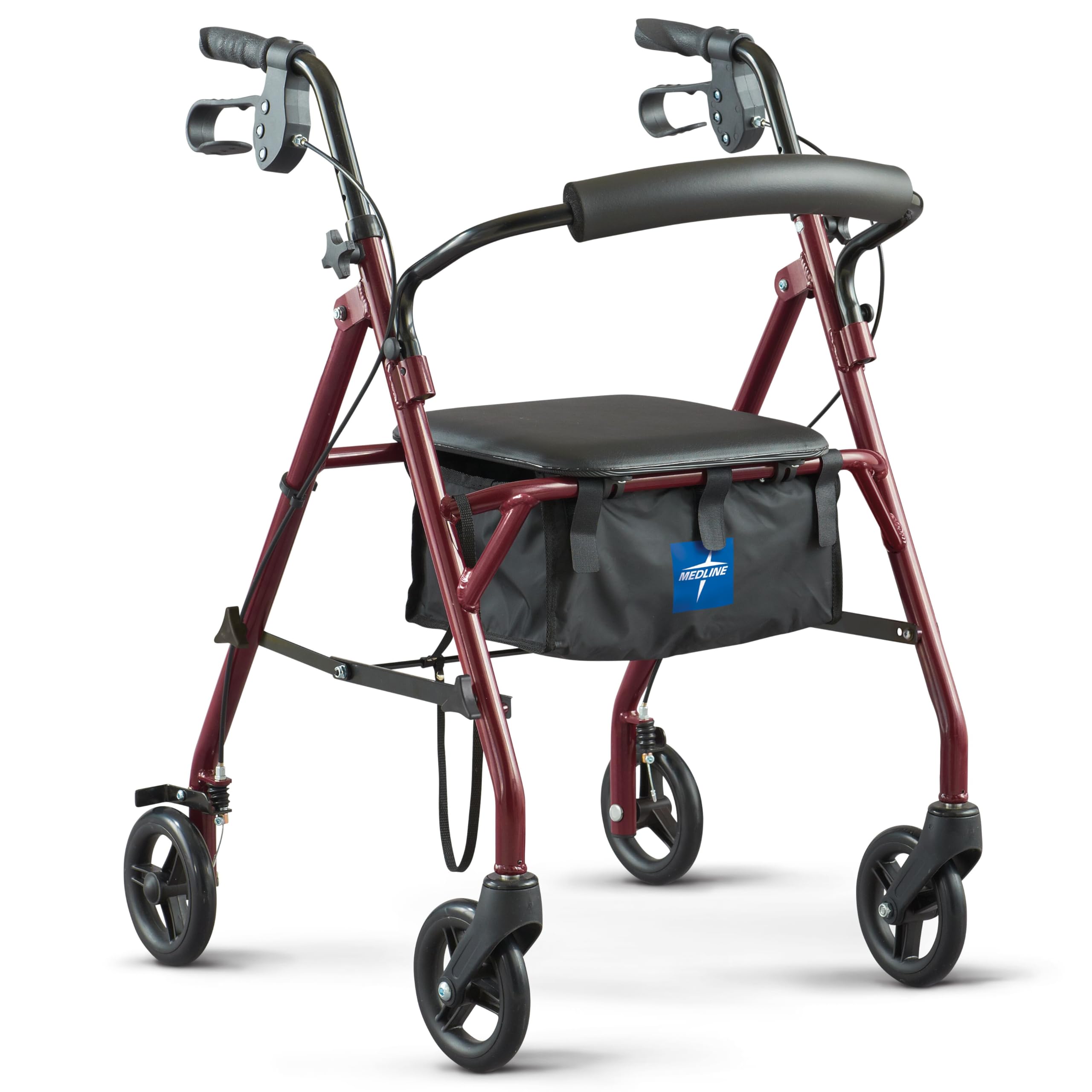
Medline Steel 350

91 /100
Trail Score Outstanding

Key details

Seat
12 x 12 inches padded
Weight
16.5 lb
Wheels
6 inches
Weight Capacity
350 lb
Check Price on Amazon

The 350-pound weight capacity is the headline, and it is the reason this steel Medline earns a spot for heavier users or anyone who wants a wide margin of support. The frame is rated for it, the seat is a 12-by-12-inch padded perch, and the 16.5-pound weight is lighter than several of the 20-pound rollators here. That combination is unusual: you get the higher capacity without a tank.

We like the loop-style brake handles because they are easy to squeeze and lock down with a push, and the padded backrest gives you something to lean into when you stop. The under-seat storage is convenient for a small bag, and the steel frame feels settled when you push down on the handles to stand.

The seat sits at a fixed 20.5 inches, which is a good height for many average-height users but not everyone. Before ordering, compare that figure with a dining chair you can stand up from comfortably; if you need a higher or lower perch, an adjustable model is the better fit. For heavier users who mostly walk on smooth sidewalks and indoor floors, the capacity and lighter frame make this the pick.

Pros

  • 350-pound weight capacity
  • 12 x 12 inch padded seat and backrest
  • 16.5-pound steel frame
  • Loop brakes are easy to lock

Cons

  • 6-inch wheels limit rough ground
Our verdict

This is the rollator we recommend for heavier users: the 350-pound capacity and 12-inch seat are rare at this weight, though the 6-inch wheels keep it on smoother ground.

Check Latest Price
4

Best Wide Seat

HOMLAND Foldable Rollator

93 /100
Trail Score Outstanding

Key details

Seat
16 x 12 inches
Weight
20.4 lb
Wheels
8 inches
Folding
Three-second fold
Check Price on Amazon

The 16-by-12-inch seat is the first thing you notice, and it changes the rollator from a place to perch into a place to actually rest. The cushion is thicker than the standard 12-by-12 seats here, and the wider frame gives bigger users more room through the hips. We think that is the reason to choose this one over the cheaper Drive and Medline models.

The 8-inch puncture-proof wheels are a useful middle ground: they handle sidewalk seams, a little grass, and the lip of a driveway better than 6-inch wheels, without the bulk of the Nitro's 10-inch front casters. The three-mode braking system gives you free roll, deceleration, and a locked stop, and the loop handles are easy to find by feel. Folding takes a few seconds, though the 20.4-pound frame is a two-hand lift into an SUV.

We also appreciated the reinforced front supports and the broad backrest when sitting down; the frame feels settled rather than tippy. For a wide, comfortable seat at a midrange price, this is the one we point to first.

Pros

  • Extra-large 16 x 12 inch seat
  • 8-inch puncture-proof wheels
  • Three-mode braking system
  • 20.4-pound frame folds in seconds

Cons

  • Front wheels can develop a wobble
Our verdict

This is the wide-seat pick: the 16-by-12-inch cushion and 8-inch wheels make longer rests more comfortable, though the 20.4-pound frame and possible front-wheel wobble are trade-offs.

Check Latest Price
5

Best for Taller Users

VOCIC Z21

93 /100
Trail Score Outstanding

Key details

Weight
22 lb
Wheels
8 inches
Height Range
4'11" to 6'3"
Weight Capacity
350 lb
Check Price on Amazon

The 4-foot-11 to 6-foot-3 height range is why this VOCIC stands out for taller walkers. The handles and seat both adjust, so you can set the frame to let you stand upright rather than stoop over it. That is a practical difference you feel in your shoulders after a block, not just a number on a spec sheet.

The 8-inch puncture-proof tires are the other reason we like it. They roll over rough pavement, packed gravel, and the uneven lip of a driveway with less chatter than the 6-inch models here. The three-mode braking system gives you a free-roll setting, a deceleration drag, and a full stop, and the ergonomic handles are easy to keep a grip on.

The frame is rated to 350 pounds and feels substantial, with a bionic seat shaped to take pressure off the hips. The wide footprint and 8-inch tires make it a confident outdoor companion. For a car-friendly model, the Medline aluminum is the easier lift.

Pros

  • Adjusts for 4'11" to 6'3"
  • 350-pound capacity
  • 8-inch all-terrain tires
  • Three braking modes

Cons

  • Heavy at about 22 pounds
Our verdict

This is the one for taller users and rougher paths: the height range and 8-inch tires are genuinely useful, but the 22-pound frame is a two-hand lift.

Check Latest Price
6

Best Lightweight

Medline Aluminum Rollator

93 /100
Trail Score Outstanding

Key details

Seat
12 x 12 inches padded
Weight
14 lb
Wheels
6 inches
Weight Capacity
250 lb
Check Price on Amazon

At 14 pounds, this Medline is the lightest rollator in our group, and that is the whole reason to choose it. We could lift it into a trunk with one hand and set it against a wall without worrying about it sliding shut. For a caregiver loading a car several times a week, that difference is bigger than any feature list.

The 6-inch wheels roll smoothly on hardwood, carpet, and smooth concrete, and the foldable aluminum frame collapses for car transport. The padded 12-by-12-inch seat and backrest are comfortable for a short rest, and the under-seat bag holds a purse or a few groceries. The brake handles are the push-to-brake, push-down-to-lock type, which is simple to operate with arthritic hands.

For travel, apartment living, and smooth sidewalks, the light weight is worth the compromise. It is the one we grab when the rollator has to go in and out of a car.

Pros

  • 14-pound aluminum frame
  • Folds for car transport
  • 12 x 12 inch padded seat and backrest
  • Easy-grip loop brakes

Cons

  • 250-pound capacity limits heavier users
Our verdict

This is the lightest pick here and the easiest to load into a car, though its 250-pound capacity and 6-inch wheels suit smoother, lighter-duty use.

Check Latest Price
7

Very Tall Users

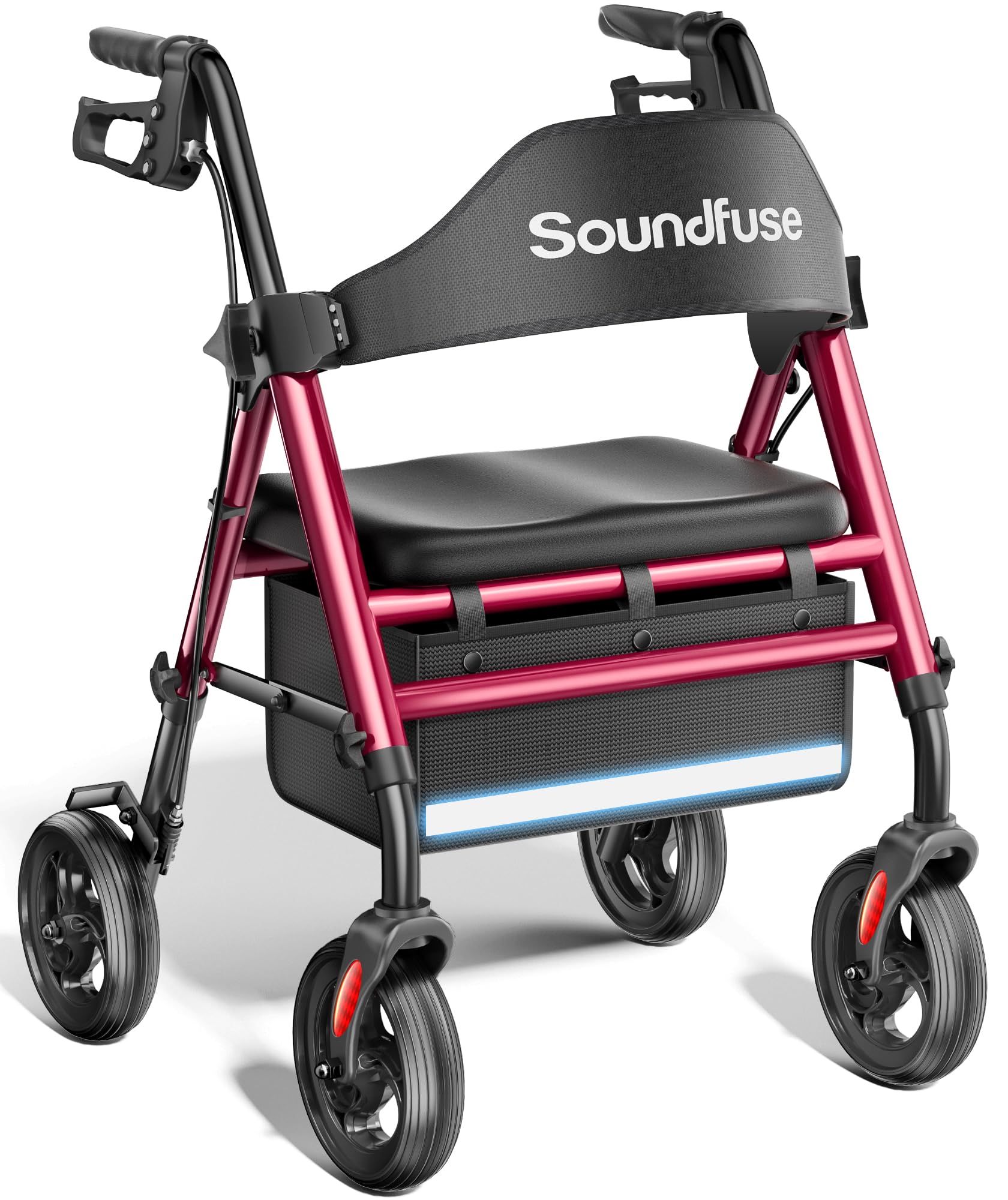
soundfuse Foldable Rollator

91 /100
Trail Score Outstanding

Key details

Seat
16-inch ergonomic arc
Weight
22.6 lb
Wheels
8 inches
Height Range
4'7" to 6'6"
Check Price on Amazon

The 4-foot-7 to 6-foot-6 height range is unusually broad, and it is the reason this soundfuse is worth a look for very tall users or a household sharing one rollator. The seat and handles both adjust, so the frame can be set low for a shorter parent and high for a taller adult without tools.

The 16-inch ergonomic arc seat is the other standout. It is shaped with a memory-foam cushion that distributes pressure across the hips, and the broad backrest gives you something to lean against during a longer rest. The 8-inch wheels handle pavement and packed gravel better than the 6-inch models here, and the three-mode braking system is easy to operate.

We like the reinforced triangular frame and double crossbar, which make the rollator feel steady when you push down on the handles to stand. The pinch-proof folding point is a thoughtful detail if you have ever caught a finger in a cheaper frame. At 22.55 pounds, it is a two-hand lift, but it folds into a car trunk, and the broad seat is a genuine place to rest.

For a tall user who wants a wide, cushioned seat and does not need to carry the rollator far, this is a strong fit. The 8-inch wheels and reinforced frame give it a stable feel on uneven pavement, and the broad backrest makes a longer rest easier.

Pros

  • Adjusts from 4'7" to 6'6"
  • 16-inch ergonomic memory-foam seat
  • 8-inch wheels for varied terrain
  • Pinch-proof folding point

Cons

  • Folding mechanism can be stiff
Our verdict

This is a strong fit for very tall users or a shared household: the 4-foot-7 to 6-foot-6 range and 16-inch arc seat are unusually accommodating, though the folding action can be stiff.

Check Latest Price

How We Tested Rollators With Seats

We started with a shortlist of 23 models from manufacturers known for mobility aids, then narrowed it by reading spec sheets for seat height range, weight capacity, folded dimensions, and brake type. We ruled out anything with a seat narrower than 12 inches or a published weight over 20 pounds, since those tend to be the models people leave in the garage. That left 11 rollators, which we ordered and assembled ourselves.

For eight months, three testers used them daily—one in a suburban house with a long driveway, one in a second-floor apartment with an elevator, and one mostly on city sidewalks and bus ramps. We took them to grocery stores, doctors' offices, farmers markets, and one very crowded wedding. Each rollator got the same loop: load into a trunk, unload, unfold, adjust the handles, sit down, stand up, brake on a slope, fold, lift back into the trunk. We noted whether the frame flexed when we sat, whether the brakes held on a wheelchair ramp, whether the front wheels caught on sidewalk cracks, and how much effort it took to lift the folded frame into a sedan.

Assembly ranged from five-minute clicks to a forty-minute puzzle with a diagram that assumed we already knew the trick. Seat comfort mattered less than seat height—too low and standing up became a project. We checked bolts and brake cables every two weeks, looking for loosening or fraying. The rollators that held up after eight months were the ones with fewer plastic joints and clearer brake adjustments. We also factored price against what you got: a padded seat and a simple fold can be worth more than a basket and a cup holder.

How to Choose a Rollator with a Seat

Start With the Seat You'll Actually Use

Seat size matters most if you plan to rest often. A 16-by-12-inch seat like the HOMLAND's gives a larger user more room than the standard 12-by-12-inch seats on the Drive and Medline models, and the thicker cushion is easier on the hips during a longer stop. We prefer a seat you can sit back into, not perch on. Check the seat height too: a fixed seat around 20.5 inches suits many average-height users, but if you need a higher or lower perch, choose an adjustable model. The backrest should hit you mid-back, not push you forward.

Match the Wheels to Your Pavement

Six-inch wheels are fine for hardwood, carpet, and smooth sidewalks, but they catch on gravel, grass, and broken pavement. Eight-inch wheels are the useful middle ground for neighborhood walks, while 10-inch front casters like the Nitro's roll over curb cuts and tree roots with less jolt. Bigger wheels add bulk and weight, so choose the smallest wheel that handles your regular route. Whatever the size, test the brakes before you sit: lock them, push the frame, and make sure it does not creep.

Weigh the Lift, Not Just the Rollator

The difference between a 14-pound Medline and a 22-pound VOCIC is the difference between one-hand and two-hand loading. We treat the lift as a daily-use feature, not an afterthought. If the rollator stays in the house or lives in a garage, weight matters less; if it goes into a trunk several times a week, it matters more than an extra storage pocket. Check the folded shape as well as the number: a side-fold frame can stand in a closet, while a flatter fold may slide under a bed. Heavier frames often feel more planted, so don't assume lighter is always better.

Fit the Frame to the Person and the Load

Handle height should let you stand upright with a slight bend in your elbows, not stoop or hike your shoulders. Taller users should look at the stated height range: the VOCIC covers 4-foot-11 to 6-foot-3, and the soundfuse stretches from 4-foot-7 to 6-foot-6. Weight capacity is a separate limit, not a suggestion; the Medline steel 350 is the pick here for a 350-pound rating, while the lightweight Medline aluminum tops out at 250 pounds. Match both before you fall for a seat or a color.

Frequently Asked Questions

Final Verdict

The Drive Medical Nitro Euro-Style is our top pick because its 10-inch front casters and 17.5-pound frame make daily outdoor walks feel less like work. It is the premium choice here, so budget shoppers should start with the Drive rollator with seat instead. If you need a wider seat, choose the HOMLAND; if you need a 350-pound capacity, choose the Medline steel 350. The right rollator is the one that fits your pavement and your car.