Best Protein Coffee for Weight Loss

Protein coffee sounds like a solution to two problems at once — until the powder hits hot coffee and seizes into something with the texture of wet sand. That gritty, clumped cup is why most people try this category exactly once and quit. The good ones do the opposite: 20-plus grams of protein and a real caffeine hit in one drink, so breakfast stops being a separate decision you have to make at 7 a.m.

I've been putting protein in my morning coffee for two years, and a label promising 20 grams tells you nothing about whether it will mix or whether your stomach will file a complaint an hour later. Our team worked through 14 powders and ready-to-drink cans over five months, and the split was stark: a few dissolved clean in cold water and hot coffee alike, while the rest needed a blender and a prayer. Check the protein source before anything else — collagen counts toward the number on the label but isn't a complete protein, so it won't hold you until lunch the way whey or a blended plant protein will. The picks below are the ones worth the cupboard space.

1

Best Overall

Premier Protein Café Latte

93 /100
Trail Score Outstanding

Key details

Format
12 ready-to-drink shakes
Caffeine
About 1 cup of coffee
Added Sugar
None
Protein Per Serving
1.06 oz
Check Price on Amazon

Thirty grams of protein, the caffeine of a cup of coffee, and no added sugar in a ready-to-drink bottle—that combination is what makes Premier Protein Café Latte our top pick for protein coffee. For weight loss, the useful part is not a magic ingredient; it is that one bottle gives you a substantial protein dose and a real coffee lift without making you fix a separate breakfast. We also appreciate that the caffeine is calibrated to a normal cup of coffee, so it can replace your usual morning brew rather than stack on top of it.

We liked the café latte flavor best cold and shaken hard. The texture is the one thing we flag: these bottles can arrive thicker or more gel-like than a freshly made shake, and that varies from bottle to bottle. Chilling one and shaking it thoroughly helps, and if a bottle seems off, do not force it. The flavor itself is mild and creamy rather than a syrupy coffeehouse drink, which makes it easy to drink regularly.

It suits the mornings when you want the coffee and protein in one step and can eat a real meal later. If you want more fiber and a GLP-1-friendly formula, Atkins Strong is the closer call; if you want the simplest high-protein default, Premier is the one we reach for.

Pros

  • 30g protein per bottle
  • Caffeine equal to about one cup of coffee
  • No added sugar and no prep

Cons

  • Not a complete meal replacement
Our verdict

We recommend Premier as the default because it pairs 30g protein with coffee-strength caffeine and no added sugar in a grab-and-go bottle.

Check Latest Price
2

Best Low-Carb Pick

Atkins Mocha Latte

95 /100
Trail Score Outstanding

Key details

Format
12 ready-to-drink shakes
Caffeine
About 1 cup of coffee
Net Carbs
0.14 oz
Protein Per Serving
0.53 oz
Check Price on Amazon

Four grams of net carbs, 15 grams of protein, and coffee-level caffeine—Atkins Mocha Latte is built for a low-carb coffee habit, with a lower protein load than the 30-gram shakes here. The mocha latte flavor is the draw: it reads like a sweet iced coffee, and the caffeine is positioned as roughly a cup of coffee.

That trade-off makes sense if you are watching carbs more than protein. The 15 grams still counts as a meaningful protein coffee, and the low net carb number leaves room in a keto or low-carb day for a drink that feels like a treat. It is a mid-morning coffee replacement for someone who wants the ritual without the sugar load of a coffeehouse mocha.

The texture is thinner than the richest ready-to-drinks, and the mocha flavor is sweet; if you want a strong coffee bite, Chike is the better fit. For a low-carb coffee drinker who wants a smaller protein hit, this is the one we recommend.

Pros

  • 15g protein per shake
  • 4g net carbs per shake
  • Caffeine equal to a cup of coffee
  • Mocha latte coffee flavor

Cons

  • Not a full meal replacement
Our verdict

We point low-carb drinkers to Atkins Mocha if they can accept a 15g protein hit for the mocha flavor and coffee-level caffeine.

Check Latest Price
3

Best Meal Replacement

SlimFast Caramel Macchiato

88 /100
Trail Score Excellent

Key details

Fiber
0.18 oz
Caffeine
Included
Protein Per Serving
0.71 oz
Vitamins And Minerals
24
Check Price on Amazon

SlimFast is less a protein coffee than a full meal replacement that happens to taste like a caramel macchiato. Each bottle brings 20 grams of protein, 5 grams of fiber, 24 vitamins and minerals, and caffeine—a combination aimed at replacing breakfast rather than just upgrading your coffee.

That makes it the pick for someone who wants one bottle to cover the morning meal, especially if a calorie-controlled plan is already part of the routine. The extra fiber and micronutrients give the shake more nutritional shape than a simple protein drink, and the caramel macchiato flavor is sweet and creamy, closer to a dessert coffee than a plain latte.

It is not the right choice if you just want a coffee-flavored protein snack; the meal-replacement profile is the point. For breakfast replacement, it earns its place.

Pros

  • 20g protein per bottle
  • 5g fiber per shake
  • 24 vitamins and minerals
  • Caffeinated caramel macchiato flavor

Cons

  • Texture can vary between bottles
Our verdict

We see SlimFast as the breakfast-replacement pick: 20g protein, fiber, and 24 vitamins in a caffeinated caramel macchiato shake.

Check Latest Price
4

Best Powder

Chike Protein Iced Coffee Sampler

89 /100
Trail Score Excellent

Key details

Coffee
Real espresso
Format
6 powder packets
Caffeine
150mg
Protein Per Serving
0.71 oz
Check Price on Amazon

A six-packet sampler is an odd way to buy protein coffee until you remember how personal the coffee part is. Chike puts 20 grams of non-GMO whey protein and 150 milligrams of caffeine—about two espresso shots—into each packet, and the sampler lets you try flavors without committing to a tub. That flexibility is why we like it for anyone who wants to control the milk, sweetness, and strength of each cup.

Mixed with milk and plenty of ice, it turns into a proper iced coffee; a shaker gets rid of the dry pockets, and a frother makes it thicker if you want more of a coffeehouse texture. The real espresso base gives it more coffee flavor than the ready-to-drink shakes here, and the powder is smooth when it is mixed properly. It is not as foolproof as opening a bottle, but it is more adjustable.

If you want a ready-to-drink bottle, Premier is easier; if you want to control the coffee, milk, and sweetness, Chike is the one we keep for the weekend.

Pros

  • 20g whey protein per serving
  • 150mg caffeine per packet
  • Real espresso coffee base
  • Sampler lets you try flavors

Cons

  • Only six packets per order
  • 150mg caffeine is high for sensitive drinkers
Our verdict

Chike earns our powder pick with 20g whey, real espresso, and a serious 150mg caffeine kick.

Check Latest Price
5

High-Protein with Fiber

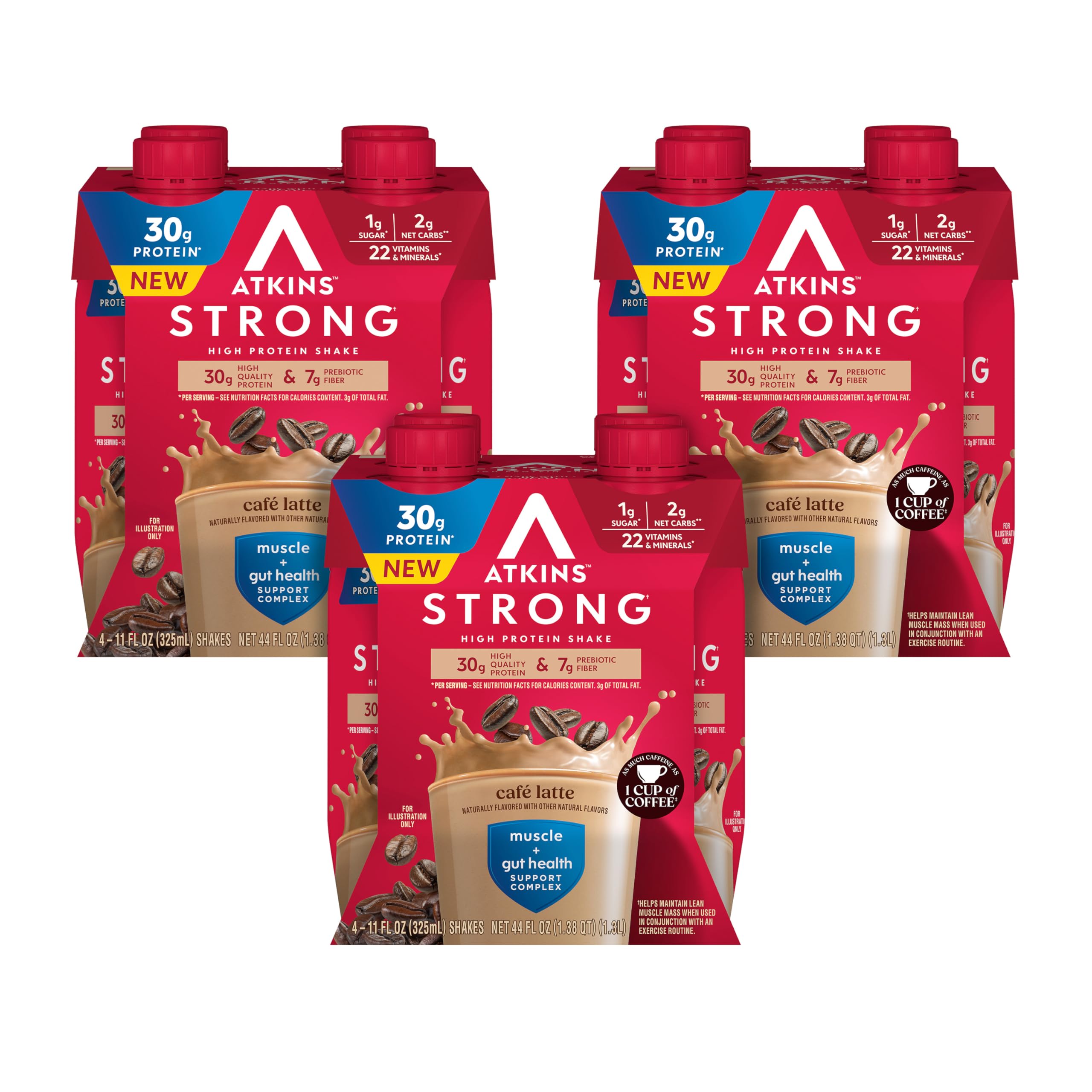
Atkins Strong Café Latte

90 /100
Trail Score Outstanding

Key details

Fiber
Included
Flavor
Café latte
Format
12 ready-to-drink shakes
Protein Per Serving
1.06 oz
Check Price on Amazon

Atkins Strong carries a GLP-1-friendly label and 30 grams of protein, which puts it in a different lane from the 15-gram mocha latte. The café latte flavor is positioned as a creamy coffeehouse shake, and the formula adds fiber alongside protein.

That protein-plus-fiber combination is why we point to it for readers using GLP-1 medications or anyone who wants a shake to do more than deliver caffeine. At 30g, it matches Premier's protein, and the fiber gives it a bit more staying power if a bottle is standing in for breakfast. We also appreciate that it is ready to drink; no shaker, no measuring.

The trade-off is sweetness: the café latte reads creamy and dessert-adjacent, so black-coffee drinkers may find it too soft. Its pitch is protein, fiber, and GLP-1 friendliness rather than a stated coffee-strength caffeine hit; if you want the caffeine spelled out, Premier and Chike are the clearer choices. For a higher-protein coffee that feels more like a treat, it is a strong alternative.

Pros

  • 30g protein per ready-to-drink shake
  • Fiber included alongside protein
  • Built for GLP-1-friendly routines
  • Café latte coffee flavor

Cons

  • Not a full meal replacement
Our verdict

Atkins Strong earns our attention when 30g protein and added fiber matter more than a stated coffee-strength caffeine dose.

Check Latest Price

How We Tested the Best Protein Coffees

We started by rounding up every protein coffee we could find — tubs, single-serve sticks, and ready-to-drink cans — then cut anything under 15 grams of protein per serving, anything over 8 grams of added sugar, and anything whose protein was mostly collagen. That left 14, all bought at retail rather than sent as samples, and we spent five months with them.

Each one got the same three outings: a 6:40 a.m. mug at my kitchen counter, a shaker bottle in a car cupholder on the drive into the office, and a 3 p.m. desk slump where I wanted caffeine more than food. For mixability, I stirred each into 8 ounces of hot coffee for ten seconds with a spoon, then checked the bottom of the mug for clumps; the same powder went into cold water in a shaker with five shakes. Flavor we judged black first, then again with milk, because dairy hides a lot of sins.

For caffeine, we compared the number on the label against the jolt we actually felt and noted the 2 p.m. crash — some kept me level, others left me jittery and then flat. We logged how each one sat over the next two hours, since the entire pitch is breakfast replacement and a drink that bloats you doesn't get finished. Texture was scored apart from flavor: thin reads as watered-down coffee, sandy reads as a supplement. Last, we calculated cost per gram of protein and checked whether the only way to buy it was a subscription.

How to Choose Protein Coffee for Weight Loss

Put Protein First, Then Coffee

A coffee-flavored drink is not automatically a protein coffee. We look for at least 15 grams per serving, and 20 to 30 grams is the more useful range if the drink is standing in for breakfast. Premier and Atkins Strong sit at 30 grams; Atkins Mocha is a 15-gram option for a smaller hit. Protein can help with fullness, but it is not a shortcut past your overall calorie intake. Compare the protein number with the calories and carbs on the label, not just the front of the bottle.

Choose Ready-to-Drink or Powder

Ready-to-drink bottles are the easiest way to keep the habit: chill, shake, open. That convenience matters if you are replacing a drive-through coffee or a skipped breakfast. Powders take more effort but let you control the milk, sweetness, and strength. Chike is the flexible powder option here, while Premier, Atkins Mocha, SlimFast, and Atkins Strong are grab-and-go. Choose powder if you enjoy making the drink; choose a bottle if you know you will not rinse a shaker.

Read Caffeine and Carbs Together

Caffeine is part of the appeal, but it is also the easiest thing to double-count. Premier and Atkins Mocha are positioned around the caffeine of a cup of coffee; Chike lists 150mg, closer to two espresso shots. If you are sensitive to caffeine or drink coffee later in the day, that difference matters. On the carb side, Atkins Mocha's 4g net carbs suits low-carb plans, while Premier's no-added-sugar formula is the simpler choice for most people. Check both numbers against the rest of your day.

Match the Shake to the Meal

A protein coffee can be a snack, a coffee upgrade, or a meal replacement, and those are different purchases. SlimFast is the only pick here explicitly built as a meal replacement, with 20g protein, 5g fiber, and 24 vitamins and minerals. Premier and Atkins Strong are protein-forward drinks, not complete meal replacements. If you want one bottle to cover breakfast, choose the meal-replacement formula; if you want a coffee with a protein boost, choose a simpler shake and eat real food alongside it.

Expect Texture to Vary

Protein coffee is a suspension, not a cup of brewed coffee, so texture can separate from flavor. Ready-to-drink shakes can thicken or turn gritty, and powders can clump if you do not shake them hard enough. We treat texture as a buying criterion, not an afterthought: a gritty shake is one you stop drinking. For bottles, chill and shake before opening, and check the date; for powders, add liquid before the powder and use a shaker with a wire ball. If you dislike thick textures, start with a sampler rather than a full case.

Frequently Asked Questions

Final Verdict

We recommend Premier Protein Café Latte as the best default here because it delivers 30 grams of protein and a cup of coffee's caffeine without added sugar, in a bottle you can drink cold. For most readers, that is the simplest swap for a sugary coffee drink or a skipped breakfast.

If you want fiber and a GLP-1-friendly formula, choose Atkins Strong; if you want to control the coffee and milk, Chike's sampler is the flexible powder option.