Best Cereal for Weight Loss of 2026

A serving of cereal is almost never the bowl you actually pour. The side of the box says three-quarters of a cup and 150 calories, but the bowl in your hands holds closer to two cups, and that's before the milk goes in. So the useful question isn't which cereal has the smallest number on the label — it's which one fills you up and keeps you there on a portion you'd genuinely eat, without tasting like the cardboard it ships in. That's what separates a cereal you're still eating in March from one that goes stale in the pantry by February.

Over the past three months, my team and I worked through 16 boxes, eating them the way people actually do: dry by the handful, with cold milk at the kitchen table, and rushed standing at the counter. A few were genuinely good — crunchy, properly sweet, high in fiber without a chalky finish. Others tasted like a punishment. Some were fine until the third bowl, when the texture started to wear on us. One thing worth knowing before you shop: fiber and protein per calorie tell you more about staying power than any 'light' or 'lightly sweetened' claim printed across the front. Here's what earned a permanent spot in the rotation.

1

Best Overall

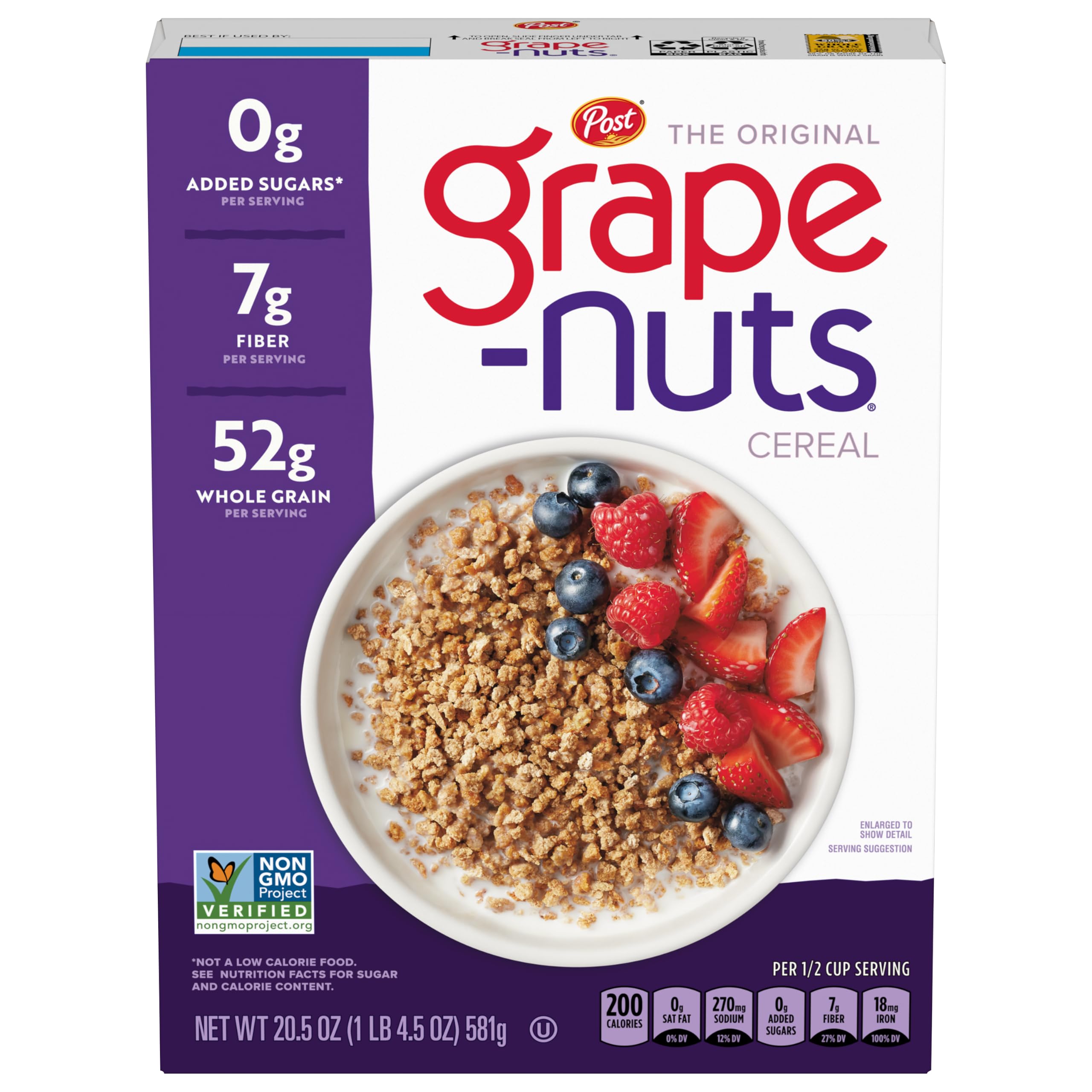
Grape-Nuts Original

95 /100
Trail Score Outstanding

Key details

Fiber
High fiber
Texture
Crunchy nuggets
Main Grains
Whole-grain wheat and barley
Package Size
20.5 oz
Check Price on Amazon

The first thing you notice about Grape-Nuts is the sound: small baked nuggets that stay firm long after milk hits them. That texture is the point. The cereal is made from whole-grain wheat and barley and built around fiber, so a modest serving has more staying power than a flaky, airy cereal. We liked that it gives a weight-loss breakfast some chew and bulk without relying on sweetness. The catch is that the nuggets are genuinely hard, and we needed to let them sit in milk or fold them into yogurt before they softened enough to enjoy.

What makes it our top pick is the way the fiber and whole grains work together. A bowl feels like a meal rather than a snack, and the malty, nutty flavor does not push you toward a second serving. We also appreciated how well the nuggets work as a topping: spooned over plain yogurt with berries, they add crunch and bulk without turning the bowl into dessert. If you expect a sweet cereal, this is not it; the appeal is texture and staying power.

The limitation is real, though. The nuggets are hard enough that sensitive teeth may object, and the 20.5-ounce box is easy to free-pour from. We keep a measuring cup in the box and let the cereal soak for a few minutes before eating. For anyone who wants a filling, fiber-forward bowl and does not mind a chewy breakfast, those are small adjustments. The box is big enough that a measuring cup earns its place beside it.

Pros

  • High-fiber whole-grain base
  • Filling, chewy texture
  • Works in a bowl or over yogurt

Cons

  • Nuggets are very hard before soaking
Our verdict

Grape-Nuts earns our top spot because its whole-grain wheat and barley and high fiber make a small, chewy bowl feel far more substantial than a flaky cereal.
Check Latest Price
2

Best Everyday Low-Sugar

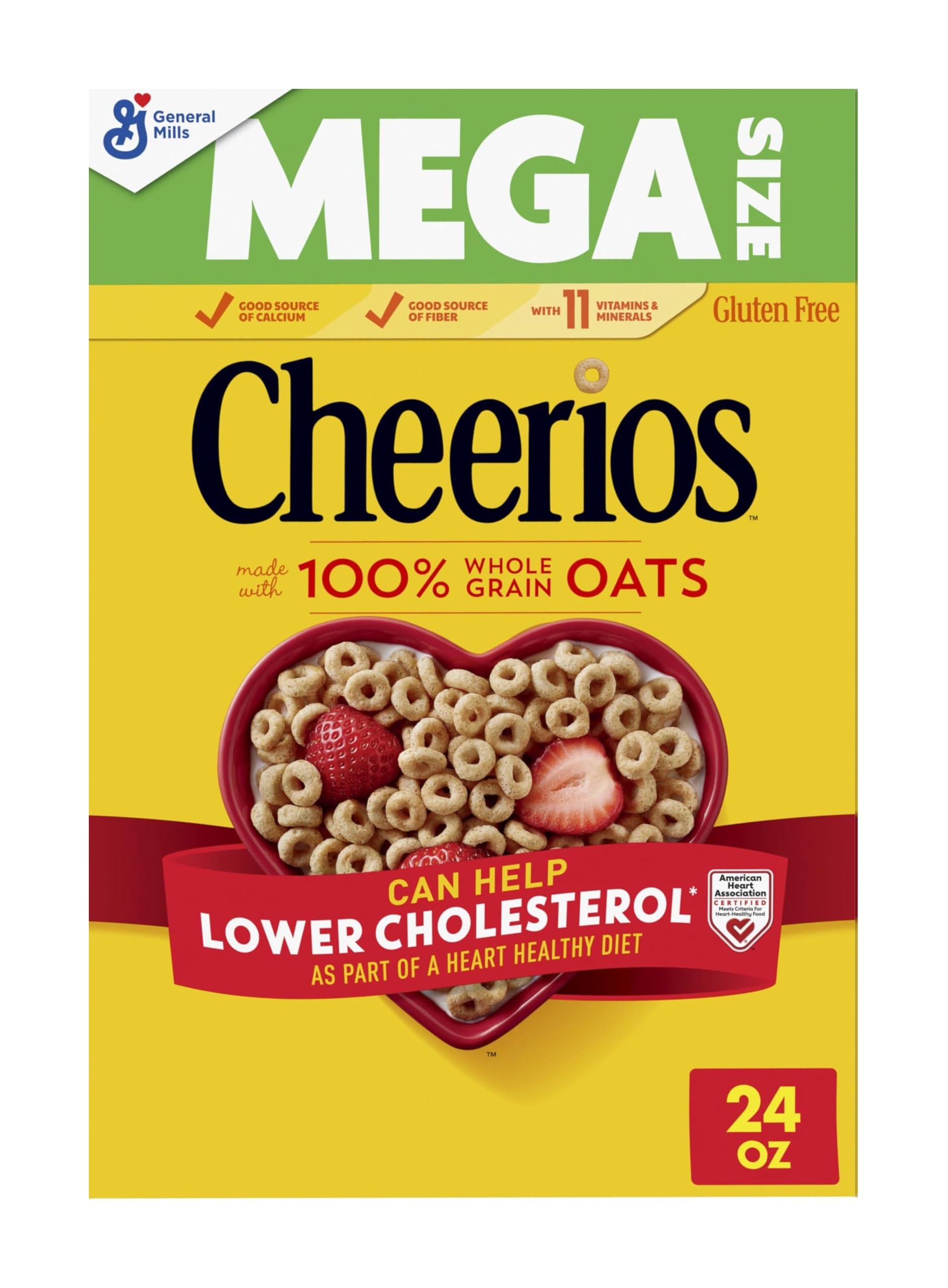
Cheerios

96 /100
Trail Score Outstanding

Key details

Fiber
Good source
Dietary
Gluten-free
Whole Grain
34 g per serving
Package Size
24 oz
Check Price on Amazon

A 24-ounce mega box of Cheerios is a strange place to start a weight-loss review, because the first job is not eating it by the handful. The cereal itself is one of the simplest low-sugar options here: whole-grain oats, a light familiar crunch, and no added sugar in the plain version. It is also gluten-free and provides 34 grams of whole grains per serving, with a good source of fiber and 11 vitamins and minerals. In other words, it is a neutral base rather than a flavor event.

Where Cheerios earns its place is as the everyday bowl you can dress up without much effort. We recommend it for the person who wants a familiar cereal, not a health-food project, and who is willing to add fruit, nuts, or a spoonful of Greek yogurt for staying power. On its own it is not as filling as the fiber-forward picks here, and the mega box makes over-pouring easy. The cereal is not the problem; the pour is.

We kept a half-cup measure in the box and treated the cereal as a base, not the whole breakfast. A handful of berries and a splash of unsweetened soy milk did more for satiety than a larger bowl of dry cereal. The gluten-free label is a bonus for anyone who needs it, though it is not a reason to choose Cheerios over a higher-fiber cereal. For a low-sugar, family-friendly pantry staple, it is hard to beat.

Pros

  • No added sugar in the plain version
  • Whole-grain oats and gluten-free
  • Neutral base for fruit or yogurt

Cons

  • Less filling than higher-fiber picks
  • Mega box invites over-pouring
Our verdict

We recommend Cheerios as the low-sugar everyday bowl, especially when you want a familiar base for fruit or yogurt; just measure it out of that mega box.

Check Latest Price
3

Best for Portion Control

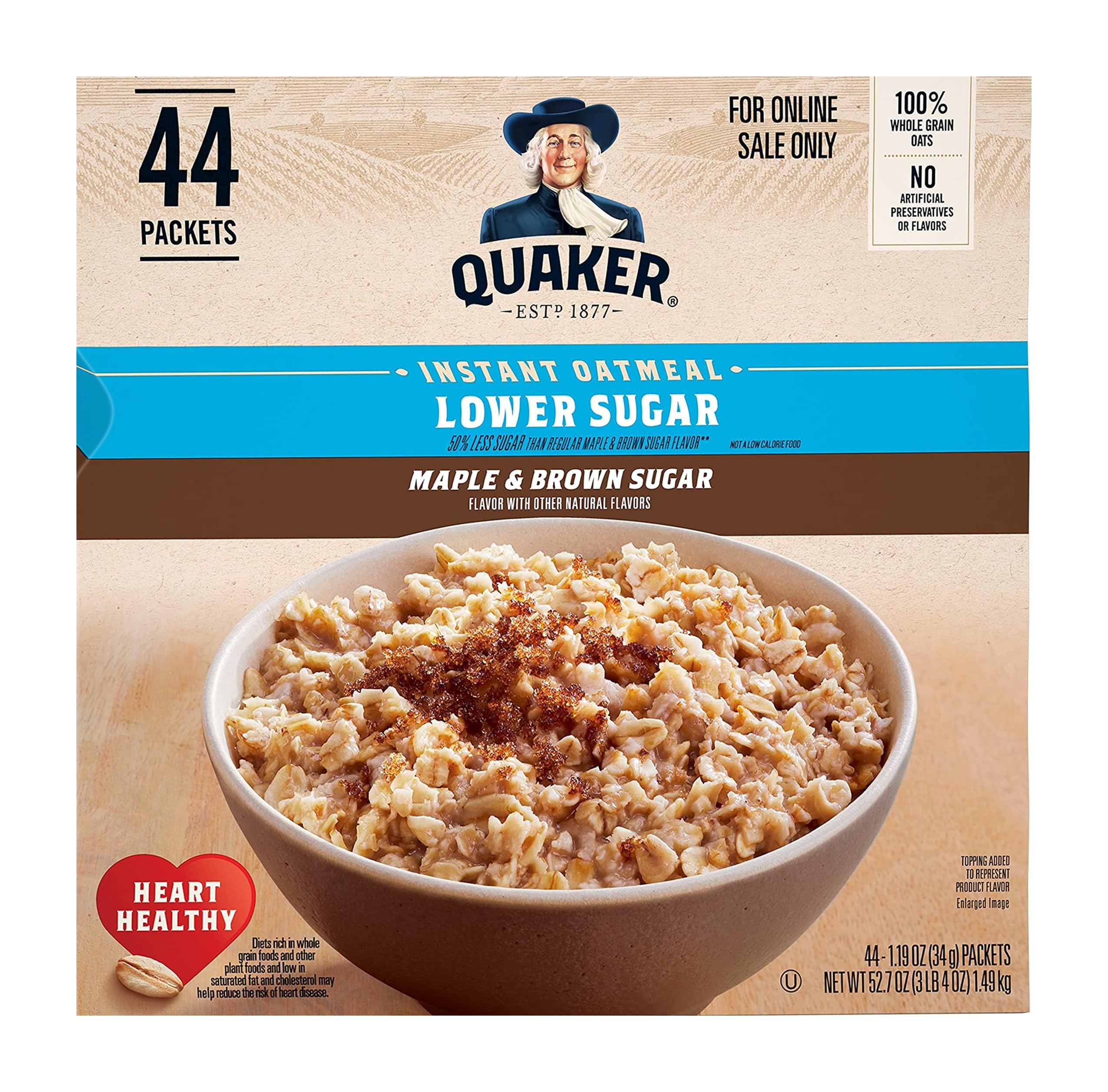
Quaker Lower Sugar Instant Oatmeal

94 /100
Trail Score Outstanding

Key details

Sugar
50% less than regular
Flavor
Maple and brown sugar
Pack Count
44 packets
Whole Grain
100% whole grain oats
Check Price on Amazon

The best thing about this Quaker box may be the box itself: 44 individual packets, each 1.19 ounces, so the serving is decided before you open the pantry. That matters for weight loss, where a giant cereal box can turn into an unmeasured pour. The oatmeal is made with whole-grain oats and has 50% less sugar than the regular maple and brown sugar flavor. The company lists 7 grams of sugar on a 55-gram comparison basis for this flavor, versus 16 grams for the regular. We recommend it when portion control is the hurdle and you want a hot breakfast in minutes.

Flavor is better than the lower-sugar label suggests. The maple and brown sugar packet tastes like regular instant oatmeal, not a diet version, and it cooks quickly in the microwave. It is a good source of fiber, and the portion is satisfying for a small breakfast. We noticed the texture is softer and more uniform than steel-cut oats, which is expected for instant oatmeal. If you want a chewy bowl, this is not it; if you want fast and consistent, it is.

The limitation is that lower sugar is not sugar-free, and the packet is not a low-calorie food. We pair one with Greek yogurt or a few nuts so the meal has more protein and lasts longer. The 44-packet box is also a commitment; if you tire of maple and brown sugar, you are stuck with a lot of it. For rushed mornings and people who know a big box is a trigger, the built-in portion is the real advantage.

Pros

  • 44 pre-measured packets
  • 50% less sugar than regular
  • Whole-grain oats and quick prep

Cons

  • Still contains 7 g sugar on a 55 g basis
Our verdict

For a hot breakfast with the portion already decided, these lower-sugar Quaker packets are our pick, provided you add protein to make the bowl last.

Check Latest Price
4

Best High-Protein Instant

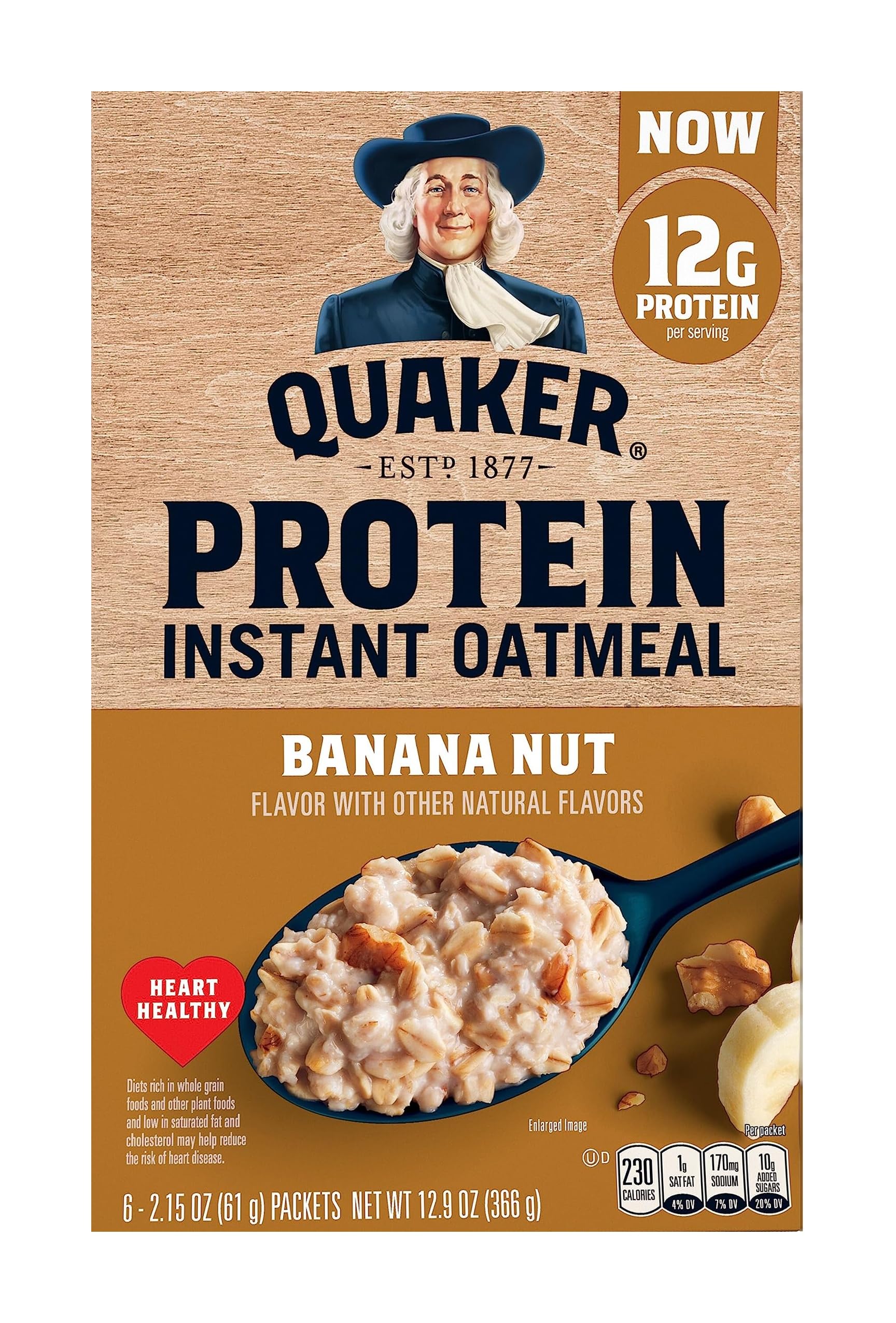
Quaker Protein Instant Oatmeal

91 /100
Trail Score Outstanding

Key details

Flavor
Banana nut
Protein
10 g per serving
Pack Count
6 packets
Whole Grain
40 g per serving
Check Price on Amazon

Ten grams of protein in a 1.19-ounce packet is the reason this Quaker option stands apart from the lower-sugar line. The banana-nut flavor is sweet and familiar, and the oatmeal is made from whole-grain oats with 40 grams of whole grains per serving. We liked it for mornings when we wanted something warm and fast but did not want to start the day with a sugary pastry. The texture is the divisive part: some bowls come out creamy, while others taste thinner than expected.

This is the packet we reach for when protein is the missing piece in a quick breakfast. The banana and walnut flavors are distinct, and the oatmeal cooks in the microwave without much fuss. It is not as filling as a bowl of Grape-Nuts, but it is faster and easier to take to work. We add milk instead of water and a spoonful of nuts or seeds to make the small packet feel more complete.

The box holds only six packets, so it is not the economical choice if oatmeal is your daily breakfast. The texture can also run thick or uneven depending on how much water you use; we start with less liquid and add more as needed. For someone who wants a fast, higher-protein oatmeal and already likes banana-nut, those are manageable trade-offs. The six-count box is the main reason we treat it as a specific tool rather than the everyday pick.

Pros

  • 10 g protein per packet
  • 40 g whole grains per serving
  • Microwave-fast banana-nut flavor

Cons

  • Only six packets per box
  • Texture can be thick or uneven
Our verdict

We reach for this banana-nut oatmeal when protein is the missing piece in a quick breakfast; the small packet needs milk and a little crunch to feel complete.

Check Latest Price
5

Best Sweet High-Fiber

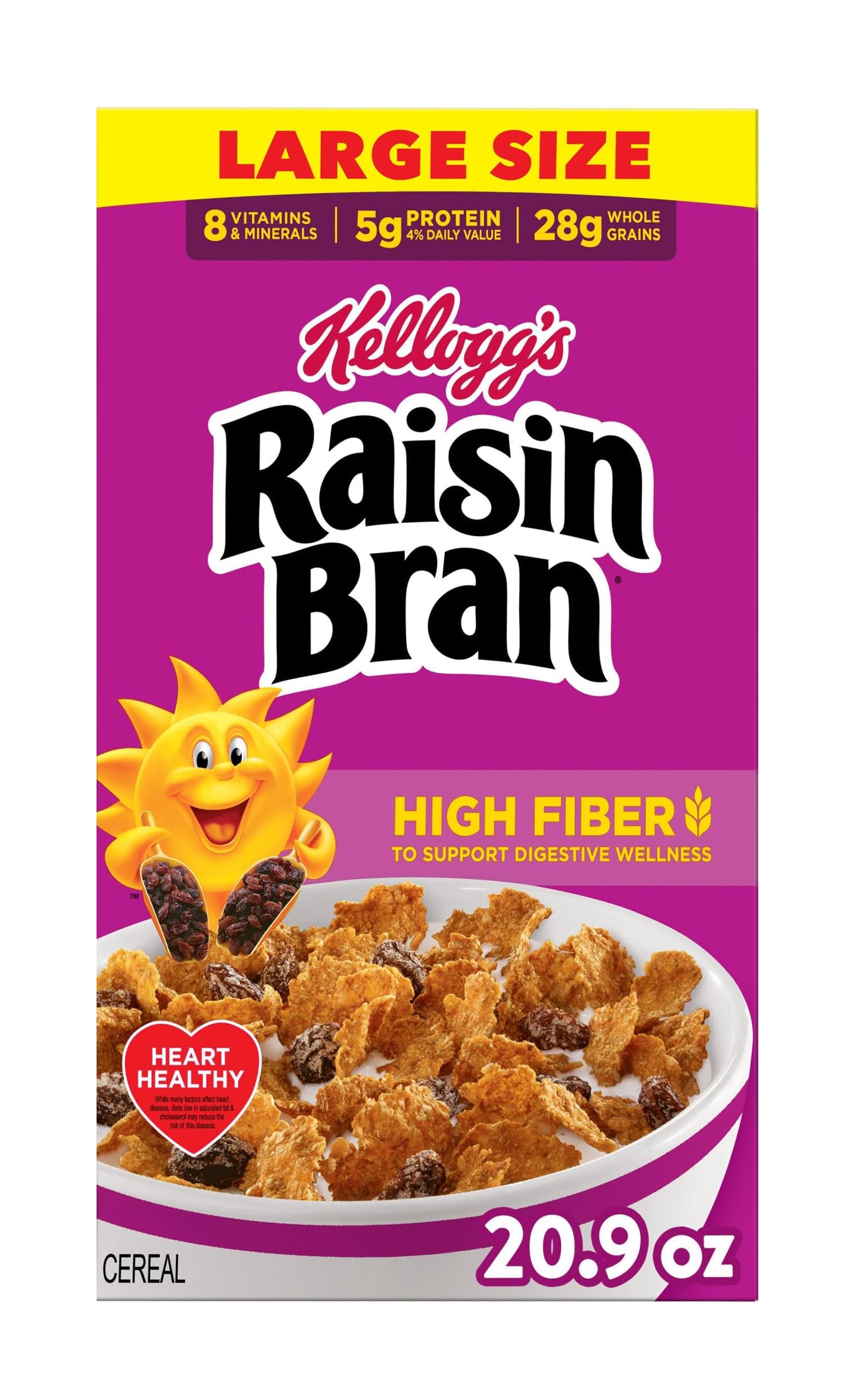
Kellogg's Raisin Bran

94 /100
Trail Score Outstanding

Key details

Fiber
26% daily value per serving
Ingredients
7 simple ingredients plus iron
Whole Grain
28 g per serving
Package Size
20.9 oz
Check Price on Amazon

Raisin Bran is the rare high-fiber cereal that tastes like a treat, and that is exactly why it earns a place here. The flakes are crisp, the raisins are plentiful, and each serving provides 26% of the daily value for fiber plus 28 grams of whole grains. We liked that it does not ask you to tolerate a twig-like texture to get fiber. The sweetness comes largely from raisins, so it feels less austere than plain bran.

Where it fits is the sweeter end of a weight-loss breakfast. A bowl with milk keeps us full through the morning, and the raisins give it enough flavor that we do not need to add sugar. The flakes soften quickly once milk is poured, so it is not a cereal for slow eaters. We also found the raisin distribution can vary from bowl to bowl, which is a small annoyance rather than a dealbreaker.

Our verdict is that Raisin Bran is worth buying when you want a high-fiber bowl with built-in sweetness, but not when you are trying to keep sugar as low as possible. The raisins are the sugar source, and a generous pour turns a healthy-sounding cereal into a sweeter breakfast. Measure the serving, add milk and maybe a few nuts, and it does its job. It is a good compromise cereal, not the strictest choice.

Pros

  • 26% daily value fiber per serving
  • 28 g whole grains per serving
  • Plentiful raisins and crisp flakes

Cons

  • Raisins add concentrated sugar
  • Raisin distribution can vary
Our verdict

Raisin Bran is our sweet route to a high-fiber bowl, as long as you treat the raisins as the sugar source and keep the serving measured.

Check Latest Price
6

Best Protein Granola

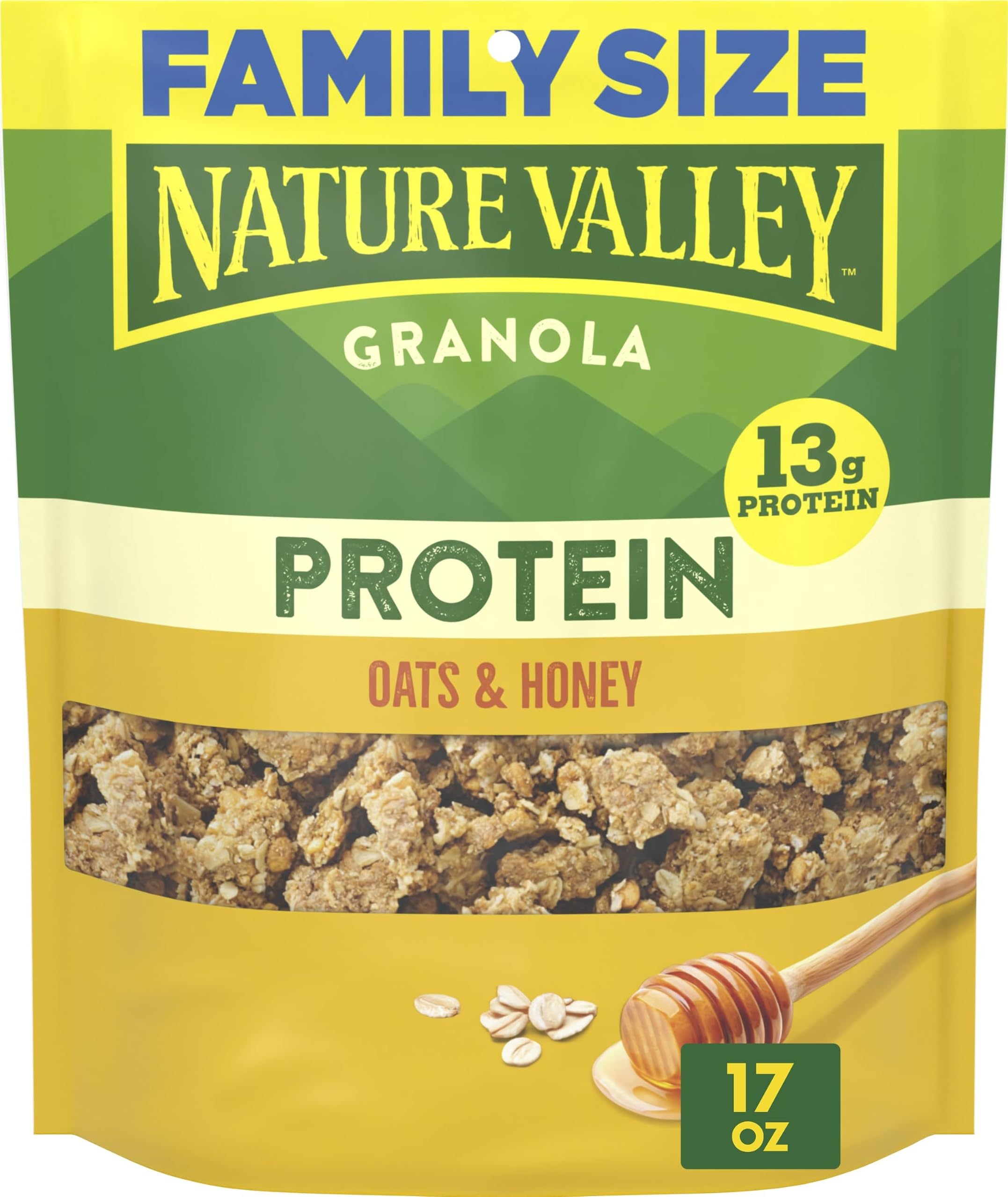
Nature Valley Protein Granola

94 /100
Trail Score Outstanding

Key details

Fiber
Good source
Protein
13 g per 2/3 cup
Whole Grain
33 g per serving
Package Size
17 oz
Check Price on Amazon

The 13 grams of protein in a 2/3-cup serving is the headline, but the more useful number may be the 33 grams of whole grains alongside it. This is a crunchy oat-and-honey granola with clusters that hold up in yogurt and milk, and it provides a good source of fiber. We liked it as a topping more than as a bowl: the clusters are sweet and substantial, and a small scoop adds a lot of texture to plain Greek yogurt.

Where it fits is the protein-seeking yogurt eater. A scoop over unsweetened yogurt gives you crunch and sweetness without needing a sugary flavored yogurt, and the protein helps the bowl last. The catch is that granola is calorie-dense; 2/3 cup is a real serving, not a sprinkle, and it is easy to add a second scoop. We measure it into a small bowl first, then spoon it over the yogurt.

This is the granola we keep for yogurt, not for a bottomless bowl. It is not a cereal you can fill a large bowl with and expect the same portion control as Grape-Nuts. The pouch is also easy to over-scoop from, especially if you eat straight from it. For a protein-rich topping that makes plain yogurt more satisfying, it earns its place. For a full breakfast bowl, choose one of the flakier or nugget cereals instead.

Pros

  • 13 g protein per 2/3 cup
  • 33 g whole grains per serving
  • Crunchy clusters hold up in yogurt

Cons

  • Calorie-dense and easy to over-scoop
Our verdict

This is the granola we keep for yogurt, not for a bottomless bowl: 13 grams of protein and a crunchy cluster make a small scoop count.

Check Latest Price
7

Best Low-Sugar Granola

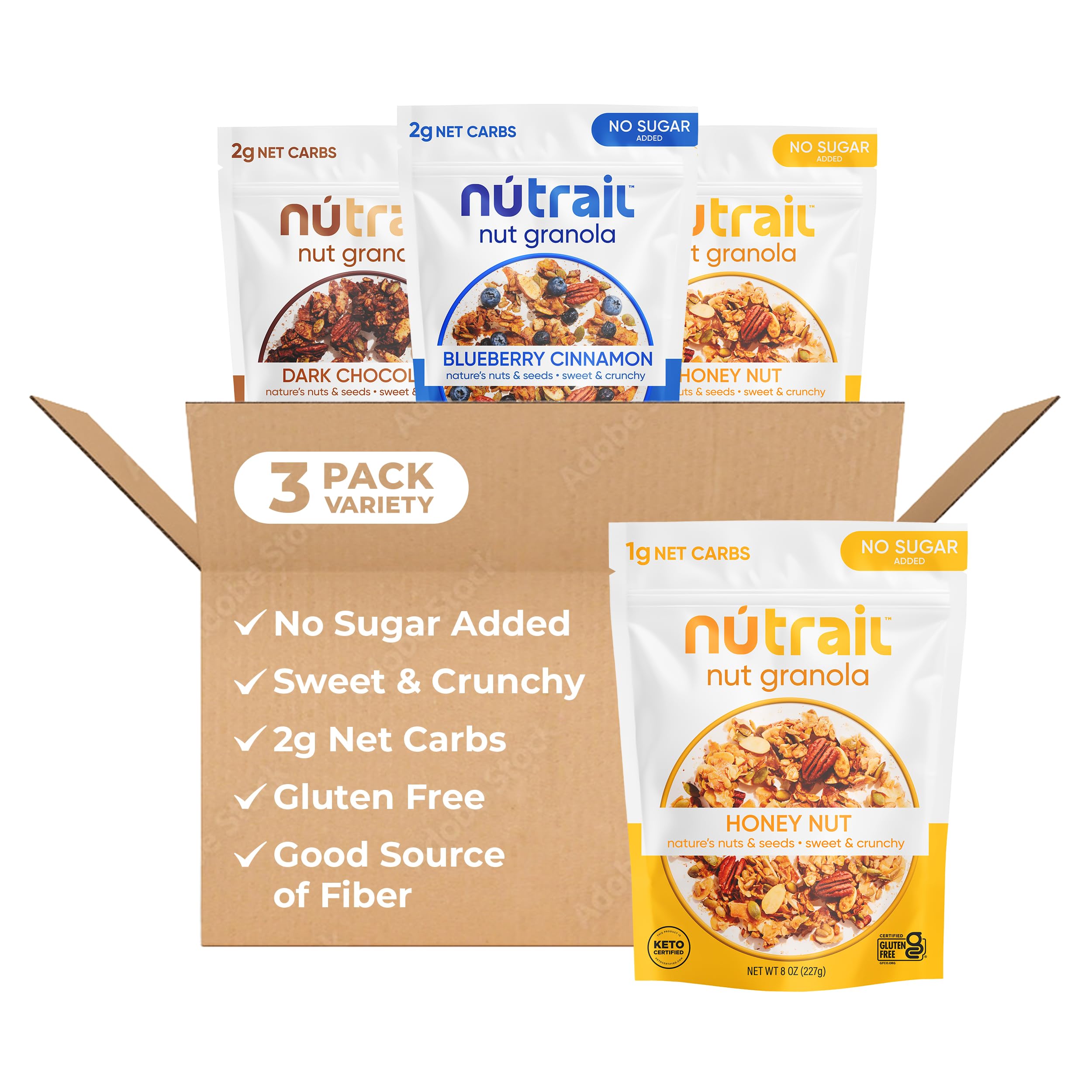
NuTrail Nut Granola

93 /100
Trail Score Outstanding

Key details

Sugar
No sugar added
Dietary
Gluten-free, grain-free, keto
Net Carbs
1-3 g per serving
Pack Size
3 x 8 oz
Check Price on Amazon

The first thing that gives us pause is the cost per ounce. NuTrail is a premium granola, and the bags are small enough that treating it like a normal cereal gets expensive fast. What you get for the money is a nut-based granola with no added sugar, 1 to 3 grams of net carbs per serving, and a genuinely crunchy texture. We liked it best as a controlled topping: a small scoop over unsweetened yogurt gives you sweetness and crunch without turning breakfast into dessert.

The flavor is the reason to consider it. The blueberry and dark chocolate varieties taste like real granola, not a compromise, and the nuts give it a satisfying chew. It stays crunchy in yogurt and does not turn to paste. We found the sweetness is enough that we did not need to add fruit or honey. If you are used to sugary granola, the first bowl may taste less sweet, but the texture and nut flavor carry it.

The trade-offs are worth naming. The bags are small for the price, and the ingredient list includes erythritol, which some people prefer to avoid or find hard on the stomach. The portion size is also easy to misjudge because the granola is dense; a small amount goes a long way, but a generous pour disappears quickly. We treat it as a topping or a small bowl, not a fill-the-bowl cereal.

We keep NuTrail for when no added sugar and low net carbs matter more than price, especially as a yogurt topping rather than a full bowl. It is not the best value pick here, and it is not the most filling bowl for the money. For someone following a low-carb or keto pattern who misses granola, it fills a specific gap. For an everyday high-fiber breakfast, Grape-Nuts is the more practical choice.

Pros

  • No added sugar
  • 1-3 g net carbs per serving
  • Crunchy nut-based texture

Cons

  • Premium price for small bags
  • Contains erythritol
Our verdict

We keep NuTrail for when no added sugar and low net carbs matter more than price, especially as a topping rather than a full bowl.

Check Latest Price
8

Fruit-And-Nut Crunch

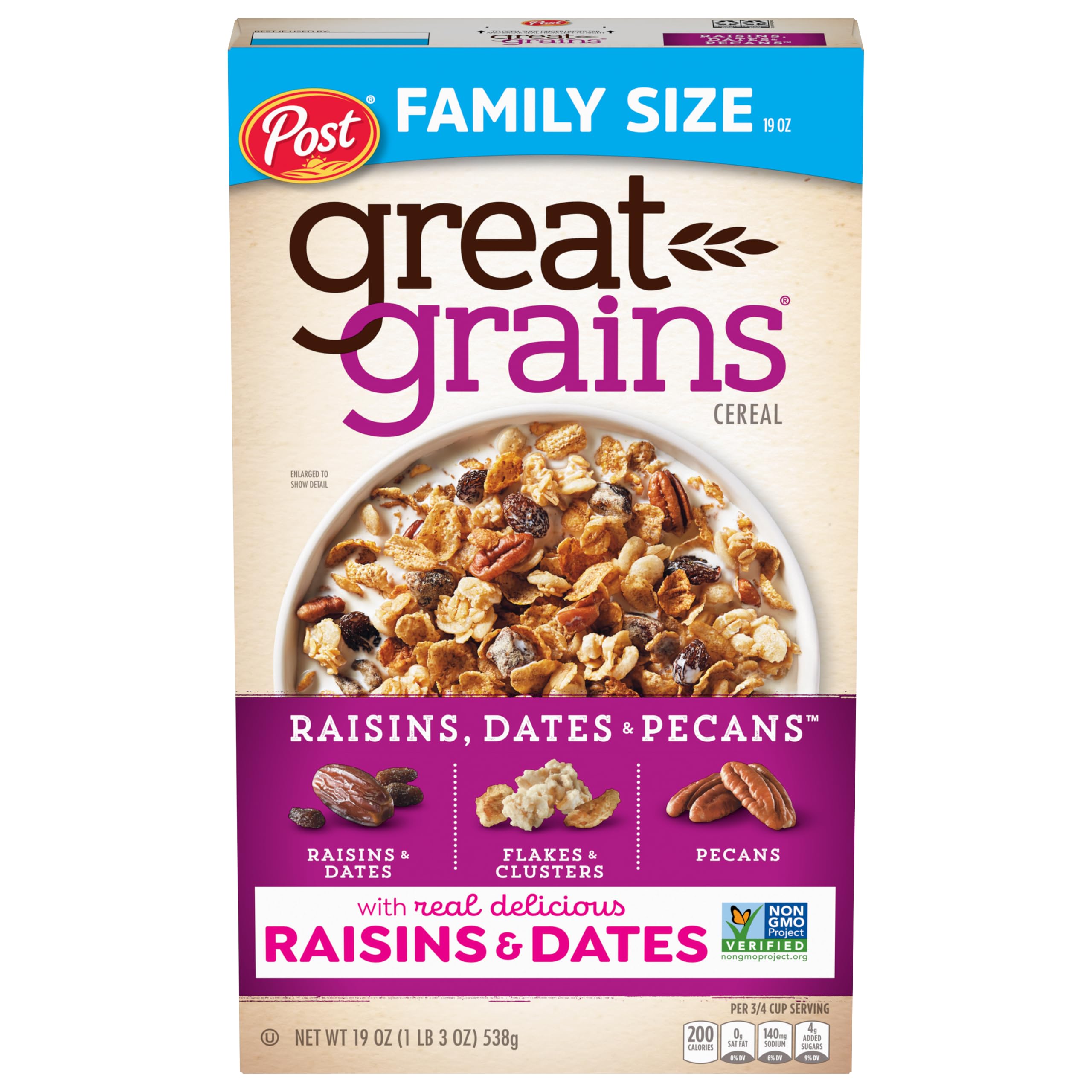
Great Grains Raisins, Dates & Pecans

93 /100
Trail Score Outstanding

Key details

Mix
Raisins, dates, and pecans
Fiber
Good source
Whole Grain
32 g per serving
Package Size
19 oz
Check Price on Amazon

The raisins, dates, and pecans are what make Great Grains worth considering; the whole-grain flakes are the delivery system. Each serving has 32 grams of whole grains and is a good source of fiber, with a crunch that holds up longer than many flake cereals. We liked the combination of sweet dried fruit and nuts, though the mix can vary from box to box—some bowls feel heavier on raisins than dates or pecans.

Where it fits is the person who wants a more interesting high-fiber bowl without going full granola. The flakes are crisp, the fruit adds sweetness, and the pecans give it enough richness that you do not need to add nuts. It is not a low-sugar cereal, because the raisins and dates are concentrated fruit sugar. We measure the serving and add milk or plain yogurt rather than stacking more dried fruit on top.

Texture is the strong point. The cereal stays crunchy in milk longer than expected, and it works well as a yogurt topping when you want something more substantial than granola. The flakes soften like muesli if you let them sit, so eat promptly if you like crunch. The fruit-and-nut mix is also less predictable than a plain flake cereal; sometimes you get a spoonful of mostly raisins, sometimes mostly flakes.

We like Great Grains for a crunchy, fruit-and-nut bowl with whole grains and fiber, but not as the lowest-sugar choice on the shelf. It earns a place as an also-consider for people who find plain bran boring and want a cereal that feels like a treat without being sugary-sweet. Keep the portion honest and treat the dried fruit as the sweetener. For the lowest sugar, look to Cheerios or NuTrail instead.

Pros

  • 32 g whole grains per serving
  • Good source of fiber
  • Raisins, dates, and pecans
  • Stays crunchy in milk

Cons

  • Dried fruit adds concentrated sugar
  • Fruit and nut mix can be uneven
Our verdict

We like Great Grains for a crunchy, fruit-and-nut bowl with whole grains and fiber, but not as the lowest-sugar choice on the shelf.

Check Latest Price

How We Tested: 16 Boxes, Three Months, a Lot of Milk

We started in the cereal aisle, not the lab. I read the panel on every box making a weight-loss claim — grams of fiber, grams of protein, added sugar, and where that fiber actually came from — then cut anything that was mostly puffed air, anything listing three separate sweeteners under different names, and anything priced like a specialty import. That left 16 boxes, running from supermarket store brands to the pricier nut-and-cluster bags, and we spent three months eating through them.

Every serving was weighed on a kitchen scale instead of eyeballed, because the gap between a label serving and a real bowl turned out to be the whole story. We measured how much of each cereal actually fit in a standard bowl and roughly how many bites it took to finish, then tasted each one at least twice — dry, and with 2% milk — noting whether the sweetness hit up front or faded, and whether the pieces tasted fresh or had that flat, bag-sat-too-long quality.

Texture got its own pass: we timed how long each cereal stayed crunchy in milk and wrote down which ones went soft in under two minutes. For freshness, bags were clipped shut and re-tasted at the two-week mark, with notes on which resealed cleanly and which had already gone soft or stale. Value was calculated as price per weighed serving rather than per box, since a cheap box that only gives you five real bowls isn't cheap.

Healthiness and overall quality came down to the ingredient list — whole grain first versus chicory root and inulin doing the fiber work, added sugar hiding in plain sight — plus a simpler test: were we still glad to pour a bowl in week ten? The ones that held up on all counts are below.

How to Choose Cereal for Weight Loss

Start with fiber and protein, not the front label

Fiber and protein are the two numbers most likely to change how long breakfast holds you. We look for a cereal that contributes meaningful fiber, meaningful protein, or both; if it contributes neither, it is a base to add yogurt or nuts to, not the whole meal. As a rough screen, we like to see at least 5 grams of fiber or 8 to 10 grams of protein per serving. A high-fiber cereal such as Grape-Nuts earns its place because the bulk and chew slow the bowl down. A packet like Quaker Protein brings 10 grams of protein to a fast breakfast. Compare the per-serving panel, not the cereal's reputation.

Read added sugar against the serving size

Sugar is not the only thing that matters, but it is the easiest place to be fooled. A cereal can be low in sugar per gram and still easy to over-pour, and a raisin-heavy cereal can taste wholesome while delivering concentrated fruit sugar. Granola is the bigger trap: a small serving is dense, so a generous pour can turn a topping into a second breakfast. We measure the first few bowls instead of eyeballing them, and we read the serving size before comparing sugar numbers. If you need sweetness, berries or a little fruit are easier to portion than a sugary cluster.

Choose a bowl cereal or a topping

The format changes the portion. A flaky or nugget cereal is built to fill a bowl; granola is built to add crunch and flavor to something else. We treat Nature Valley Protein Granola and NuTrail as toppings first, using a small scoop over plain yogurt or oatmeal, because the serving is small and calorie-dense. If you want a bowl you can sit down with, start with Grape-Nuts, Cheerios, or Raisin Bran and add protein on the side. Buying granola for a weight-loss breakfast only works if you are honest about the scoop.

Match the format to your portion-control habits

The best cereal is the one you can portion without thinking. Pre-measured oatmeal packets remove the guesswork, which is why Quaker's lower-sugar box works for rushed mornings and for people who know a big cereal box is a trigger. A box of loose cereal asks more of you: keep a measuring cup in the box, use a smaller bowl, and put the box away before you sit down. Instant oatmeal is not automatically better than cold cereal, but the built-in portion can be the difference between a measured breakfast and a free-pour.

Frequently Asked Questions

Final Verdict

Grape-Nuts is our pick because it does the one thing a weight-loss cereal needs to do: make a measured bowl feel like a real breakfast. The whole-grain wheat and barley and high fiber give it staying power, and the chewy nuggets slow you down. If the hard texture is a dealbreaker, Cheerios is the easier everyday bowl, and Quaker Lower Sugar Instant Oatmeal is the better choice when you want the portion decided for you.